Nikko to Nasu: A Cycling Journey Through Scenery, Food & Seven Treasures | Part 2
Translated from Bikepacking diary’s original Nikko–Nasu journey, Part 2, published on November 18, 2021, and republished by arrangement with the author. Photographs are linked directly from the original website.
Editor’s note: This is a historical travel account, preserving the author’s experiences, local historical explanations and legends. Access rules, road conditions, visitor arrangements and opening hours may have changed. Check current requirements before riding. Historical figures and tree counts quoted below reflect the original account and have not been independently updated. An old discount offer in the source has been omitted because its current validity has not been confirmed.
Day 3: History and Nostalgia
I suspect Yamamoto-san gave each day’s route its own theme. Day one was about snacks and food, day two about forests and countryside, and day three about history and nostalgia.
This is a theme I particularly love. Wherever I go, I am interested not only in the scenery but also in local history and culture. If a small country town has a little history museum, I will usually stop in. Anything connected with the Sengoku period, spirits or folklore is especially likely to catch my attention. I can spend three consecutive weeks returning to remote mountain villages simply to explore their history and traditions. Those stories make the landscapes before me more vivid.
The Oshu Kaido
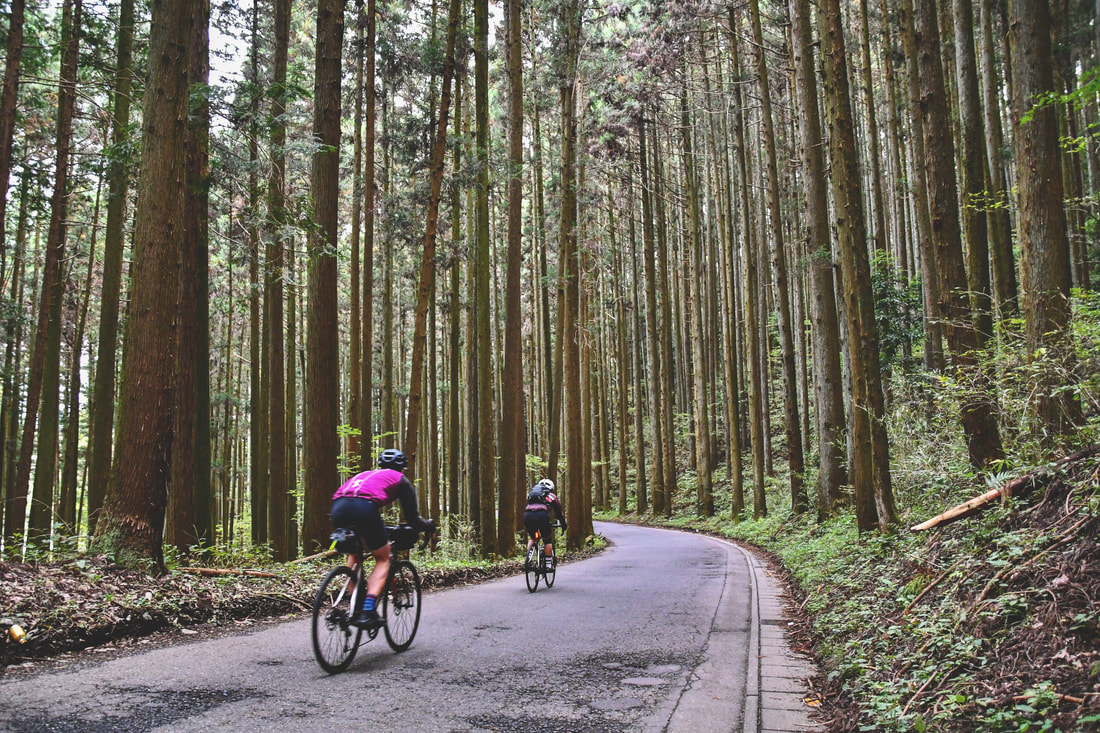
In 1601, the sixth year of the Keicho era, after Tokugawa Ieyasu had brought the country under his control, roads linking different regions with the capital at Edo, now Tokyo, were improved. These routes were often named after the places they connected. The road we rode linked Oshu, in the northeast, with Edo, so it was called the Oshu Kaido.
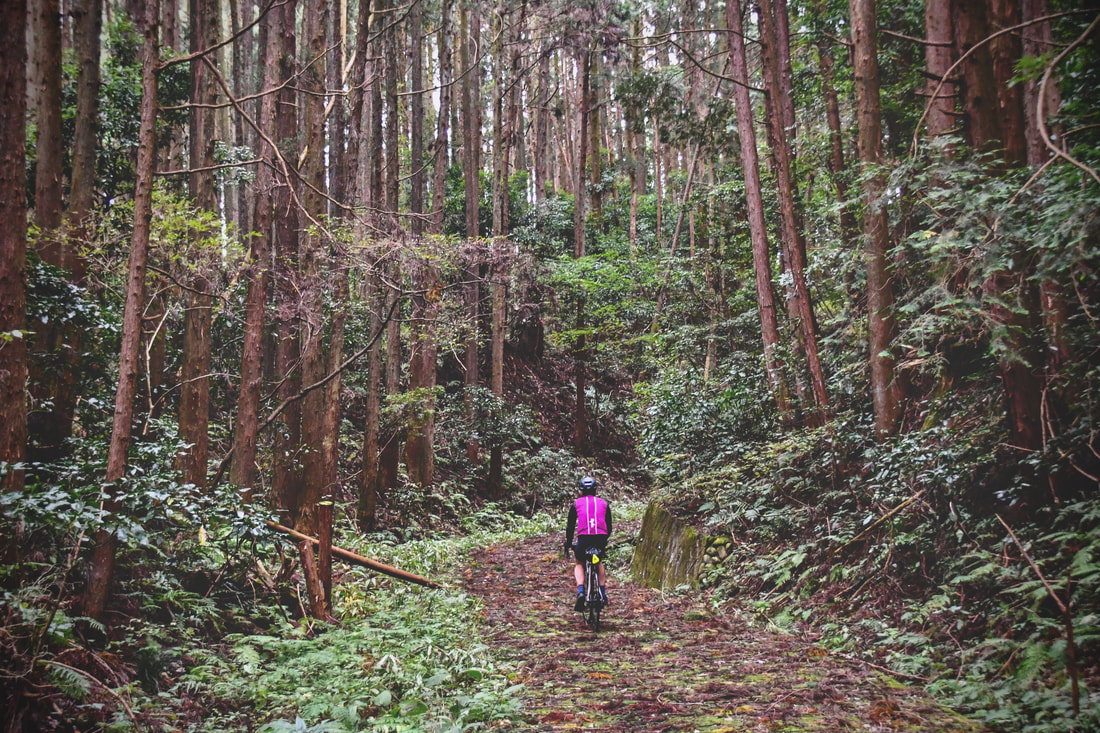
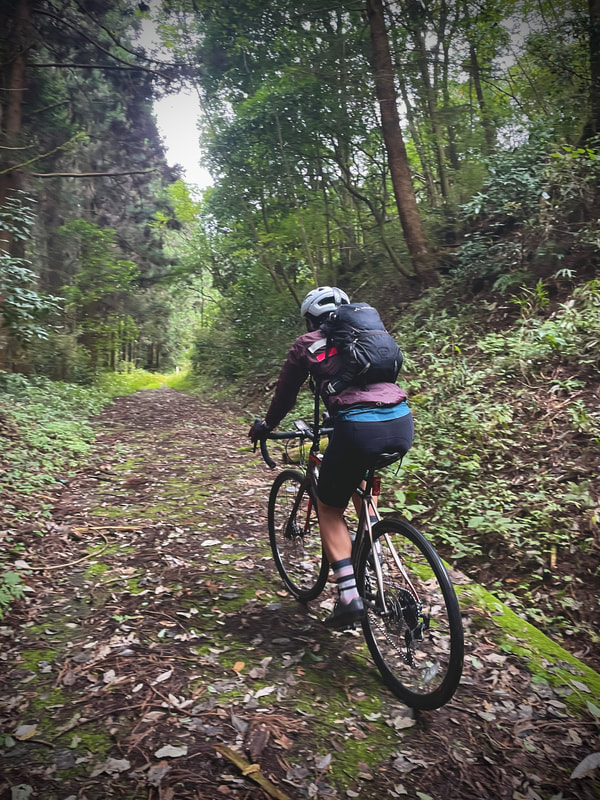
Many major roads in modern Japan follow these older corridors. The familiar Tokaido railway corridor and National Route 1 follow the broad route of the old road between Tokyo and Kyoto. Tochigi is no exception: some present-day highways trace the Oshu Kaido.
Where the old road was difficult or the terrain demanded a different solution, newer roads took another course. As fewer people used the old sections, they gradually returned to nature and disappeared into the forest.
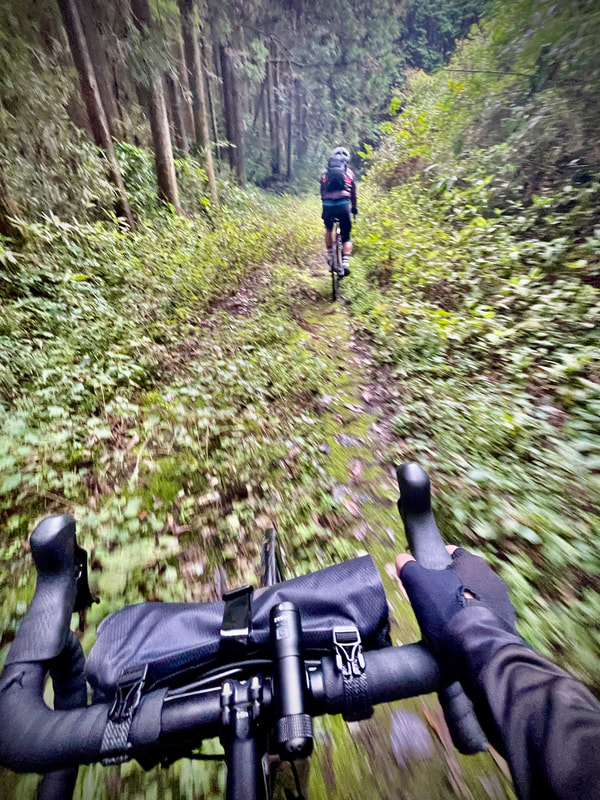
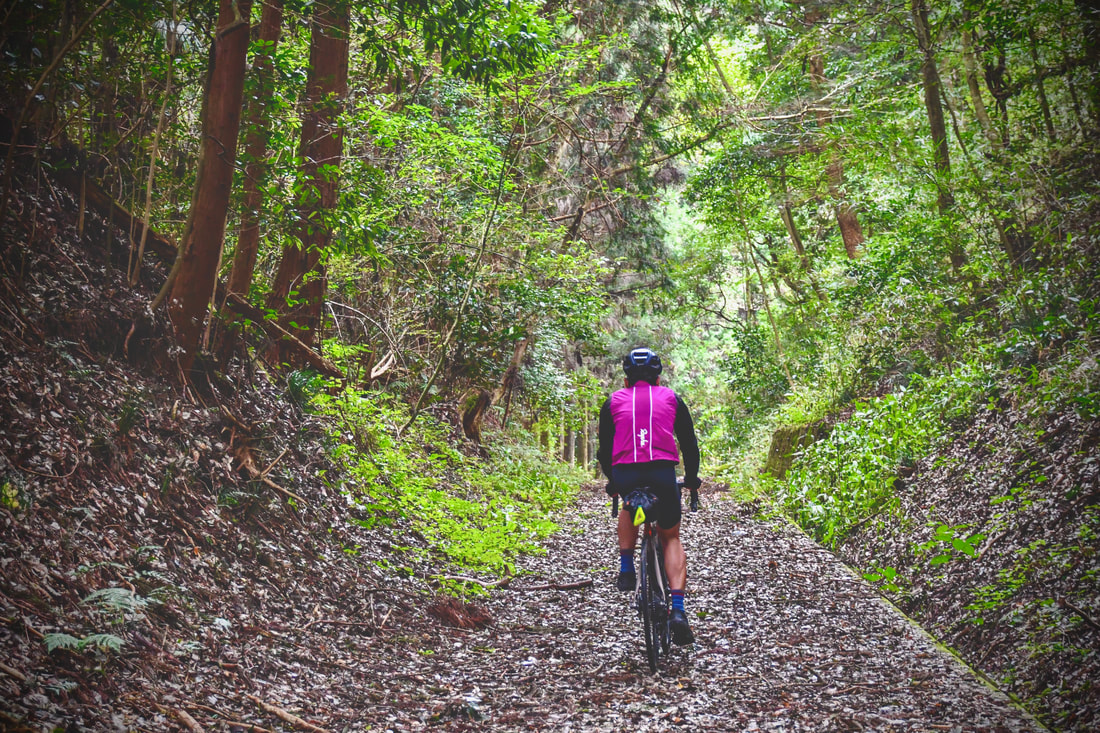
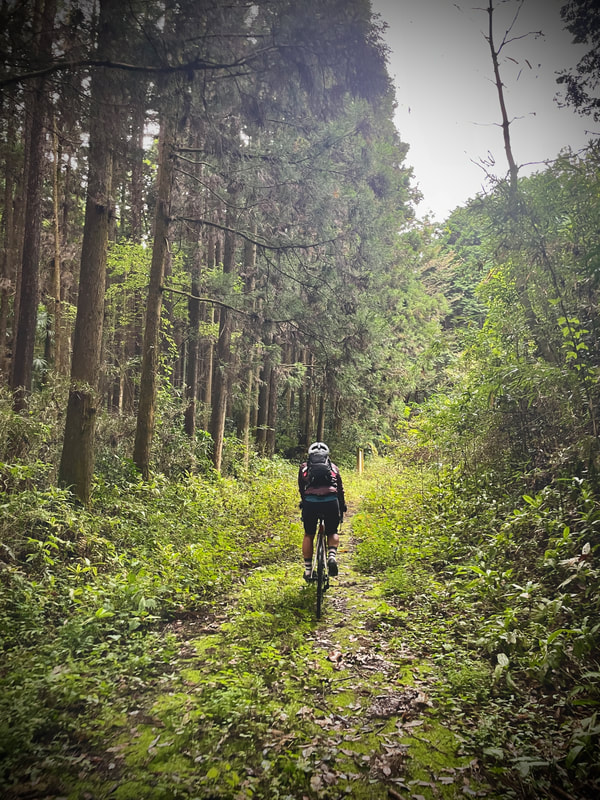
We rode a short surviving stretch of the old road away from its modern replacement. Looking at the track, almost buried in fallen leaves and grass, it was hard to imagine Date Masamune, the great lord of Oshu known as the One-Eyed Dragon, once passing this way with an impressive procession on his journey to the capital.
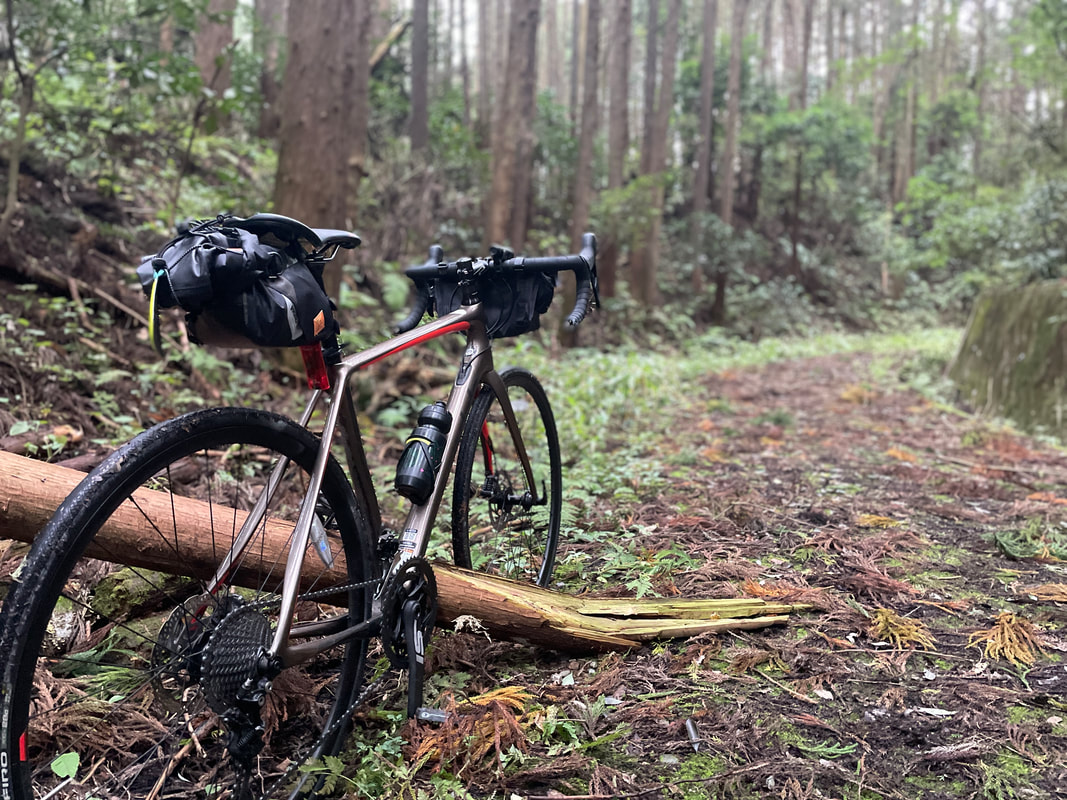
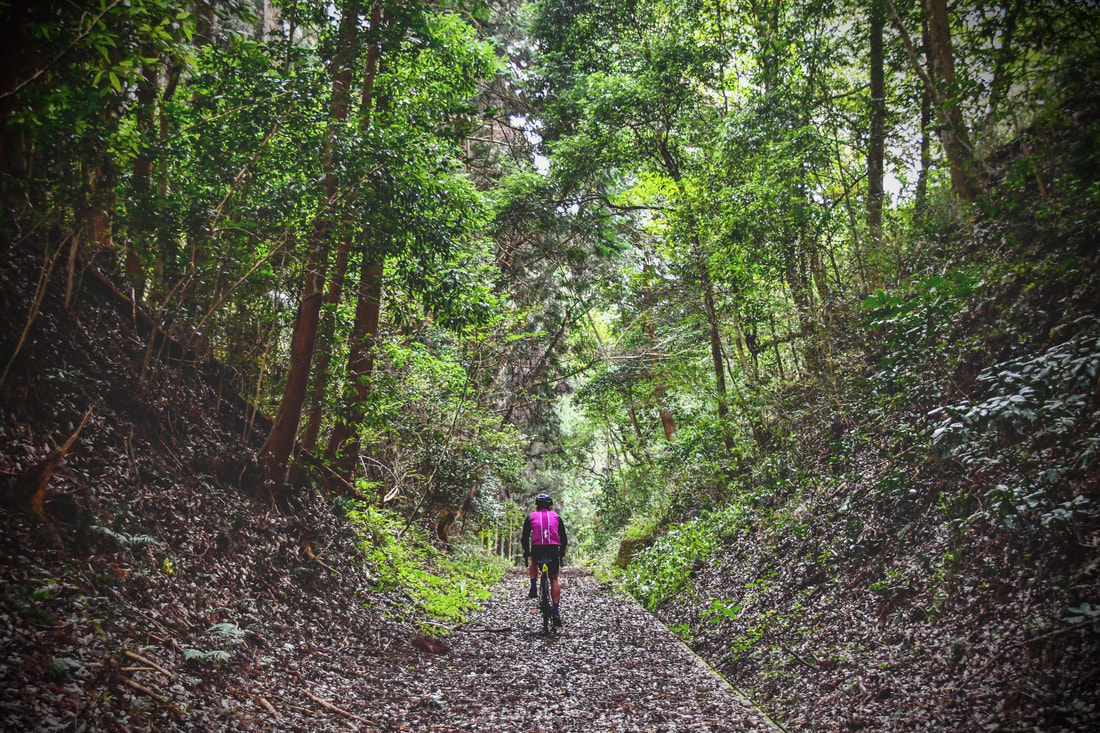
The Nikko Reiheishi Kaido
The reiheishi was an imperial envoy responsible for delivering the court’s annual offerings on behalf of the emperor. The destination was Nikko Toshogu, the shrine honoring Tokugawa Ieyasu, who was deified after his death. Each year, the envoy traveled from Kuragano-juku on the Nakasendo toward Nikko Toshogu. This route became known as the Nikko Reiheishi Kaido.
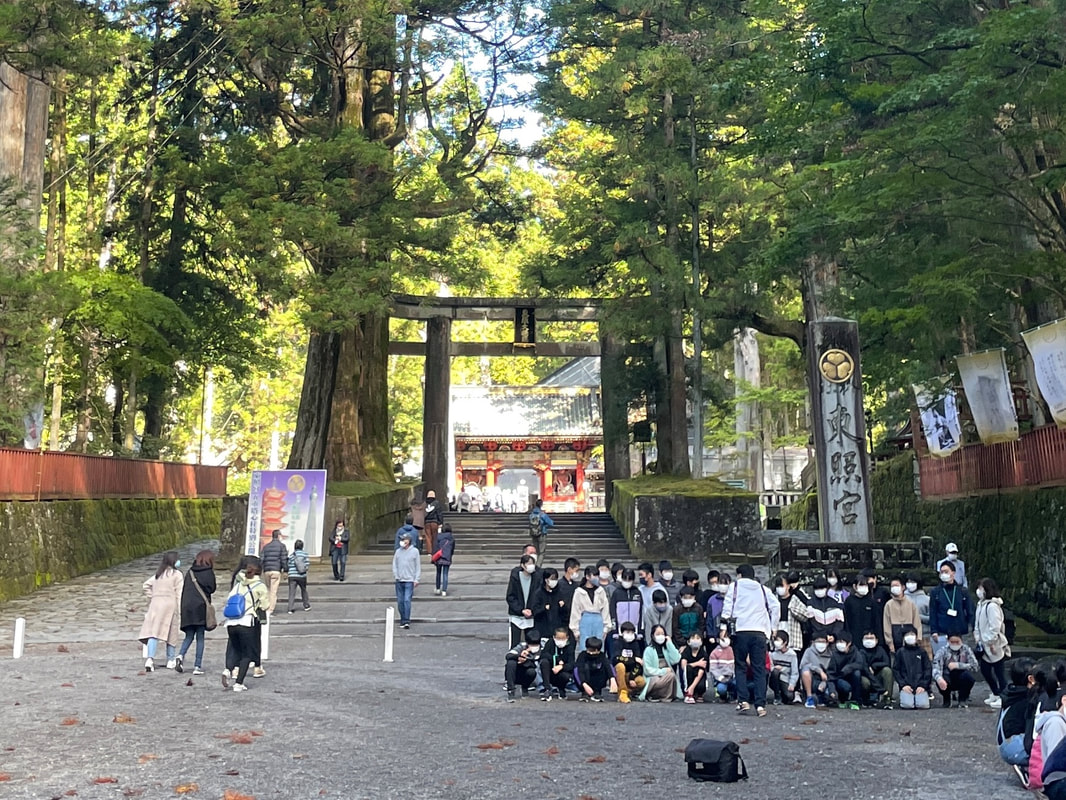
Like many Japanese shrines, Toshogu had ceremonial approaches lined with cedar trees. As the mausoleum of Tokugawa Ieyasu, its approaches had to be suitably magnificent. Matsudaira Masatsuna, a longtime retainer who served three generations of the Tokugawa family, began planting cedars along three routes leading to the shrine.
According to the original account, the effort continued for twenty years and involved more than 16,500 trees across 37 kilometers.
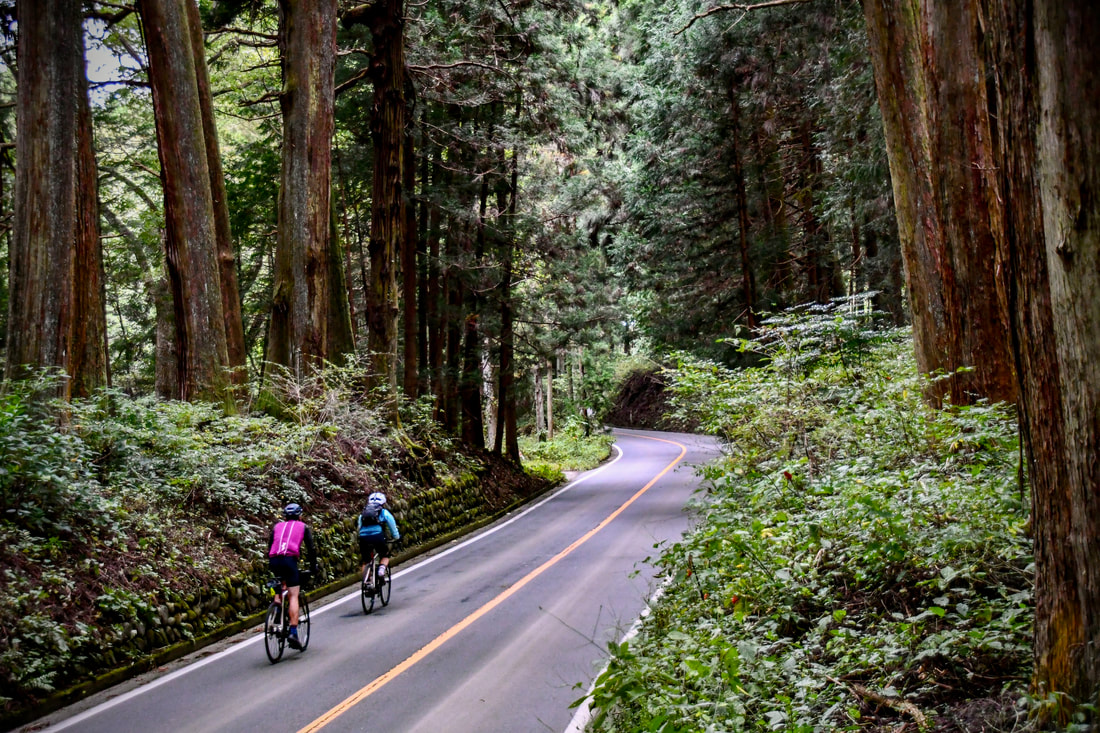
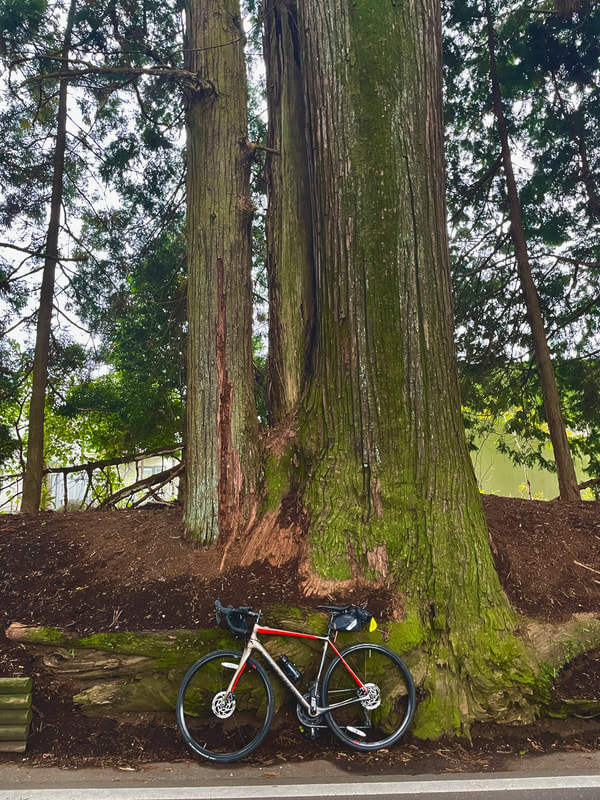
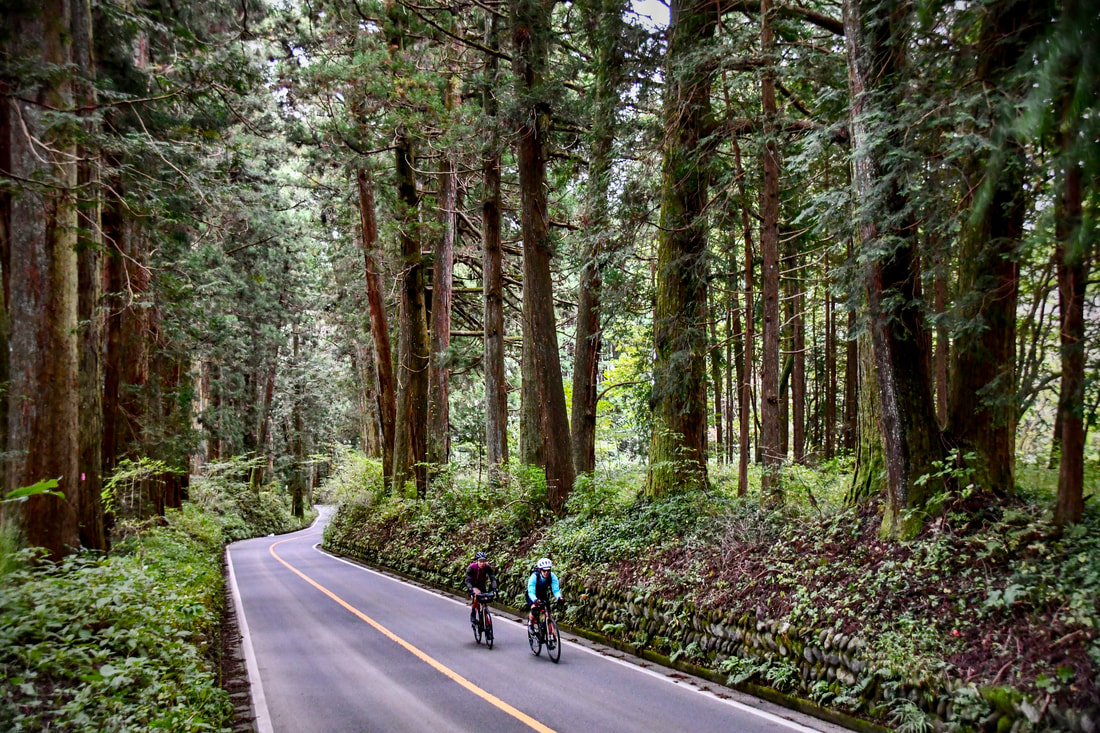
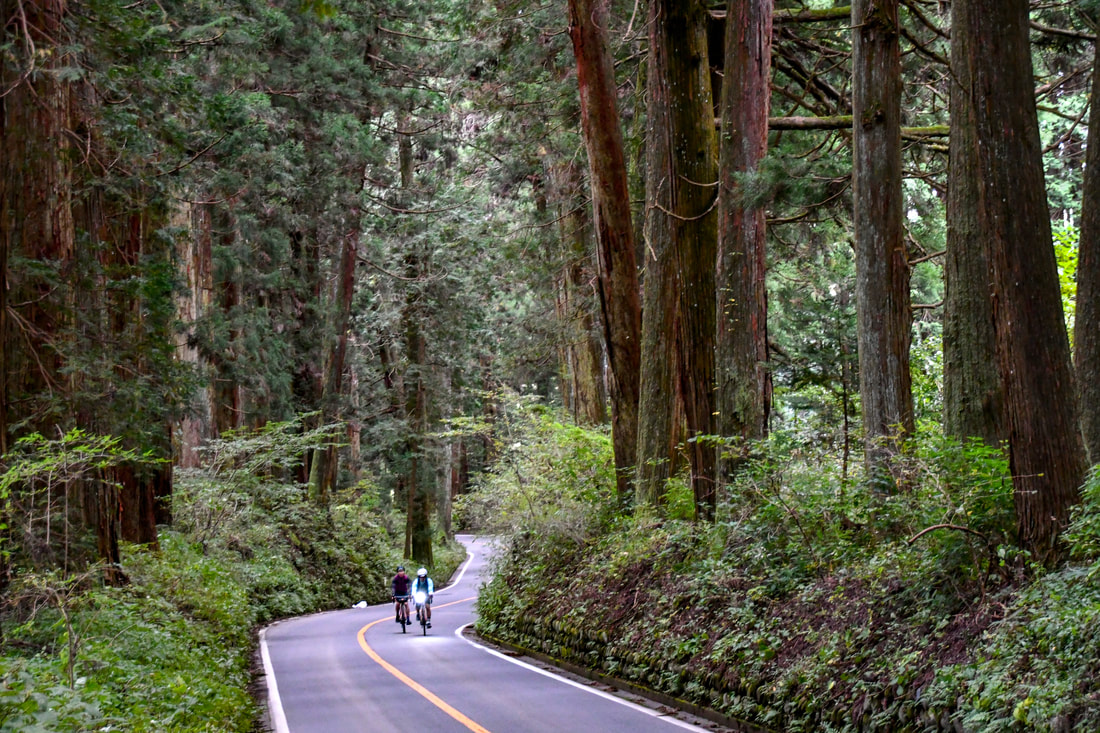
After centuries of development, natural disasters and the loss of aging trees, the account put the surviving avenue at around 12,200 trees over 35 kilometers.
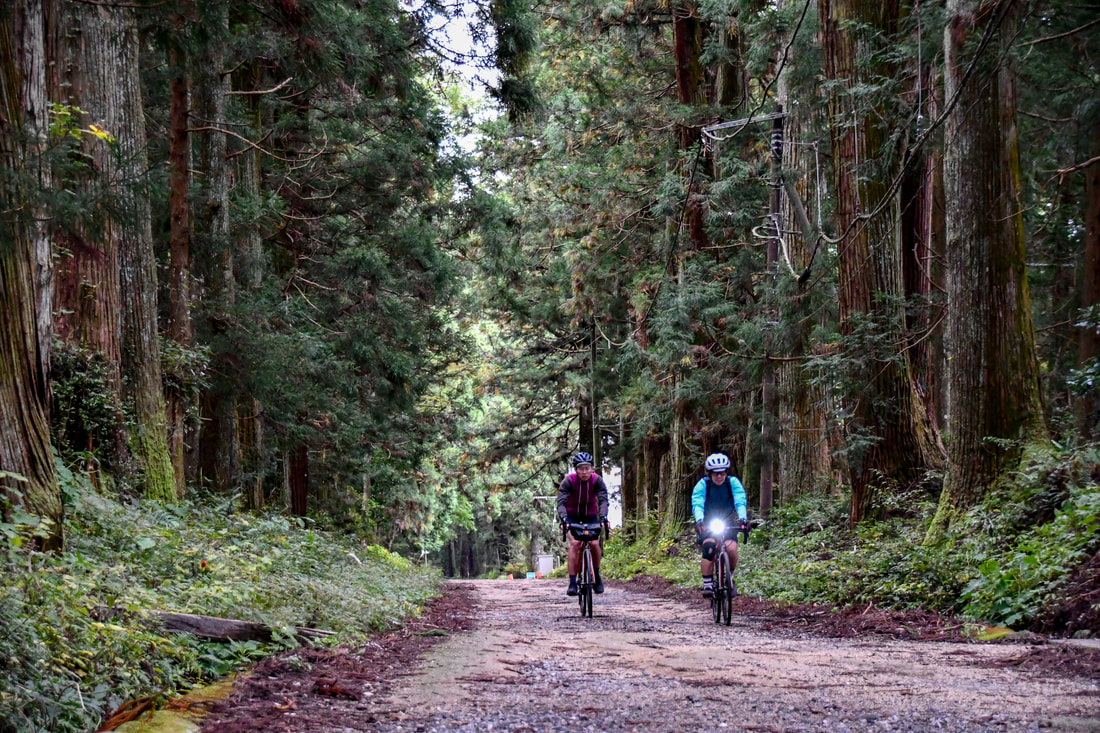
Even reduced, it was an extraordinary number and distance, described in the source as the world’s longest cedar avenue. The trees are protected as natural monuments, with development avoiding them and efforts made to preserve these centuries-old giants.
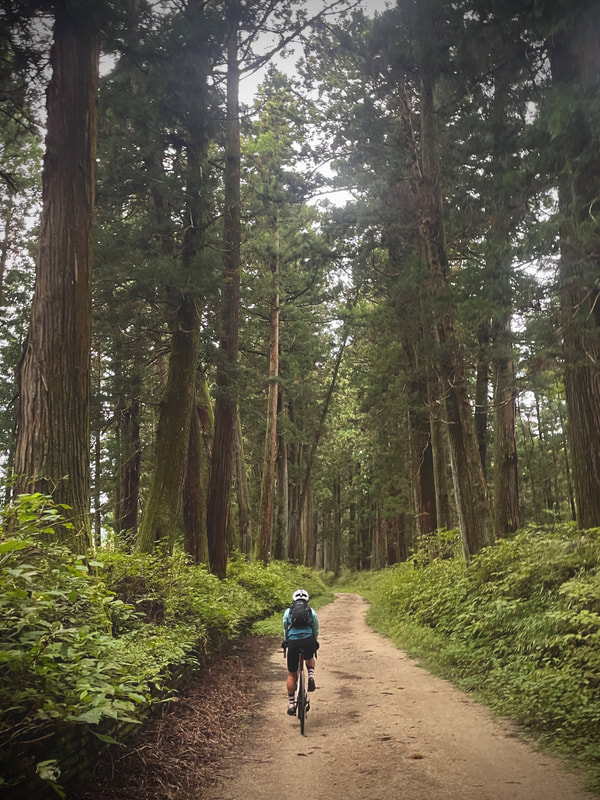
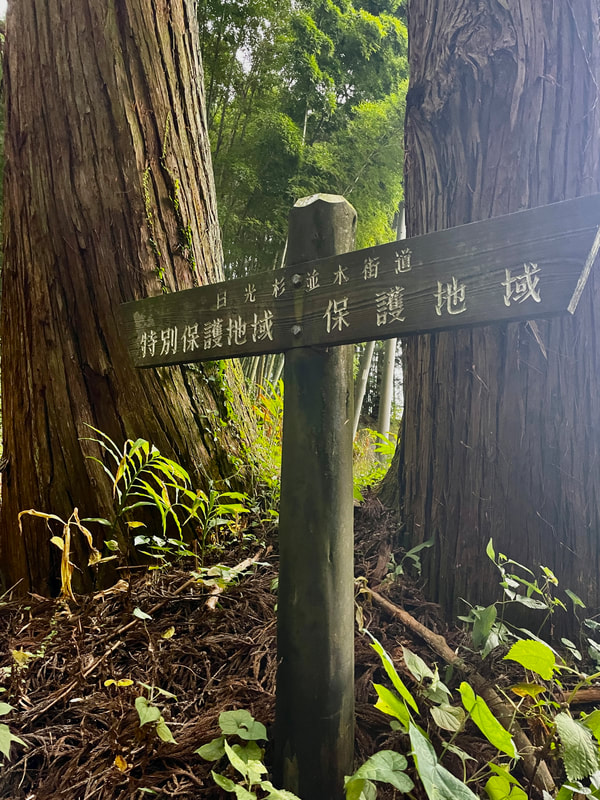
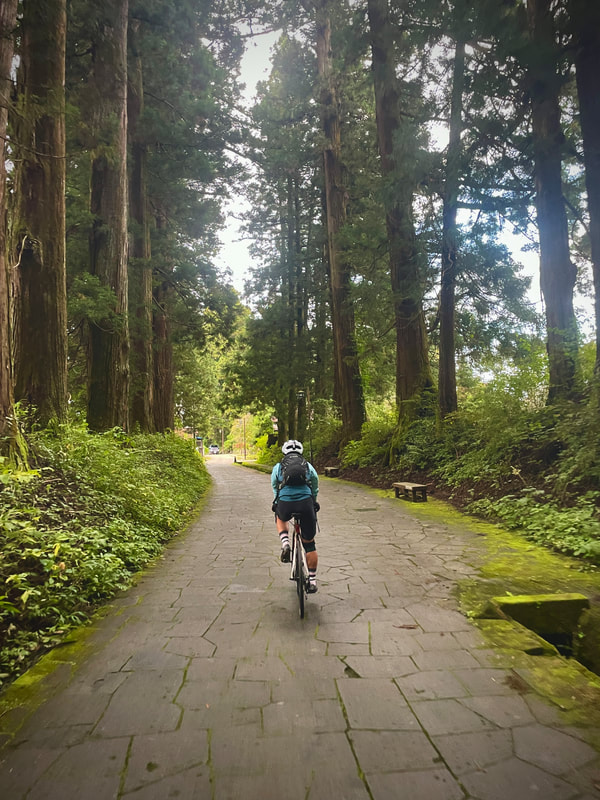
Looking at their grandeur, I imagined Ieyasu greeting Masatsuna in the next world with a great embrace and telling his loyal retainer that he had done a fine job.
Day 4: Climbing into Nikko National Park
Today we headed toward the final destination of the journey, Nikko National Park. It was also the only place in Tochigi I had briefly passed through on my previous visit, making it a meaningful way to end the ride.
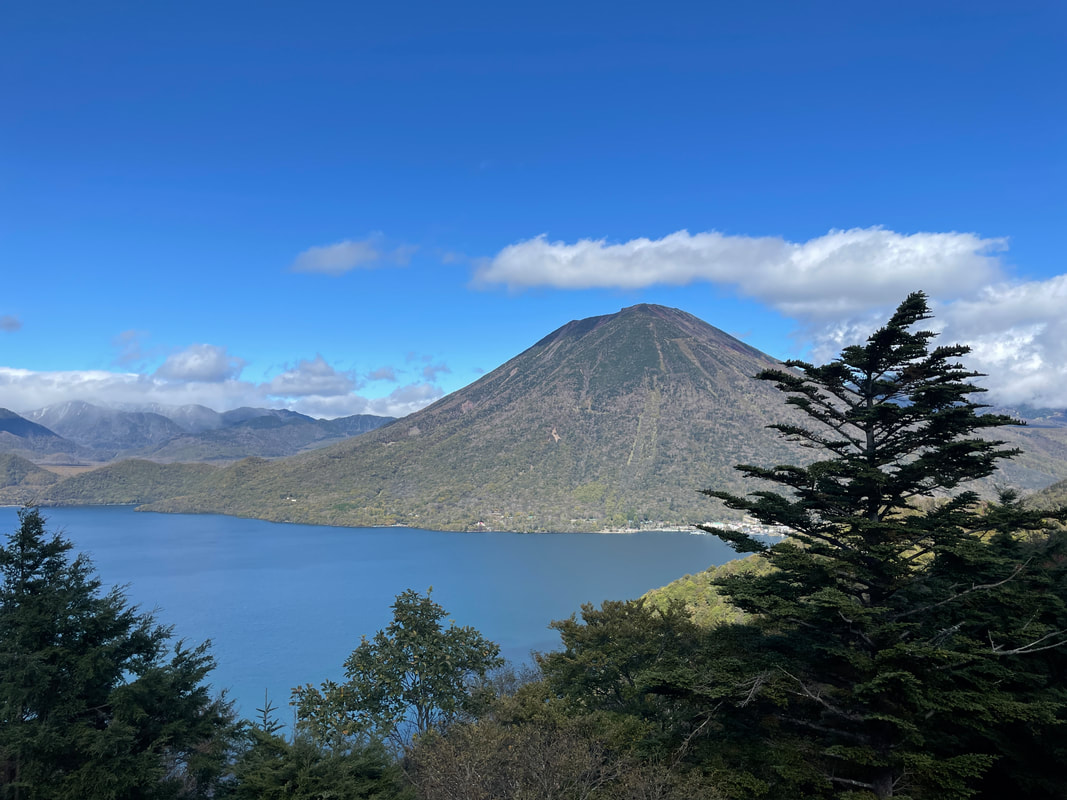
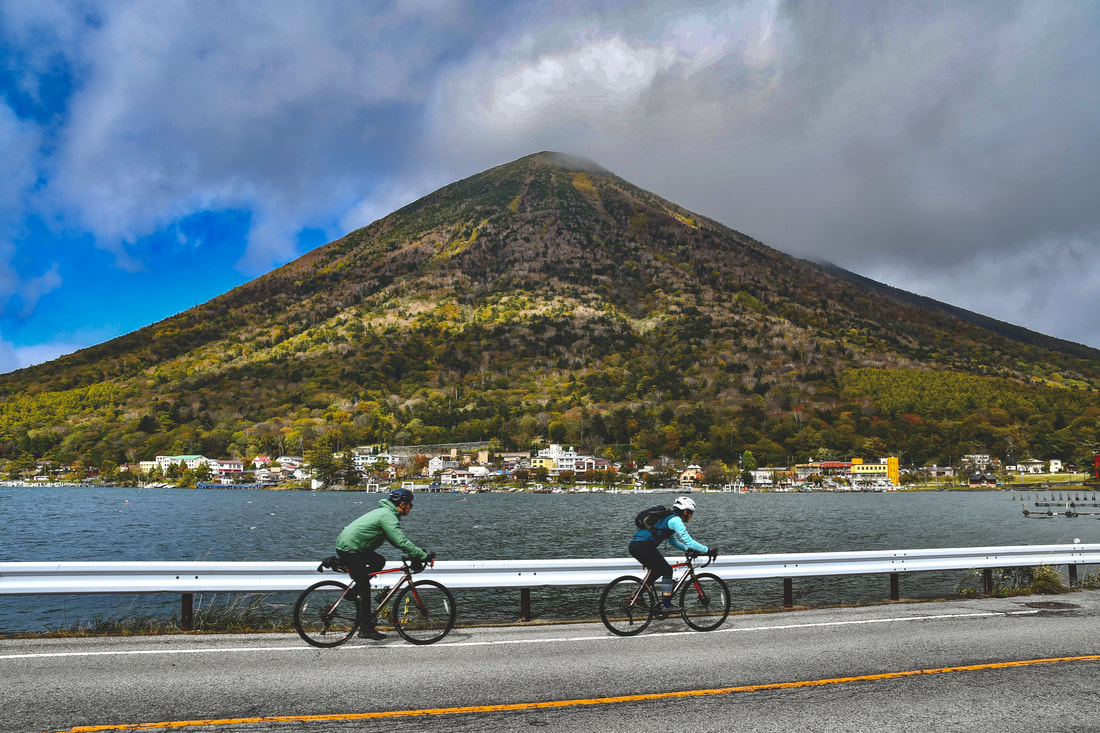
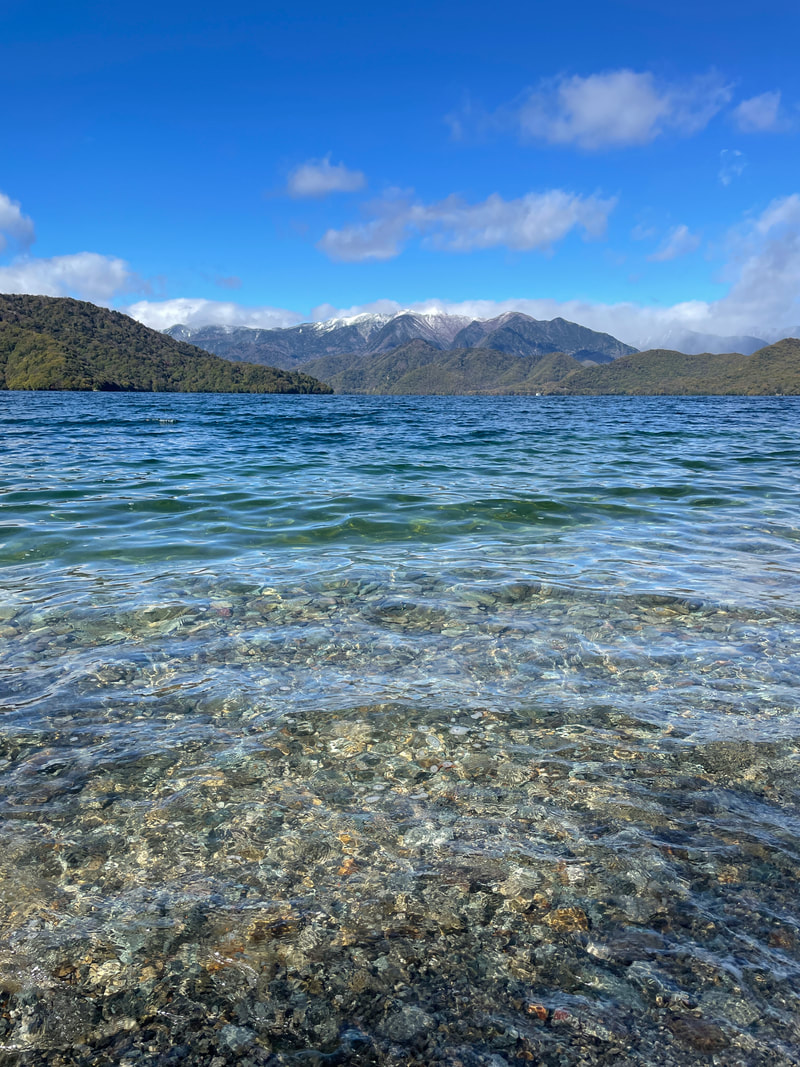
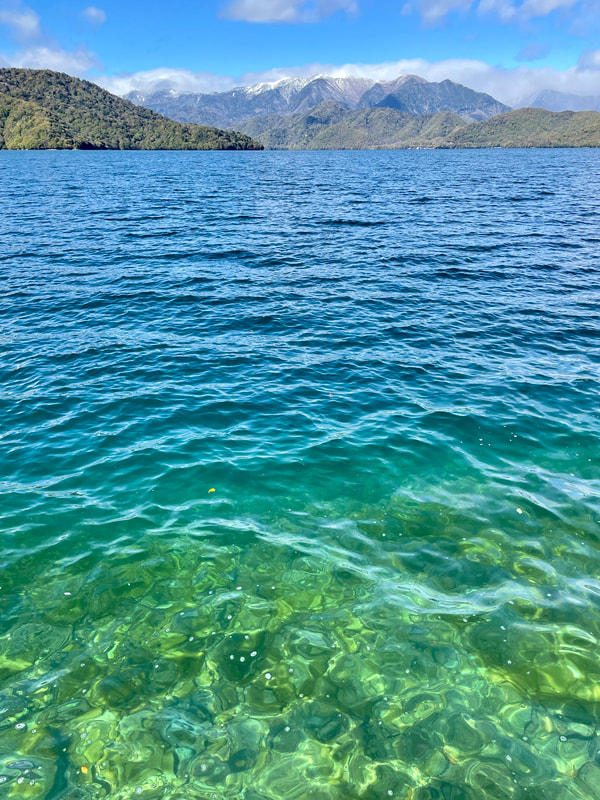
Within the park lies Lake Chuzenji, one of Japan’s representative mountain lakes. Large for a lake at this elevation, it was formed when lava from Mount Nantai blocked the valley. Its water is clear and beautiful.
More than a thousand years ago, the monk Shodo Shonin, associated with the founding of Chuzenji Temple, climbed Mount Nantai. The original account relates how this hidden landscape moved him to establish a temple and practice here.
Irohazaka: A Climb Named for a Poem
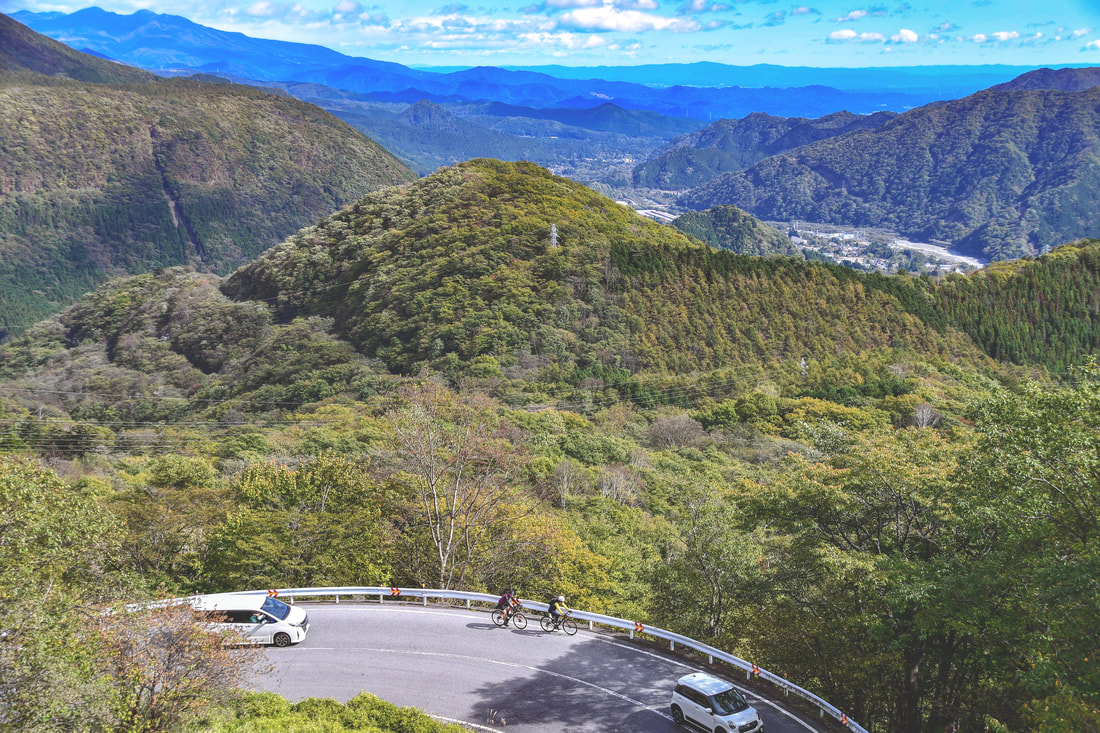
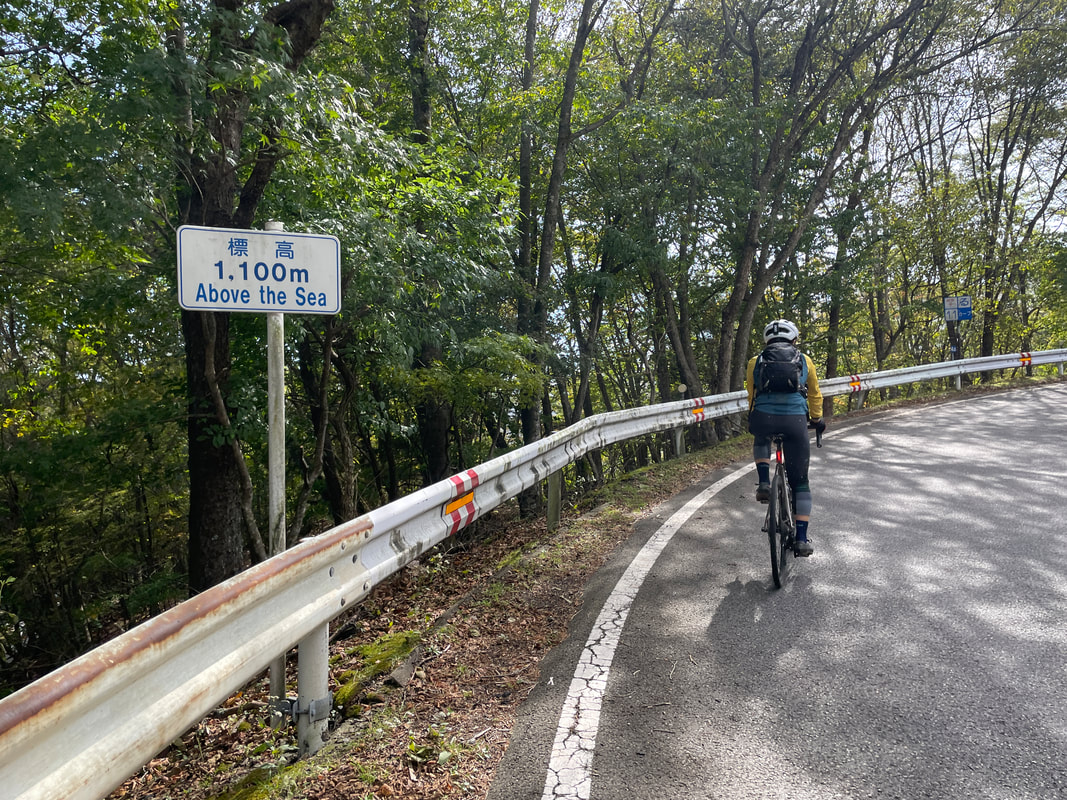
Irohazaka, also known for its autumn foliage, climbs toward Lake Chuzenji. Its winding road takes riders from an entrance around 800 meters above sea level to a high point around 1,300 meters. It is something of a pilgrimage climb for cyclists in Tochigi.
Despite its intimidating appearance on a map, I did not find it as frightening as it looked. The bends lengthen the road, spreading out the climbing, and the corners themselves were not especially steep.
I had often encountered the word iroha in Japanese place names and somehow assumed it referred to colorful scenery. Yamamoto-san explained that the bends here were named using kana characters in an older order, drawn from the Iroha poem.
The Iroha is a Heian-period poem composed in a seven-and-five rhythm and commonly interpreted as expressing the Buddhist idea of impermanence. Its text uses 47 distinct kana without repetition, making it a kind of pangram.
Later generations used it as a model for practicing Japanese writing and learning kana. Arranging characters in the order in which they appear in the poem became known as iroha order, widely used in dictionaries and other reference works from medieval into early modern Japan.
The poem begins with the sounds i-ro-ha, giving the road its name.
If you are a dedicated climber, consider investigating the continuation toward Konsei Pass or the Hangetsuyama viewpoint. The climbing is substantial, and the reward is a bird’s-eye view of Lake Chuzenji. It is ideal for riders who enjoy earning their scenery the hard way.
Senjogahara: A Battlefield of Gods
What comes to mind when you hear “Senjogahara”? My first thought was Hitagi Senjogahara, the heroine of Bakemonogatari. If you thought the same, we probably share a certain enthusiasm for anime.
The place name itself is straightforward: it means a battlefield plain. But this battle belongs not to ordinary history, but to the age of myth.
In the story recounted here, the god of Mount Akagi in Gunma claimed Lake Chuzenji as his territory. Taking the form of a great centipede, he led an army against Futara, the old name associated with Nikko. The god of Mount Futara, or Mount Nantai, became a serpent to oppose him, though the creature in the illustration looked more like a dragon to me.
The Futara deity was unable to withstand the attack and began to retreat. Another local deity then transformed into a white deer and went to seek help from Ono no Sarumaru Dayu, a renowned archer described as a descendant of Nantai Gongen, at a mountain near the border of Iwashiro and Mutsu, in the areas associated with present-day Fukushima and Miyagi.
The archer shot the centipede in its left eye with his powerful bow, forcing the god of Mount Akagi to withdraw. Senjogahara was said to be the place where these mountain gods fought.
Thinking about the story now, I wondered whether it might preserve a memory of a lord from the Mount Akagi area leading an attack on land around Nikko. That was simply my own speculation.
A Quiet Detour through Odashirogahara
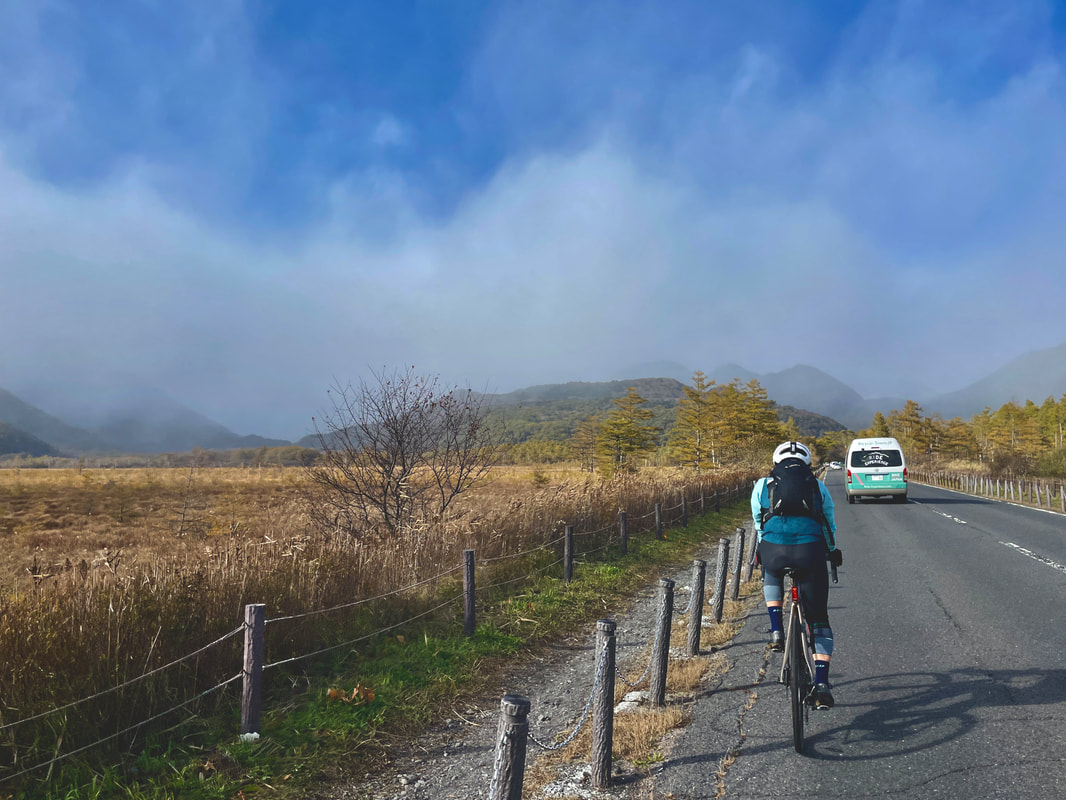
There was more traffic today, so Yamamoto-san led me onto a small road branching off the main route. A locked gate barred the entrance, with a sign prohibiting ordinary motor vehicles. Bicycles were exempt under the rules we encountered on that visit.
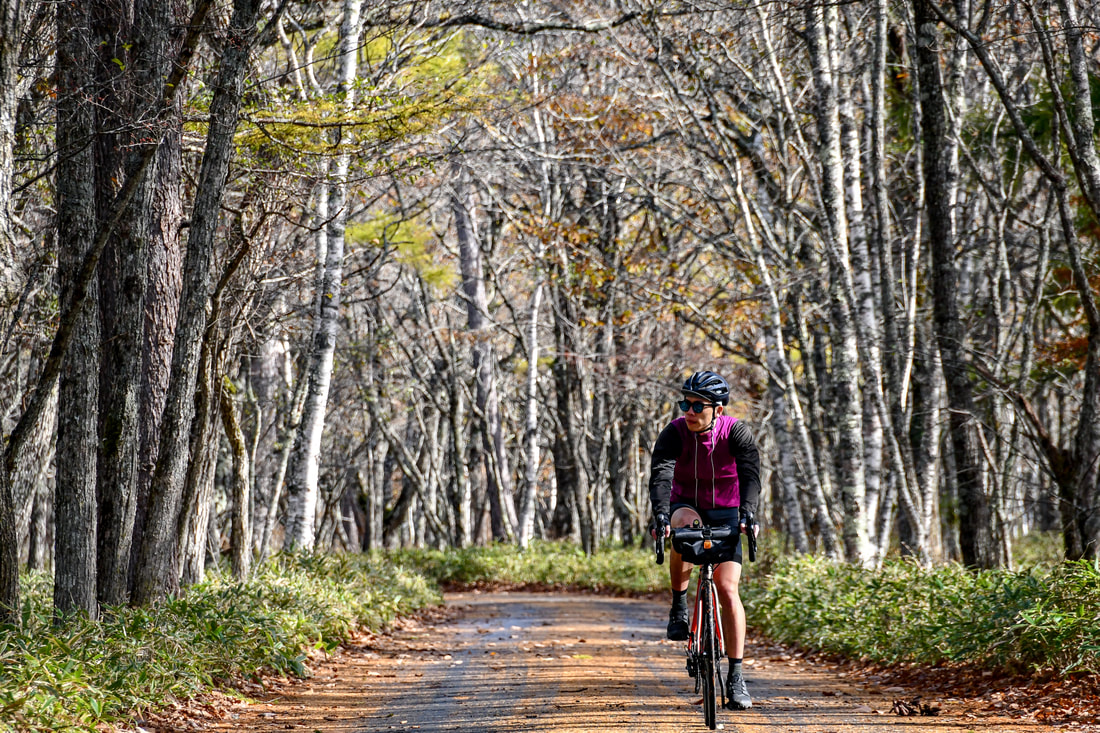
We were entering Odashirogahara. Only designated buses and bicycles used the forest road at the time. Autumn was approaching. Many leaves had only just begun to change color, but the forest already felt distinctly autumnal.
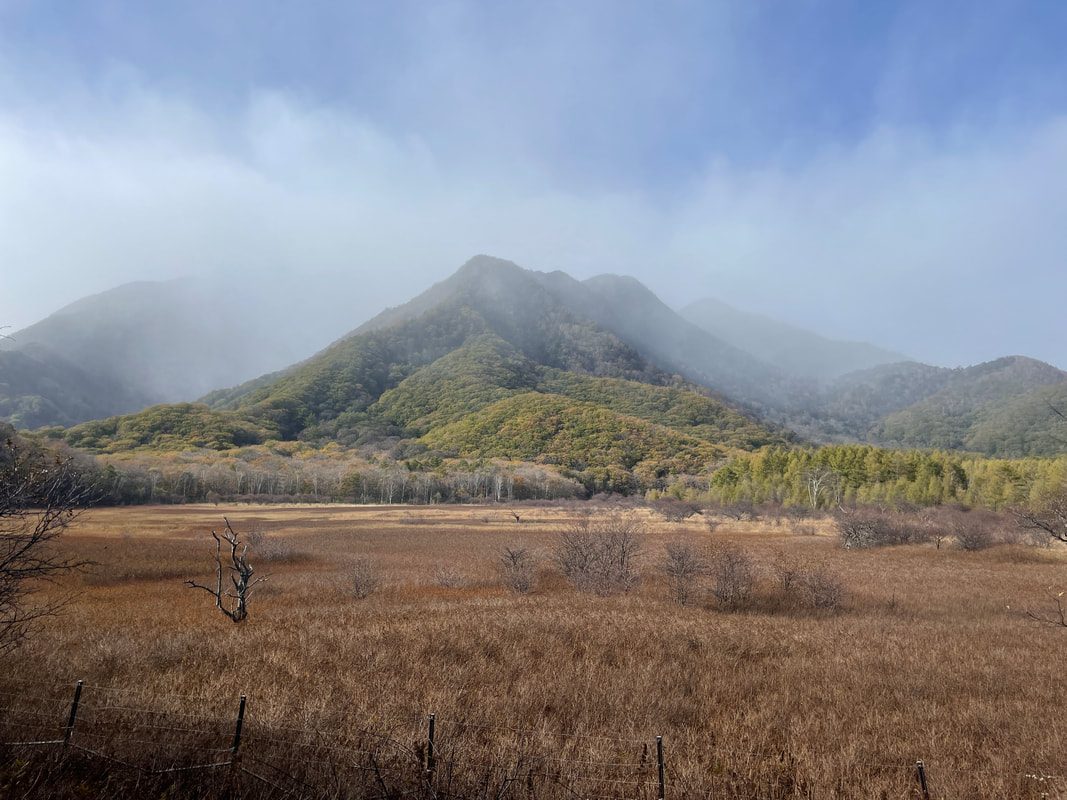
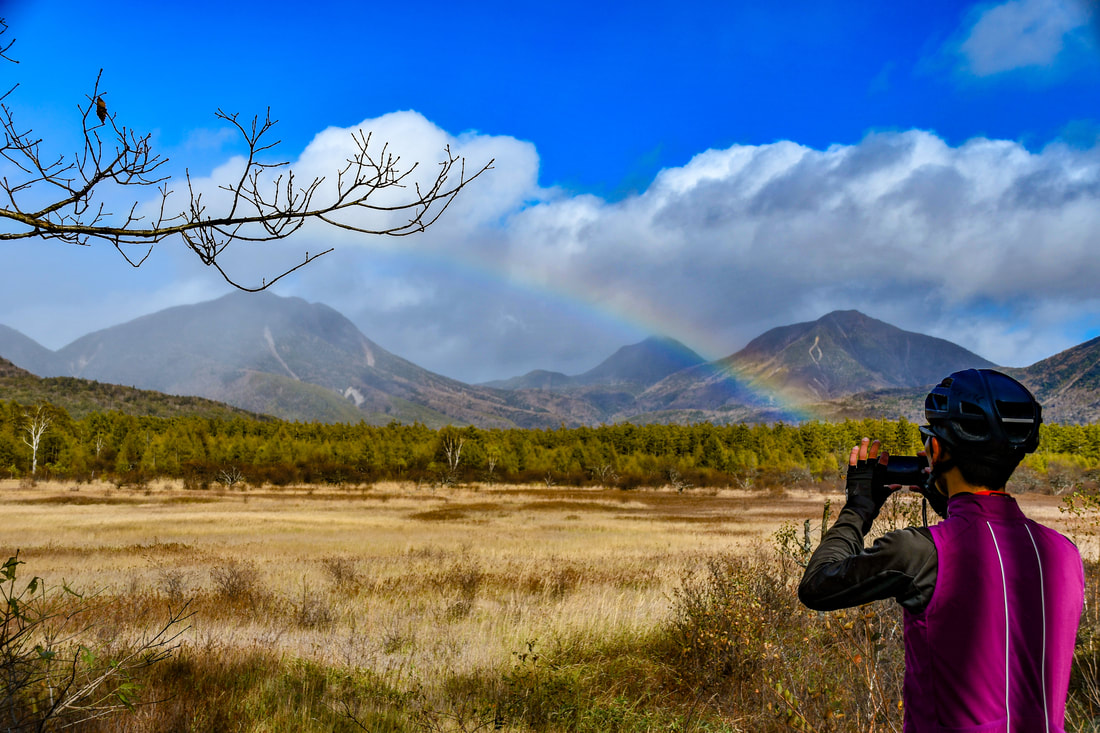
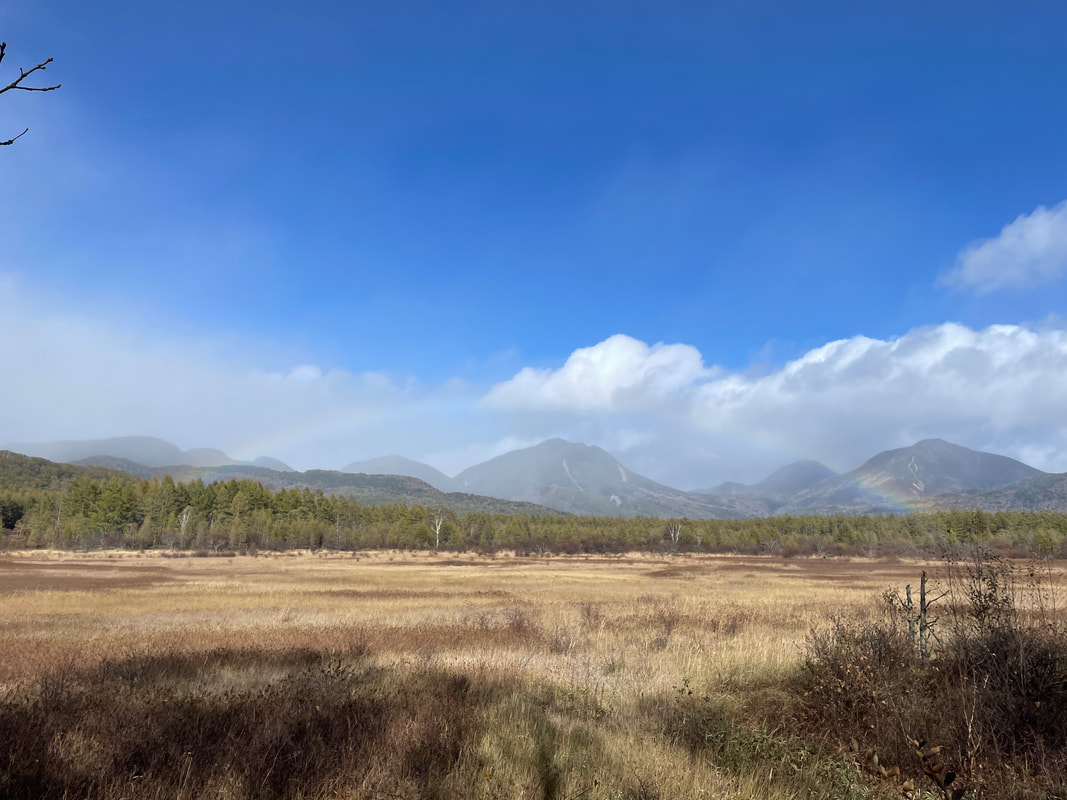
There were few people, and the riding was wonderfully peaceful. You could leave the bicycle in a suitable place and walk onto the wetland trails, continuing toward Senjogahara to enjoy the marshland and Mount Nantai.
Past Kotoku Farm toward Yumoto
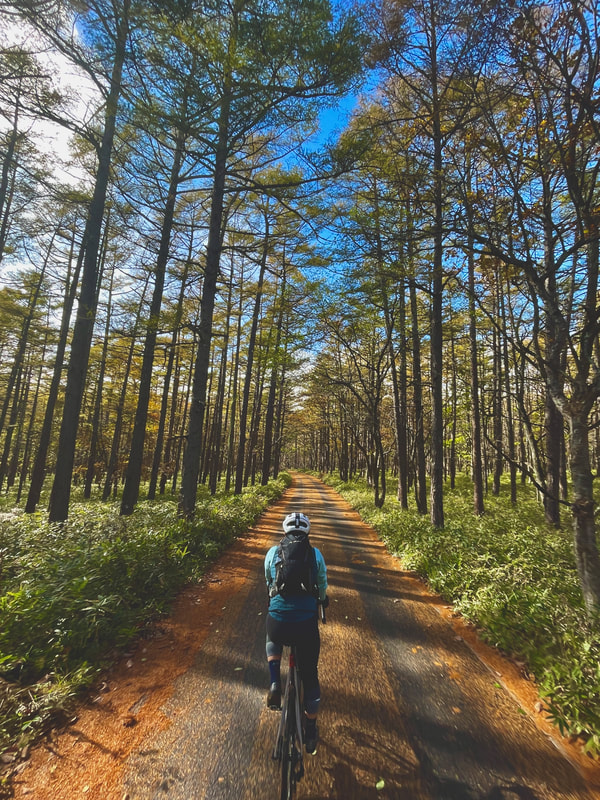
Back on the main route, we continued toward Yumoto, where we would spend the night. We passed Kotoku Farm, whose ice cream was said to be excellent. Unfortunately, the weather was poor. What fell from the sky was not just rain; there was a little icy precipitation mixed in. It was hardly ice-cream weather.
This was my second time passing the farm without tasting its ice cream. The first had been four years earlier, while riding the length of Japan, on my way from Nikko toward the Kinugawa forest road. That time, I had arrived too early, before it opened.
I did not feel particularly disappointed. I knew I would return to this area someday and have another chance.
Yumoto, Lake Yunoko and Yudaki Falls
Our final night’s lodging was in Yumoto, deep in Oku-Nikko. You see the name Yumoto in hot-spring areas throughout Japan. It means the source of the hot water.
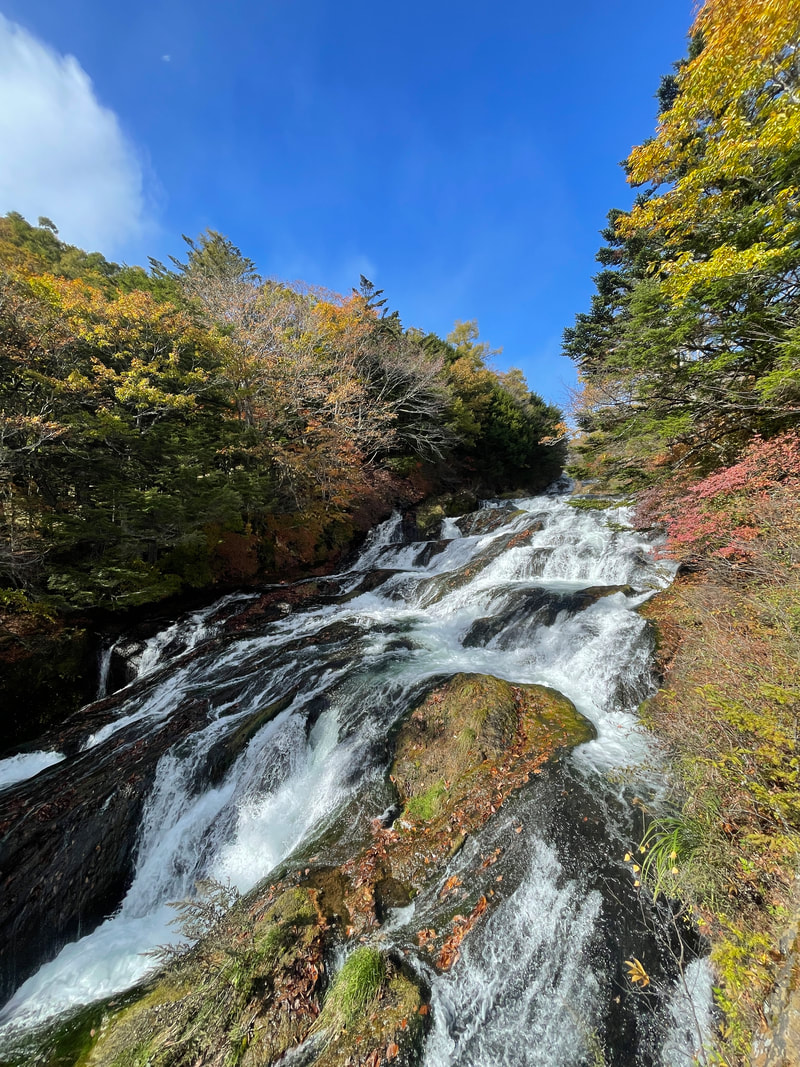
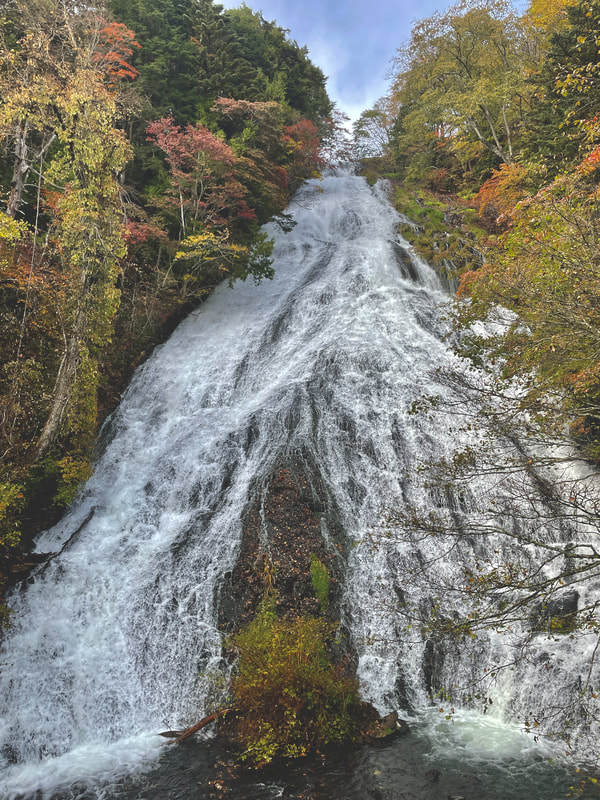
Here in Nikko’s Yumoto is Lake Yunoko, a lava-dammed lake like Lake Chuzenji. Water spills from its lower end to form Yudaki Falls. Although large, the waterfall appeared surprisingly shallow: a thin layer of water spread over a broad face of lava, scattering spray like a huge piece of white patterned cloth draped over the rock.
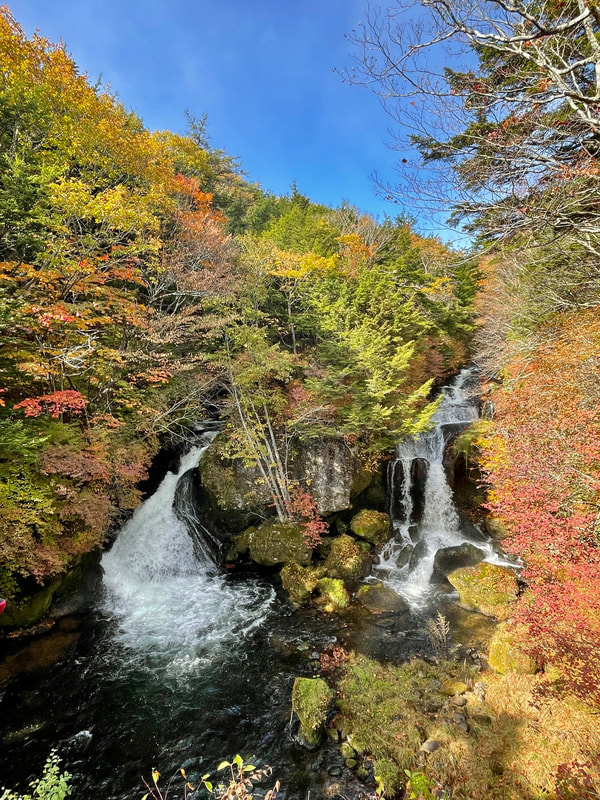
From Yunoko, the water passes through Yudaki, Senjogahara and Ryuzu Falls before reaching Lake Chuzenji.
Day 5: Lakeside History and a Final Panorama
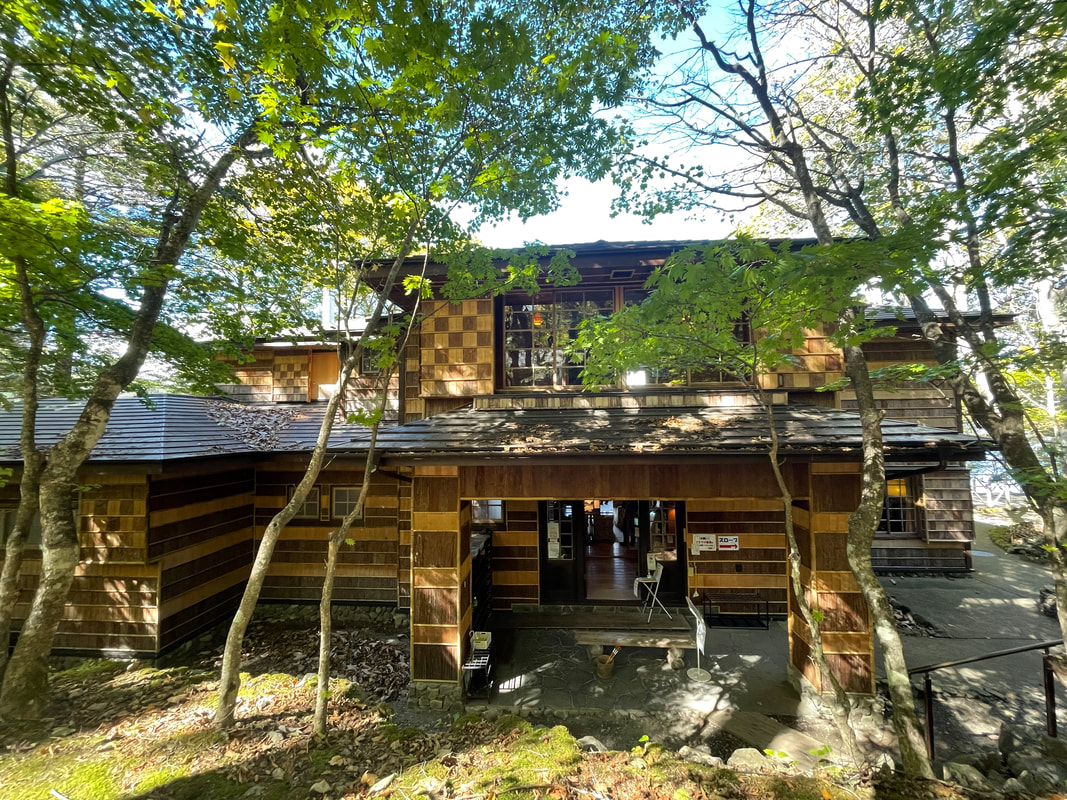
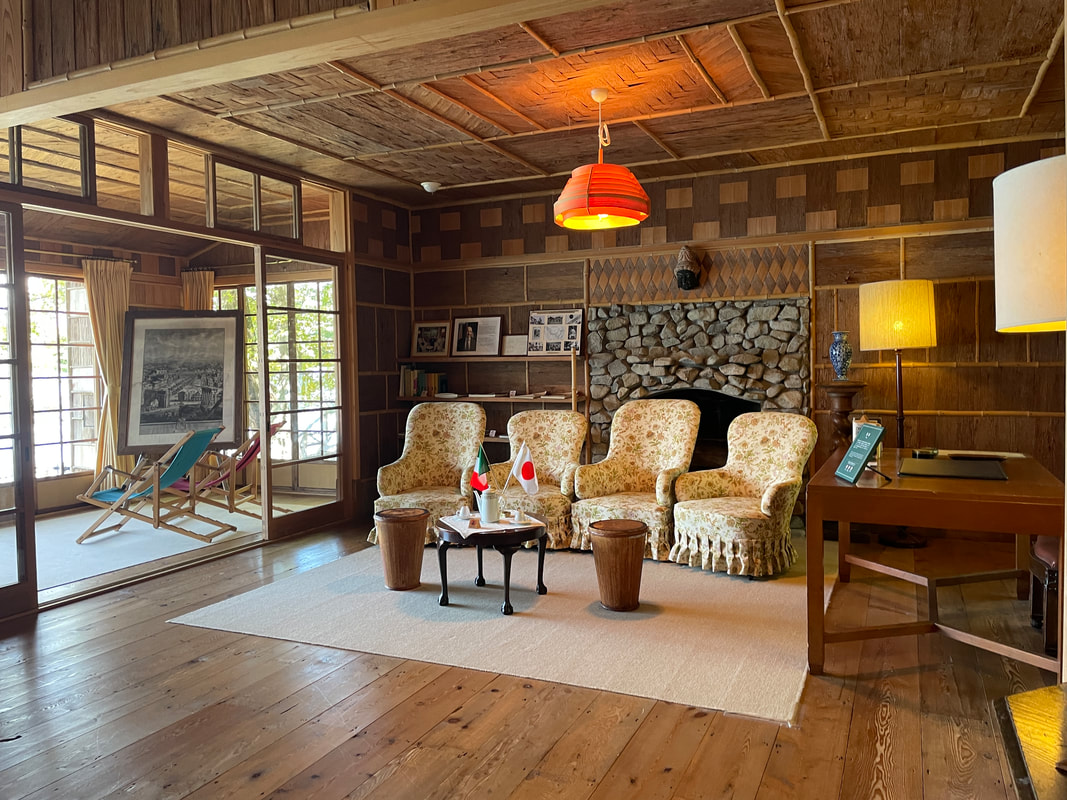
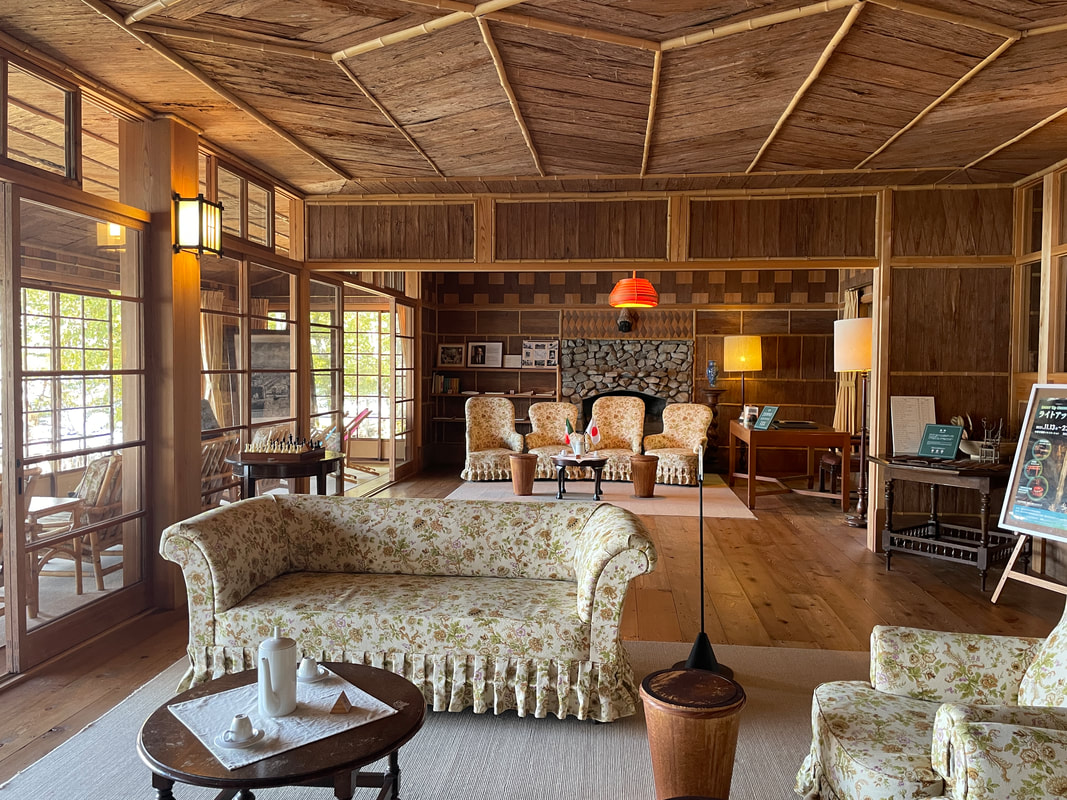
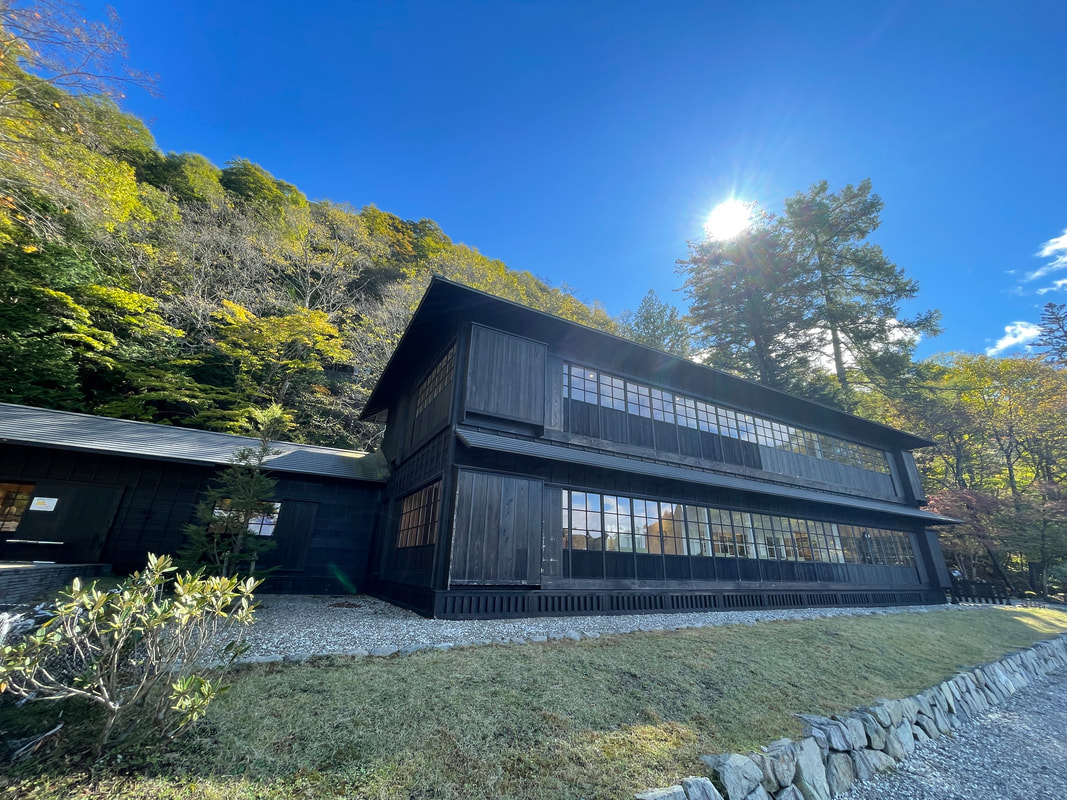
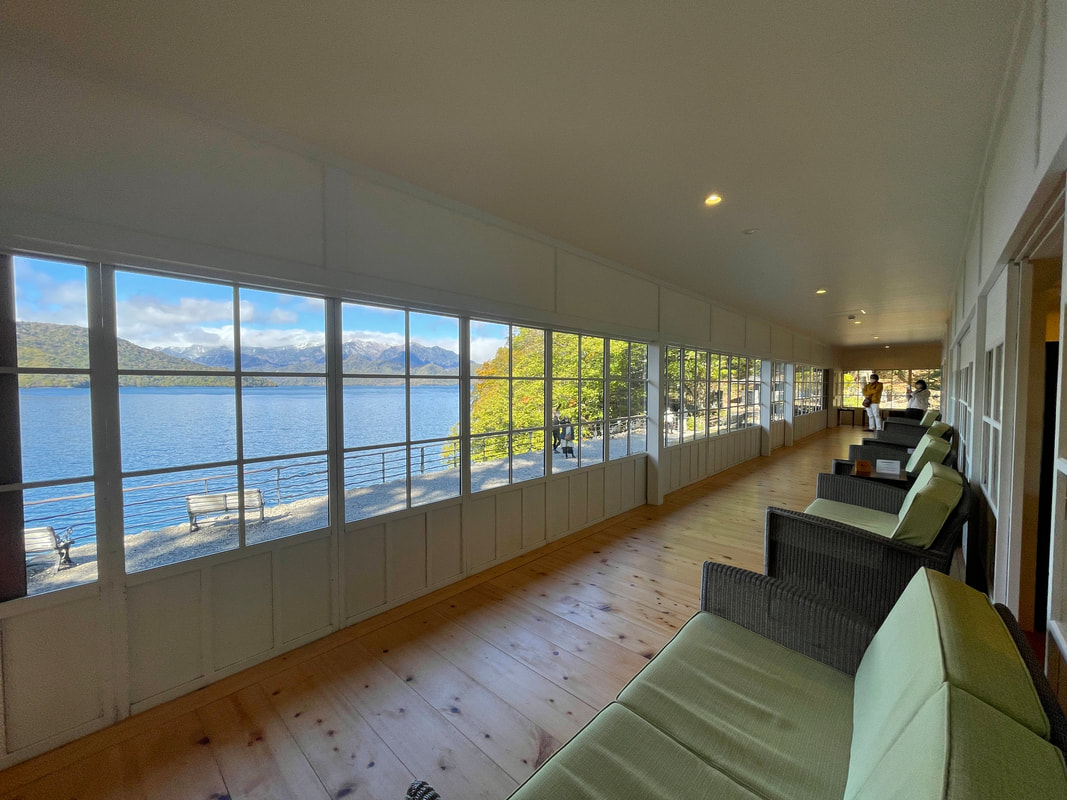
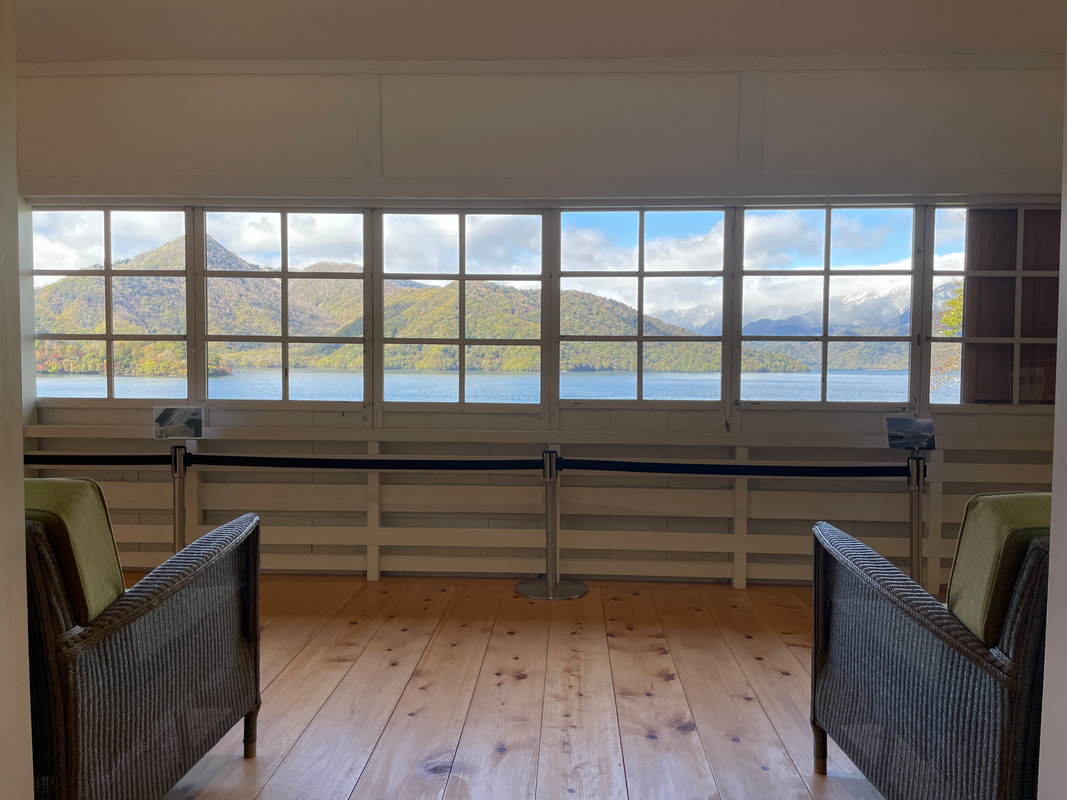
We made the final day a rest day and drove to the former British and Italian embassy properties beside Lake Chuzenji.
At first, I wondered how ambassadors could possibly have worked effectively in such beautiful surroundings, especially before the internet made remote work easy. Surely they must have spent much of their time enjoying the mountains and lake.
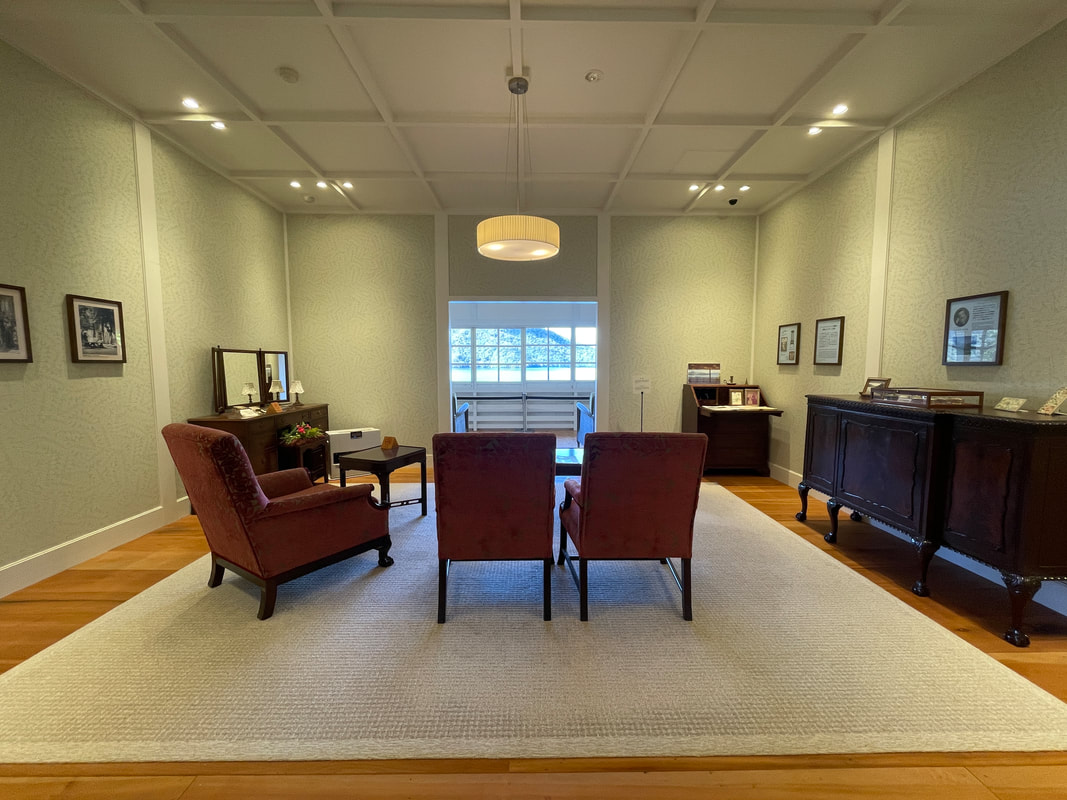
Visiting the buildings clarified things: these were lakeside retreats, places where diplomats could rest and recover from their everyday responsibilities.
Ernest Satow and the British Villa
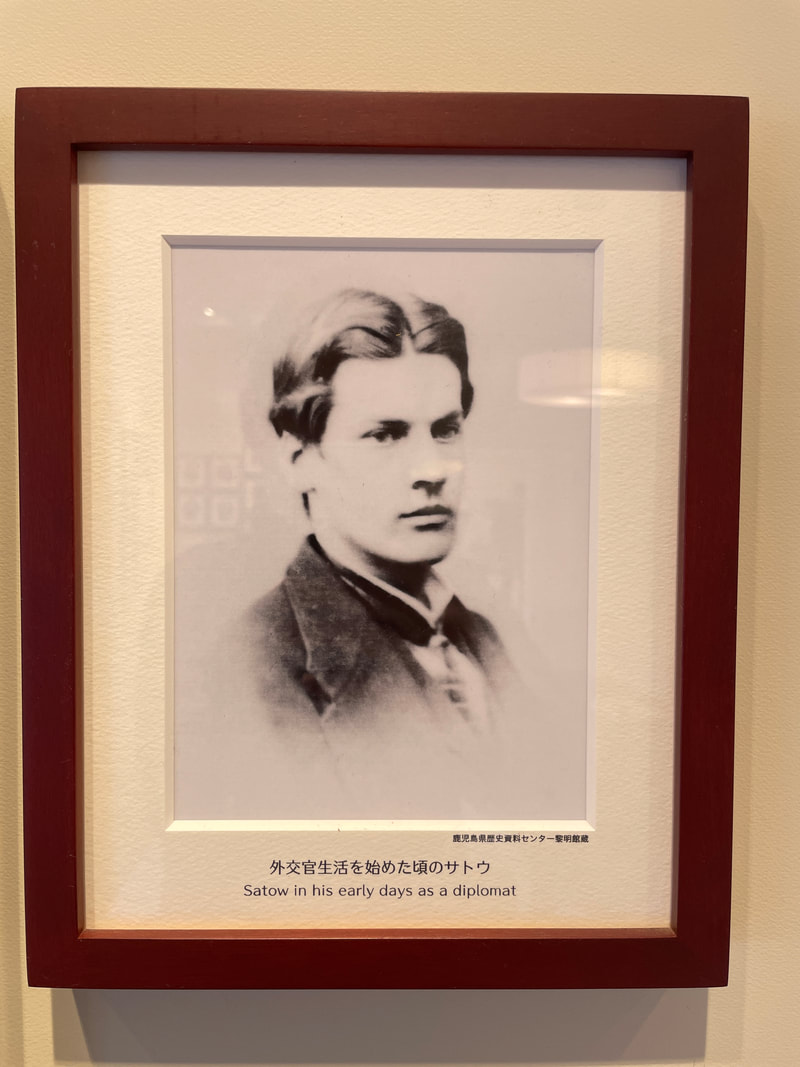
I was especially interested in the story of Ernest Satow. After reading about Japan at eighteen, he resolved to visit. He arrived at nineteen and went on to work in Japan and China as an interpreter and diplomat, including service as minister. The original account describes a connection with Japan spanning some twenty-five years.
His interests extended beyond politics. Satow also contributed to mountaineering in Japan and wrote about mountain travel.
Compared with the Italian property, where I found little information about its former occupants, the British site offered a rich introduction to Satow. It gave a sense of his importance to relations between Britain and Japan. If that history interests you, the former British Embassy Villa at Nikko is worth exploring.
Hangetsuyama: A View Worth Earning
After the cultural visits, we chose scenery for the journey’s final note. We drove uphill to the Hangetsuyama viewpoint, looking down over the whole of Lake Chuzenji.
Seeing the landscape from there, I could only admire Shodo Shonin’s eye for a remarkable place, and his determination to reach these remote mountains more than a thousand years ago. Perhaps this view was the reward for his effort.
Today, we can reach it comparatively easily and enjoy what earlier generations worked so hard to make accessible. Although I went up by car this time, I would recommend riding if conditions and your ability allow.
Even a little sweat on the climb makes the view at the end feel closer to the moment of awakening that I imagined Shodo Shonin experiencing here.
Ride Experience: Original tour-operator link
Bikepacking diary: YouTube · Facebook · Instagram
The author’s bikepacking bags: WOHO