Kinmen History by Bike | Days 2 & 3: Festivals, Mountain Paths and Wartime Memories
Translated from Bikepacking diary’s original Kinmen history bikepacking account, Days 2 and 3, published on May 7, 2017, and republished by arrangement with the author. Photographs are linked directly from the original website.
Editor’s note: This is a historical travel narrative, not a current access, accommodation or camping guide. Confirm present arrangements with accommodation providers, park staff and site managers. Use authorized paths and overnight locations, respect military restrictions and warning signs, and do not enter abandoned defenses or suspect ground. The final beach stay does not establish permission or safety. Historical interpretations and the temple-origin story below are the author’s reflections and an attributed local account, not independently verified historical conclusions. Feeling clear-headed after drinking does not establish sobriety or fitness to ride; kaoliang can cause hangovers and impairment like other alcoholic drinks. Use only facilities designated for you or explicitly authorized by staff.
Several source filenames identify photographs as “by Tony”; those filenames are preserved.
A Warm Welcome after the First Night
Although I had been rather drunk the previous evening, as described in Day 1, I woke feeling surprisingly clear-headed.
At the time, I thought of my friend’s claim that kaoliang did not give you a hangover. That was an impression from this particular morning, not a reliable claim about the drink.
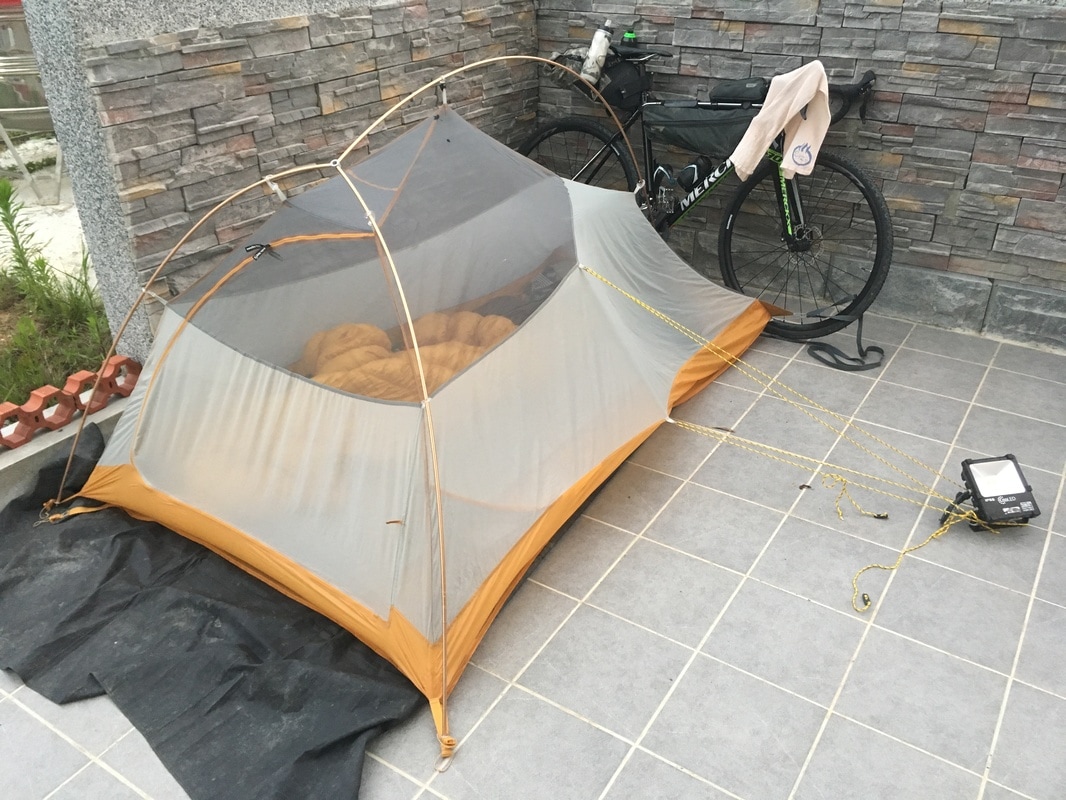
I went upstairs and found my companions at the guesthouse still asleep, so I used the spare time to organize and pack my tent.
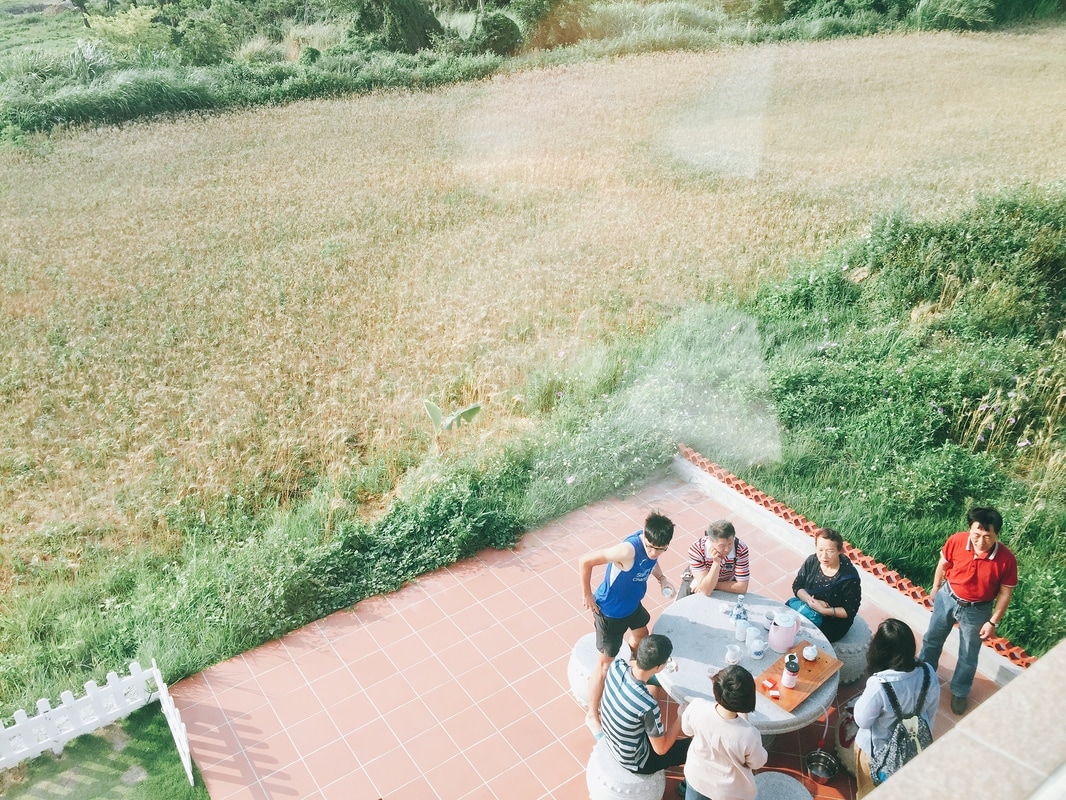
Some early-rising guests came over to talk. Everyone was curious about why I was sleeping in a tent.
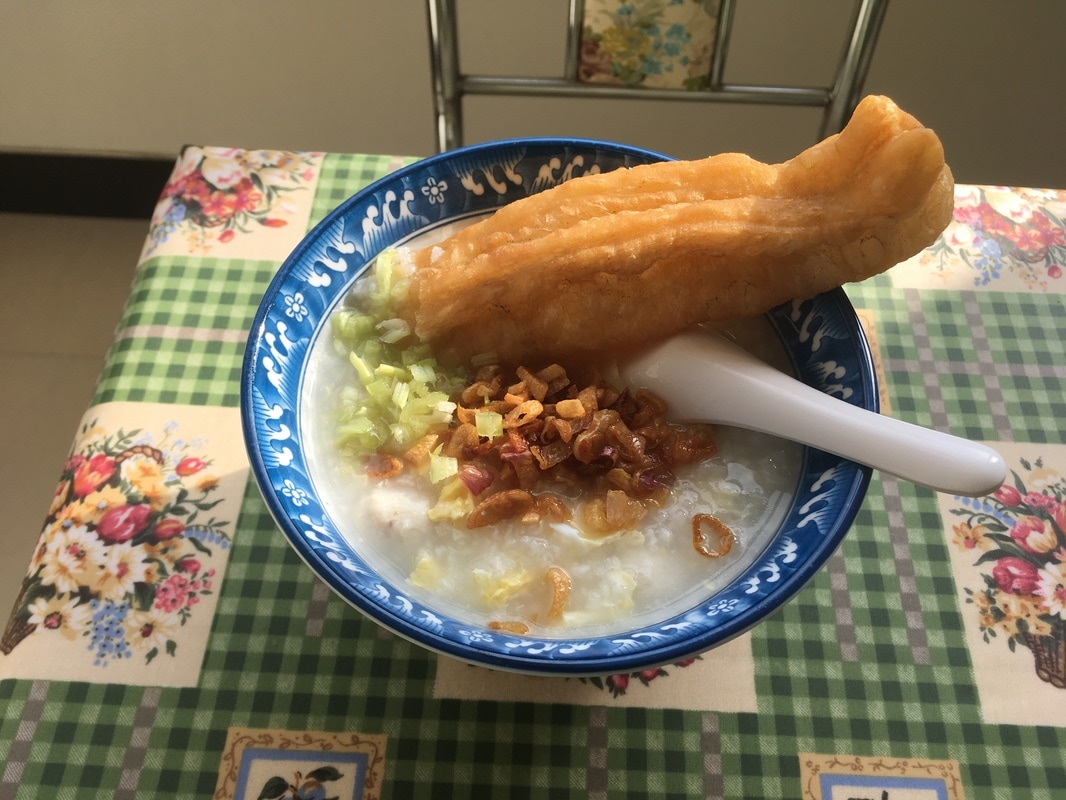
Before long, the owner brought out tea for everyone and even asked whether I wanted to come upstairs for breakfast.
The hospitality was remarkable. Even though I was not a paying guest, I was treated like a friend.
For anyone looking for accommodation on that visit, I warmly recommended 幸福莊園, the guesthouse whose kindness had made such an impression.

Taiwu Mountain: Small in Height, Grand in Atmosphere
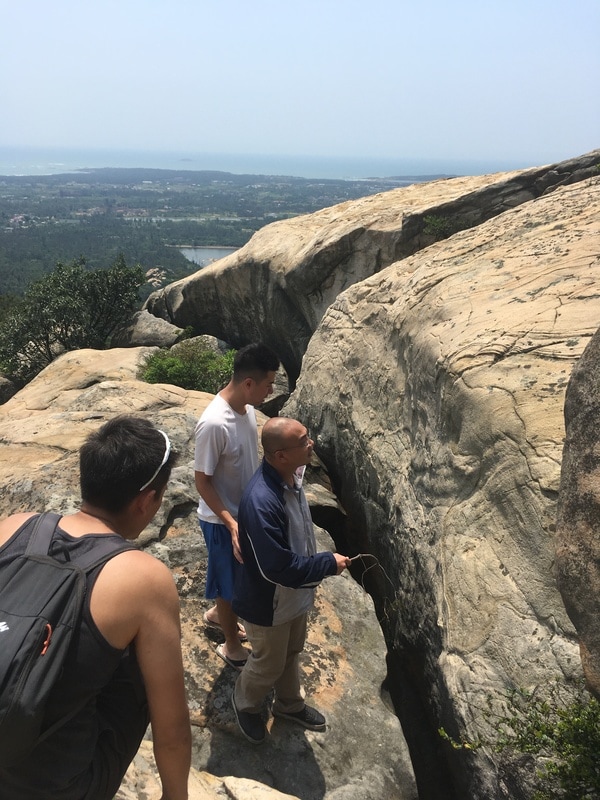
While in Kinmen, we wanted to climb Taiwu Mountain, described in the original account as the island’s highest peak at 262 meters.
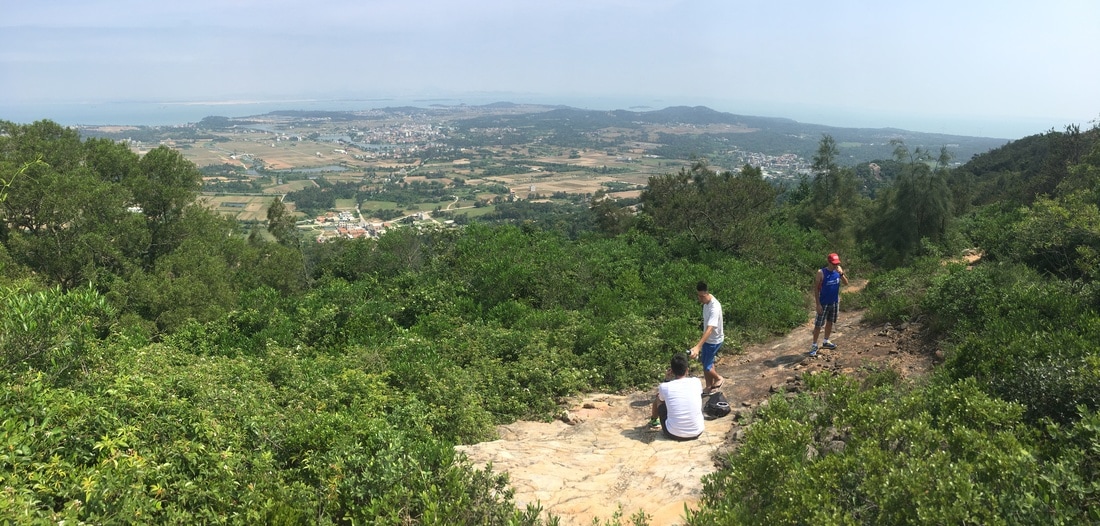
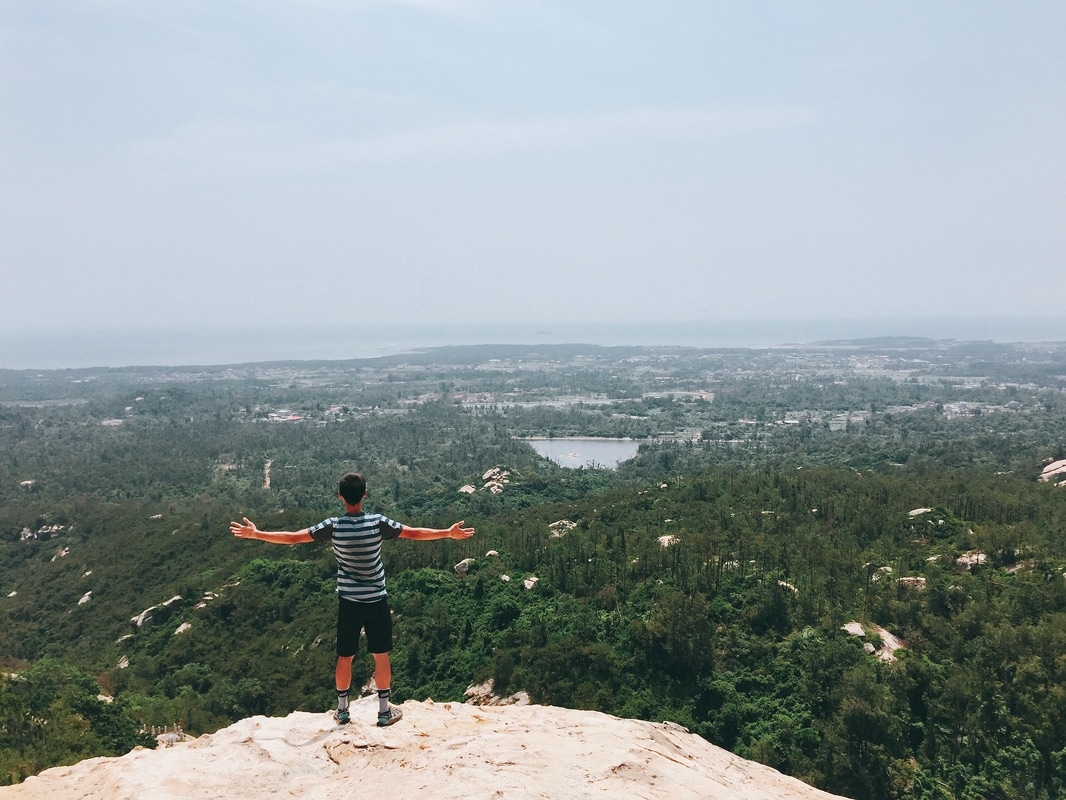
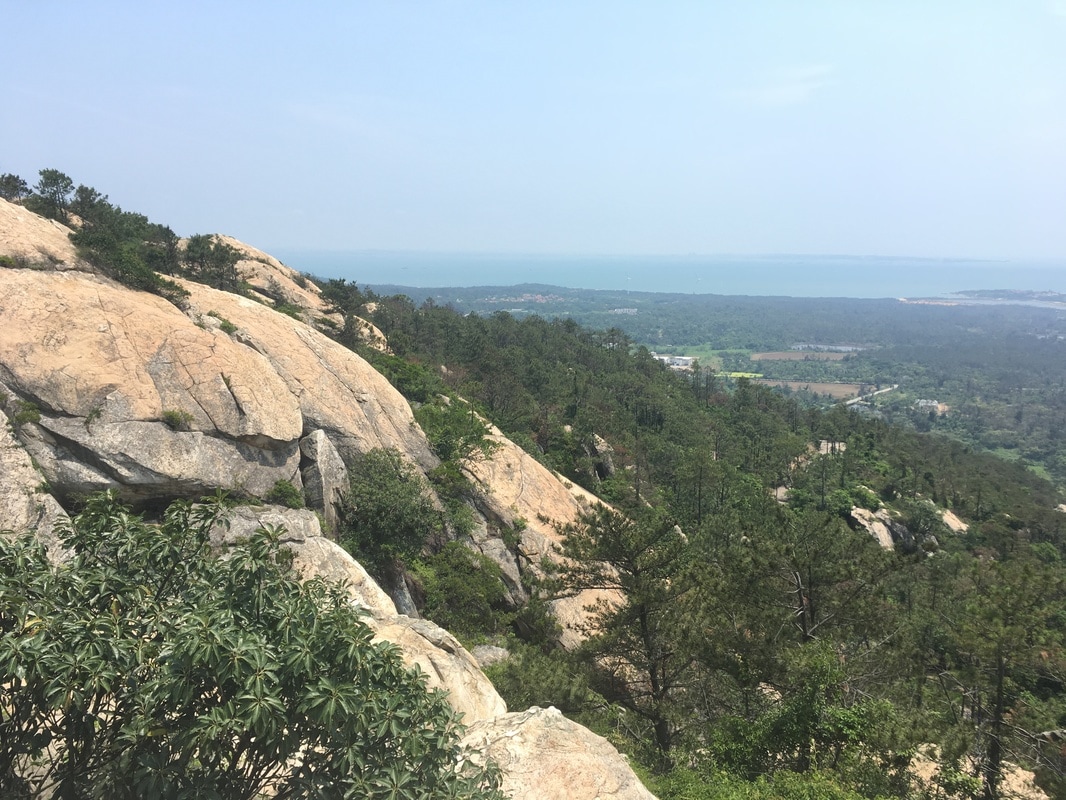
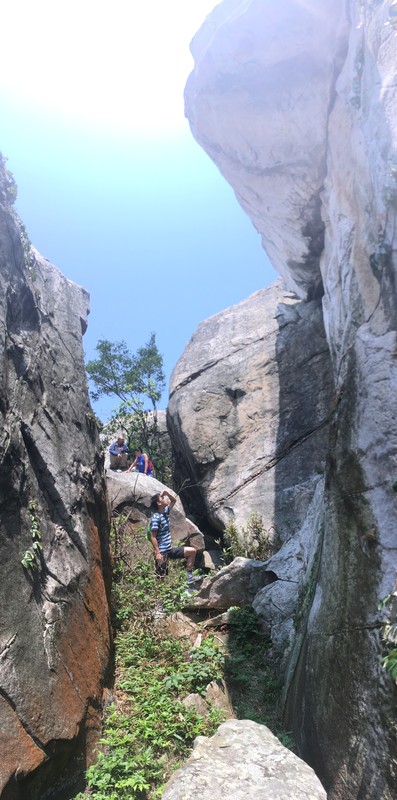
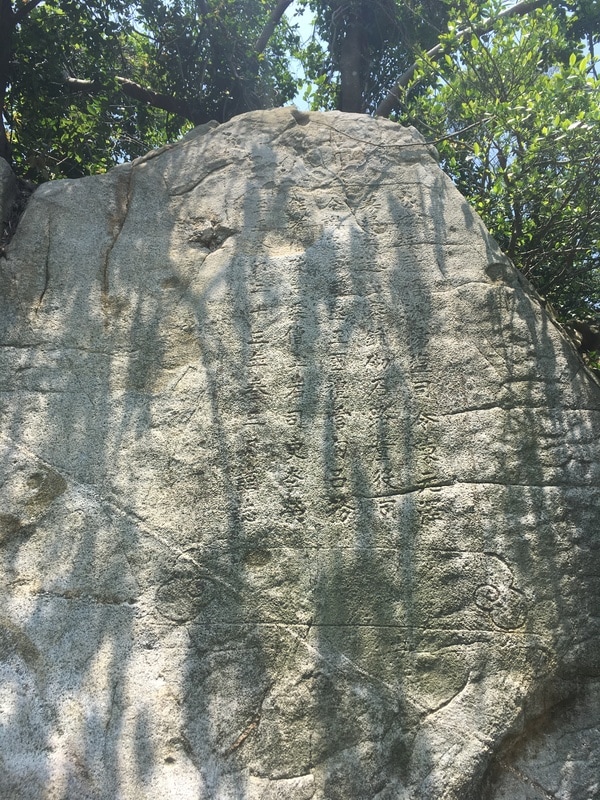
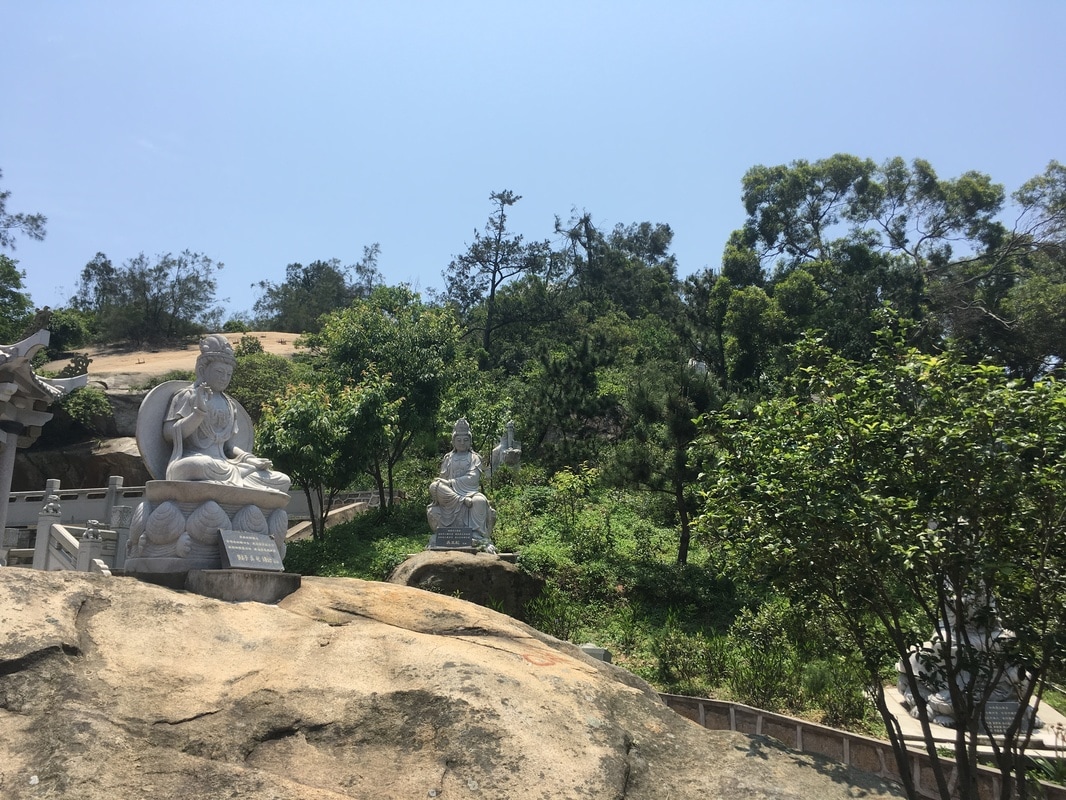
It was not a tall mountain, but its exposed rock and large boulders among green trees gave it an extraordinary atmosphere.
The scenery reminded me of the remote cliffs in martial-arts novels, where a great master might train in seclusion.
With the broad views, a hill only a few hundred meters high could feel like a much larger mountain.
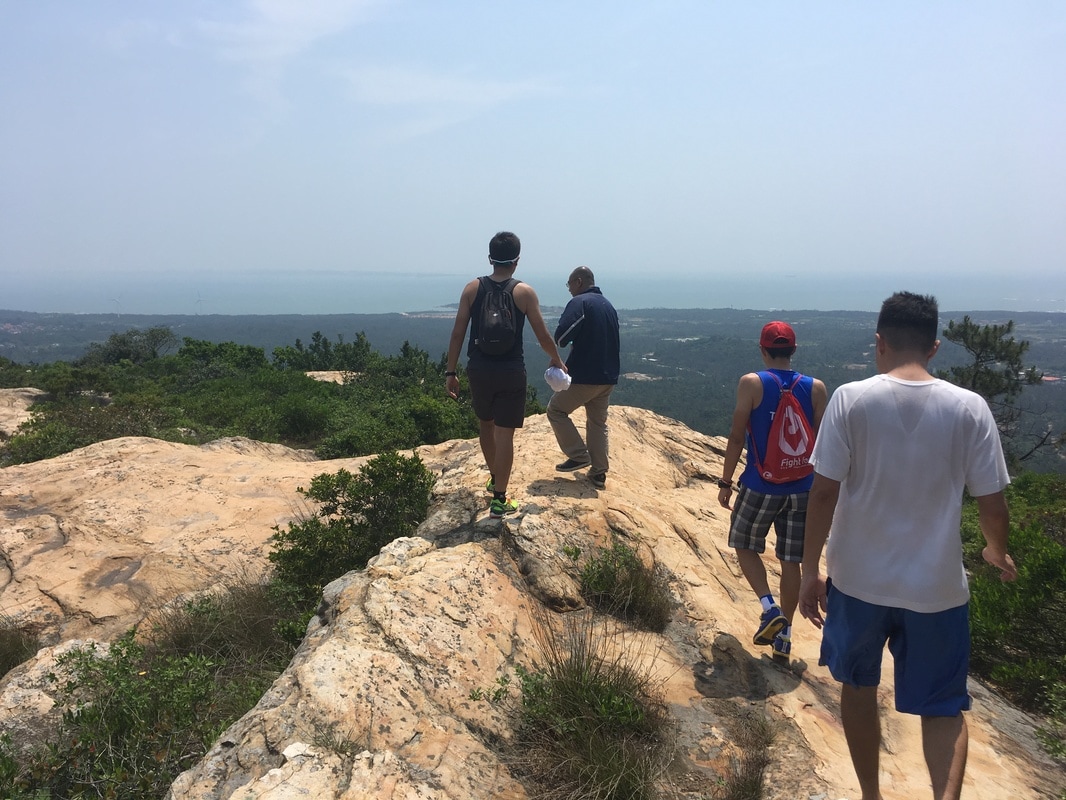
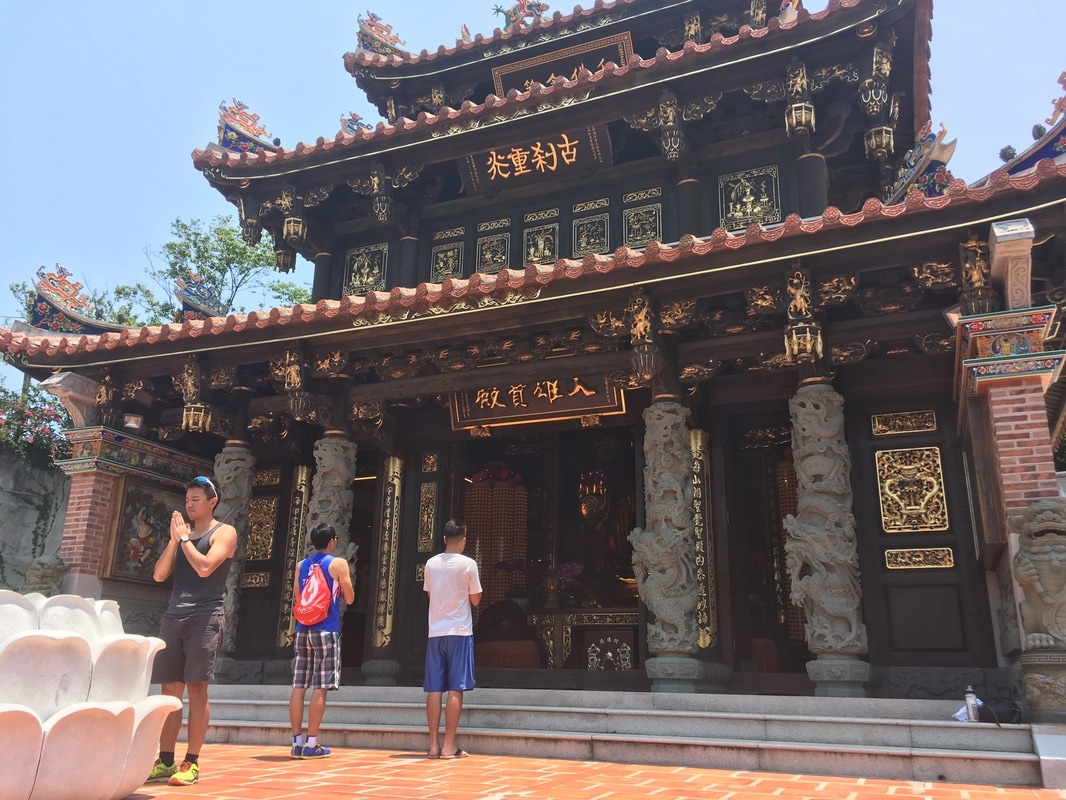
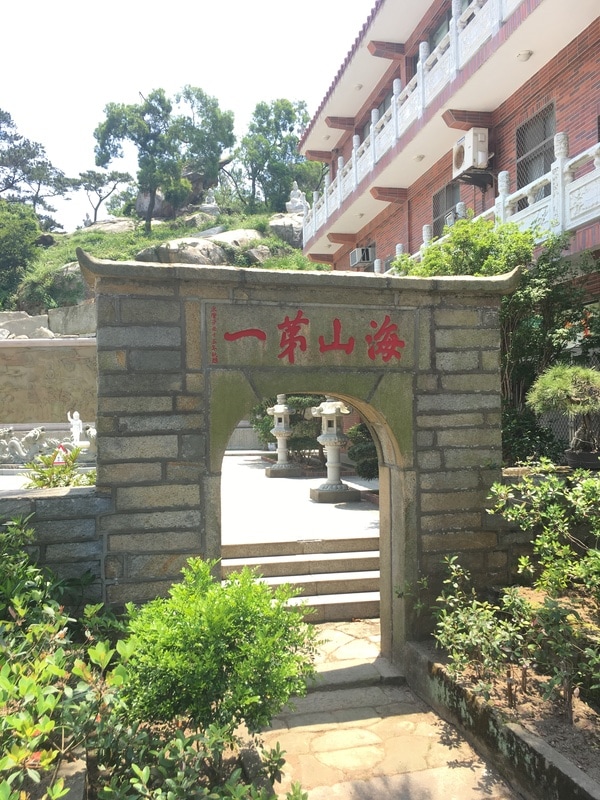
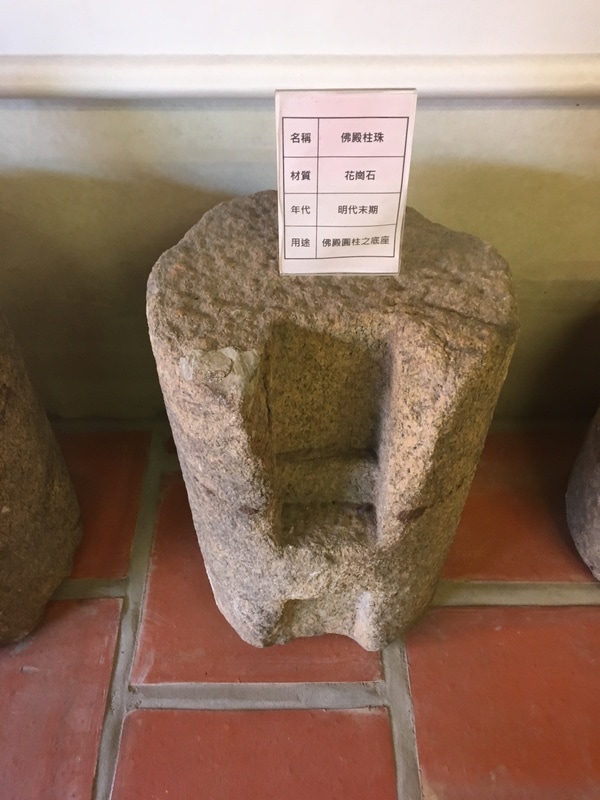
Having a local friend with us, we followed a local approach, climbing from the old Tsai family residence toward the summit and Haiyin Temple beyond.
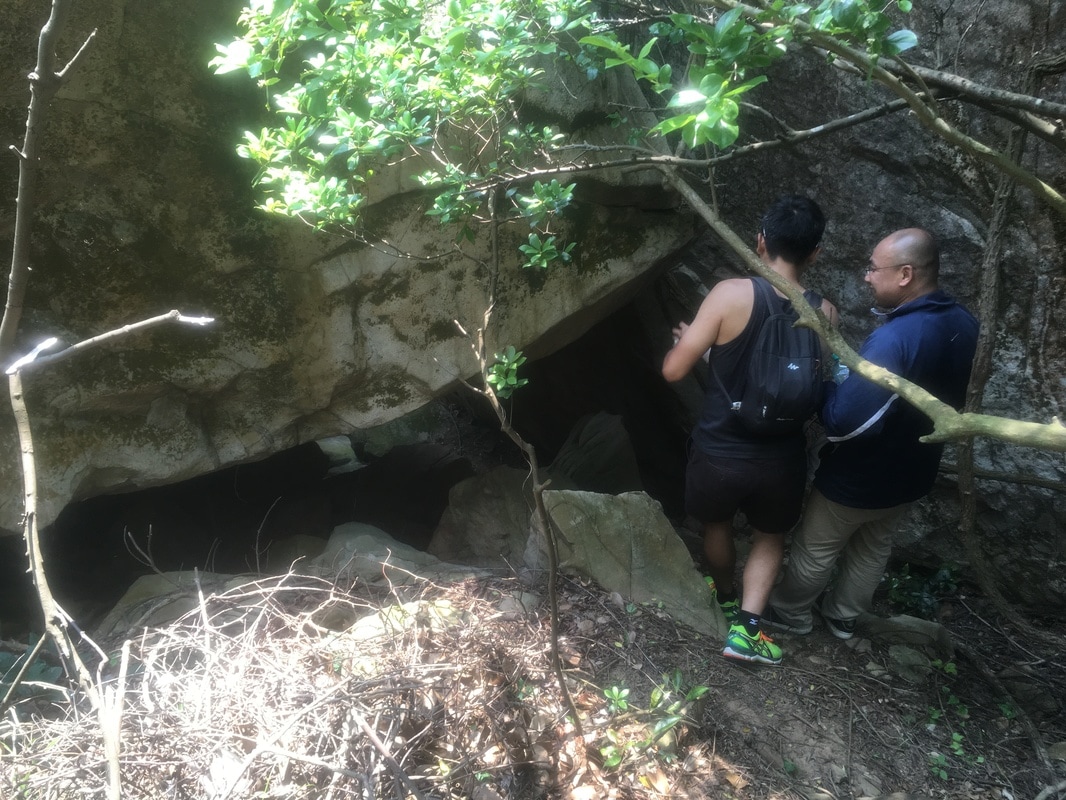
The distance was not long. But in an adventurous mood, we repeatedly left the main path to investigate smaller tracks, hoping for an unknown viewpoint or shortcut.
We did not find a new way through and eventually returned to the original route.
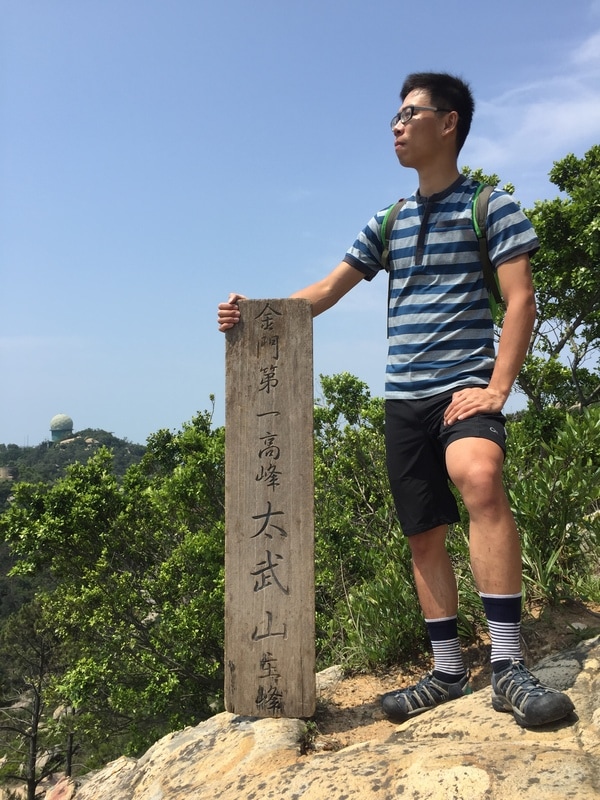
Still, the detours showed us scenery we might otherwise have missed. I even unexpectedly found a Taiwu summit sign inside a bunker.
As I often say, getting lost is also a route, and sometimes it brings surprises. That sentiment is not a reason to leave authorized paths around former military sites.
Joining the City God Procession
By the time we left the mountain, it was afternoon.
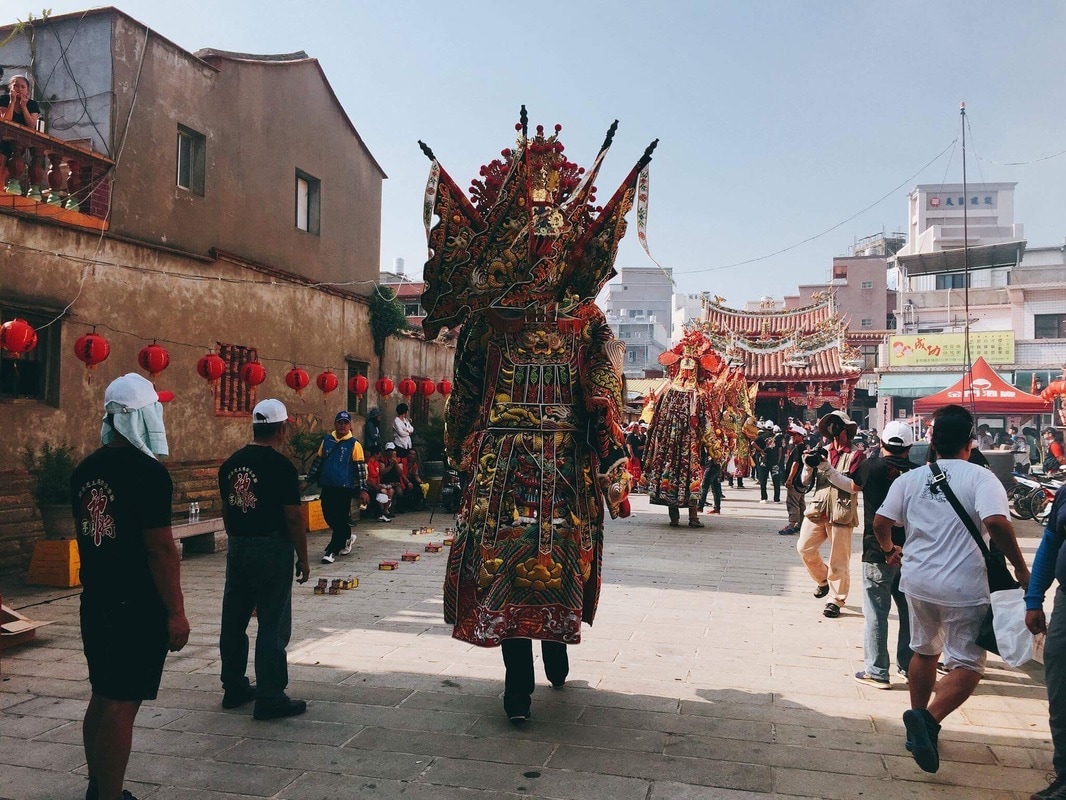
After a simple lunch, we hurried to the main event of this Kinmen visit: the City God procession.
I had little experience of temple festivals and could hardly offer an expert comparison, but this one left a wonderful impression.
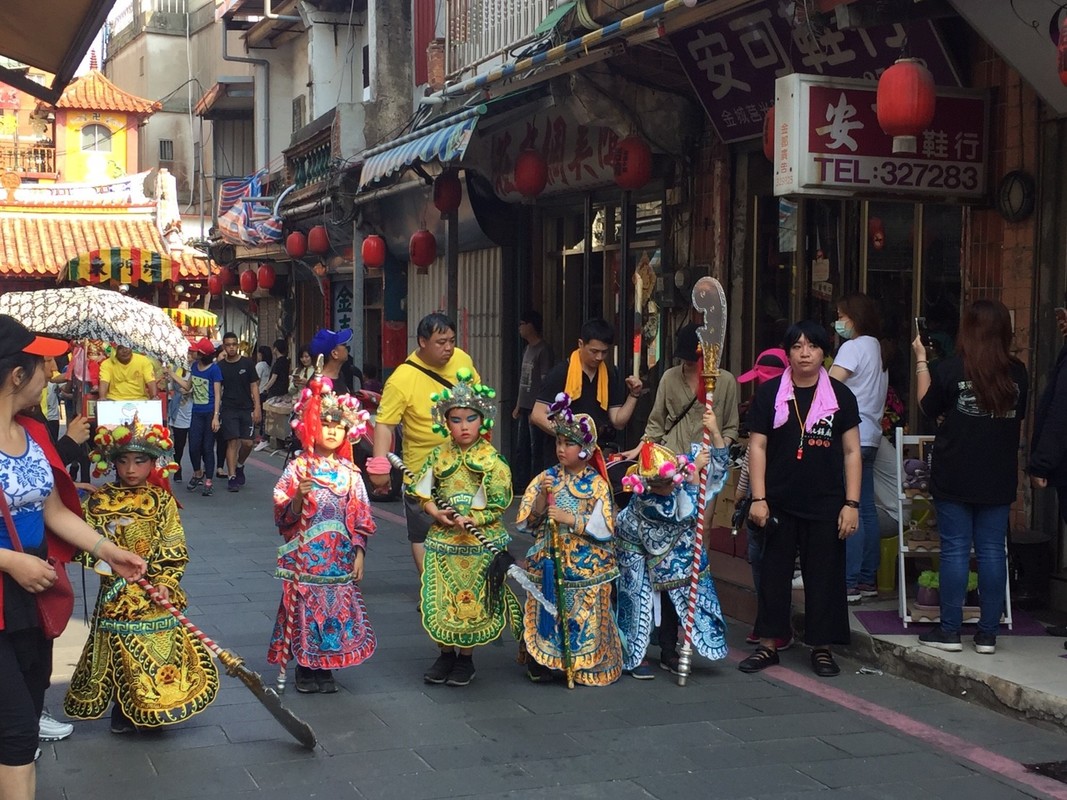
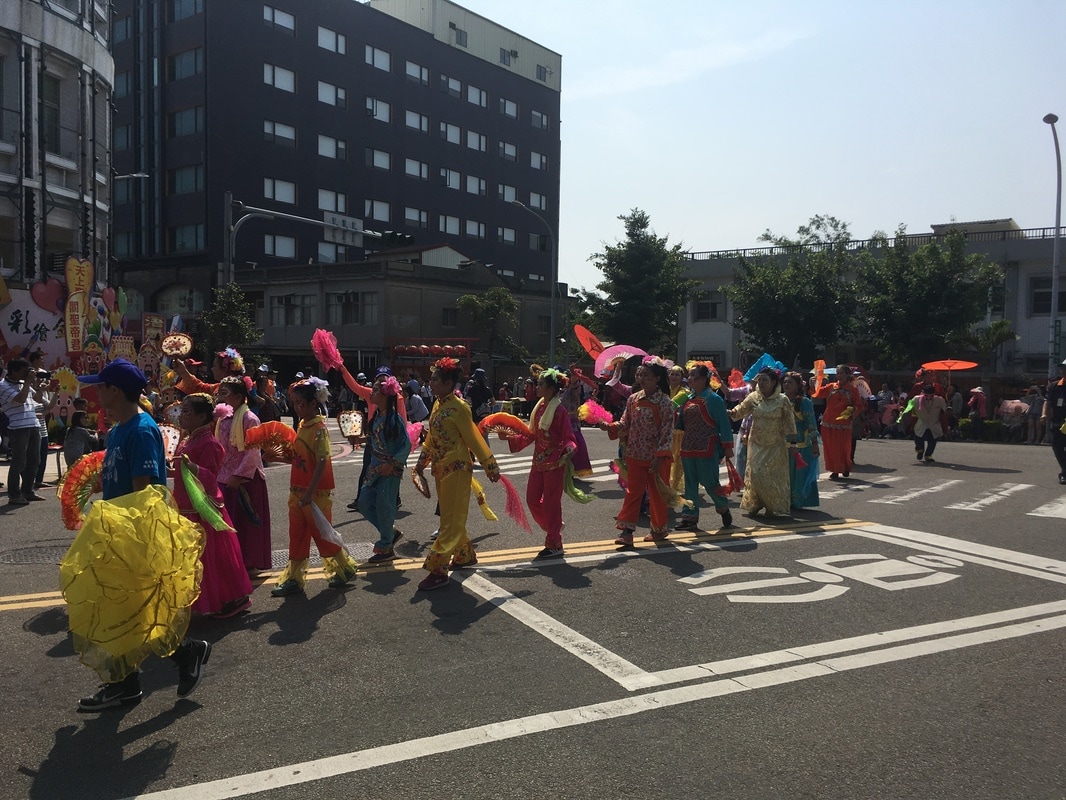
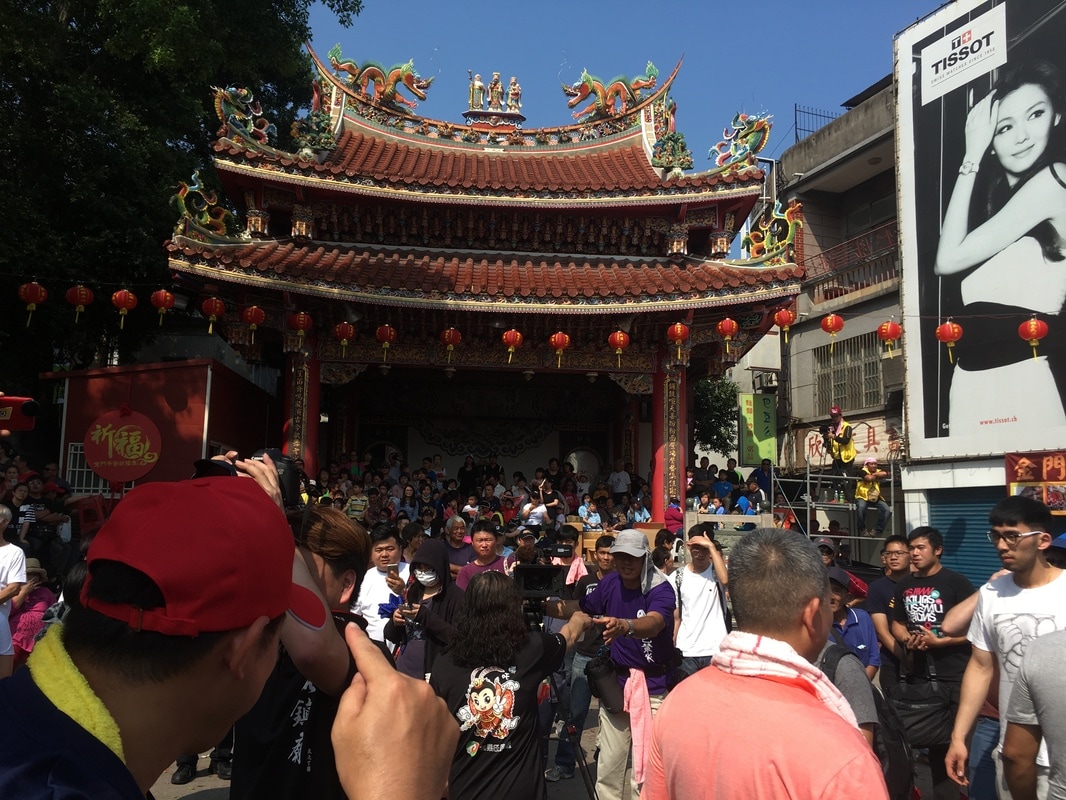
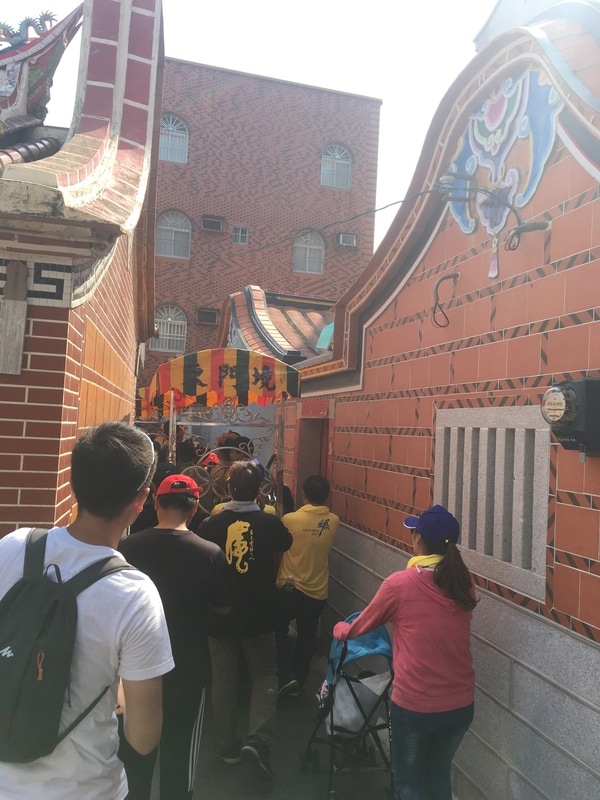
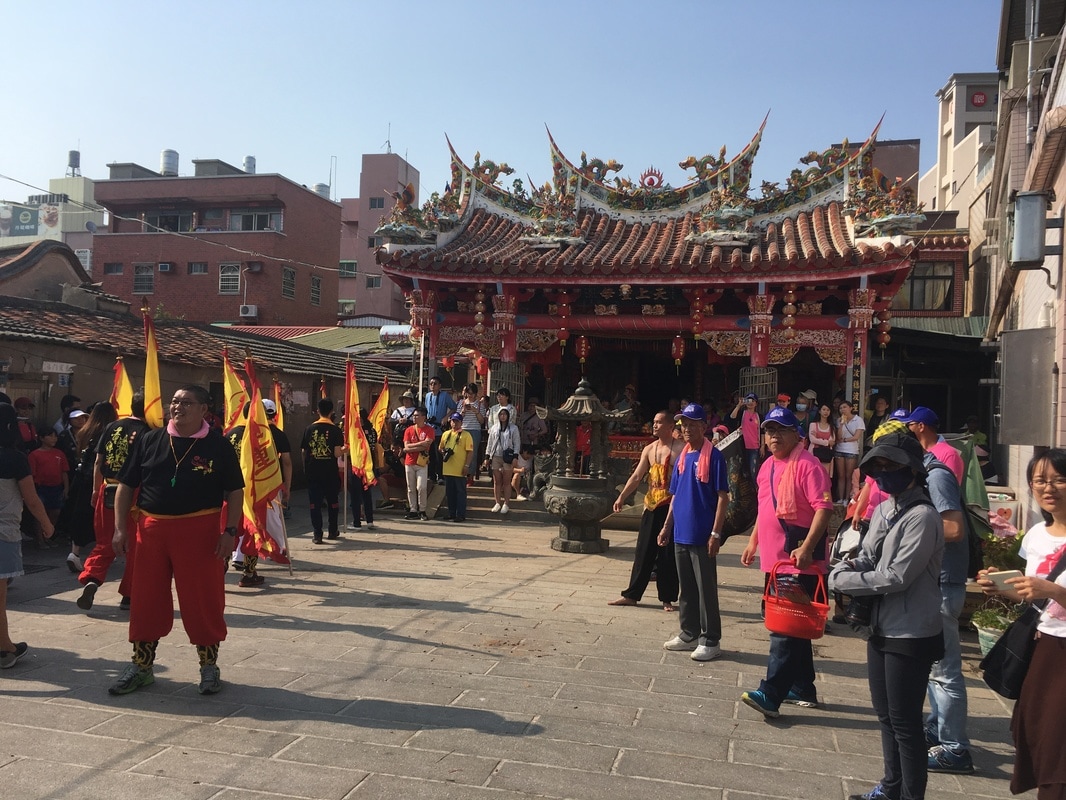
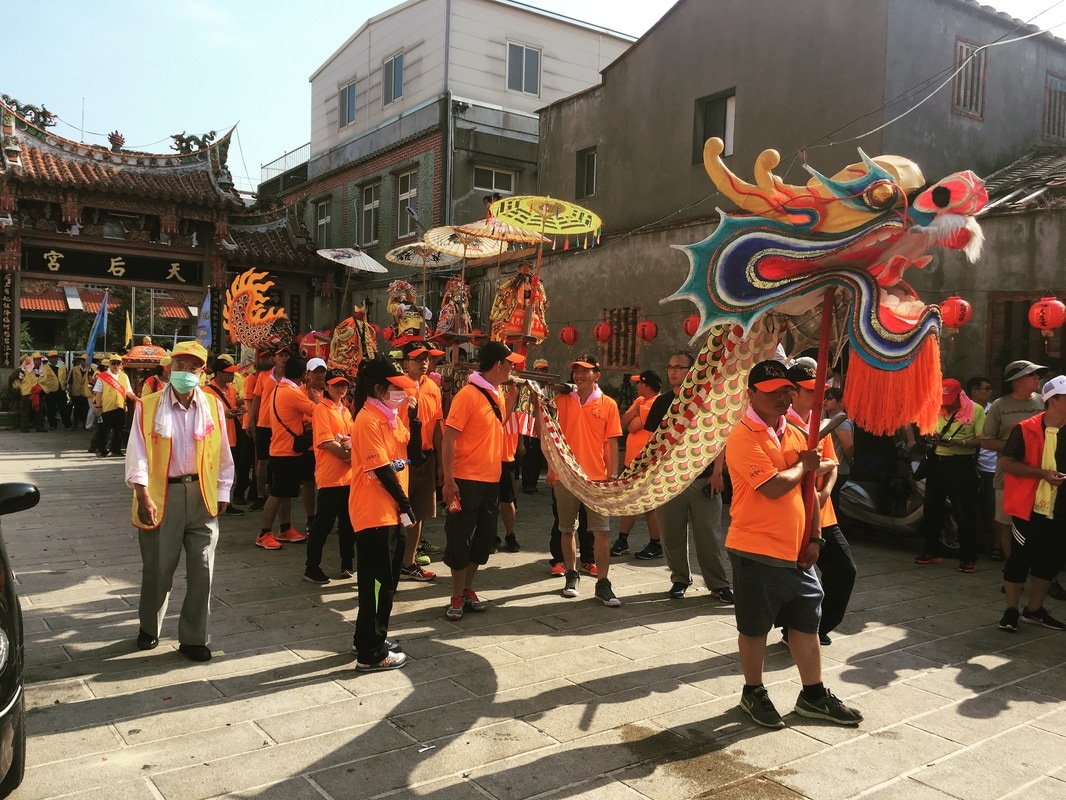
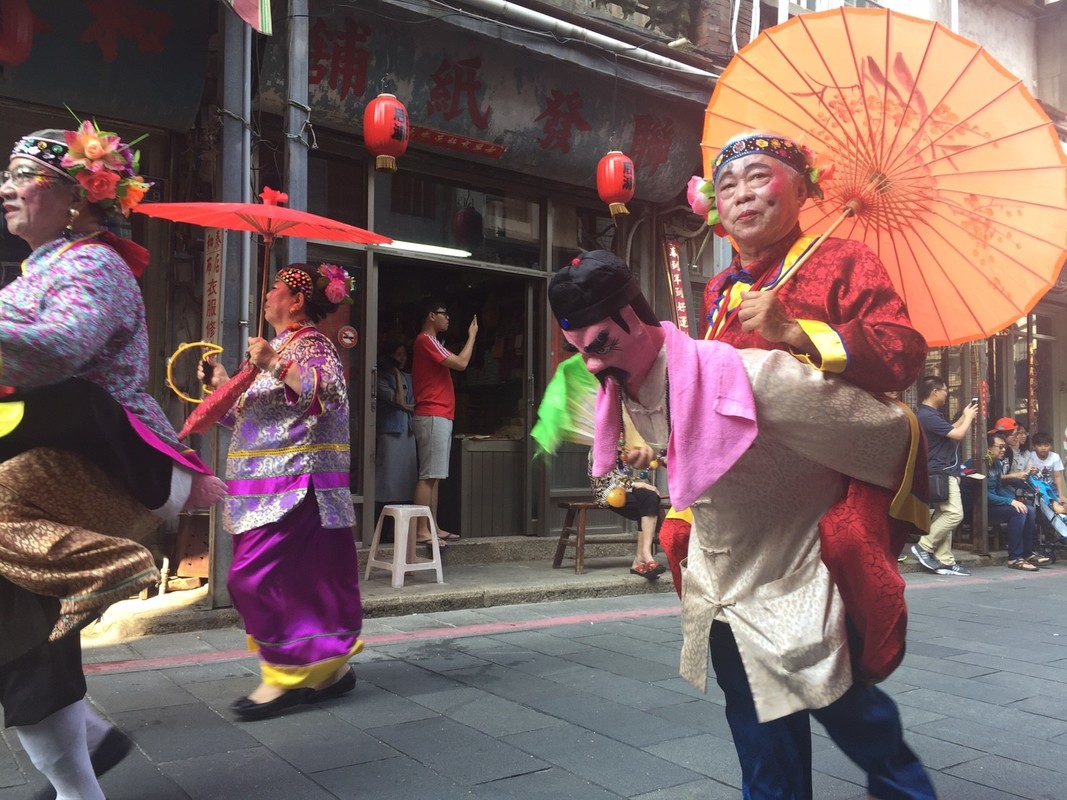
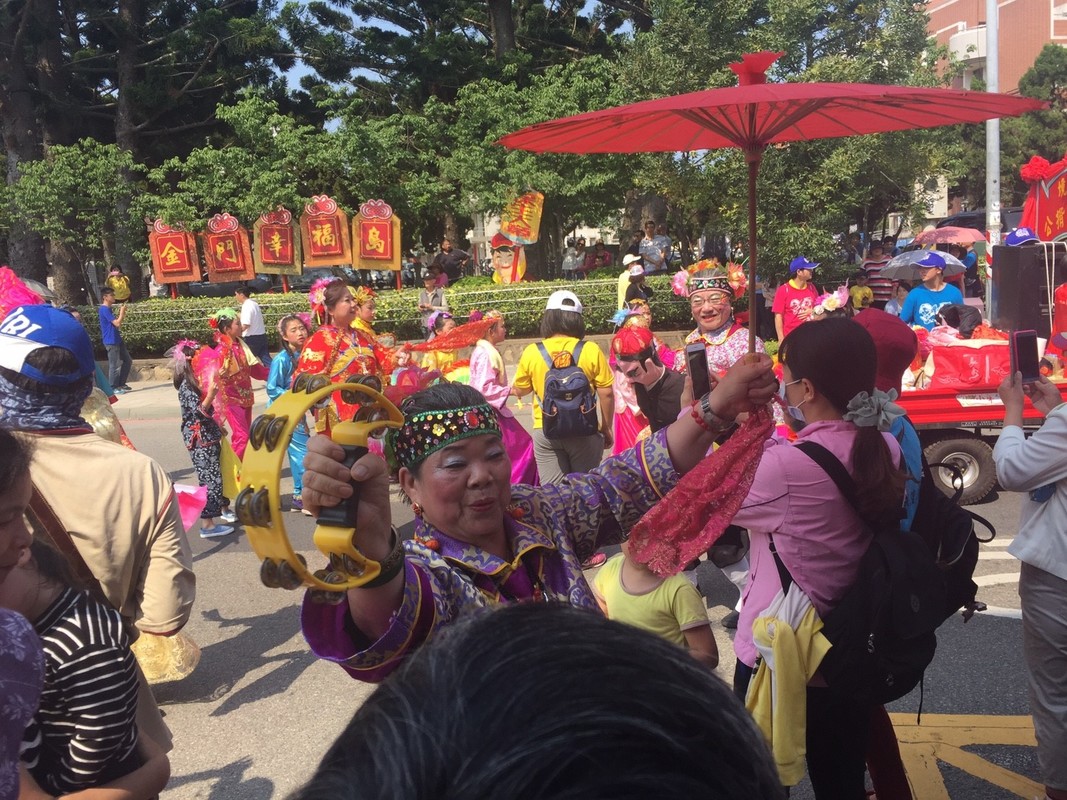
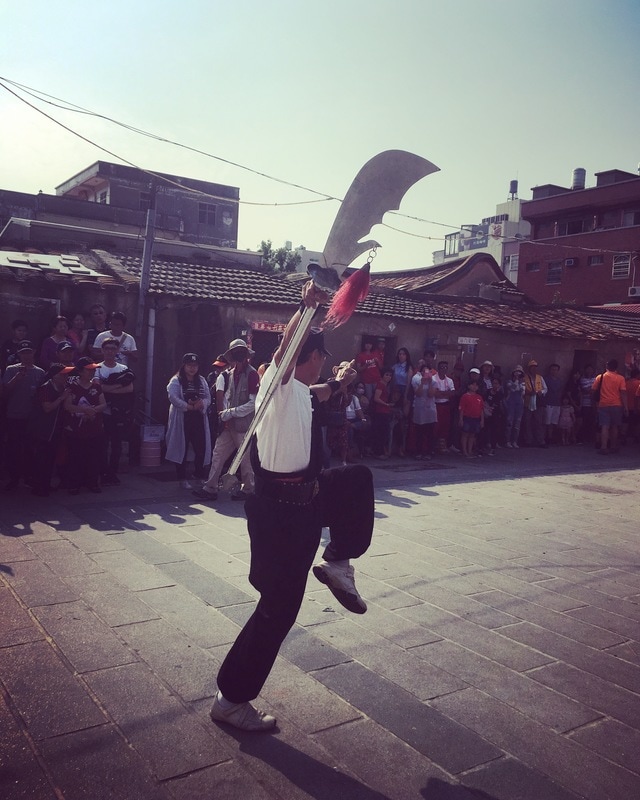
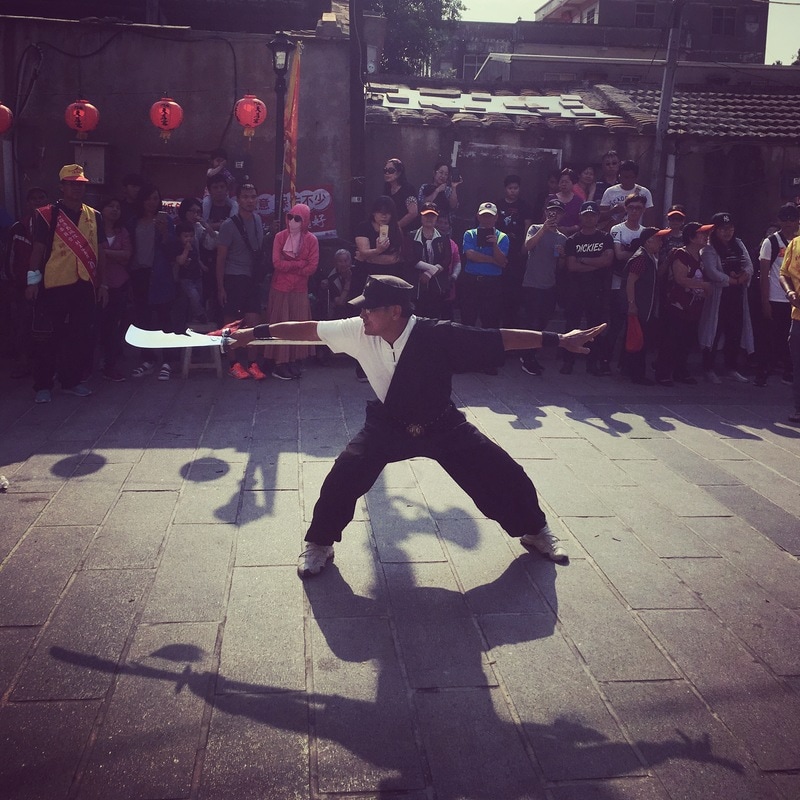
It moved through Kinmen’s streets and lanes like a carnival parade, visiting temples around town.
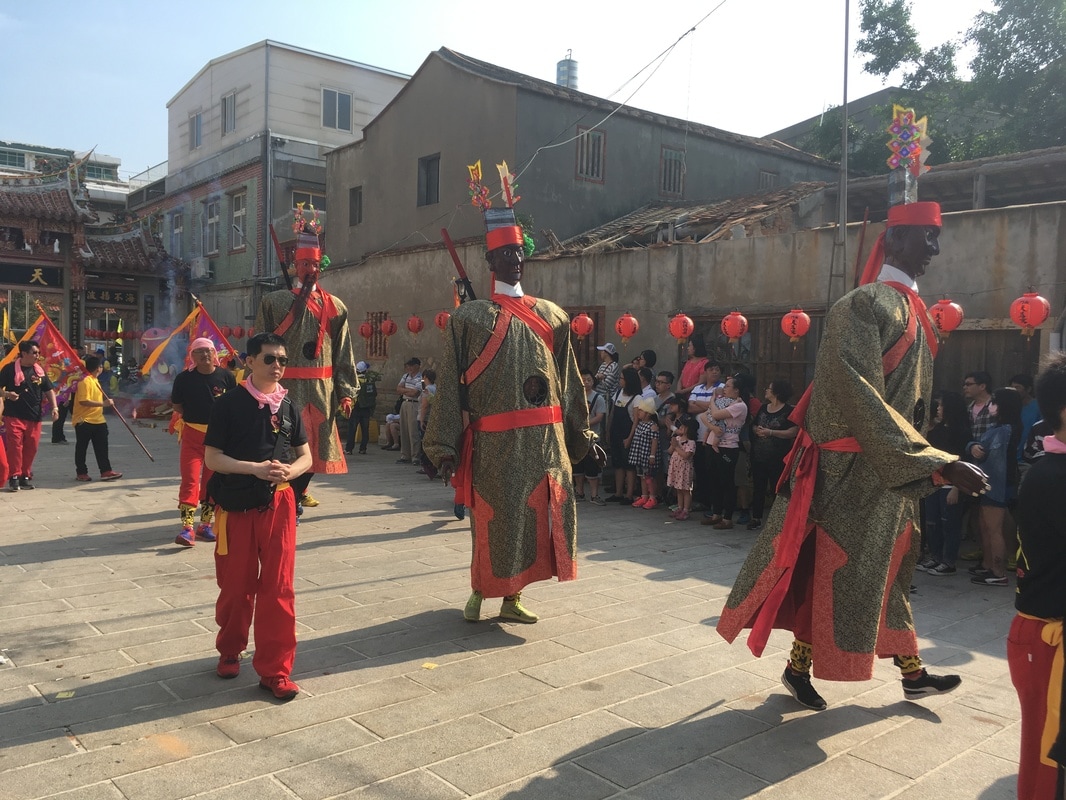
Its participants included people of every age.
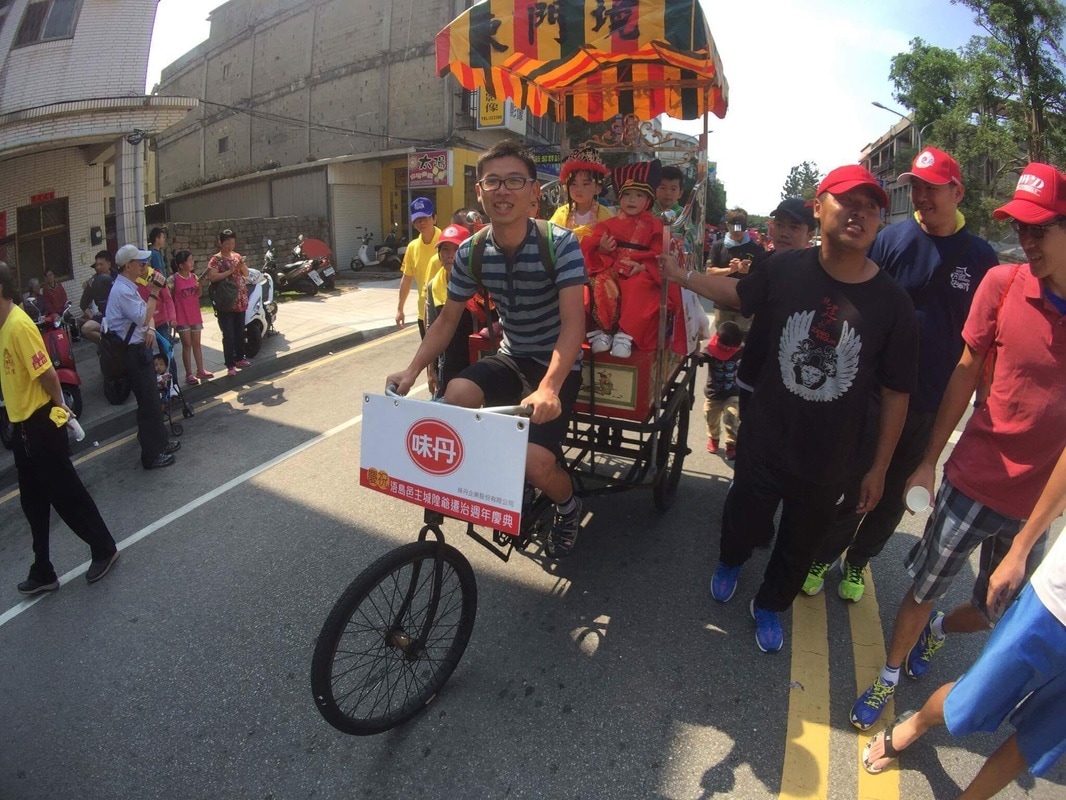
A father pedaled a tricycle carrying children in traditional costumes. Older participants performed a playful character dance, while young dance groups added their own performances.
I even had a chance to pedal one of the tricycles for a short distance.
Compared with the temple-procession imagery most familiar to me, the range of participants gave the event an especially approachable, community feeling.
Residents lined the streets. It felt as though everyone had put work aside to join in.
This was not simply a religious event belonging to a few temples or organizations. It was a festival shared by the wider community.
At a time when some traditional holidays seemed to be losing their atmosphere, I found it precious to see a cultural tradition still bringing people together so vividly.
A Night at Zhongshan Memorial Forest
I had learned something from the previous evening: there was no drinking with dinner this time.
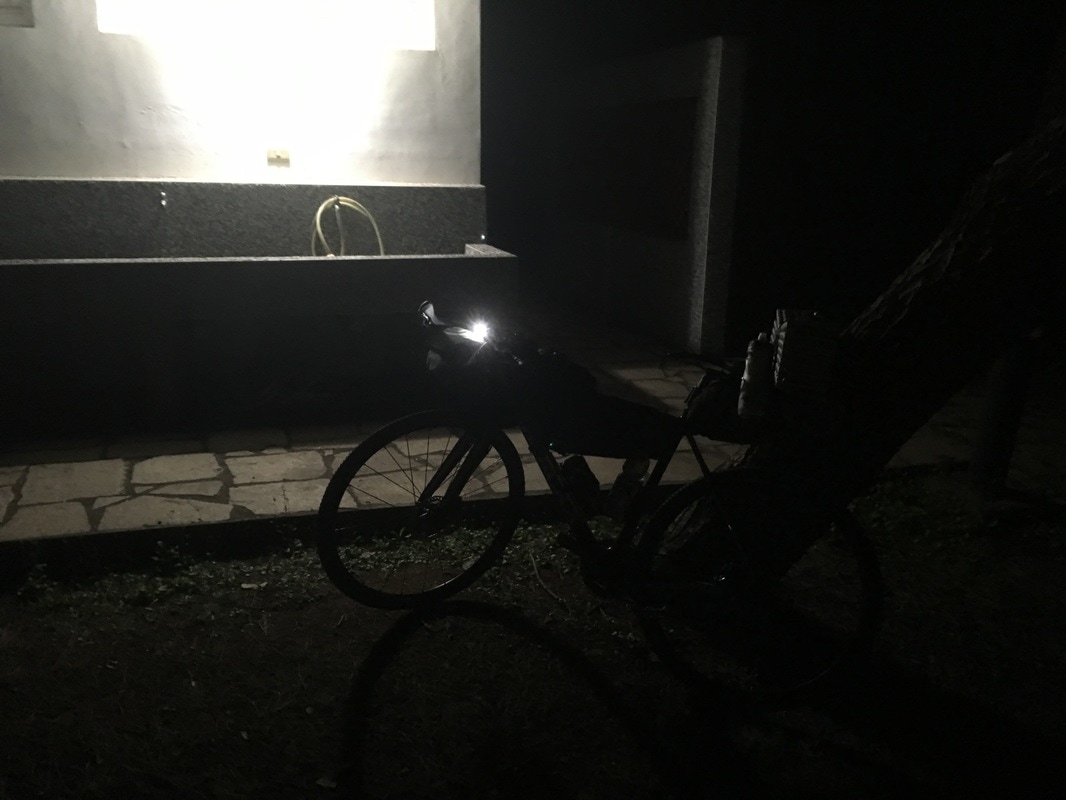
It was dark when I reached the campsite, but I was clear-headed.
On earlier journeys, I had often camped informally wherever I found a place. Visiting Kinmen, I wanted to follow the local arrangements.
Before coming, I had researched Zhongshan Memorial Forest in Kinmen National Park.
At the time, the arrangement described in my account was to contact the park in advance and apply to camp there.
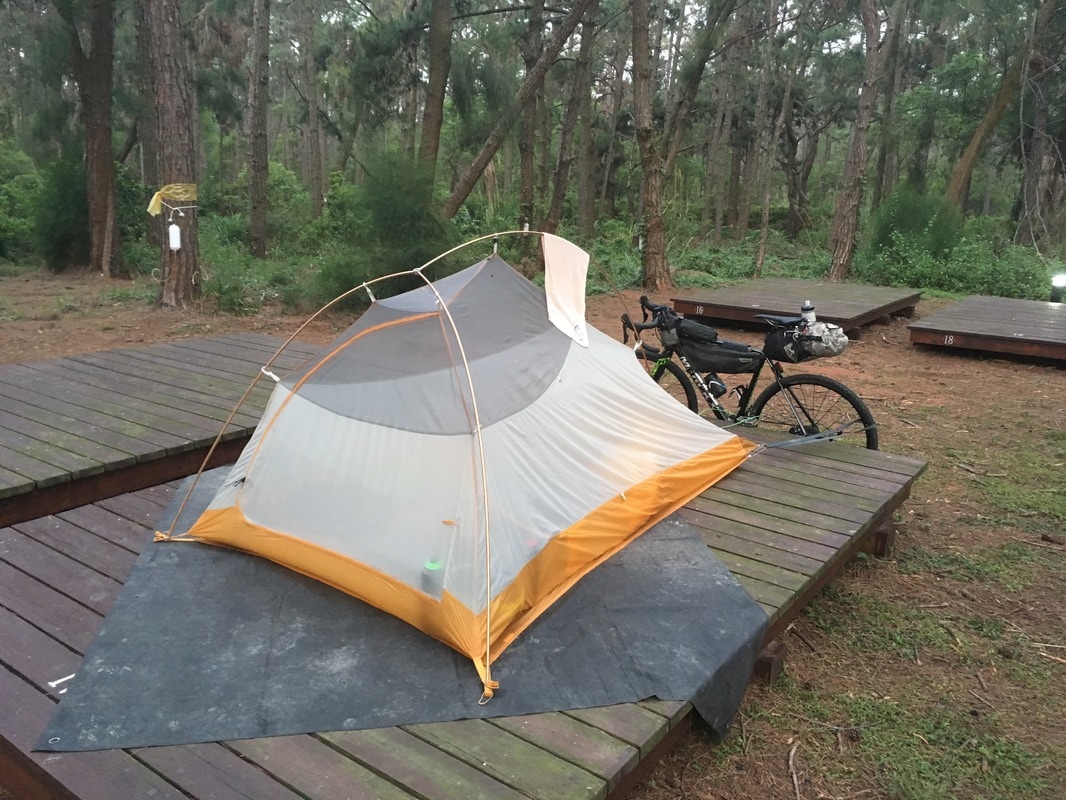
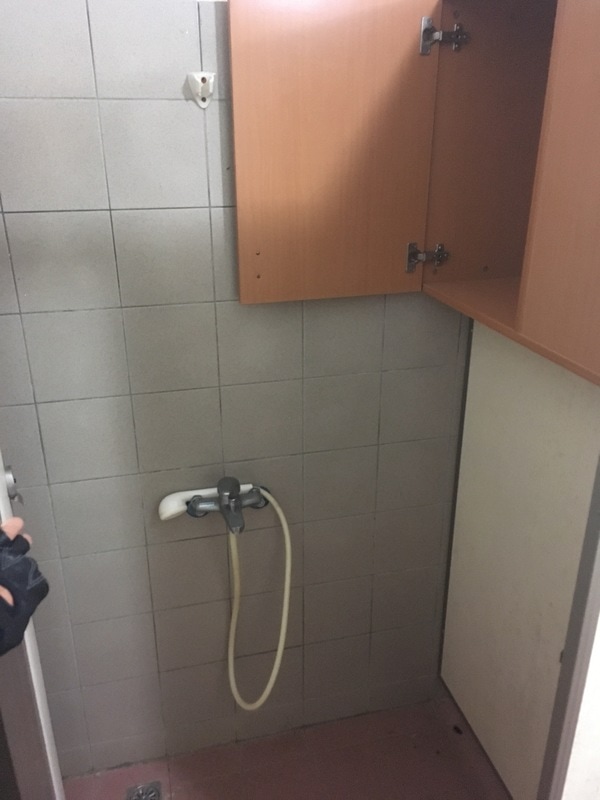
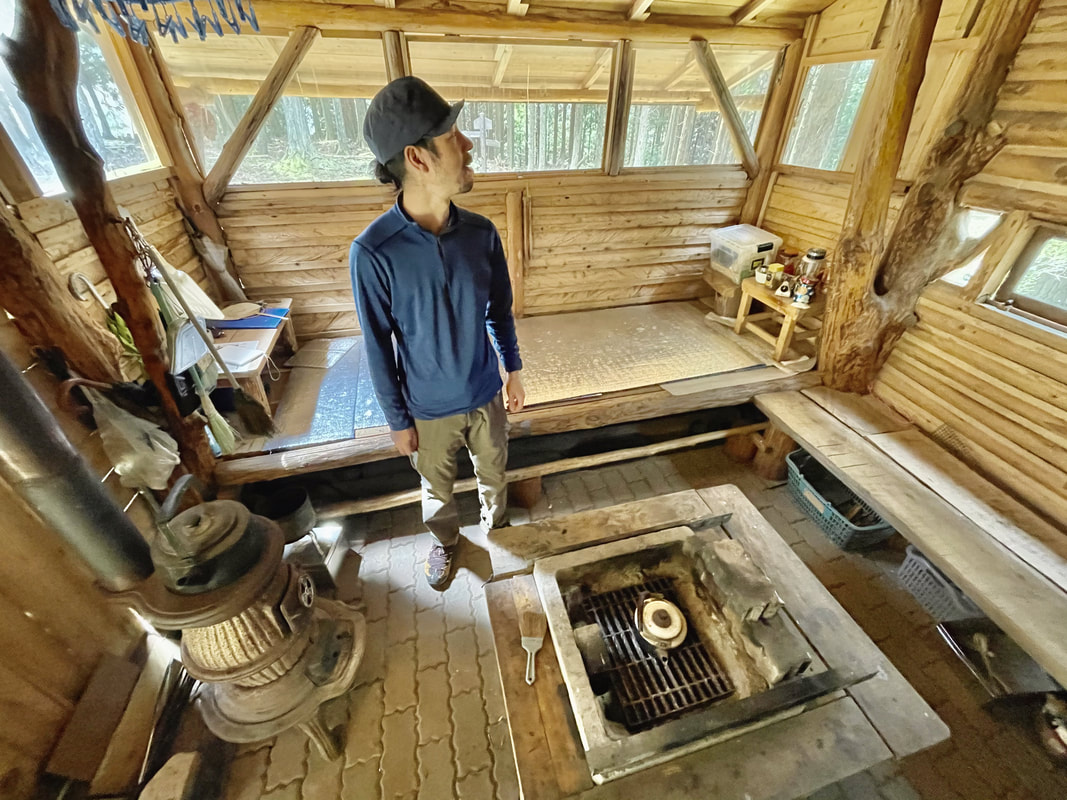
The site had toilets, hot water and raised wooden platforms. It felt very comfortable.
I expected such a pleasant campsite to be busy. Instead, I appeared to have it to myself and could choose a pitch freely.
I settled on a platform not far from the bathrooms, then went to inspect the facilities.
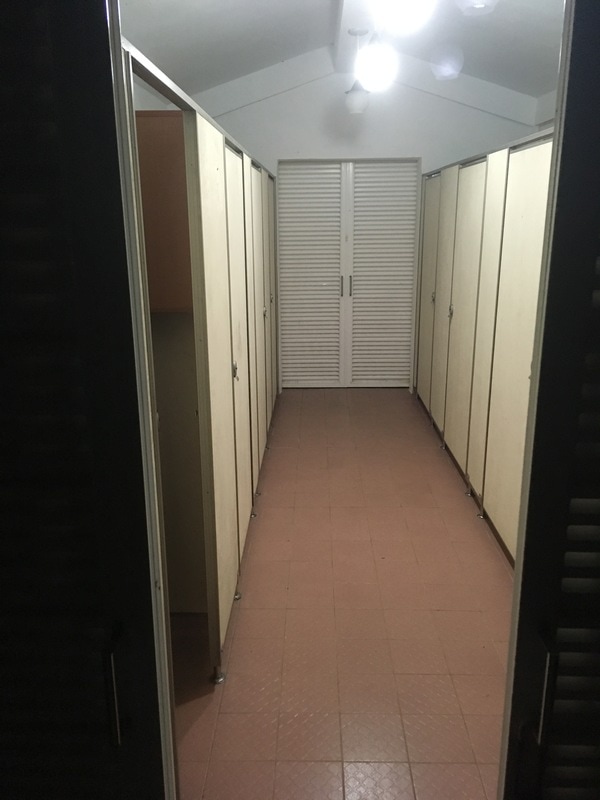
There were separate men’s and women’s bathing areas, but only the women’s side was lit that evening. I guessed it might have been an electricity-saving measure, though I had not confirmed that.
In the original account, I used the lit bathing area and joked about the possibility of an unexpected encounter. Nothing of the sort happened. The practical lesson for visitors is to ask staff which facilities they may use, rather than assume that lighting indicates permission.
Washed and ready for bed, I turned in.
History around the Island
The next morning, I packed the tent and rode to Cihu to meet my friends.
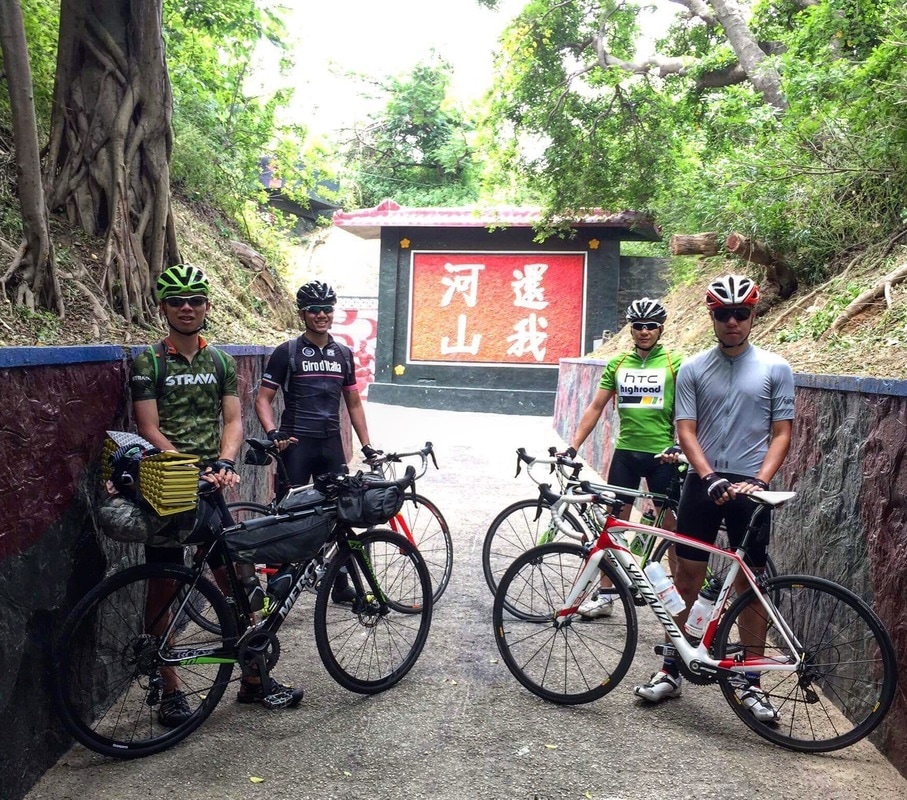
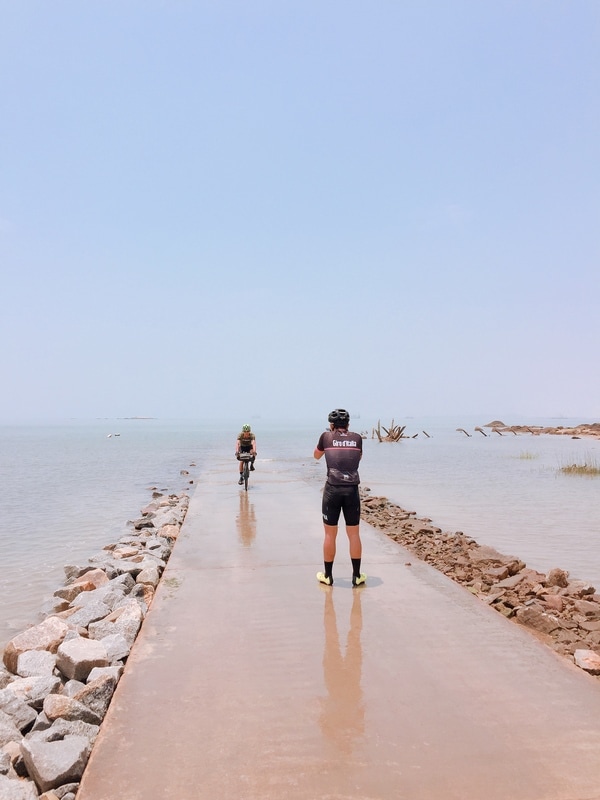
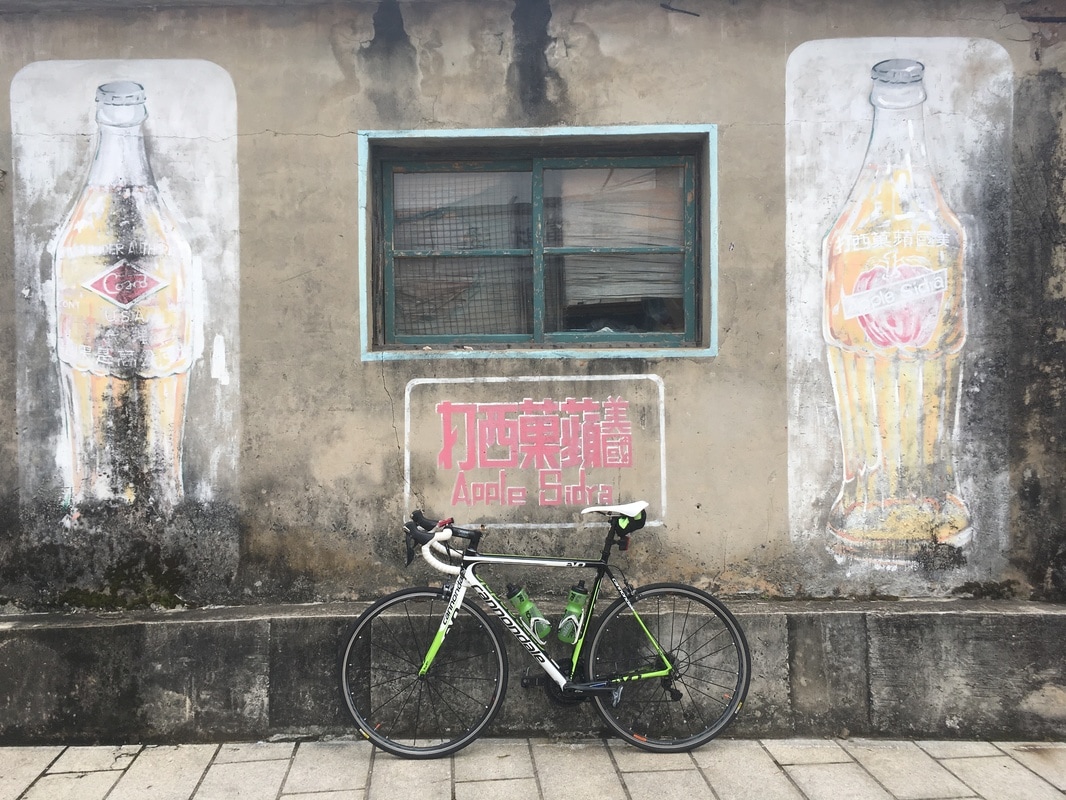
Today would be a cycling journey through Kinmen’s history.
Beyond the well-known Battle of Guningtou and the August 23 artillery bombardment, the island held many stories of people living through years of conflict.
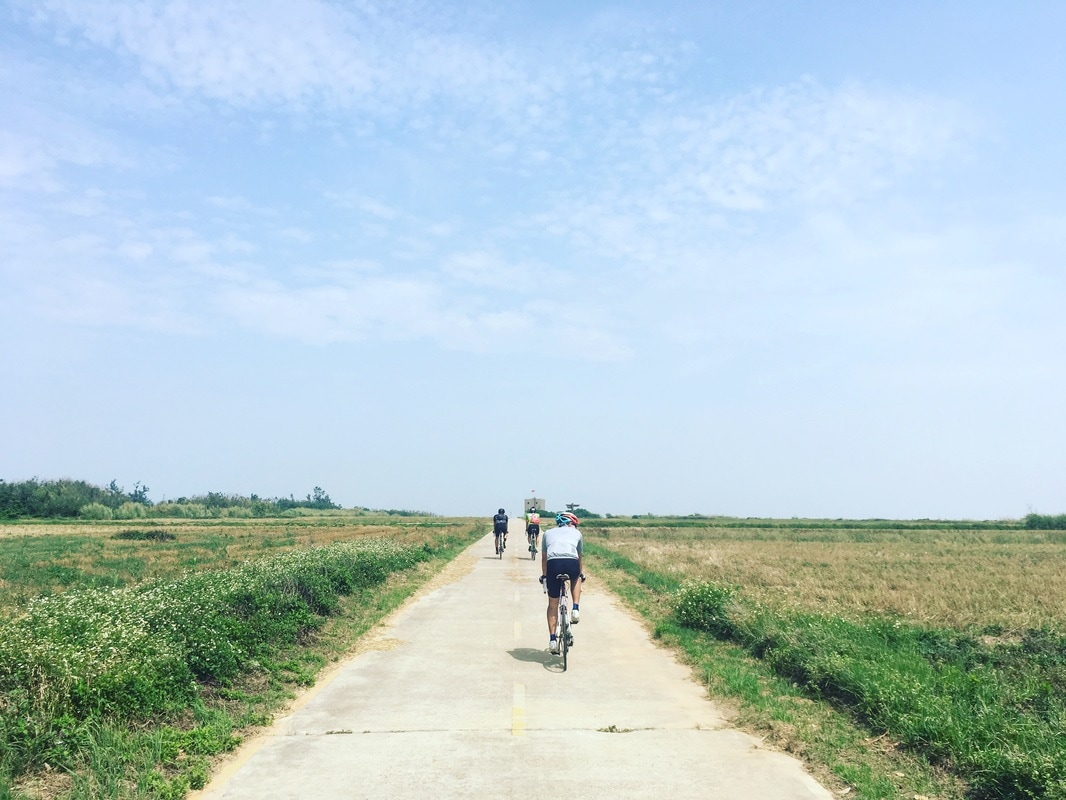
I felt grateful that I could now ride in the breeze, on Kinmen and in Taiwan, while remembering those whose youth and lives had been consumed by war.
There was sadness in the day too.
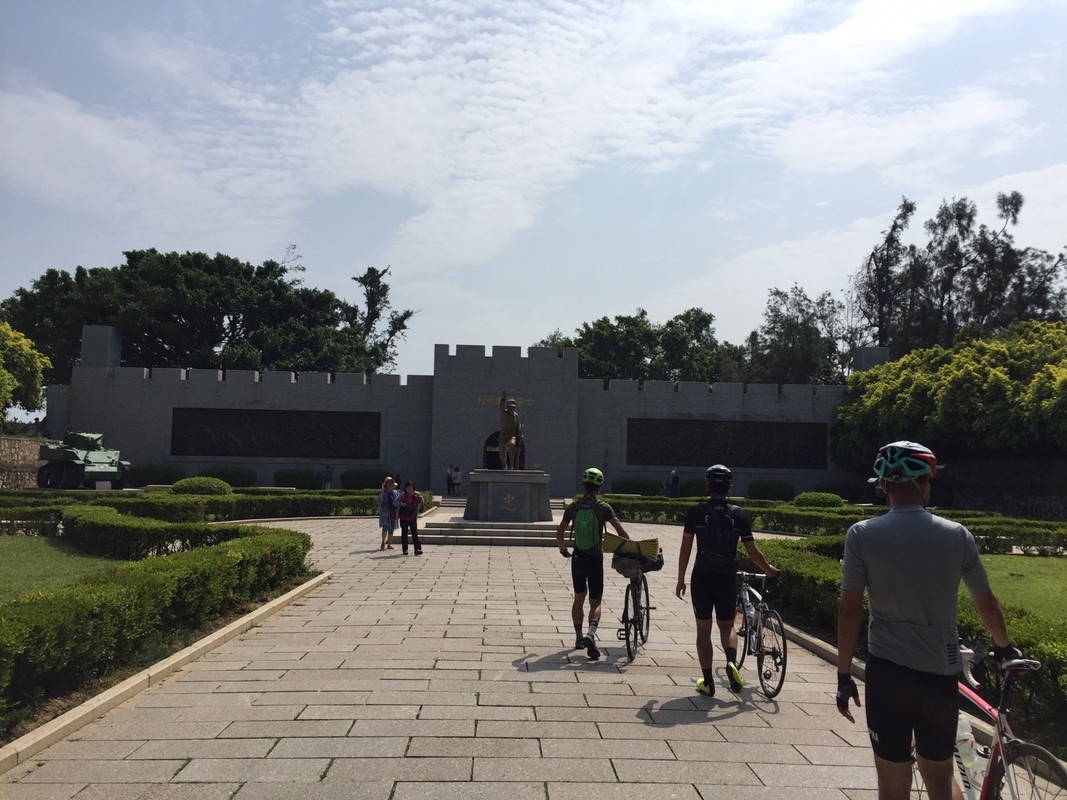
Explanatory displays, old photographs, paintings and wax figures brought scenes of wartime life before me.
I kept asking myself whether I could have survived those conditions. Would I have been able to bear the responsibility of protecting other people?
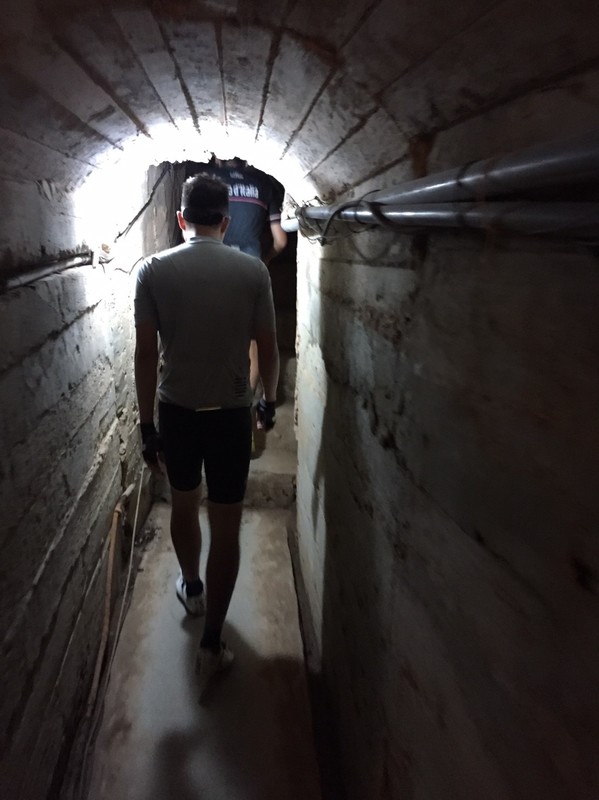
Walking through the underground tunnels, I could not give myself a confident answer.
Loudspeakers and Bullet-Scarred Walls
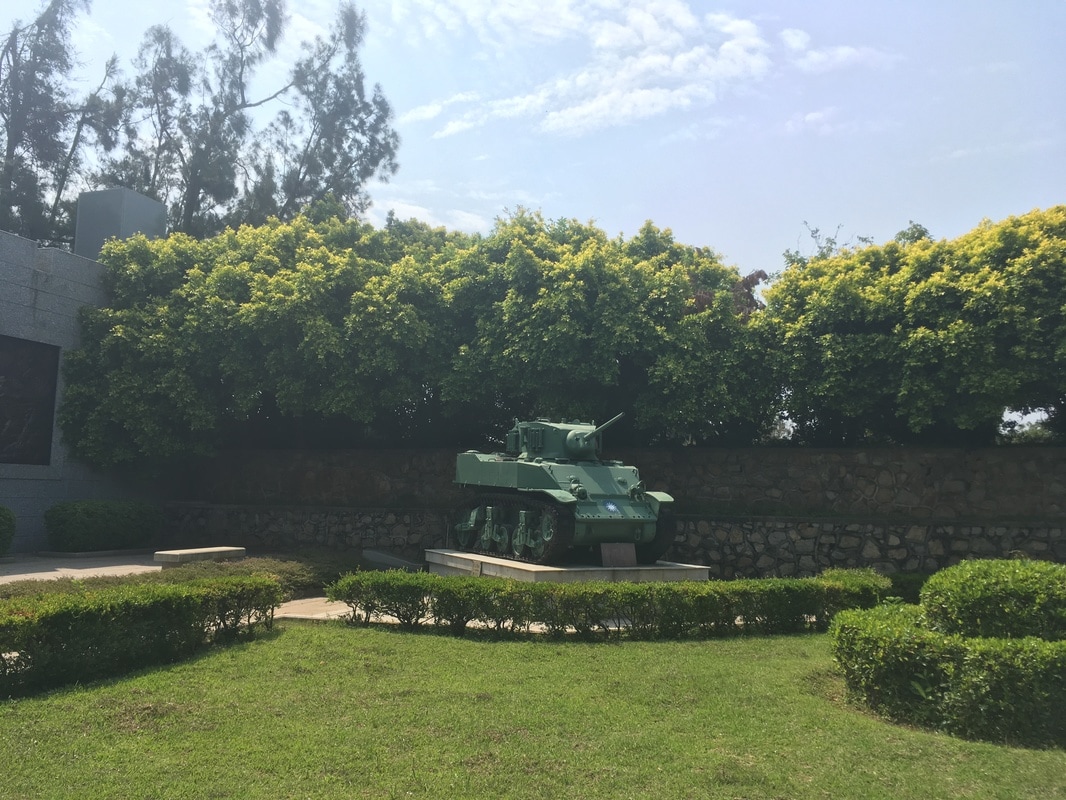
Putting those darker thoughts aside for a moment, the wartime structures were fascinating to examine.
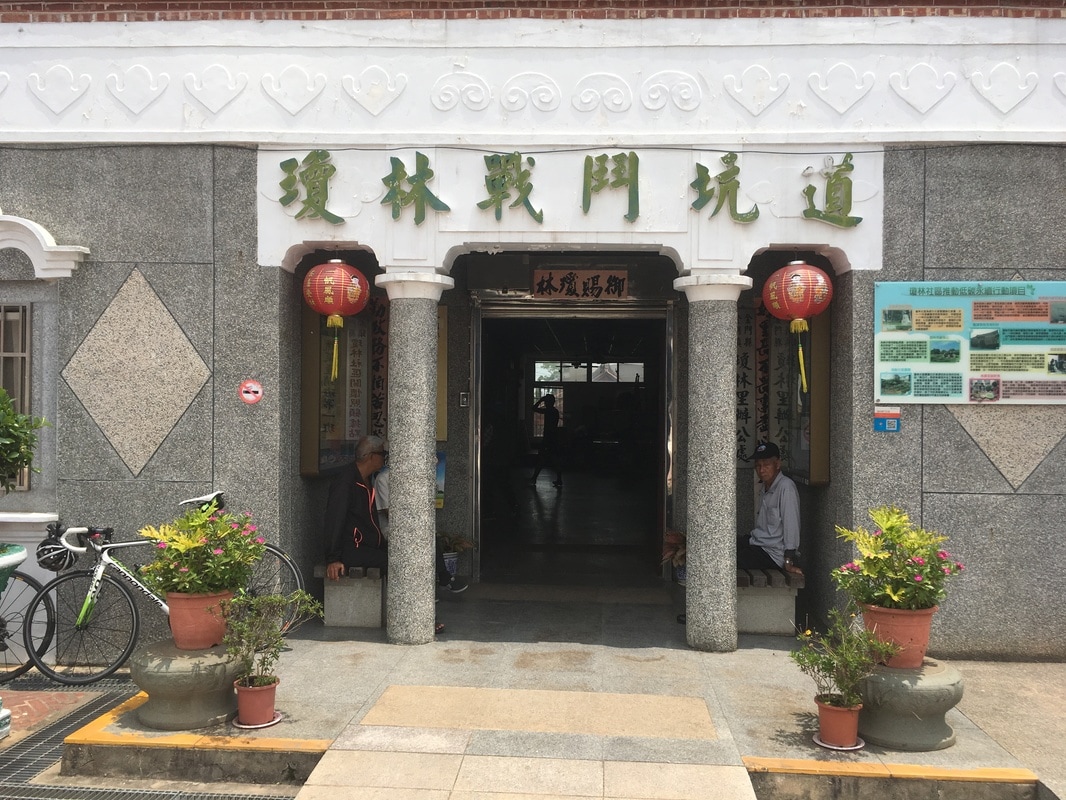
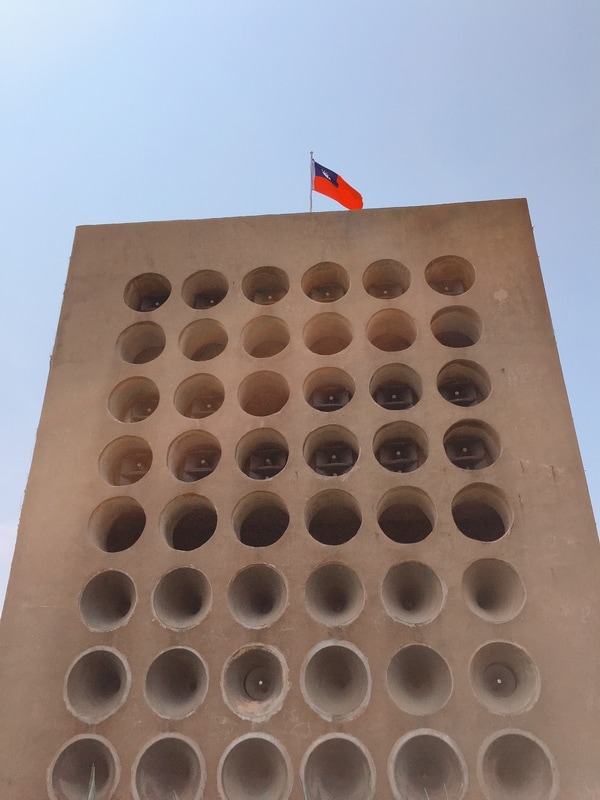
At places such as the Beishan broadcast wall and Mashan Broadcasting Station, loudspeakers had been used to send messages across the water.
I wondered how listeners on the opposite shore had reacted to broadcasts associated with Teresa Teng.
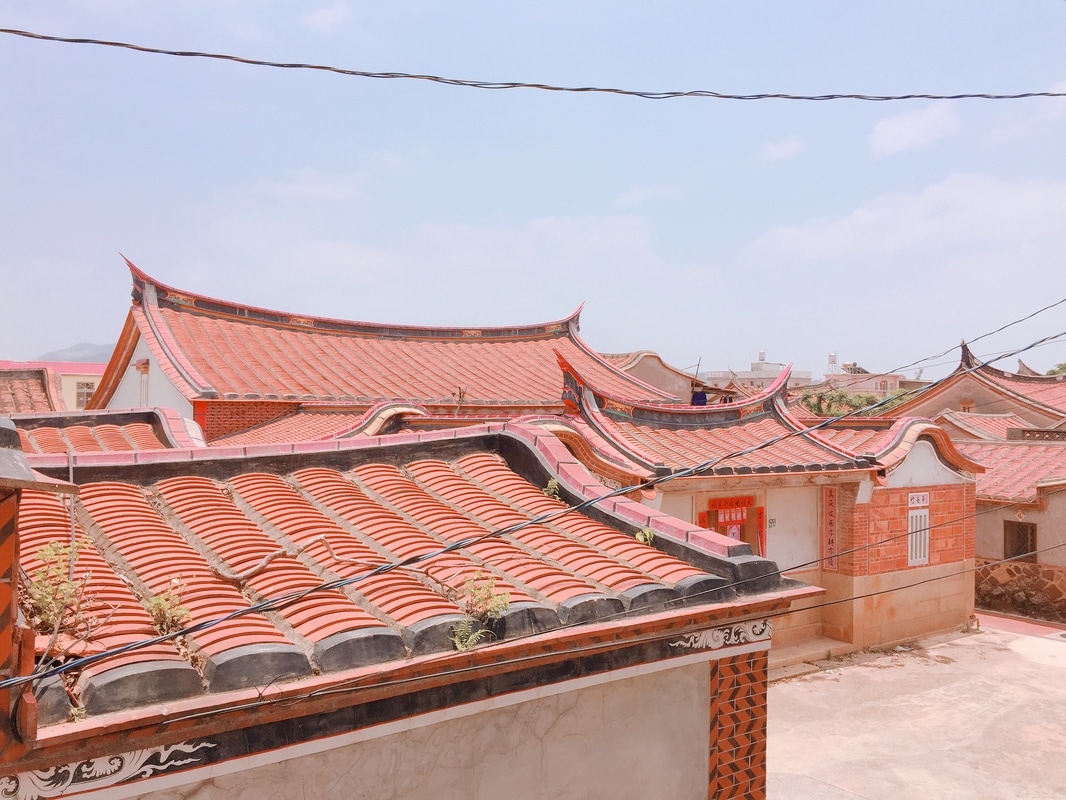
Beishan’s old Western-style house was another memorable stop.
The building had survived the fighting, its many bullet marks making the violence of that period feel immediate.
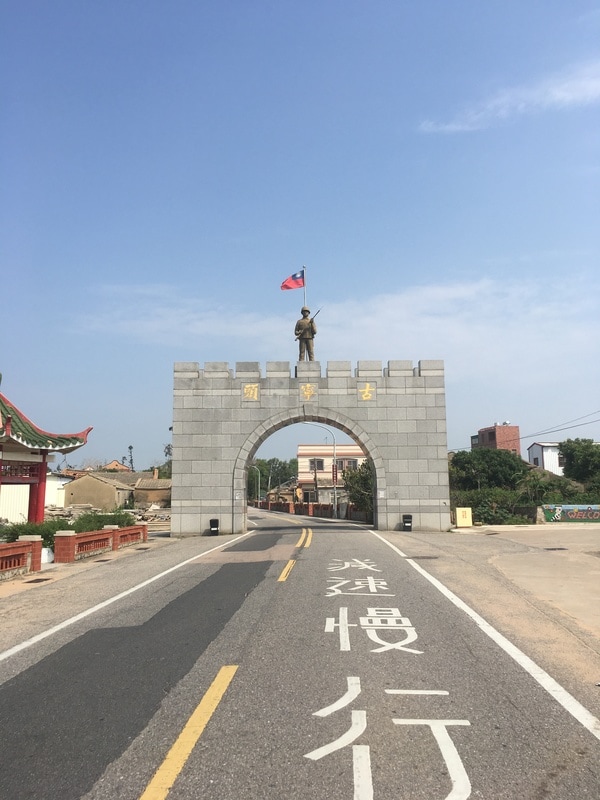
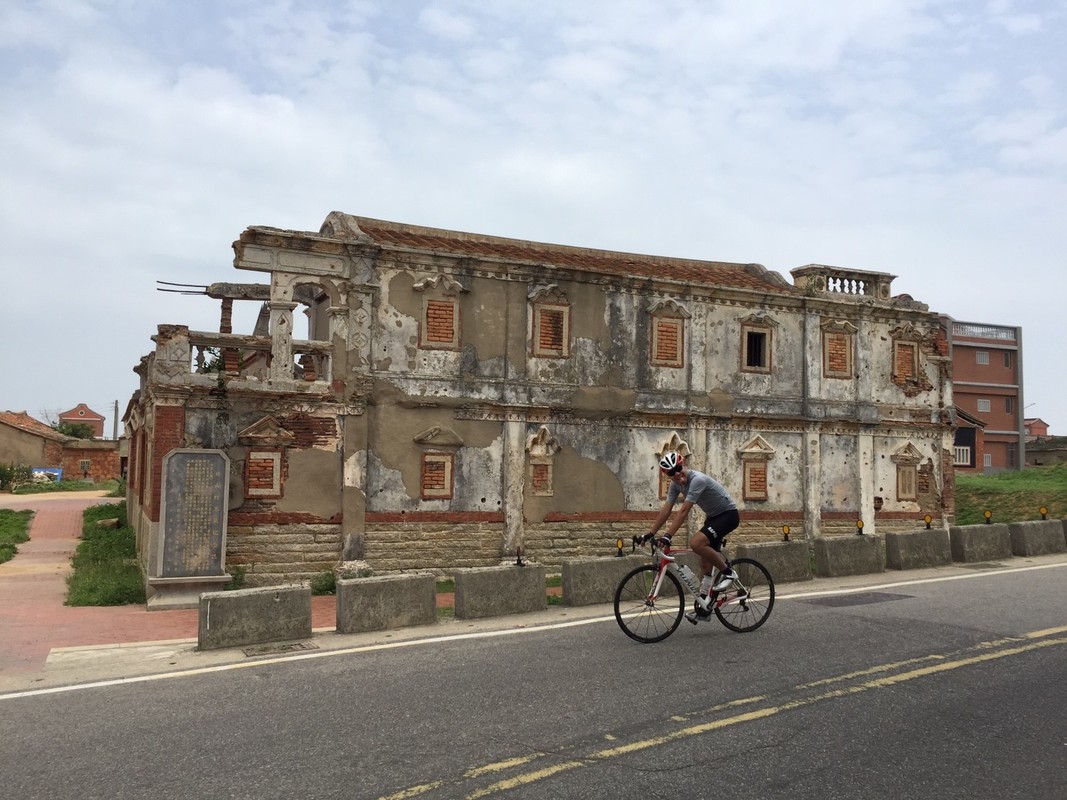
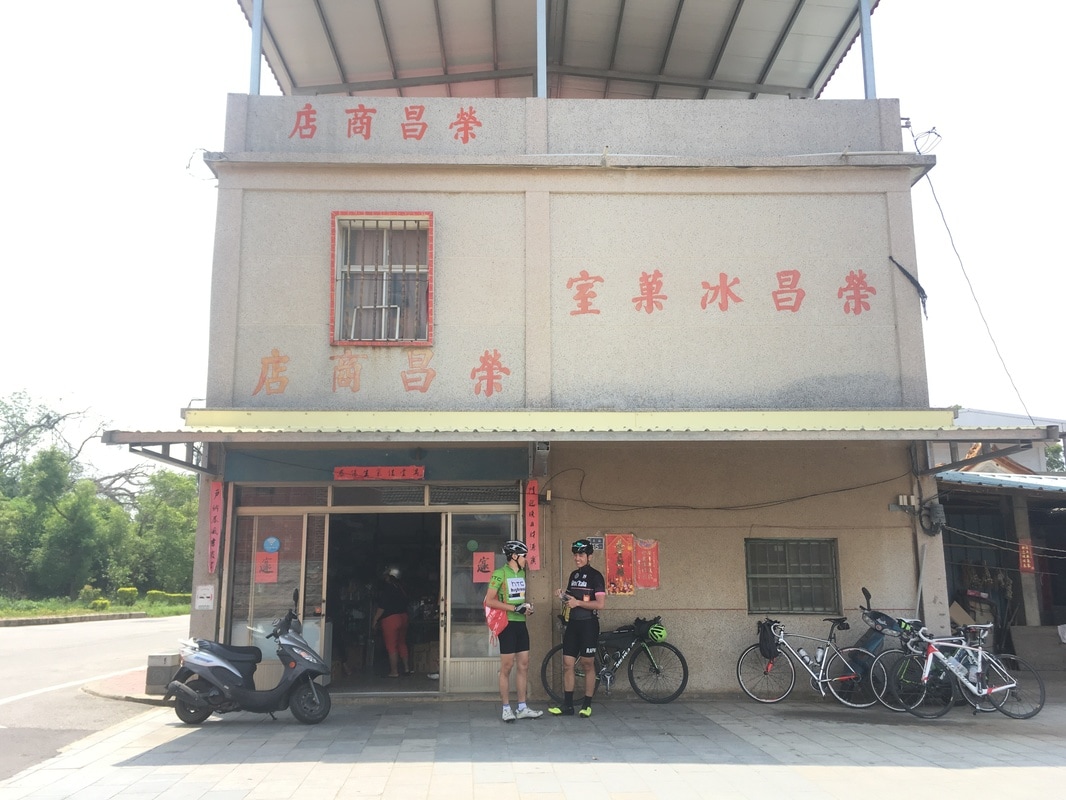
A Temple to General Li Guangqian
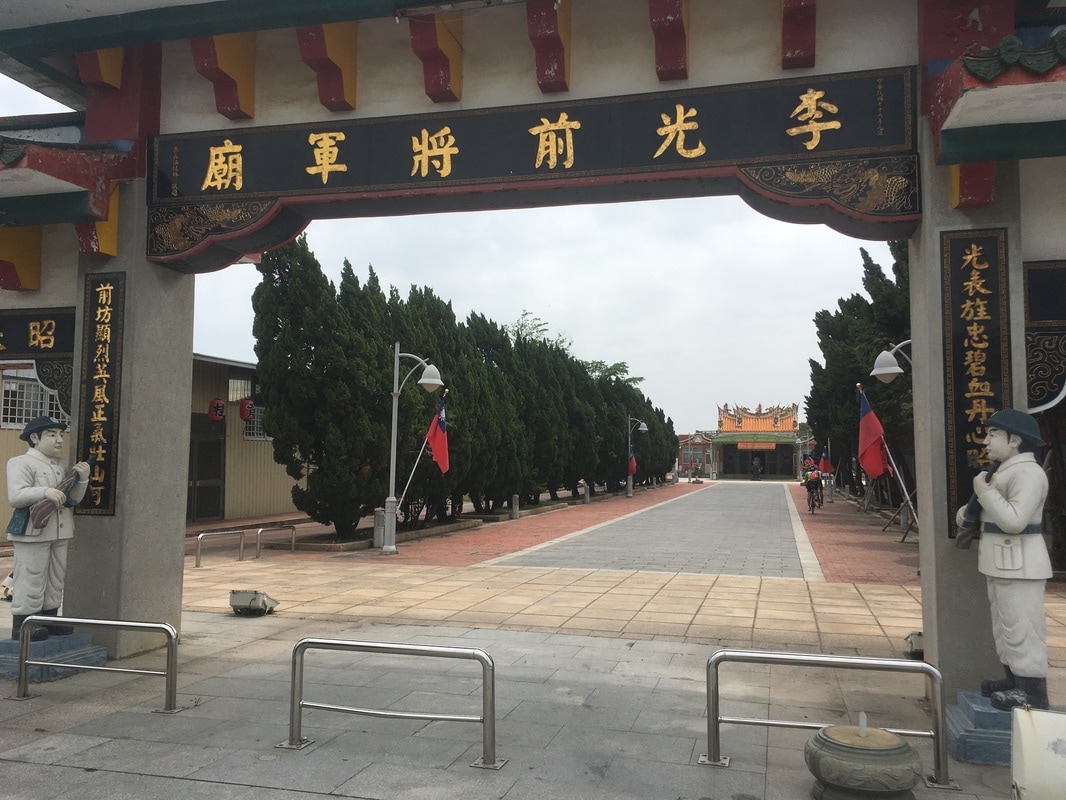
Among Kinmen’s many temples, one stood out.
At its entrance, instead of the stone lions I expected, there were sentries. Inside, the temple honored General Li Guangqian.
The historical account presented in the original article described him leading from the front during the Battle of Guningtou and dying in the fighting, remembered there as its highest-ranking fallen officer.
There were different stories about why the temple had been established.
My friend told me one local version: after so many soldiers had died, their spirits were said to wander the island. In a dream, General Li asked local people to build a temple to commemorate them, promising to lead his comrades home.
That is a story of belief and remembrance, not something I could verify as a historical event.
Whether literally true or not, I felt it expressed the qualities people associated with him: devotion and care for his fellow soldiers.
It helped me understand why later generations might choose to honor him in a temple.
One Last Evening beside the Sea
After three days exploring with local friends, Kinmen was becoming more familiar.
I was growing fond of this place that felt both similar to Taiwan and distinctly different.
For my final night, I decided to seek out a beautiful place to camp.
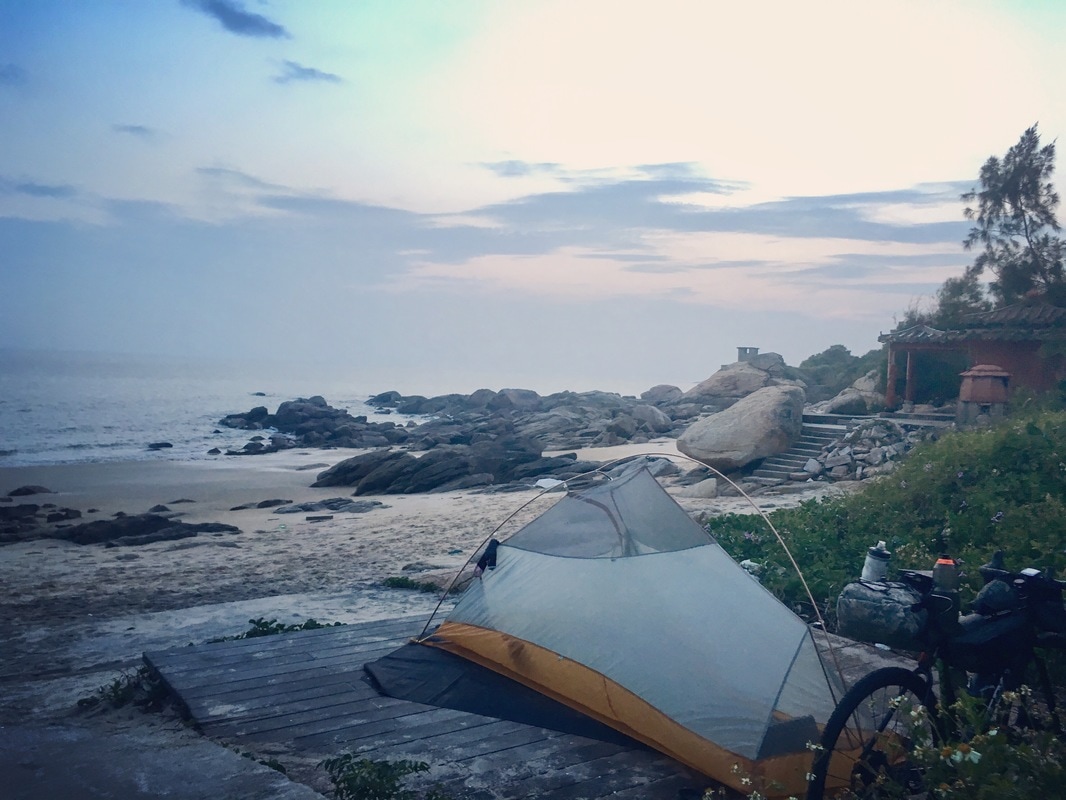
I rode to an empty beach a local friend had shown me. There was a platform, and I chose to set up there. The original account does not establish that camping was authorized or that the site was safe.
Looking toward a ruined sentry post, I imagined the danger that soldiers once associated with standing watch there, including fears of attacks from the sea.
Now I could sit listening to waves and looking at the moon.
A landscape could remain while the lives within it changed. That was not always a sad thing.
I would leave Kinmen the next day. On this shore, which I understood through its wartime history as a place once associated with mines, I spent a final quiet evening.
That closing scene is a memory, not an invitation to enter former military ground. Respect barriers and warnings, and choose confirmed authorized overnight accommodation.
Bikepacking diary: Facebook