The Nakasendo and Narai-juku | Bikepacking into Old Japan
Translated from Bikepacking diary’s original Nakasendo and Narai-juku article, published on May 20, 2019, and republished by arrangement with the author. Photographs are linked directly from the original website.
Editor’s note: This historical account preserves the author’s experiences and impressions. Historical anecdotes and equipment observations are not independently verified here. Check current road access, bicycle restrictions, weather and accommodation before travel. The author’s overnight use of a pavilion does not establish permission to camp there. A tent inner without its outer fly is not a general recommendation for mountain conditions. Respect posted restrictions and obtain permission for overnight stops.
An Old Road through the Mountains
The Nakasendo is an old route linking Edo, the name used for Tokyo before the Meiji Restoration, with Kyoto. Its earlier history reaches back into Japan’s age of warring states. This ancient highway stretched more than 500 kilometers, with post towns providing places for travelers to stay along the way.
Armies, merchants and even a princess traveling from Kyoto to marry into the shogun’s family used this road.
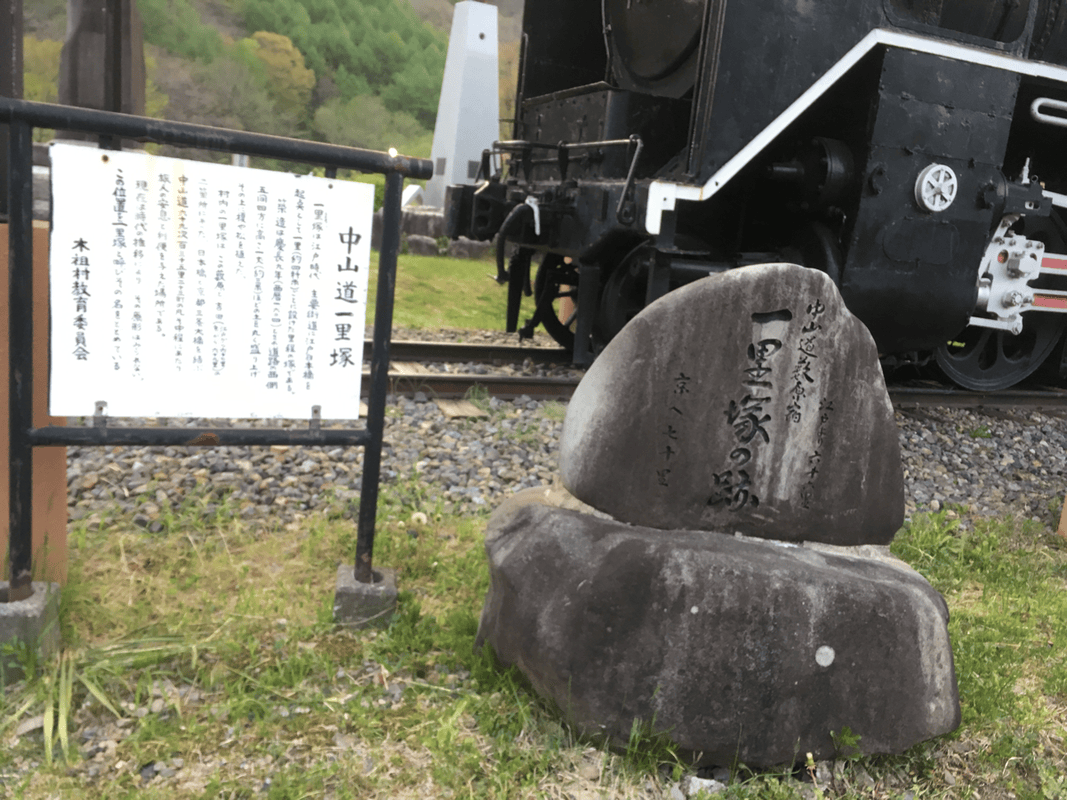
As transport changed, some sections became modern roads, some gradually disappeared beneath vegetation, and others were preserved as historic places.
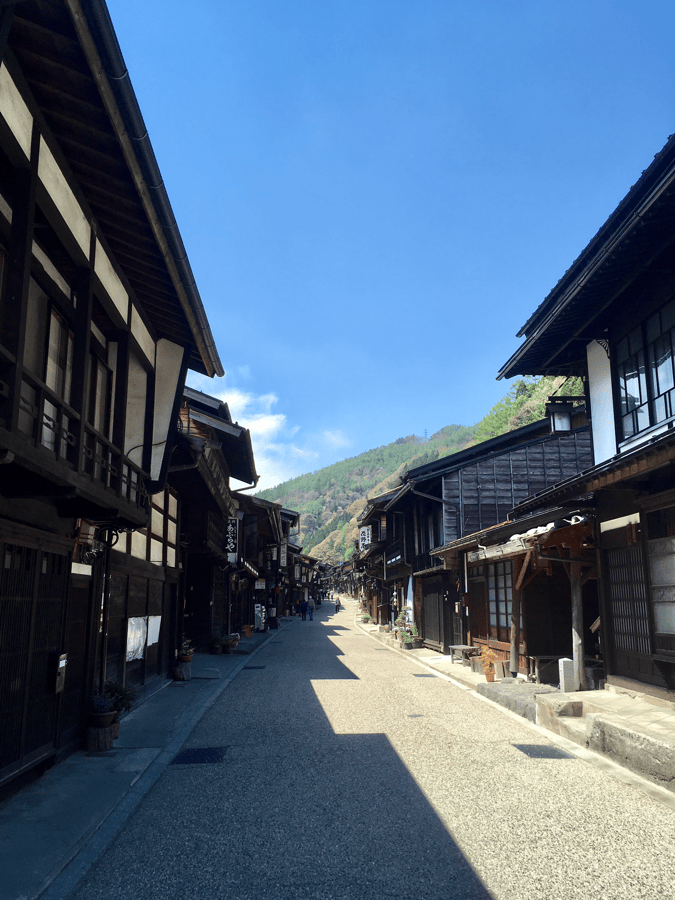
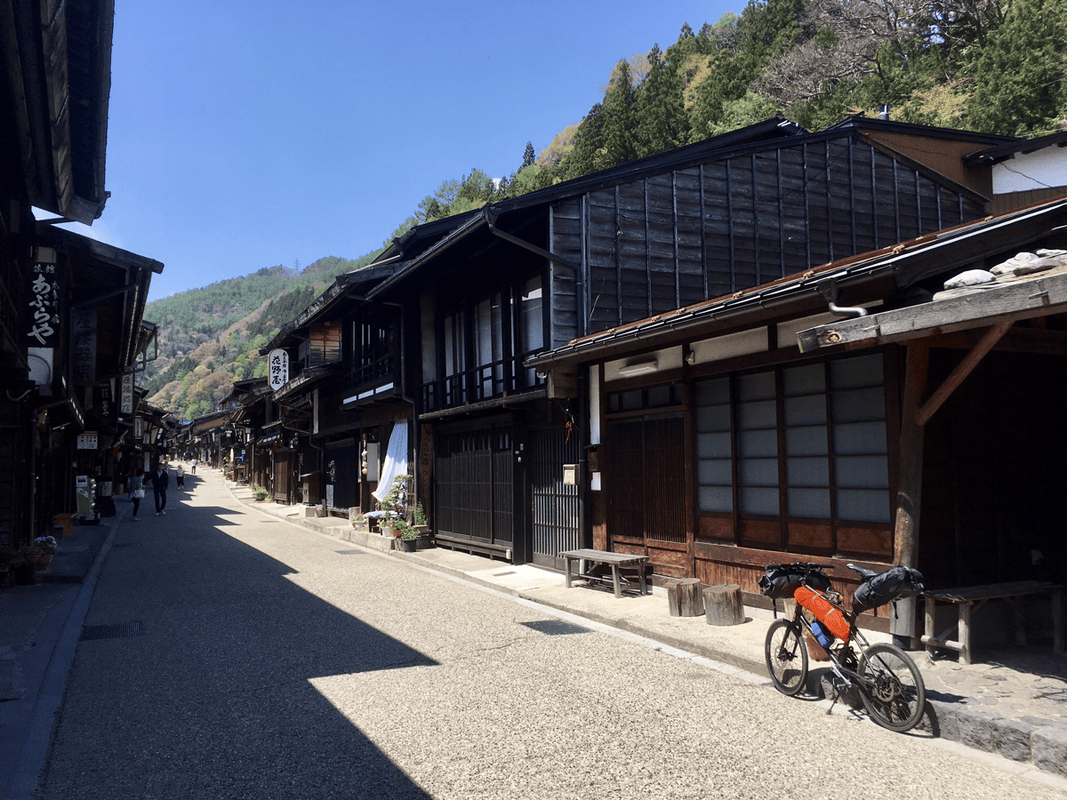
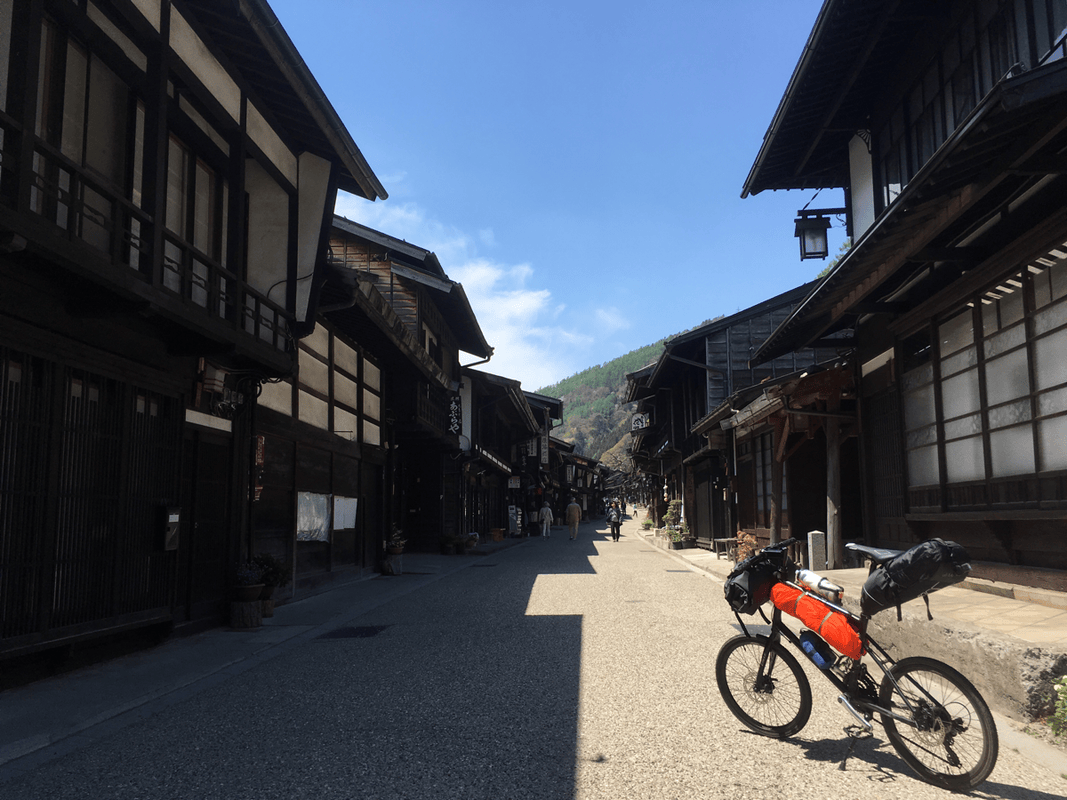
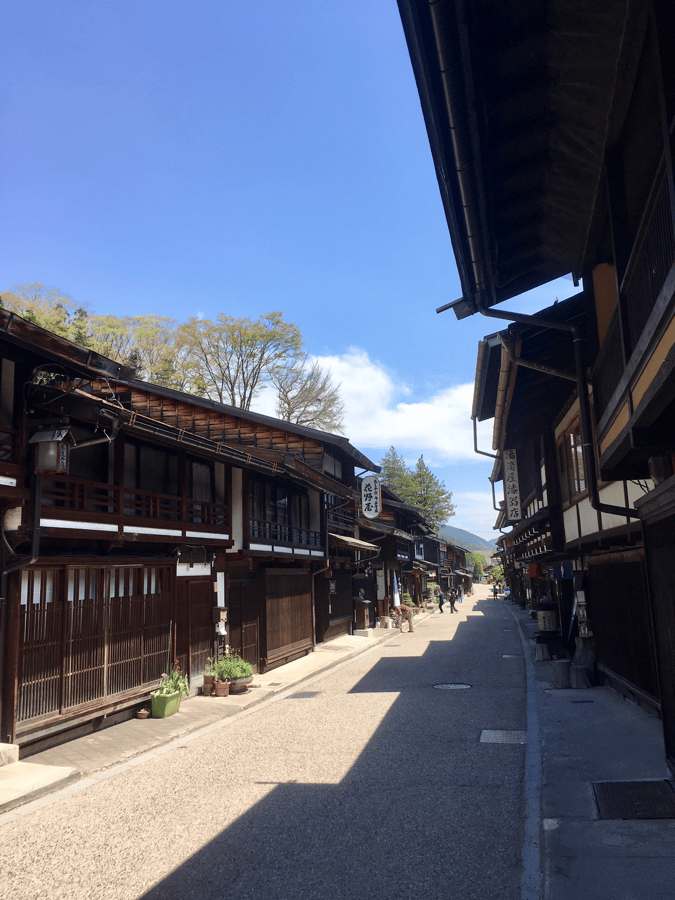
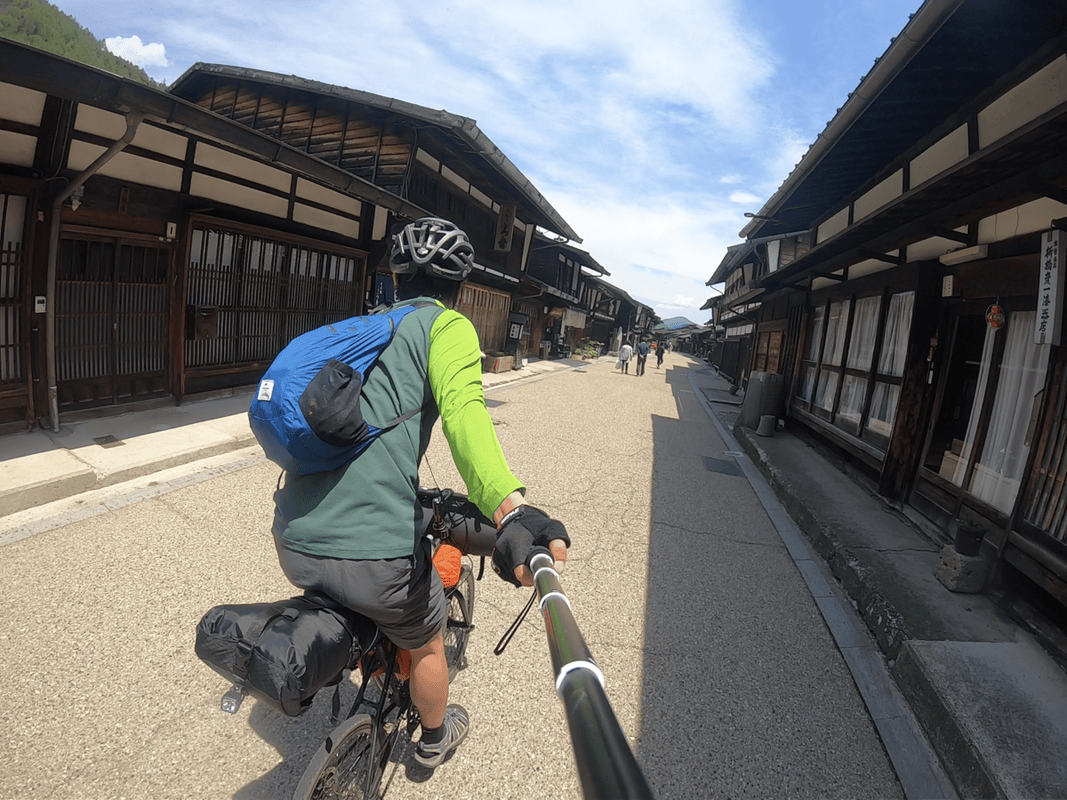
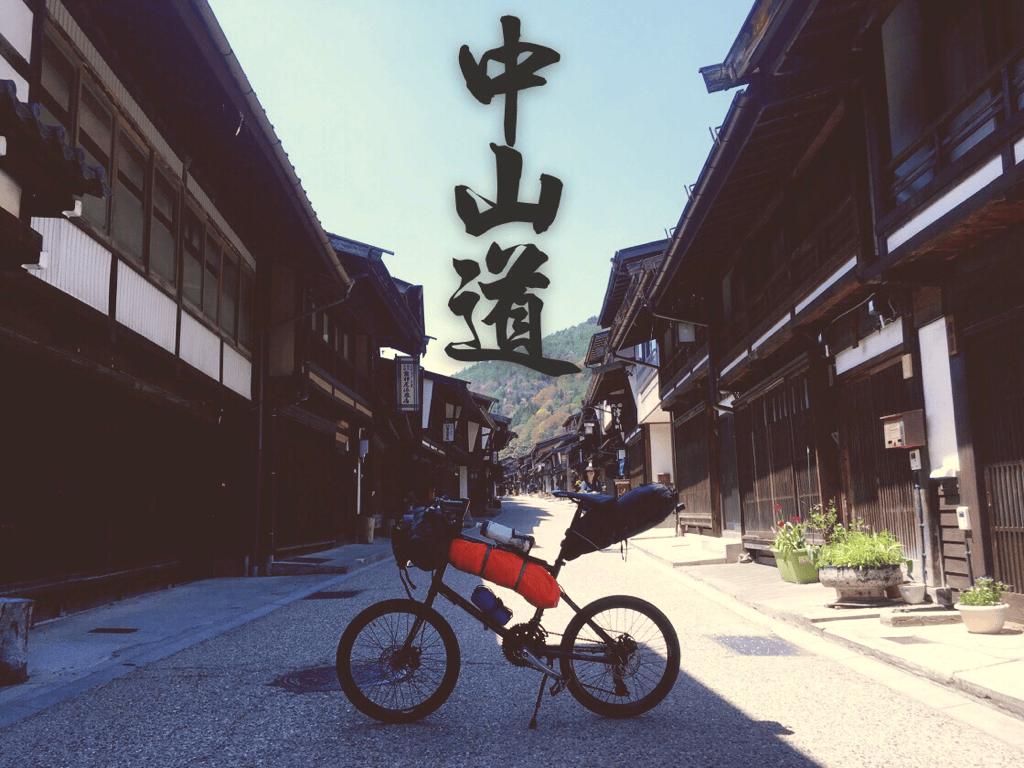
Narai-juku, with a street extending for about a kilometer, was described in my sources as an especially long post town. Its buildings and streetscape had been preserved as a traditional architectural district.
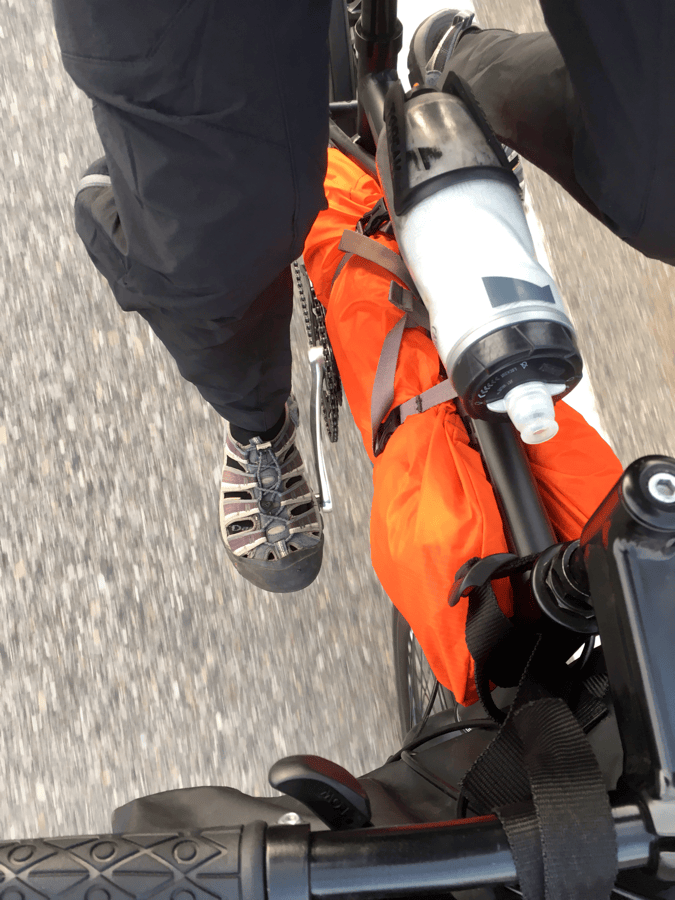
It was not far from my home in the Norikura Highlands, and the ride looked manageable. As a gentle return to cycling after winter, it seemed a good choice. It became my first bikepacking destination of the new Reiwa era.
A Journey I Had Wanted to Make
During my ride across Japan, I had crossed the Nakasendo several times. Whenever I entered one of its surviving post towns, I felt as though I had traveled through time.
The buildings, the surroundings, even the air seemed to belong to another age. A woman in kimono or a samurai carrying a sword could have stepped into the street without looking out of place.
That atmosphere of old Japan had stayed with me. I wanted to return and appreciate it slowly.
Narai-juku lay a little over forty kilometers south of Norikura Highlands. Overall, the outward journey lost elevation, so I did not expect it to demand too much energy.
Taking the Quiet Road through Norikura
Because the distance was modest, I did not leave until the afternoon. To avoid traffic and narrow tunnels, I chose the Norikura forest road toward Nagawa, then Prefectural Route 26 to Yabuhara-juku, the post town before Narai, where I planned to spend the night.
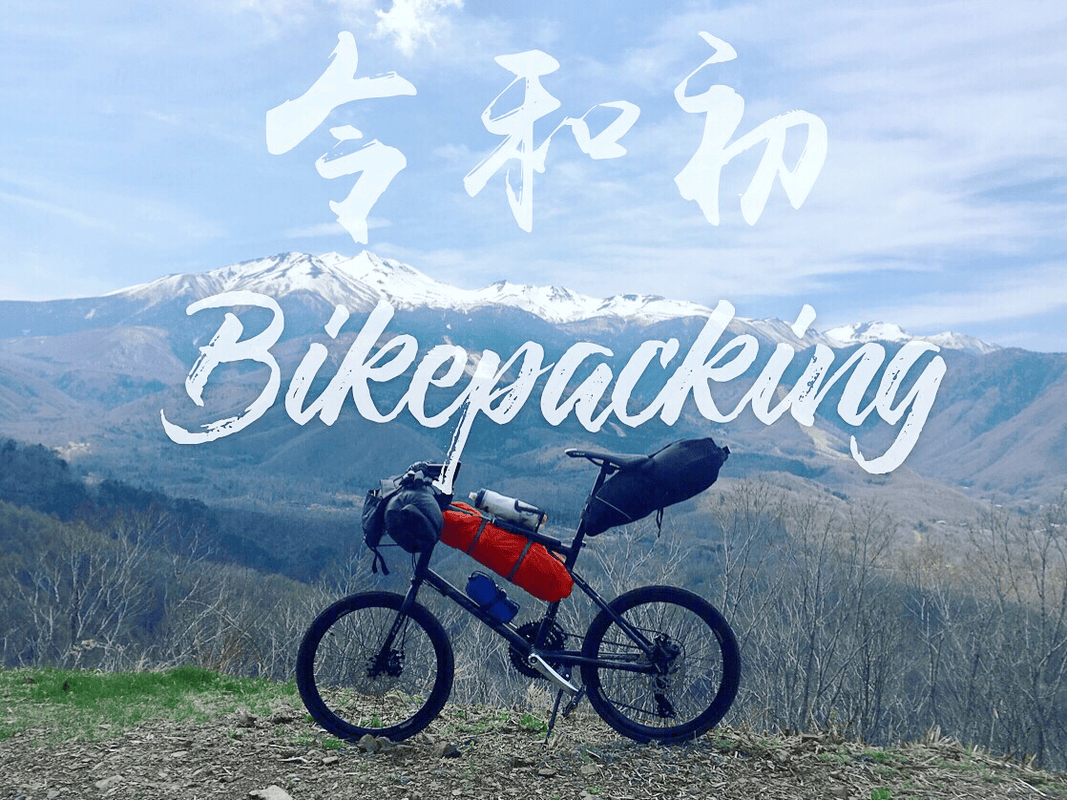
I loved the Norikura forest road. It was steep in places, but the scenery more than repaid the effort. A viewpoint near the top looked out over Mount Norikura and the highlands below, a sight that always impressed me.
Traffic was sparse too, making it my preferred way to head toward Nagawa.
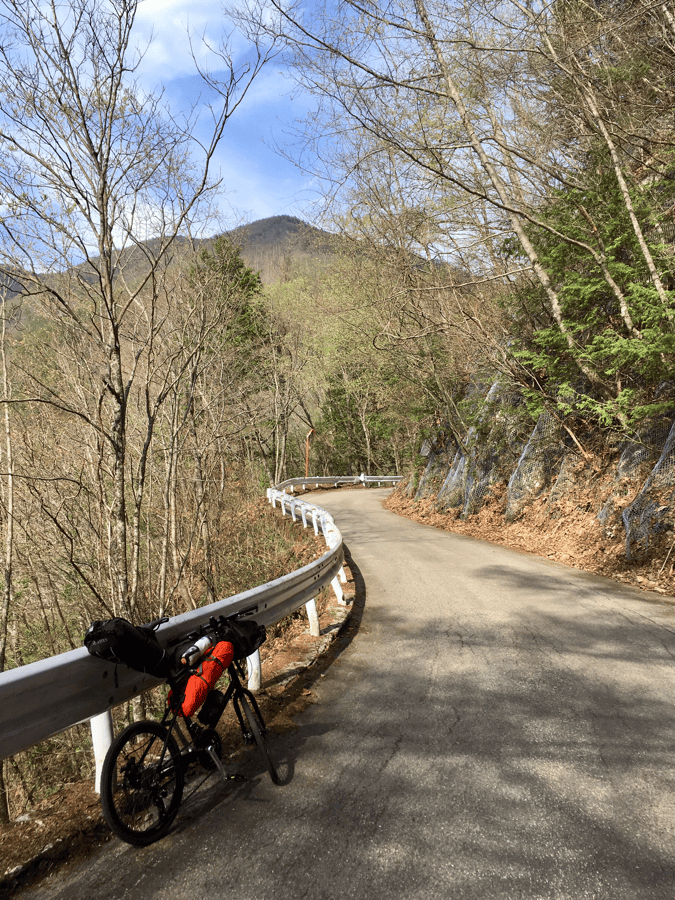
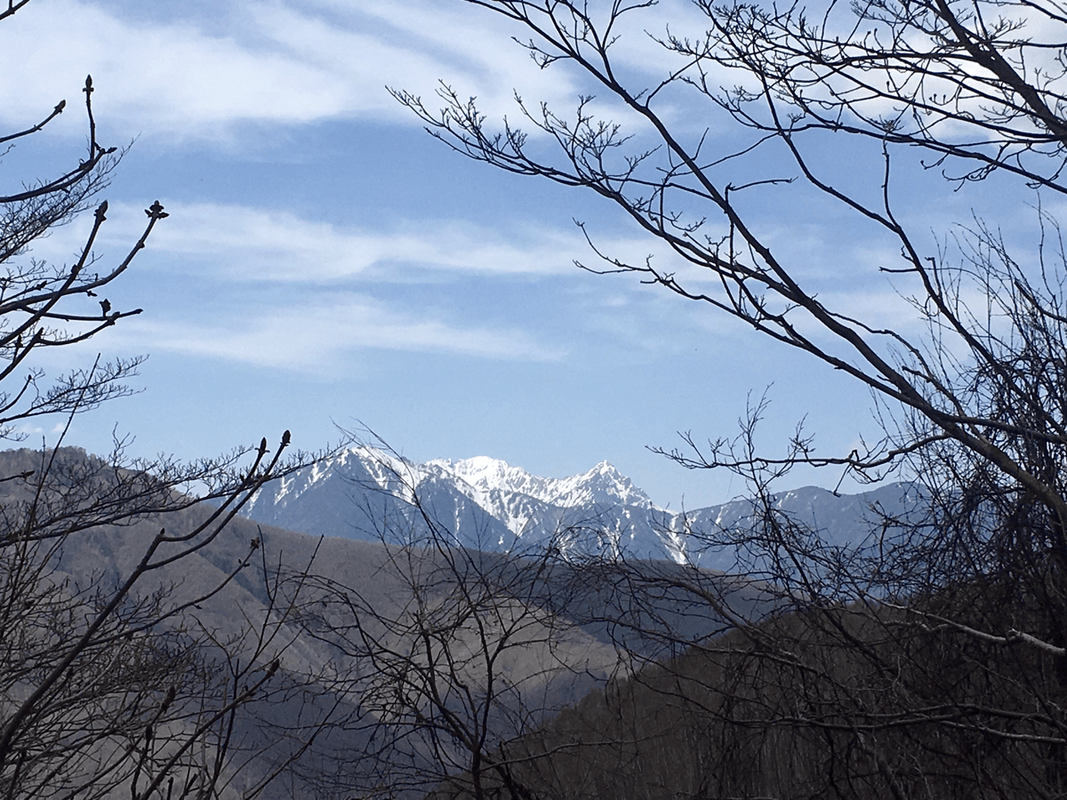
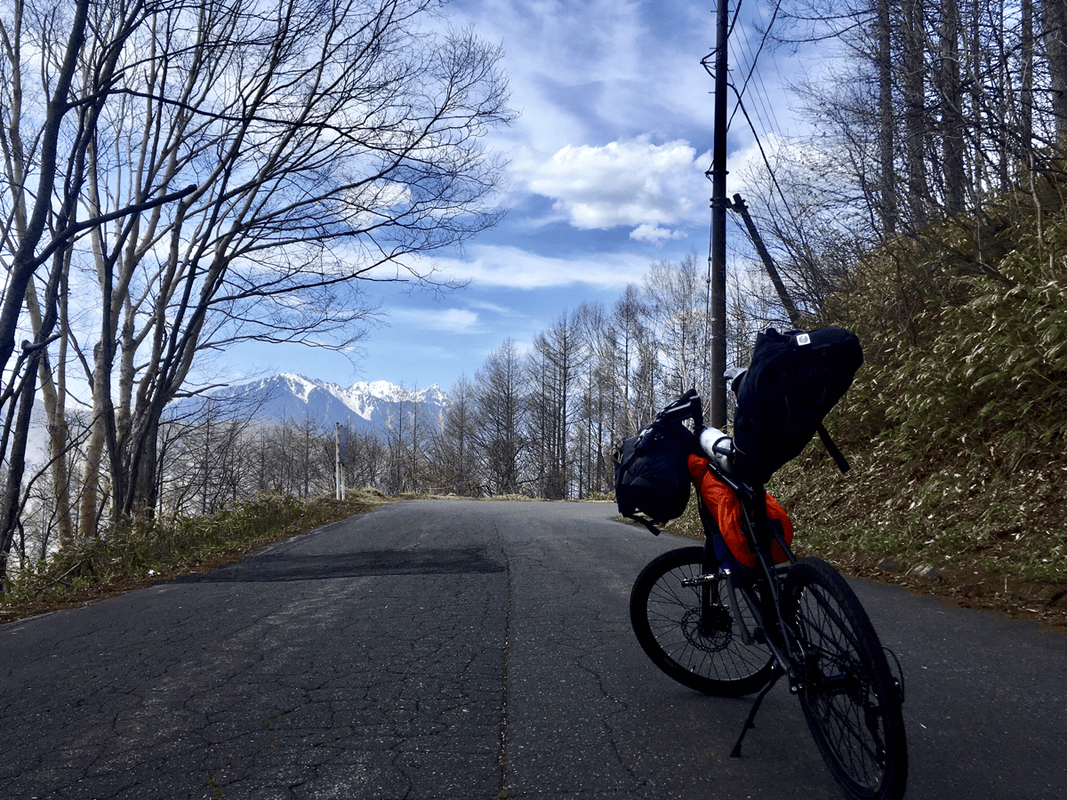
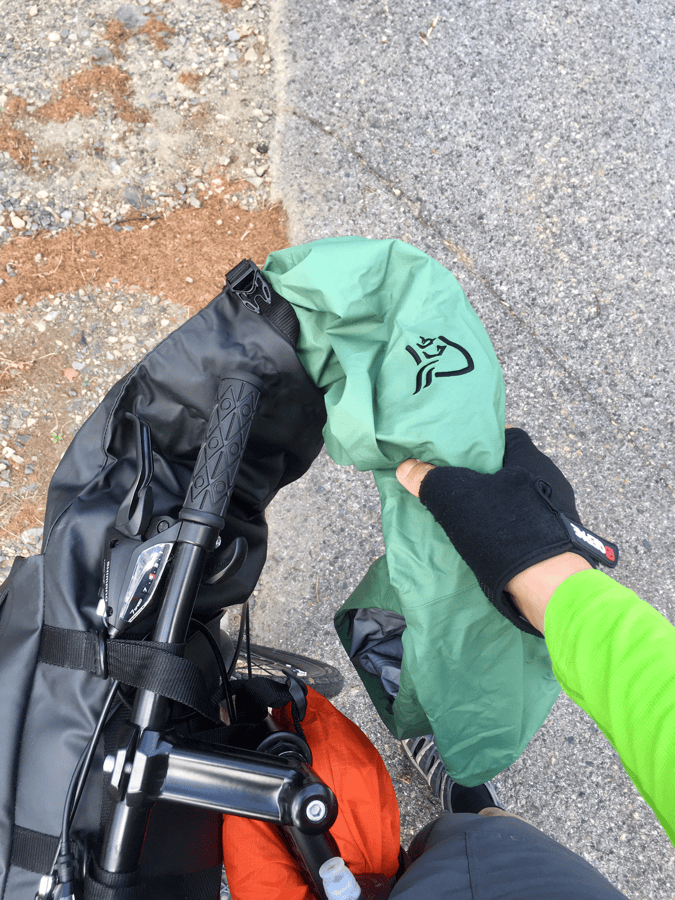
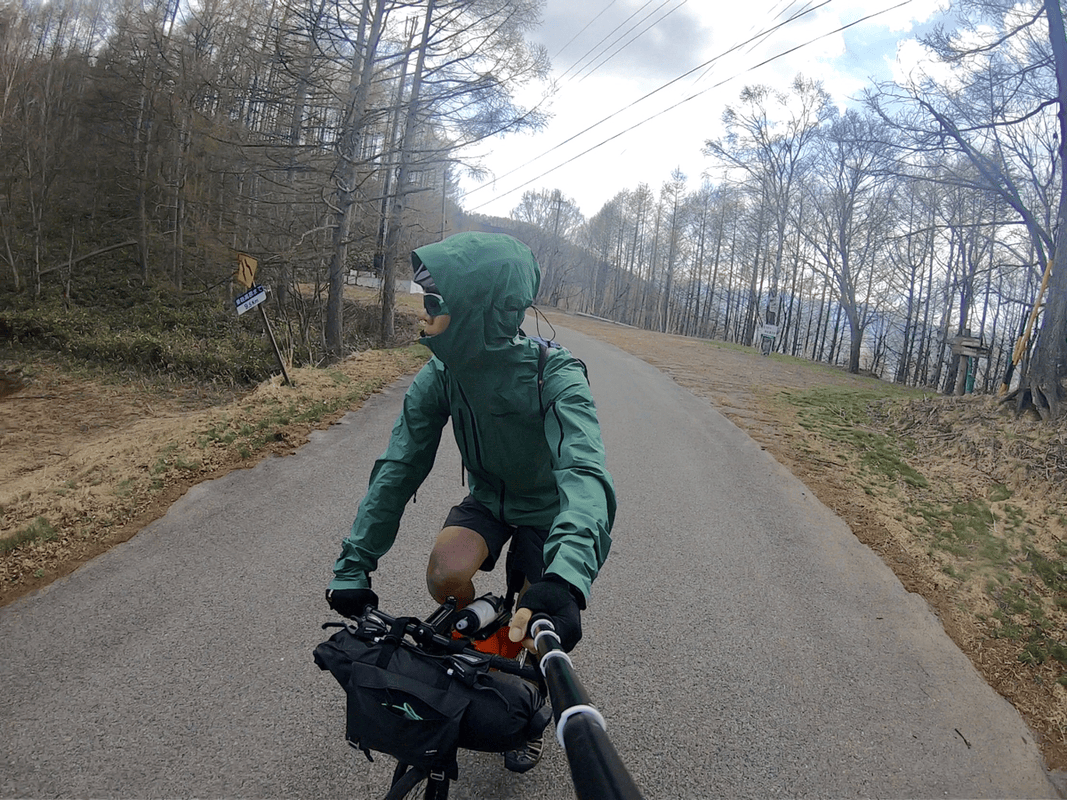
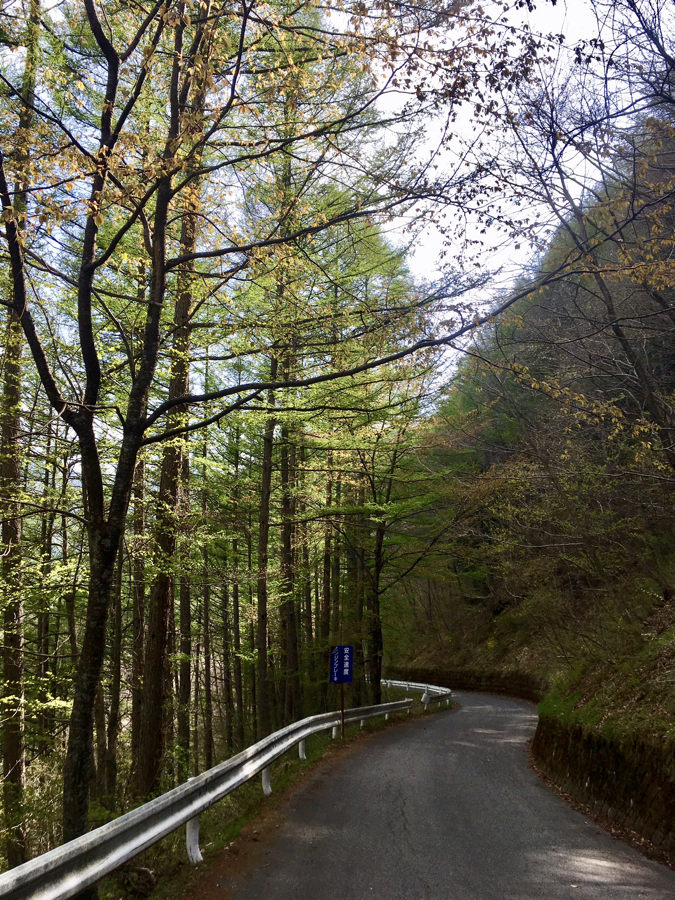
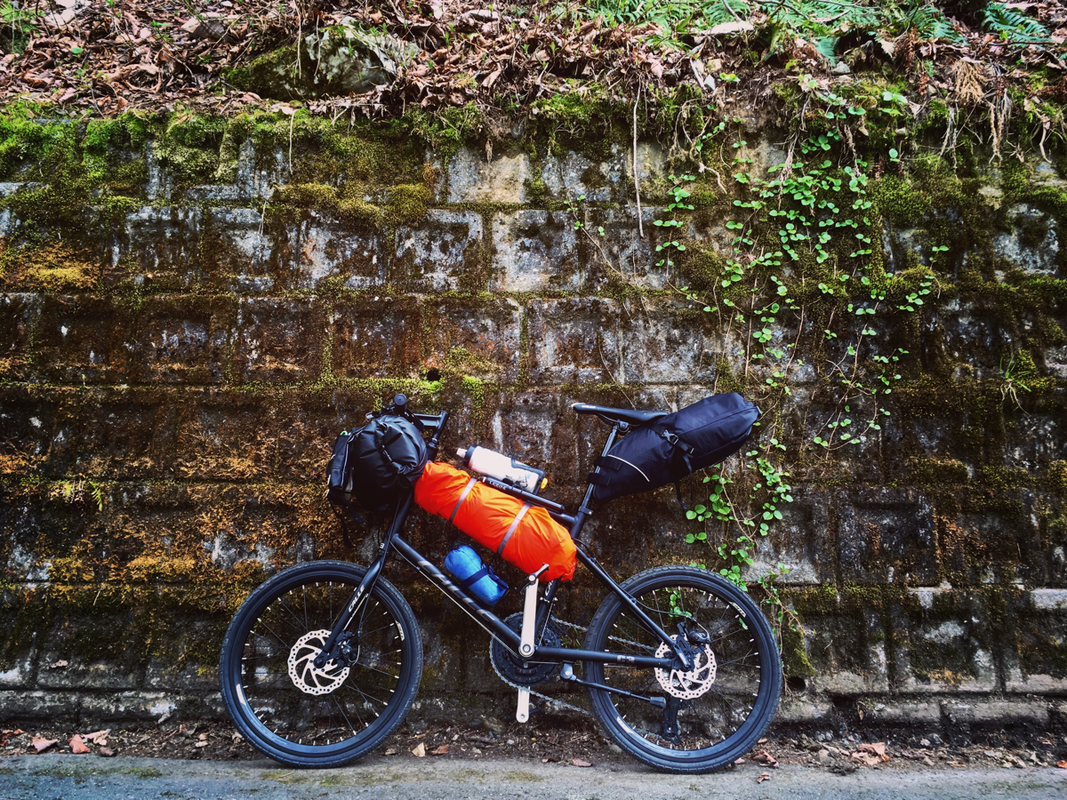
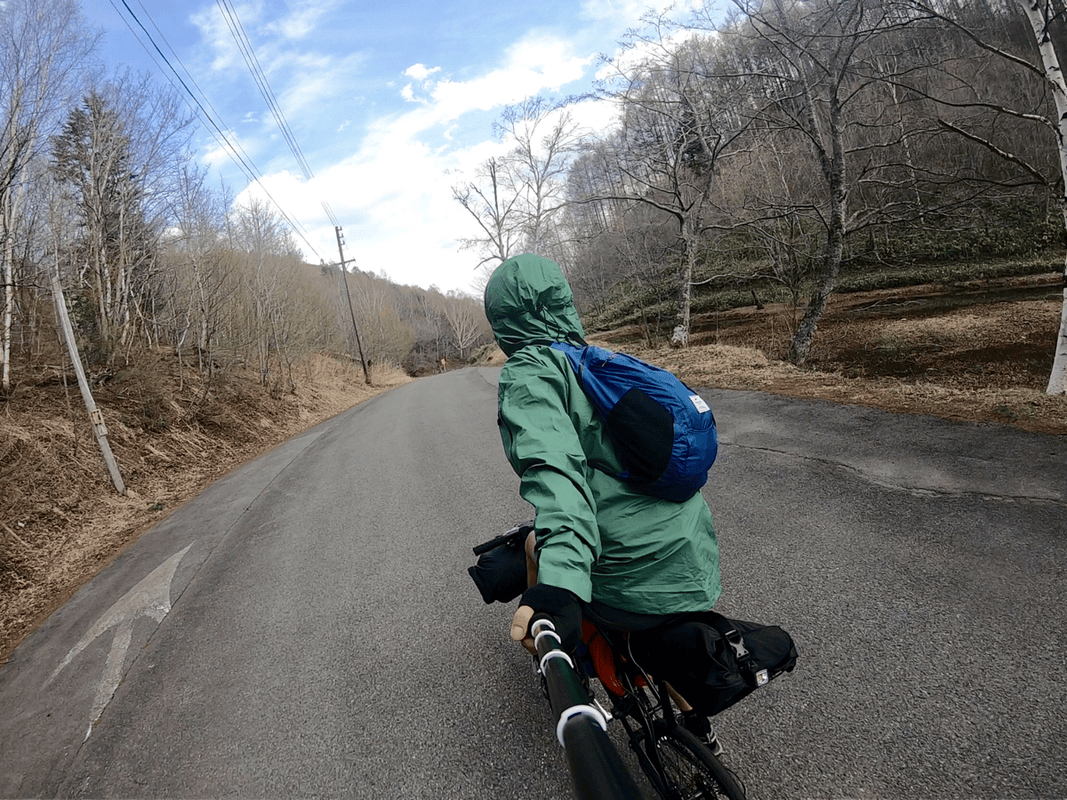
From Nagawa, I needed to cross another small mountain. Beyond Sakai Pass, the road descended toward Yabuhara.
I had ridden this stretch once before, but that day I was surrounded by cloud and remembered almost nothing of the landscape.
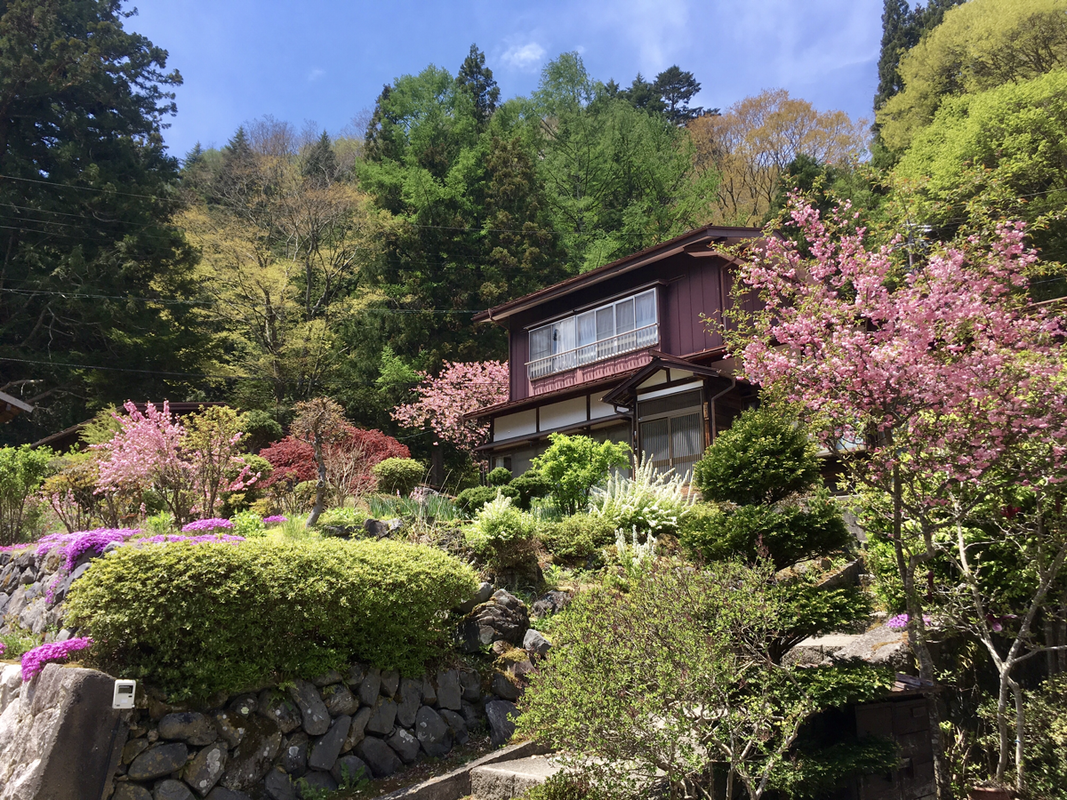
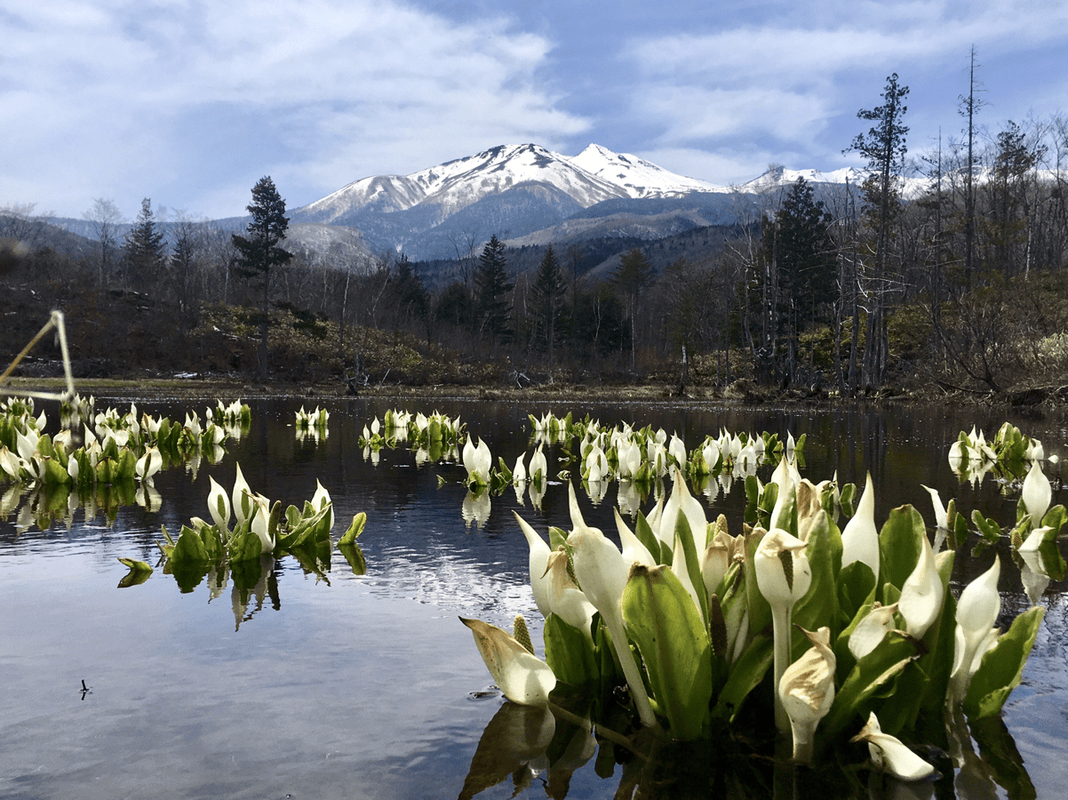
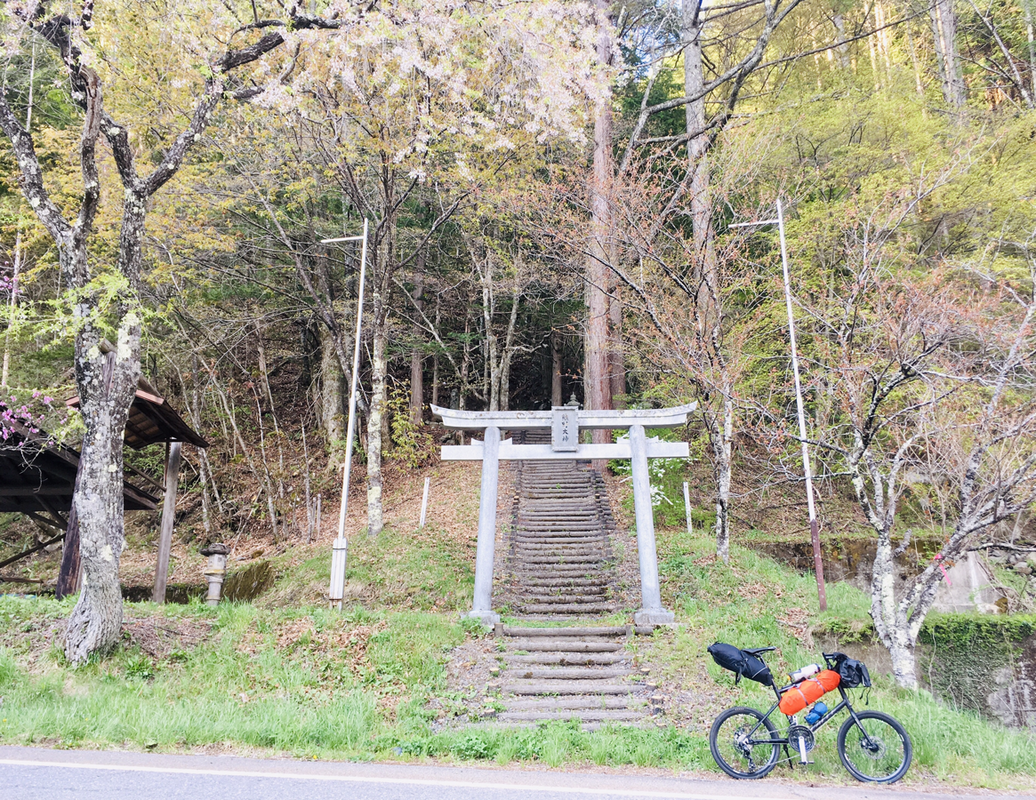
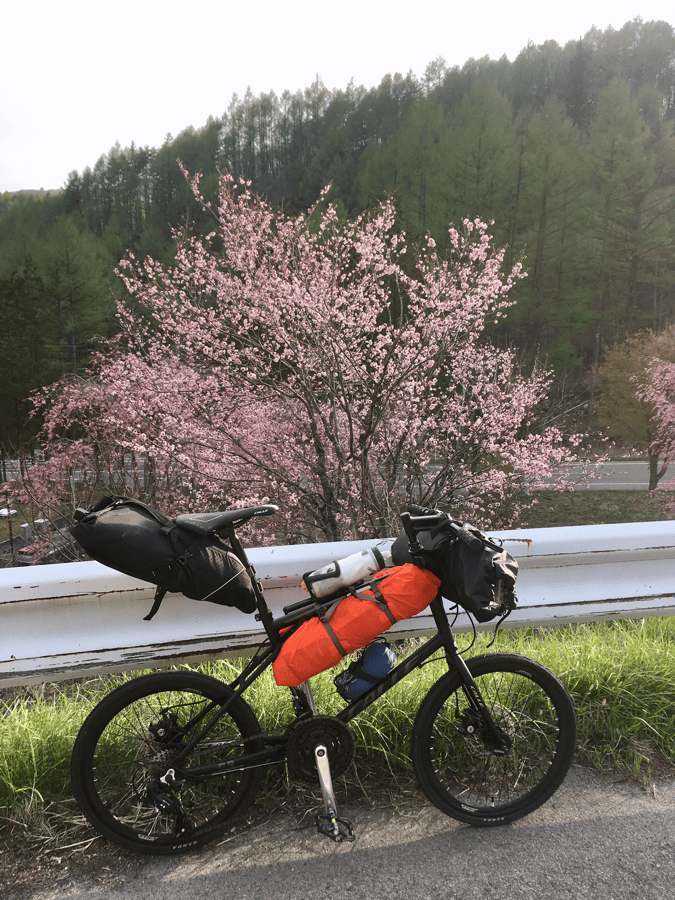
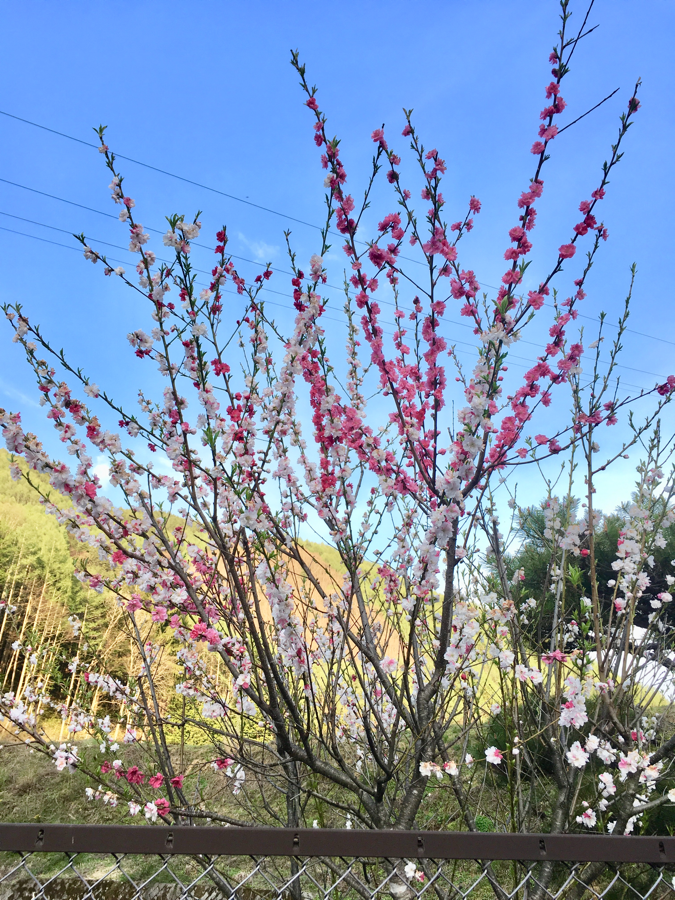
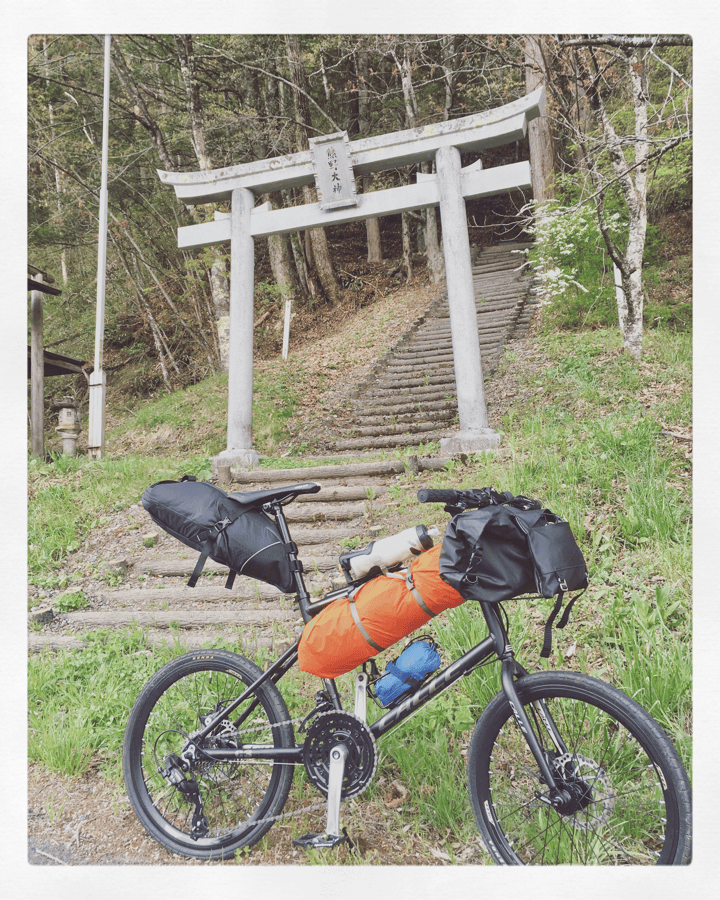
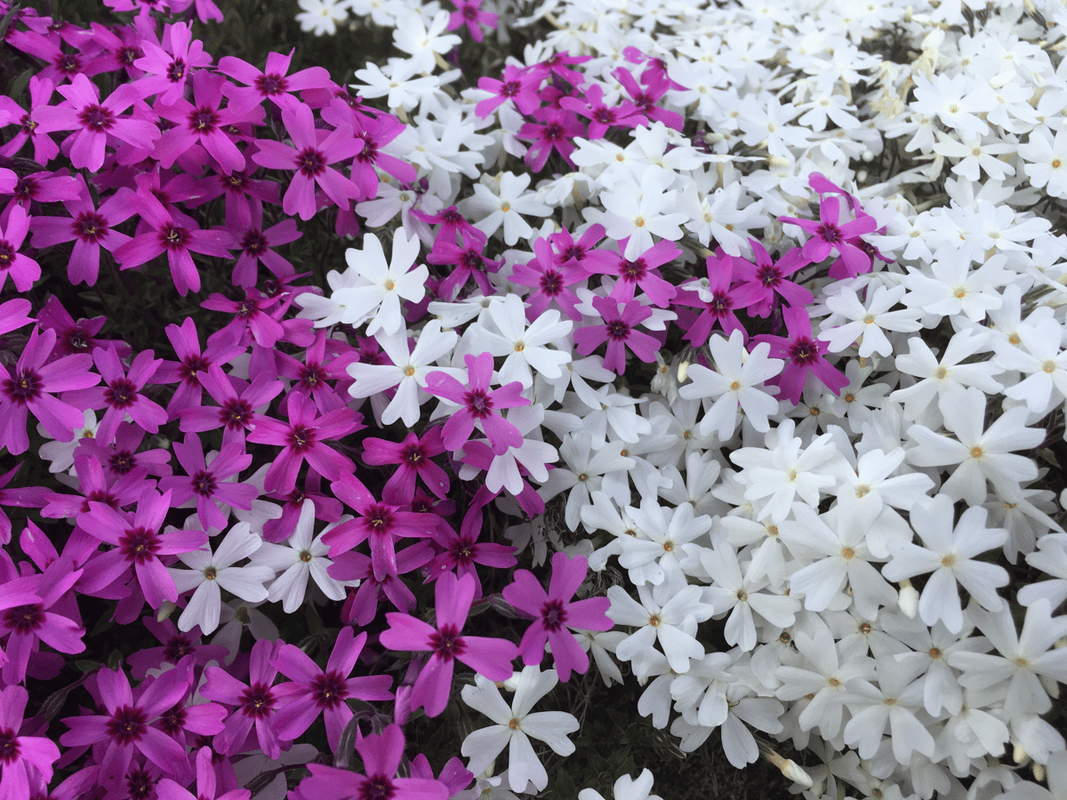
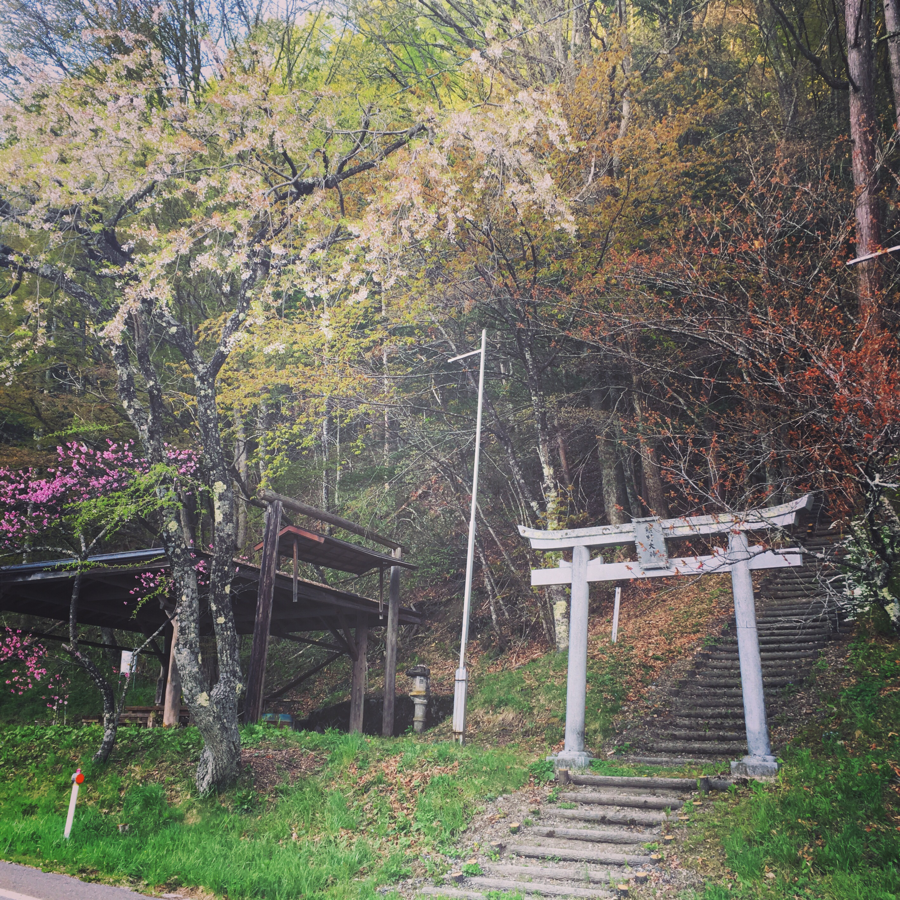
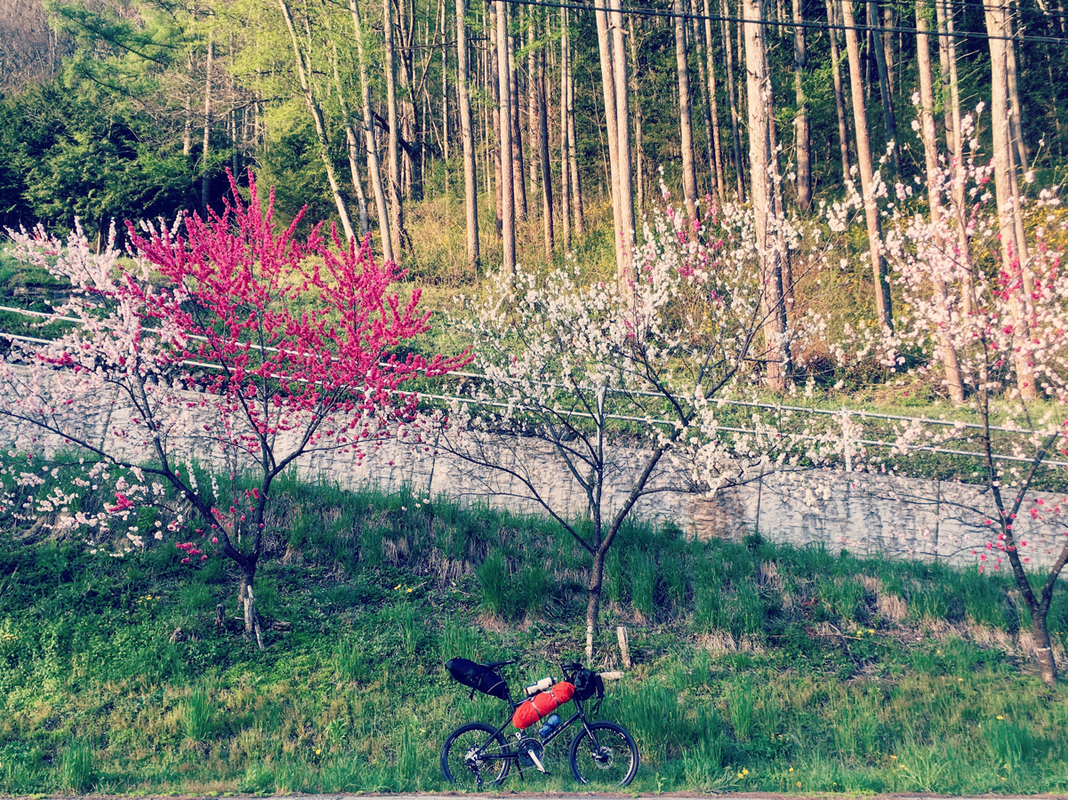
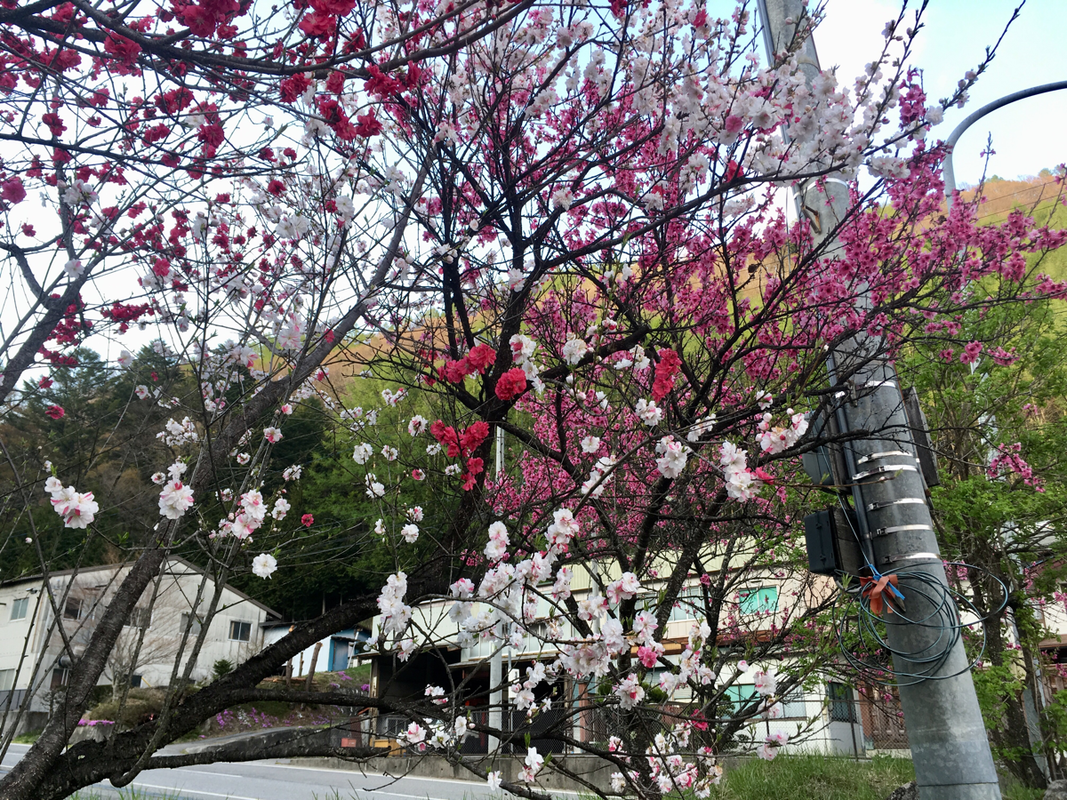
This time, the weather was fine and spring flowers were out. Only now did I realize how beautiful the road was. I had intended to descend straight to town, but kept stopping to photograph what I saw.
An Evening in Yabuhara
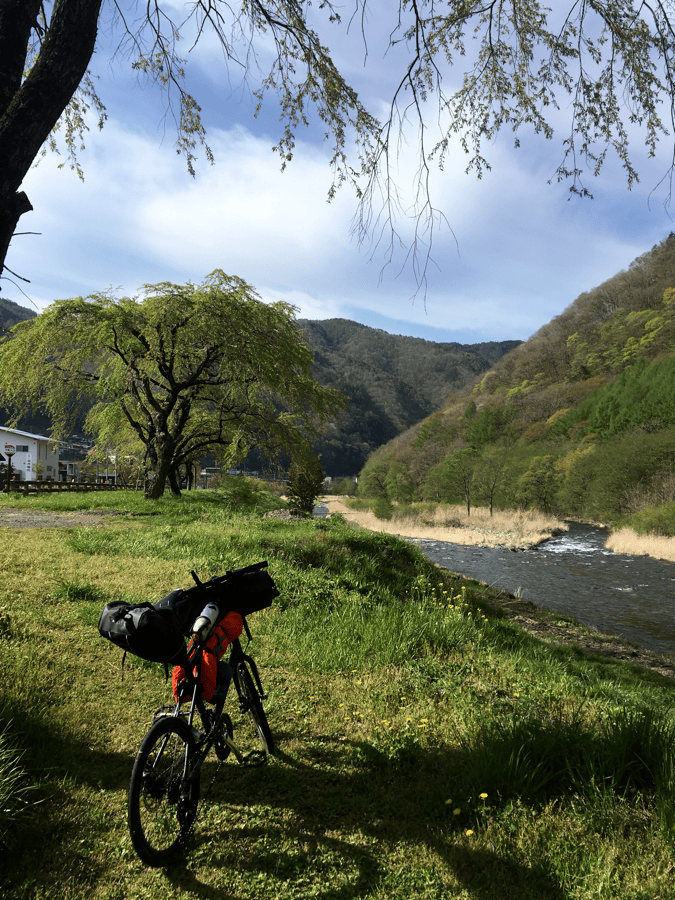
I had not planned the trip in much detail. My approach was to ride and see what appeared. Only as I neared Yabuhara did I begin looking for dinner and somewhere to sleep.
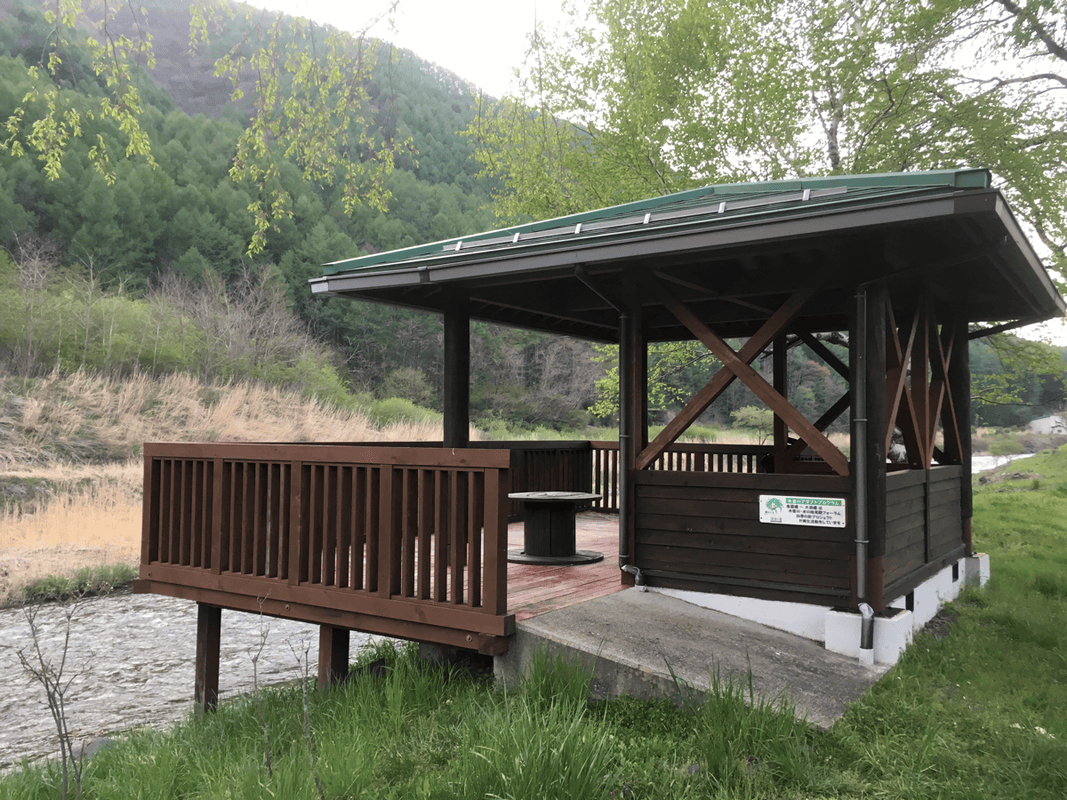
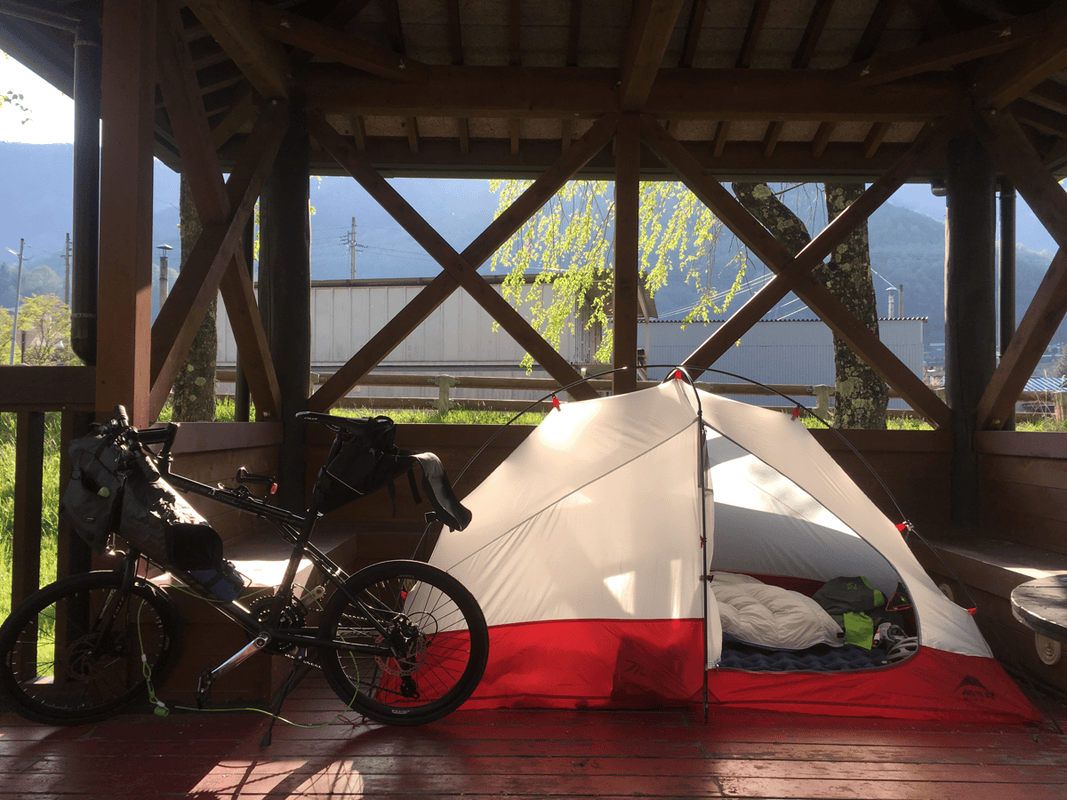
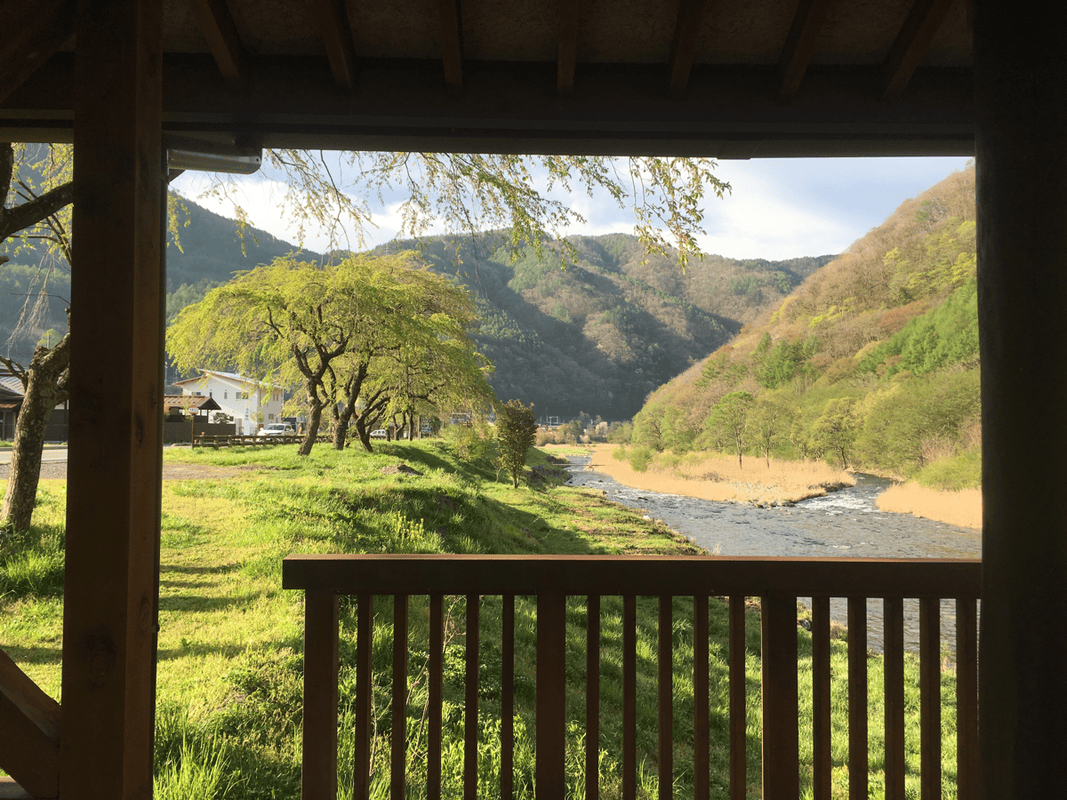
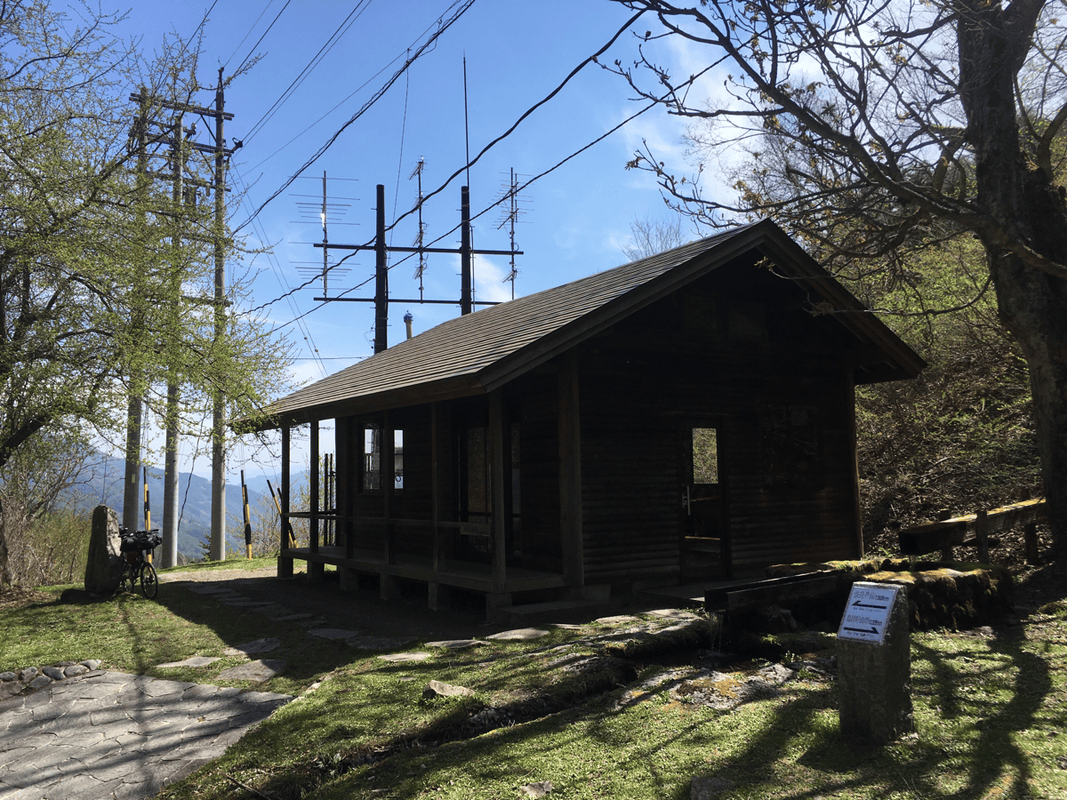
In the mountain countryside, I had often found sheltered places without much difficulty. That evening I noticed a pavilion beside the river, away from houses. It looked ideal to me, though readers should not assume it is an authorized campsite.
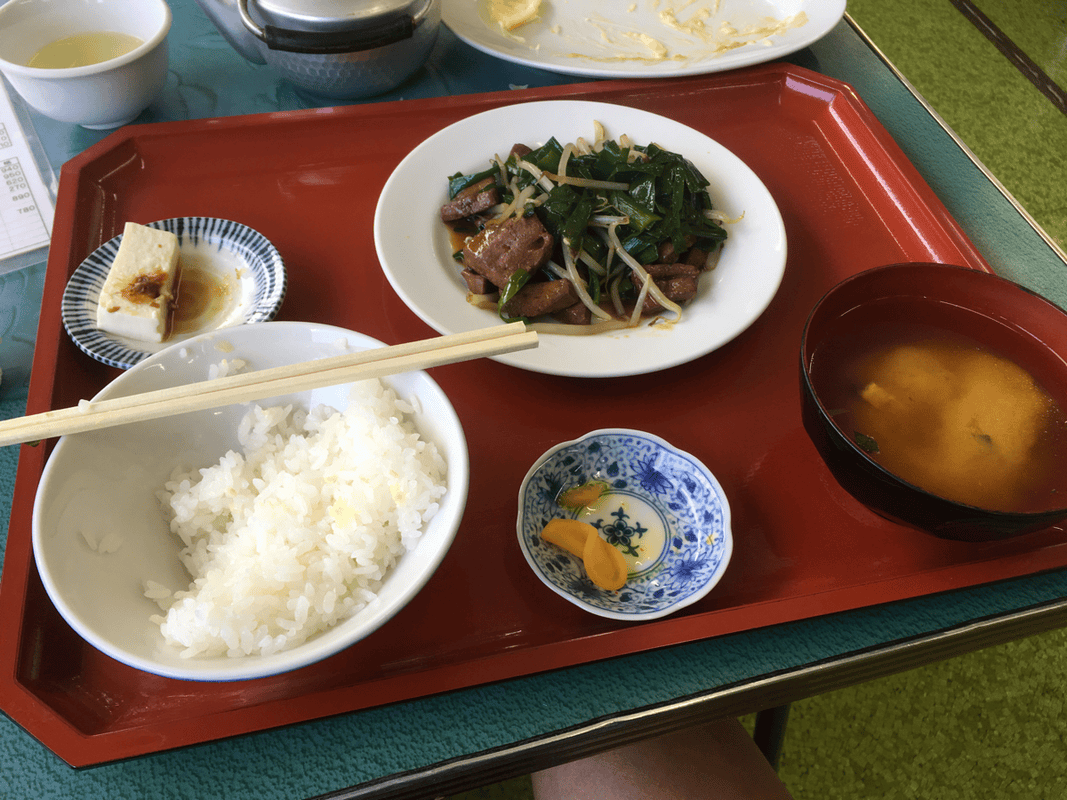
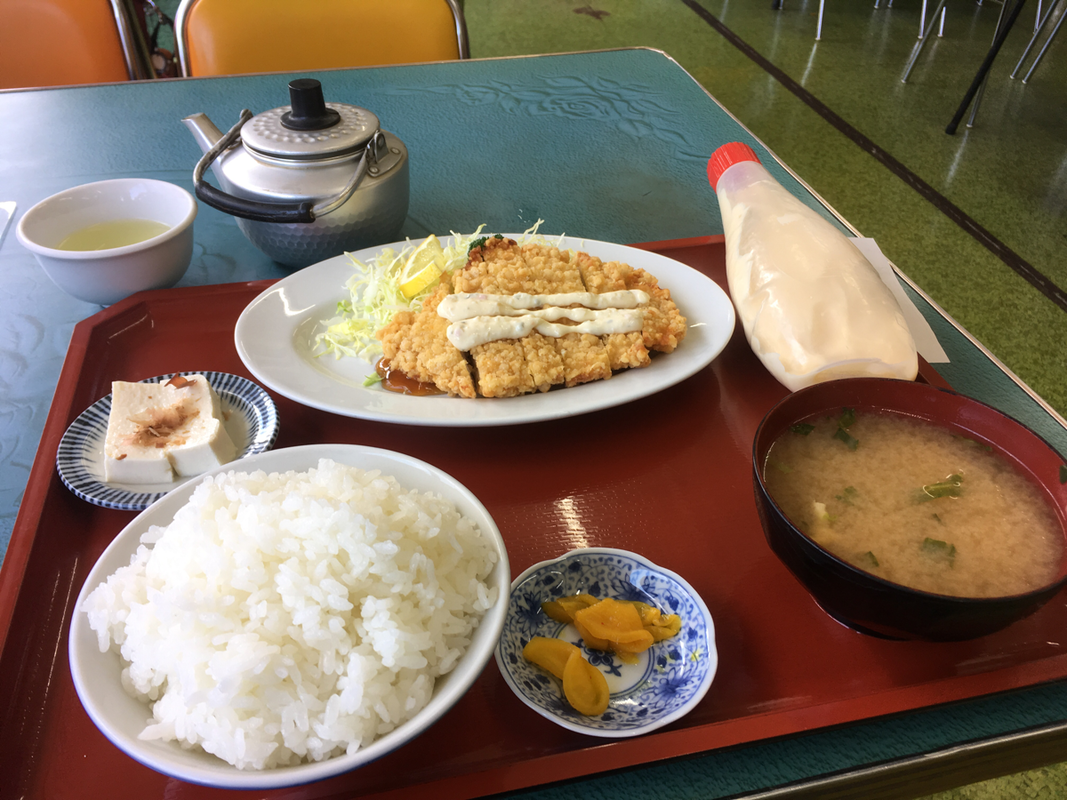
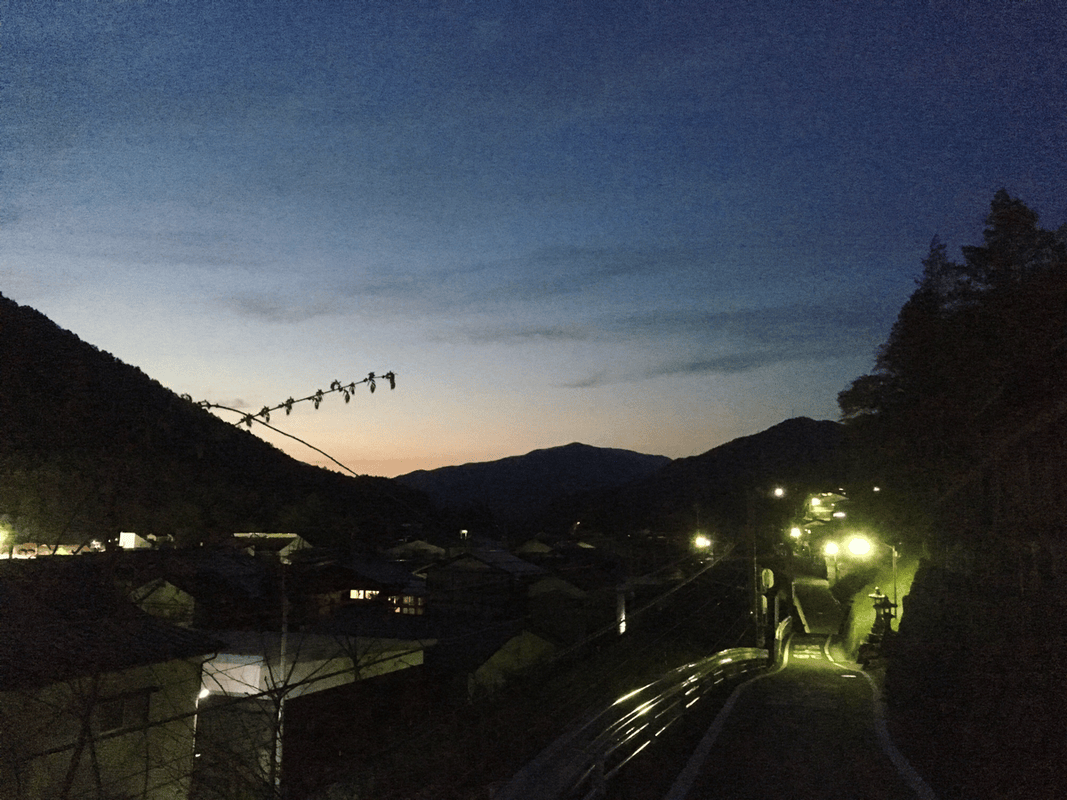
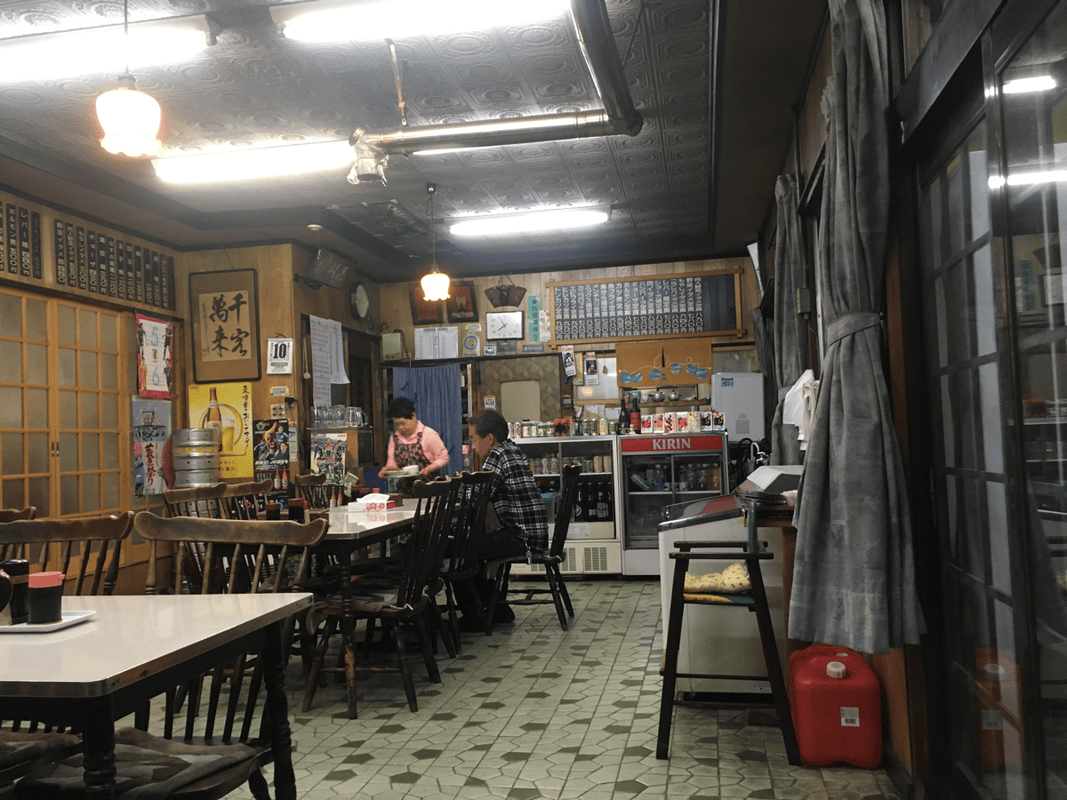
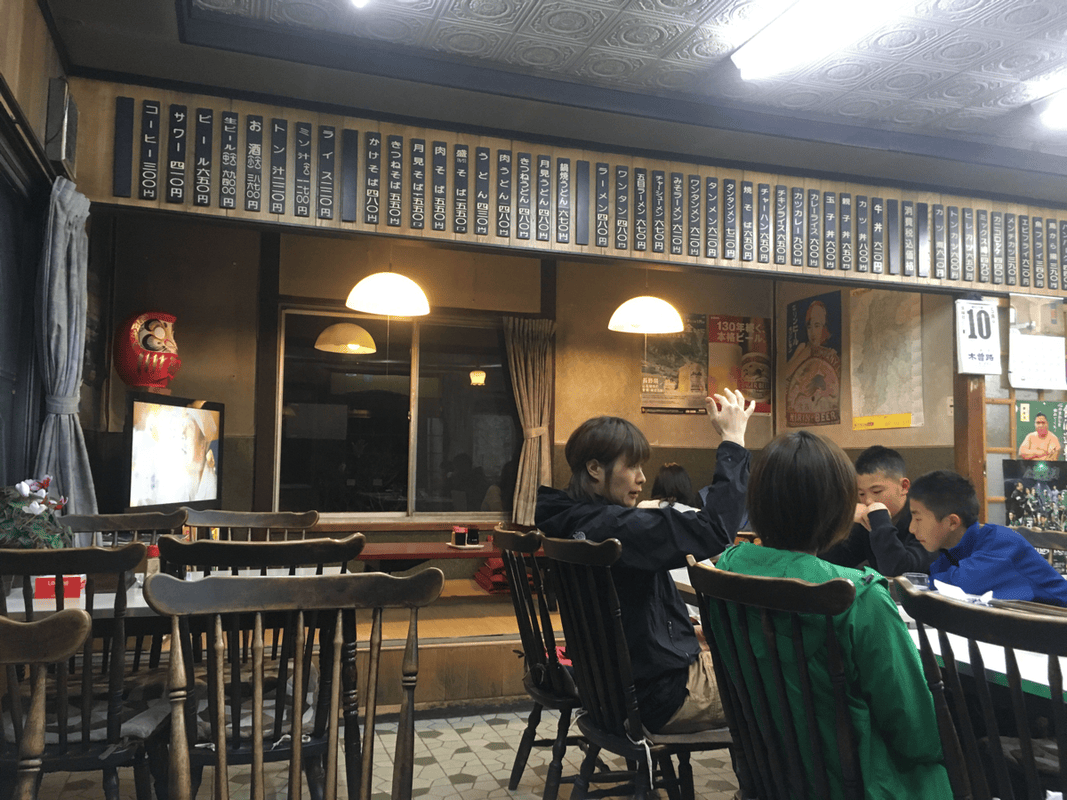
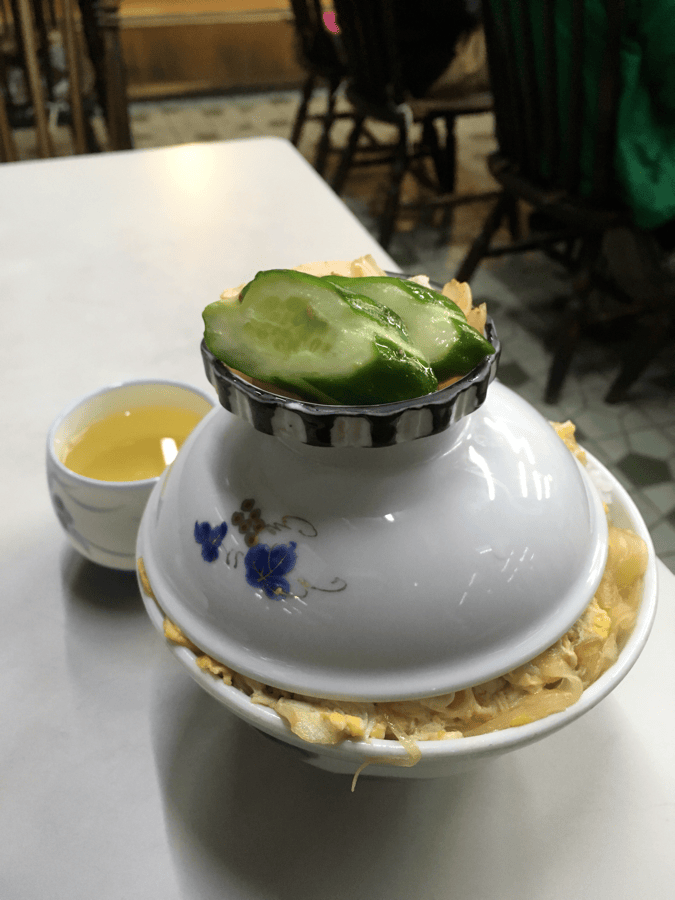
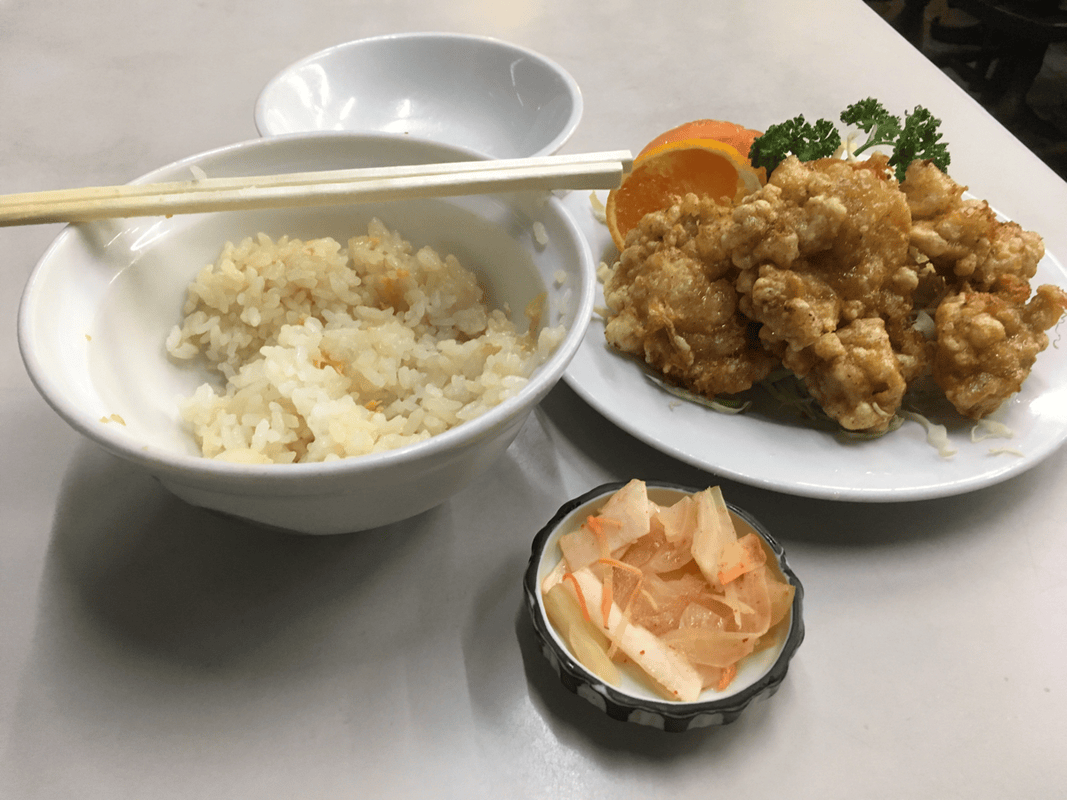
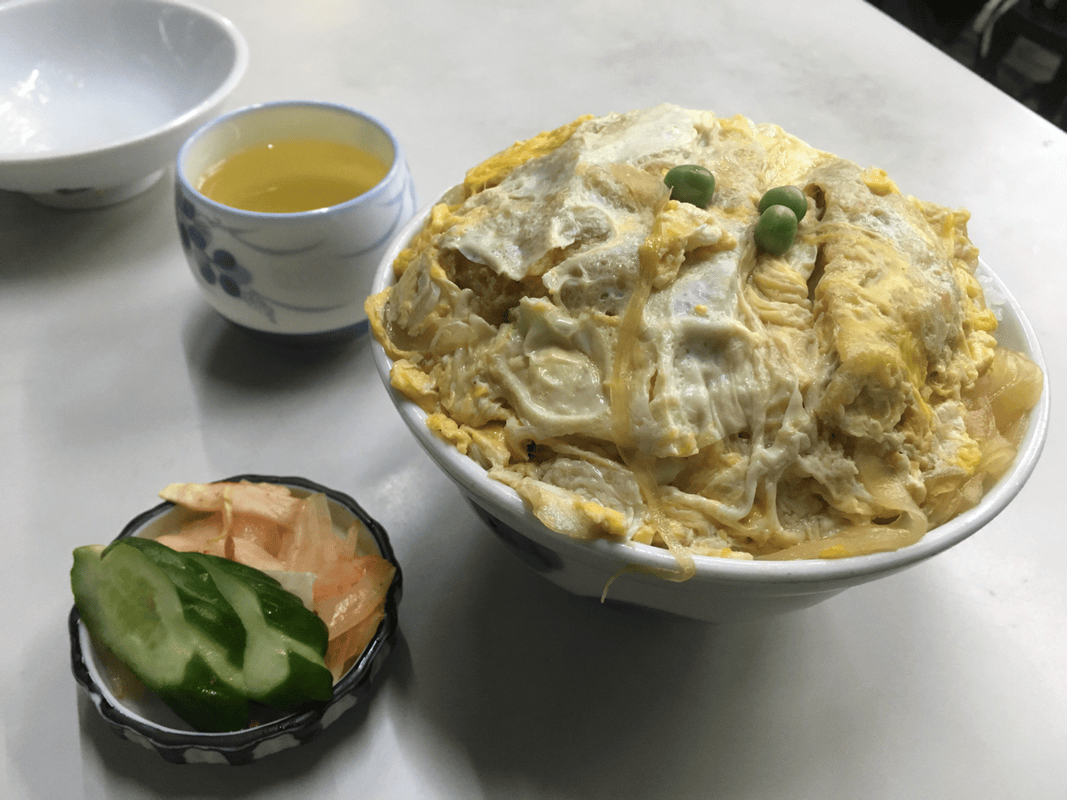
I wandered around town at dusk, watching ordinary life unfold. When hunger arrived, I found a local restaurant and ate a meal made with the flavors of the area.
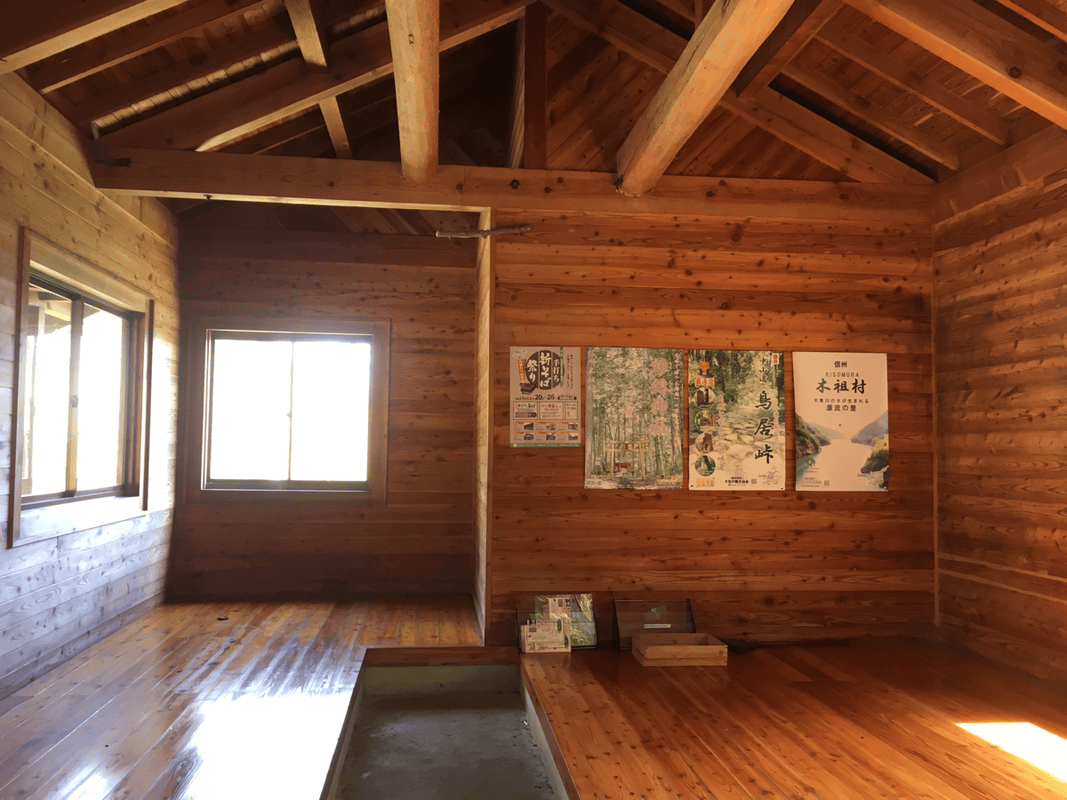
After dinner, I returned to the pavilion and went to bed early. The following morning, I would explore the Nakasendo in the mountains.
A First Night in a Different Tent
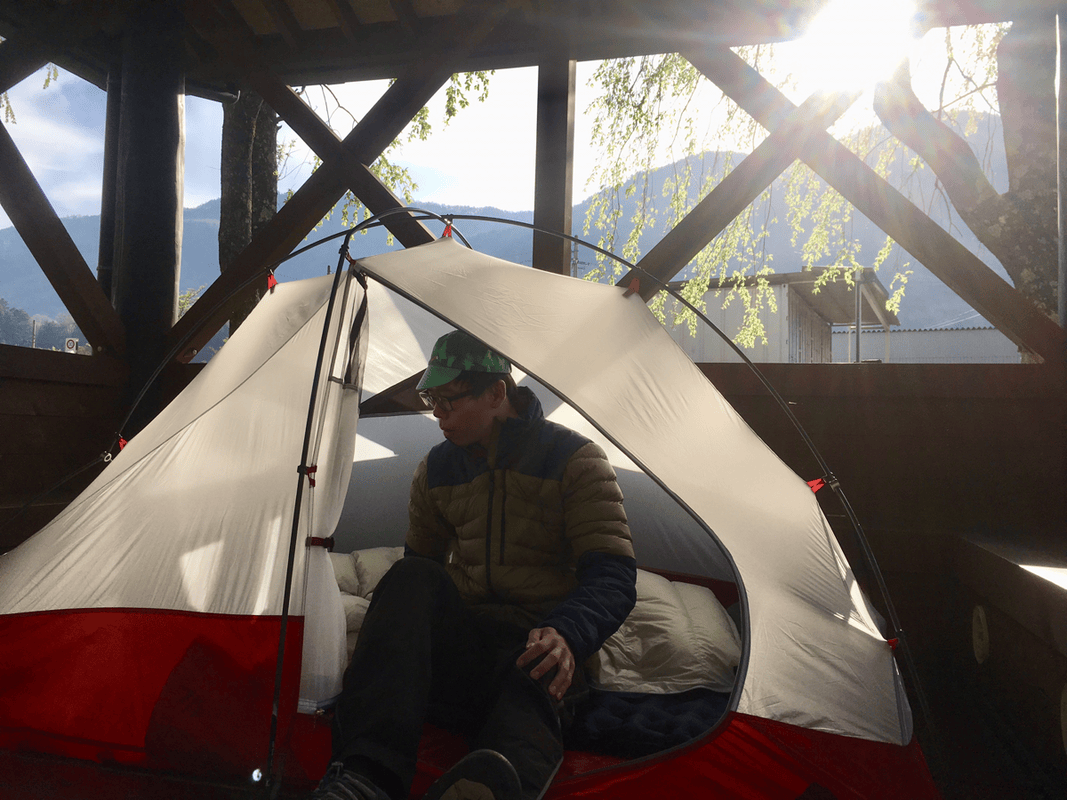
The weather was fine, and the pavilion provided shelter. My MSR Access four-season tent had relatively little mesh, so that night I pitched only the inner.
The model I used weighed about 1.86 kilograms, heavier than many three-season alternatives. I reflected that carrying only the inner and poles could reduce packed weight and size in suitable circumstances, but that choice depended on the particular shelter and conditions.
It was my first night using this tent, and the interior space surprised me. Many two-person tents felt barely large enough for two. This one seemed genuinely roomy, as though two people could sleep comfortably.
A Restriction, and an Unexpected Alternative
I had hoped to leave at dawn. My comfortable equipment encouraged me to linger, and it was almost eight before I set off.
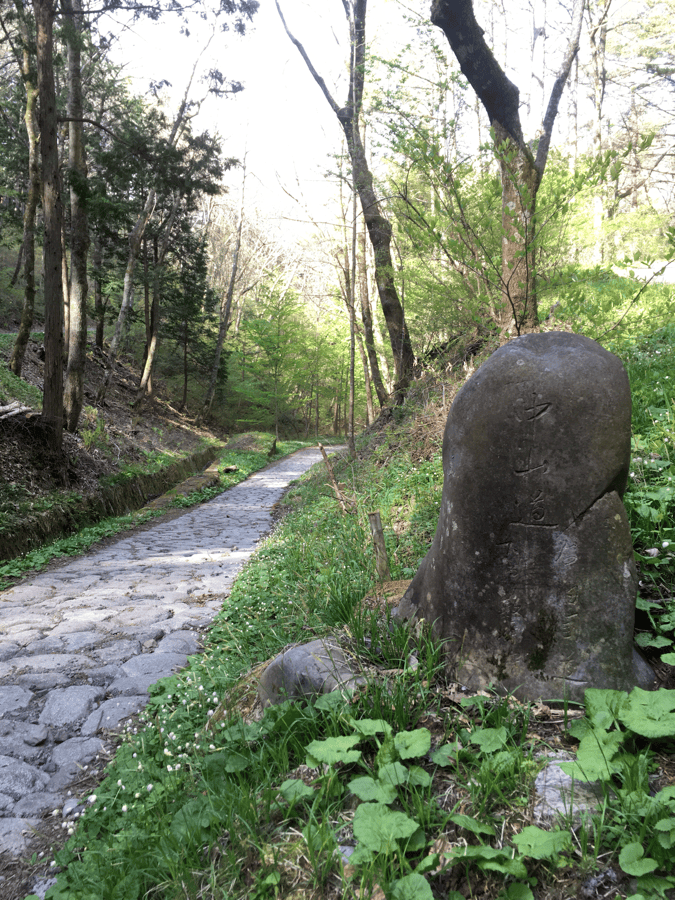
At the Nakasendo entrance, I discovered that vehicles were prohibited, including bicycles.
For a moment, I hesitated between turning back to the road and wondering whether I could simply push the bike in. Then I noticed a gravel road nearby.
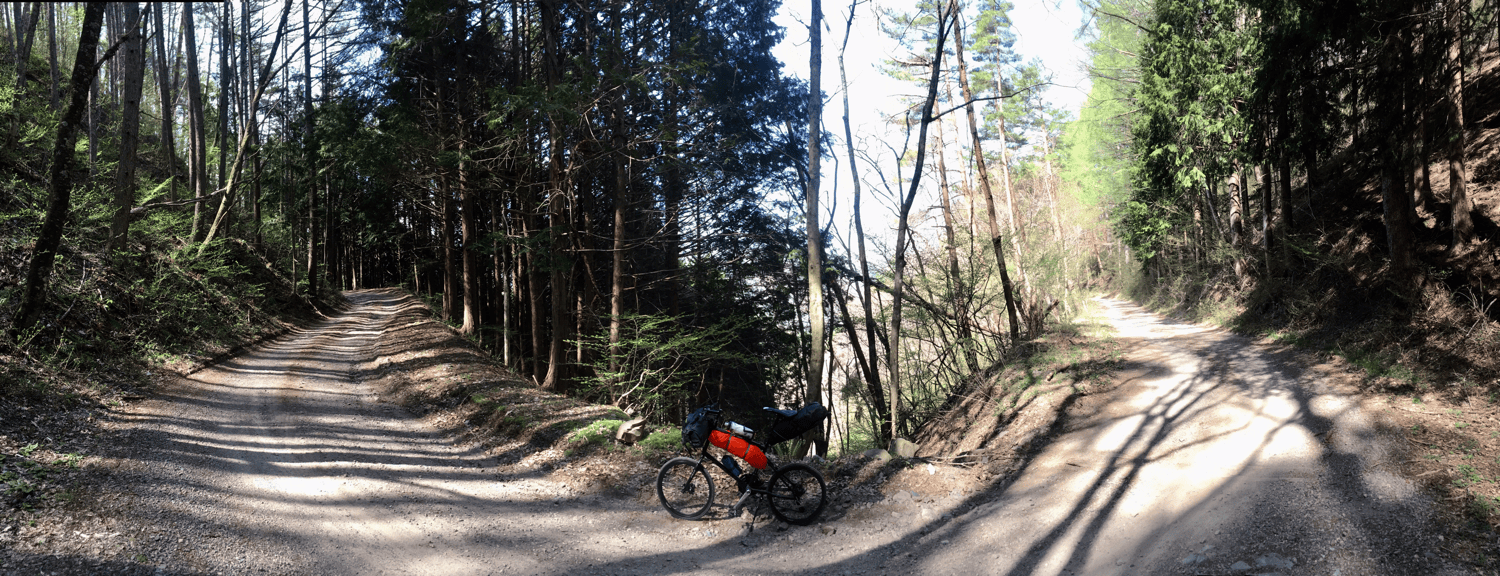
It was an old national-road alignment that could also take me toward Narai-juku, with access toward Torii Pass, the high point of this section. What a welcome discovery. I took the alternative rather than entering the bicycle-restricted path.
The Best Surprise of the Trip
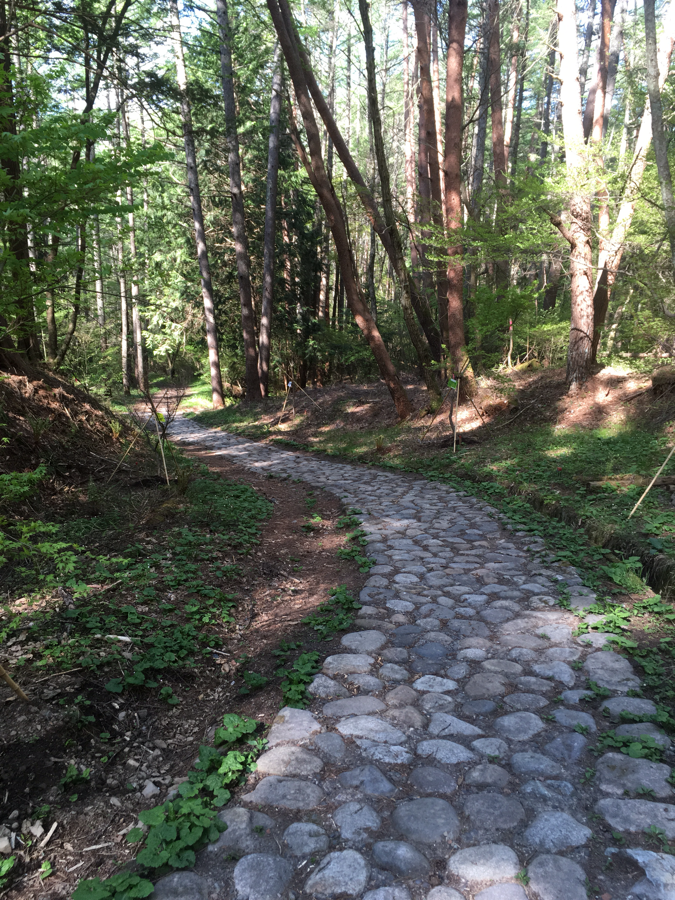
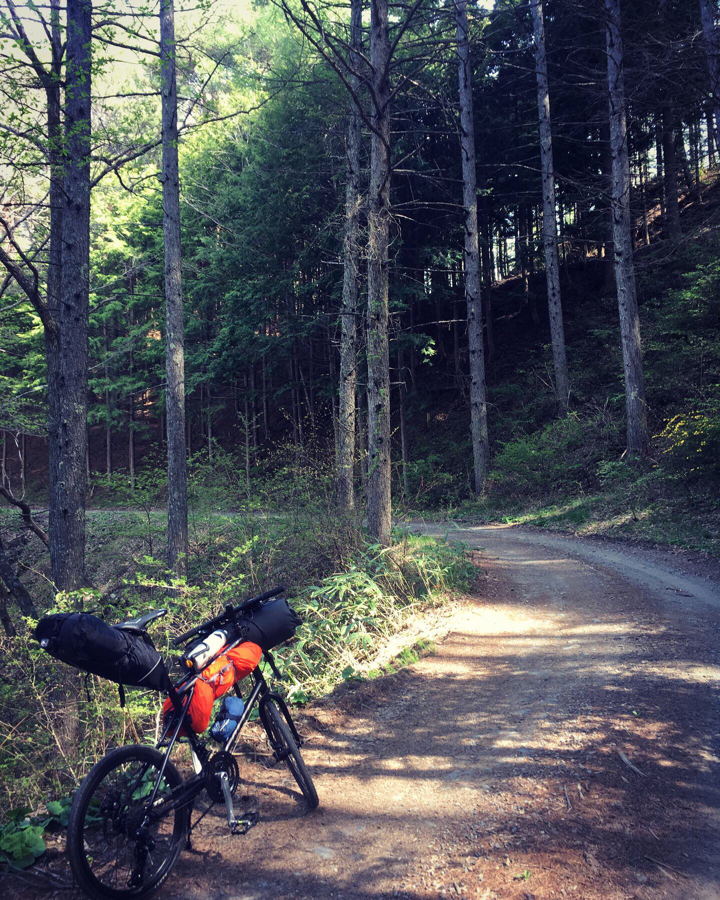
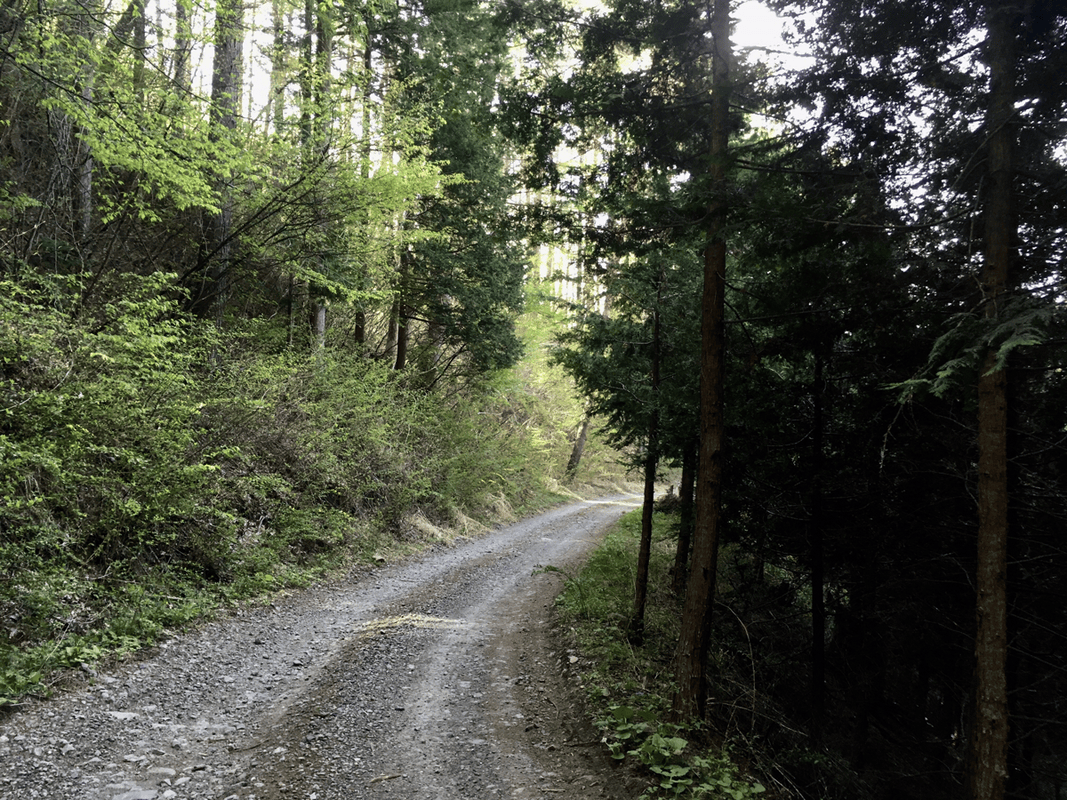
I wondered how long ago this had been a national road. I could see no trace of asphalt. It felt more like a quiet country track.
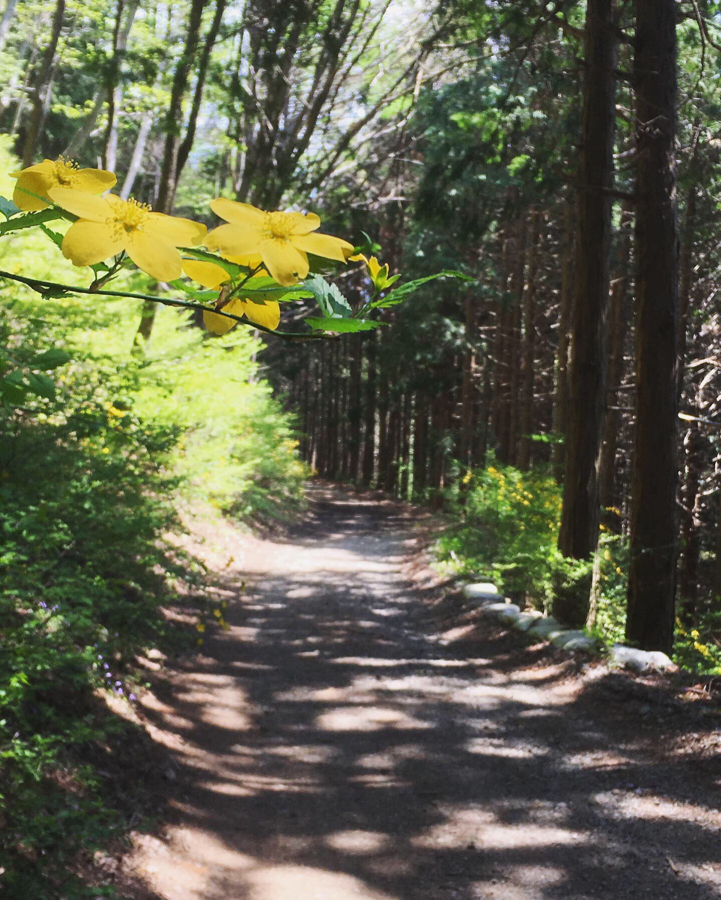
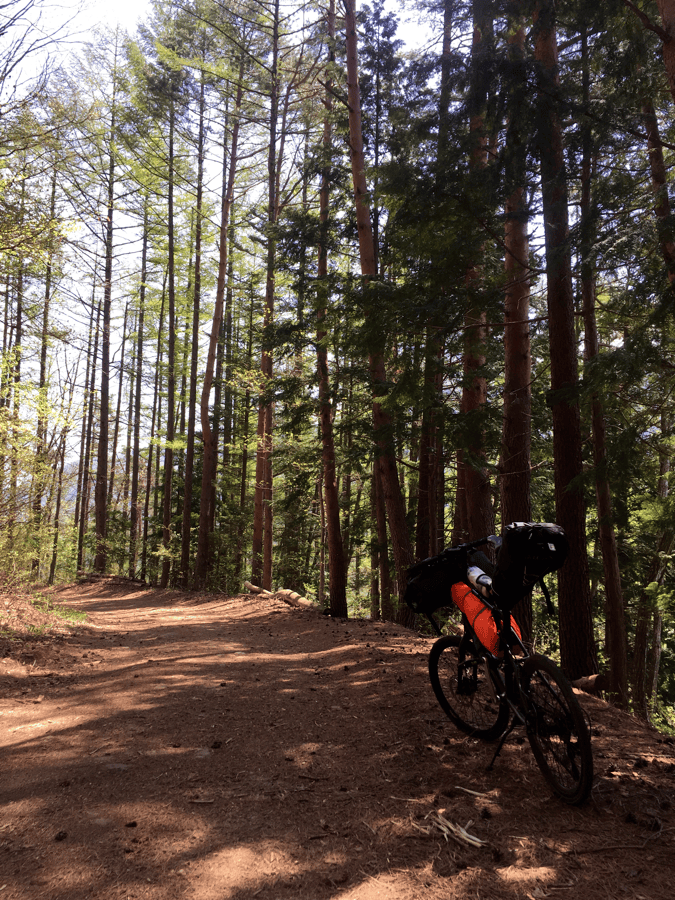
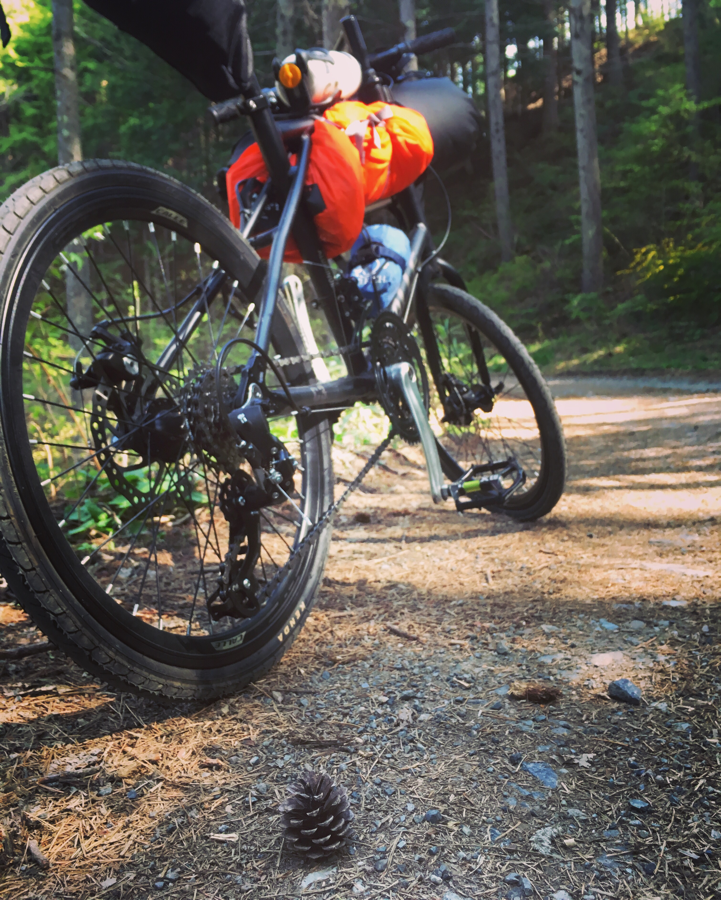
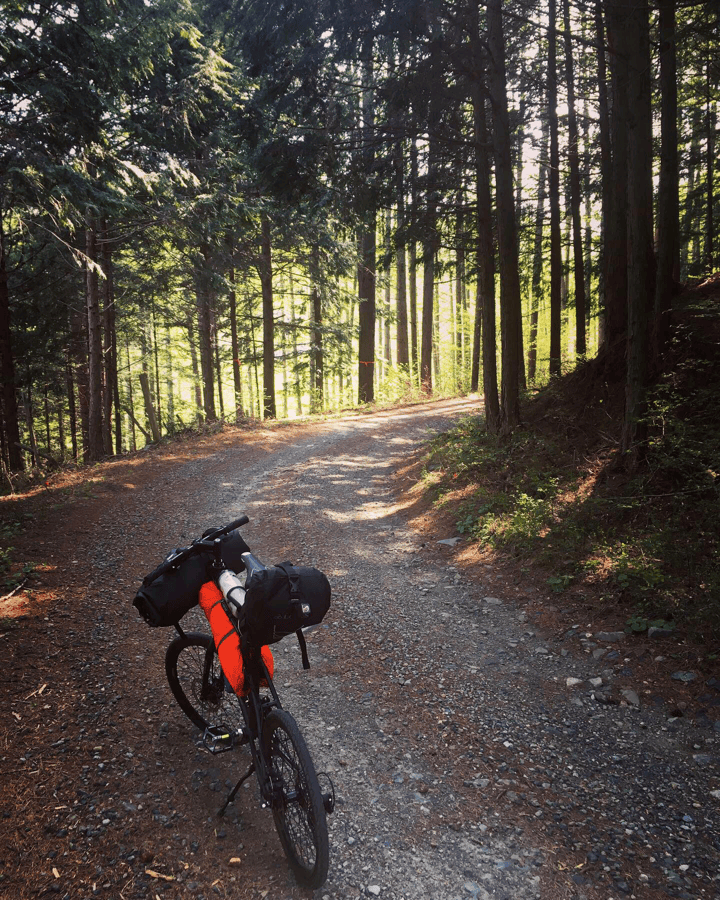
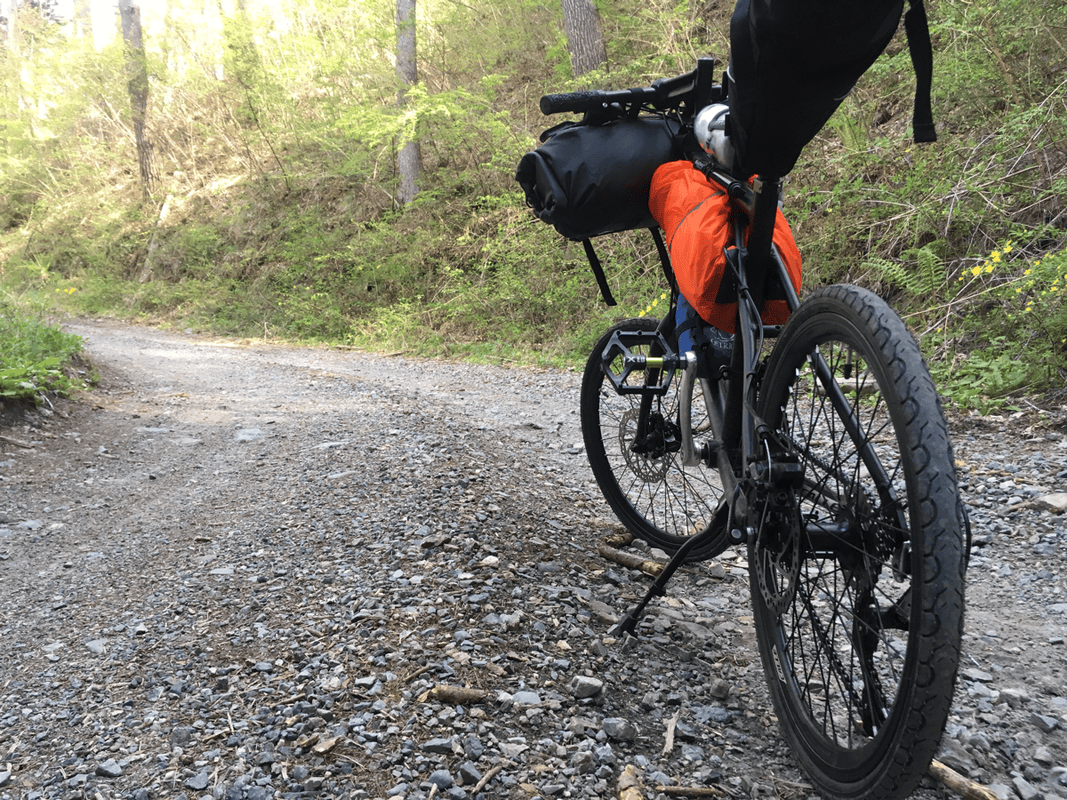
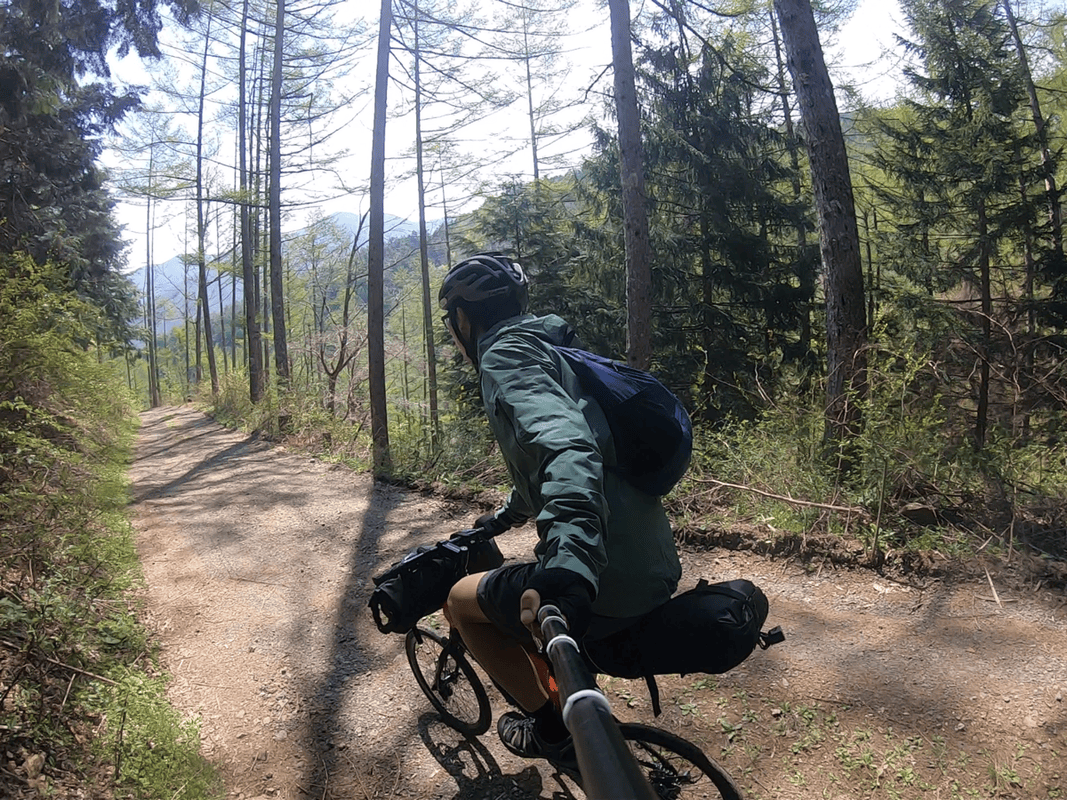
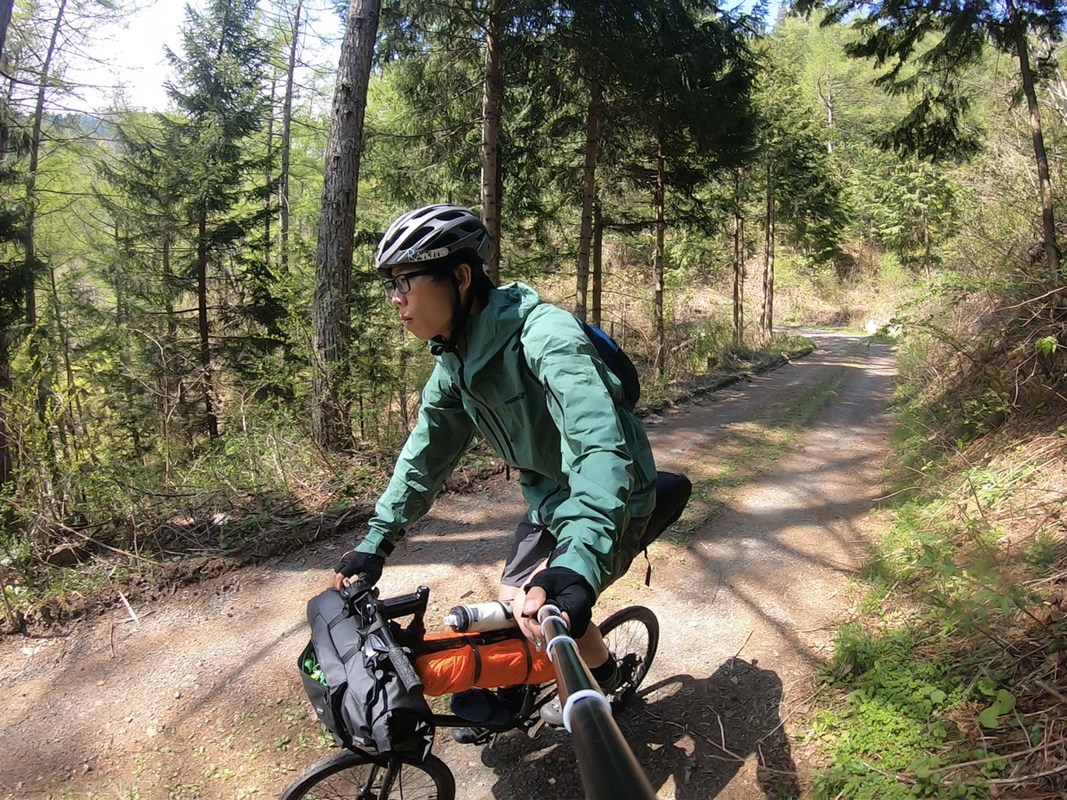
The forest road astonished me. Although it climbed, the gradient was gentle enough for a comfortable, steady rhythm.
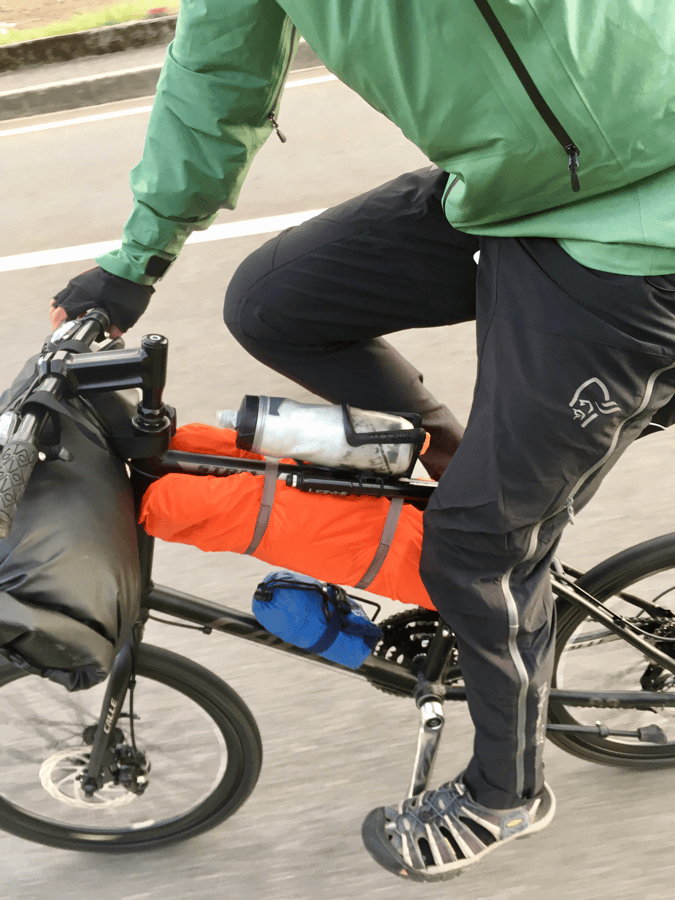
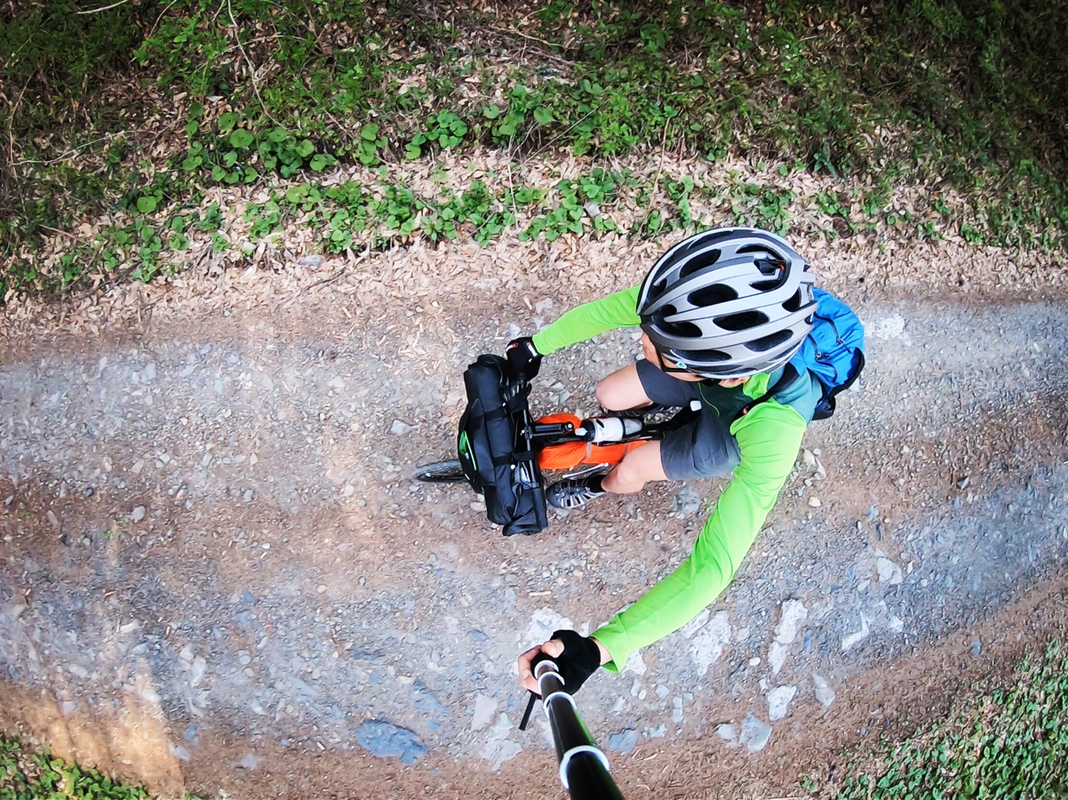
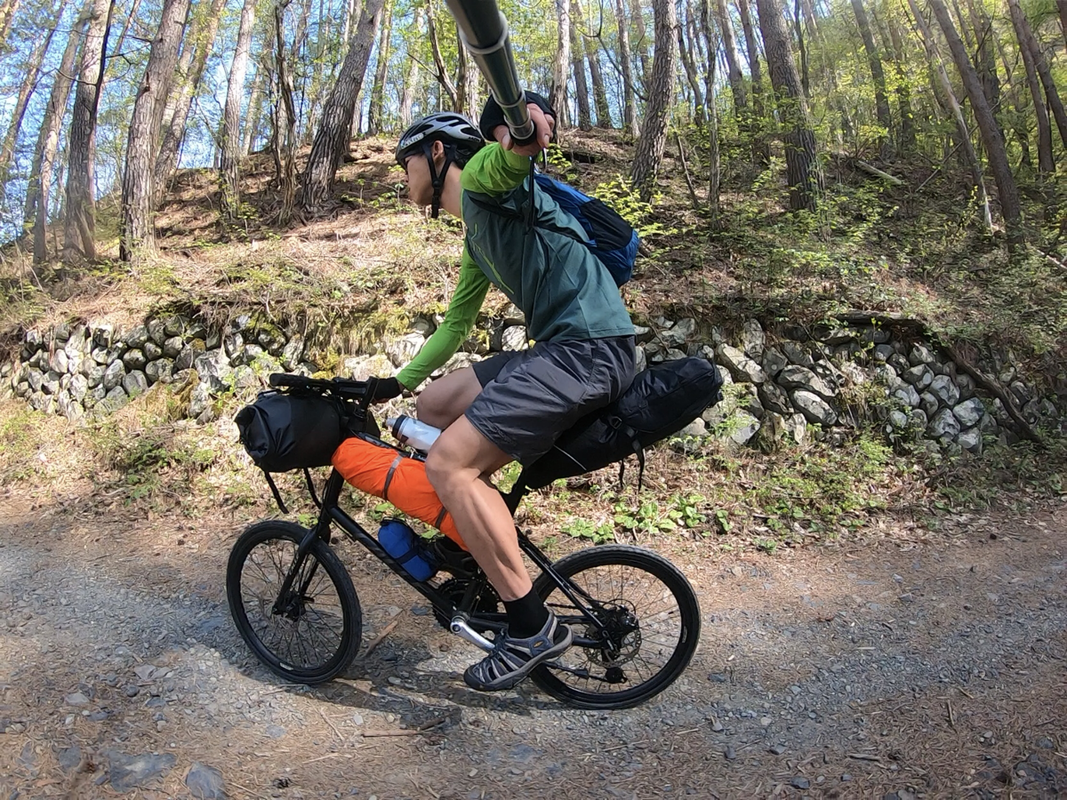
The gravel was also pleasant to ride. It did not shake the bike excessively, and even my small-wheeled bicycle with urban tires found decent grip in the conditions that day. I did not feel it sliding outward in corners.
Only a few local pickup trucks passed. To me, it was wonderful bikepacking terrain.
I had come to see an old trail, but this forest road became the trip’s greatest discovery.
Torii Pass and a View toward Mount Ontake
The Nakasendo was, after all, a road. Between post towns, it did not necessarily have old buildings lining it, so I did not expect monuments at every turn.
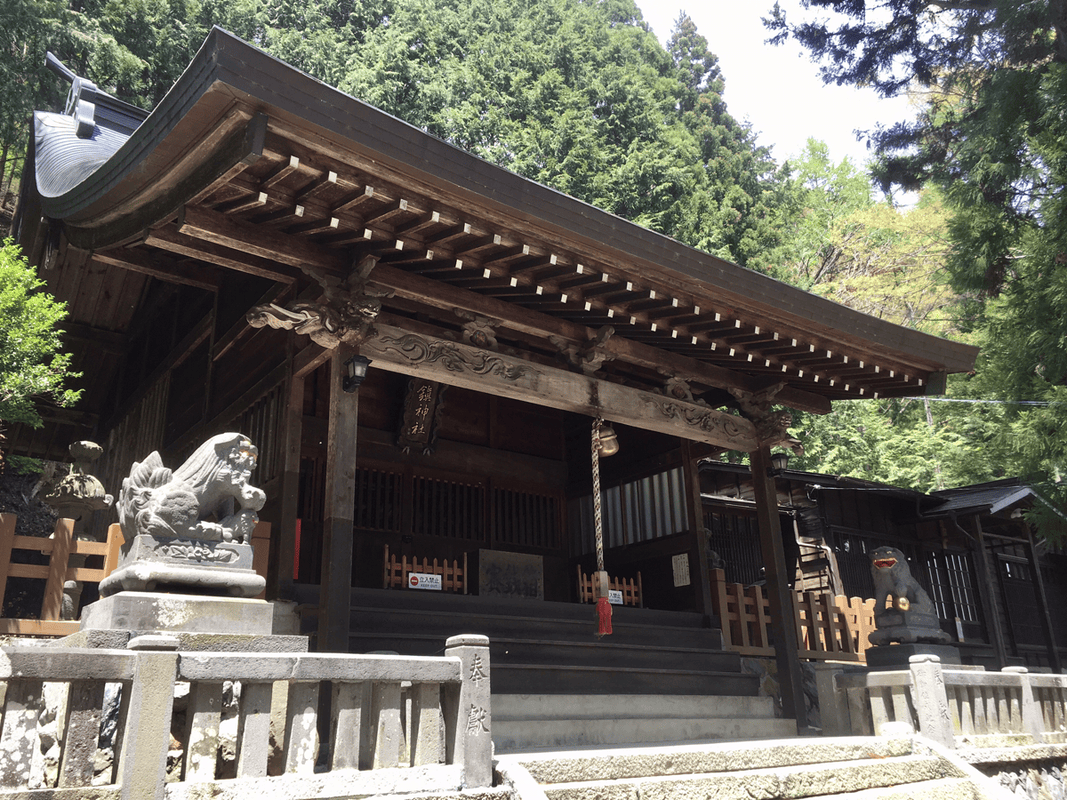
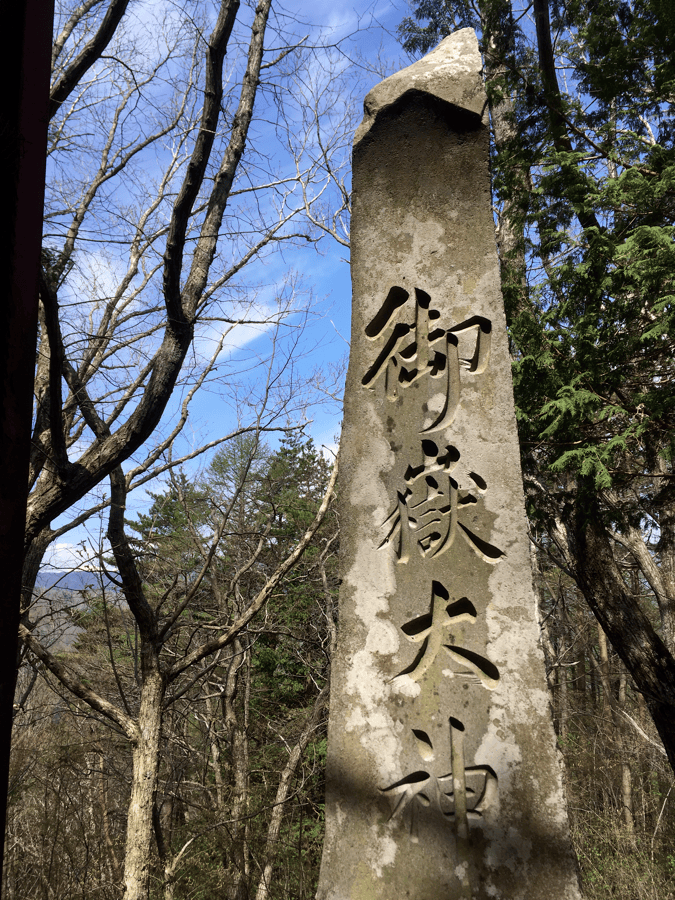
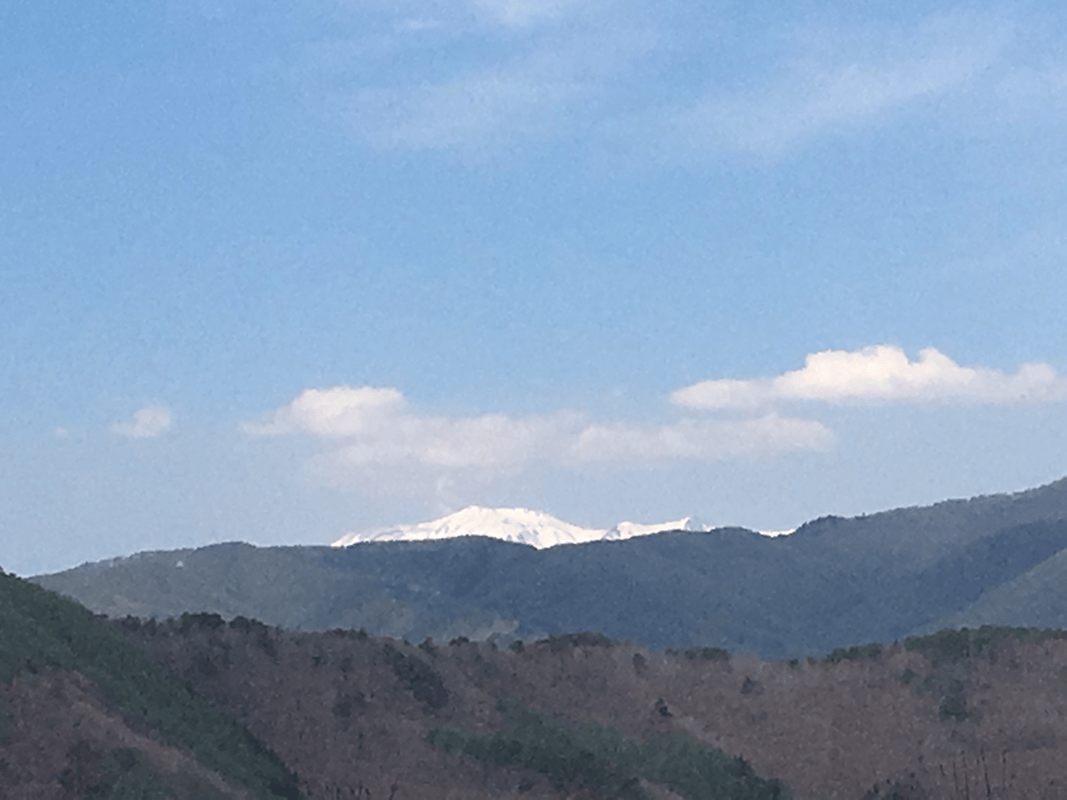
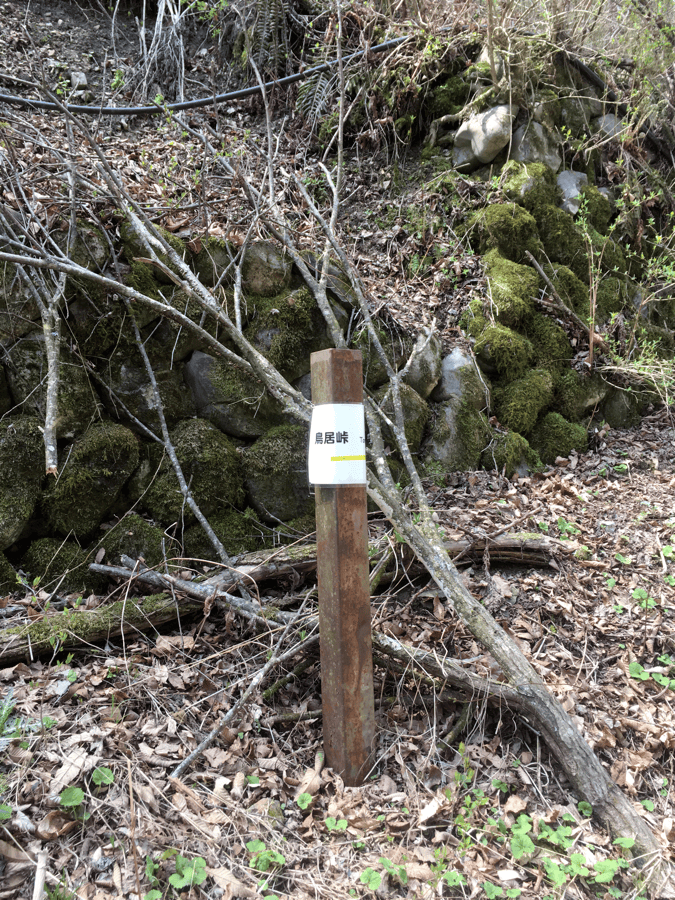
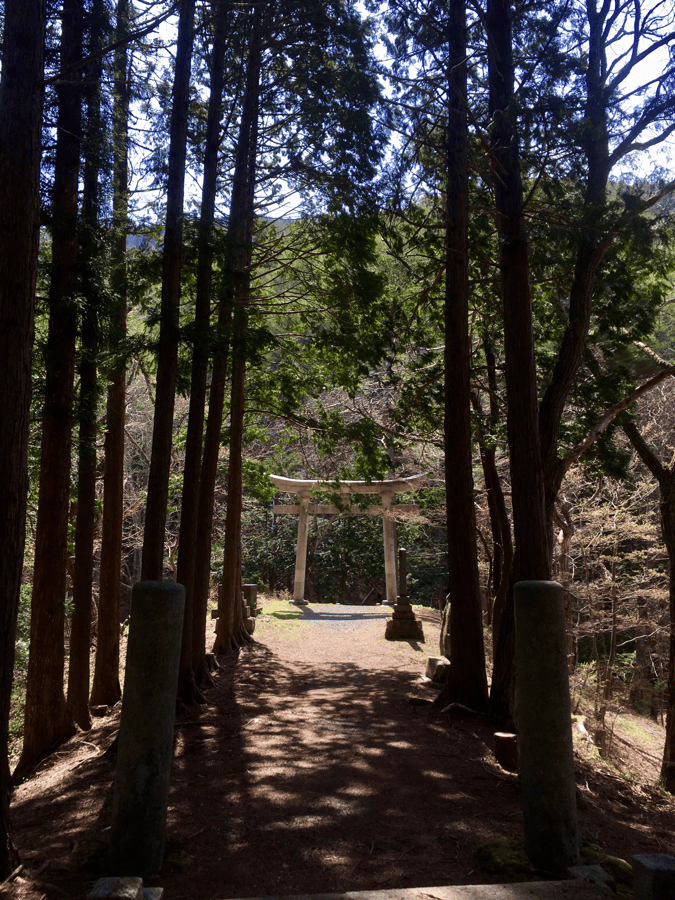
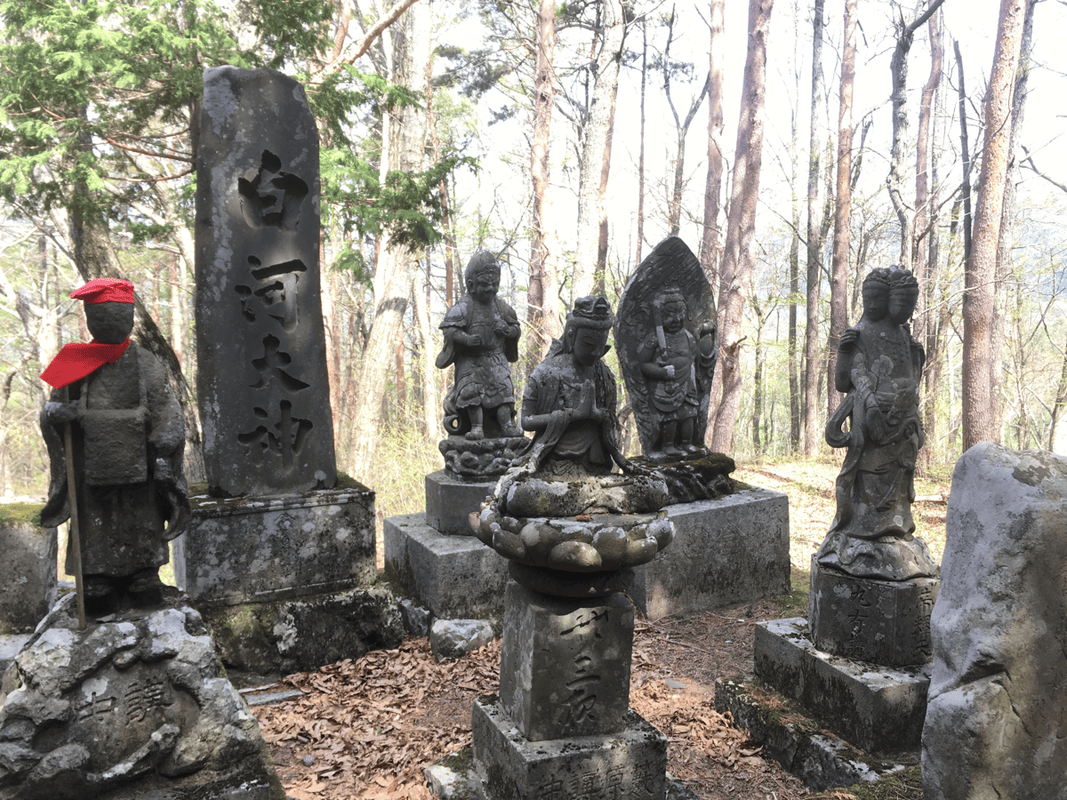
One of the main historic places on this stretch was Ontake Shrine near Torii Pass. From there, I could look toward Mount Ontake.
The local historical account I encountered connected the shrine with a Kiso warlord praying for victory during the Sengoku period.
As I watched what appeared to be a plume rising above Ontake, I wondered about the people who had stood here long before me. Had they looked across the same landscape and felt the same astonishment at the world’s beauty?
Walking through Narai-juku
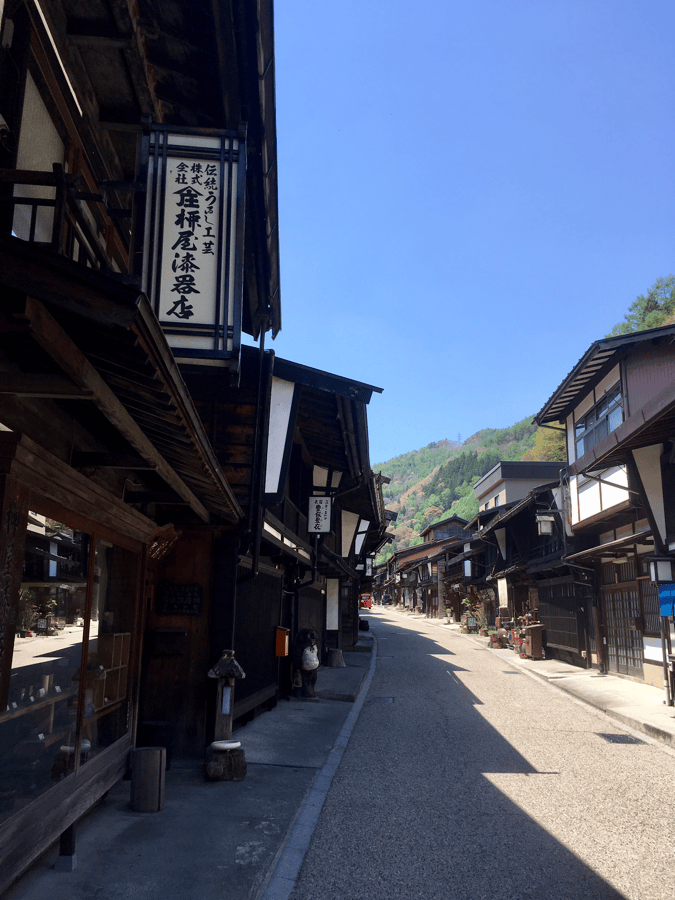
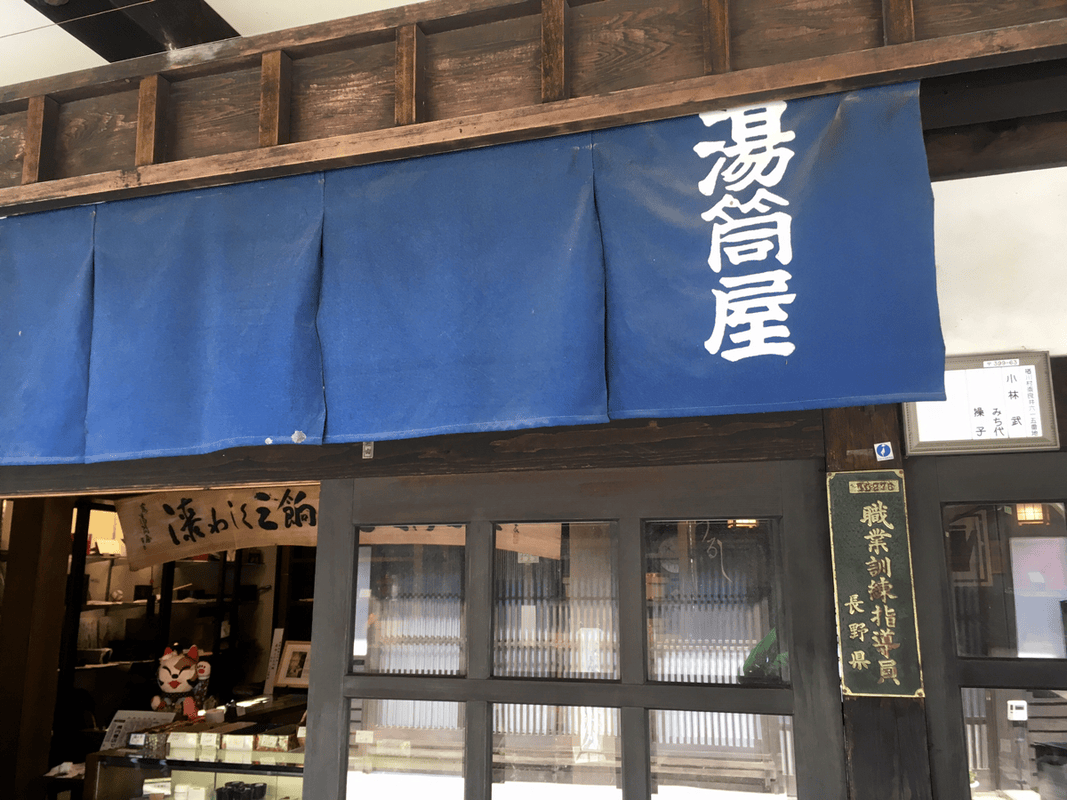
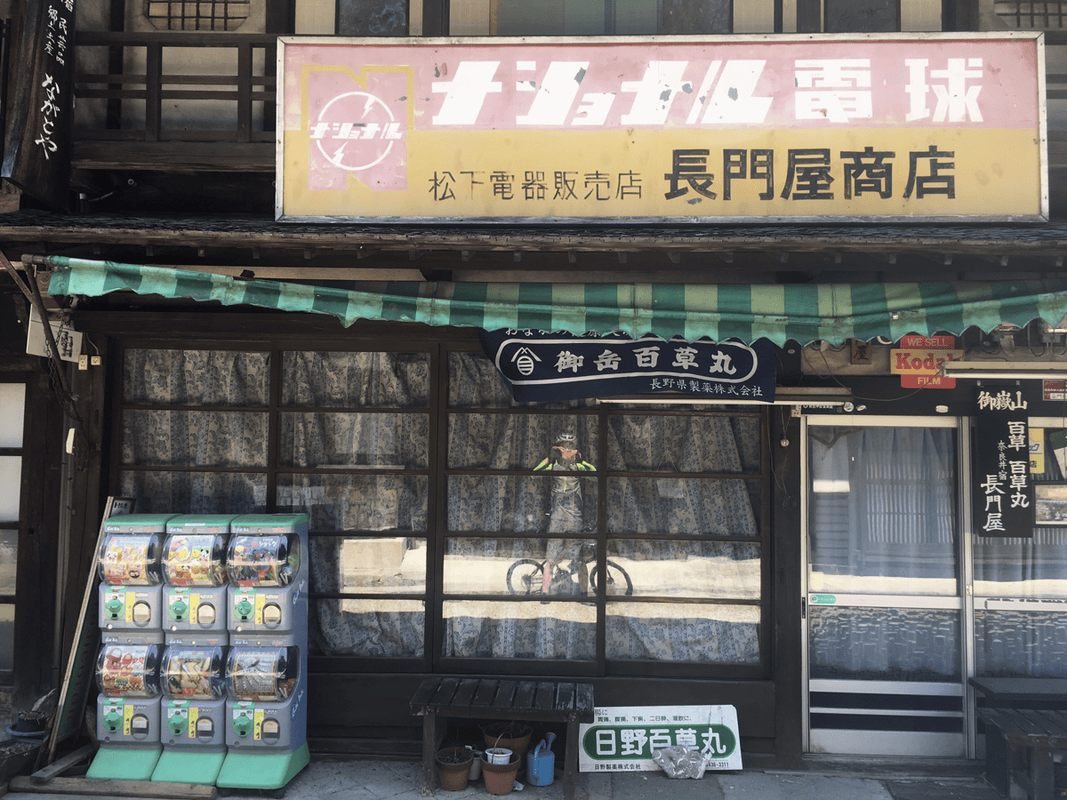
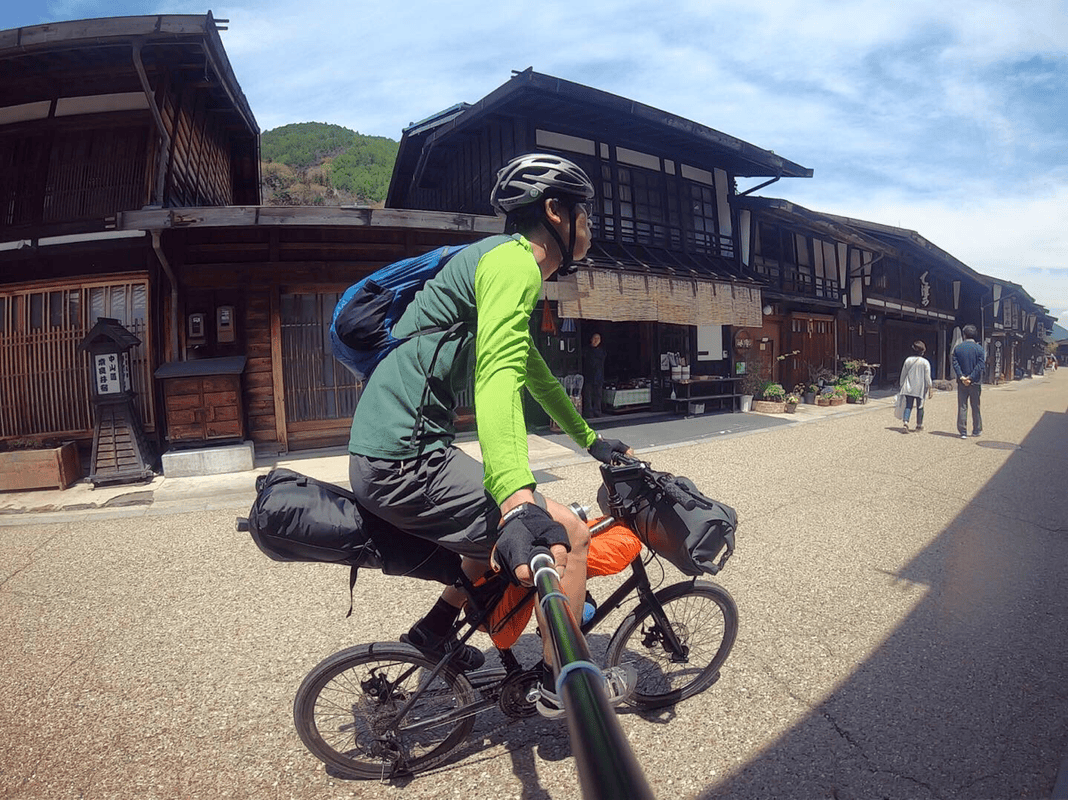
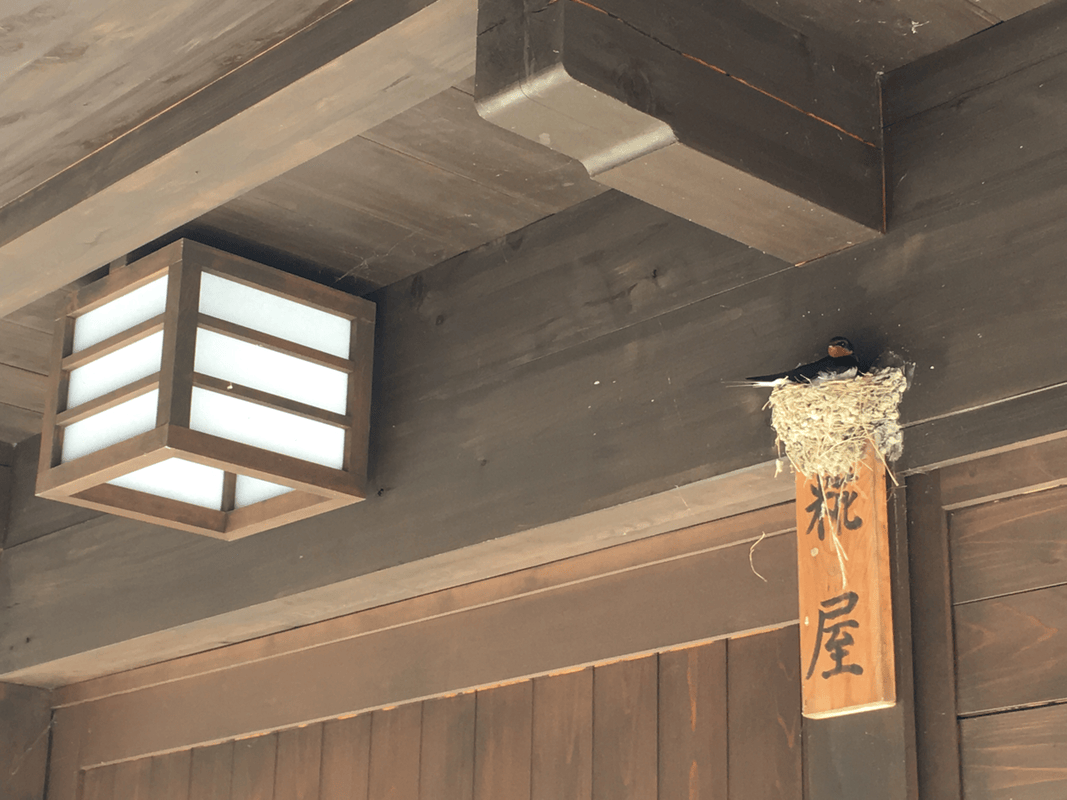
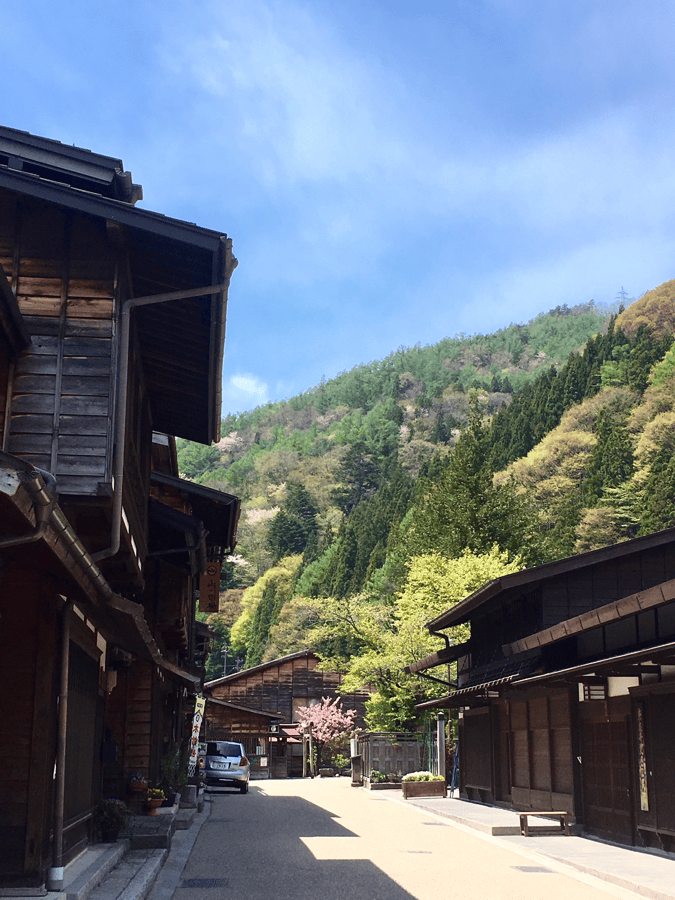
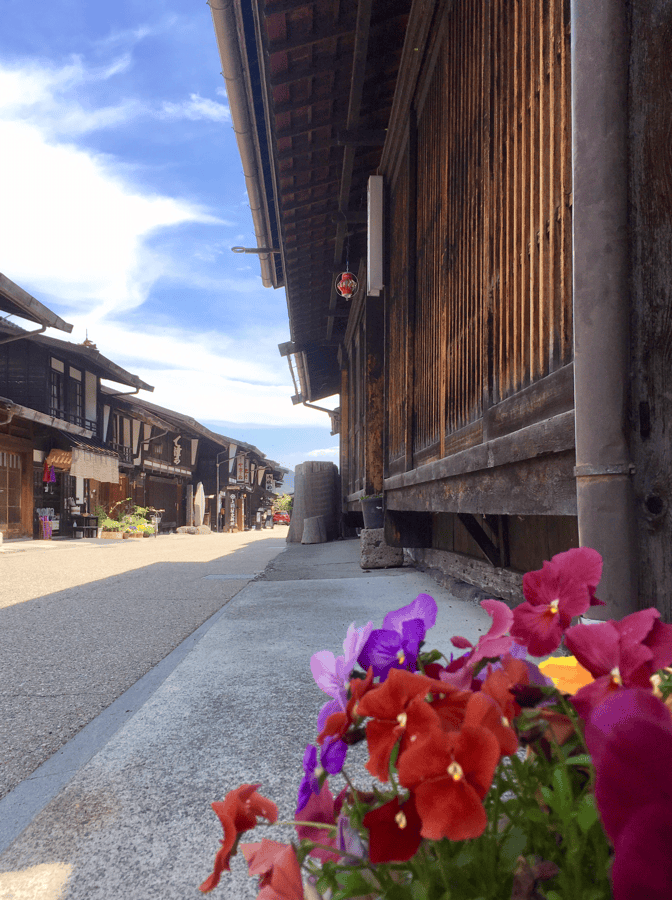
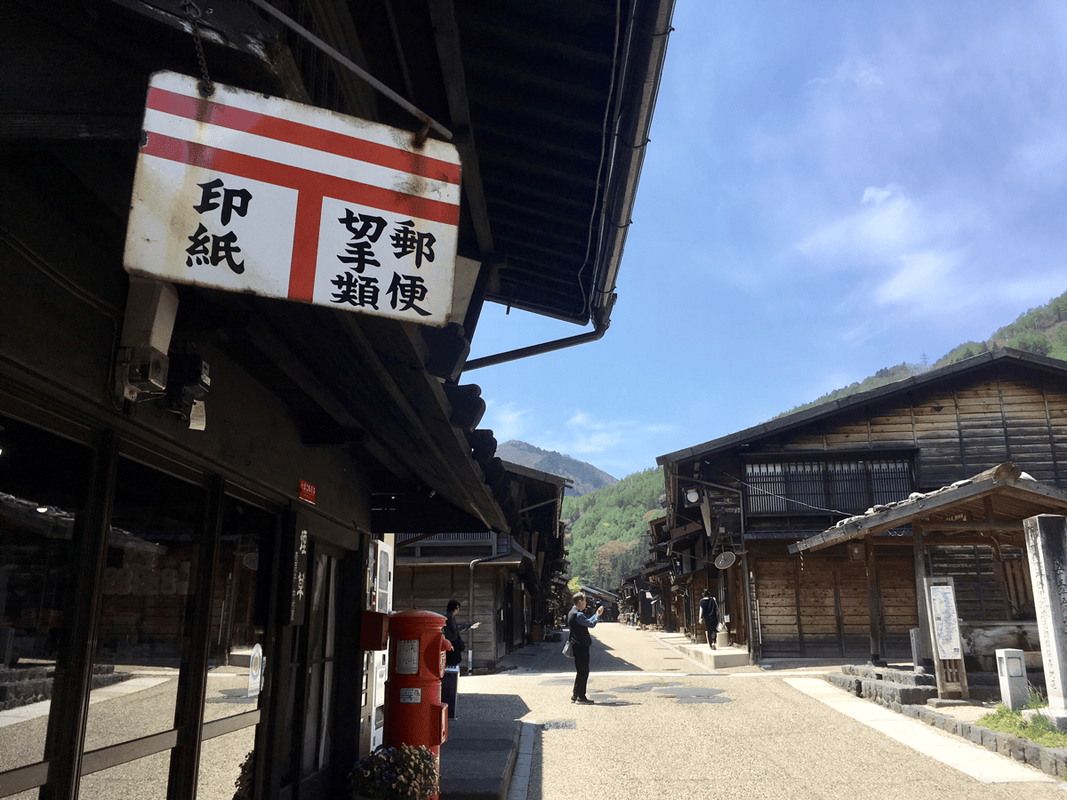
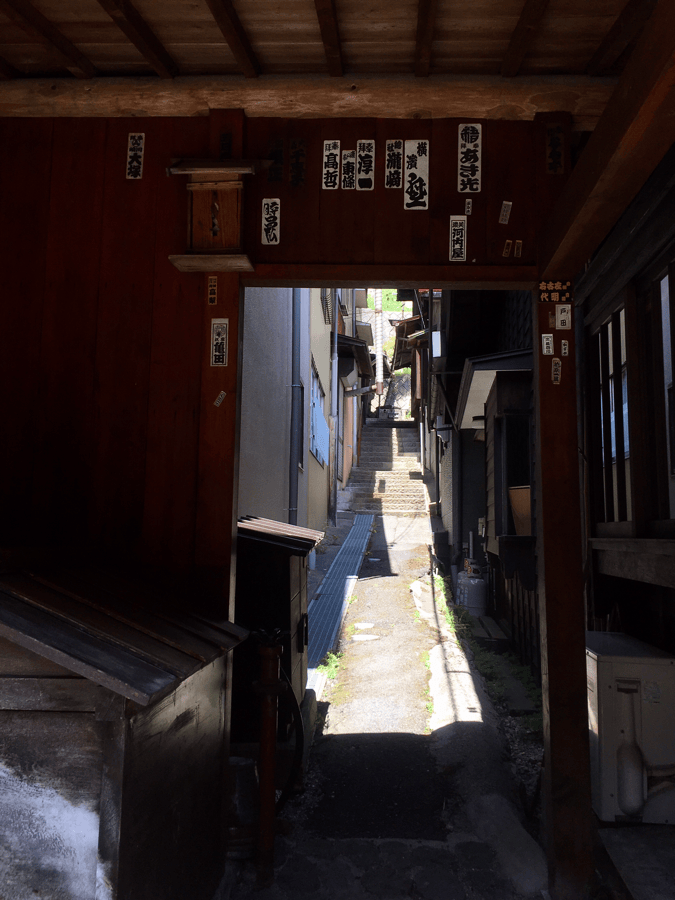
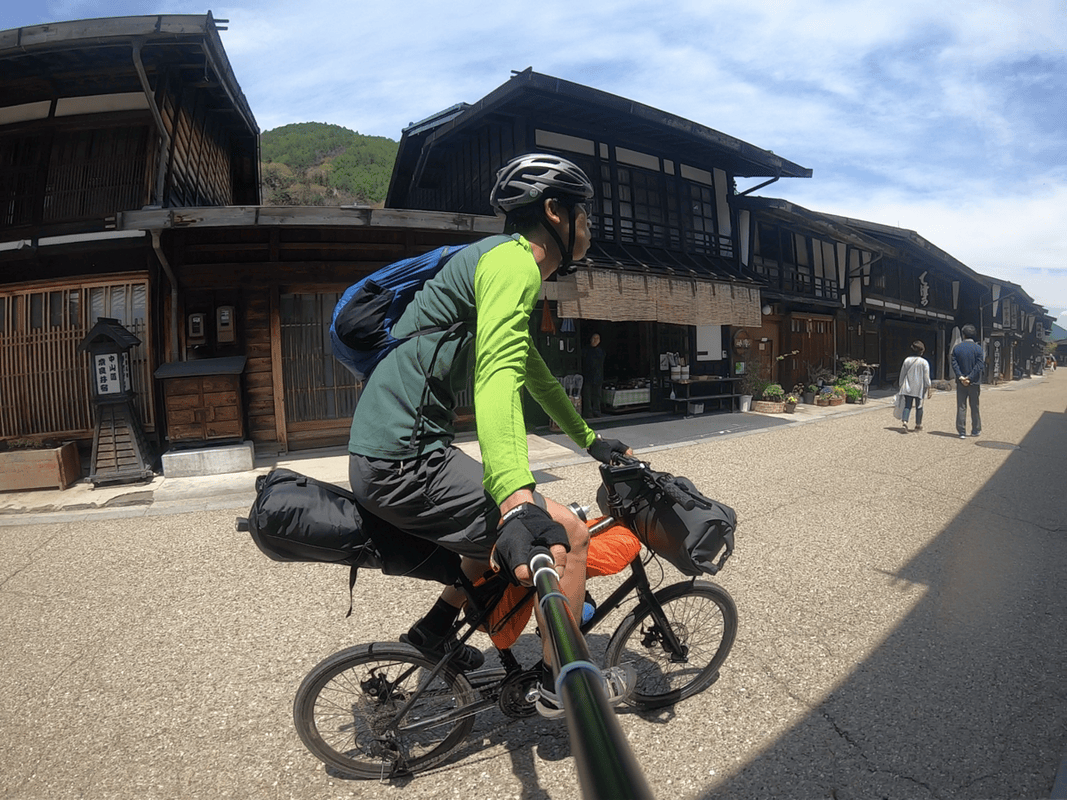
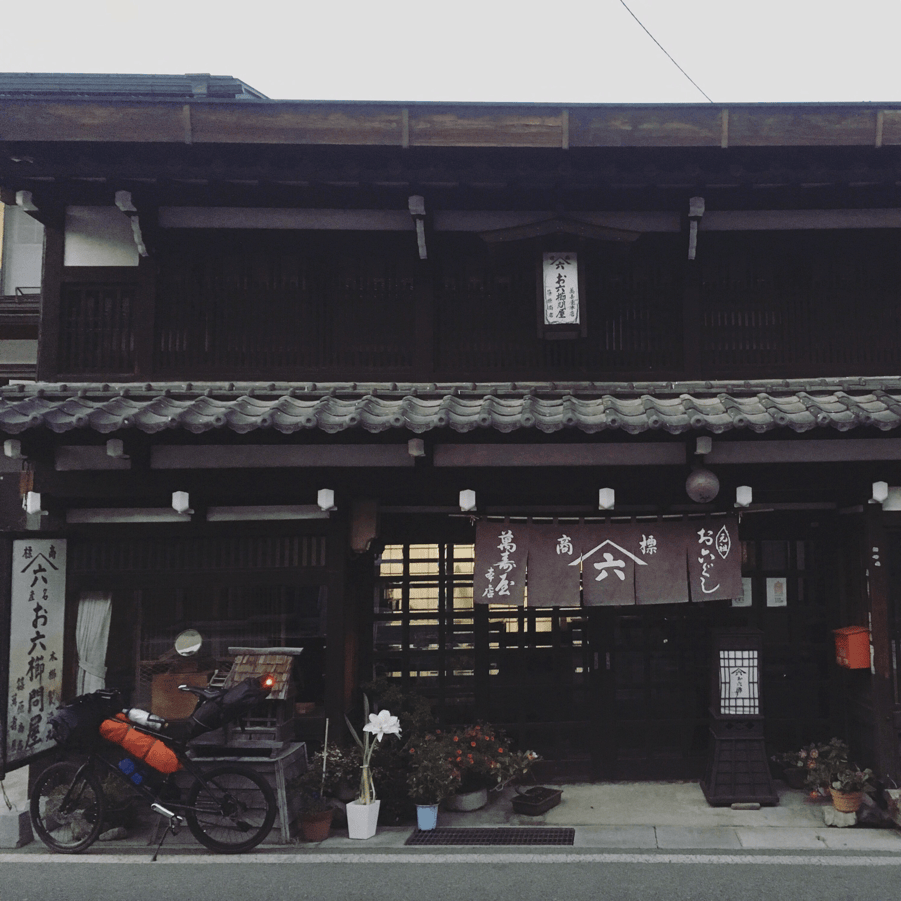
Descending into Narai, I found old wooden buildings lining the street.
I admired the care taken to preserve this setting. My understanding was that alterations had to respect the historic appearance, rather than owners simply rebuilding as they pleased.
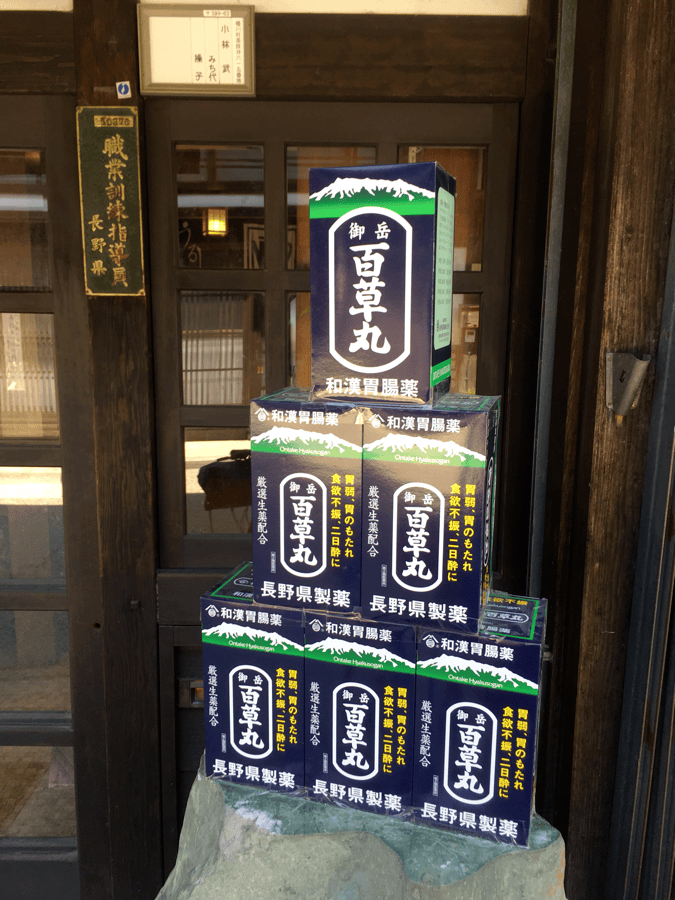
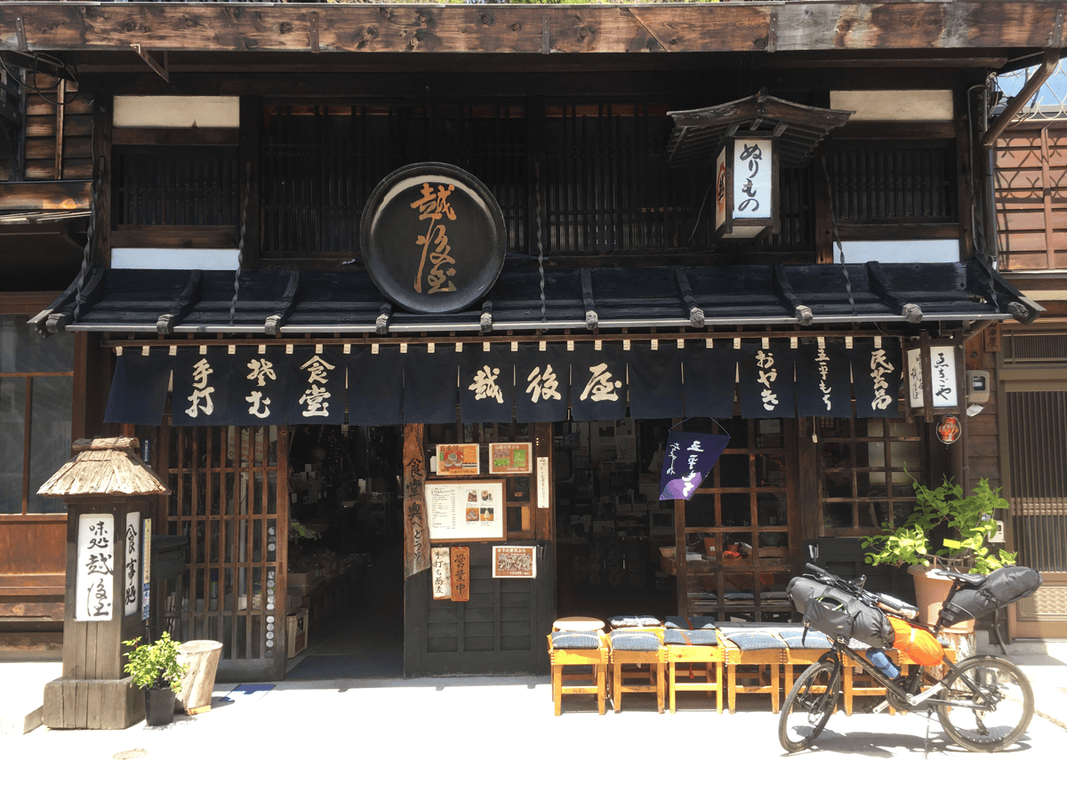
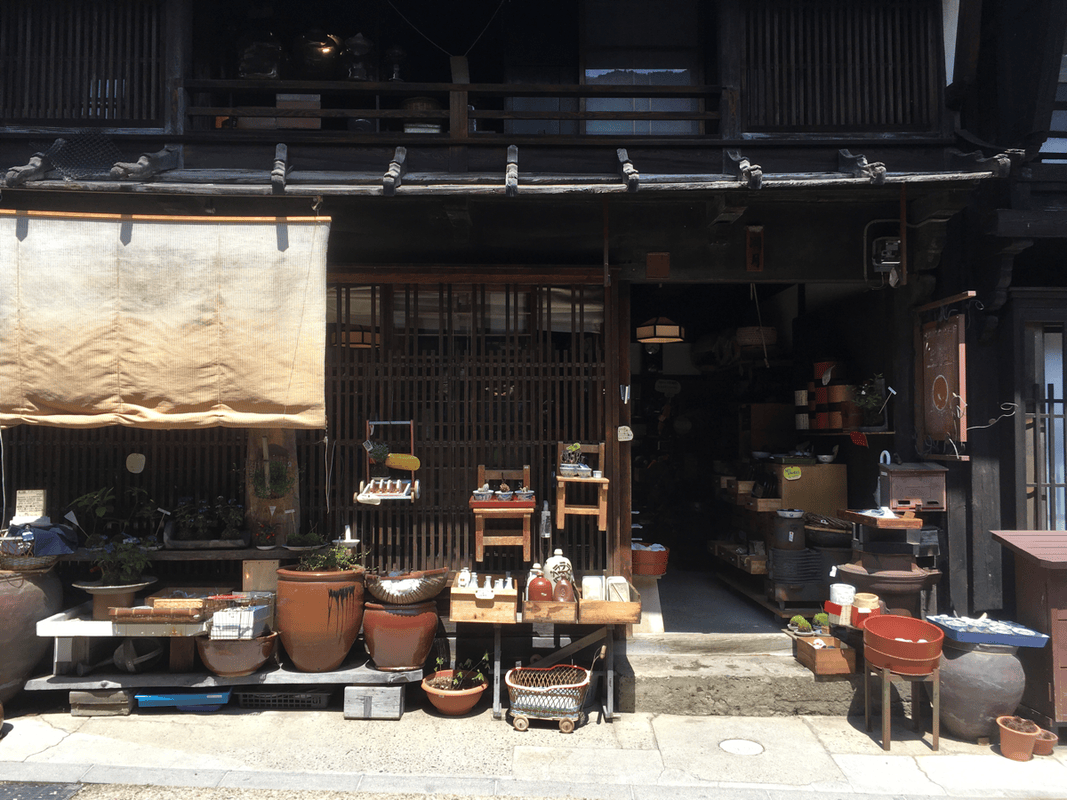
Shops offered food, drinks, antiques and accommodation. Most were not things I needed, so I was happy simply to look.
I briefly considered a gohei-mochi rice-cake snack. In the end, I decided to save the money for a fuller meal at a local restaurant.
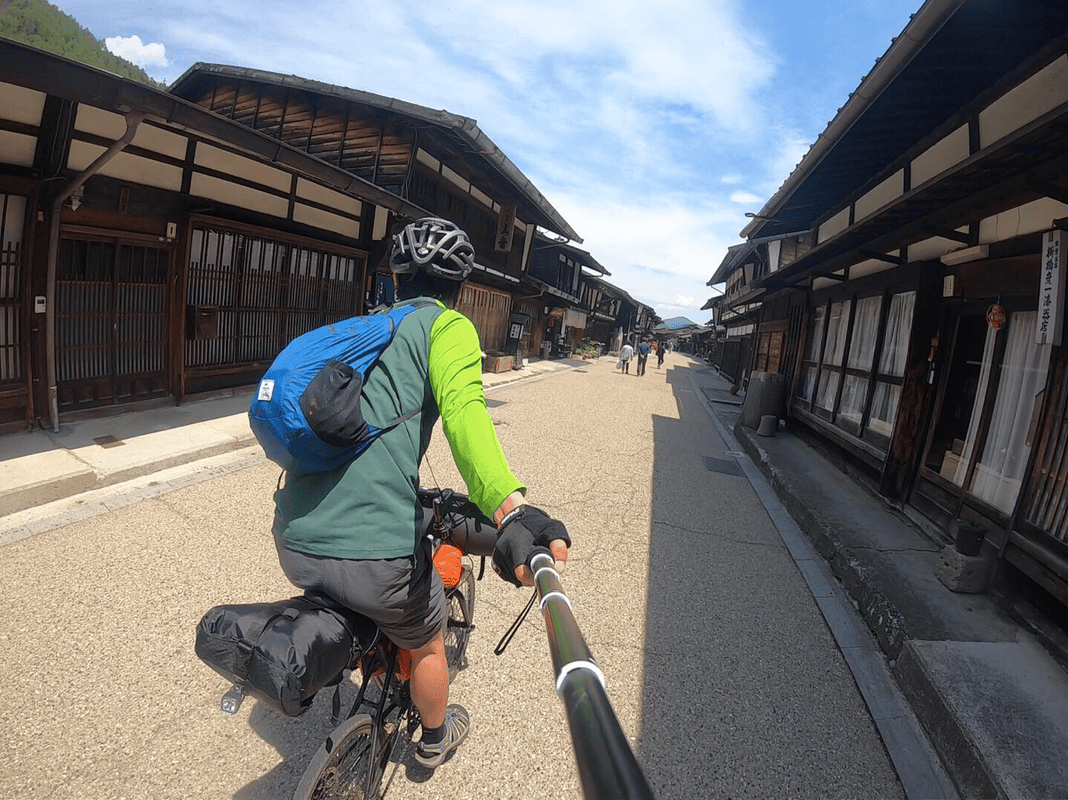
Pushing my bicycle slowly toward the far end of the old street, I quietly studied the buildings.
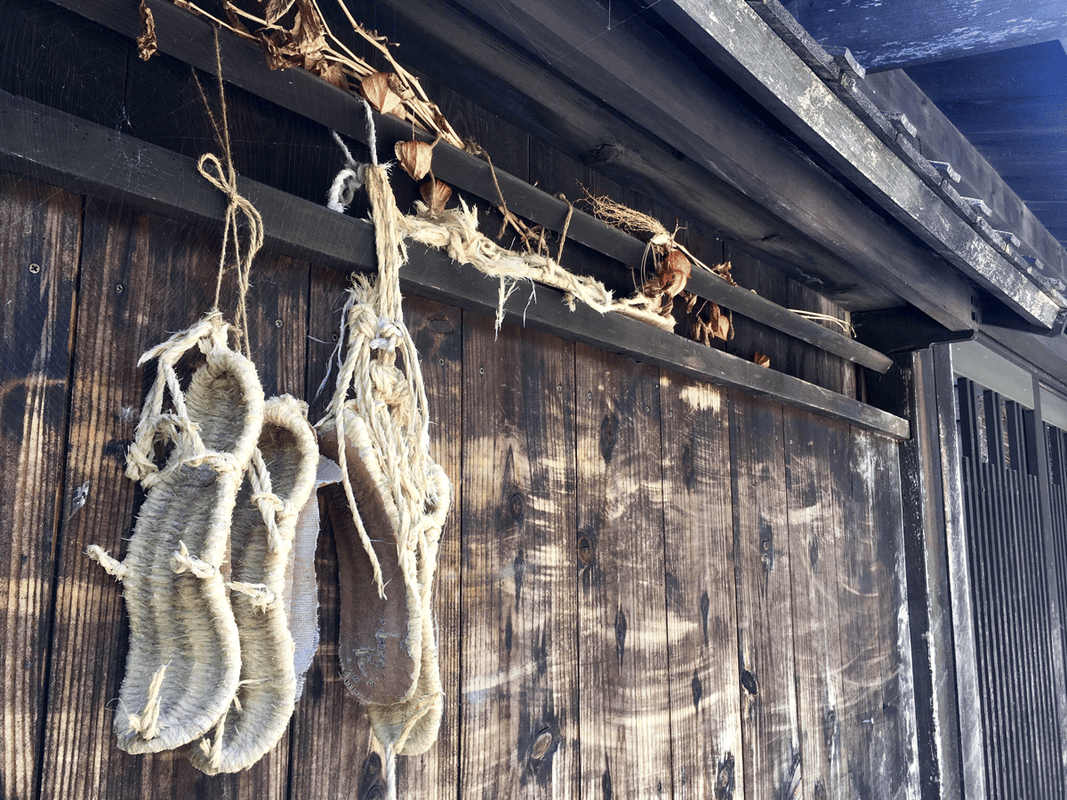
They had neither extravagant decoration nor imposing grandeur. What they offered was a distinctly Japanese sense of stillness and steadiness.
That was what I had come to see.
The Flavor of Everyday Life
After exploring Narai, I found a nearby restaurant and ate properly before riding back toward my mountain home.
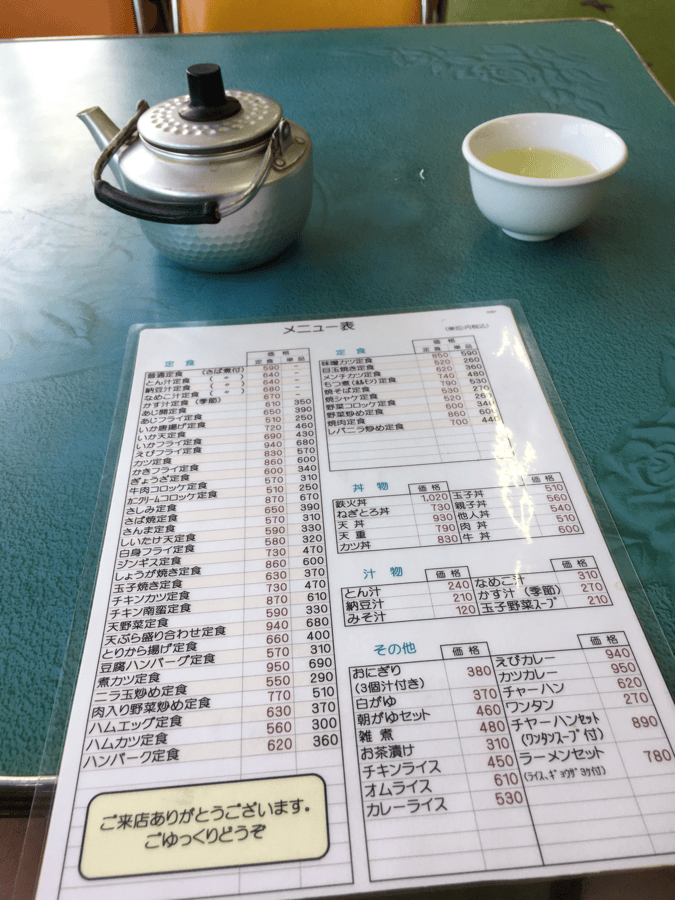
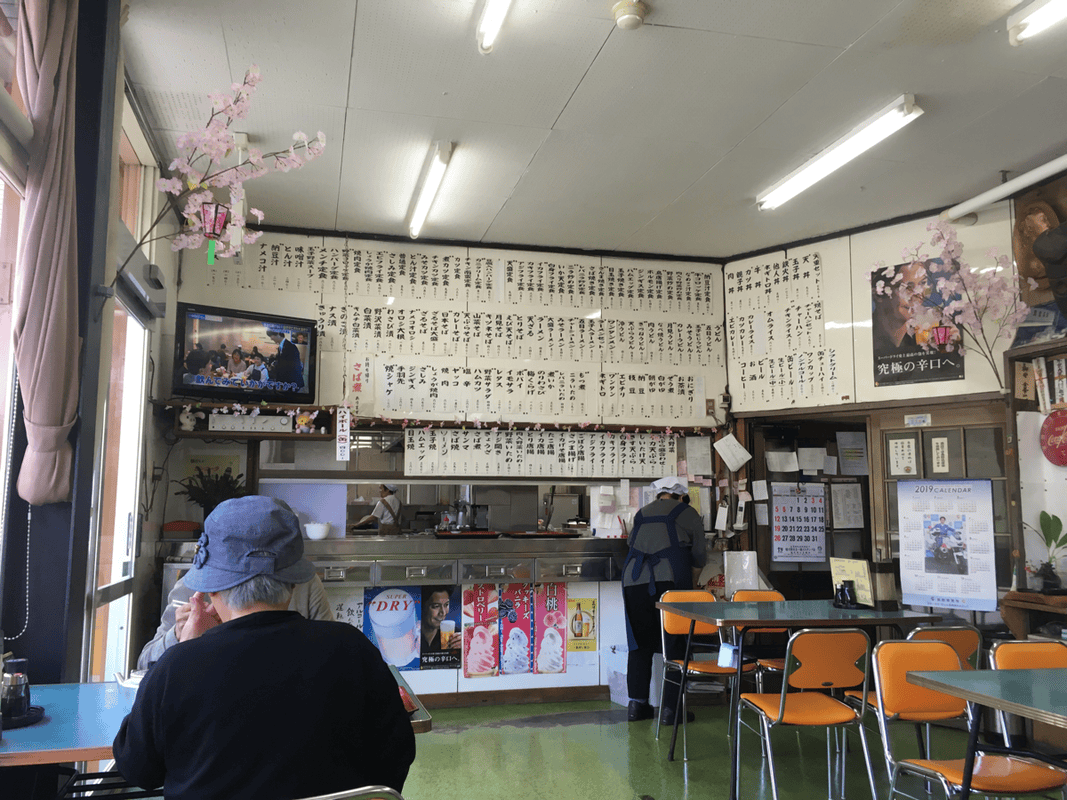
Like the previous evening’s restaurant, it had an intriguing menu full of dishes I could not entirely identify. Ordering felt a little like entering a lottery, full of surprises.
So far, every result had been delicious.
Perhaps this was the flavor of everyday Japan. Maybe a hundred years from now, the places where I lived and the restaurants where I ate would themselves form part of someone else’s historic road.
Bikepacking diary: Facebook · Instagram