Taitung’s Route 197 | Gravel Bikepacking through the East Rift Valley
Translated from Bikepacking diary’s original Taitung Route 197 article, published on April 28, 2017, and republished by arrangement with the author. Photographs are linked directly from the original website.
Editor’s note: This is a historical travel account, not a current route or camping guide. The gravel distance, surface conditions, traffic observations and facilities below reflect the author’s experience in 2017. Confirm current access, roadworks, bicycle suitability, rail carriage and authorized overnight arrangements before traveling. Do not enter an event course without authorization or make abrupt turns among racers. Respect railway seating and circulation rules, property permissions and local camping restrictions. A tree canopy is not a safe shelter from lightning or falling branches.
An Unexpected Invitation
“Hey! Do you want to come to Taitung this weekend and watch me race a triathlon?”
The message arrived on Facebook on Thursday evening.
I thought about it. The place I had originally planned to wander had no urgent timetable, and I had not promised to meet anyone there.
I did not often get to eastern Taiwan. Besides, Route 197 was still waiting for me: a road I had attempted three times without finishing.
There seemed little reason not to go.
So I went.
The Wanderer’s First Class
On such a last-minute journey, accommodation would normally be the first concern.
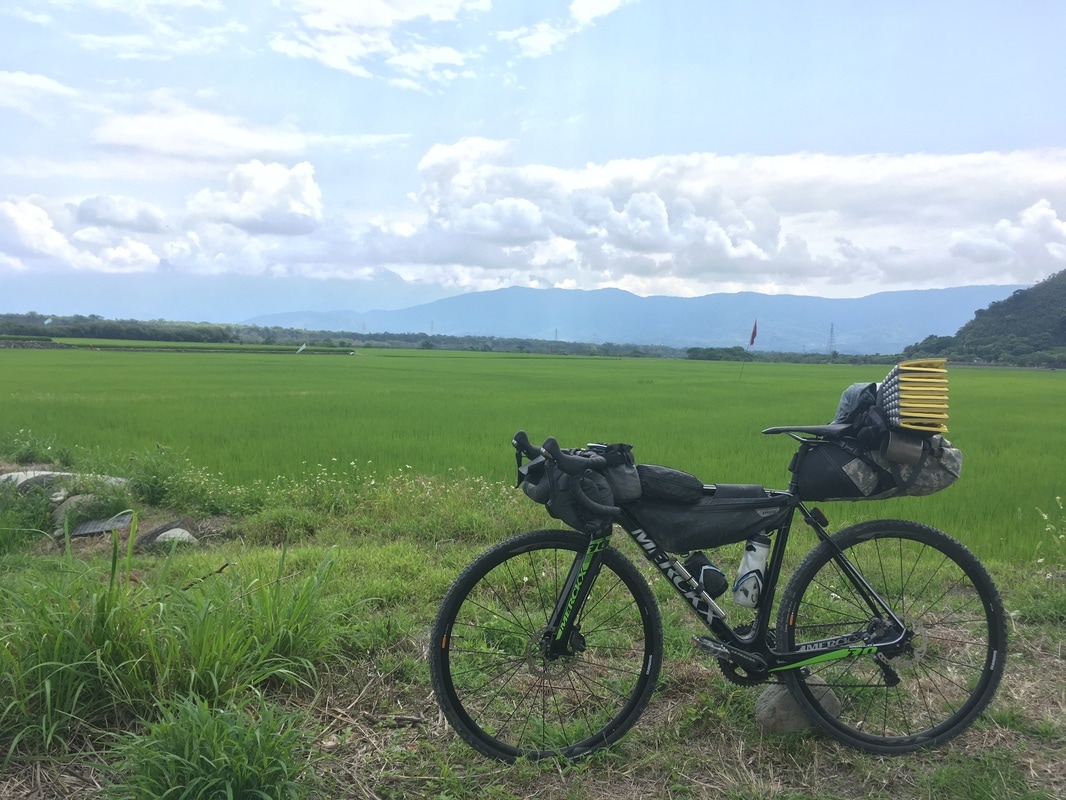
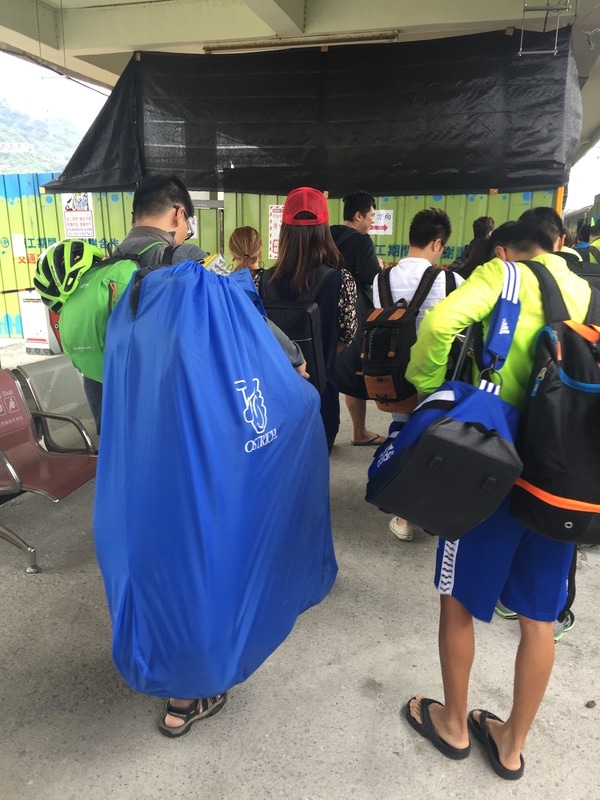
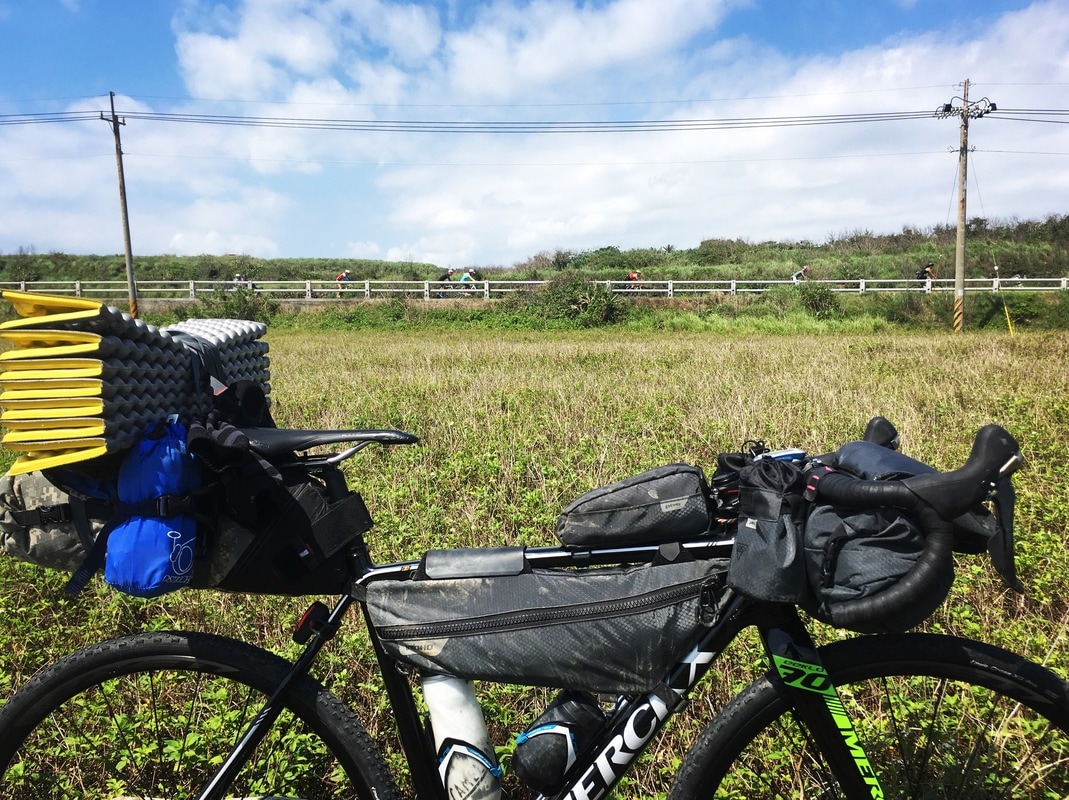
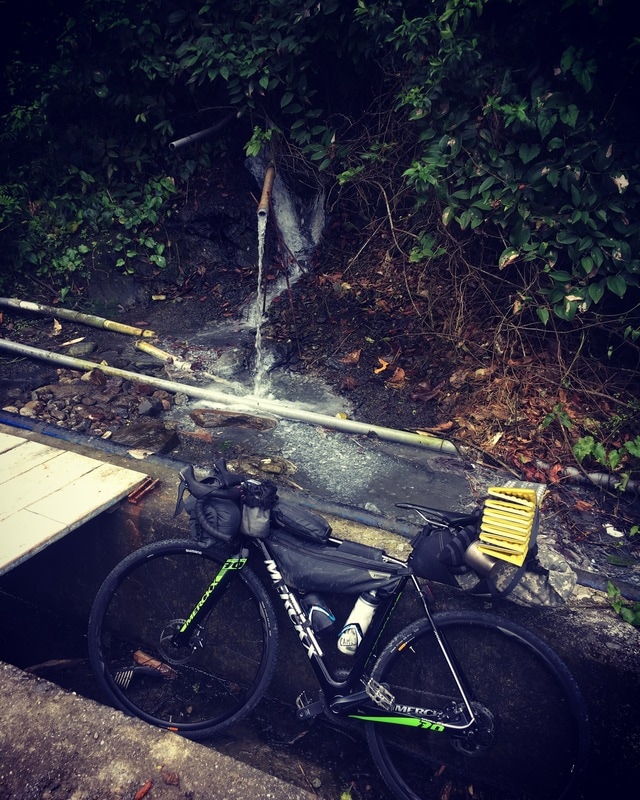
Carrying my camping equipment made me feel much freer. As on other trips, I packed my bags and set off. That flexibility still depends on finding a permitted overnight place, rather than assuming camping is possible anywhere.
Naturally, I had no reserved seat.
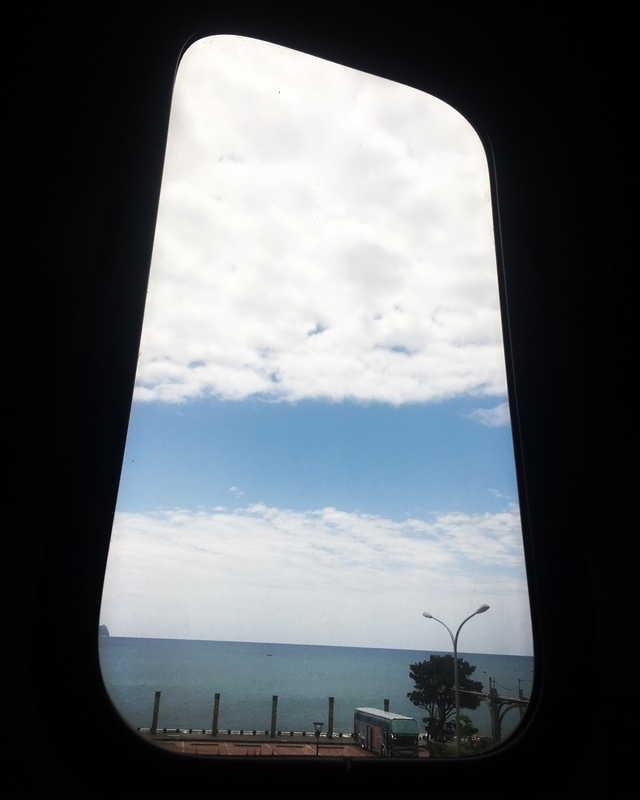
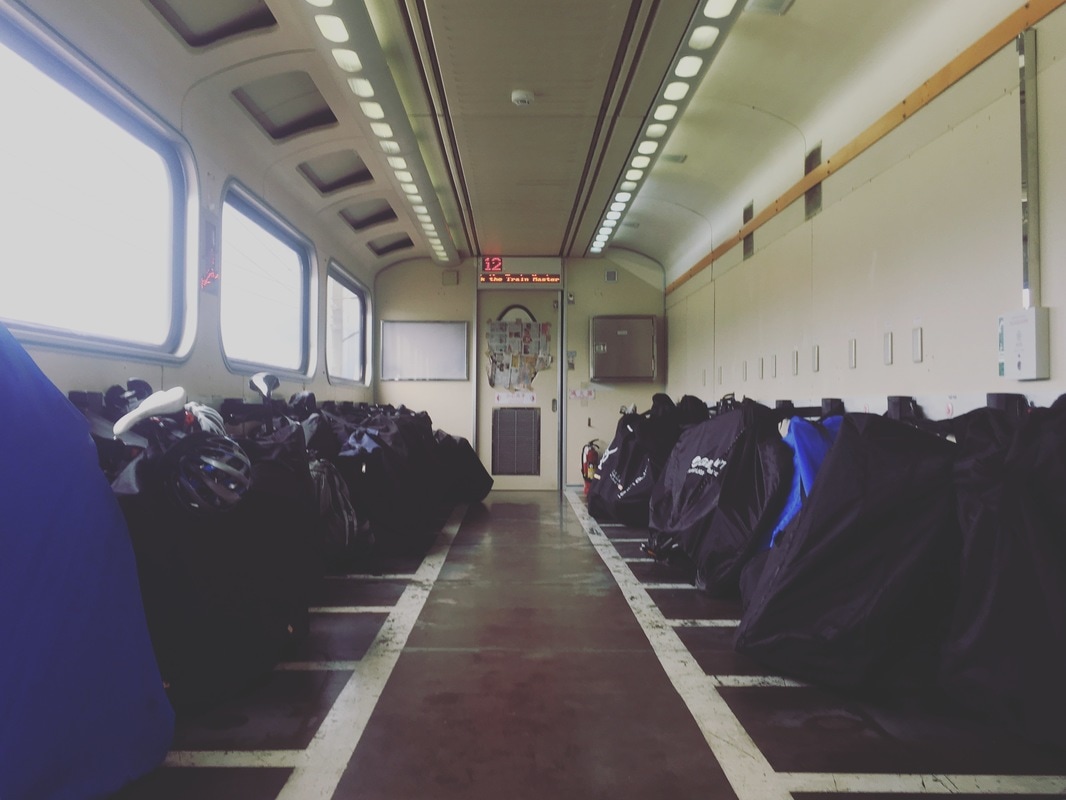
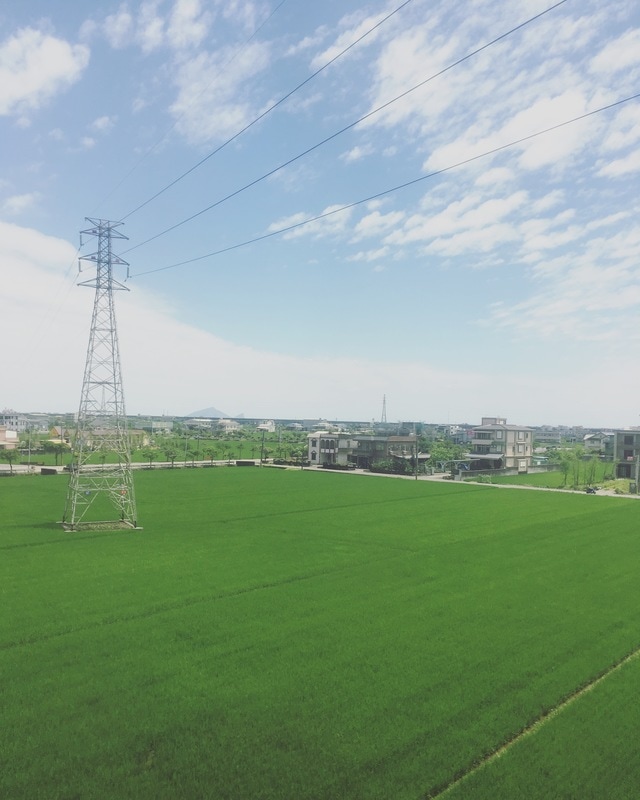
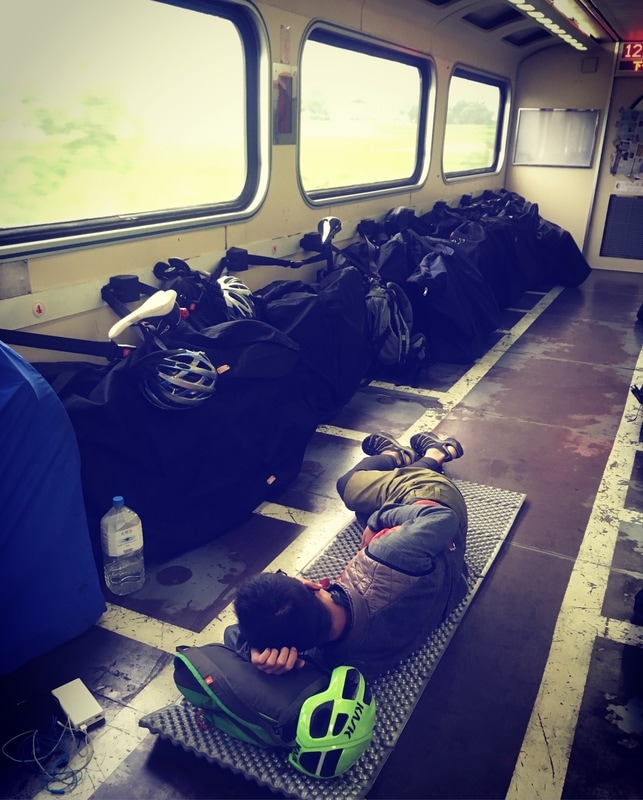
The weekday train was quiet, though. Sitting near the carriage entrance, listening to its rhythmic clatter and watching the east-coast scenery, I felt unusually peaceful.
For a wanderer, it was first class.
A Brief and Unwise Taste of Race Pace
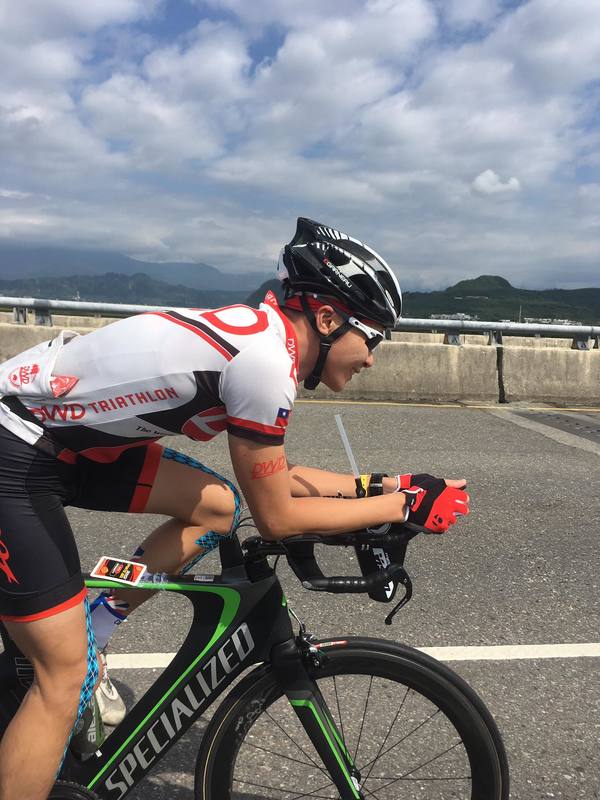
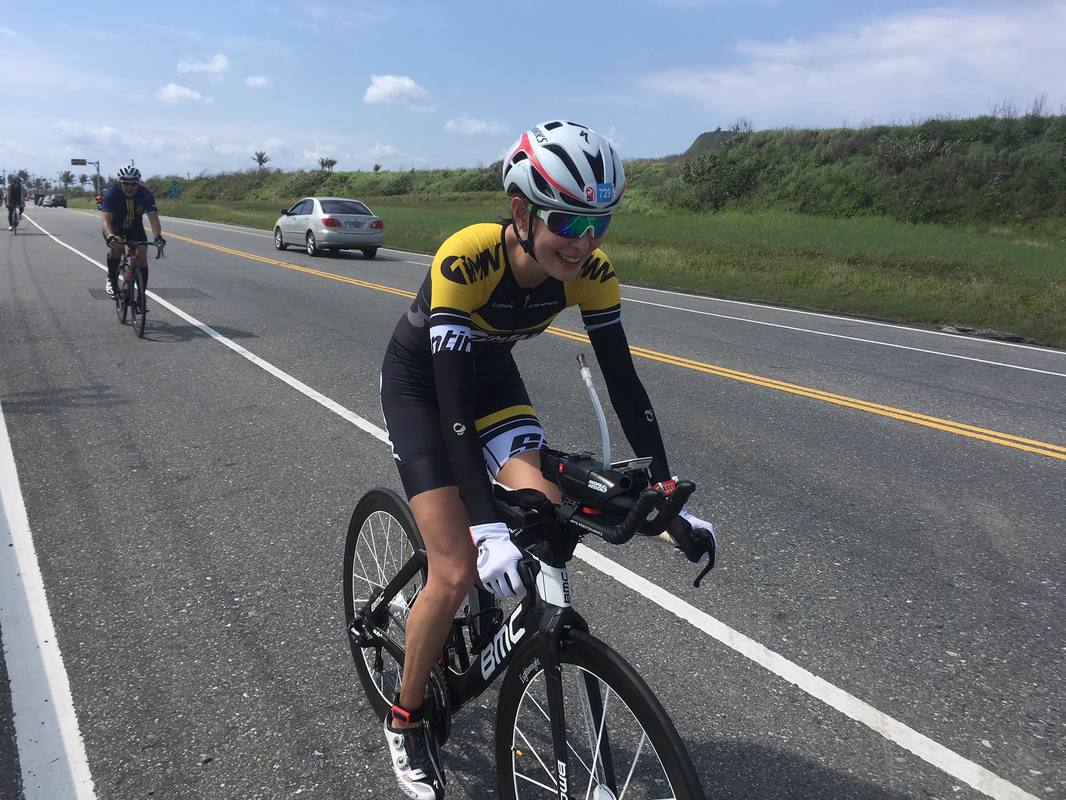
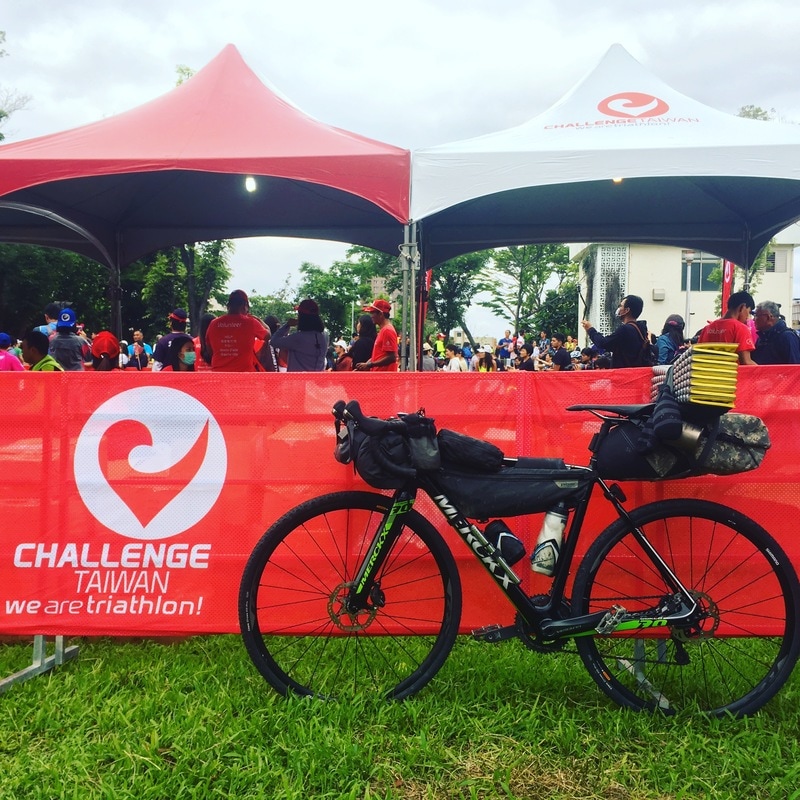
I was not competing, but I had been training. Seeing the energy of Challenge Taiwan made it difficult to remain only a spectator.
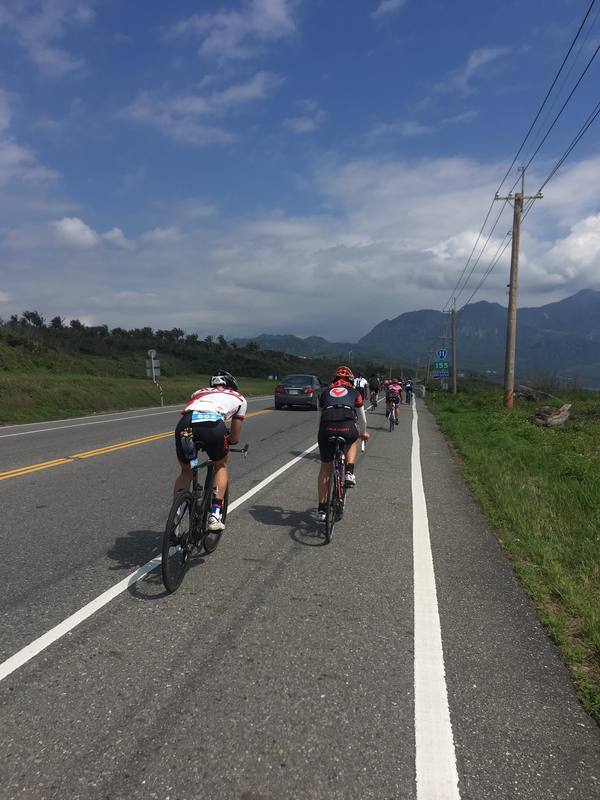
During the cycling leg, I joined the riders for a short stretch. This was part of what happened in the original account, not something visitors should copy: event courses belong to authorized participants and officials.
It did not take long to discover the limits of my enthusiasm.
After only a few kilometers above thirty kilometers per hour, I was ready to call it a day.
Just as I was struggling for breath, I noticed a small path from the straight main road toward the sea.
It felt like an escape route supplied by the god of wandering.
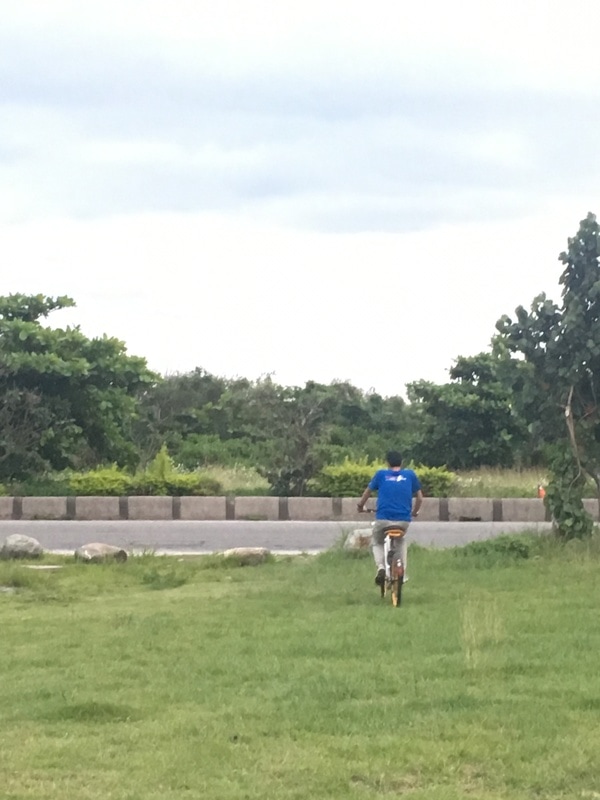
I turned off abruptly and left the course. Again, that maneuver belongs to the story, not to safe riding advice.
Standing on the little path, I watched determined athletes and purposeful triathlon bikes flash past.
I felt I could no longer return to that world.
A Quiet Coastline
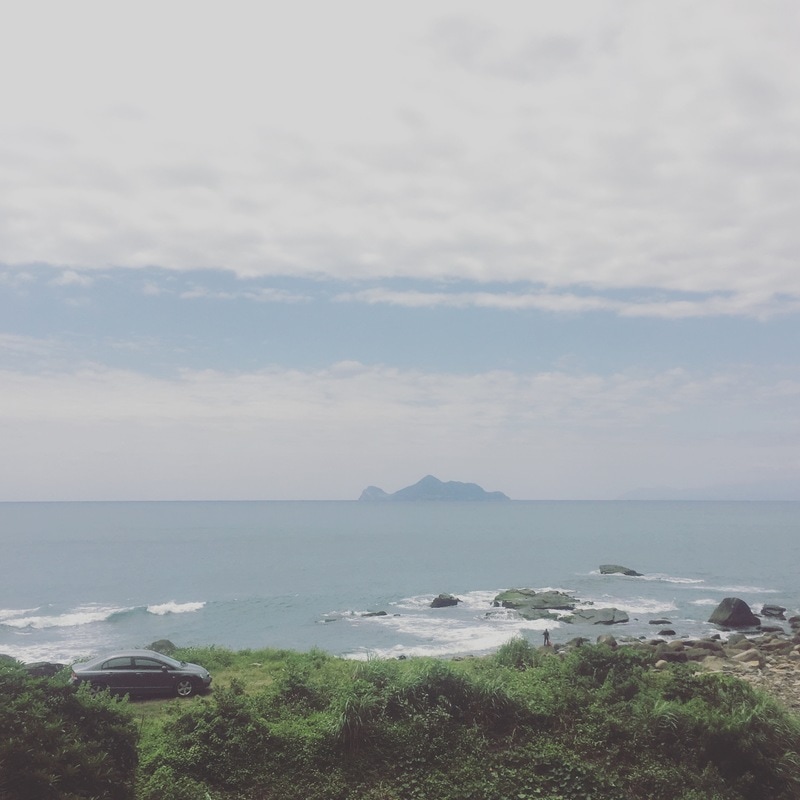
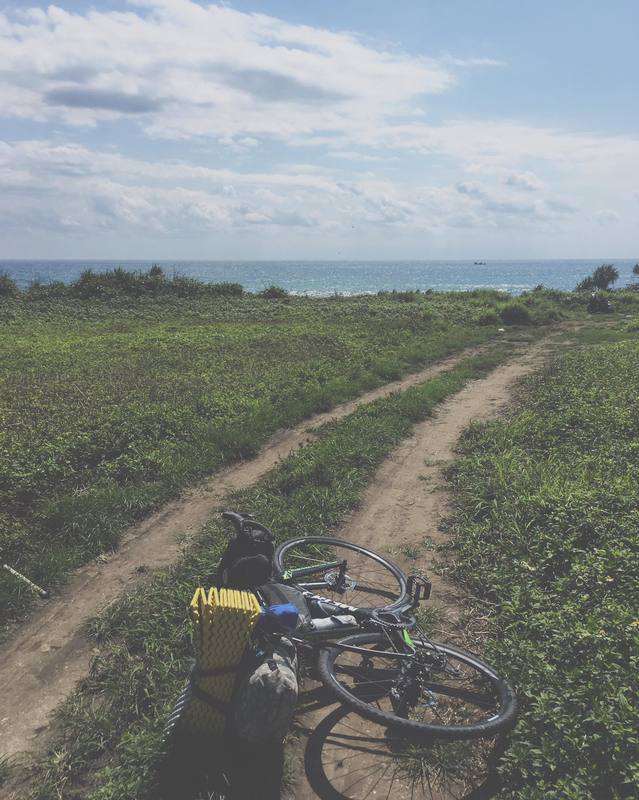
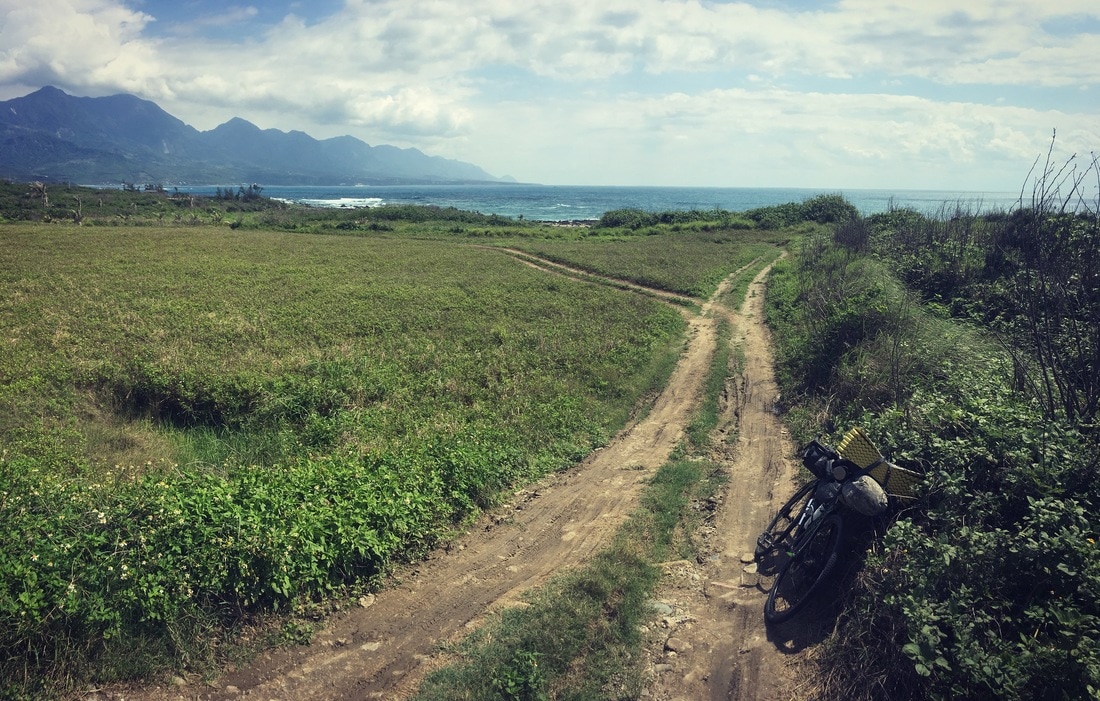
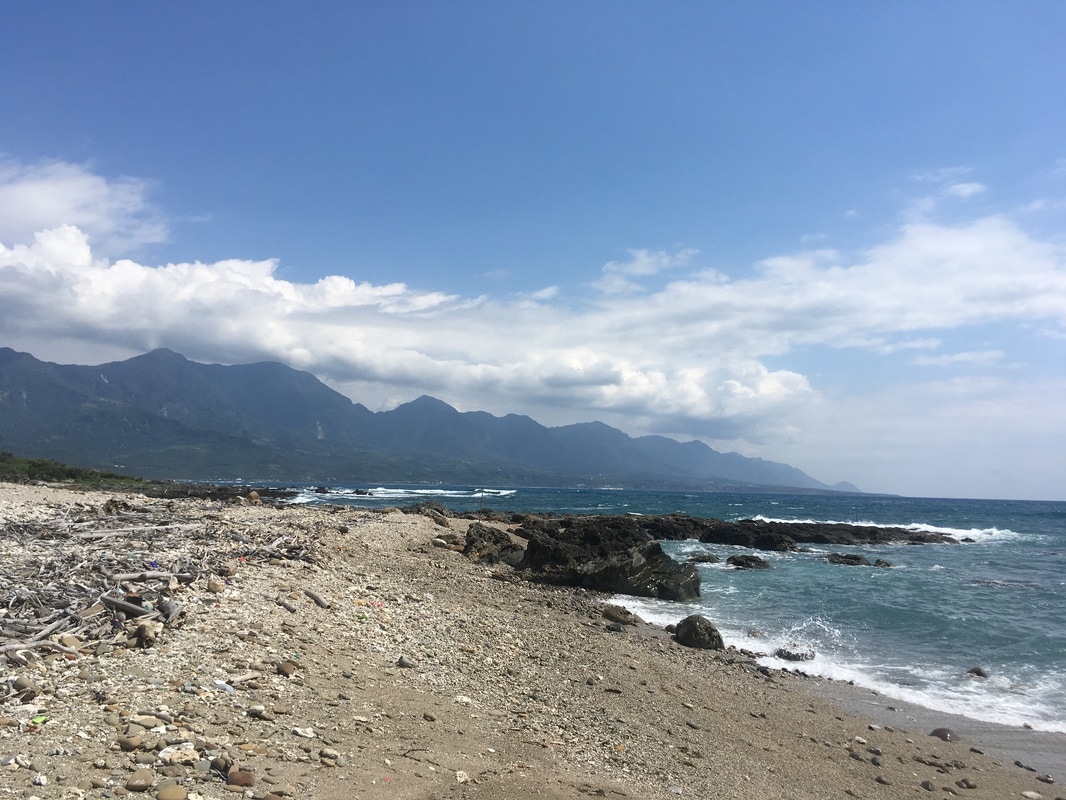
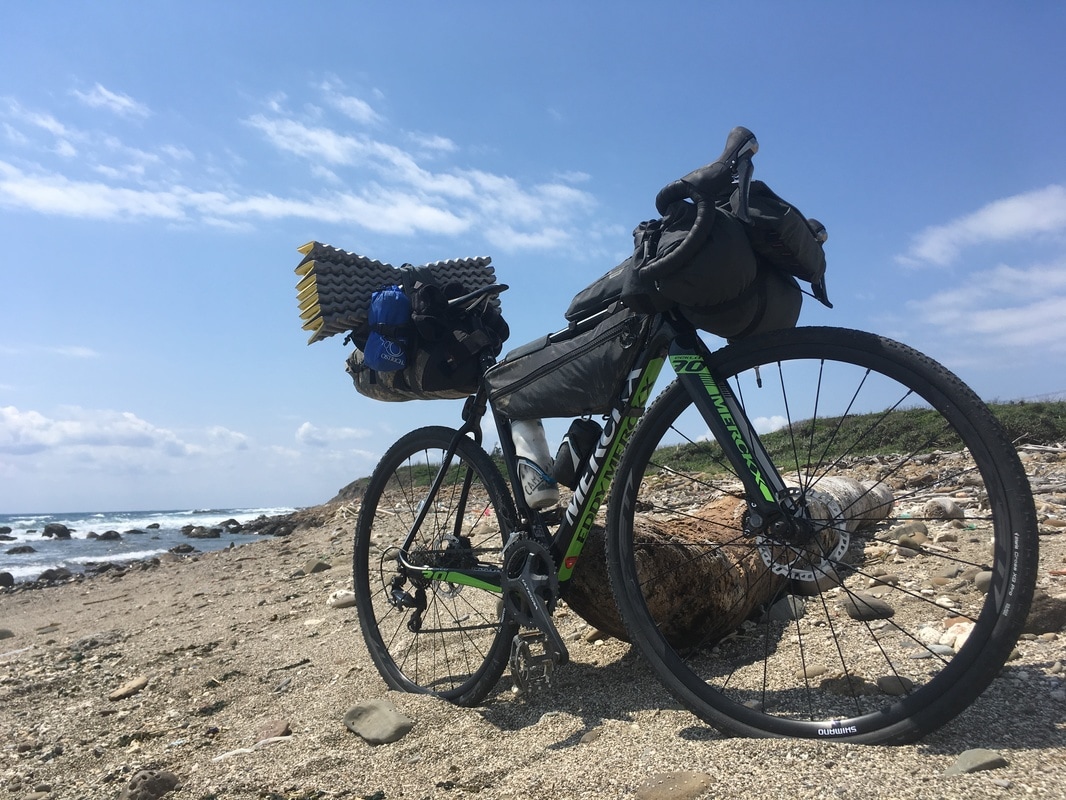
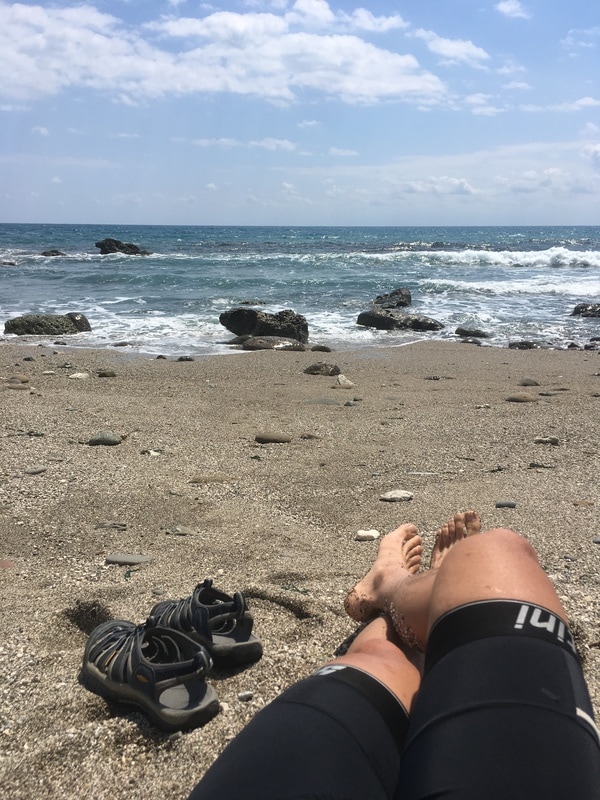
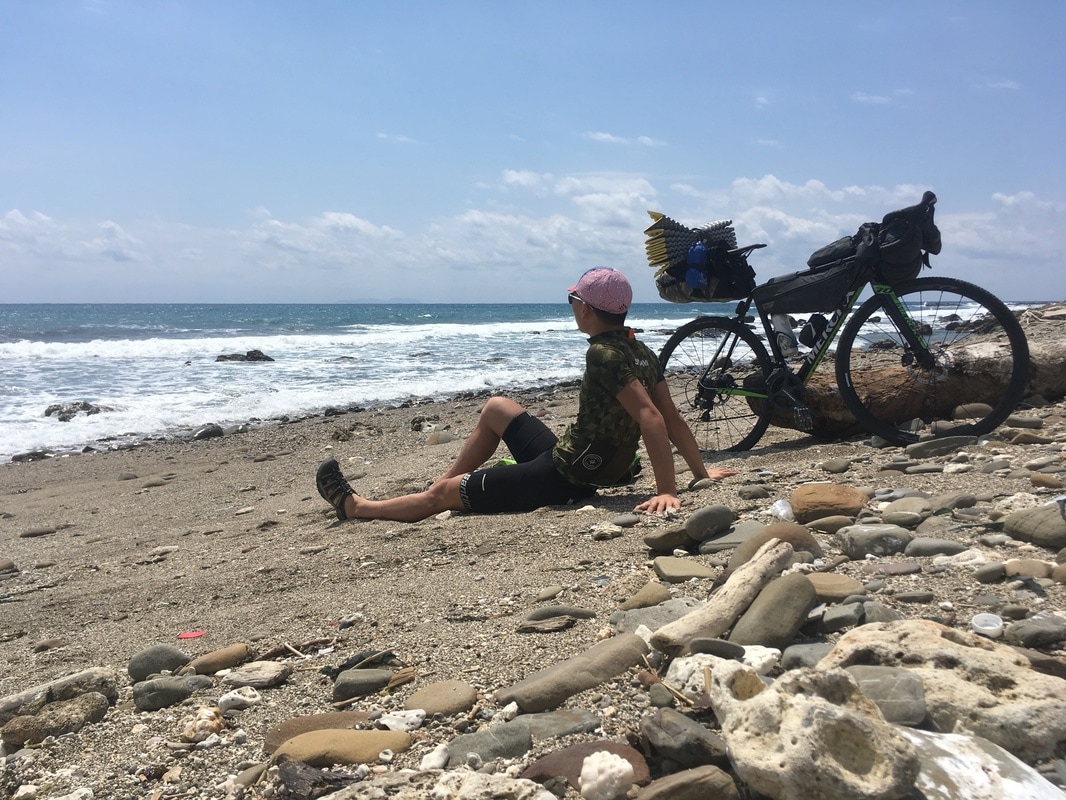
I followed the path to an empty stretch of coast.
Mount Dulan stood in the distance, while waves rolled ashore in front of me.
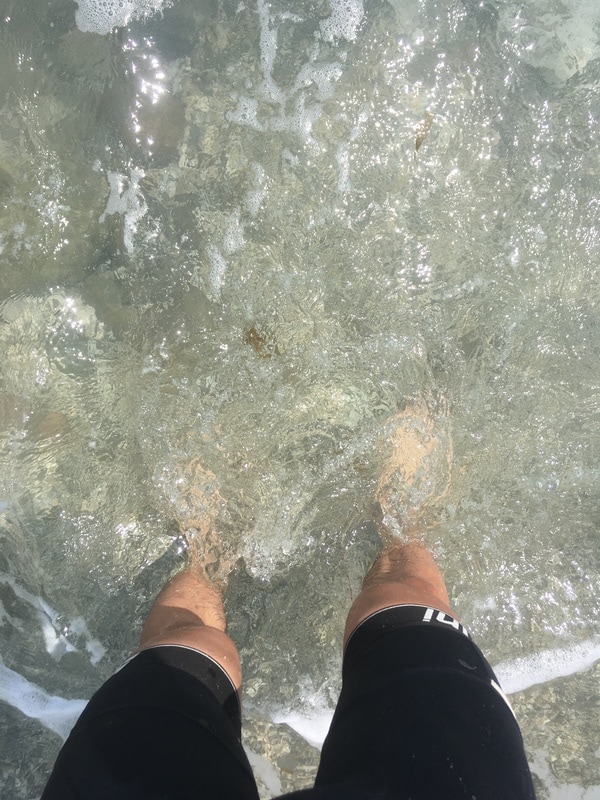
The sun was strong, but the sea breeze made the temperature comfortable enough to sit and enjoy it.
My friend still had more than eighty kilometers of riding ahead. I had time to let my mind drift.
Two Nights by the Seafront
Eventually, my impressively strong friend finished the 113-distance event.
With the time of day and the collection of his bicycle to consider, he decided to shower at the place where I had been camping.
A campsite with showers?
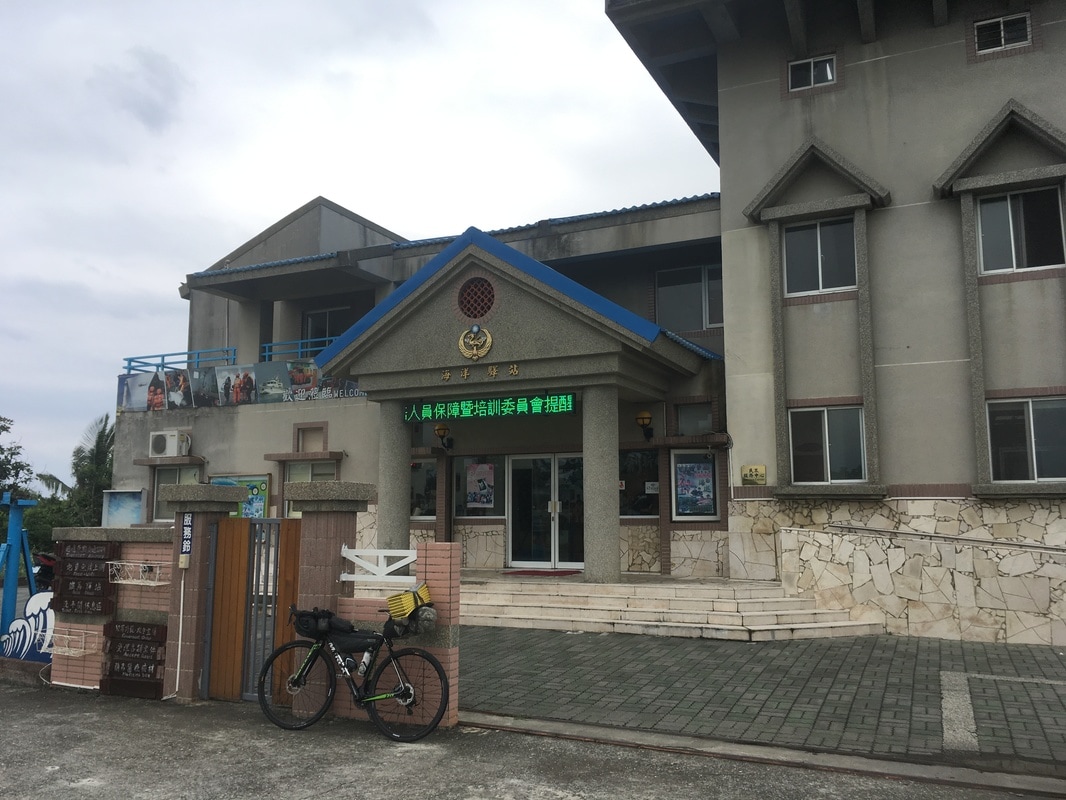
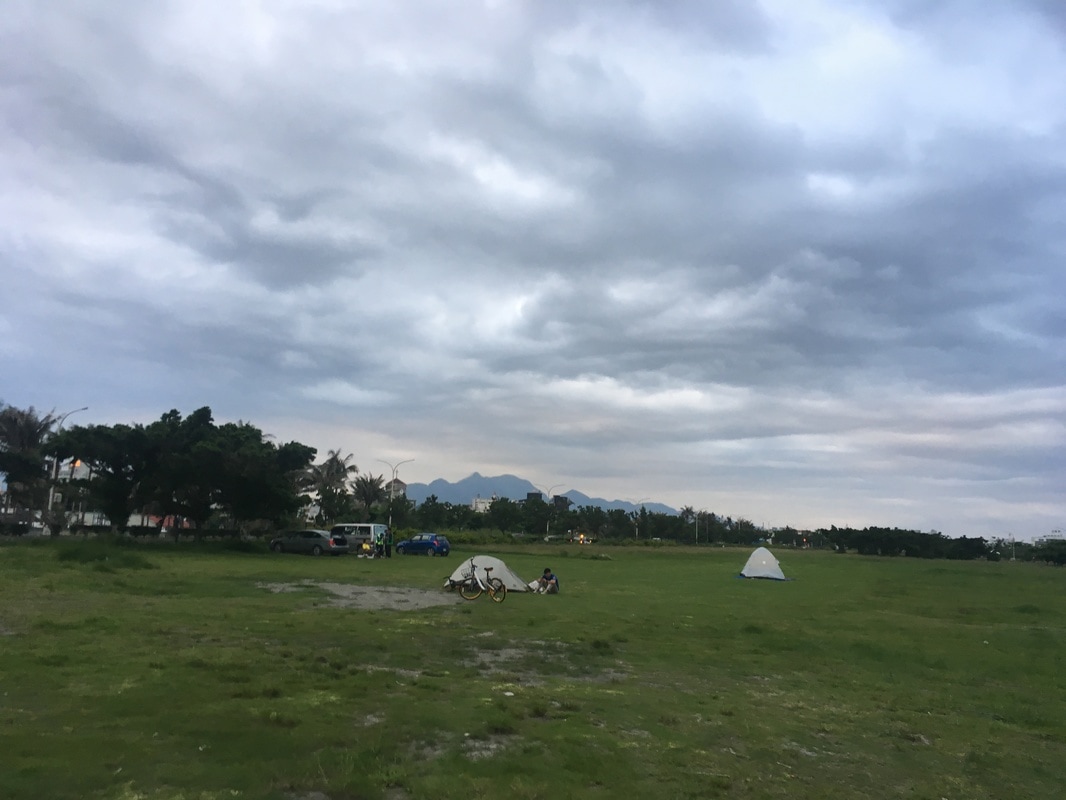
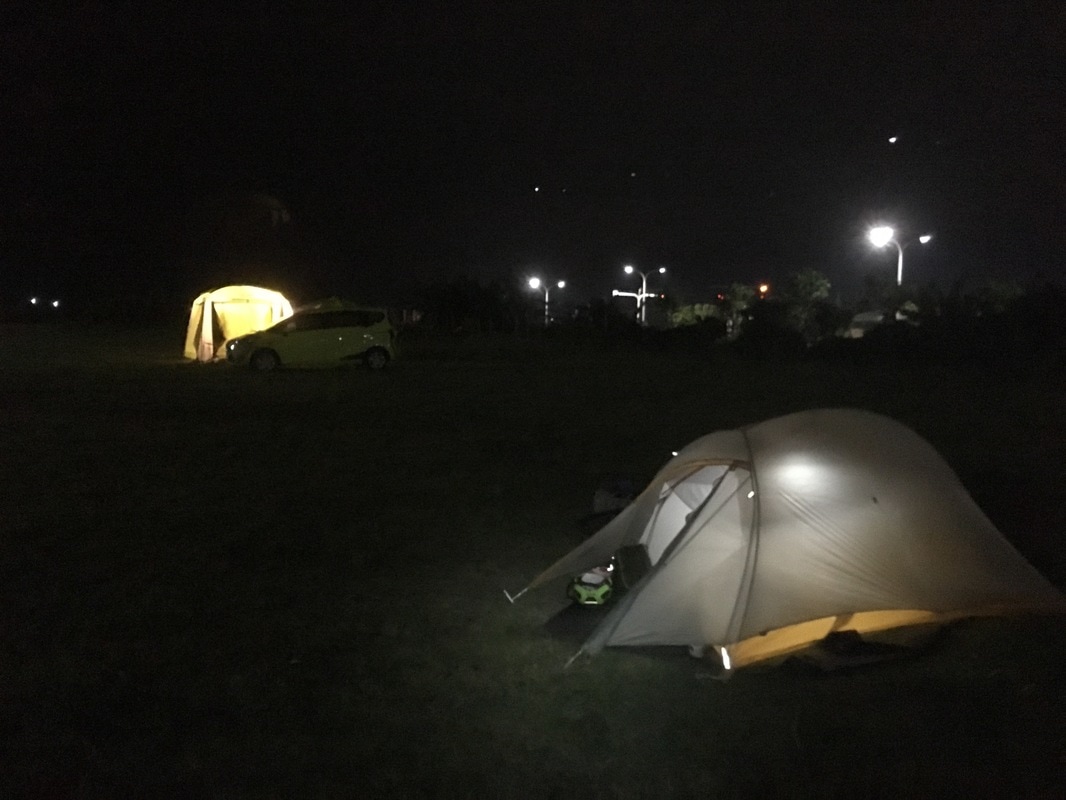
On that visit, I stayed at the marine rest area south of Taitung Seashore Park, near the Jingyang Coast Guard inspection station.
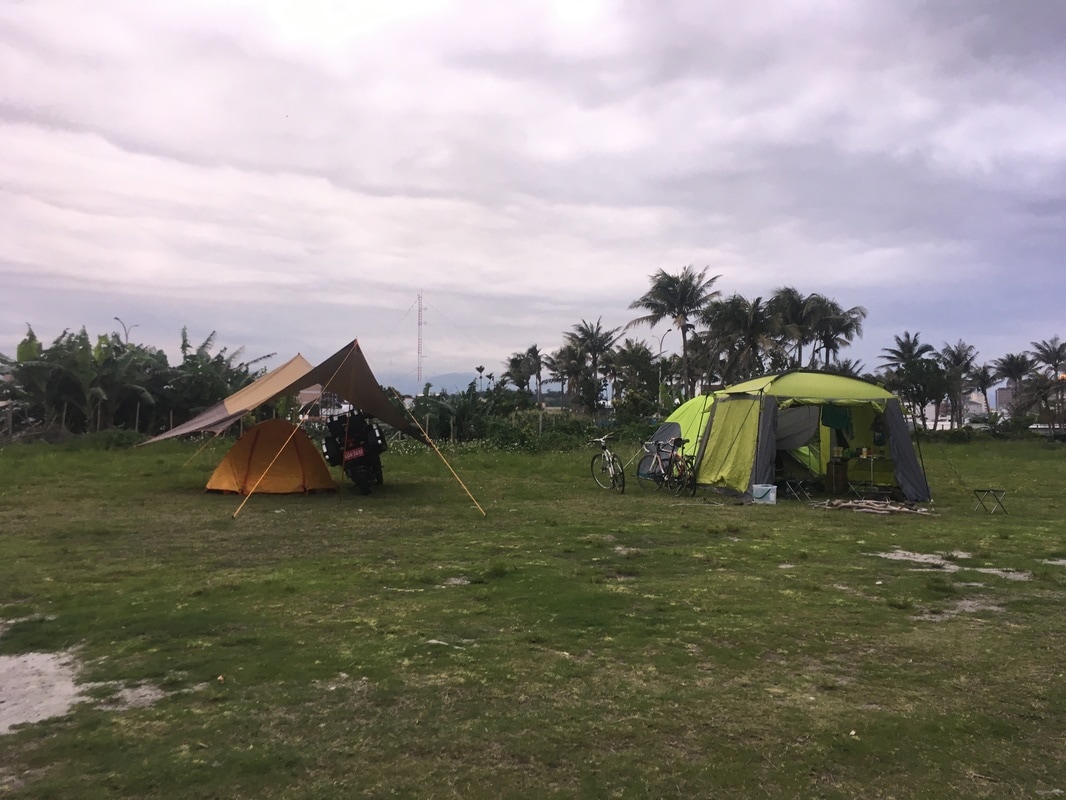
The original account described a large grassy area where visitors could camp without charge. I was also able to ask at the inspection station for water, toilet and shower access, and even electricity to recharge my power bank.
Those were the arrangements I encountered then, not confirmation that the same services or camping permission remain available.
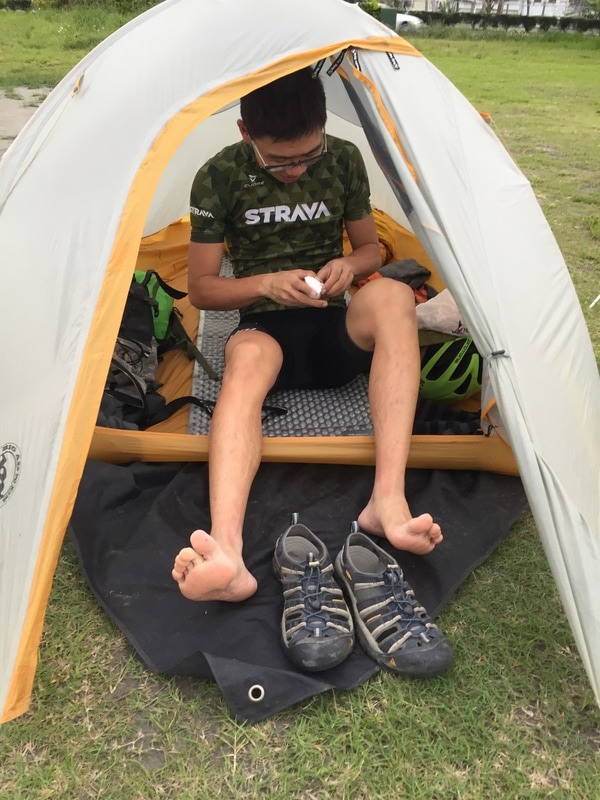
After my friend showered, I put up my tent and turned in.
The next day’s main event was Route 197.
A Different Approach through Liji
I woke early.
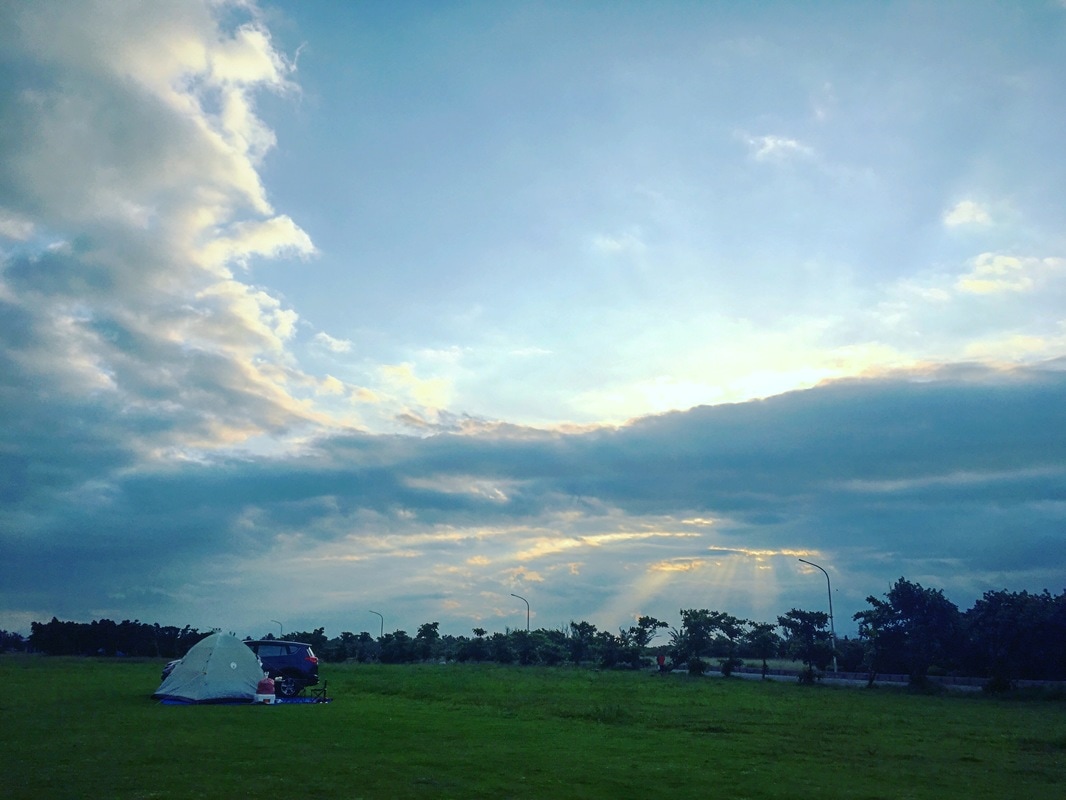
Beautiful shafts of morning light made it difficult to retreat into the tent. I packed instead and headed straight out.
Previously, I had approached Route 197 from its southern end at Shichuan. Having ridden that section three times, I wanted a change.
This time, I used Dong 45 through Liji to join Route 197.
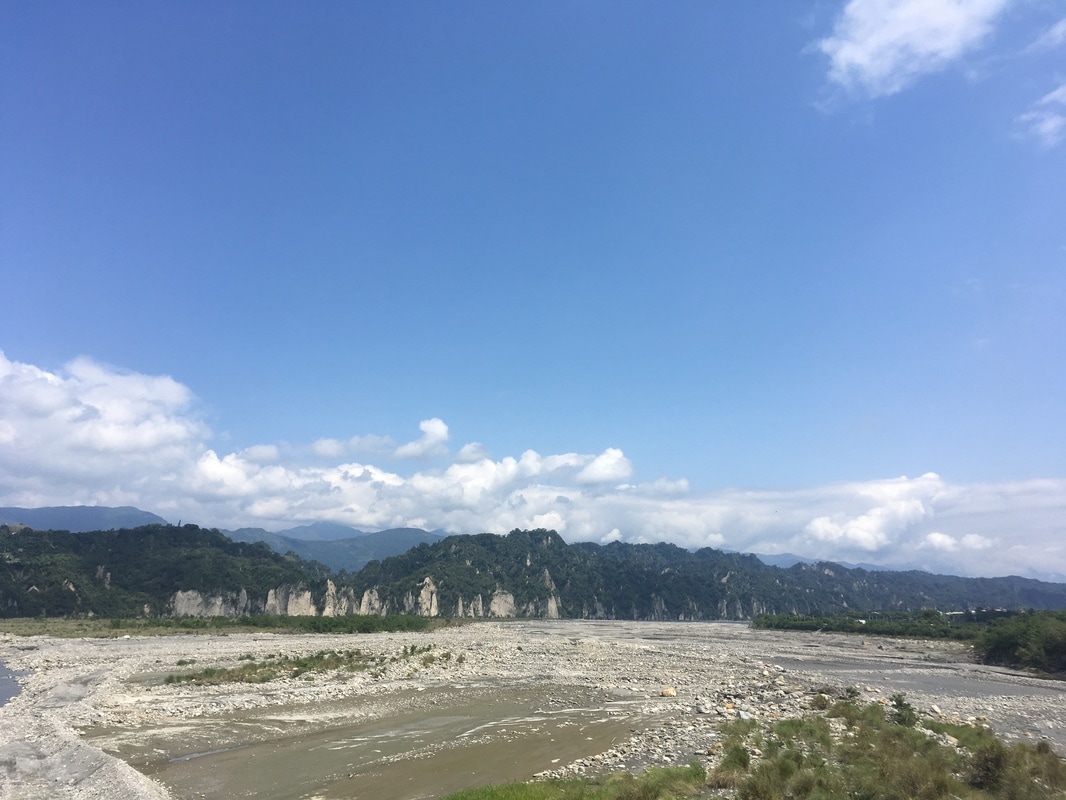
That approach felt gentler, without the same sharp climbs. Riding beside the river valley, with badland formations and Little Huangshan nearby, gave the journey a different character.
At Last, the Gravel
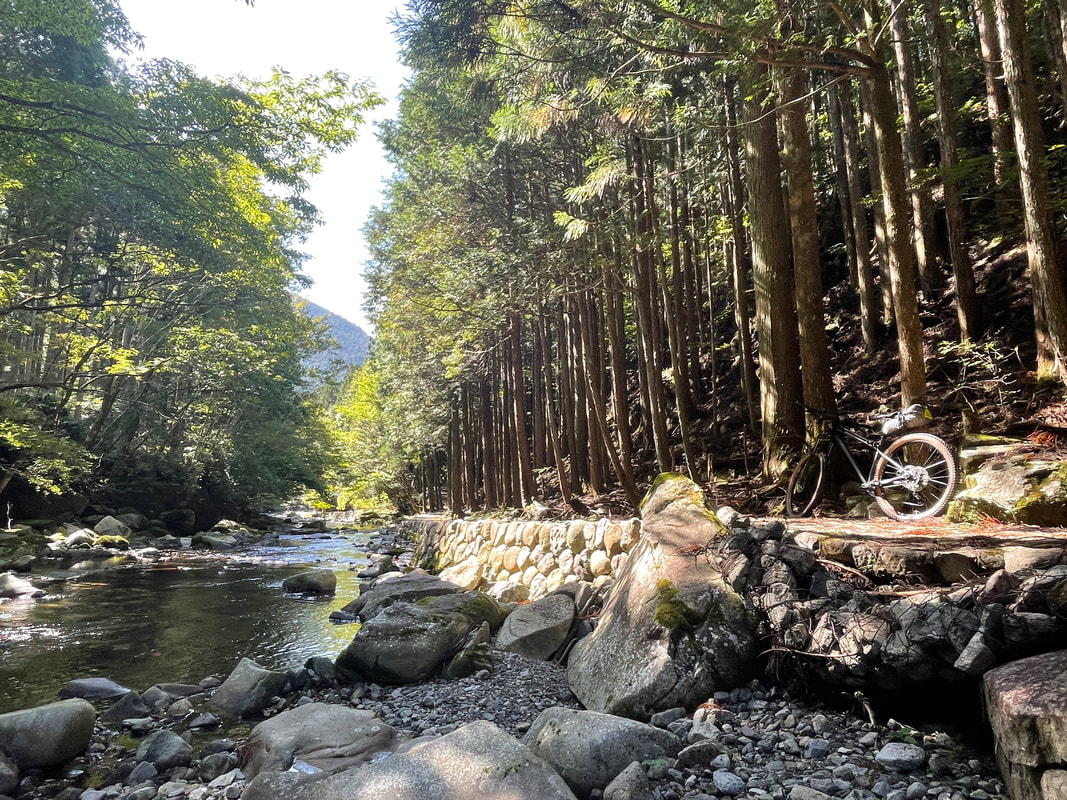
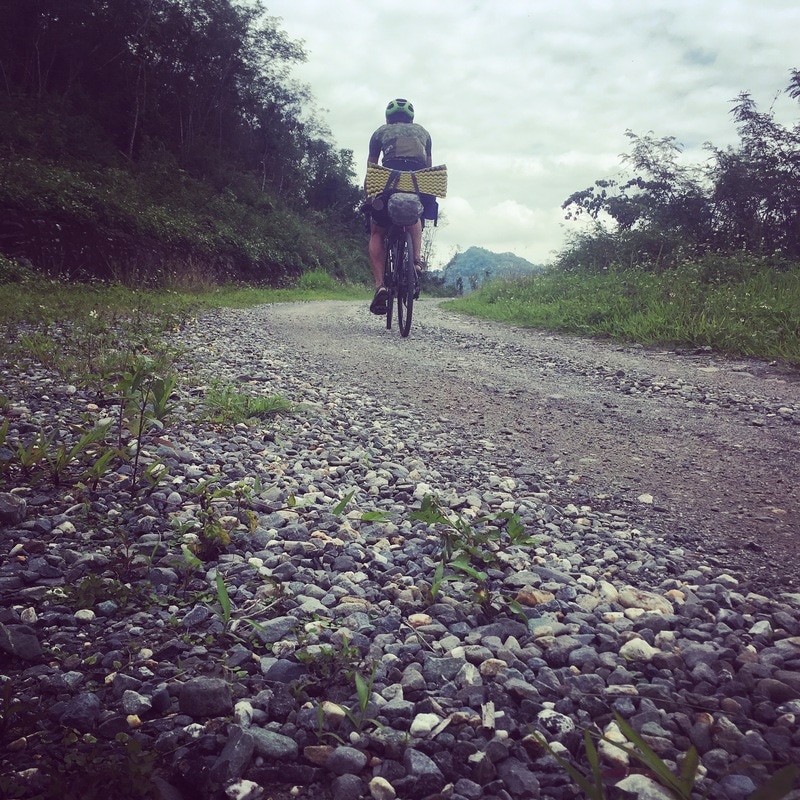
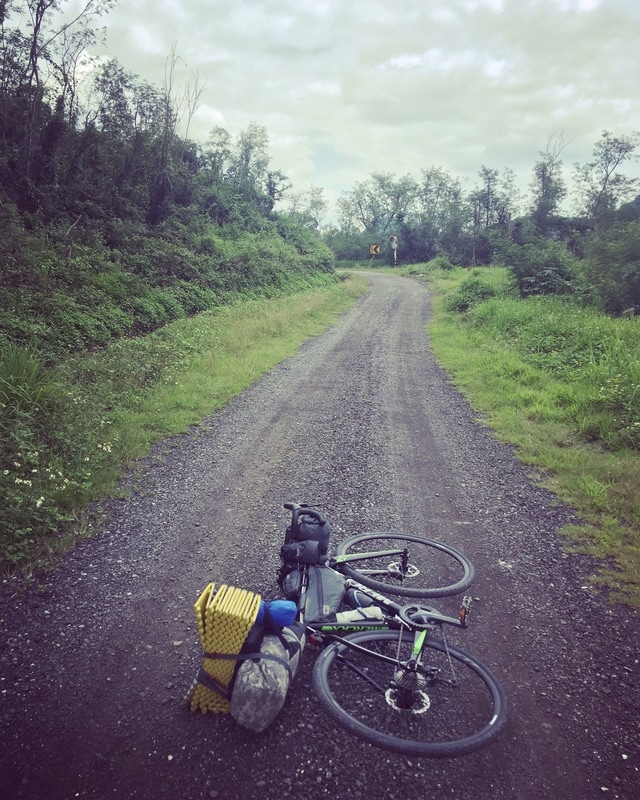
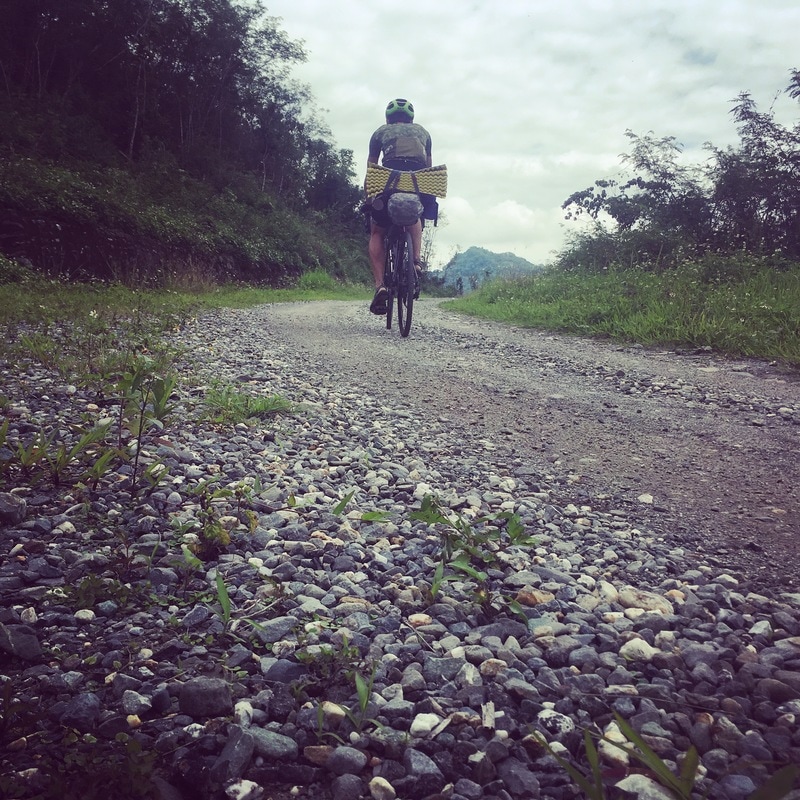
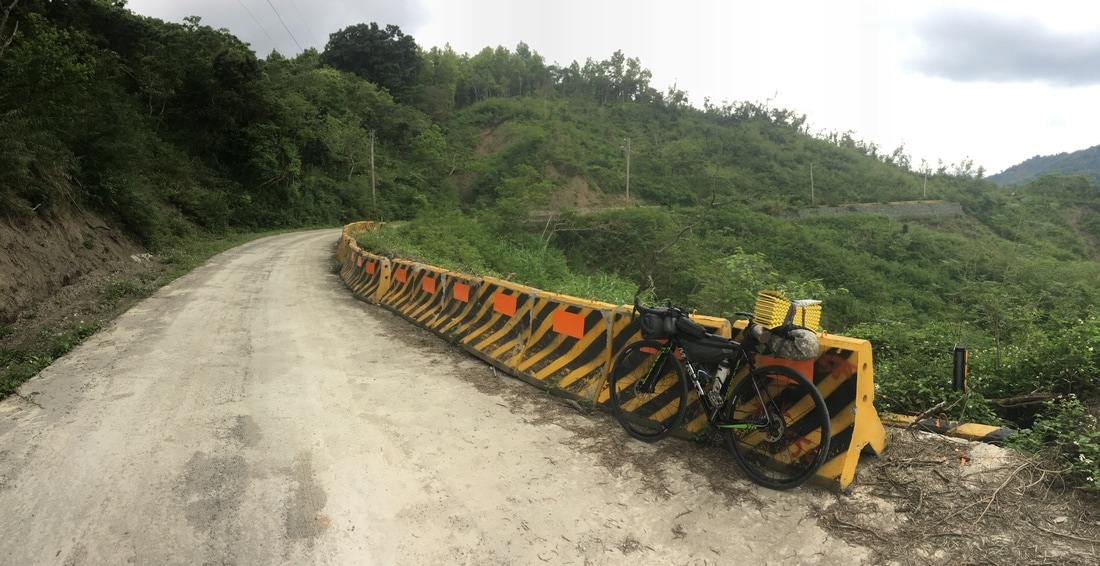
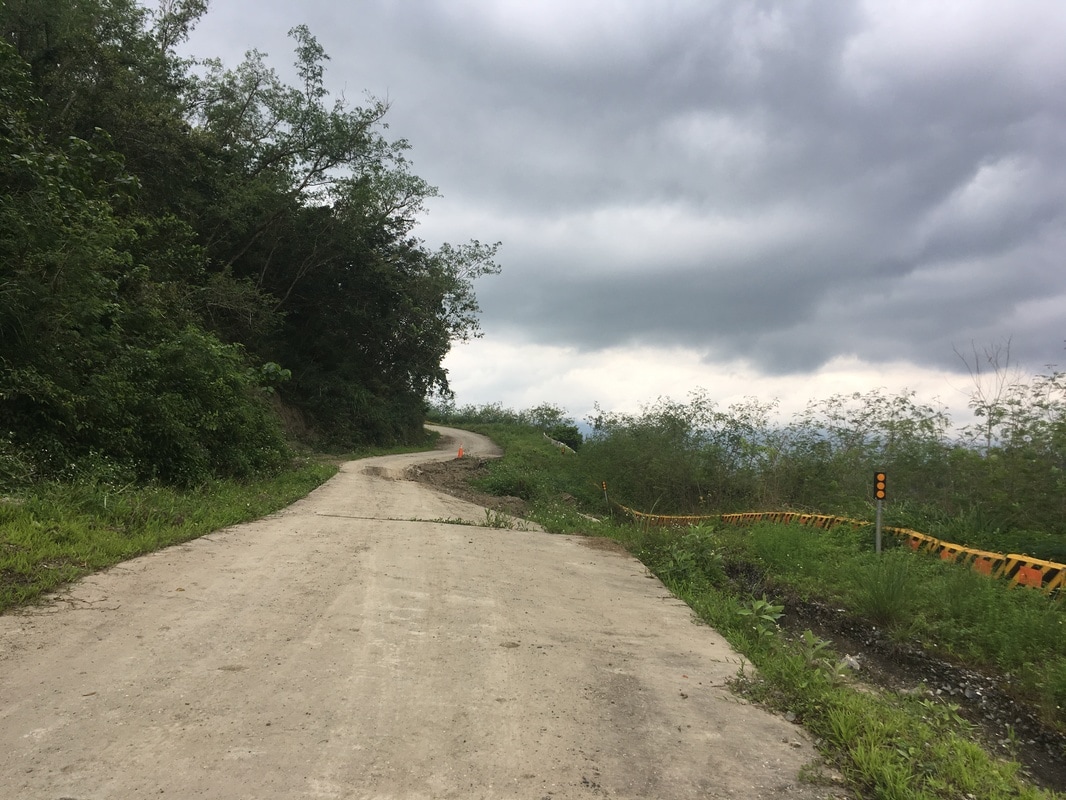
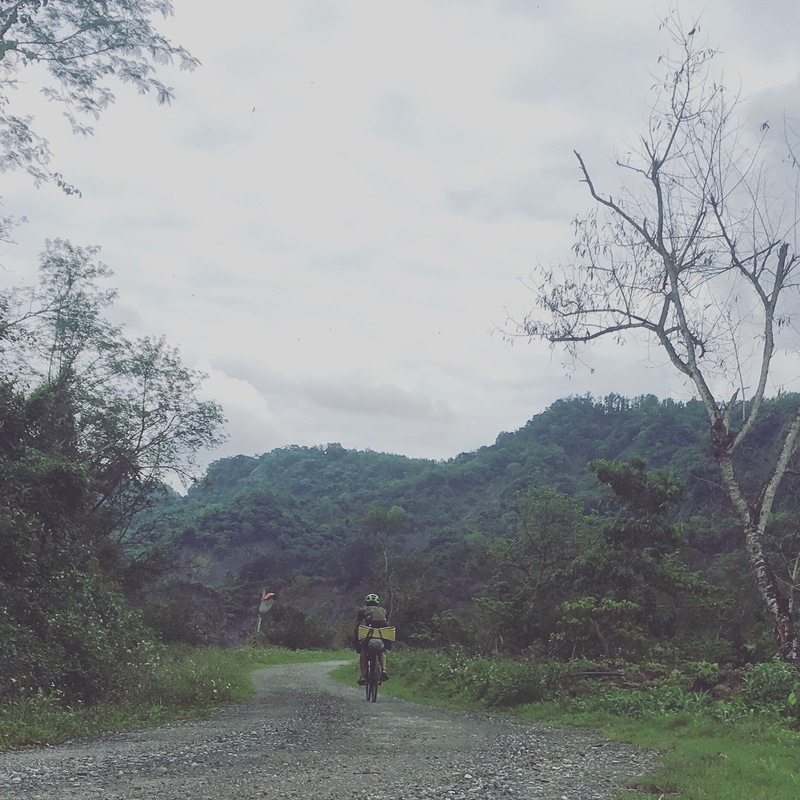
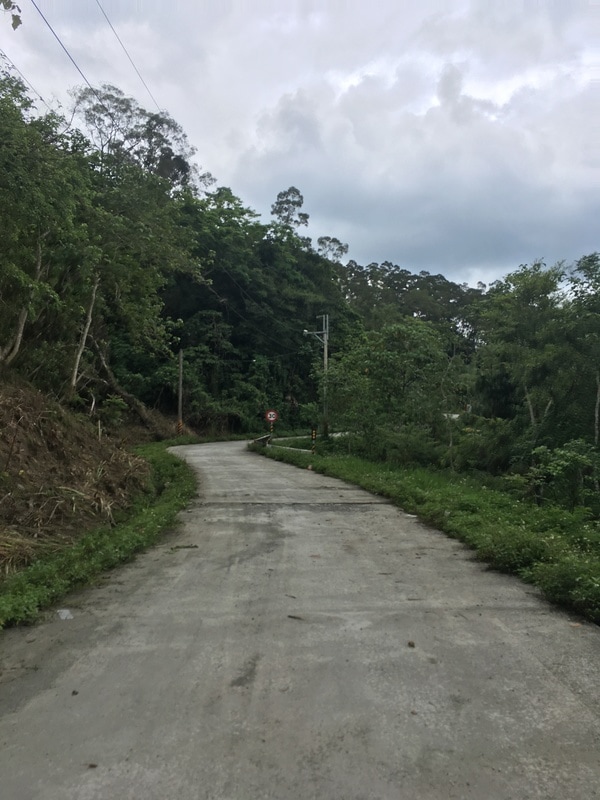
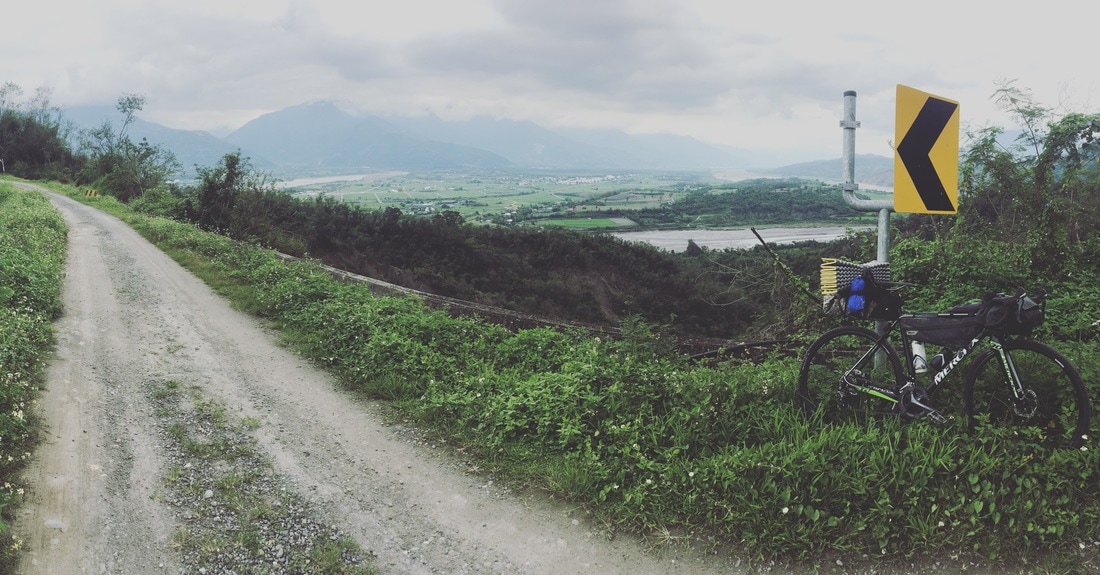
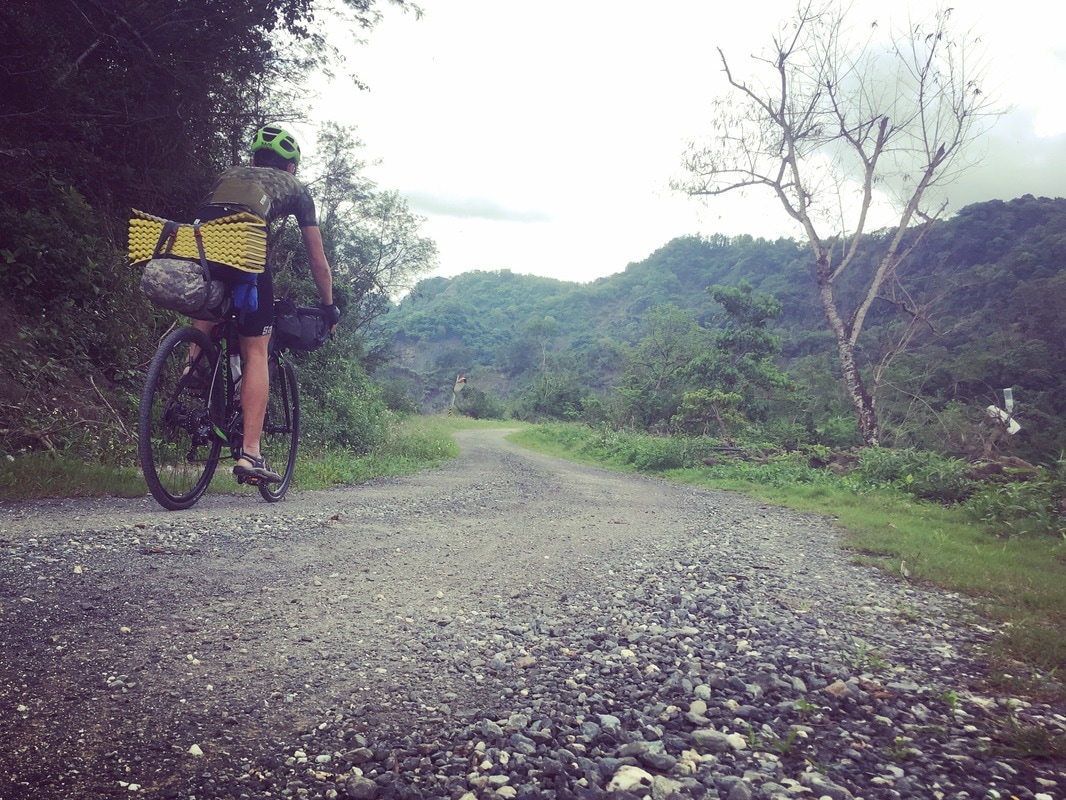
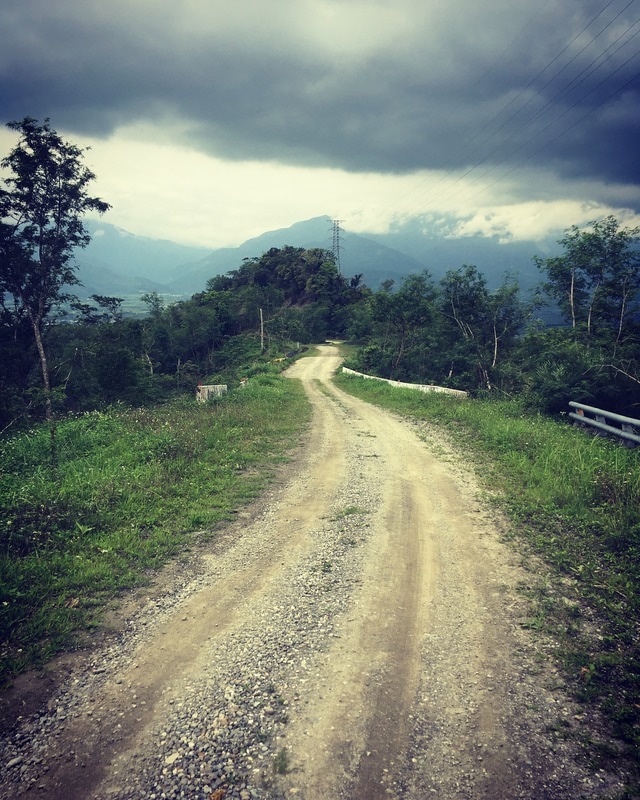
Eventually, I reached the part I had been waiting for: what I described at the time as fourteen kilometers of gravel.
That section had defeated me twice before.
The first time, I was on a road bike and lacked the courage to take it onto the loose surface.
The second time, I had found the courage, but the road was broken.
This time, conditions seemed to have come together.
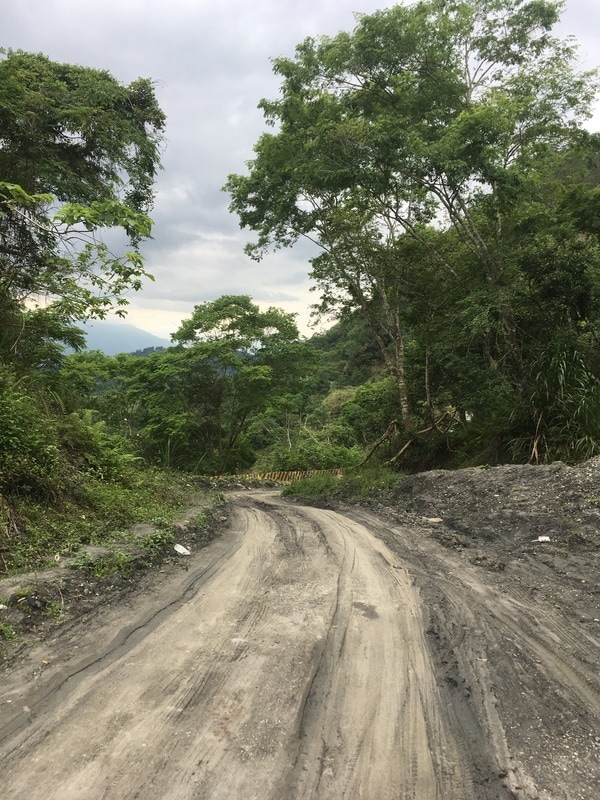
On that day, I did not find the gravel especially difficult. There were no enormous holes or boulders in the sections I rode, some stretches were concreted, the gradients seemed manageable and I did not need to carry the bike.
I even felt that a road bike might have managed it. That was my personal assessment of the surface then, not a recommendation for every bicycle, rider or current condition.
I wondered why it had never been asphalted. Perhaps the nearby badland geology made the ground unstable, though that was only my speculation.
Whatever the reason, I enjoyed the long unpaved stretch and the absence of other vehicles during my passage.
In all my wandering, I had rarely found such a long, pleasantly rideable gravel road.
A Valley of Rice Fields and a Grove of Great Trees
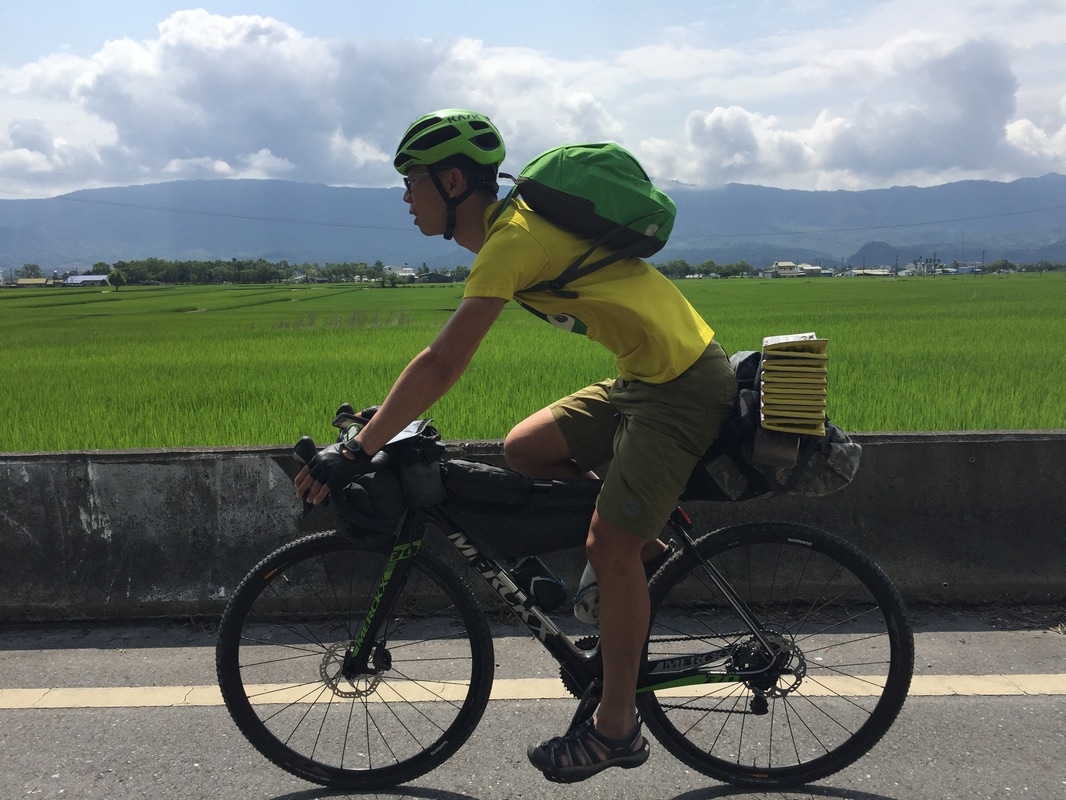
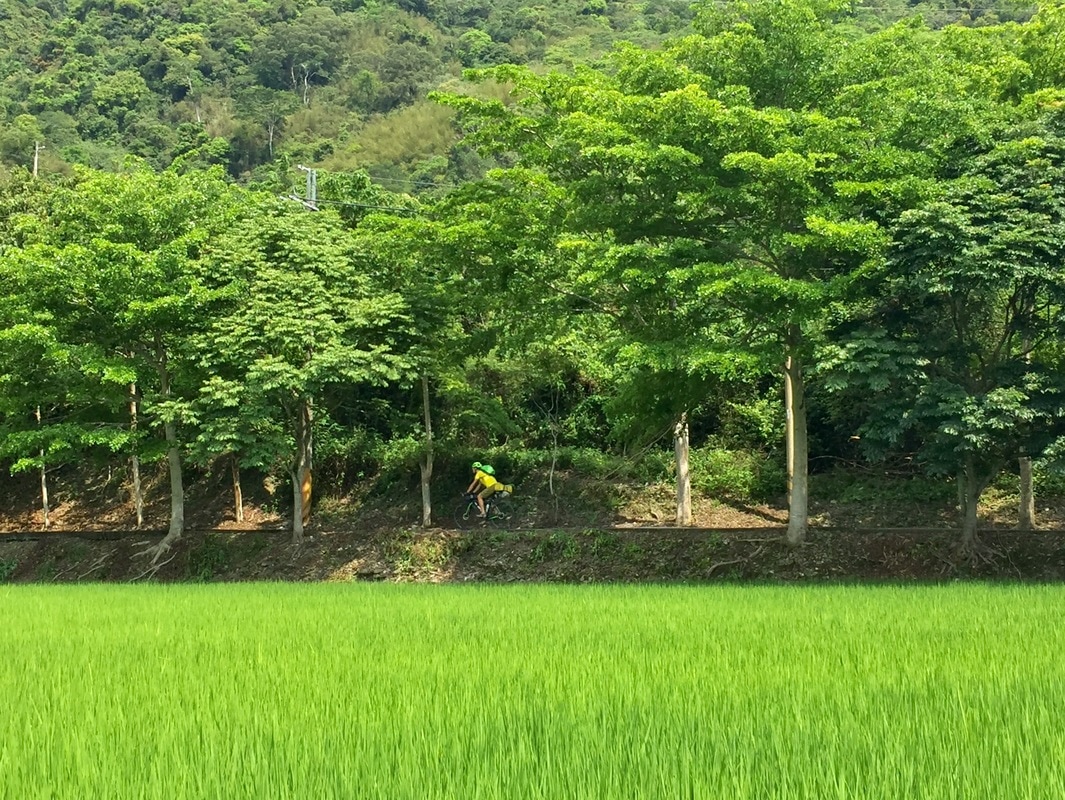
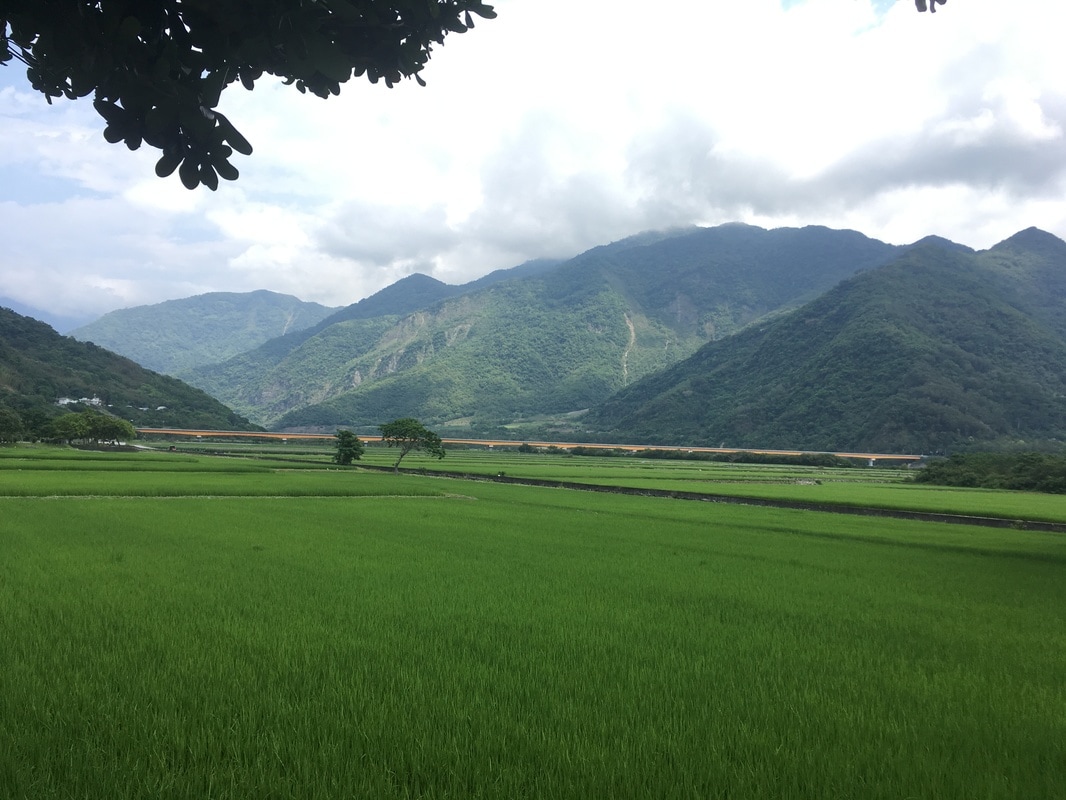
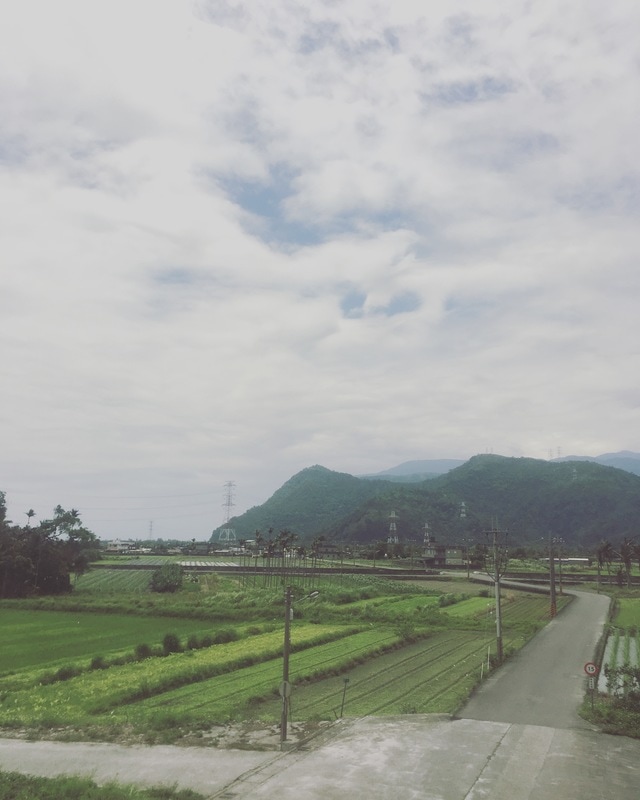
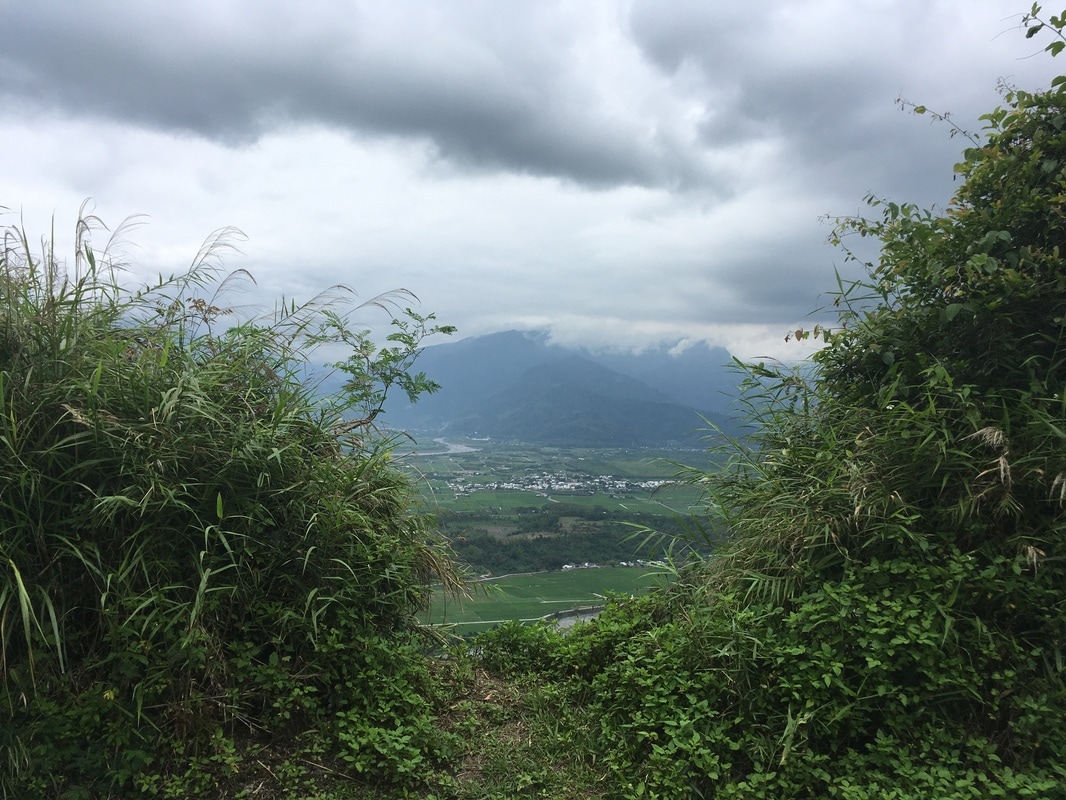
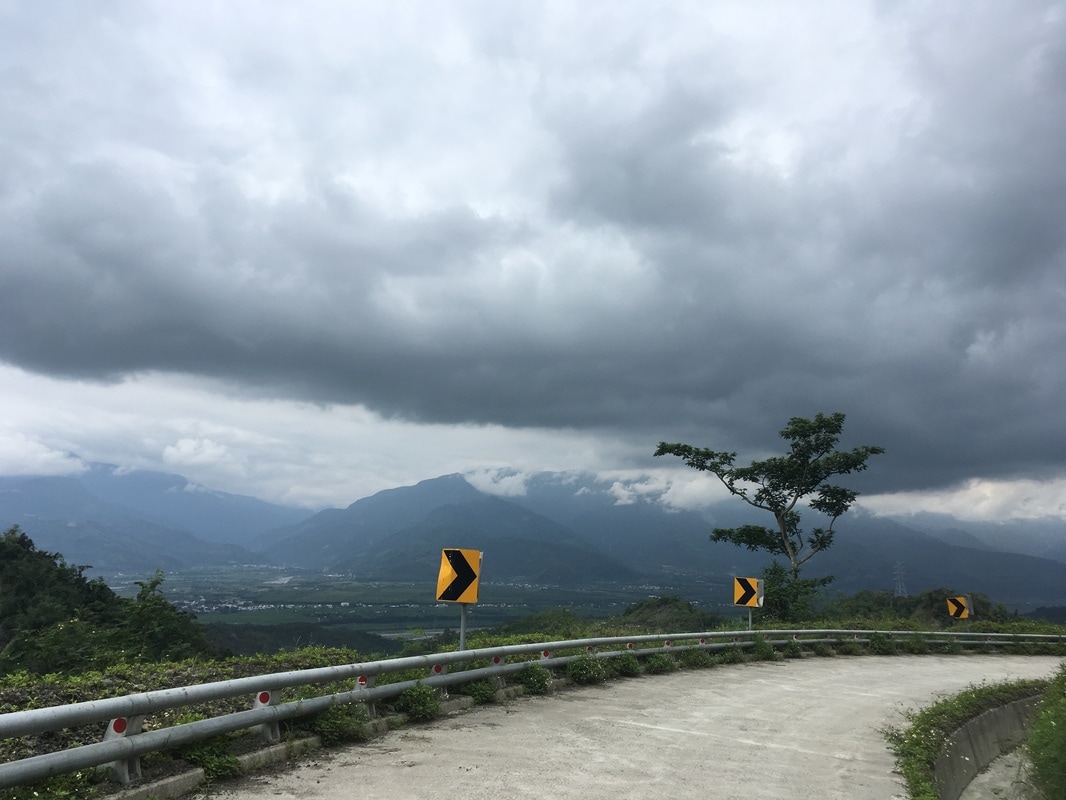
Route 197 ran along the side of the East Rift Valley.
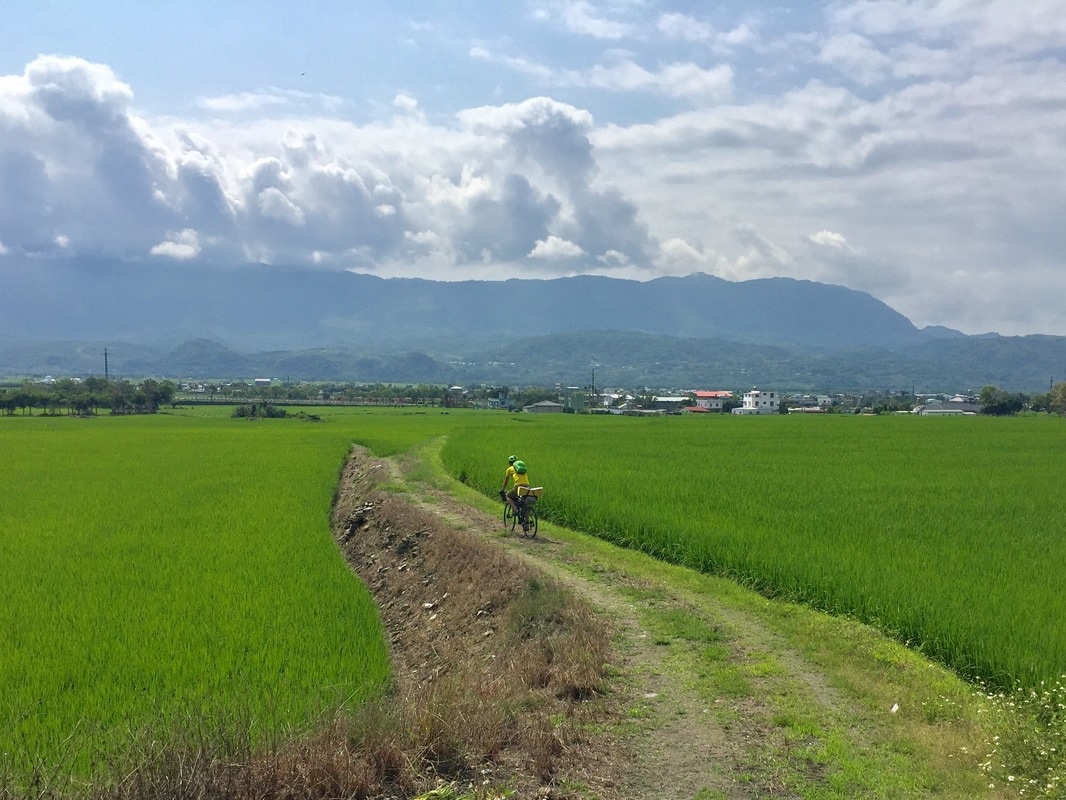
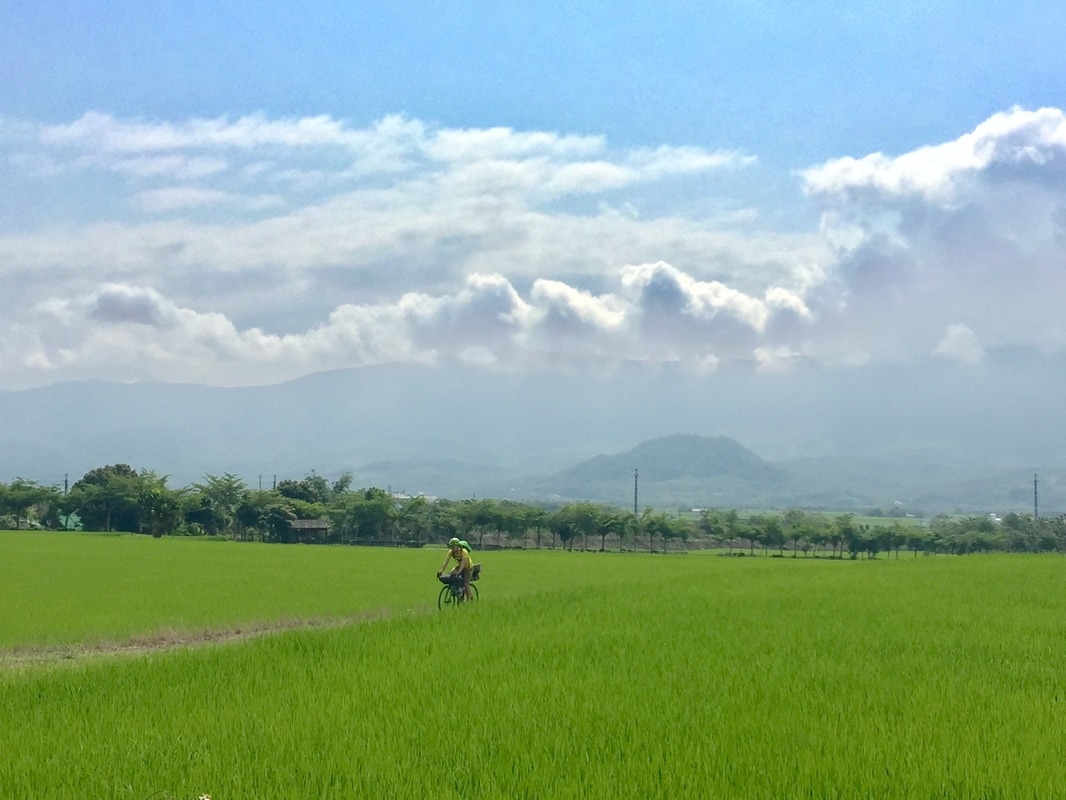
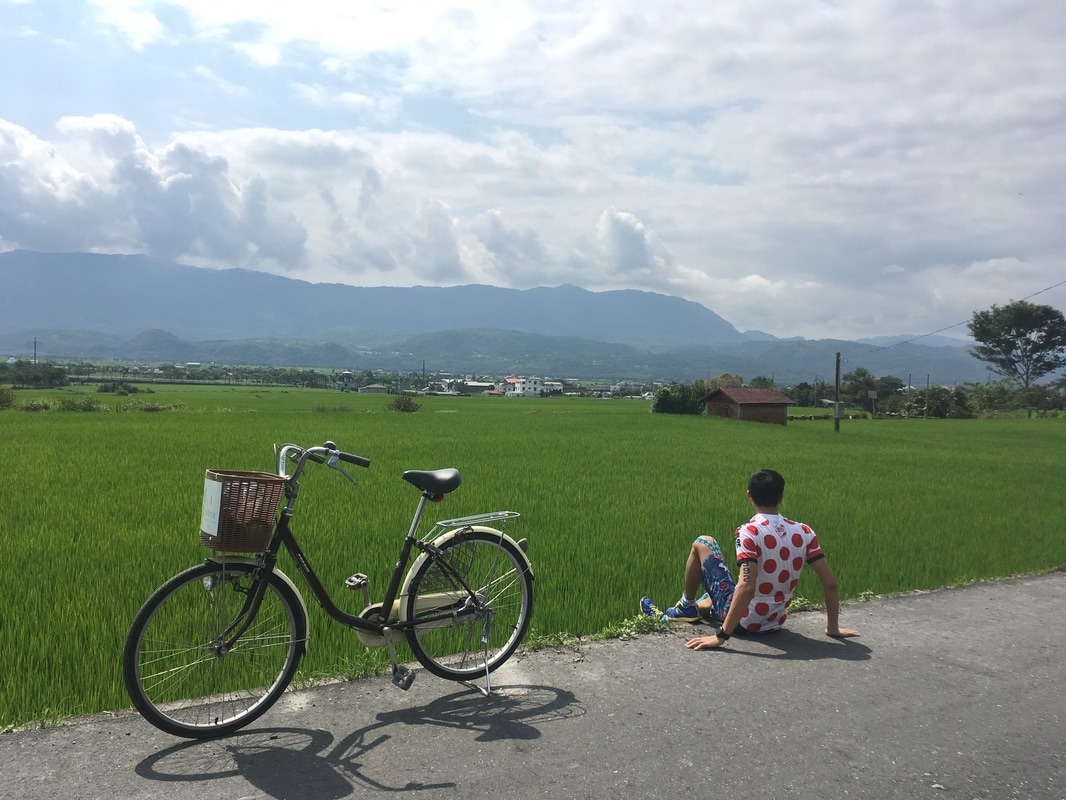
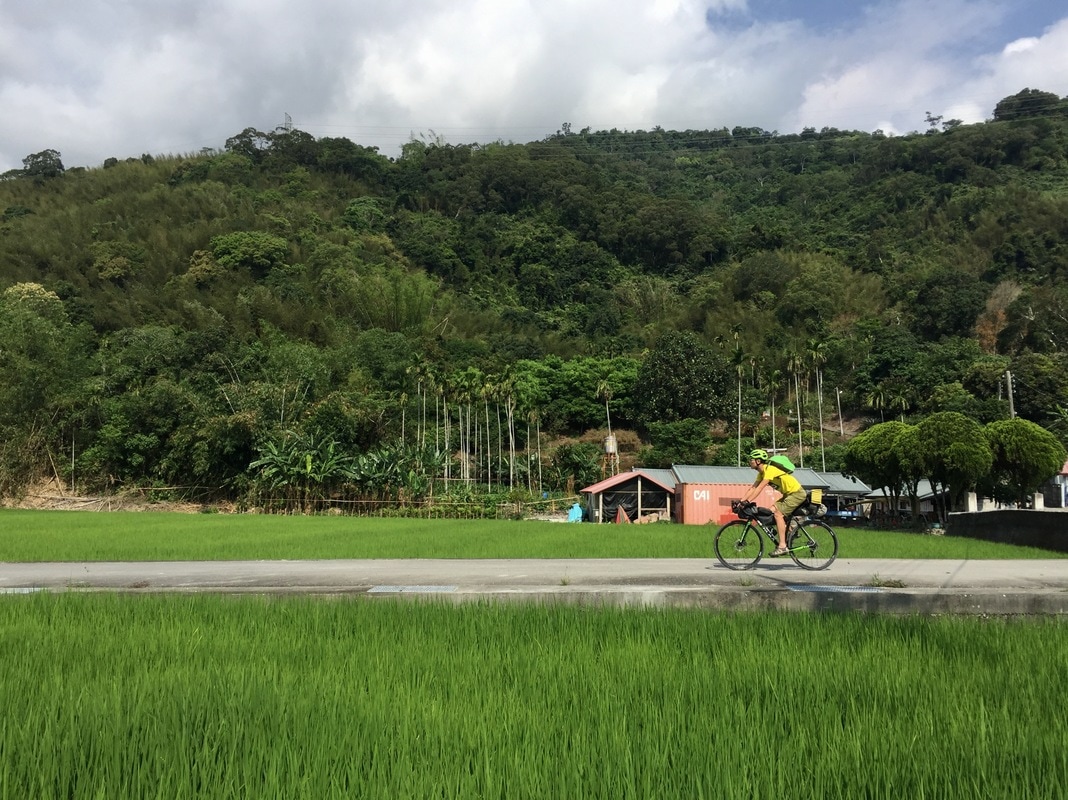
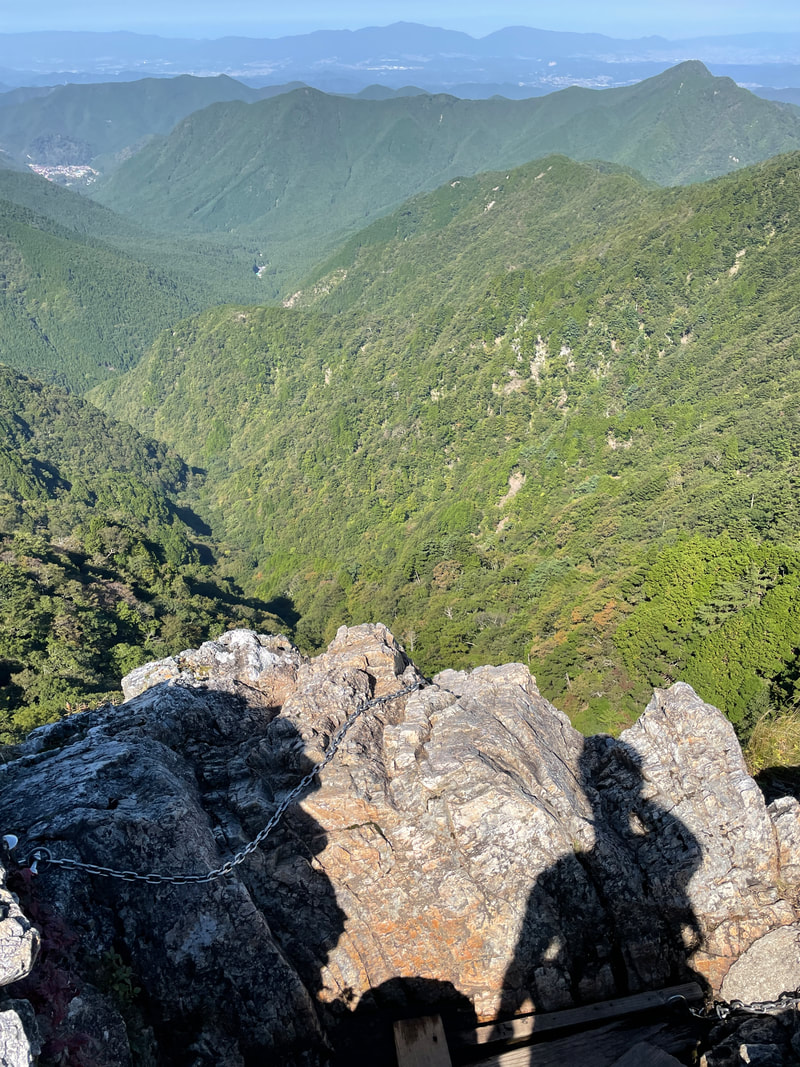
At bends and through gaps in the trees, I could look out across the valley, green rice fields filling the landscape.
This was the rice-growing country associated with places such as Brown Boulevard.
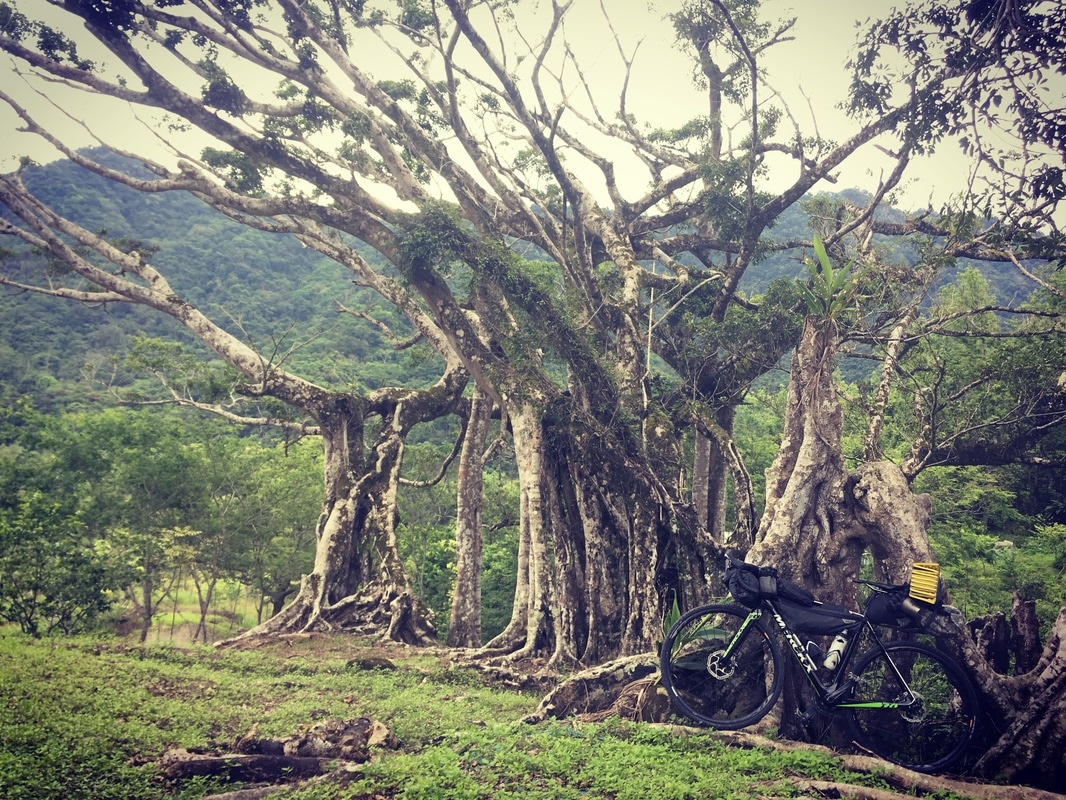
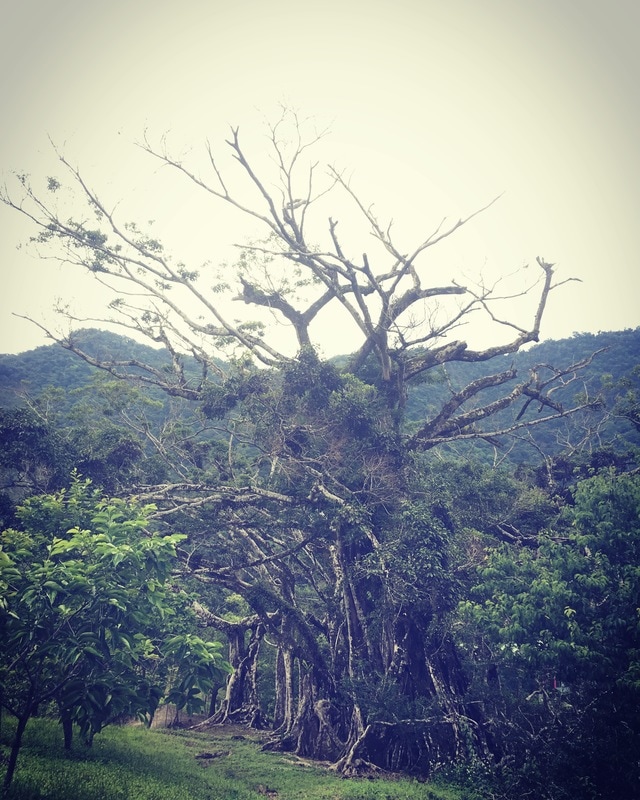
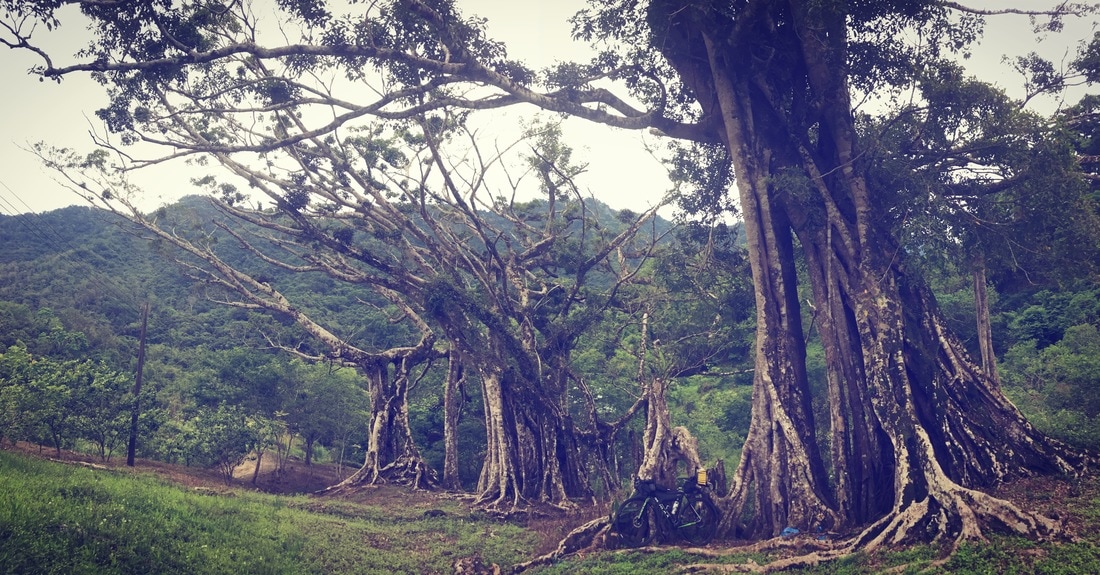
Then, around one bend, several enormous trees appeared.
They had an atmosphere unlike the surrounding woodland. Thick aerial roots reached into the ground, while broad, weathered trunks seemed to hold the weight of many years.
Together, they formed a little grove of their own within the hollow.
I pushed the bicycle beneath them. Their canopy kept the light rain off me, although trees should not be relied on as storm shelter.
I wanted to spend the night there.
But a friend was waiting at the far end of Route 197. After a short rest, I got back on the bicycle and continued.
Chishang, then Back to Guanshan
Beyond the gravel, the road returned toward the valley floor.
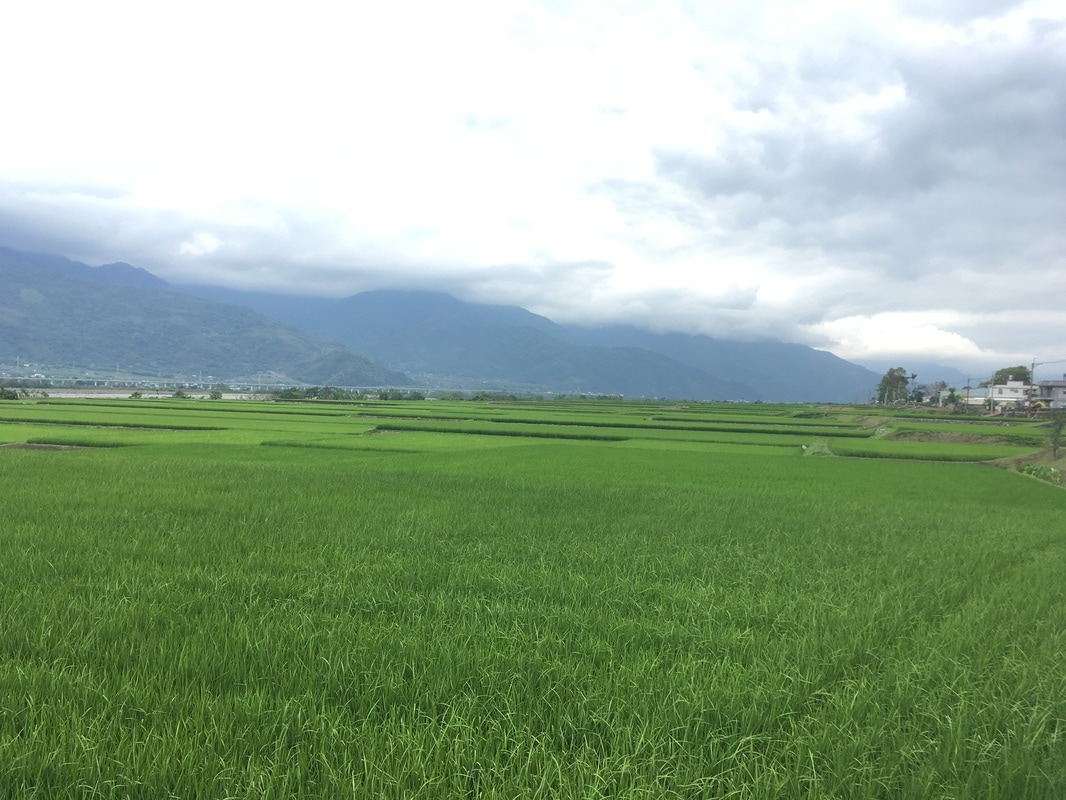
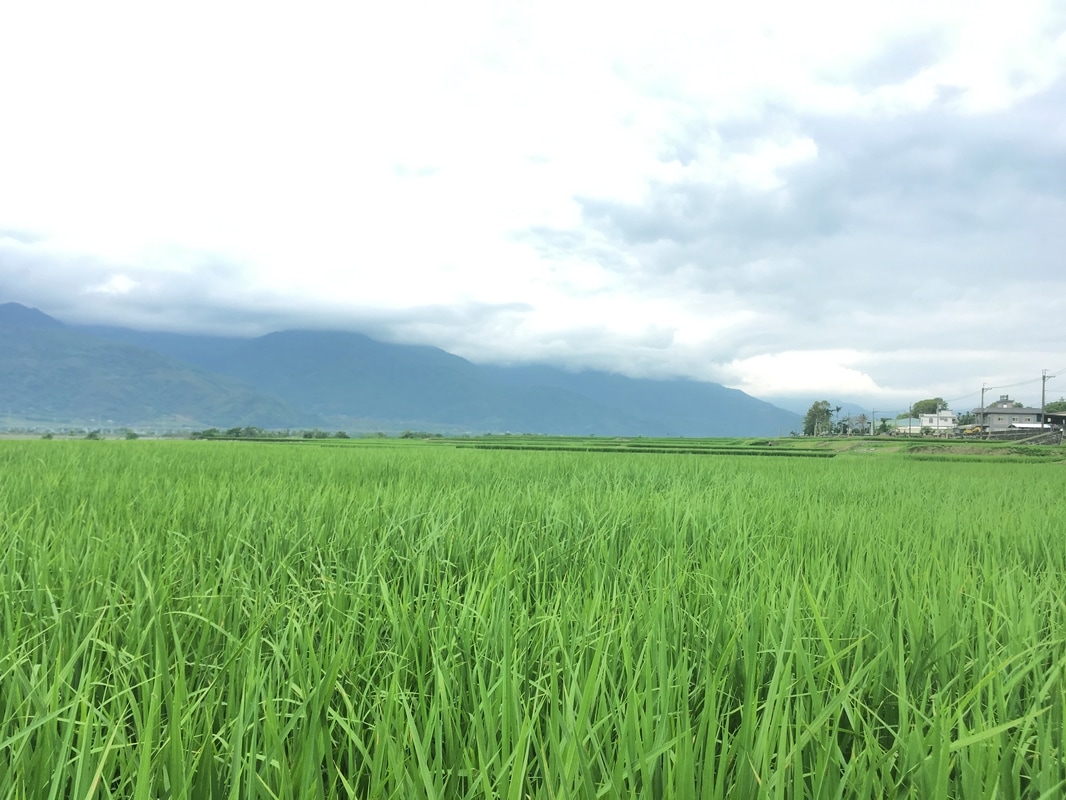
Riding beside the green rice fields, my mood felt as open as the landscape.
I rolled happily into Chishang.
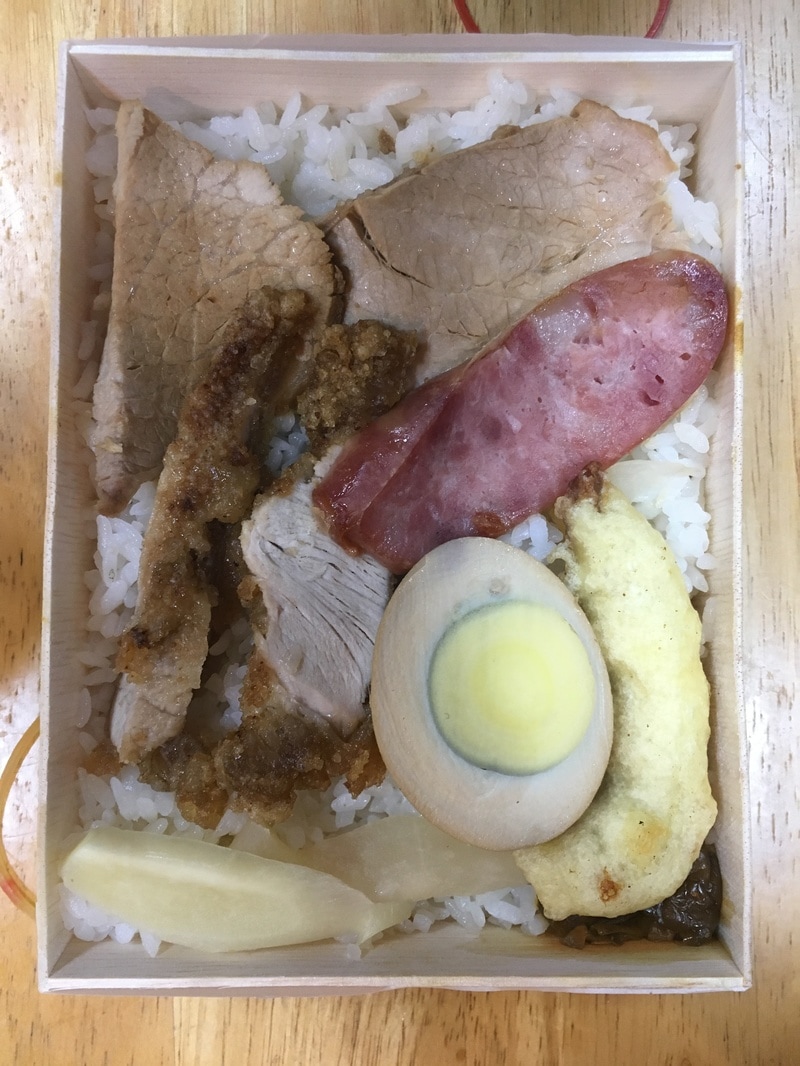
I had expected to stay there that night, but a small change of circumstances sent me back toward Guanshan after eating a Chishang lunchbox.
On the map, Guanshan Water Park looked like a possible place to camp.
Arriving, I discovered it was a paid-entry park rather than the casual overnight spot I had imagined.
I eventually found a nearby pavilion and slept there. The original account does not establish permission for that stay; future visitors should arrange an authorized place rather than treat the pavilion as a campsite.
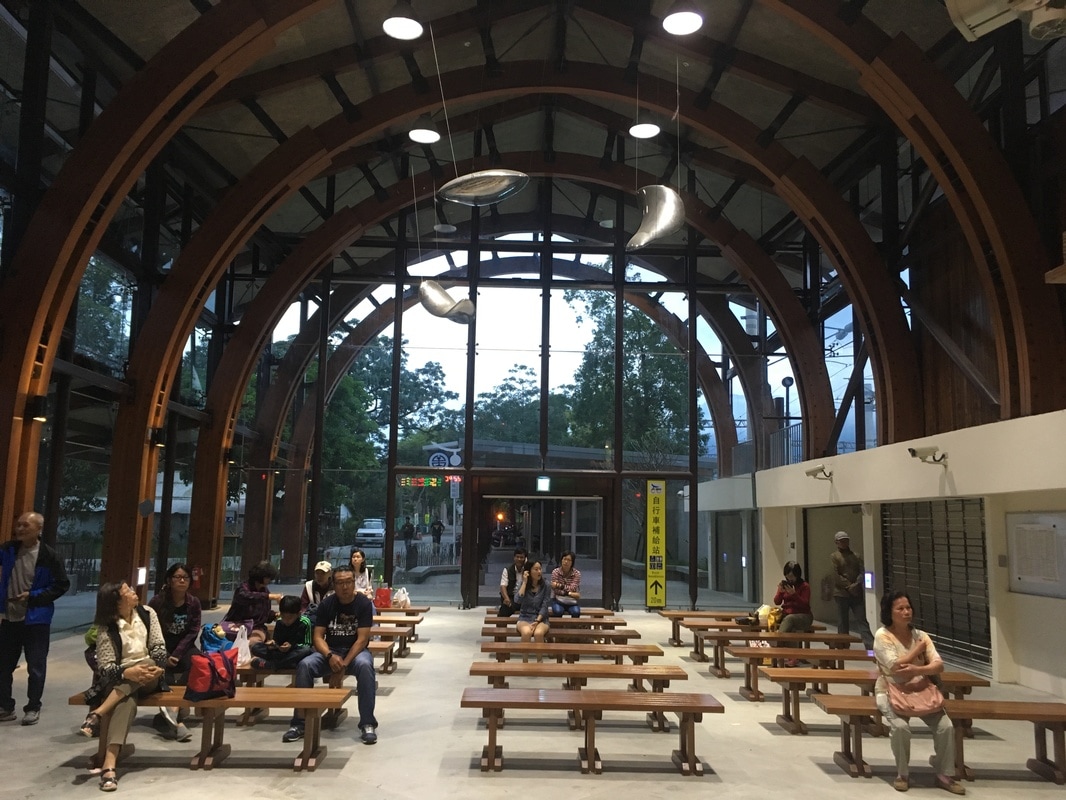
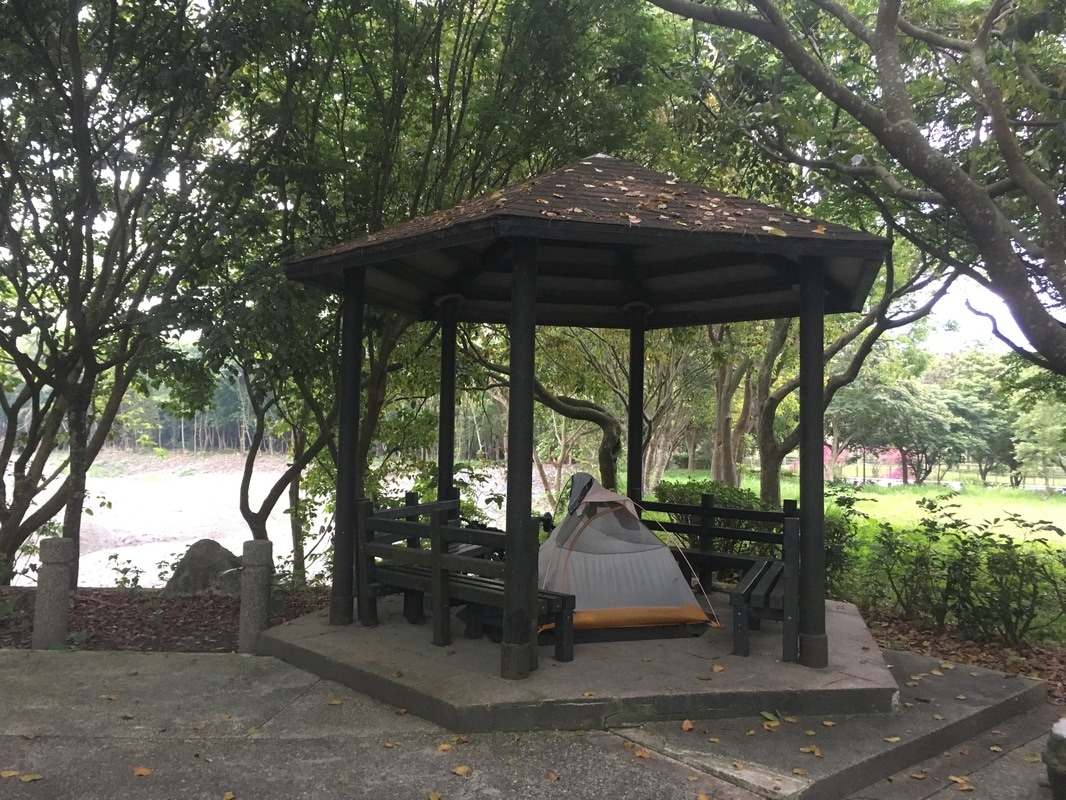
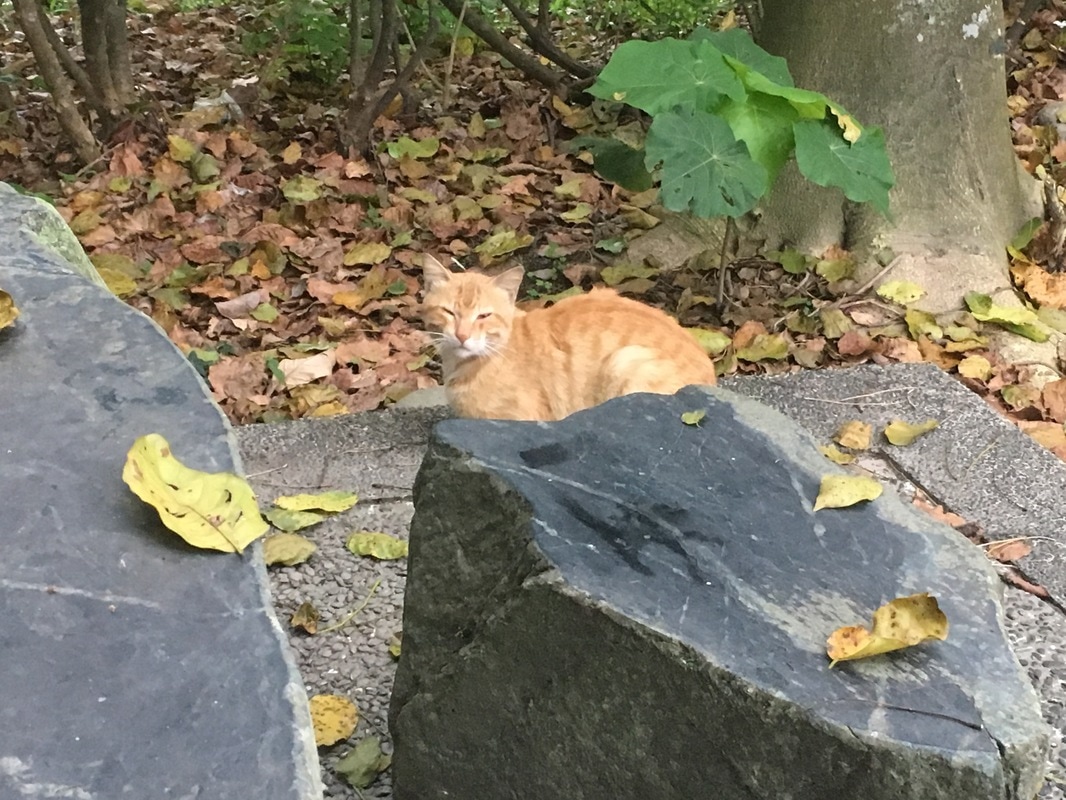
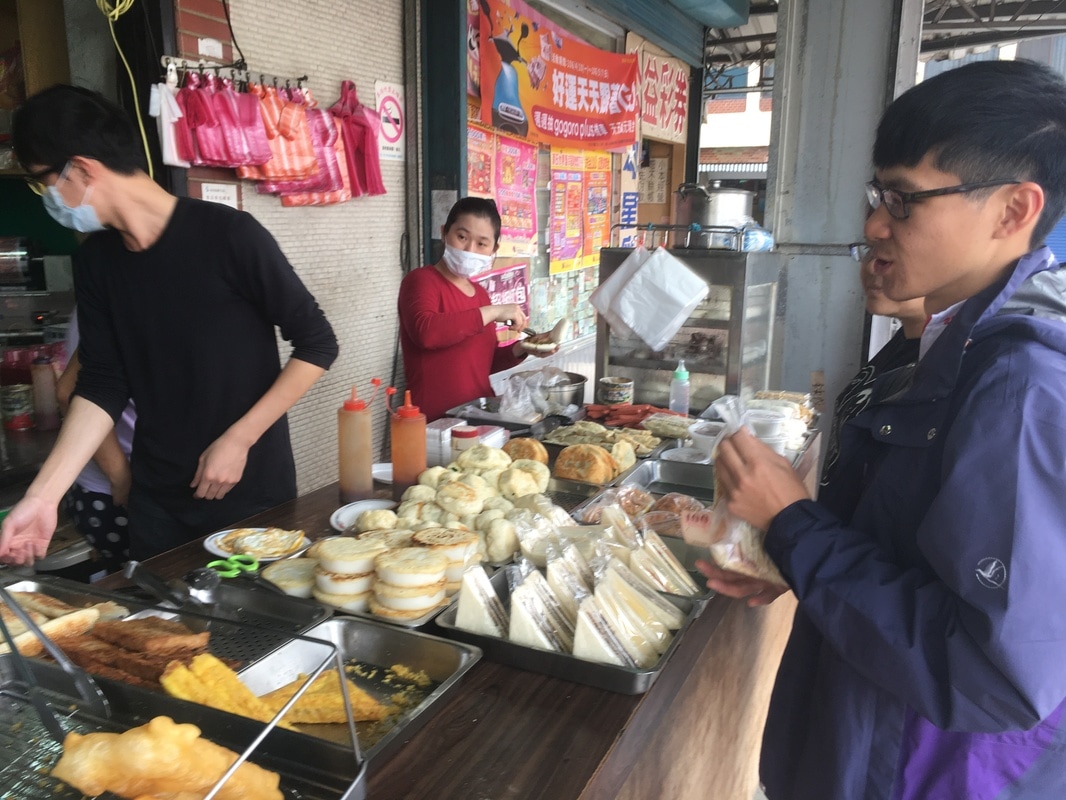
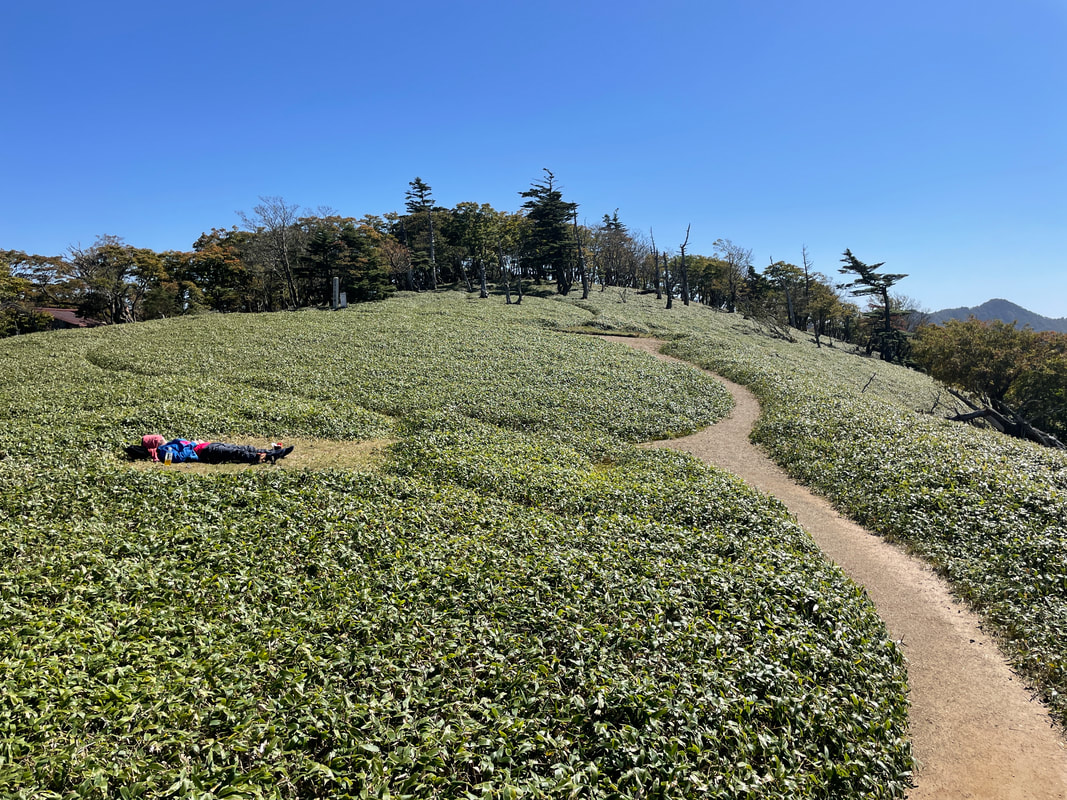
A Slow Morning around Guanshan
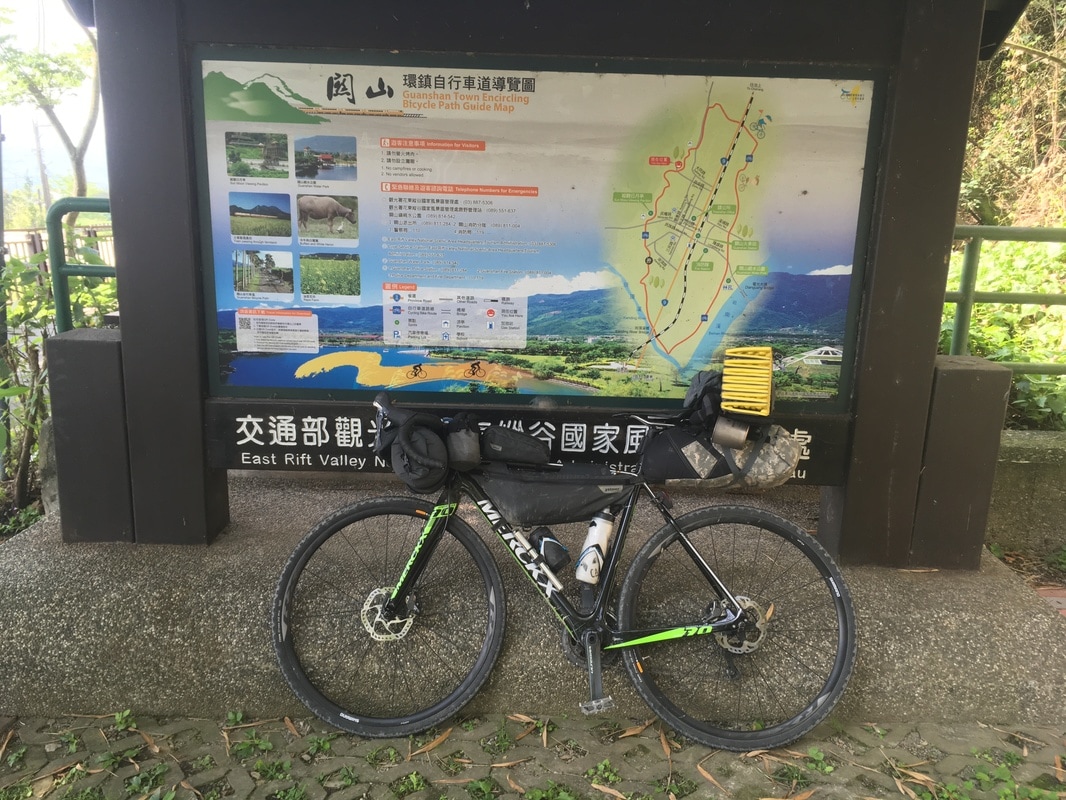
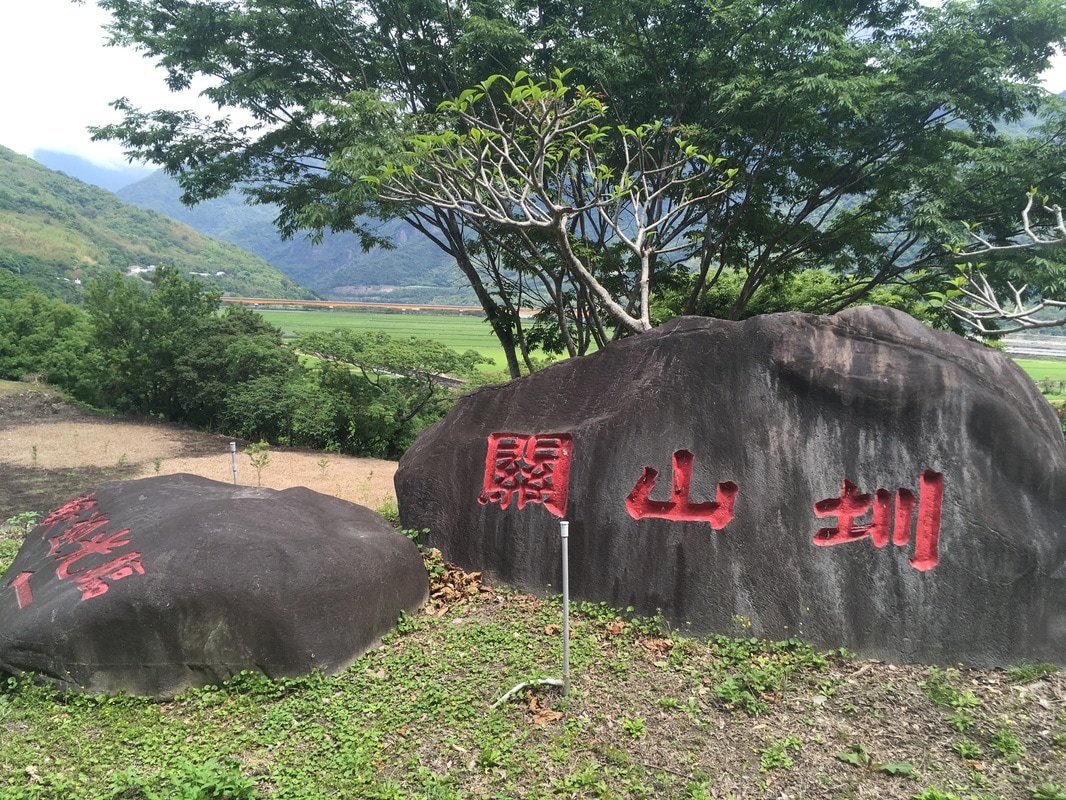
The next morning, we rode around Guanshan without much of a plan.
Compared with Chishang, it felt much less crowded on our visit.
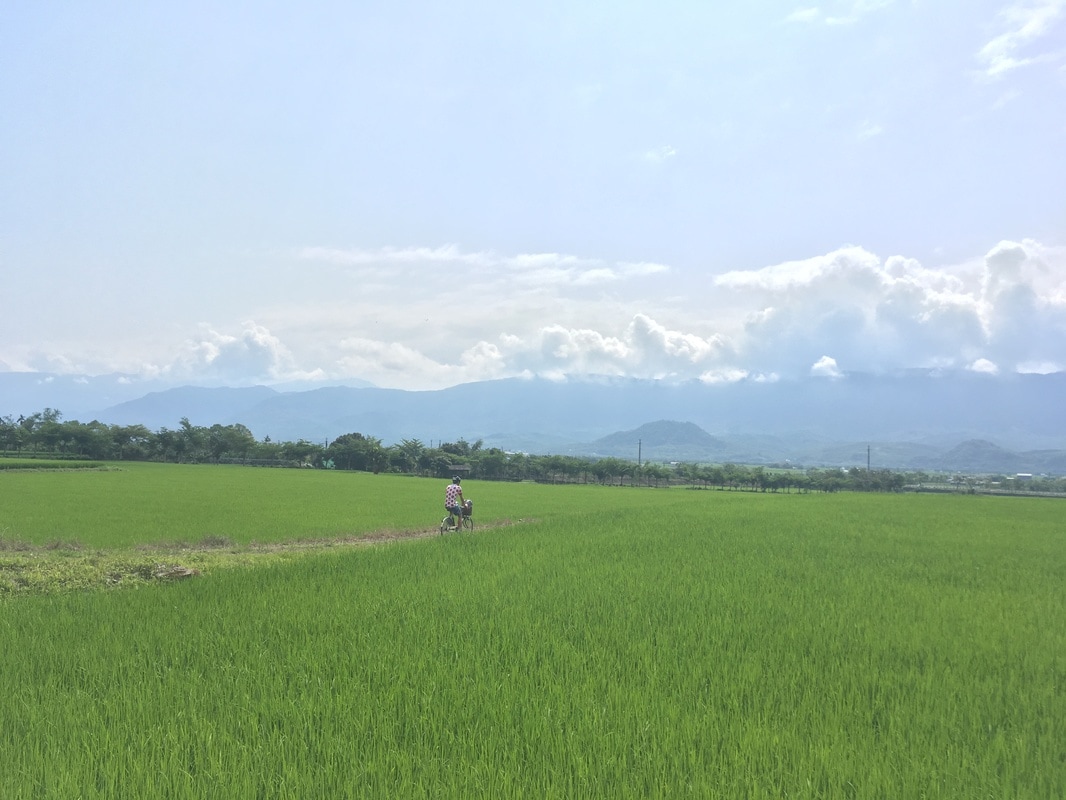
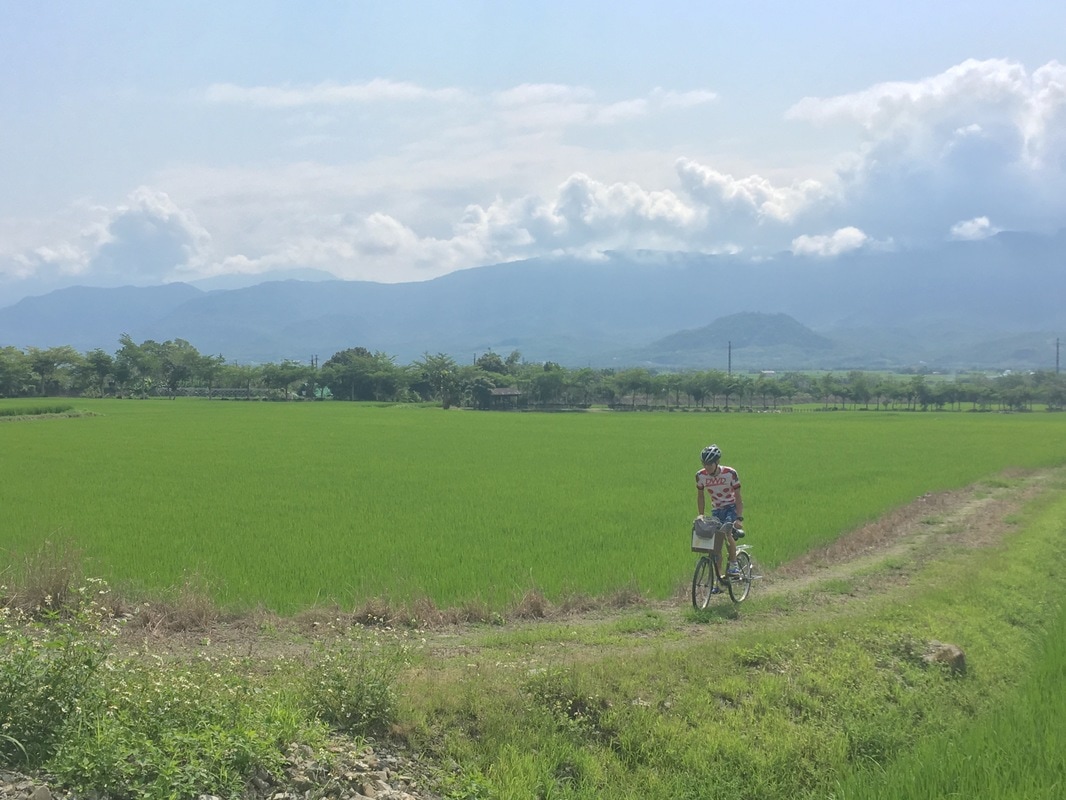
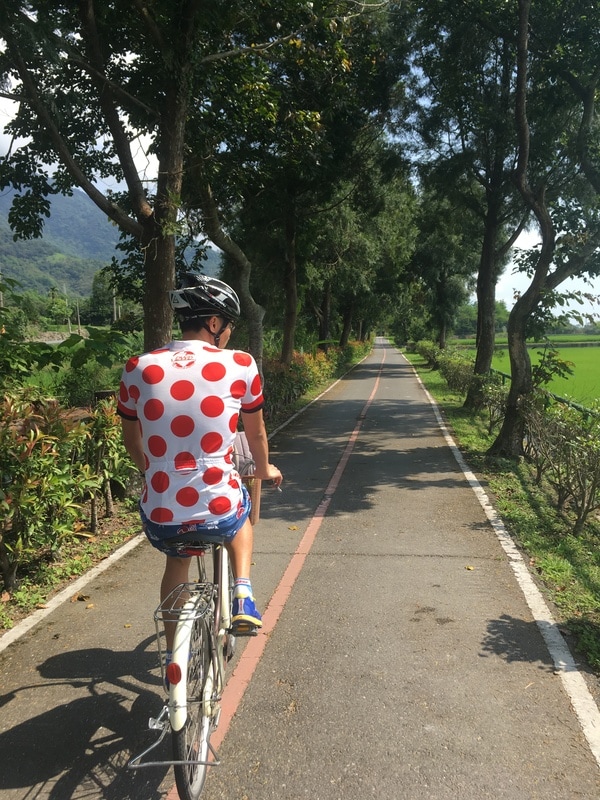
The area was smaller, but the town’s cycling route still let us wander among field edges without the crowds I associated with Brown Boulevard.
We jokingly imagined ourselves as Takeshi Kaneshiro and followed the cycleway north.
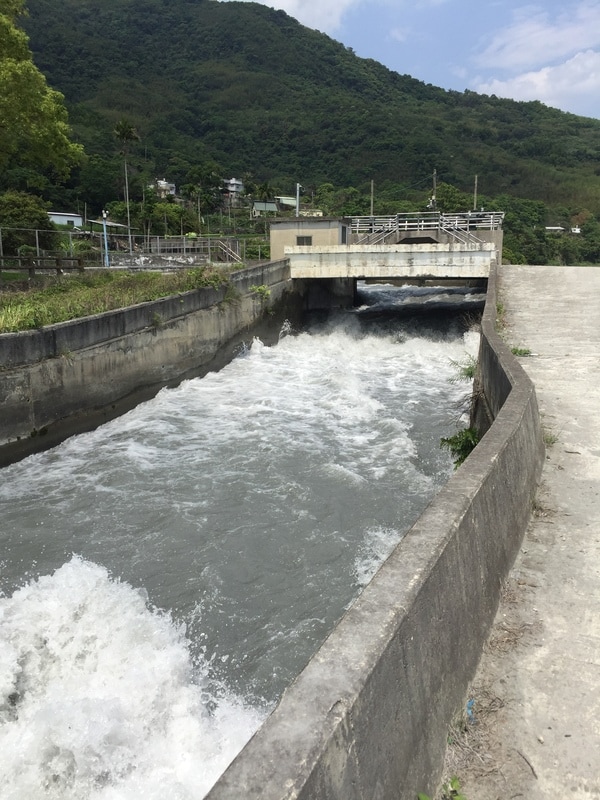
Eventually, we reached the waterside park near the intake of the Guanshan irrigation canal.
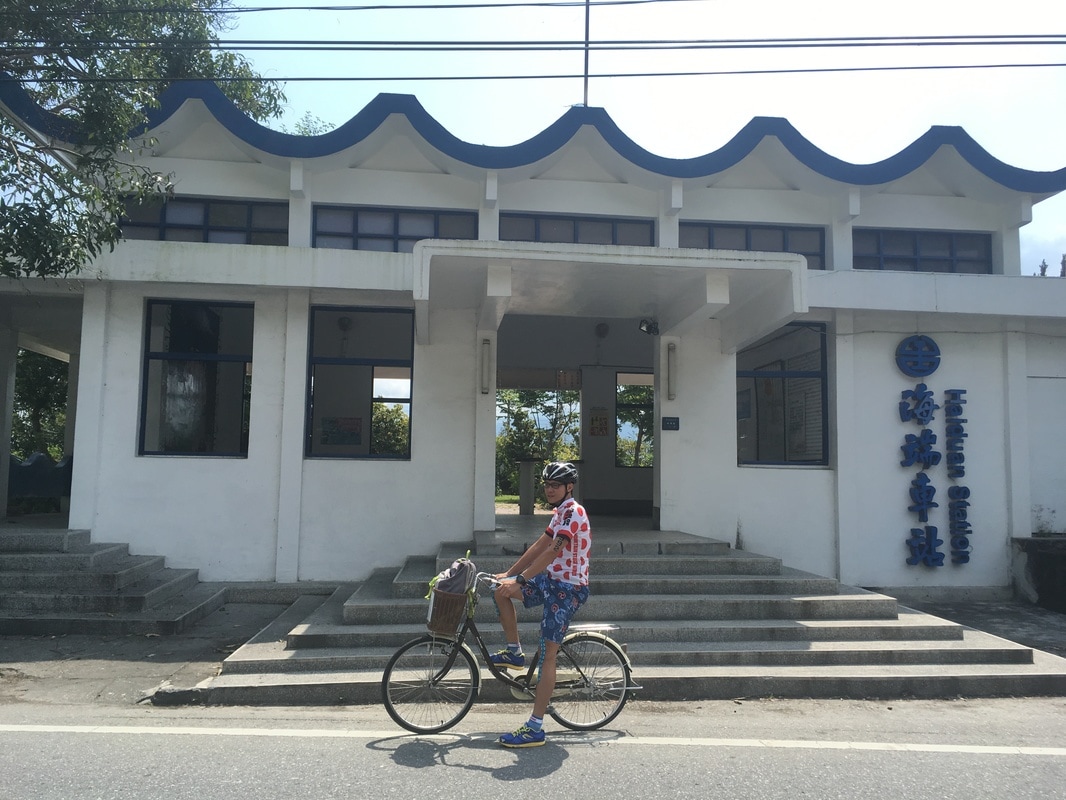
Along the way were green paddies, quiet villages, an empty station and older residents chatting on benches.
Everything felt peaceful.
It reminded me of my first visit to Chishang eight years earlier. In my eyes, the busier Chishang of this trip no longer moved at quite that same unhurried pace.
We lingered in Guanshan’s quiet rhythm until the last possible moment.
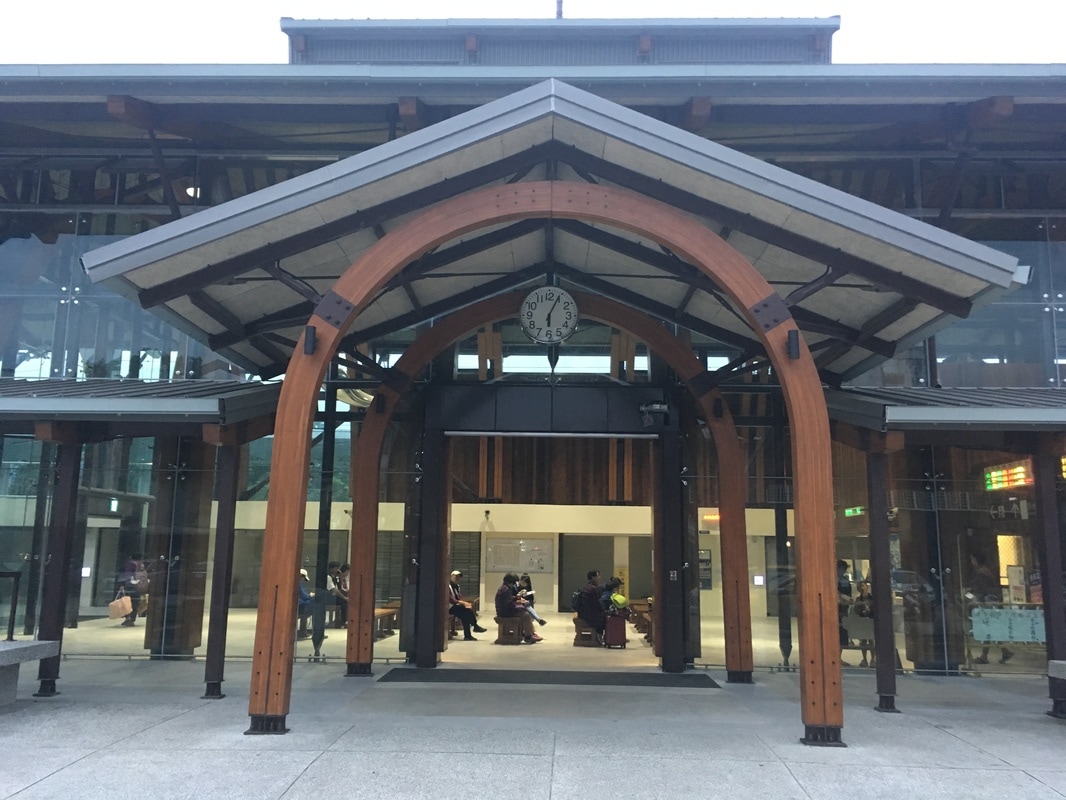
Only then did we reluctantly ride back to the station and board the Tze-Chiang train for Taipei.
Bikepacking diary: Facebook