Returning to Minamifurano | Cycling Hokkaido with Old Friends
Translated from Returning to Minamifurano by Bikepacking diary, published on September 29, 2021, and republished by arrangement with the author. Photographs are linked directly from the original website.
Editor’s note: This is a historical travel account. Tour services, rental equipment, station access and other visitor arrangements reflect the author’s trip and should be checked before travel. Wildlife observations and the guide’s actions below are not a complete wildlife-safety protocol. Follow current local advice, keep an appropriate distance from animals, and do not assume untreated water or unfamiliar produce is safe to consume.
A Place Remembered for Its People
Four years earlier, I spent about half a year riding the length of Japan, including more than a month in Hokkaido. Hokkaido may be Japan’s most distinctive region. Its broad land and open skies give me an immediate feeling of freedom. This is a place that belongs to travelers.
During that month, I rode through mountains, plains and forests and along the coast, experiencing the island’s rich natural landscapes. Yet the place that left the deepest impression was Minamifurano.
Mention Furano and most people probably picture colorful flower fields. What I remember most is the warmth of its people.
Through a friend, I met Sakamoto-san, a local cycling guide, and Kobayashi-san from the tourism association. I stayed for about a week, and they looked after me with extraordinary care. I stayed in Kobayashi-san’s home, where he prepared my breakfasts and lunches and treated me almost like his own son. Sakamoto-san took me riding, hiking and exploring every day.
I once asked Kobayashi-san why he was being so kind. He told me he had traveled around the world when he was young and received help from many people. He could not repay everyone who had helped him then, but he could pass that kindness on to other travelers. That was why he did his best to welcome everyone who came to his home.
Hearing those words almost brought me to tears.
After the journey ended, I began living in Japan. Before I knew it, four years had passed. Then a message arrived from Sakamoto-san inviting me to Hokkaido. Of course I wanted to go. I found some free time and returned to Minamifurano with my younger sister.
Back on a Bike, This Time with My Sister
Returning to a familiar place meant sharing some of the things I had enjoyed before, especially cycling.
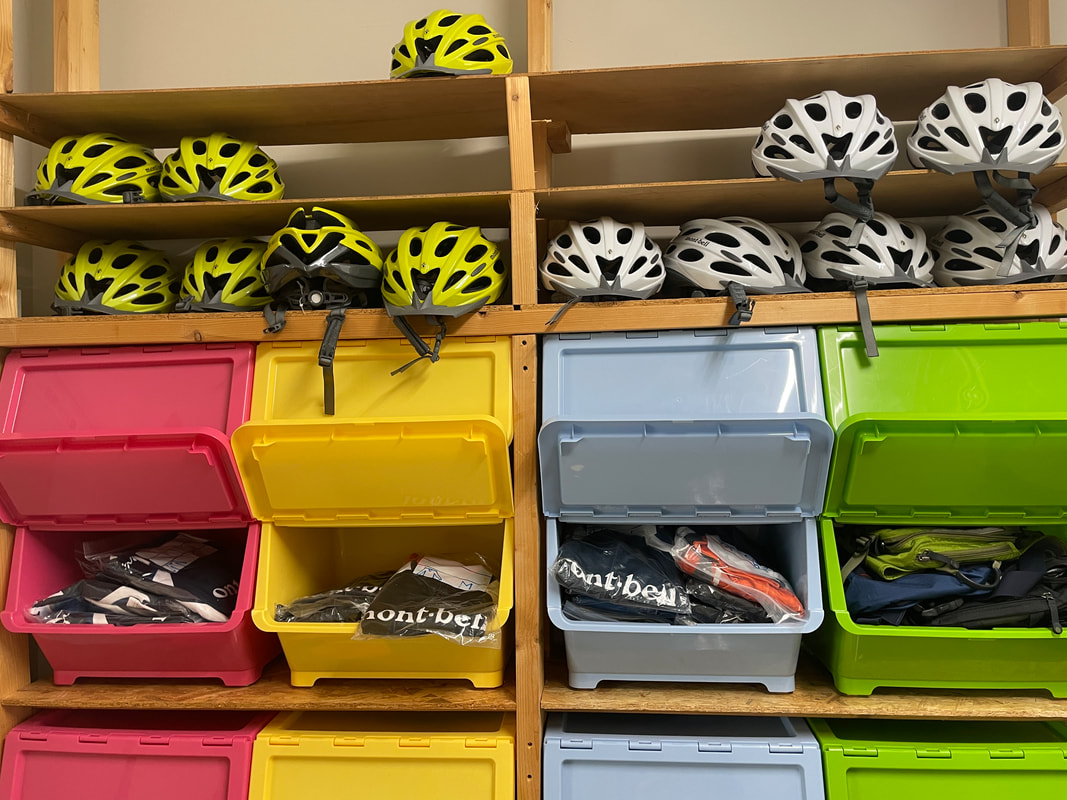
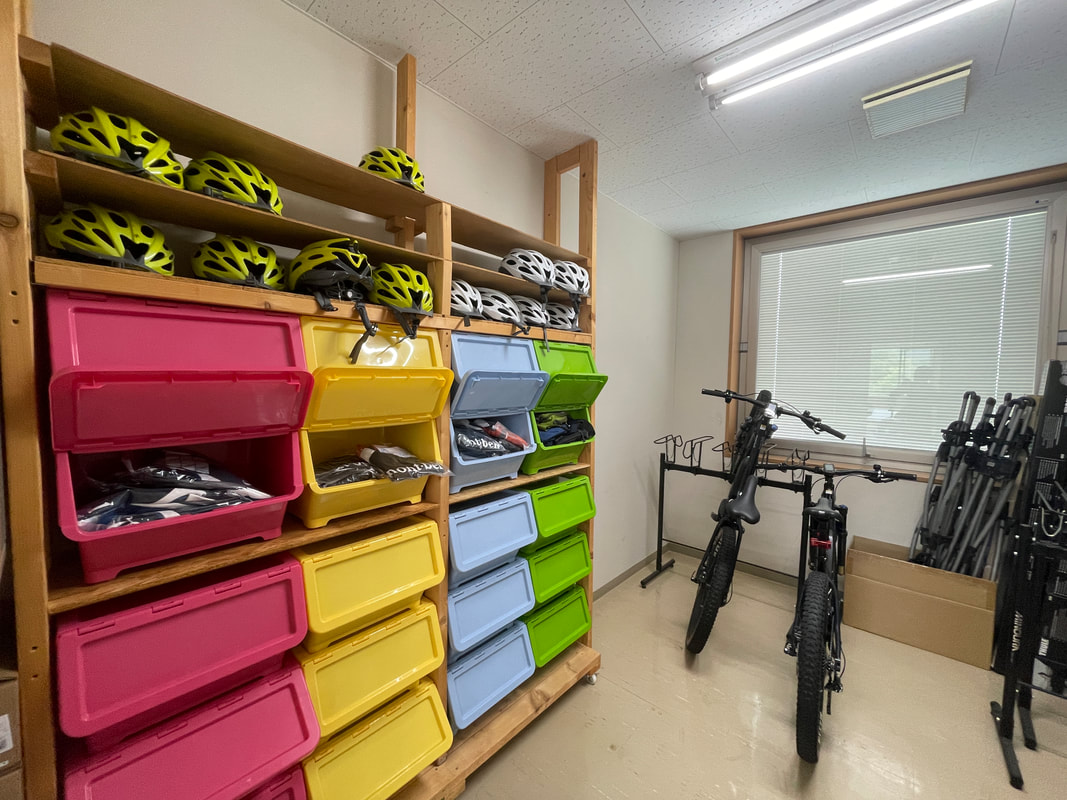
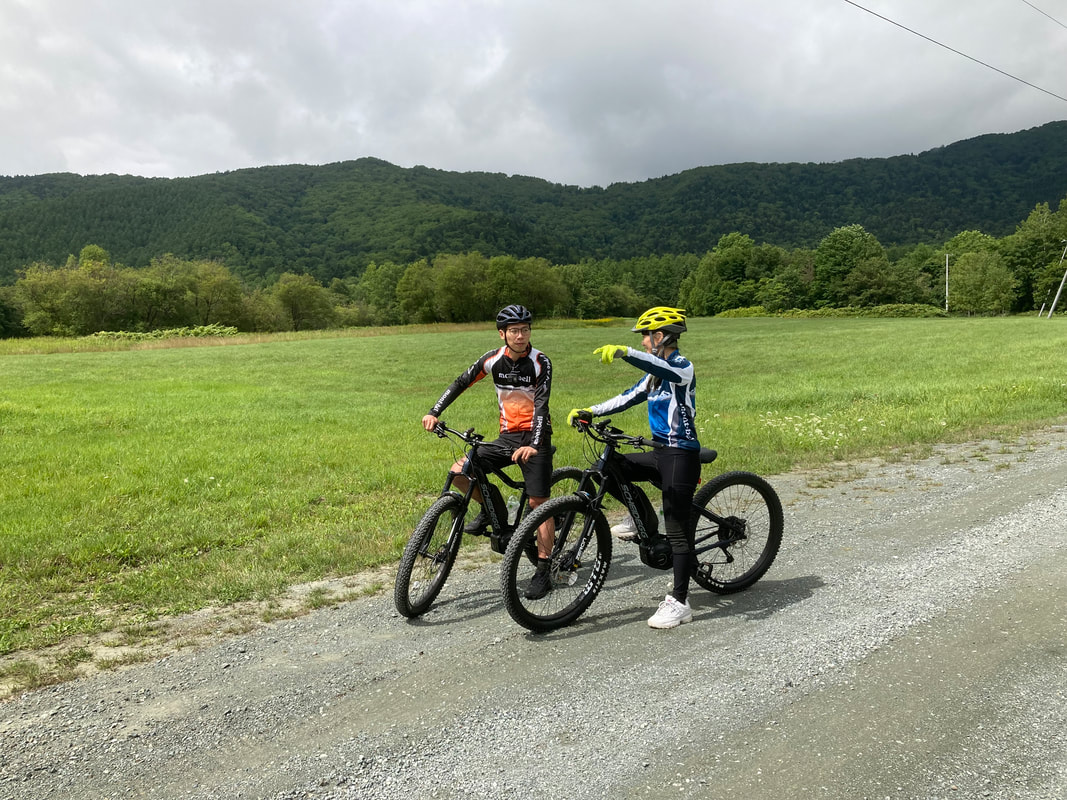
Sakamoto-san offered two main kinds of cycling tour: road riding and mountain biking. On the trip described here, you could arrive without equipment and rent what you needed locally, including clothing, a helmet and a bicycle.
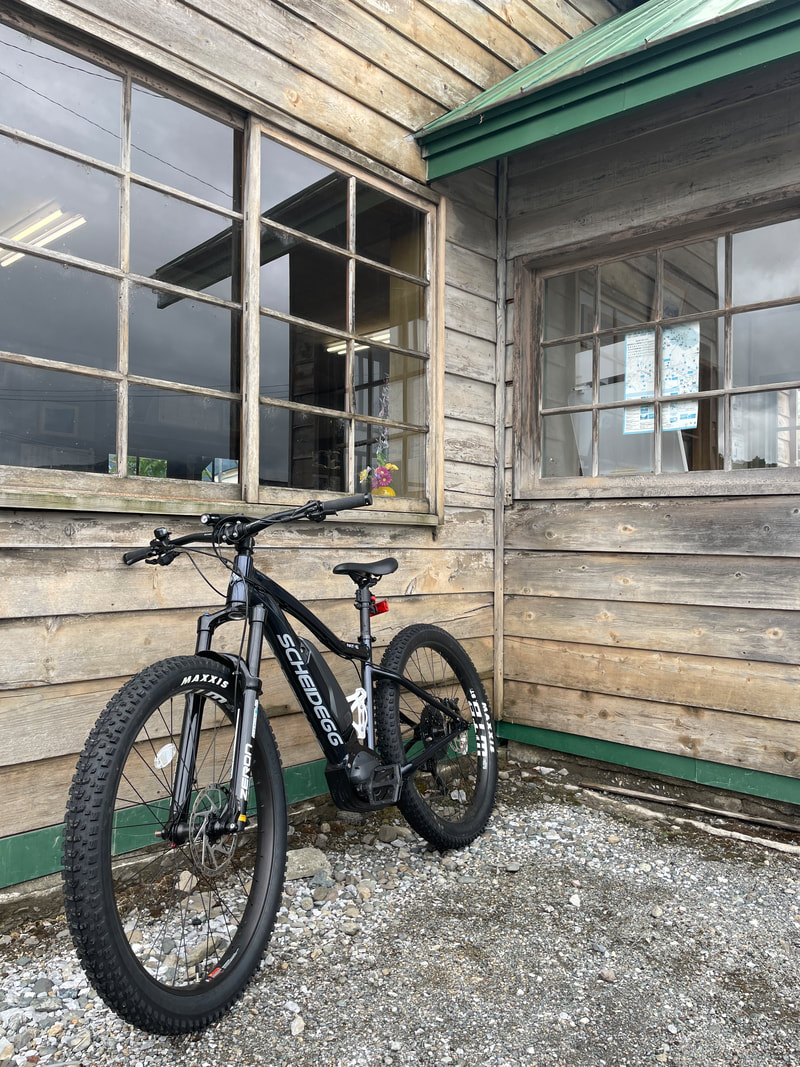
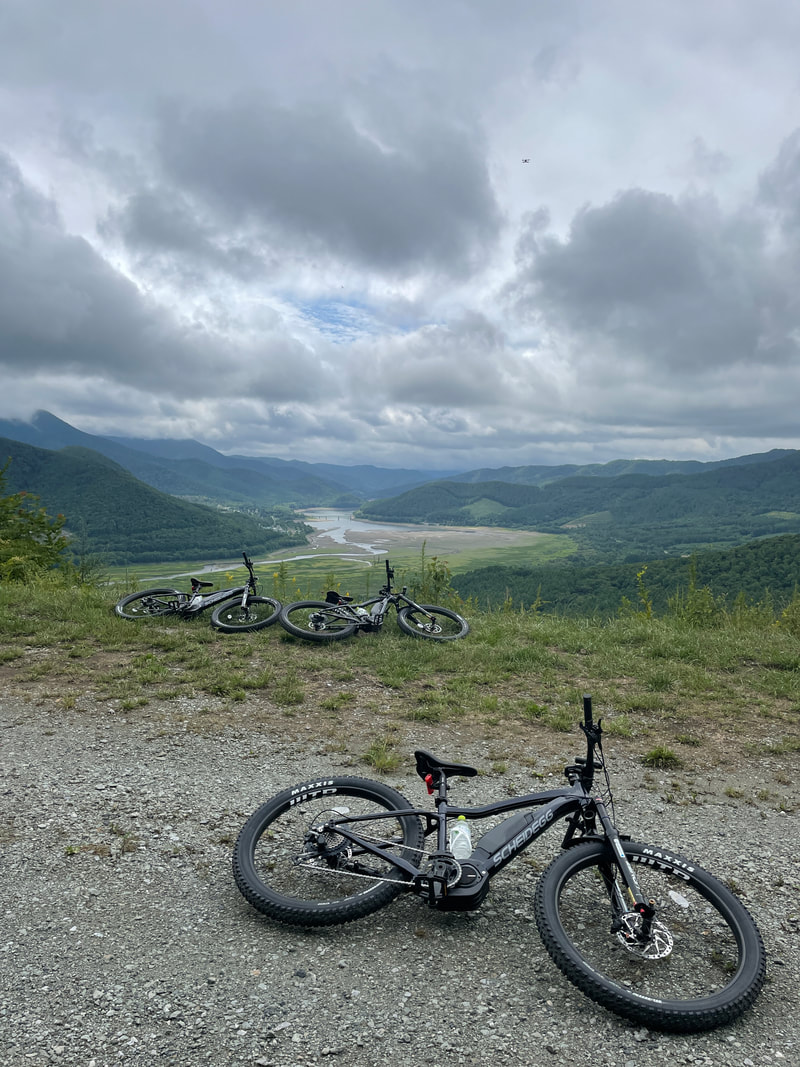
Interestingly, the bicycles came from the Japanese outdoor brand Montbell. Four years earlier, this had been the first place I saw a Montbell road bike. This time, I encountered their electric-assist mountain bikes for the first time.
Starting at a Film Location
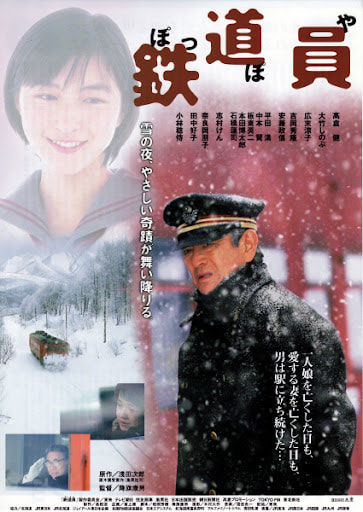
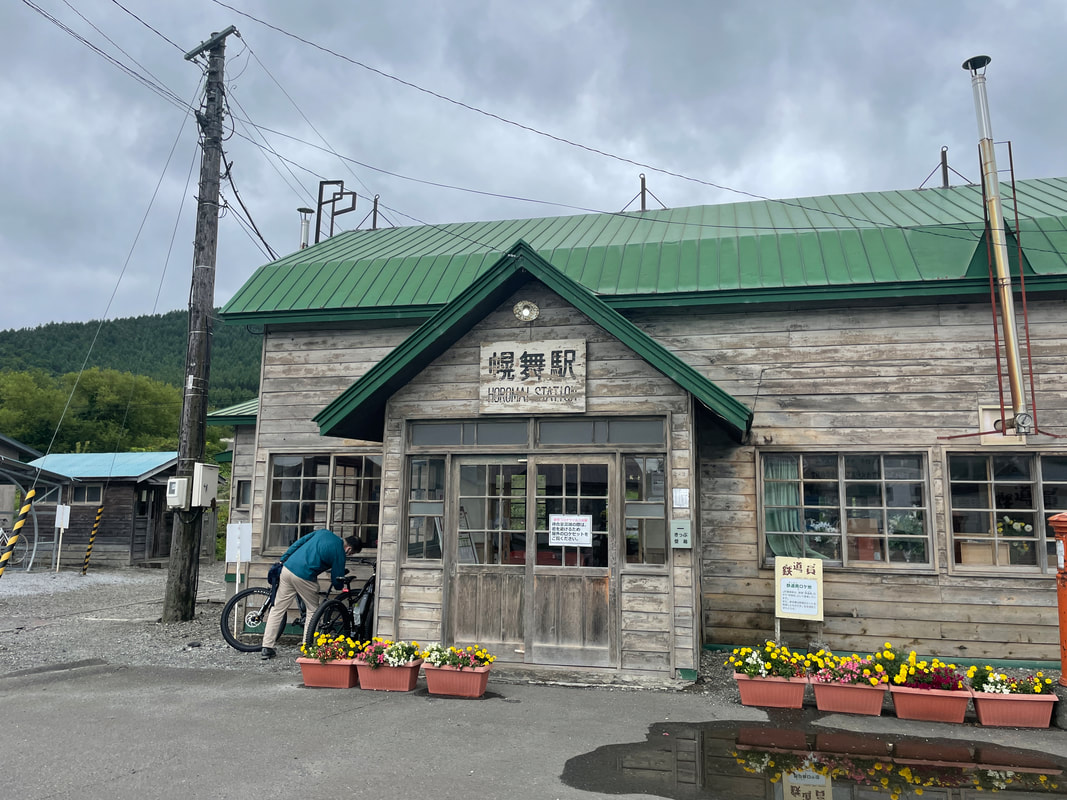
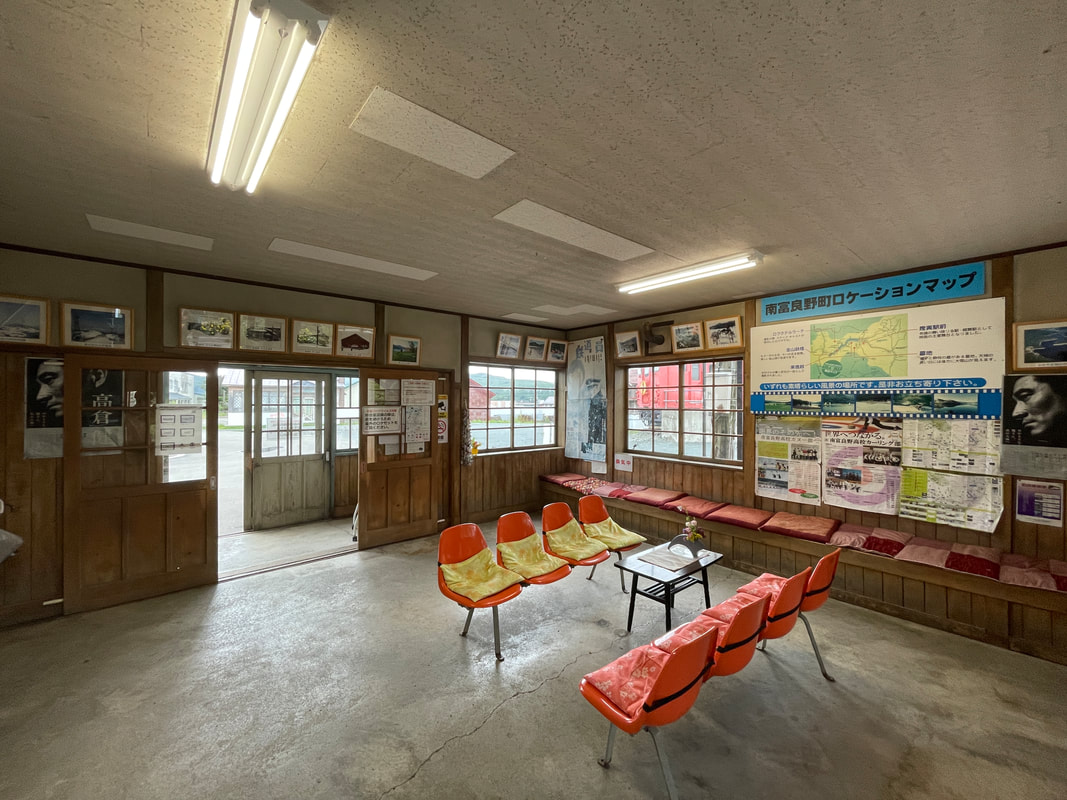
Our mountain-bike tour began at the filming location for Poppoya, also known as Railroad Man, the well-known Japanese film starring Ken Takakura. The station used in the film was Ikutora Station in Minamifurano.
The film was old enough that the cast member I recognized best was Ryoko Hirosue. But even that was plenty of reason for us to look around.
Thinking about it, this may have been my first ride on such a high-end electric-assist bike. The e-bikes I had used before were ordinary utility bicycles with baskets.
Discovering Electric-Assist Mountain Biking
As a bikepacker, I could hardly allow myself to switch on the assistance immediately. Through town, on paved roads, I relied entirely on my legs.
The bike looked heavy, but rolled much better than I expected. It did not feel sluggish. On a gentle climb before the forest road, we were doing around 14–15 kilometers per hour. I wanted to believe my legs had become dramatically stronger, but that was unlikely during a busy period after changing jobs. The rental bike was simply much nicer to ride than I had imagined.
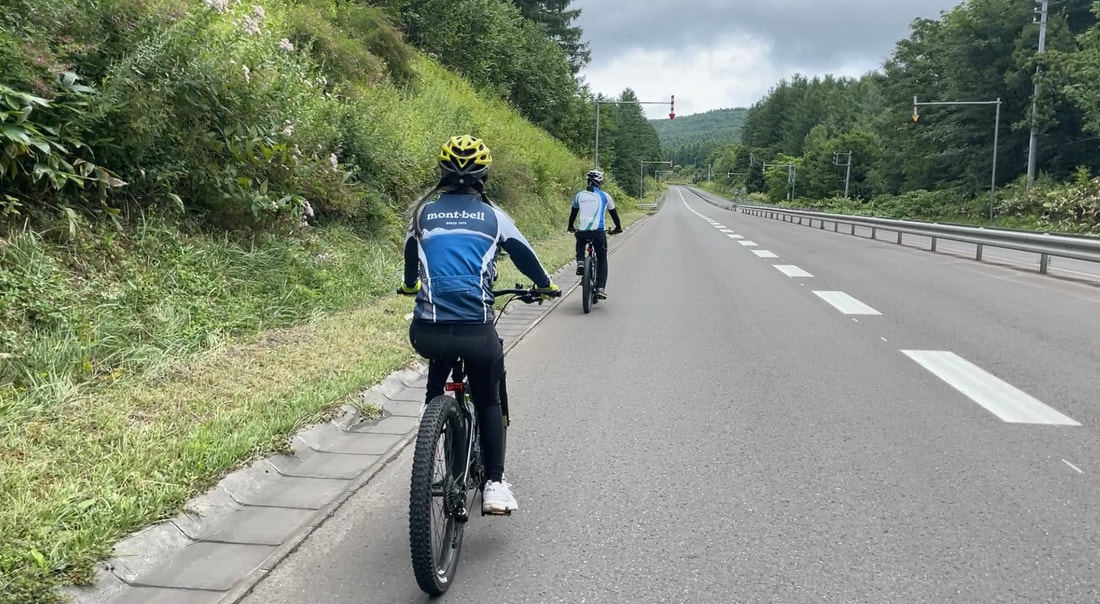
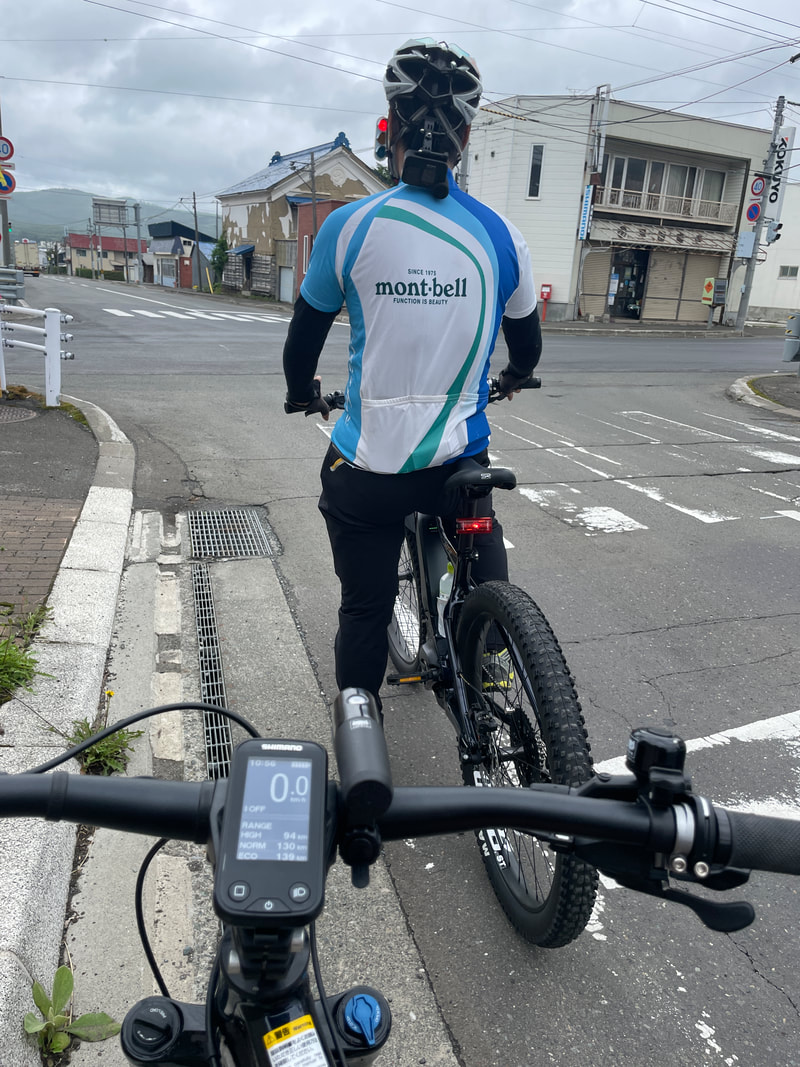
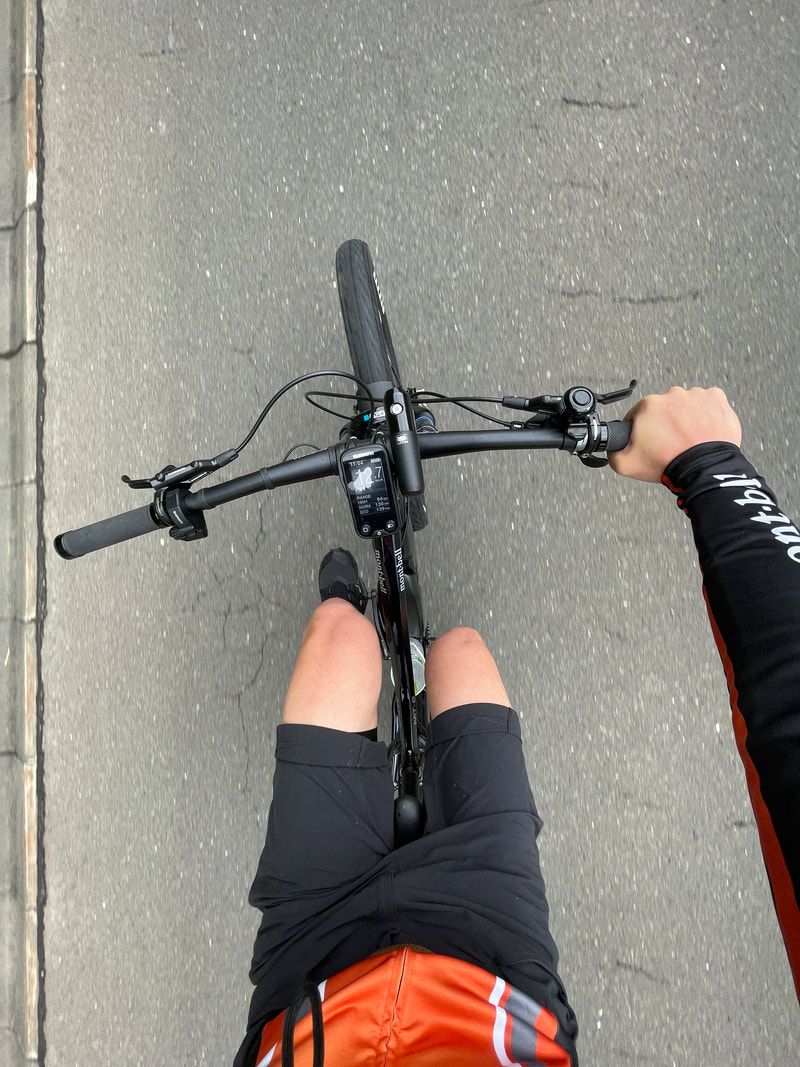
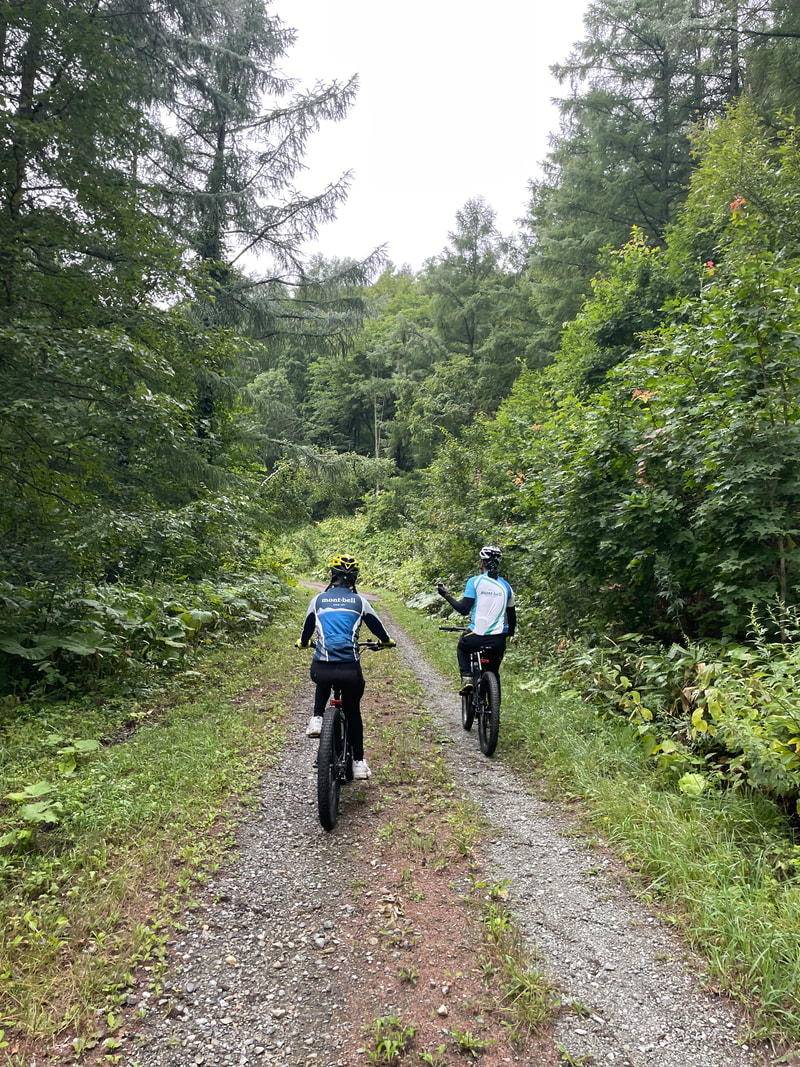
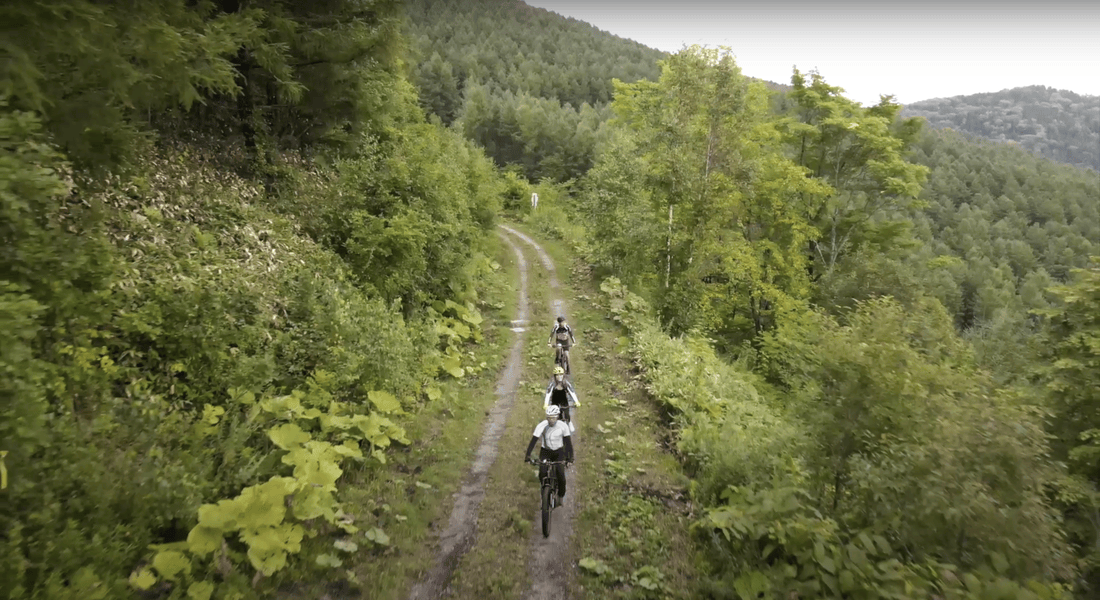
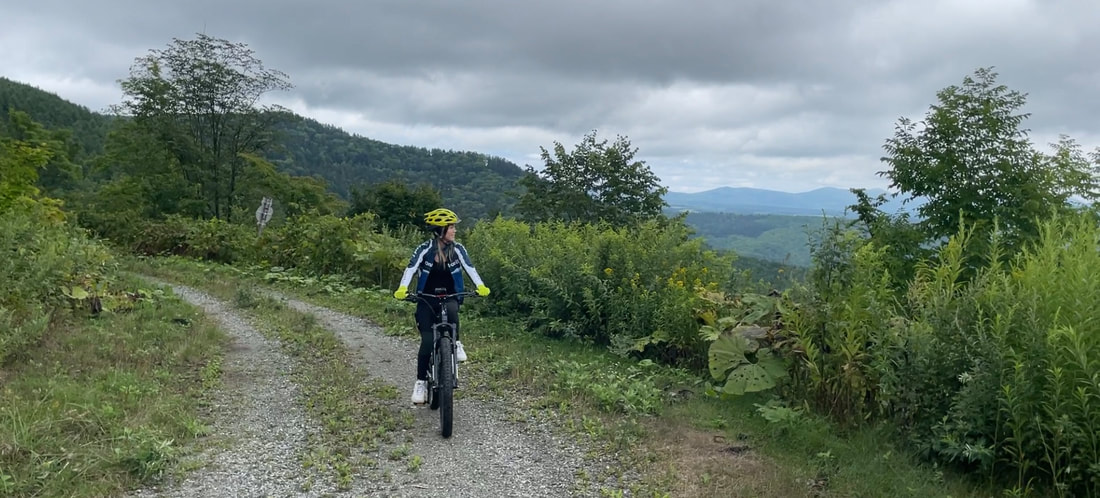
My lack of fitness became clear once we turned onto the forest road. With a realistic assessment of my abilities, I switched on the assistance. Technology immediately made the climbing easier, and I followed Sakamoto-san into Hokkaido’s woodland.
Japan’s former logging industry left many roads built to transport timber. These are now known as forest roads, with some larger routes called “super forest roads.”
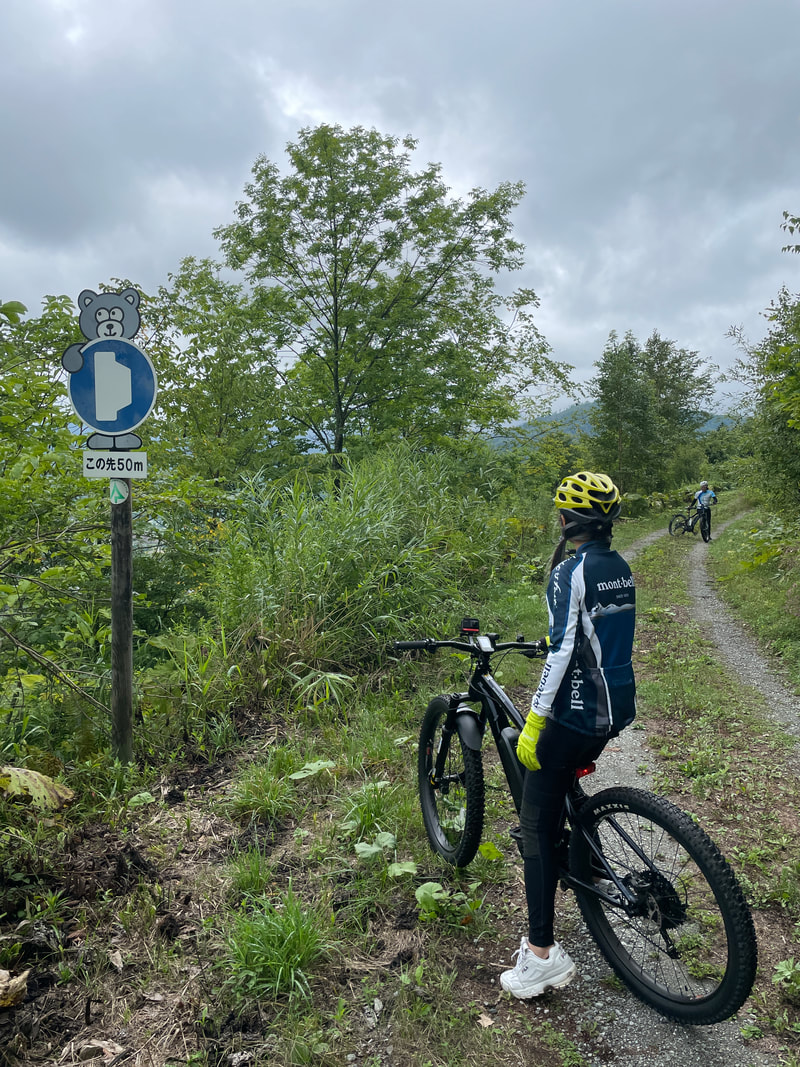
On my earlier visit to Hokkaido, I had seen many entrances to them but rarely explored. Most did not appear clearly on my maps. I worried about dead ends and, above all, meeting a brown bear. Not venturing farther into those forests was one of my regrets from that trip.
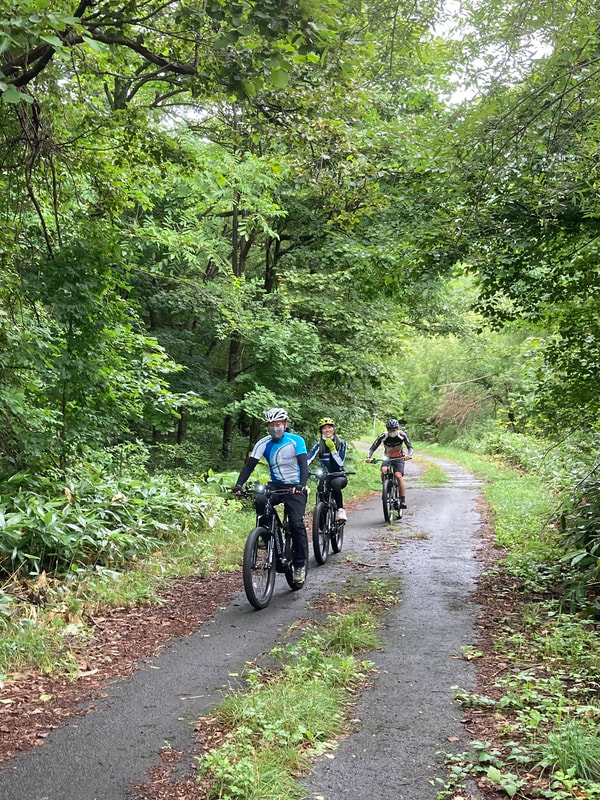
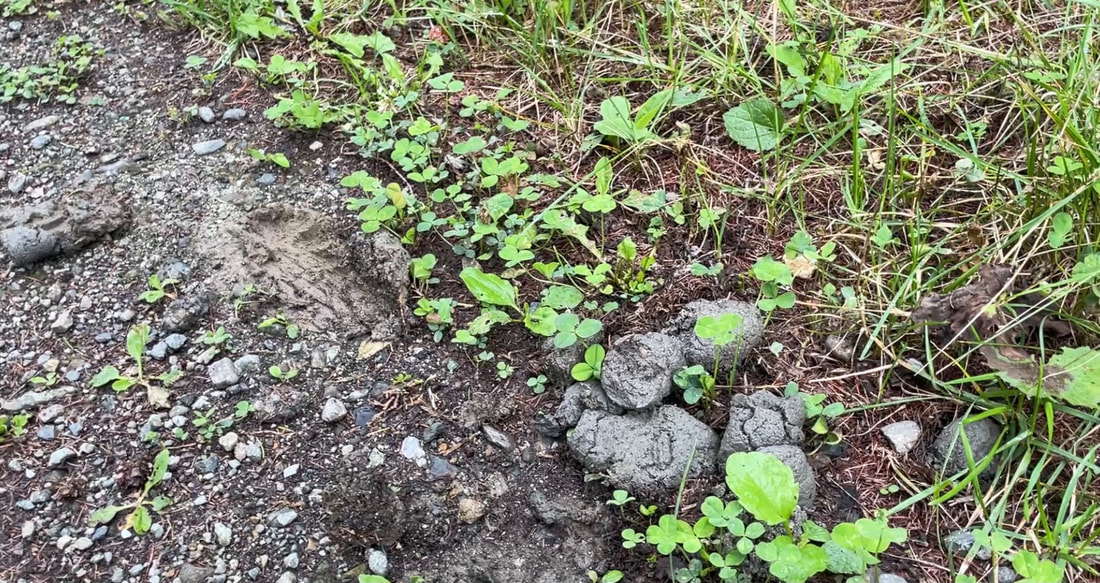
This time, I had a local guide. The route had been checked beforehand, and Sakamoto-san explained the surroundings as we rode. He also occasionally called out to make our presence audible to bears at a distance. His familiarity with the area helped me feel more at ease, though wildlife precautions cannot eliminate risk.
Forest Roads and a Surprising Landscape
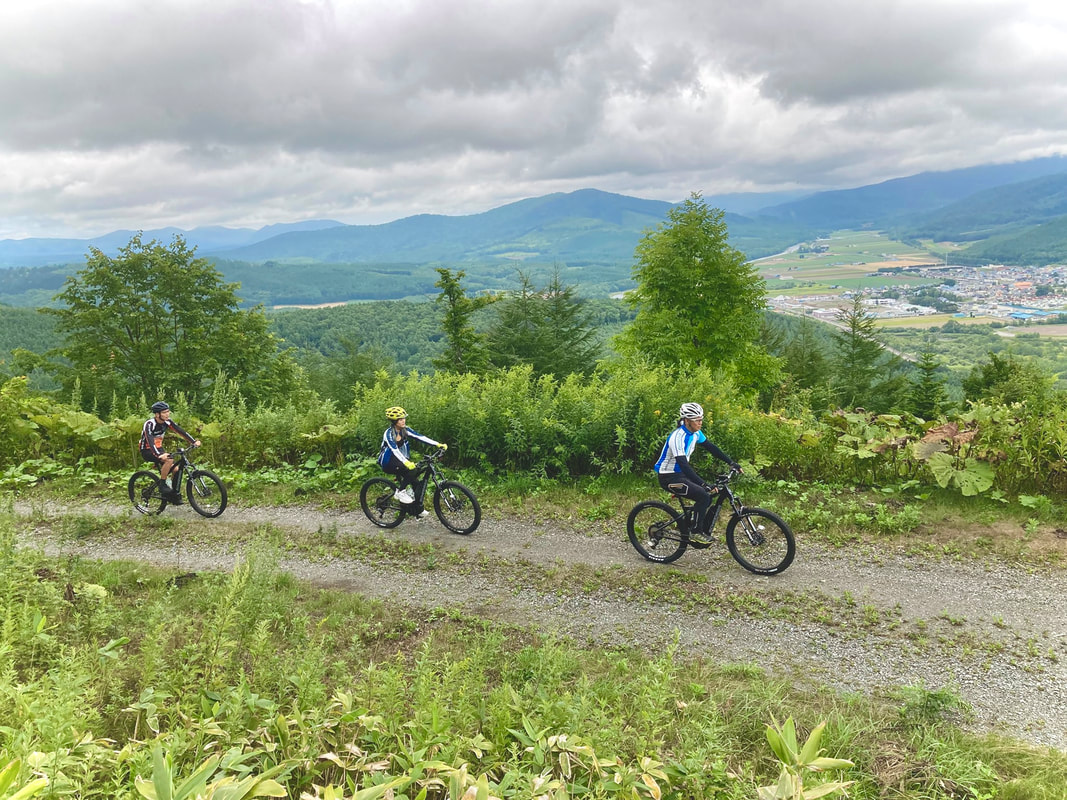
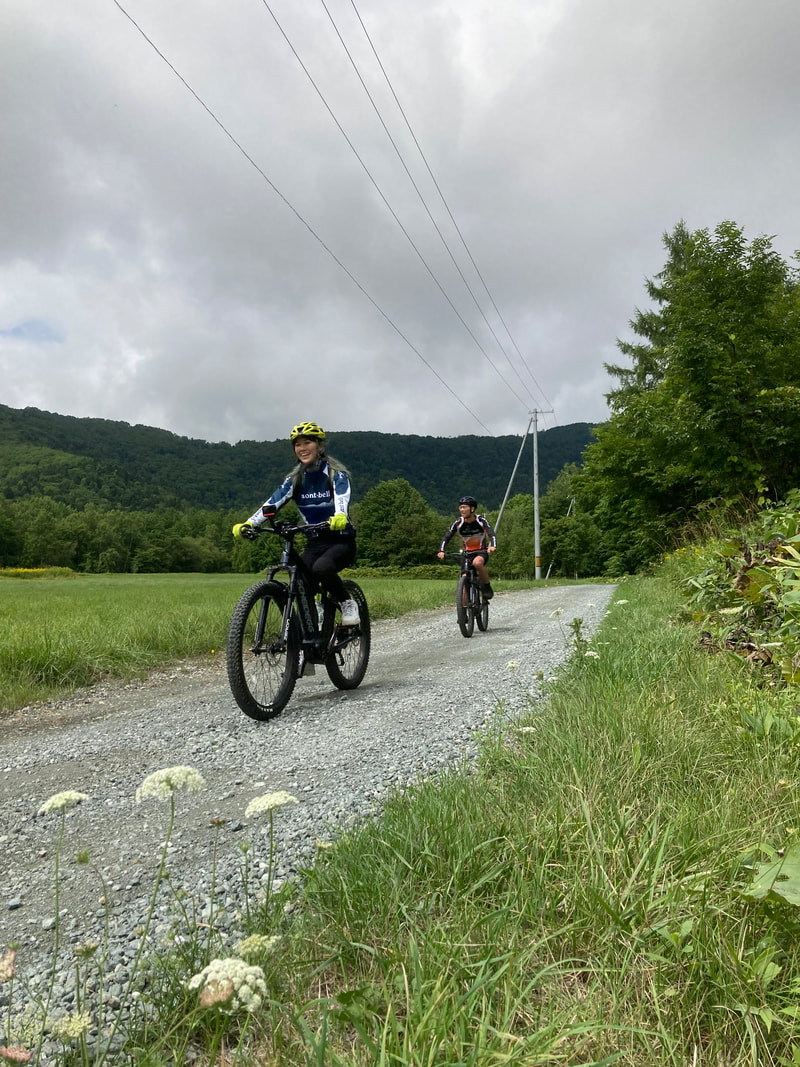
The mountain-bike route could be adjusted to suit our interests and ability. We took a relatively easy course, with gravel that lacked deep ruts or large obstacles affecting bike control. Riding on the dirt and gravel felt comfortable.
With the electric assistance, I felt this particular outing could let less experienced riders enjoy a forest road without fear overwhelming the experience. For stronger or more experienced riders, Sakamoto-san could suggest more demanding options.
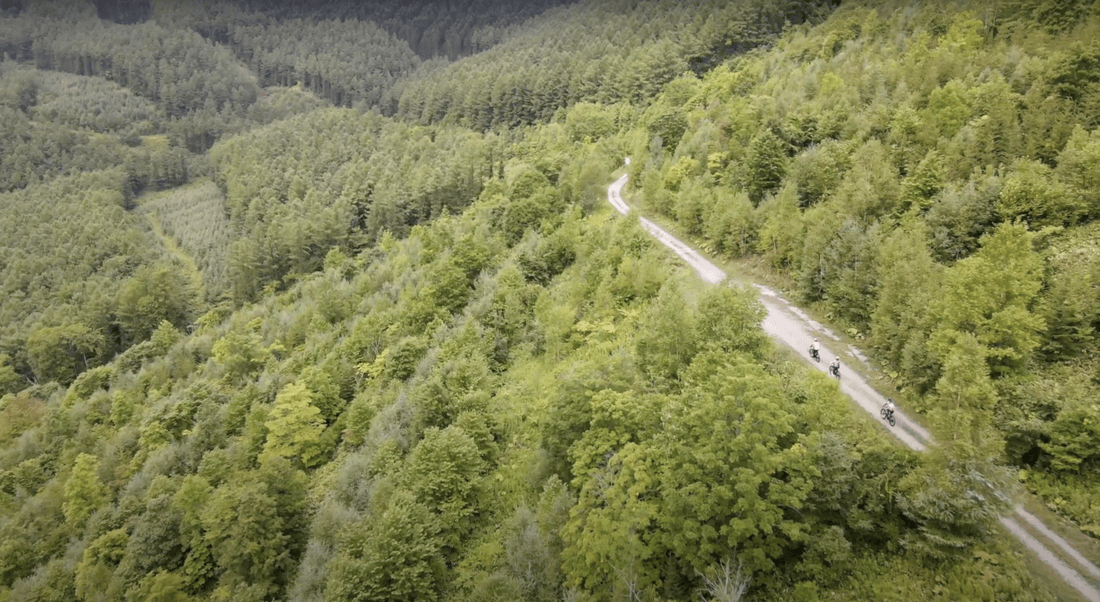
The route itself was only part of the appeal. Scenery matters just as much to me.
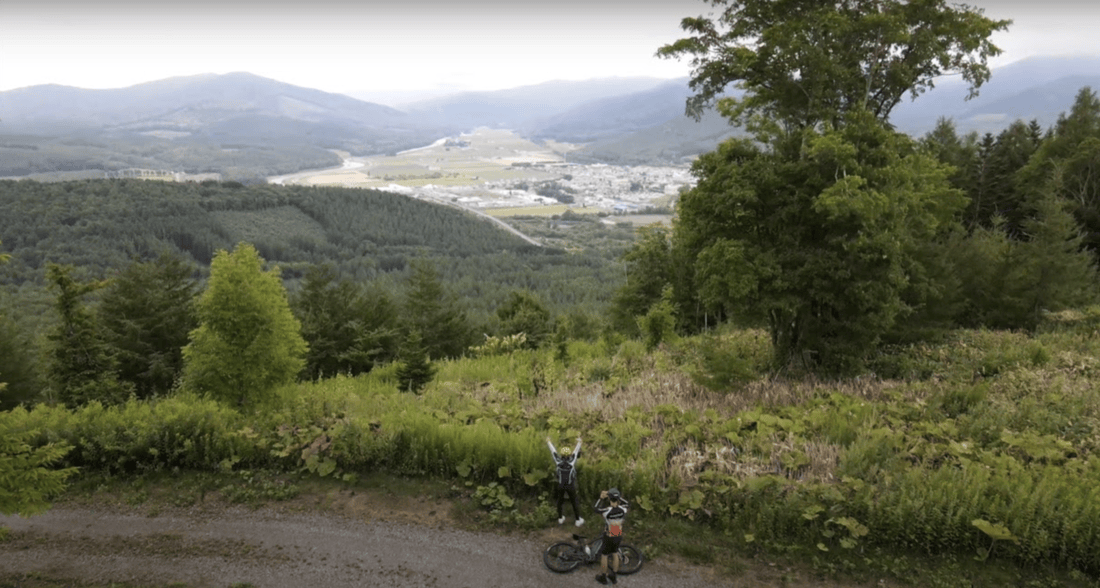
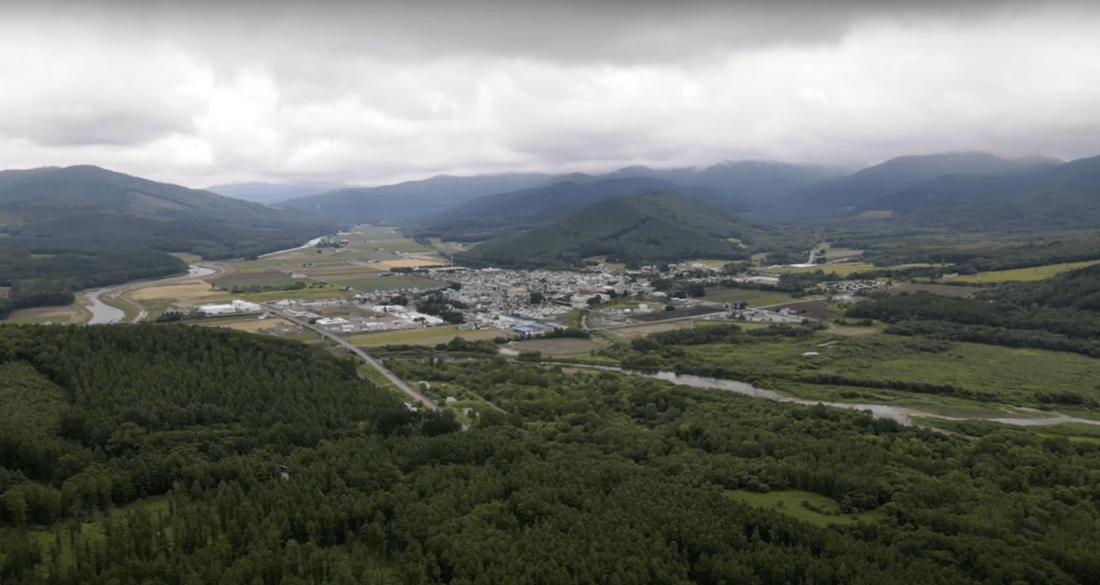
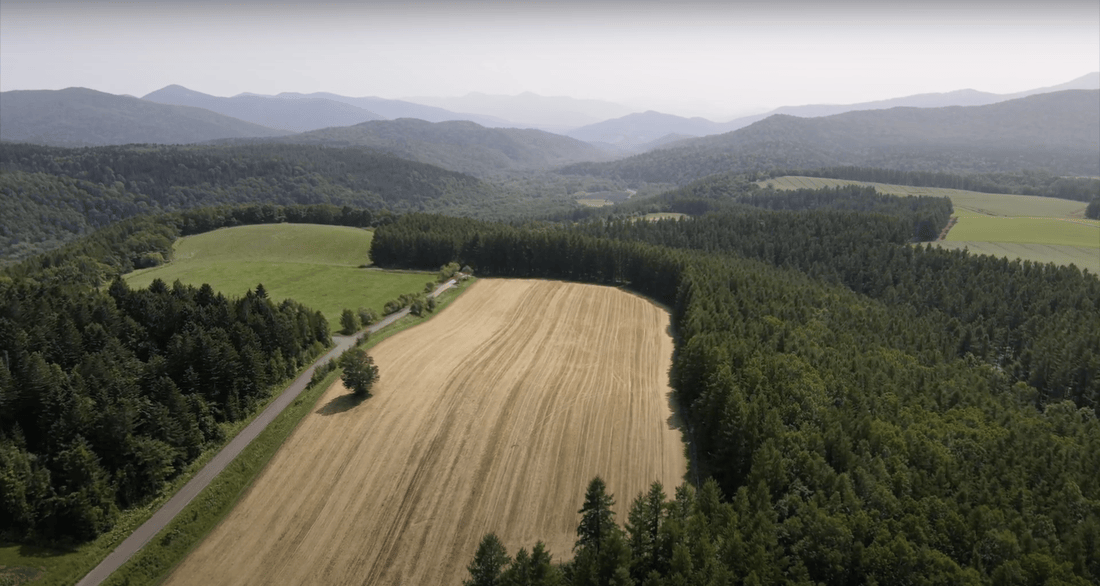
The forest road ran along a mountainside, with Minamifurano below to our left. After a climb and a bend, the town suddenly appeared before us. Neatly arranged fields surrounded it, with rolling mountains beyond. Looking out over the whole place made me appreciate just how lovely this little town was.
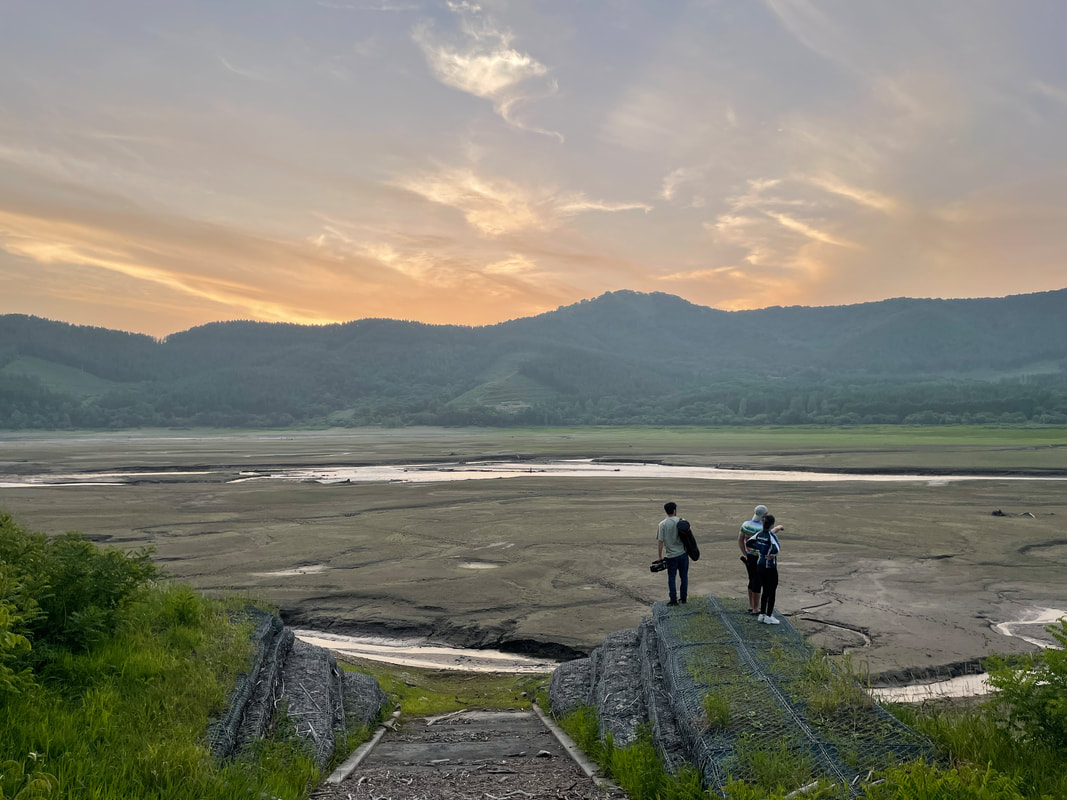
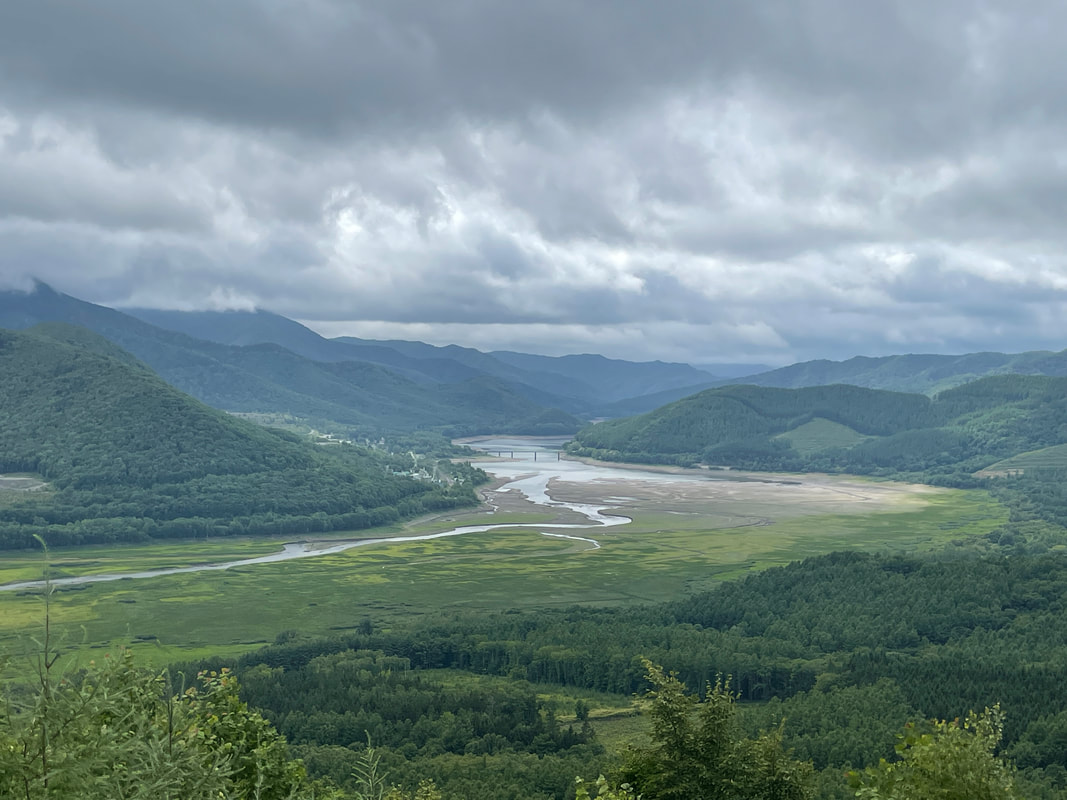
A little farther on, the town view gave way to what looked like an open grassland, crossed by a thin, winding river. I wanted to ride out across the green expanse alongside the animals.
Sakamoto-san explained why that would not work. It was not a meadow at all, but a reservoir during a low-water period. The green growth would ordinarily be aquatic vegetation. Some animals could move across it, but beneath the surface was mud. A bicycle would simply sink.
Road Riding through Hokkaido’s Fields
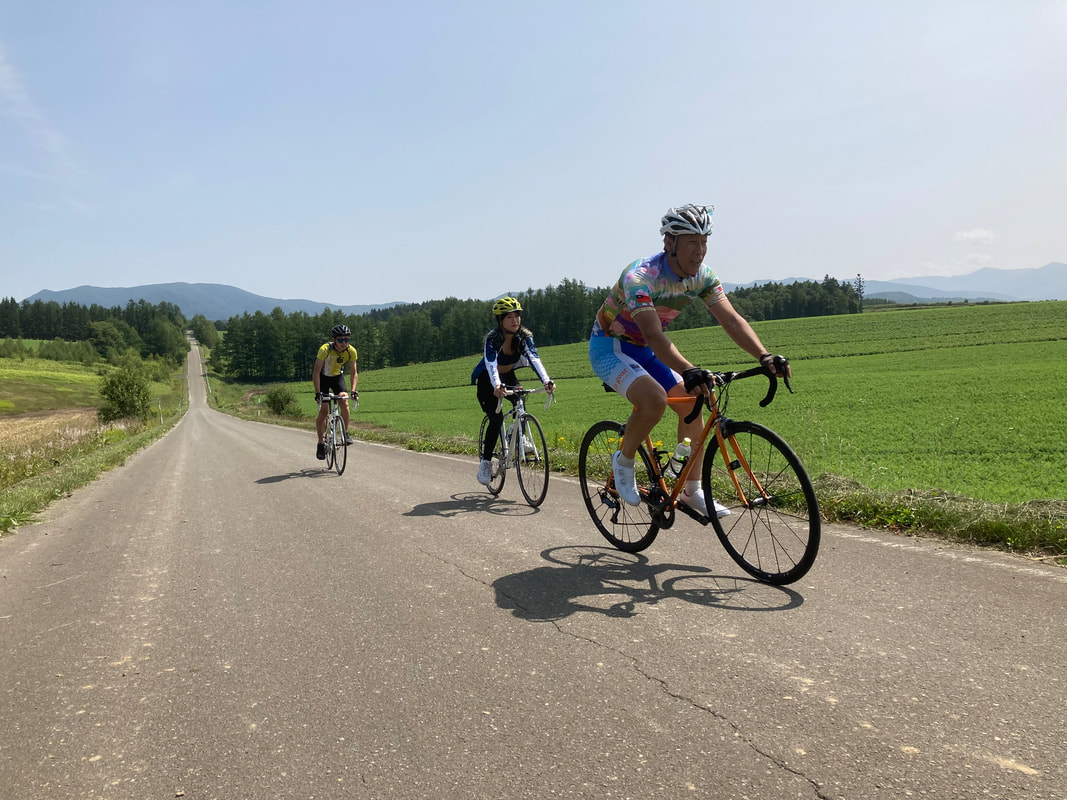
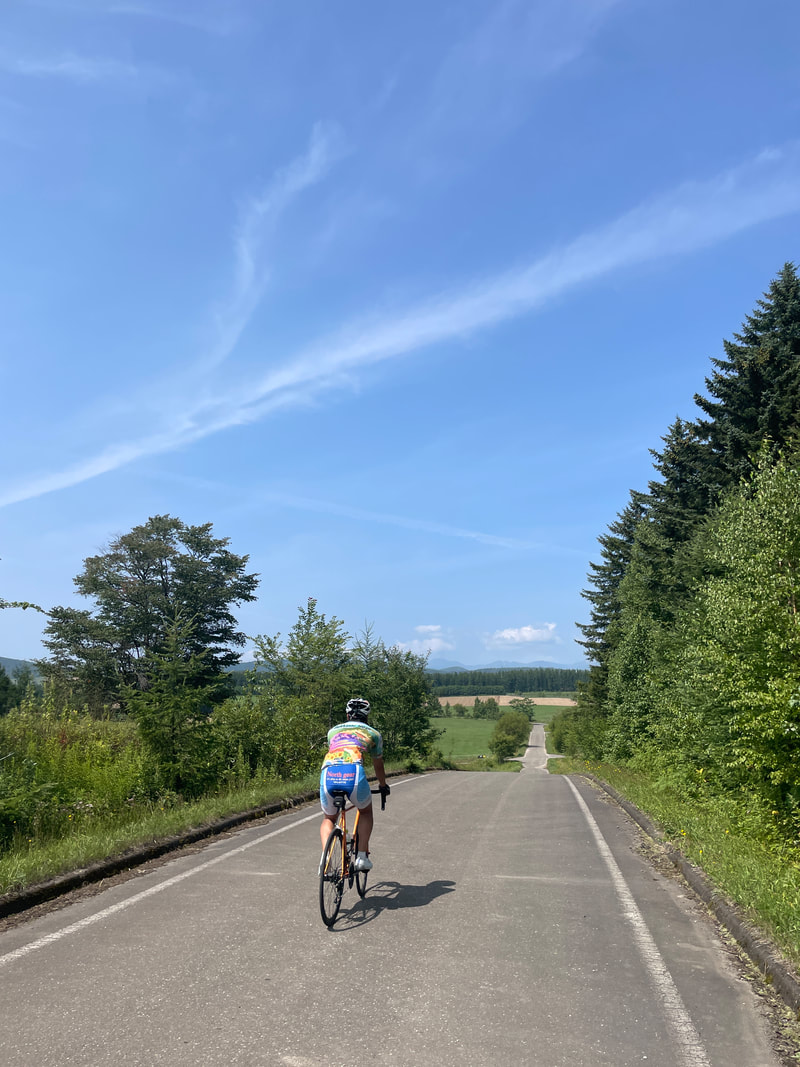
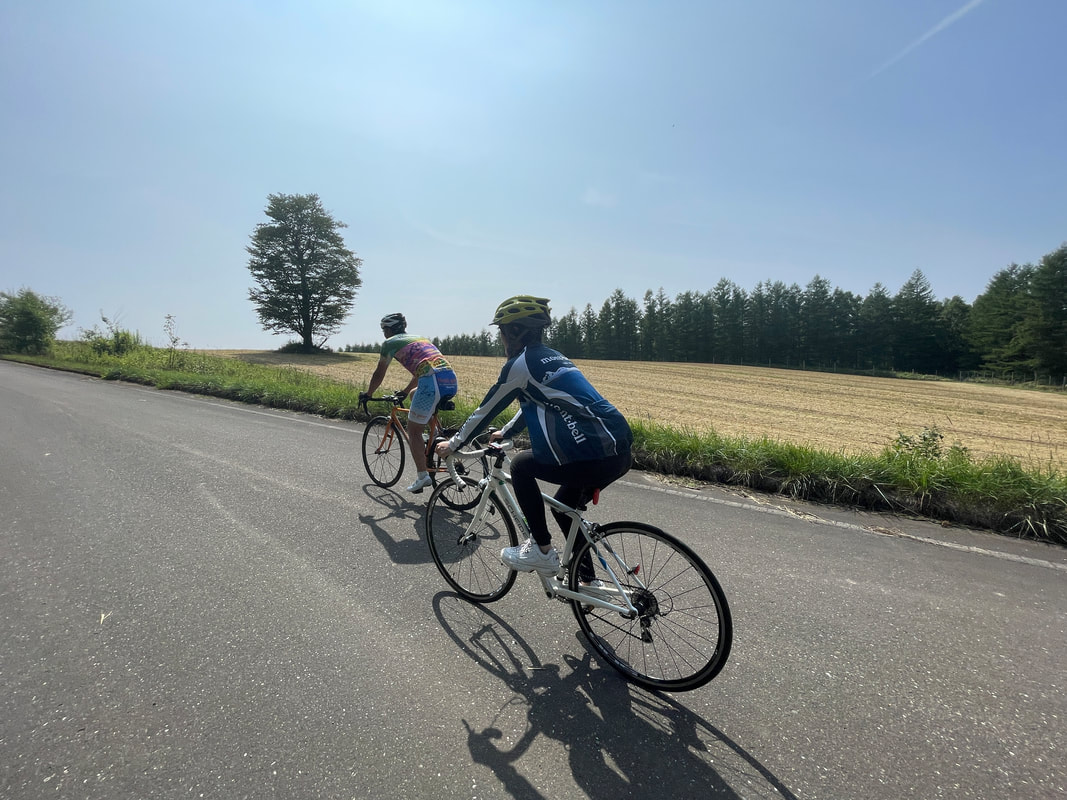
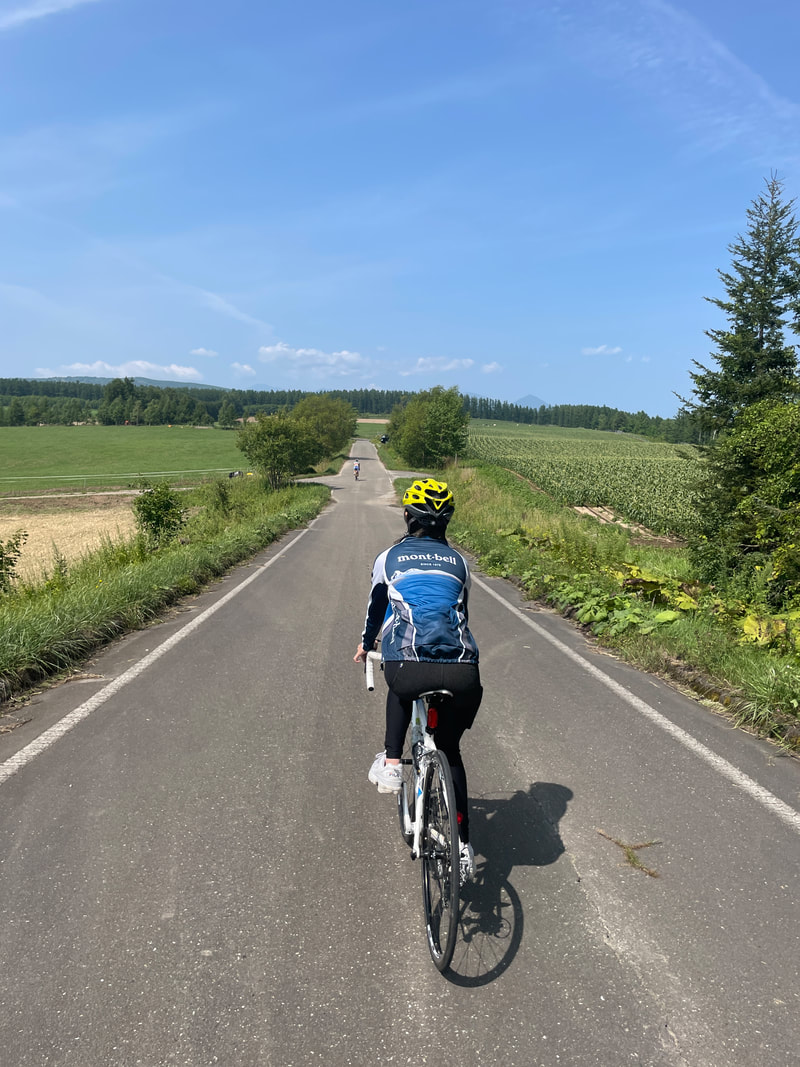
Road cycling around Furano offered another kind of landscape. A single tree rising from rolling fields might look lonely in winter, yet in summer it seemed full of life.
Fields and pastures covered the hills. Cattle grazed lazily, waving their tails without much enthusiasm at the countless insects around them.
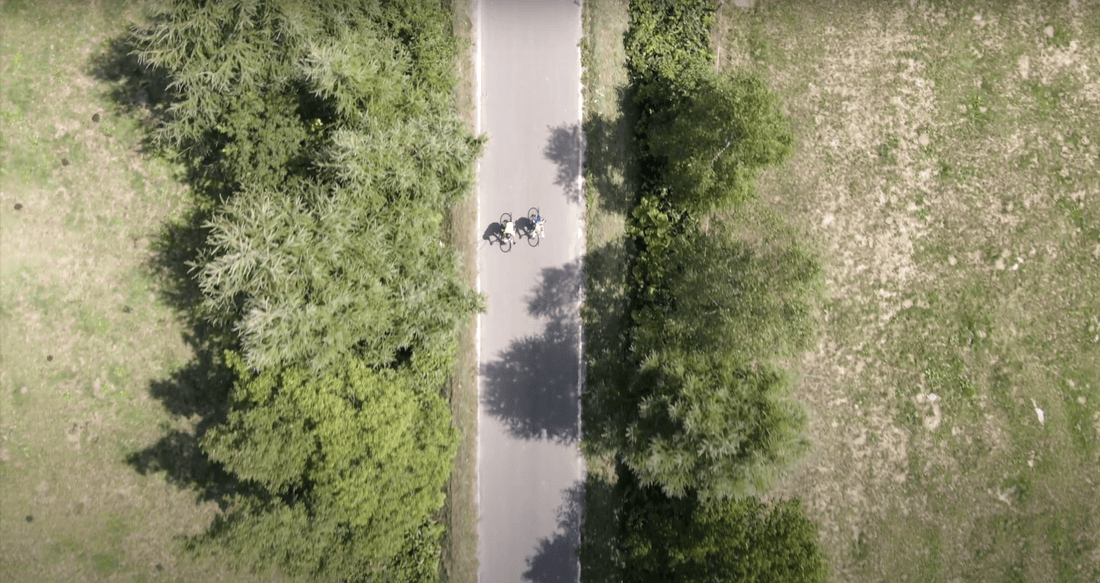
I had not ridden a road bike for some time, and finding myself back on one in Hokkaido felt wonderful, almost unreal. For my sister, it was her first road-bike ride. To have a first ride in a place this beautiful seemed almost unfairly lucky.
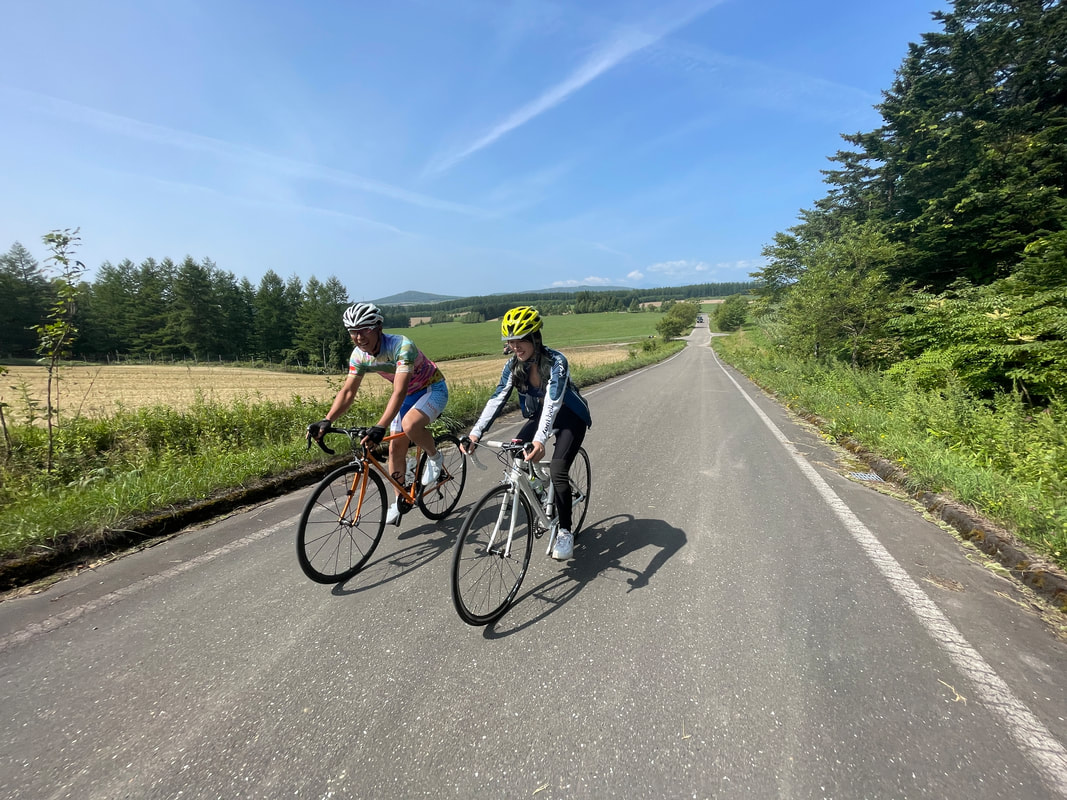
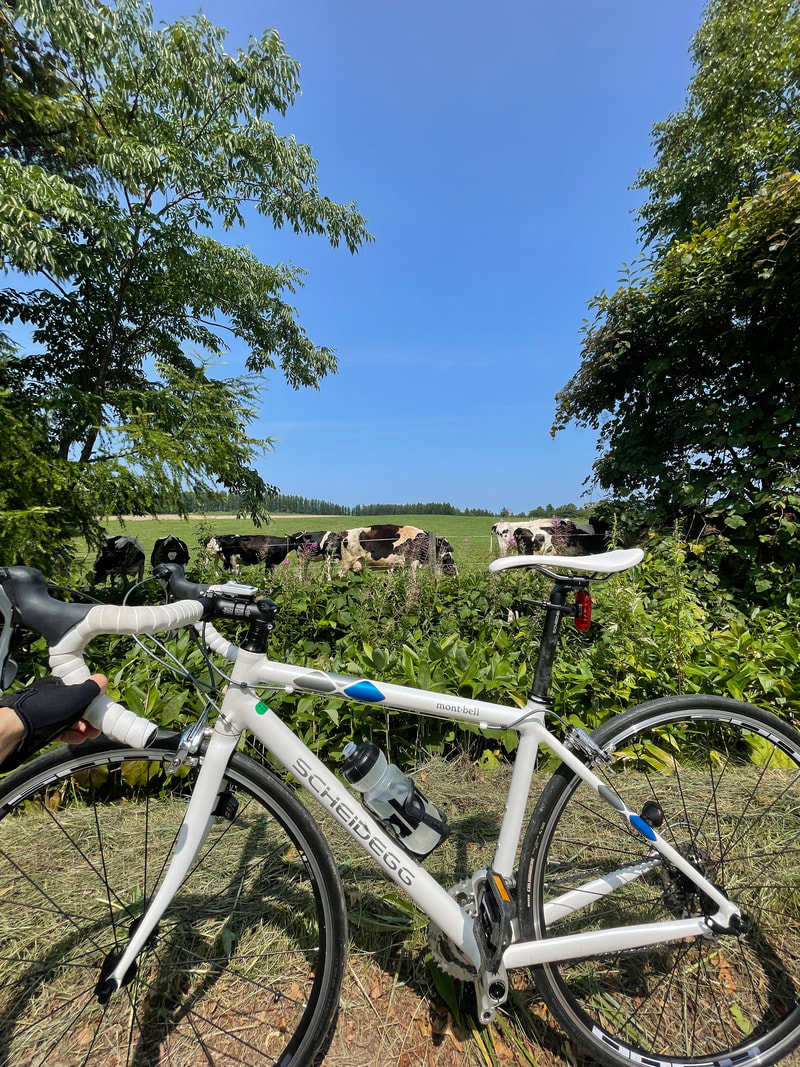
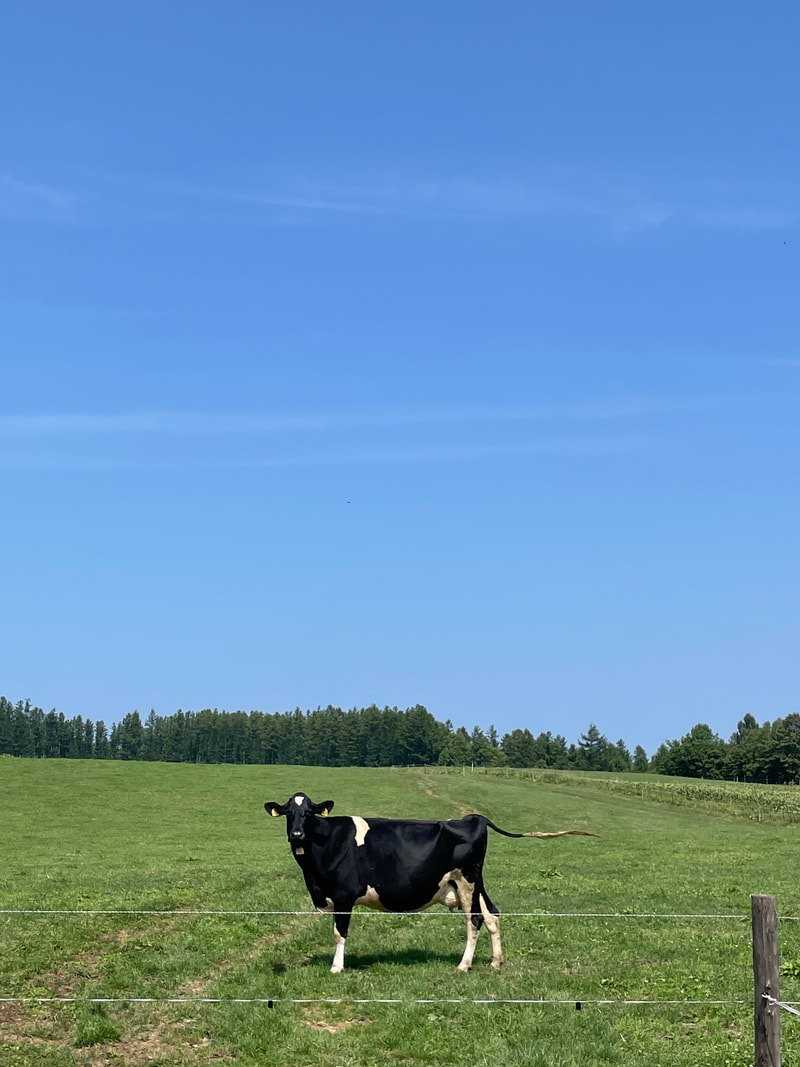
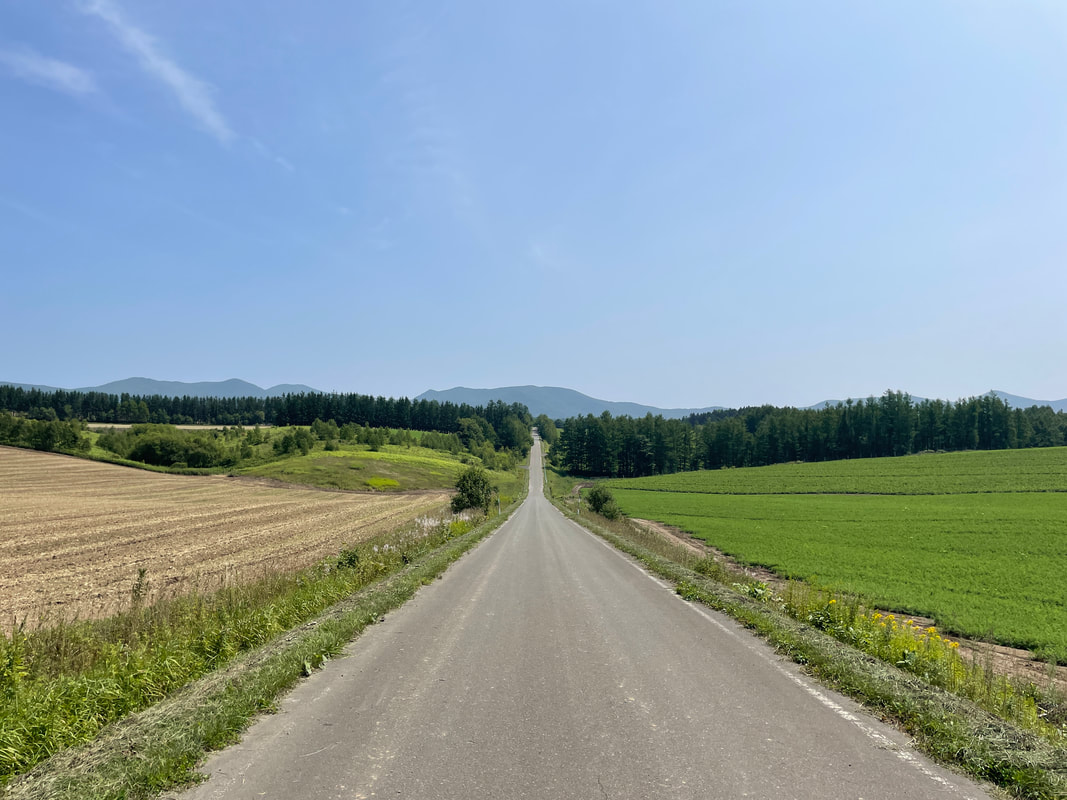
A road bike is a remarkably efficient piece of human engineering, converting effort from your legs into forward motion. Even over gently rolling terrain, my sister, who did not exercise particularly often, could enjoy the ride.
Foxes and Ezo Deer
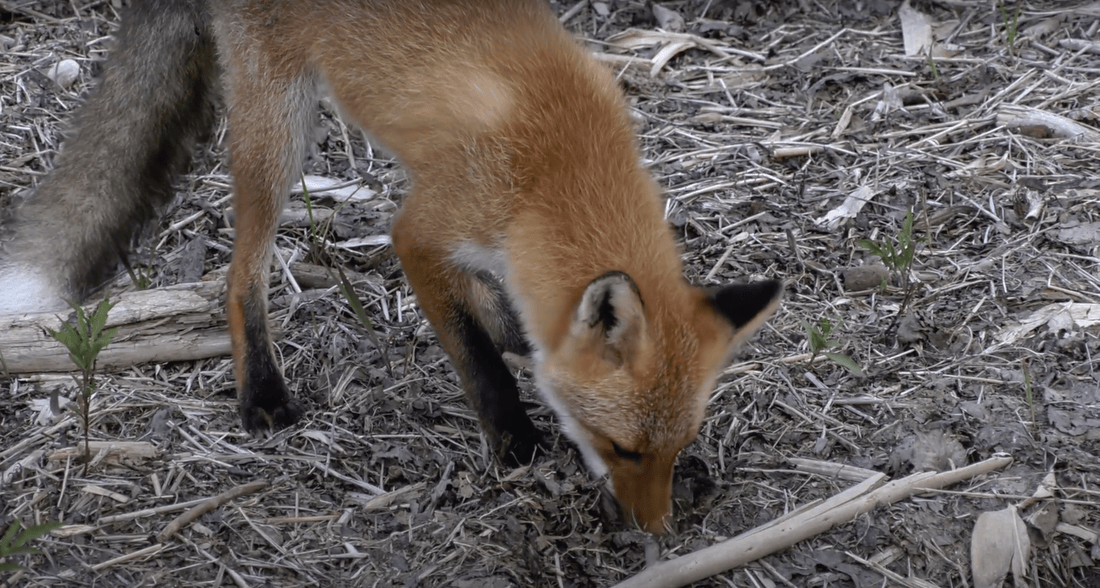
Beyond the scenery, Hokkaido’s wildlife made the riding especially memorable. Foxes appeared so often that I found myself comparing their numbers with stray dogs back in Taiwan.
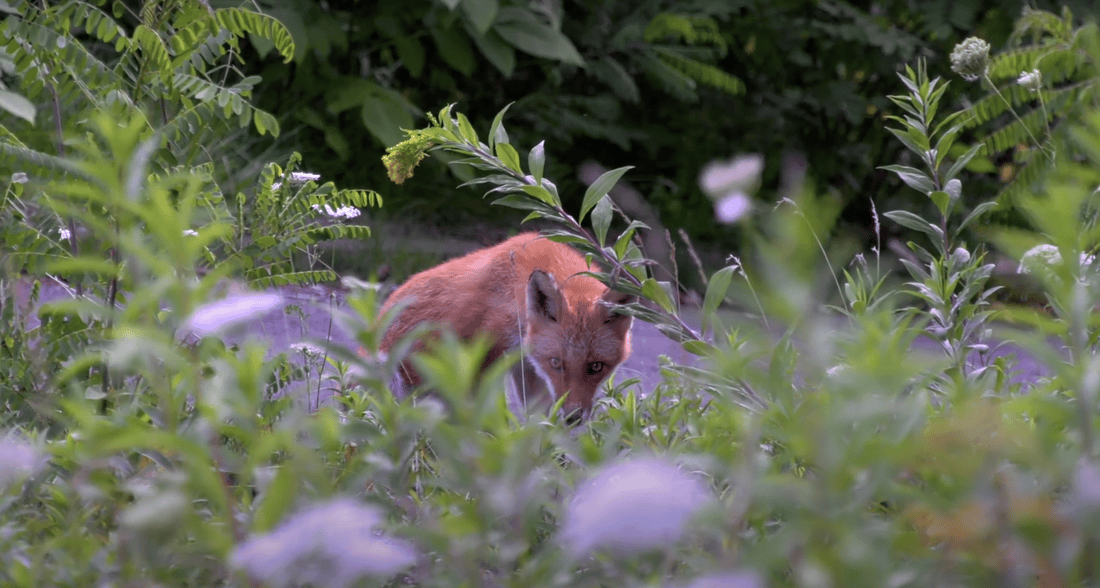
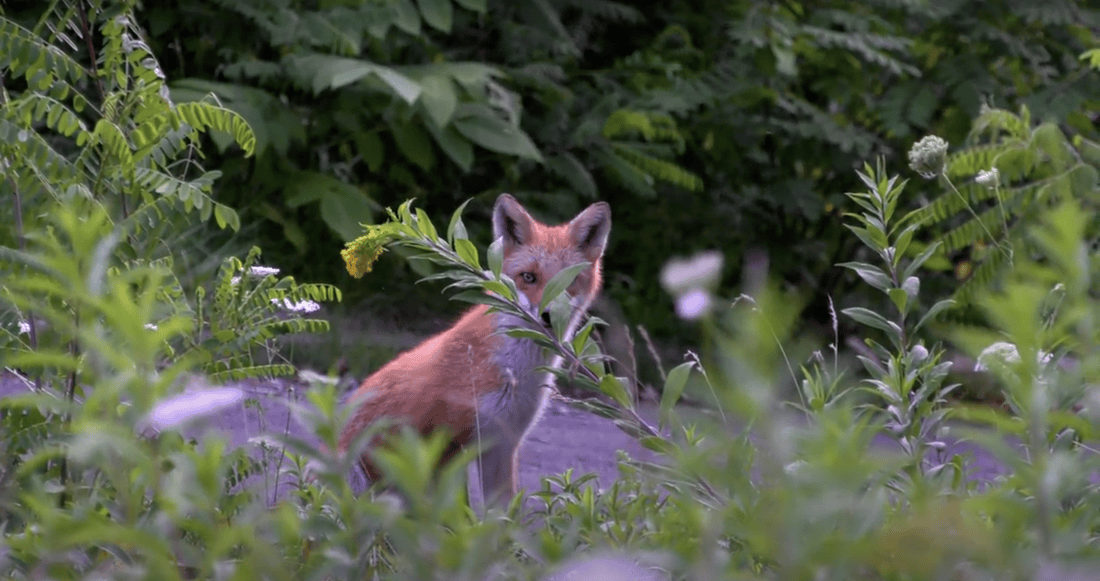
Sakamoto-san knew the local animals’ habits. He took us to a woodland clearing, where we encountered a curious fox.
At first, we simply watched one another. Later, the fox followed us and played with a stick nearby. It kept some distance, but this was the longest I had ever spent observing a fox. I could hardly take my eyes off it.
Sakamoto-san thought it was about a year old, still a youngster curious about the world, including humans.
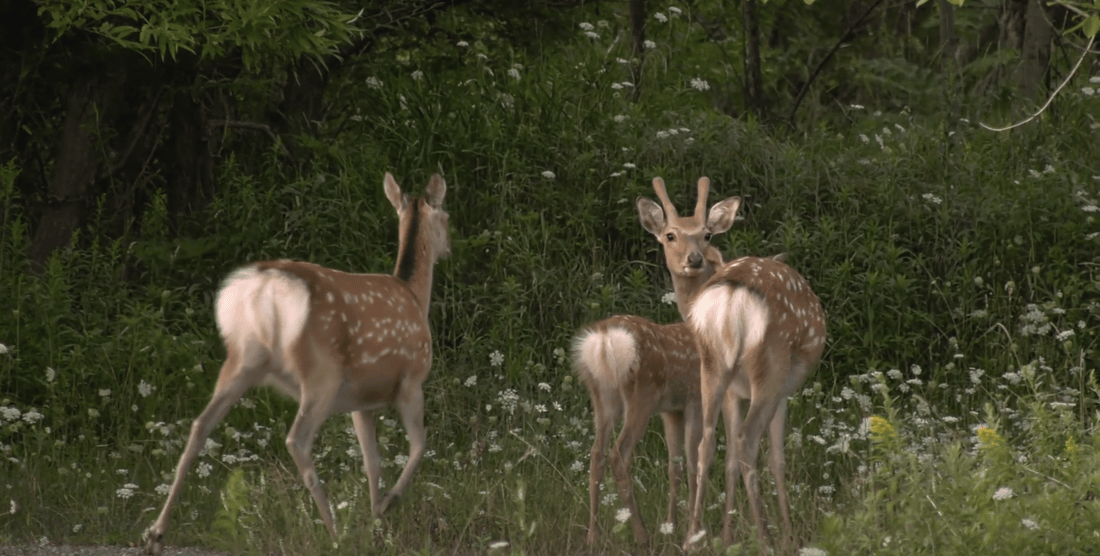
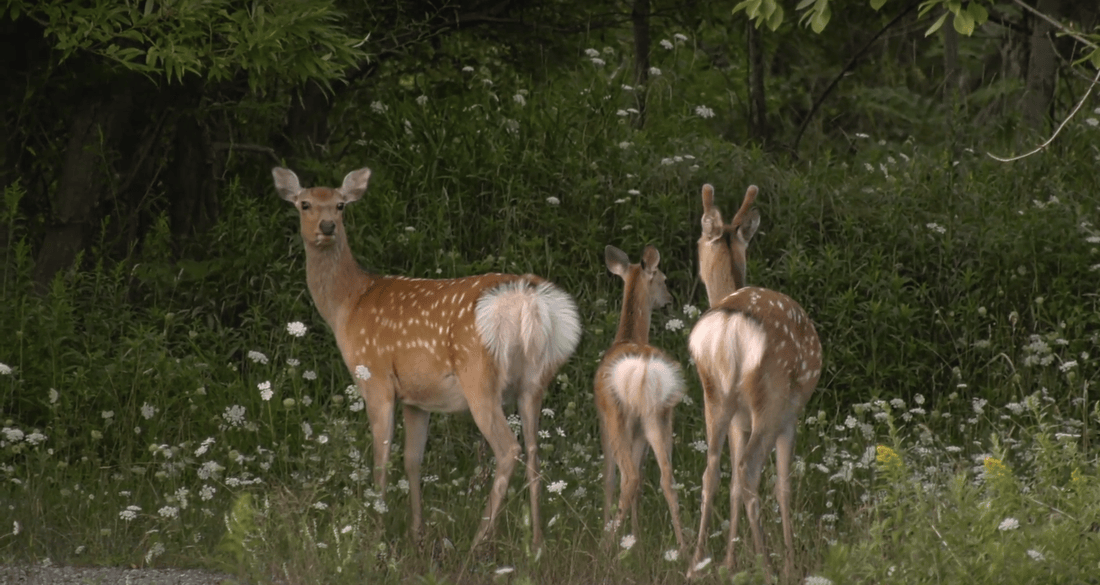
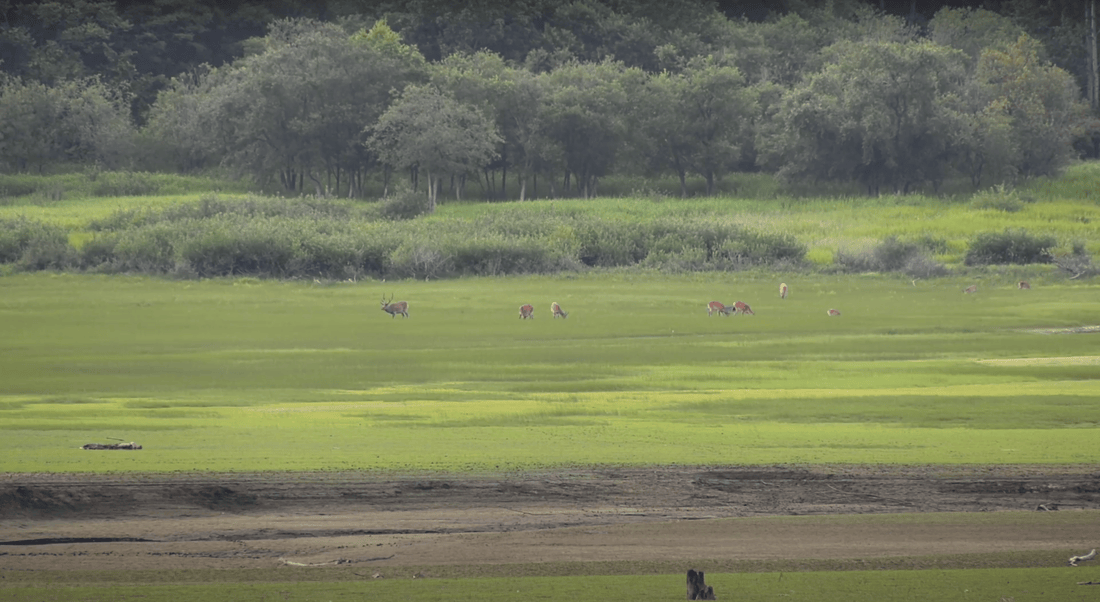
The Ezo deer were much shyer. Usually appearing in groups, they would stop and look toward us when they heard a sound. At the slightest movement, they turned and ran. From a distance, all we could see were white rumps vanishing into the trees.

Freshly Picked Sweetcorn
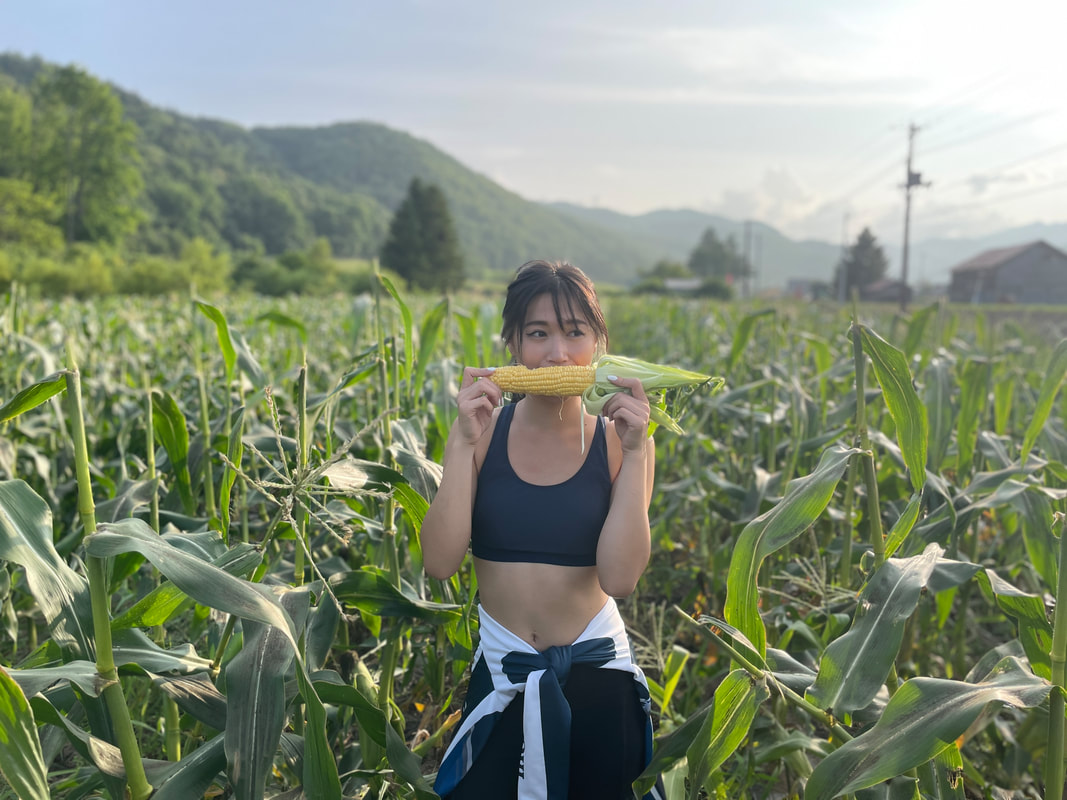
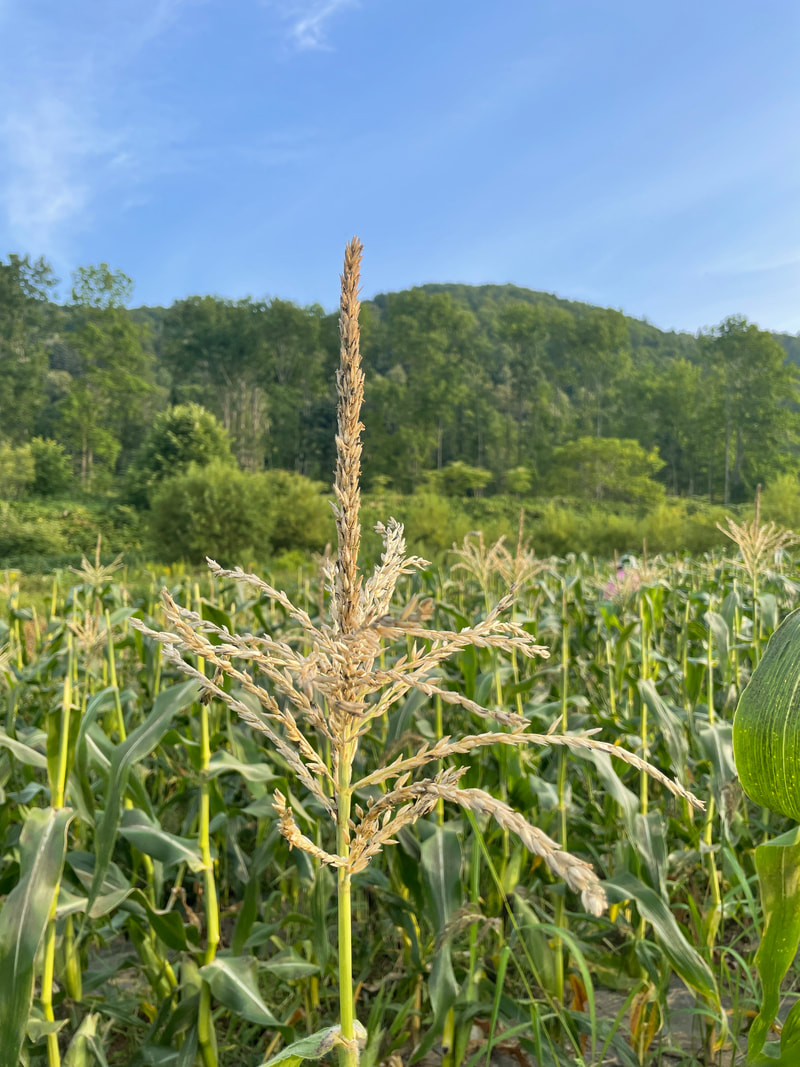
At the end of our road ride, Sakamoto-san took us to try harvesting produce. Fruit-picking experiences are common in Japan. Tomatoes or blueberries would not have especially excited me, but this time we were picking corn. It was my first time harvesting it.
Sakamoto-san and Kobayashi-san told us this particular corn could be eaten straight after picking. I hesitated at first, then decided to try what our hosts had prepared for us.
The first bite had a slight grassy note, accompanied by sweetness and a rich corn flavor, even a hint of butter. It was far better than I expected.
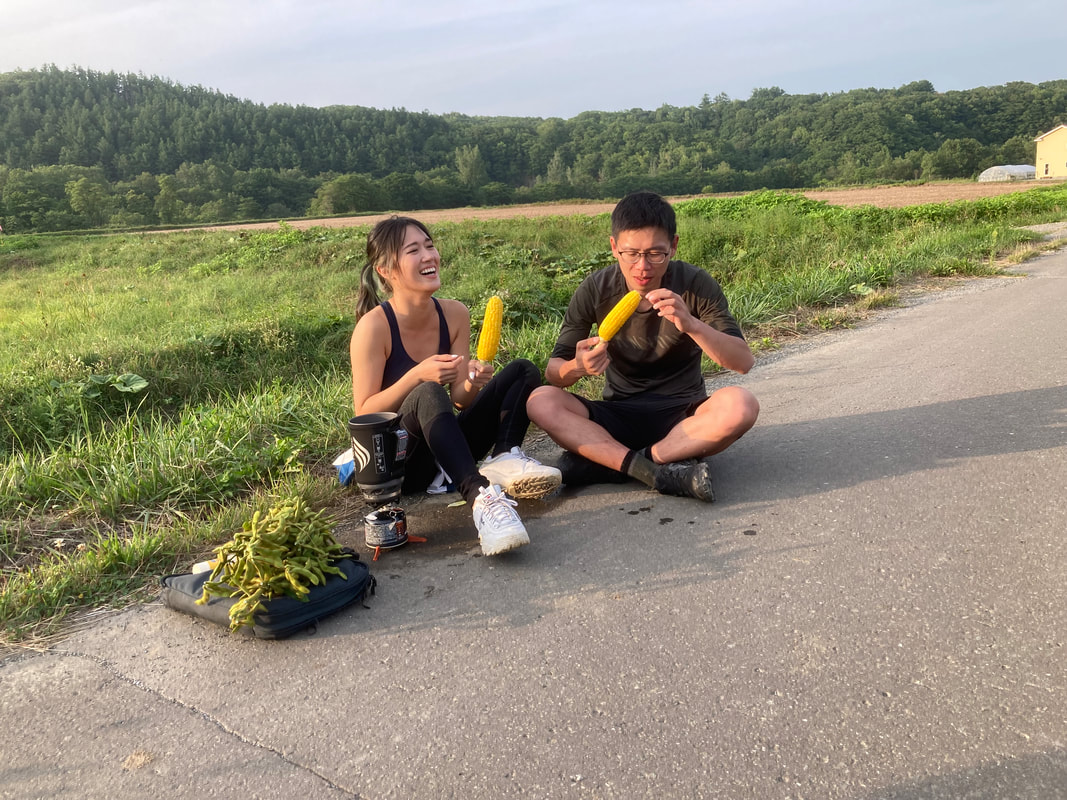
If it tasted this good uncooked, I wanted to know what it would be like cooked. Using the stove and cookware Kobayashi-san had brought, we boiled some of our harvest.
The result was extraordinary. Every kernel seemed plump enough to burst, and the sweetness was astonishing. It had already been sweet, yet cooking made it seem sweeter still. How could boiling something in water make it taste that much more intense?
Kobayashi-san had also brought butter. Spreading it over the corn lifted the flavor another level. I do not really know how to describe it. It was something I wanted everyone to experience.
This was not part of the standard itinerary at the time, but I imagined it might be possible to arrange by asking Sakamoto-san well in advance.
Traveling with Local Knowledge
Behind Hokkaido’s rich natural resources and beautiful scenery are things visitors may not immediately notice. Brown bears, for example, and concerns about water contaminated by parasites associated with foxes. These were unfamiliar issues for me coming from Taiwan, but part of everyday awareness for people living here.
As an important agricultural region, Hokkaido also has places where visitors should not wander without permission. Entering farmland can introduce soil carried on shoes, potentially bringing pests or microorganisms from elsewhere and affecting crops.
So when you see a beautiful field, do not simply walk in for a photograph. Respect the farmer’s work and stay where access is permitted.
This was another reason I appreciated a local tour. A guide could share places and stories I would not find alone, while helping me avoid behavior that might trouble local people.
Based on this visit, I was happy to recommend exploring Minamifurano by bicycle with a local guide. The riding, the landscape and, above all, the people made it special.
Bikepacking diary: YouTube · Facebook · Instagram