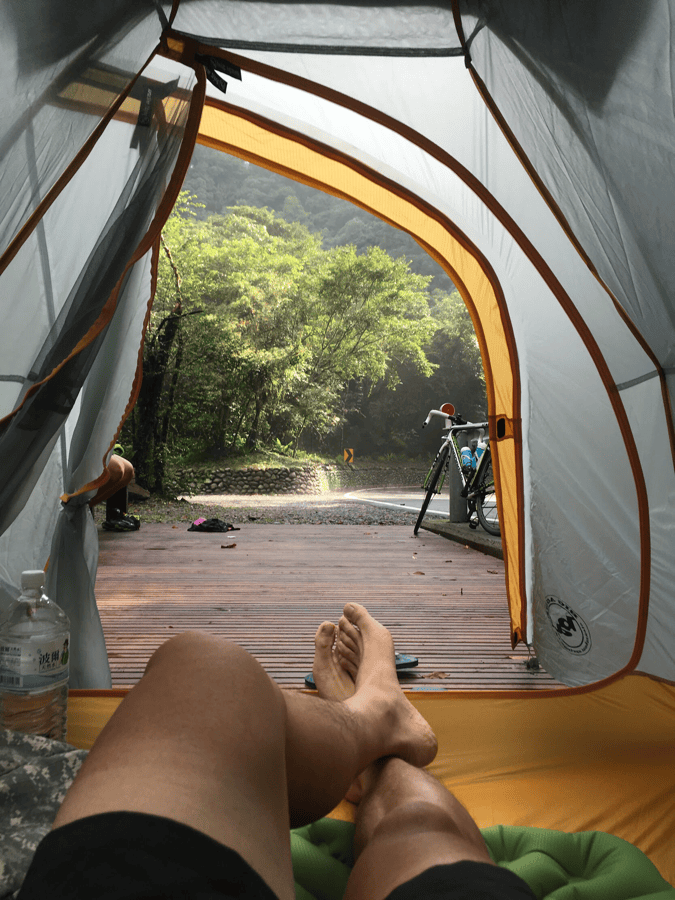
How to Plan Your First Bikepacking Trip | Start Small, Start with What You Have
Translated from Bikepacking diary’s original article on planning a first bikepacking trip, published on May 3, 2018, and republished by arrangement with the author. Photographs are linked directly from the original website.
Editor’s note: This translation preserves the author’s early experiences and personal equipment preferences. It is not a complete safety checklist. Match the bicycle, load, shelter, sleeping insulation, food and water to the route and forecast, and carry navigation, repair supplies, first aid and emergency communication appropriate to the trip. Check access and camping permission. Avoid hazardous weather, flood-prone riverbanks and exposed roadside pitches. Do not test camping equipment in a typhoon or storm. Keep washing and detergents away from natural water sources, and treat drinking water as needed. Temperature ratings and water quantities below are the author’s examples, not universal minimums.
Crossing the First Barrier
We chase beautiful scenery, long for freedom and want to spend time in the natural places we love. So we dream of getting on a bicycle and traveling.
Yet often we hesitate to take the first step. Growing up in an urban jungle does not necessarily prepare us for a real forest. We worry that we have not packed enough, do not know how to begin or cannot decide where to go.
The more we think, the more frightening it becomes. Eventually, we remain on the sofa or in bed, watching television and scrolling our phones, imagining a future night when we might fall asleep in the mountains to the sound of water.
I have felt those fears too. Here, I want to share the planning and emotions behind my first few bikepacking trips, in the hope that they make it easier to cross that inner barrier and begin an adventure of your own.
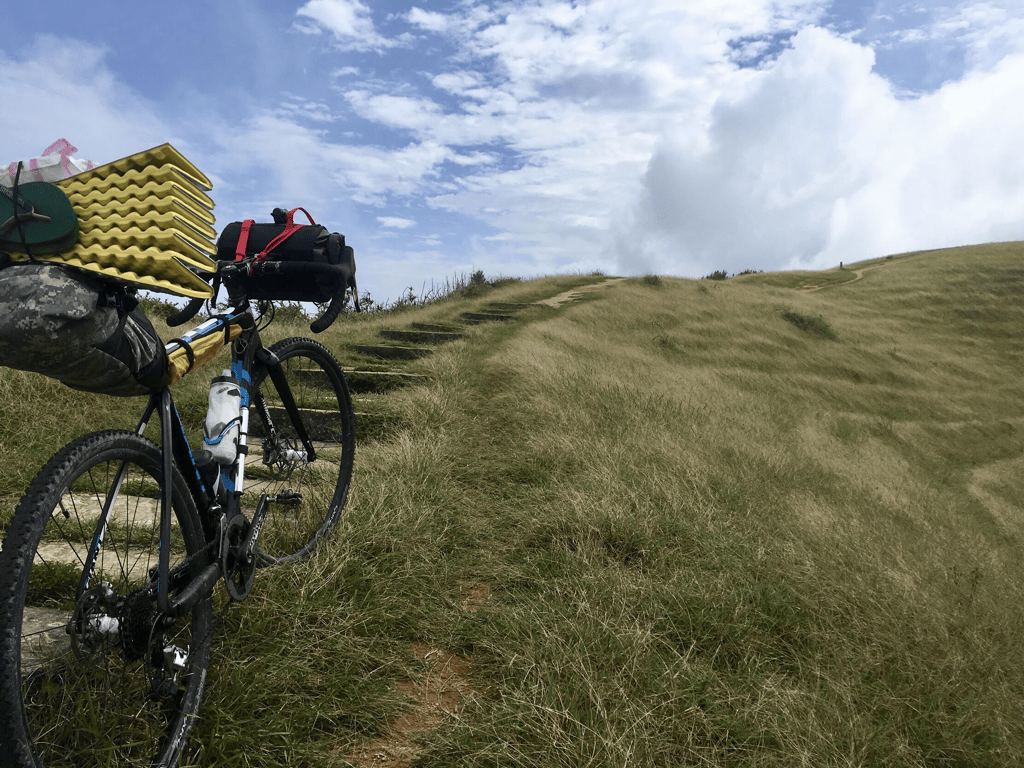
Borrow Before You Buy
Equipment is probably the biggest concern, so I will start there.
Whether people asked me about road cycling in the past or bikepacking now, my first answer was the same: “Do not rush to buy equipment. Start with what you already have, and borrow from friends.”
As more experienced bikepackers had told me, good travel is not simply a consequence of owning the right products. Getting outside helps you understand what you actually need.
The Bicycle You Already Have
Naturally, bikepacking requires a bicycle. But a bike is expensive, and I would not tell a beginner to buy a new one immediately.
For a suitably chosen first route, many kinds of bicycle can work. When I began riding in university, I used the mountain bike I had ridden in primary school.
If you do not own a suitable bike, borrowing or renting was not especially difficult in Taiwan in my experience.
By the time I started bikepacking, I had already spent ten years cycling. I happened to own a Giant cyclocross bike, so that was the bike with which my bikepacking life began.
Do You Need Bikepacking Bags Immediately?
I already had a bikepacking-style saddle bag from earlier road-bike trips, so I did not buy a special set of bags to begin.
To be precise, finding one would have been difficult anyway. At the time, few people around me in Taiwan had heard of bikepacking, and bicycle shops did not always understand what I was asking for. I had bought that saddle bag abroad.
Would I tell a new rider to buy bikepacking bags straight away? Still no.
Until you know whether you want to continue and how much luggage you need, I would consider starting with an existing backpack, provided its weight and fit are comfortable and appropriate. Purpose-made bags can come later.
As for my own preferred brand, it was naturally WOHO, whose bags had accompanied me on so many journeys.
A Tent as Your First Outdoor Home
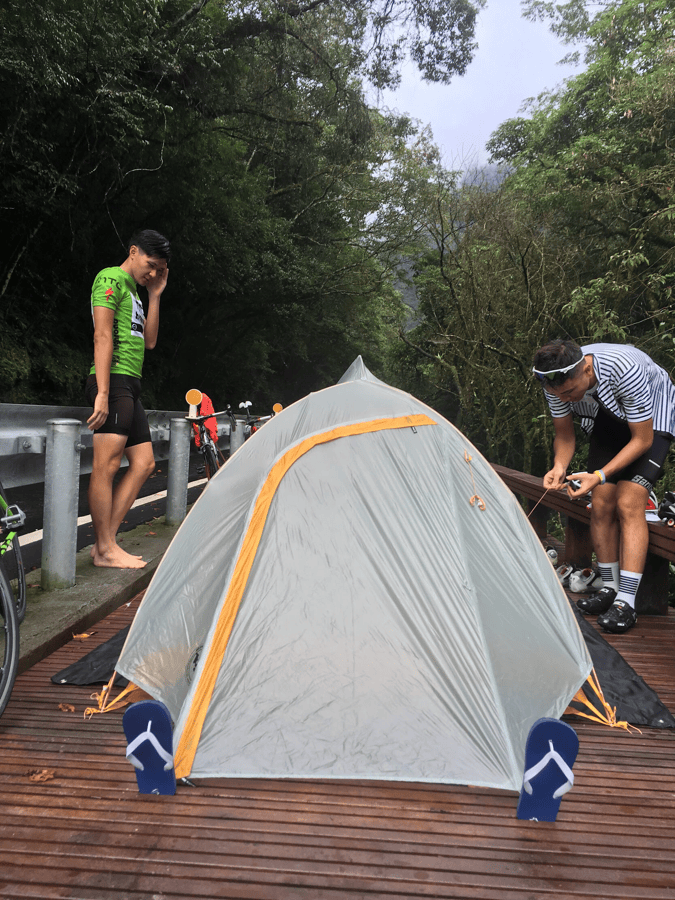
For beginners, I preferred a tent rather than immediately copying experienced travelers who slept under a tarp or in a bivy.
Having a private, enclosed space can feel reassuring on your first nights outdoors.
Bikepacking tents and backpacking tents overlap considerably. There were plenty of rental options in Taiwan, so renting was worth exploring.
My personal starting suggestion was a freestanding two-person tent weighing no more than about two kilograms, balancing room and weight. That was a preference, not a requirement that overrides the conditions or the shelter’s suitability.
For a fuller discussion, see the tent-selection article referenced in the original publication.
Borrow a Sleeping Bag and Mat
If friends go hiking, they may have sleeping bags and mats you can borrow. My first bikepacking sleeping setup came from a colleague.
For the mild-weather Taiwan outings I had in mind, I found it possible to keep the setup simple by choosing favorable conditions. Do not assume all Taiwanese routes or seasons are mild, particularly in the mountains.
Take care with inflatable mats. Sharp stones or branches can puncture them. If you borrow equipment, bring it home in good condition.
Keep the First Trip Simple
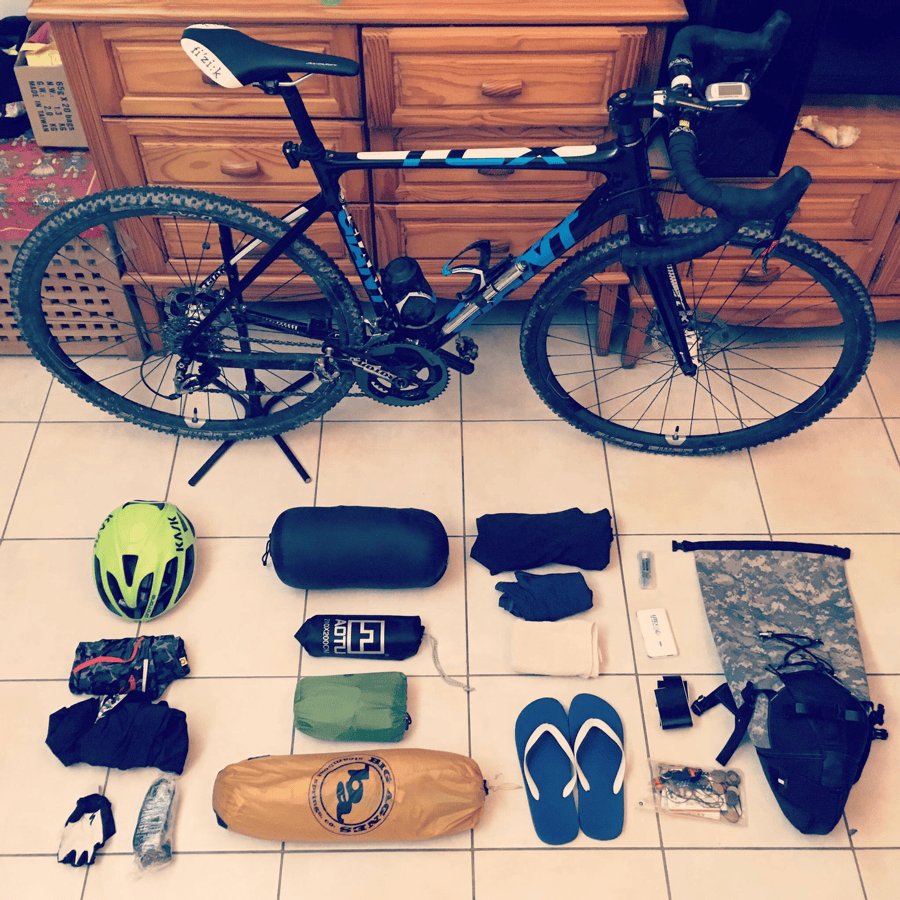
My initial kit was straightforward: tent, sleeping bag, sleeping mat, clothing and slippers.
For the first trip, I did not want to make things unnecessarily complicated.
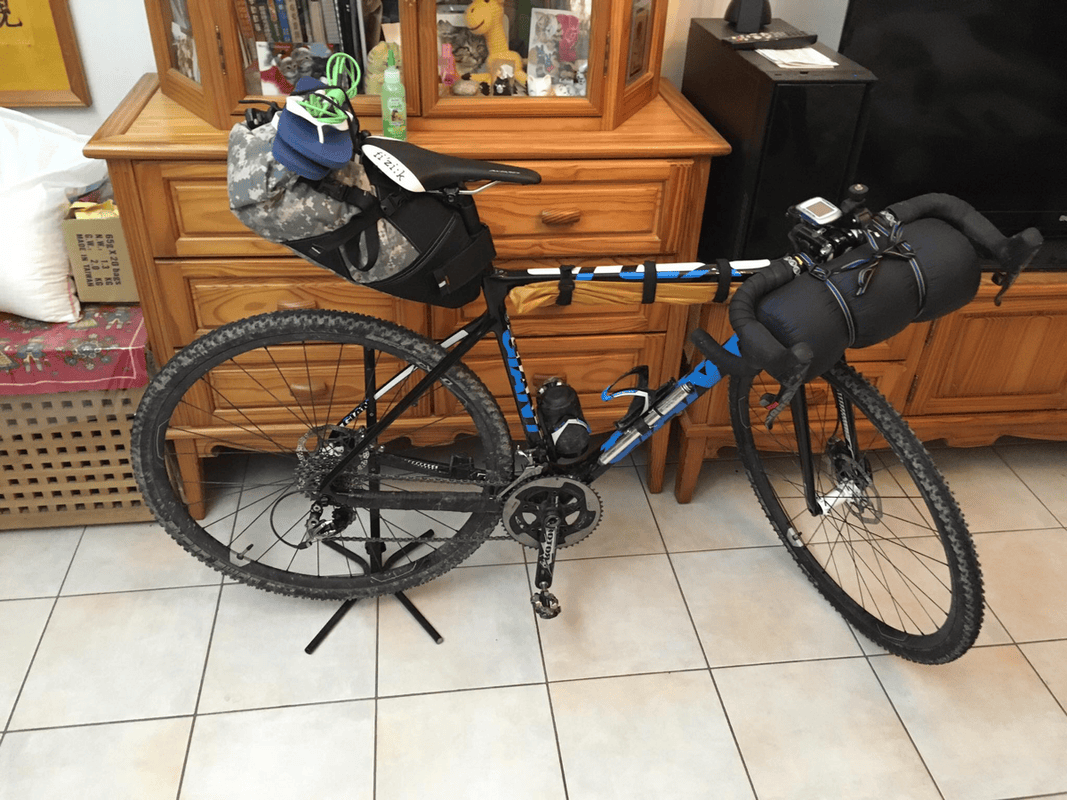
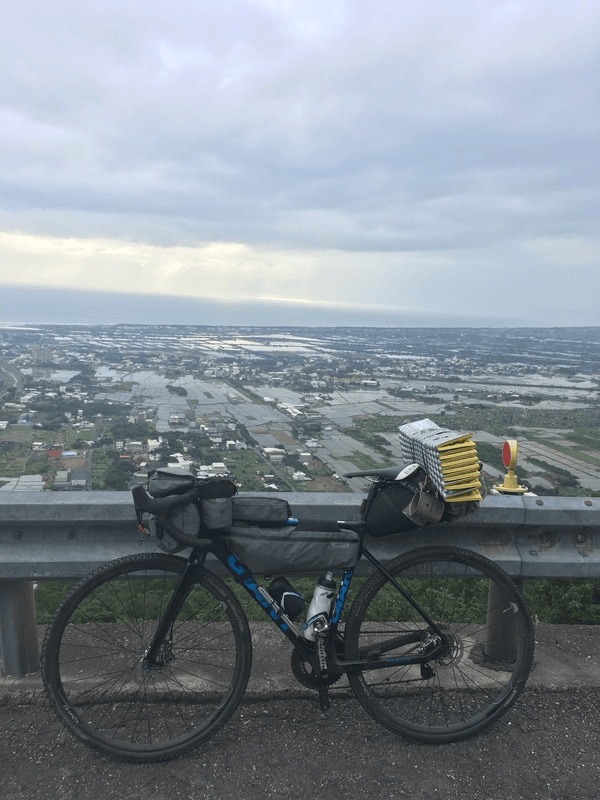
I strapped the sleeping bag to the handlebar, secured the tent poles along the top tube and put the tent body, clothing, mat and other small items into the saddle bag.
That was my packing method, not an instruction to attach loads without checking clearance and stability. Bags and straps must stay clear of wheels, brakes, steering and moving parts.
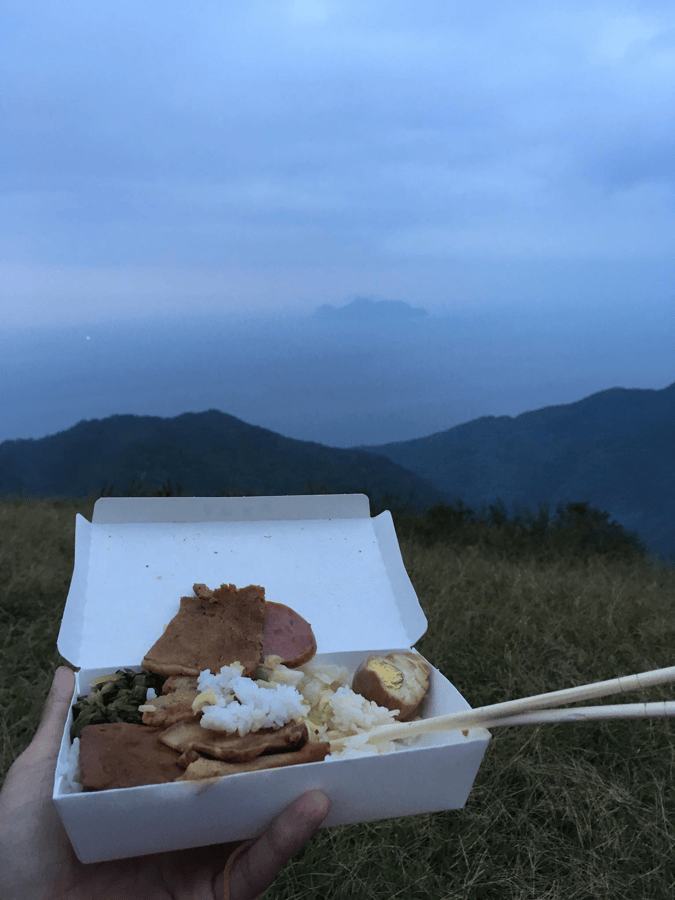
Food could be simple too. With convenience stores on the route, I could buy a boxed meal for dinner rather than begin with a full cooking system.
When You Know You Want to Continue
Once you feel confident that bikepacking is something you will keep doing, buying selected equipment begins to make more sense.
Beyond a suitable tent, a sleeping mat and bag were my priorities.
Why I Chose a Foam Mat
Inflatable mats pack small and can be comfortable. But I liked sleeping in varied places, and on a long trip I worried about an unexpected puncture.
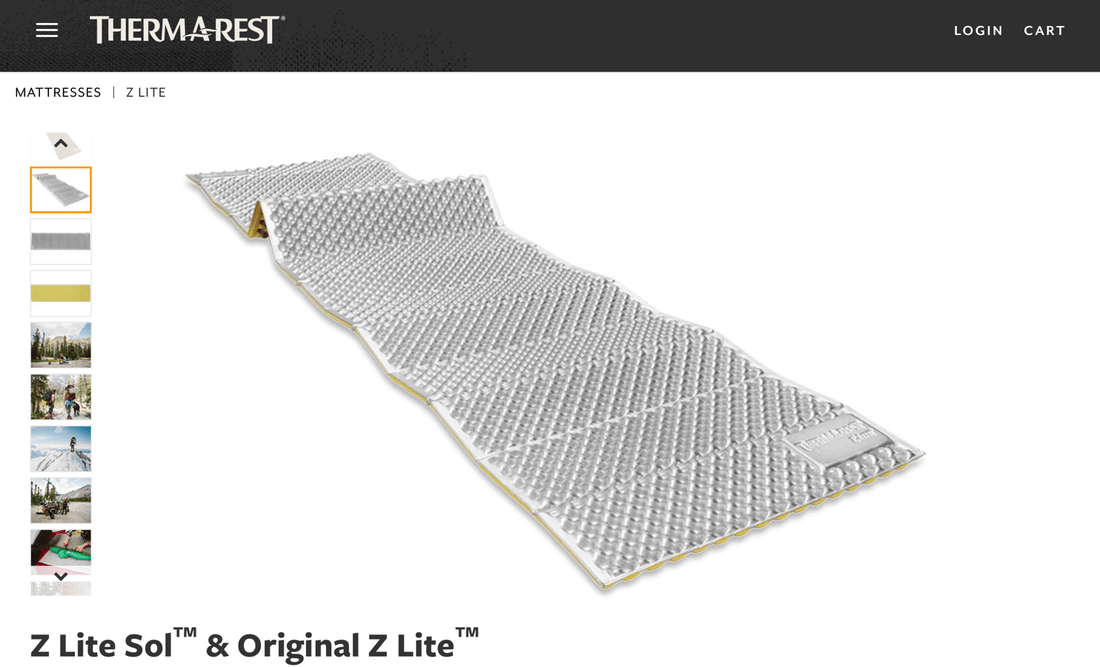
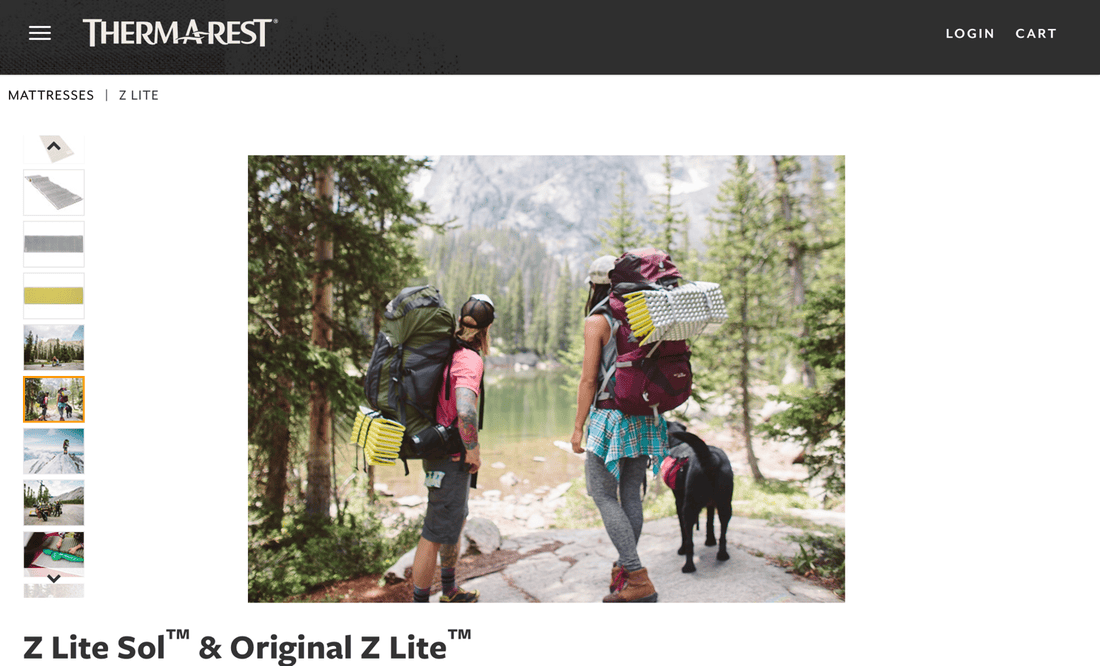
I chose the Therm-a-Rest Z Lite, a folding foam mat.
Mine had remained in good condition from the beginning of my bikepacking travels. It was bulkier than an inflatable, but I appreciated its durability and the insulation it provided for the trips I used it on.
The original article also mentioned similar foam-mat options from Montbell and Naturehike. Those were examples from the time, not a current product comparison.
Choosing a Sleeping Bag
A comfortable sleeping bag can make the difference between a restful night and hours lying awake.
I get cold easily. I bought a bag with a stated comfort rating of zero degrees Celsius and found it adequate on my own Taiwan trips, including some cold mountain nights. That experience should not be treated as a guarantee at that temperature.
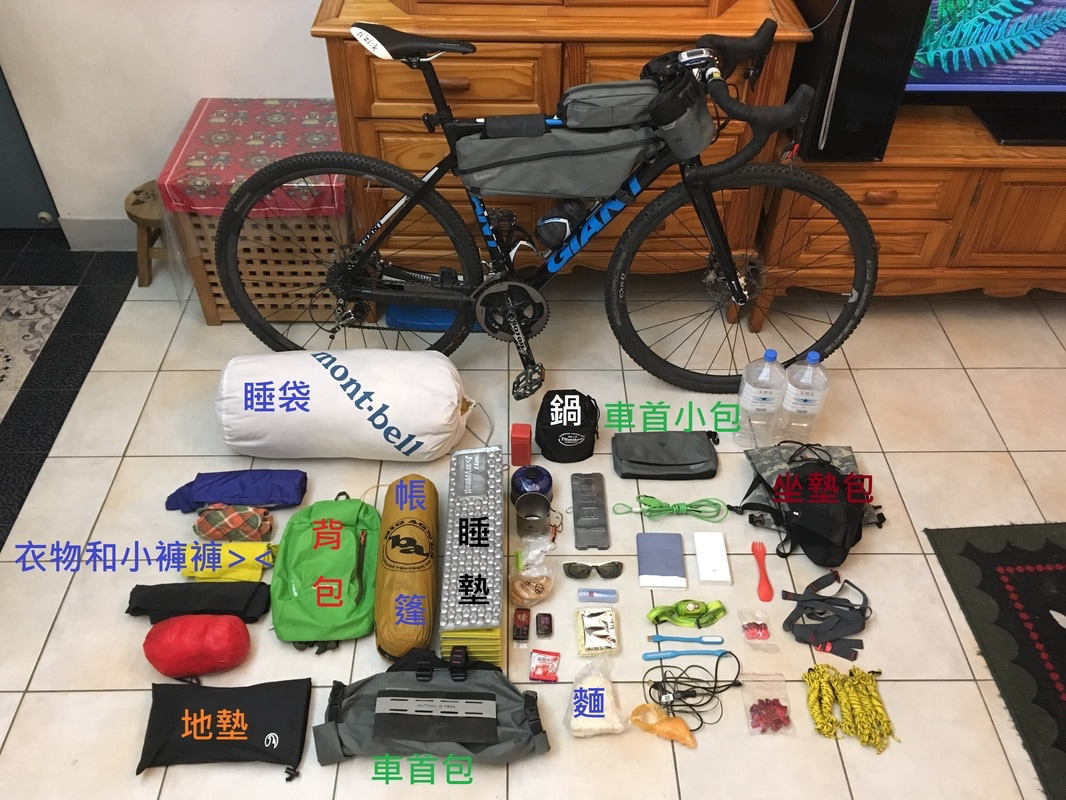
I favored down because it compressed small. My tent and sleeping bag could both fit into my handlebar bag.
For travel abroad, such as my journey through Japan, I personally wished for warmer comfort ratings, around minus six or even minus ten degrees Celsius. Coming from a subtropical climate, I had been woken by the cold on autumn and winter nights near freezing.
Choose a full sleeping system for expected conditions, with a margin for uncertainty, rather than adopting those numbers automatically. The original article also referred readers to a separate sleeping-bag guide.
Food, Cooking and Water
I did not have particularly elaborate ideas about food on the road. Simplicity worked for me.
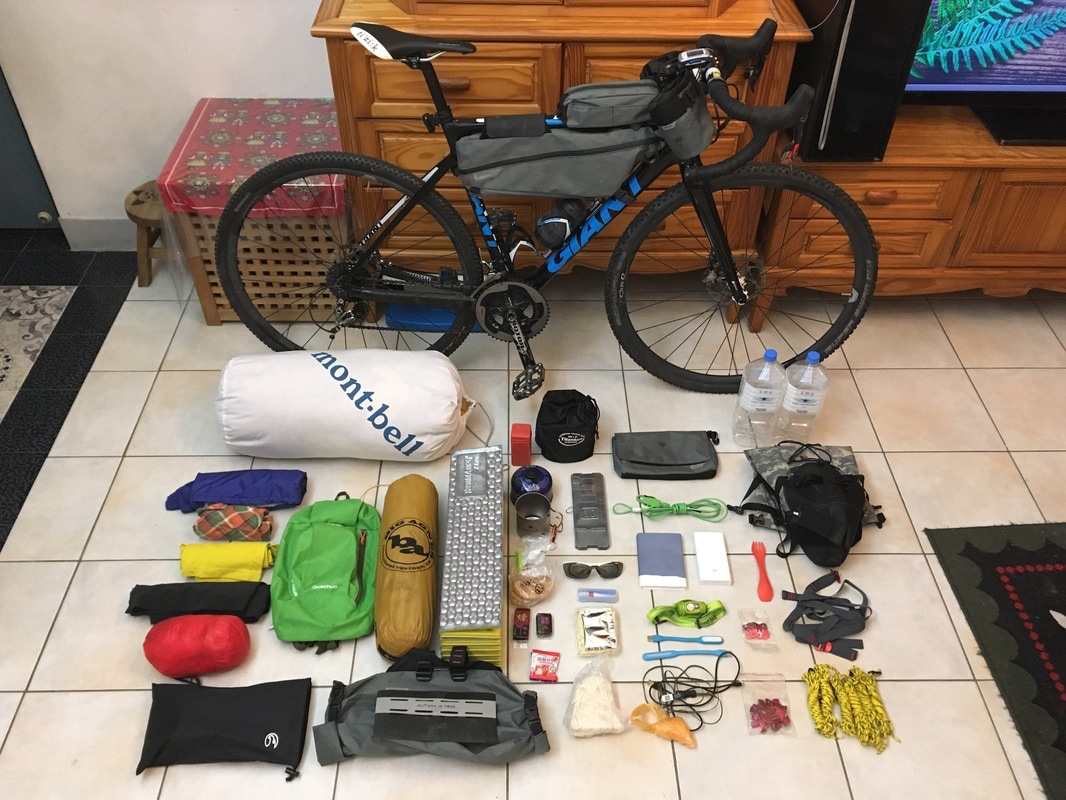
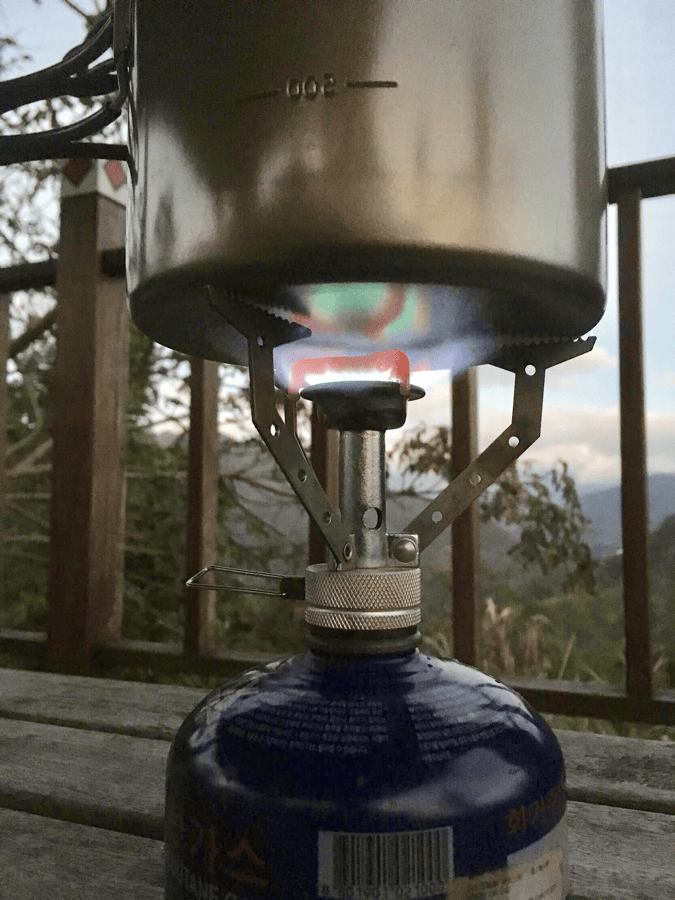
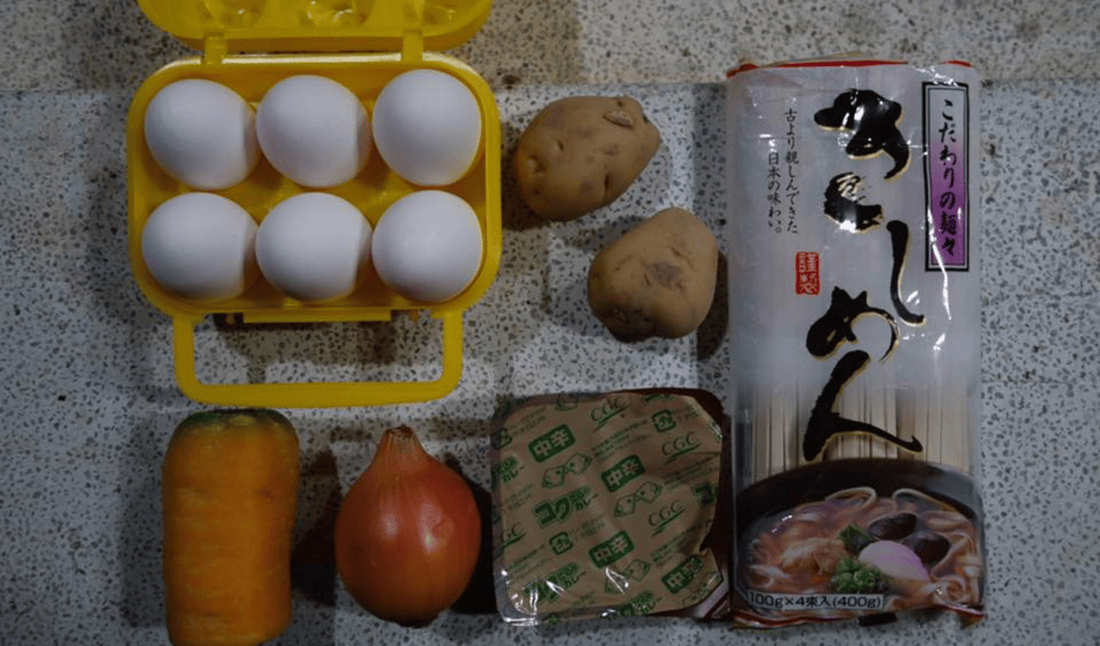
A typical meal was three portions of Guanmiao noodles with sauce and vegetables. For my appetite, a 1,400-milliliter pot worked.
In Taiwan, where I found compatible hiking fuel readily available along my planned trips, a compact canister stove seemed convenient. Check availability and stove compatibility for your own route.
I usually carried two two-liter bottles. If I was unsure about water at camp, I filled them near the destination for drinking, cooking and washing.
That was how I packed for my Taiwan trips. The basic equipment did not change much between a two-day ride and one lasting three to five days, although food, water capacity and contingency planning needed to match the trip.
Choose Familiar Terrain
For a first bikepacking trip, I recommend somewhere you already know rather than immediately disappearing into remote mountains.
You do not yet know your limits. You may not even be fully familiar with pitching your tent.
Read trip accounts, study maps and identify several permitted camping options in advance. Having alternatives makes it easier to change plans.
In the original article, I suggested riverside parks and campsites as accessible possibilities. That requires checking actual camping permission and flood risk; proximity to a river is not itself a reason to camp there.
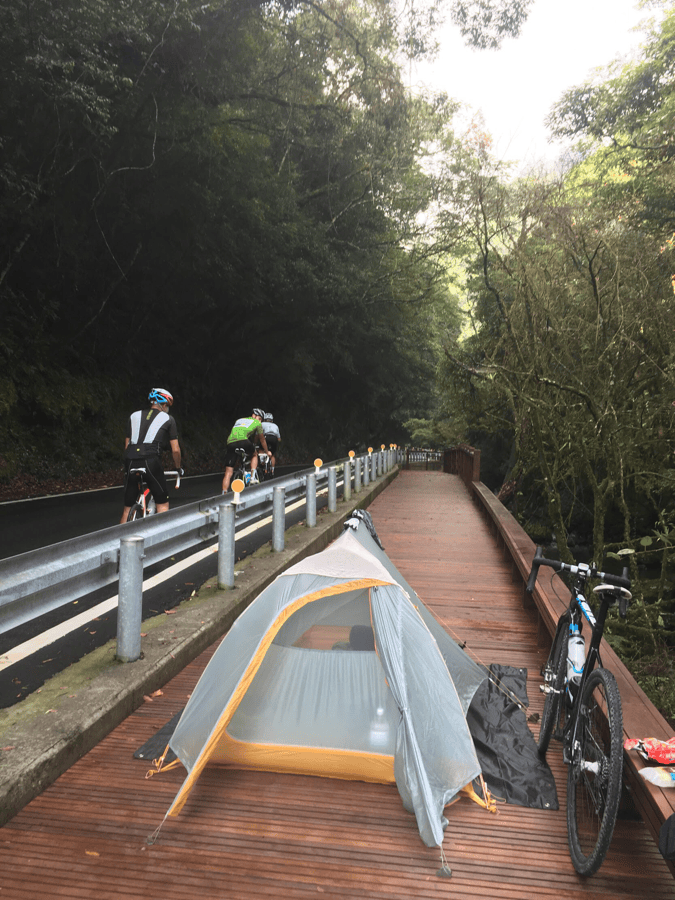
If considering a less developed overnight spot, I looked for practical water access and avoided tall vegetation where I might have unwelcome animal encounters. I also worried about roadside traffic, especially on the outside of bends, and damp valley bottoms where clothing would not dry.
On my first Northern Cross-Island Highway trip, I learned that lesson about damp clothing. Fortunately, it was summer and the sun soon dried things after I began riding. A damp or unsafe site should not become a default simply because it worked once.
My First Two Overnight Rides
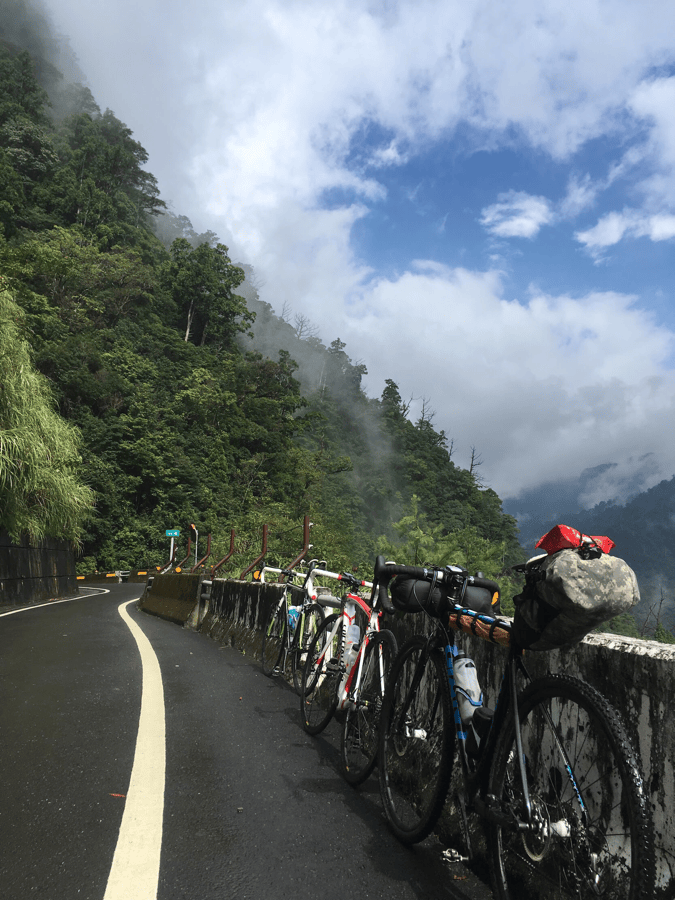
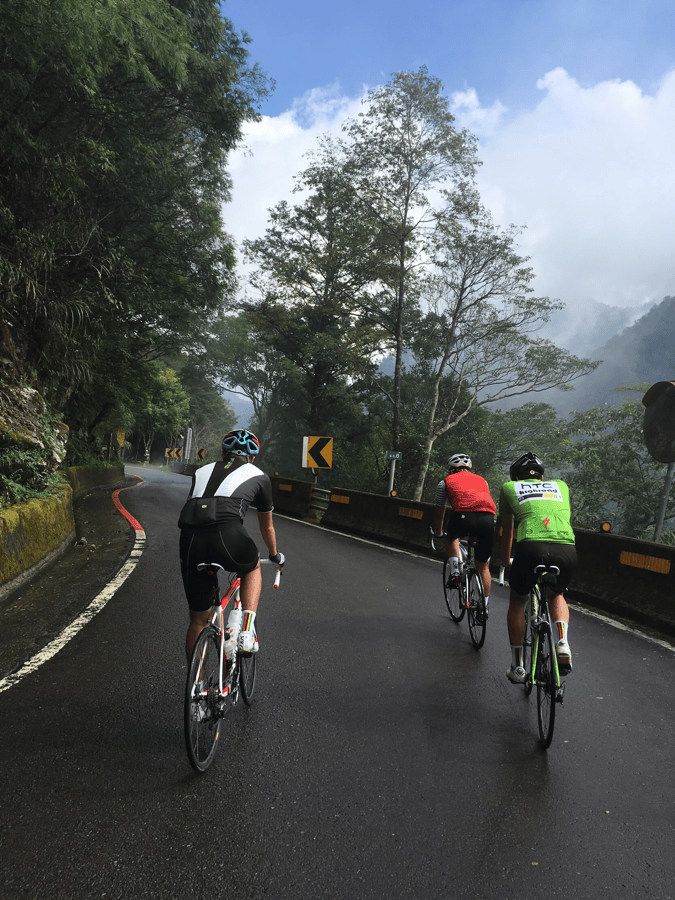
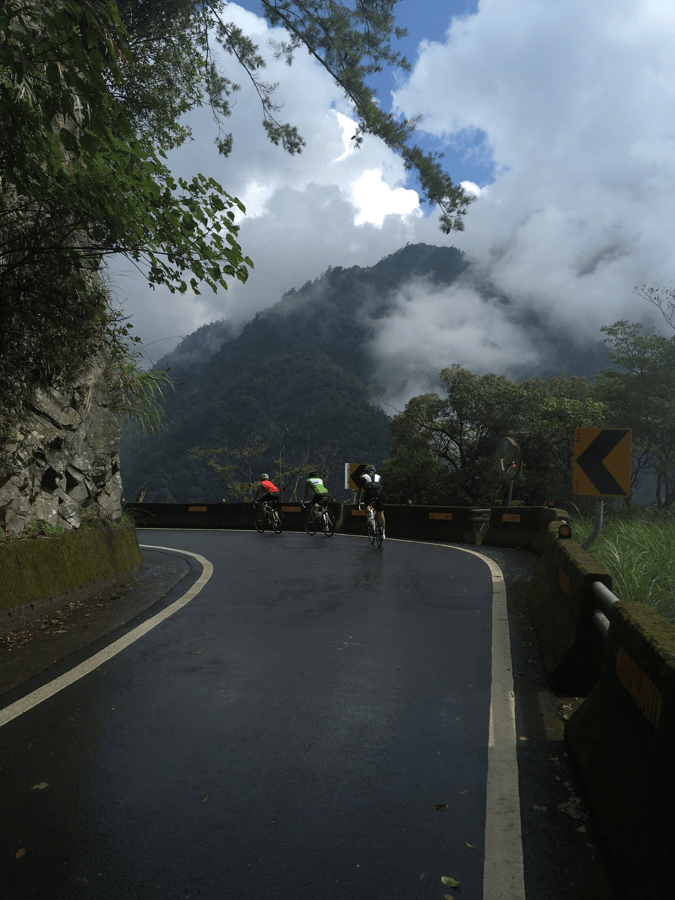
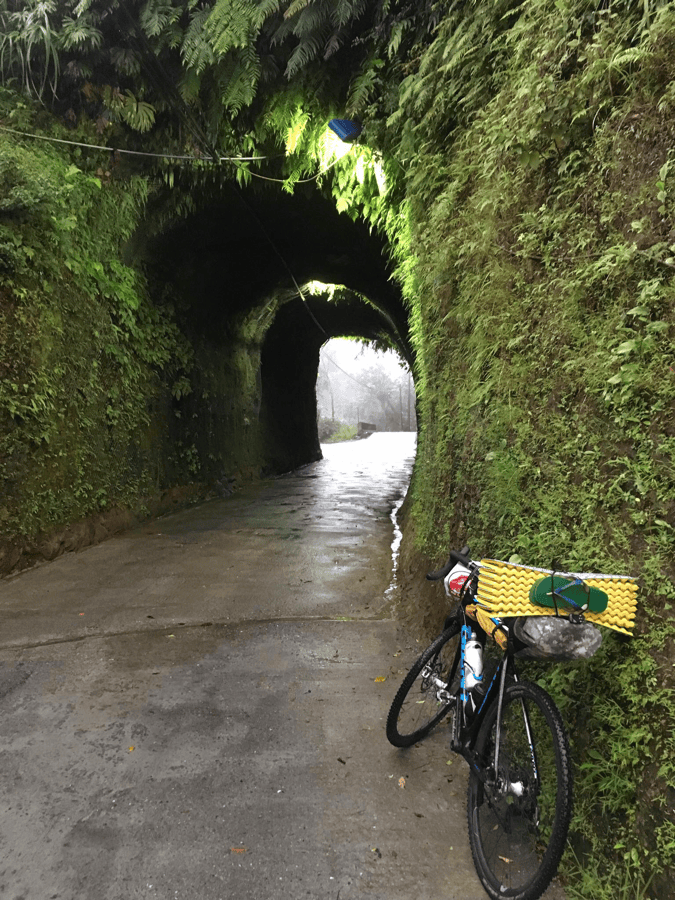
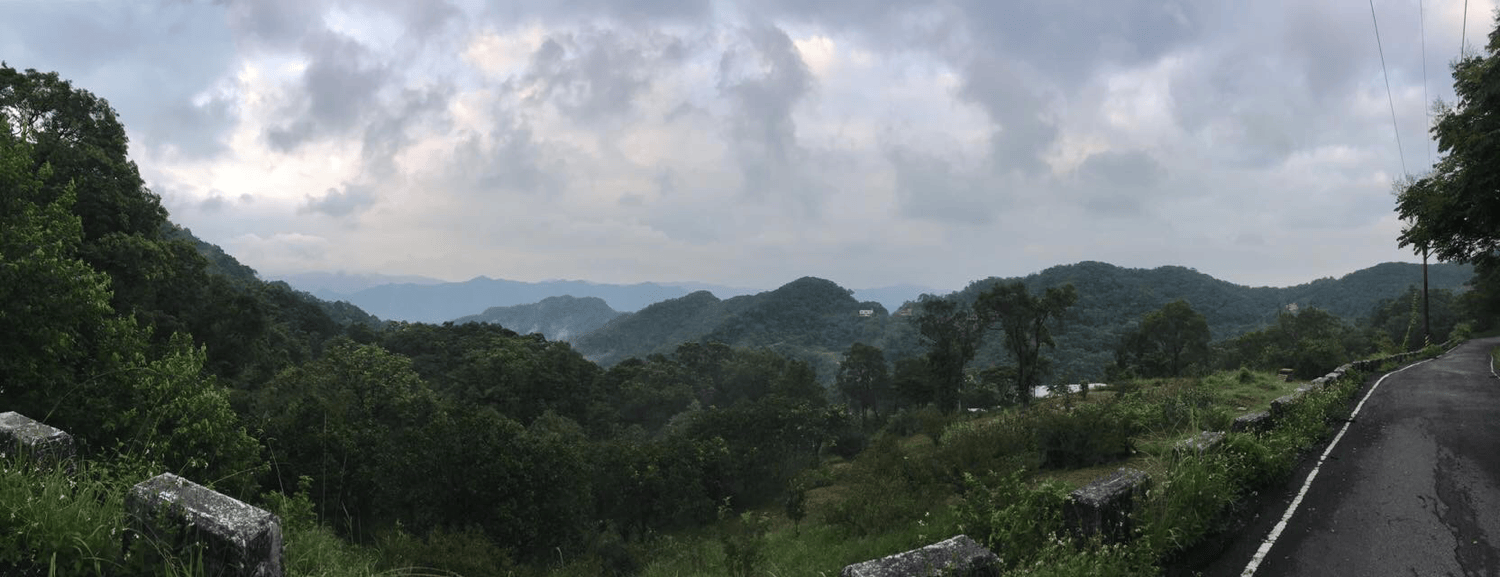
My first trip was on the Northern Cross-Island Highway. That might sound far away, but it was familiar territory to me. In my road-cycling days, riding there twice a month was nothing unusual.
I knew where to find water, shops and toilets, and had already thought about places to stop.
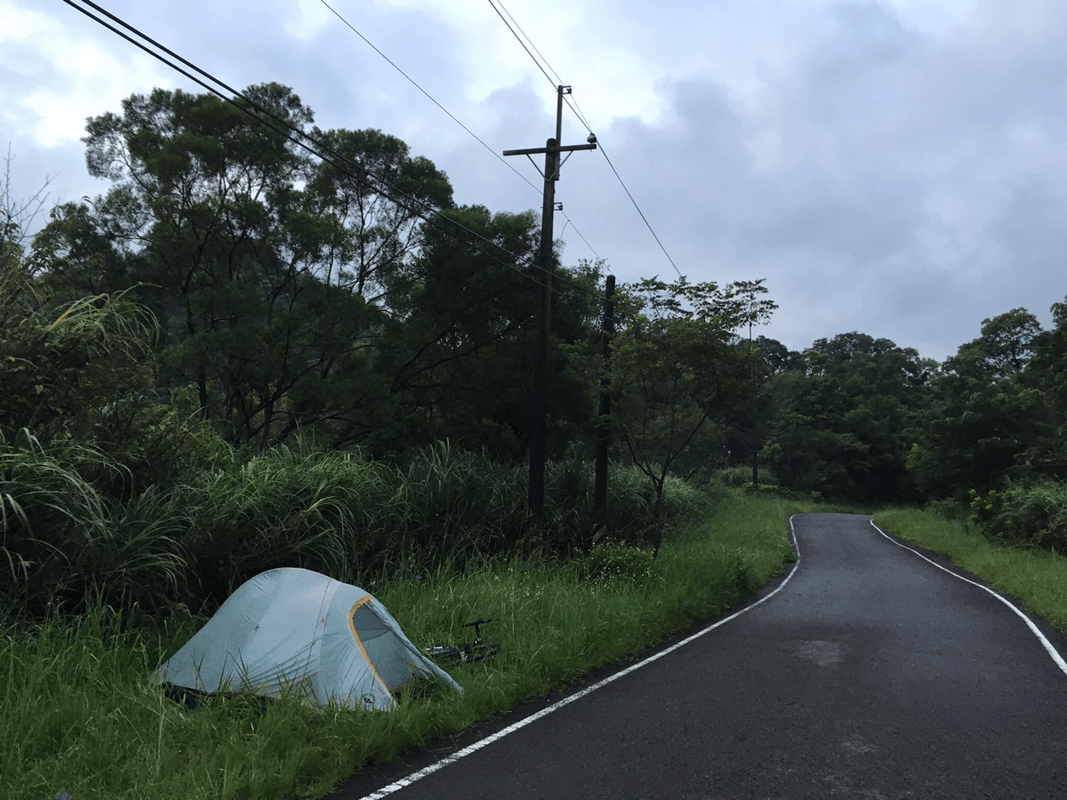
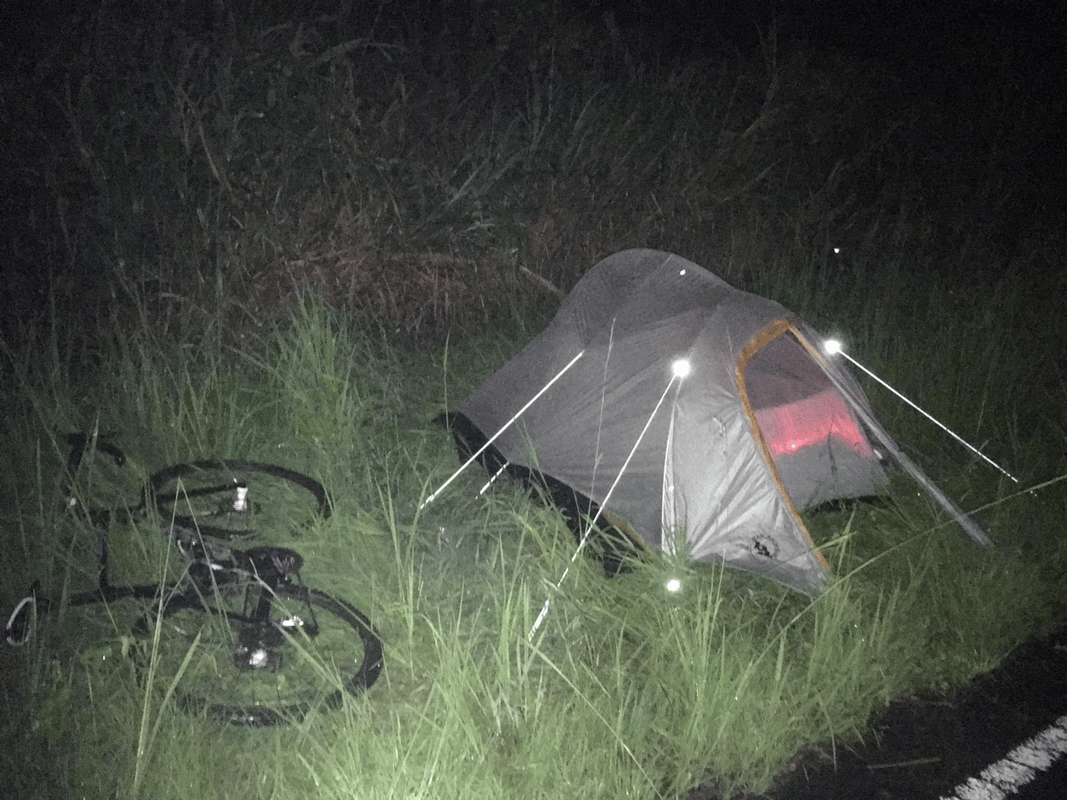
My second overnight ride was less than twenty kilometers from home. In the original account, I described going out as a typhoon approached because I believed I could retreat at any time and wanted to test the tent’s rain resistance.
That was a risky choice, not a beginner’s exercise to imitate. Test equipment in controlled, safe conditions, not approaching severe weather.
I slept well, but the grass was higher than I remembered and I encountered a snake while walking that evening. Although it frightened me, it was the only snake I had seen near my tent in nearly two years of bikepacking at that point.
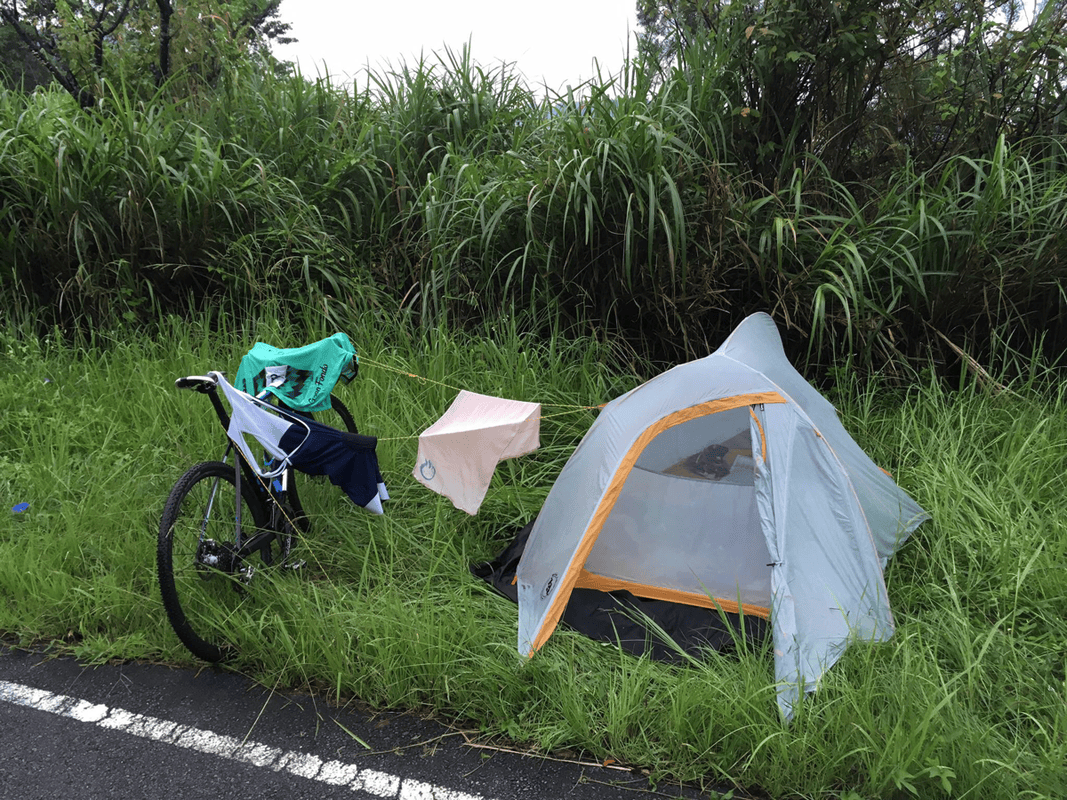
What about Showers and Laundry?
People often ask about washing. My blunt answer at the time was that if a daily shower mattered greatly, my rougher style of bikepacking might not suit them.
That was a statement about how I traveled, not a rule for the activity. A route using serviced campsites or accommodation can offer a very different level of comfort.
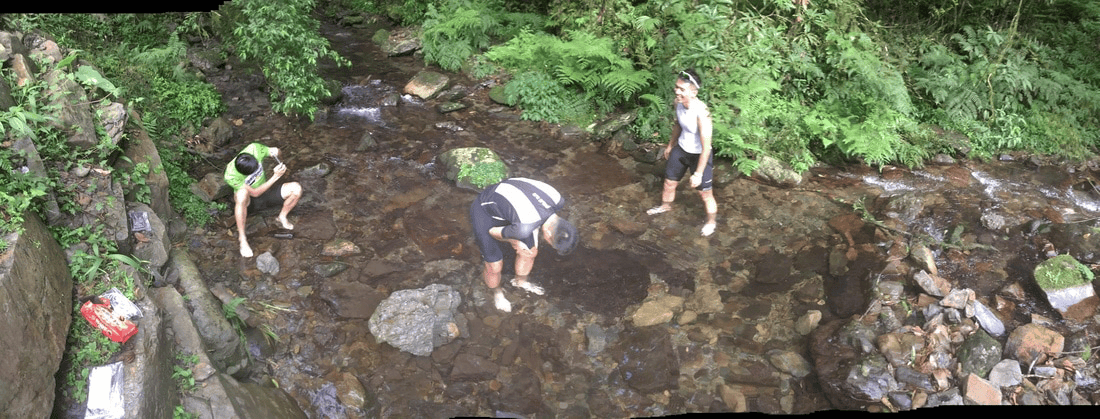
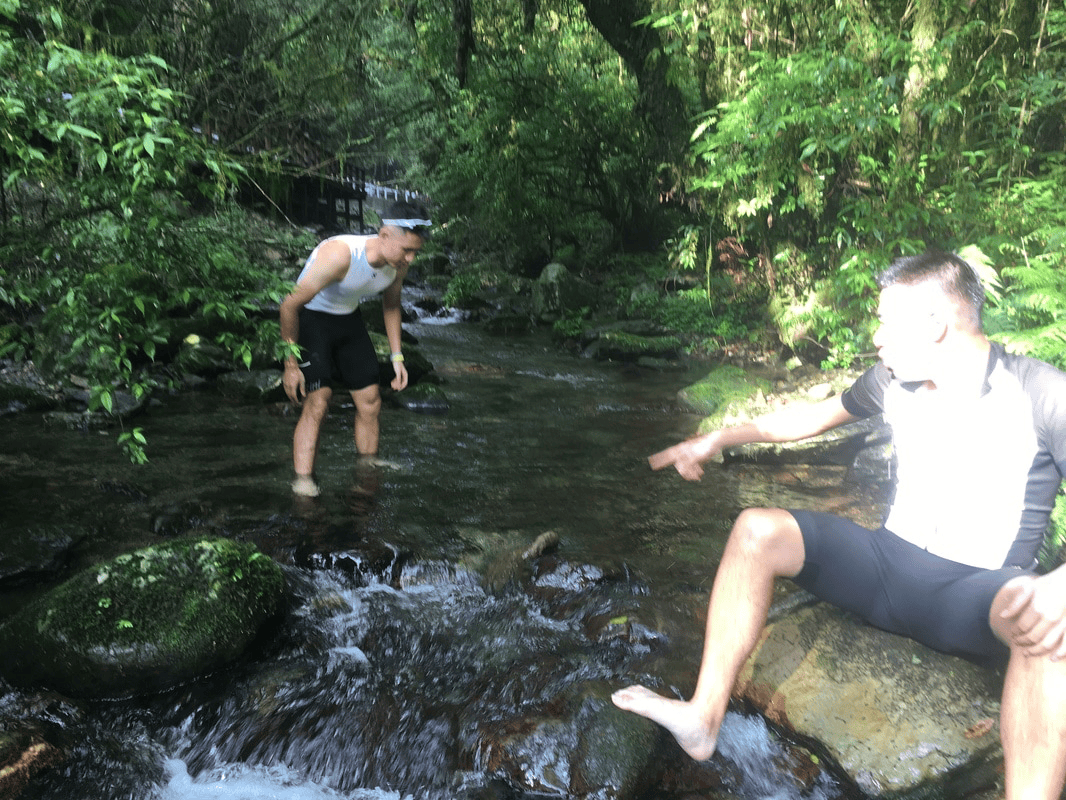
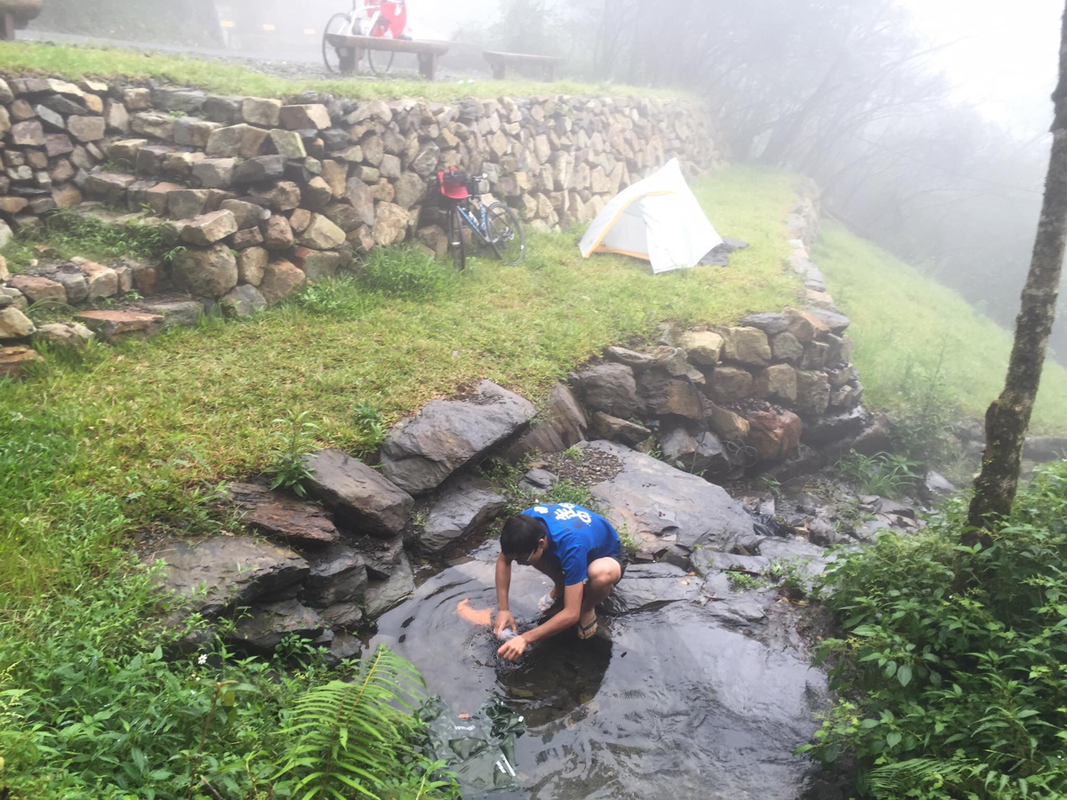
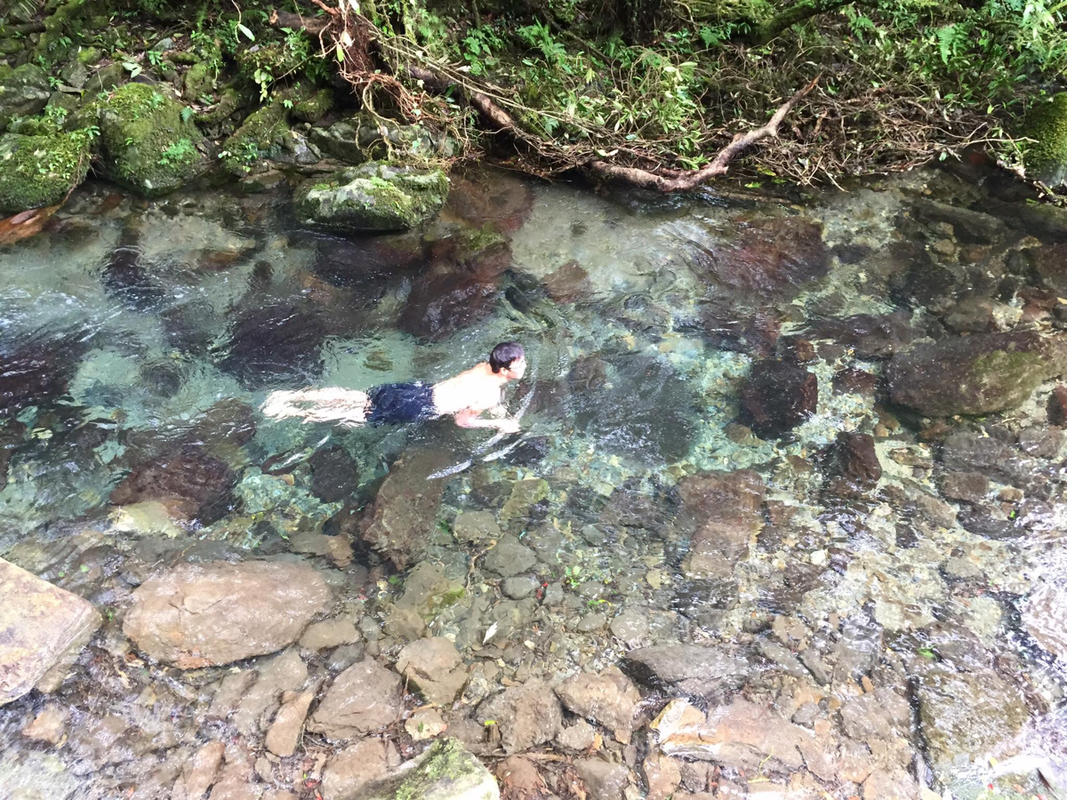
In the original account, I described washing in streams when possible, wiping down with a towel when it was cold, or simply going without. To protect waterways and avoid unnecessary risk, do not treat that stream-washing habit as advice: use appropriate washing facilities or wash away from natural water sources without introducing soap or wastewater.
Hot showers were not something I expected in remote places, unless I happened to visit a suitable hot-spring facility.
Laundry involved similar compromises. In Taiwan, my trips were often only two or three days. During winter travel in Japan, I sometimes went four or five days, or even a week, without a shower.
When my clothing badly needed washing, I would find a campsite with a washing machine and stay there.
For the kind of travel I chose, some comforts had to give way to other things I wanted.
Bring Your Friends
Finally, invite friends.
Company can make the unfamiliar less intimidating, and several people can share ideas when something needs solving.
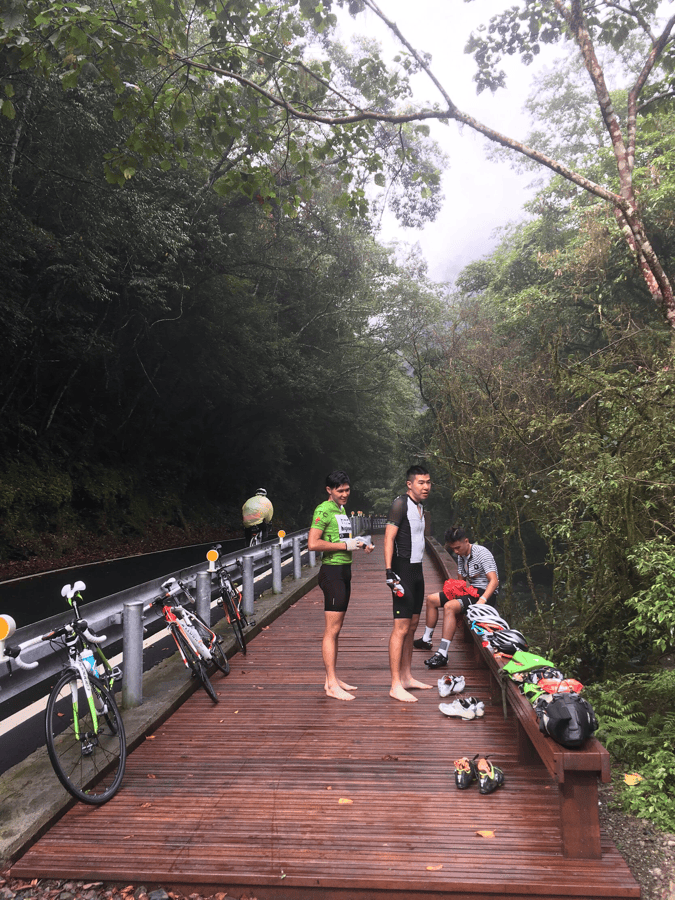
My first outing was with friends from my road-cycling days. They did not stay overnight, but they were there while I pitched my first outdoor camp and settled in. Their presence helped quiet my unease.
Despite trying for quite a while, I never persuaded those particular friends to join me for the whole overnight experience. Perhaps you will have better luck.
If nobody around you wants to camp by bicycle, the original article invited readers to the Bikepacking101 Facebook group, a place to look for other people interested in riding and camping.
The first trip need not be a grand expedition. Make it manageable, prepare for it properly and give yourself the chance to discover what you enjoy.
Bikepacking diary: Facebook