Smangus Old Village | Steep Roads, Mountain Camping and an Unforgettable Feast
Translated from Bikepacking diary’s original Smangus Old Village article, published on July 15, 2017, and republished by arrangement with the author. Photographs are linked directly from the original website. The destination name follows the original account.
Editor’s note: This historical account is not a current route or campsite guide. Road surfaces, access, place-name usage and camping arrangements require fresh confirmation with the relevant community and site operator. Respect Indigenous communities, their land and visitor rules. Carry adequate water and appropriate treatment; do not drink from discarded bottles. Alcohol and subsequent riding in the story are not a recommended combination. Shelter and cooking choices must suit current conditions and site rules, and perishable food needs safe storage during transport.
Back to a Road I Remembered Too Well
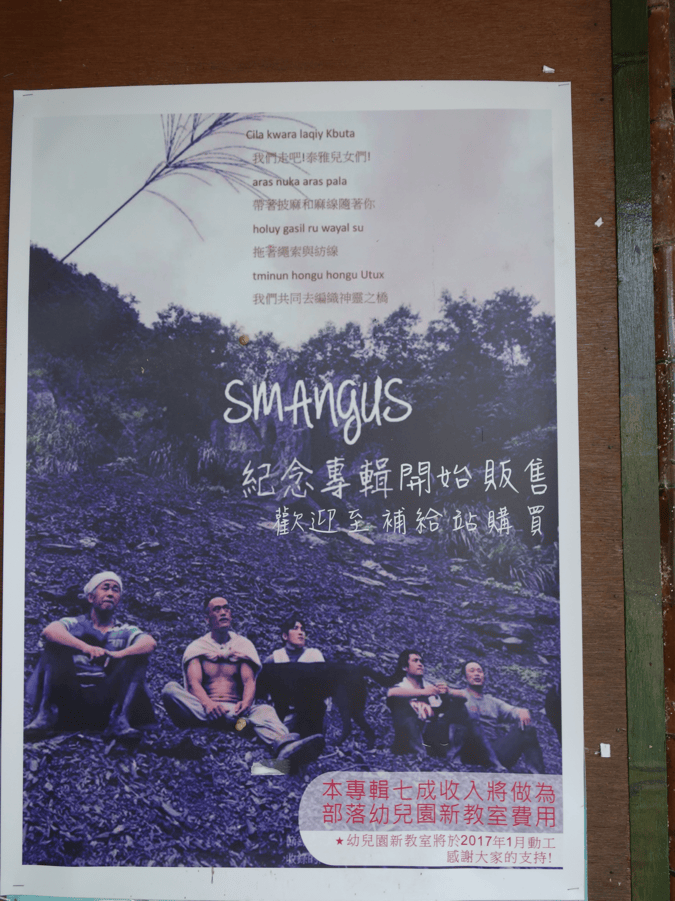
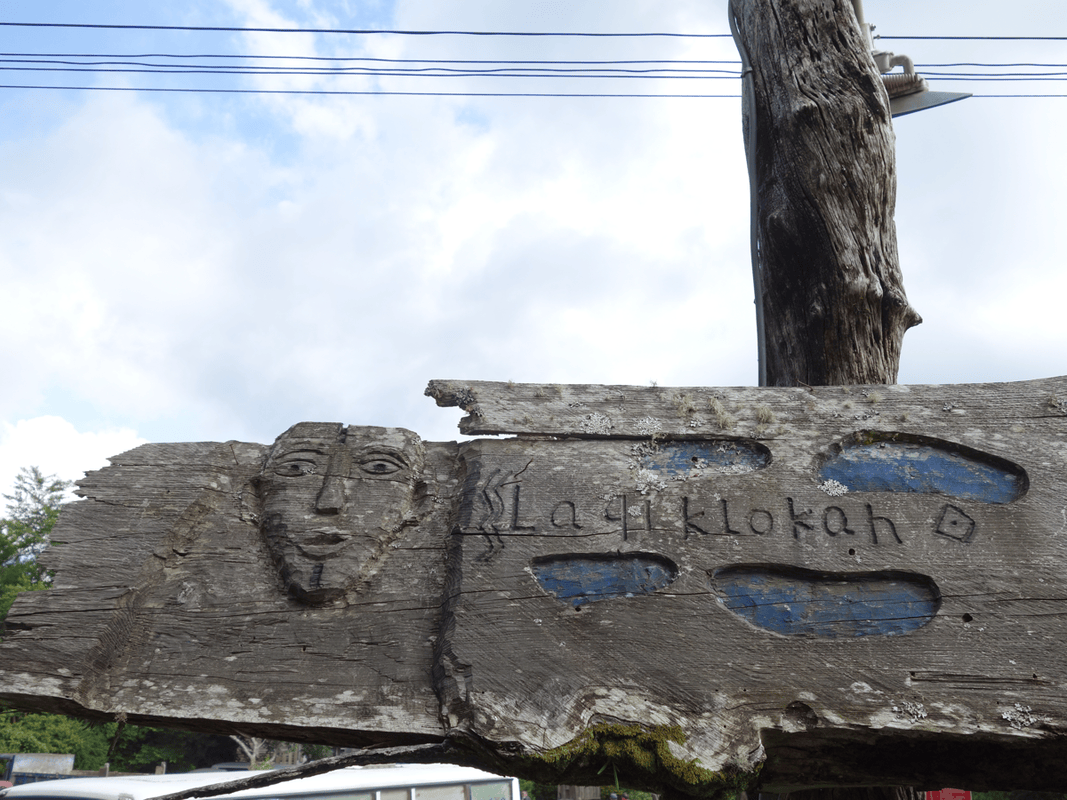
Smangus is a small mountain settlement deep in Hsinchu. The original account recalled its difficult access and late arrival of electricity, which gave rise to an old nickname referring to darkness.
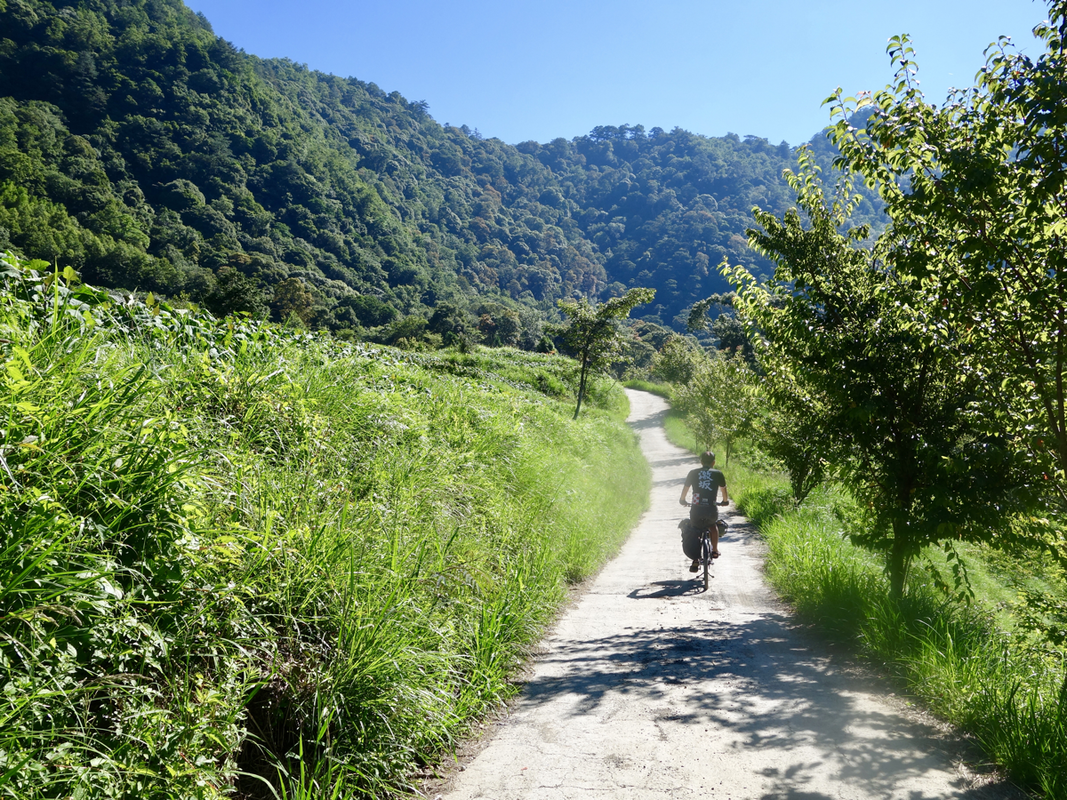
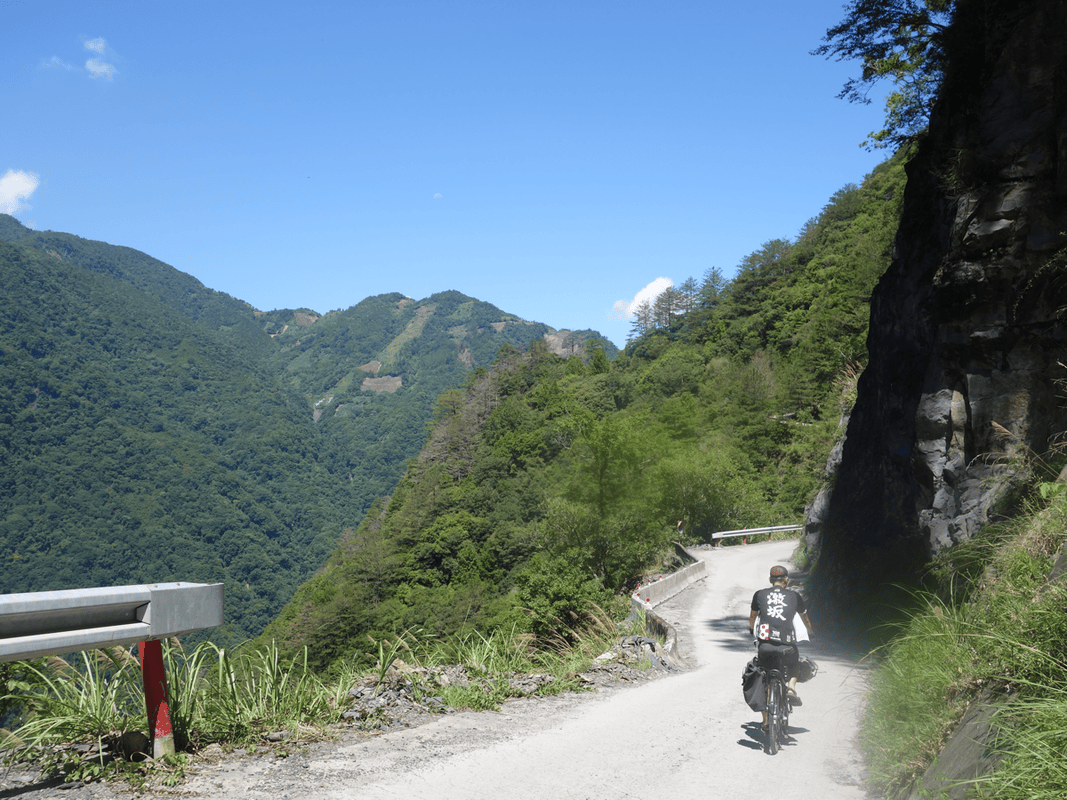
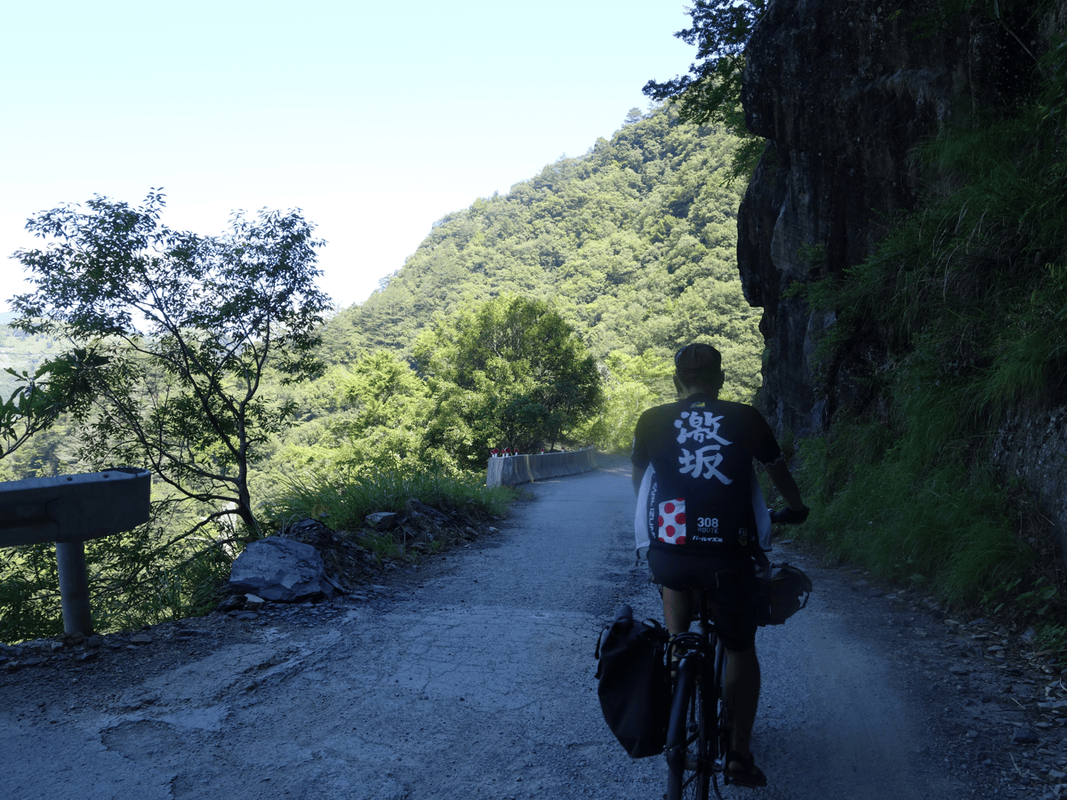
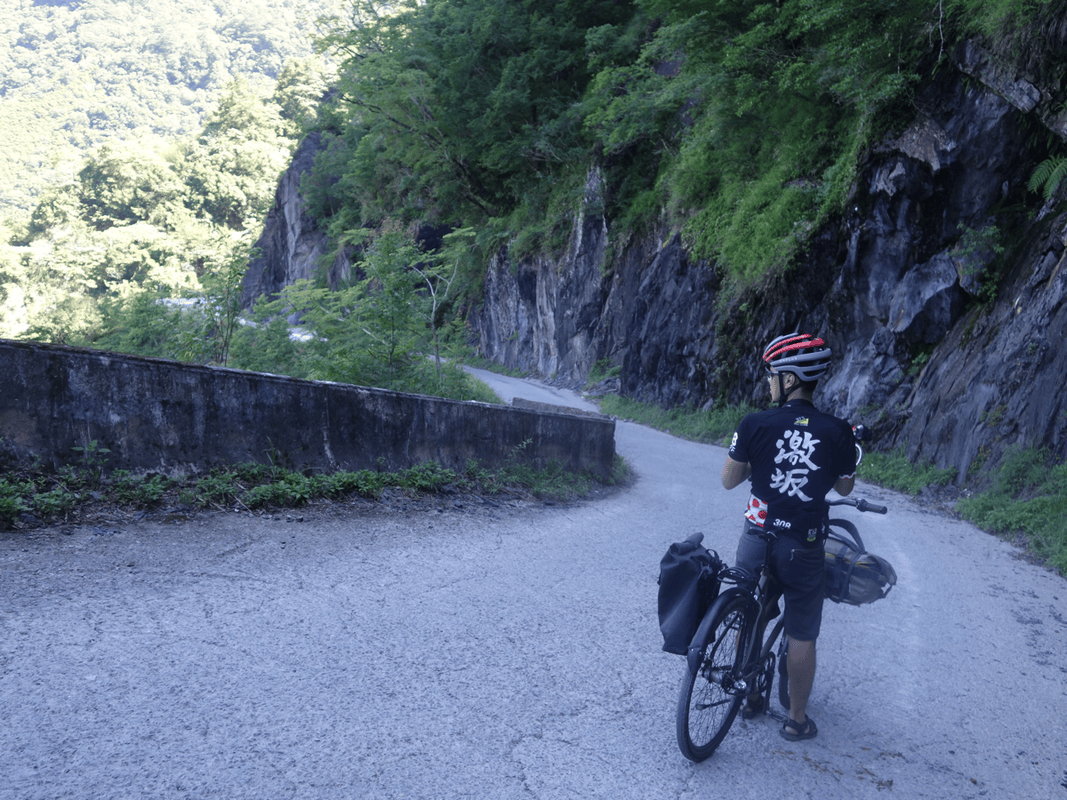
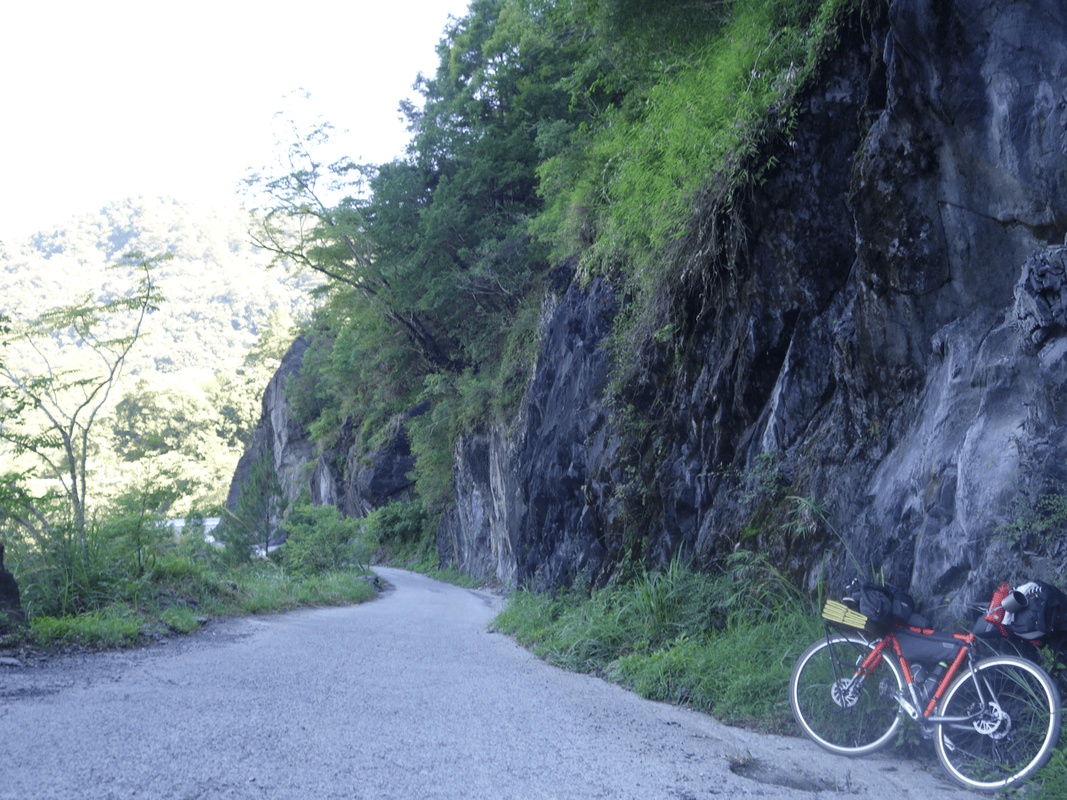
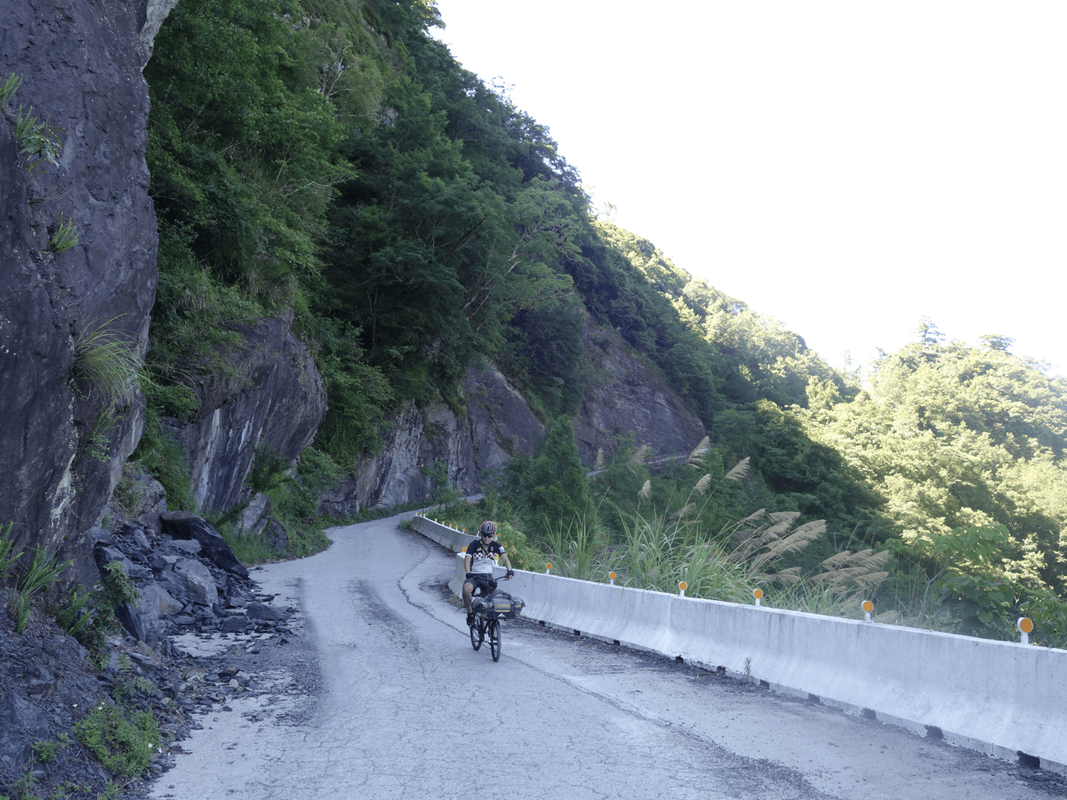
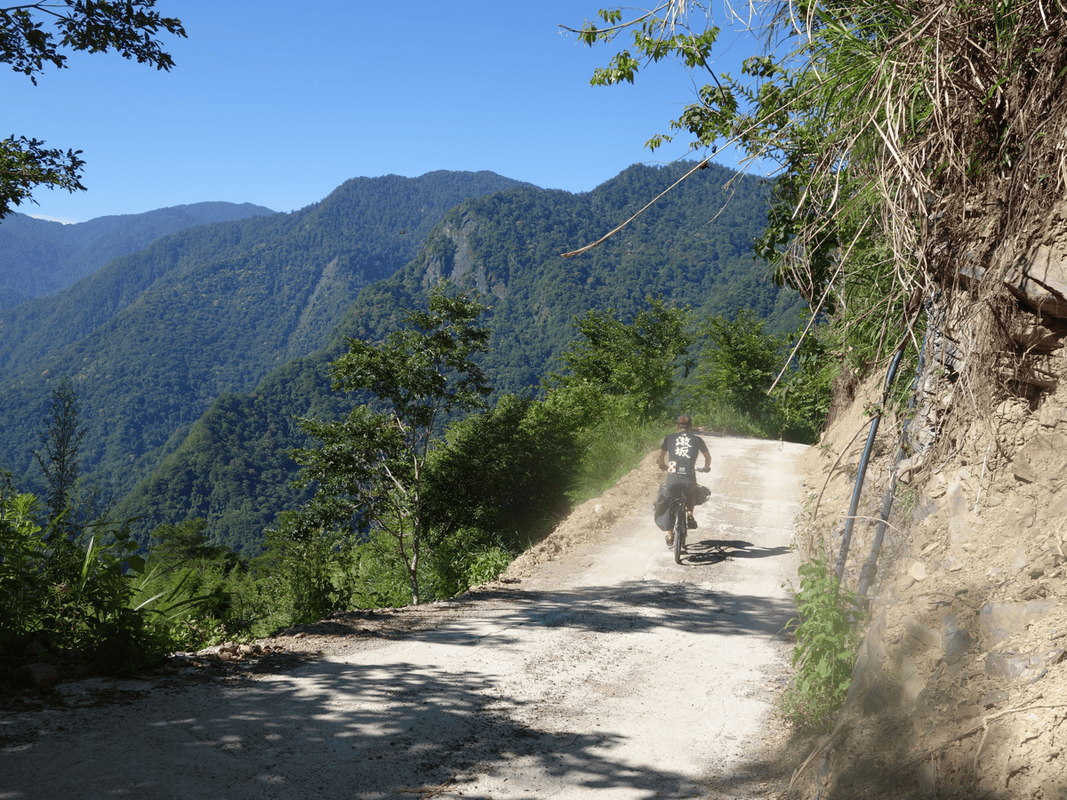
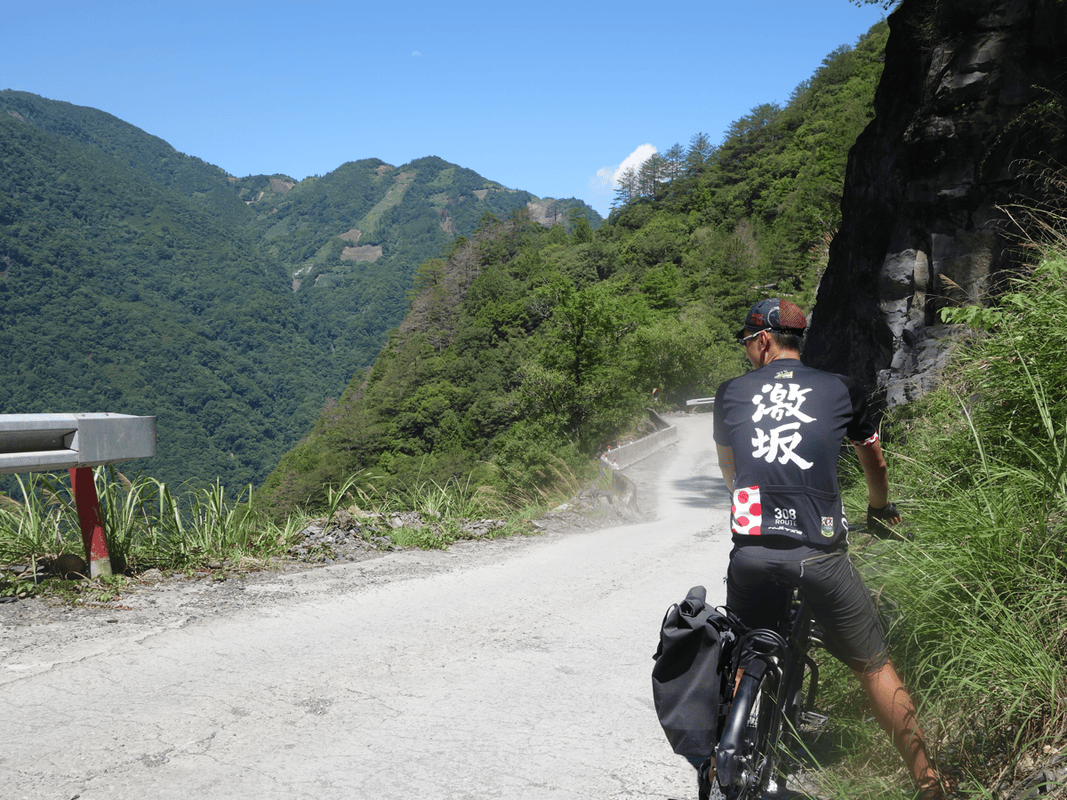
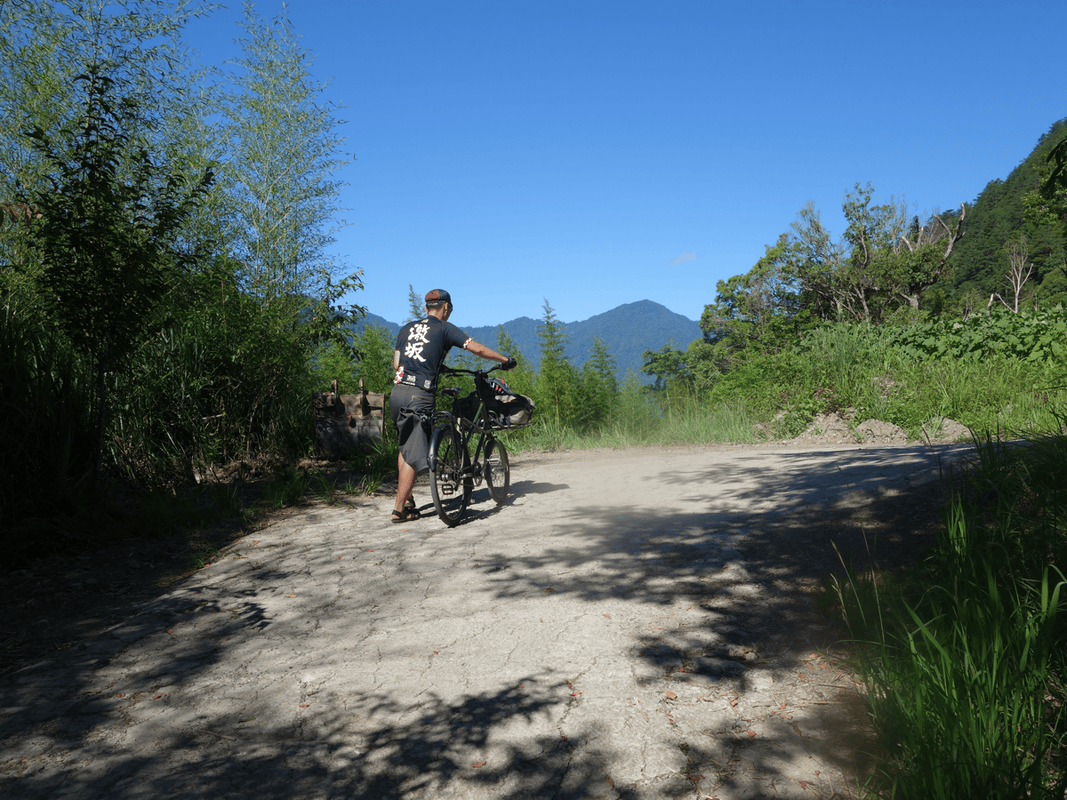
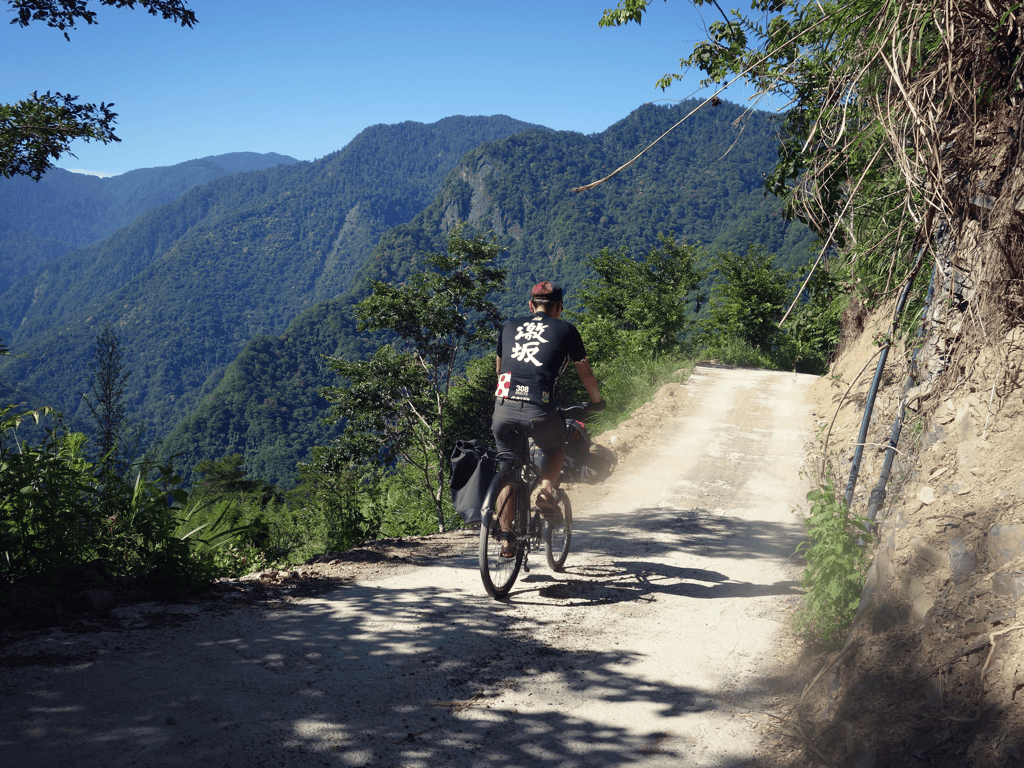
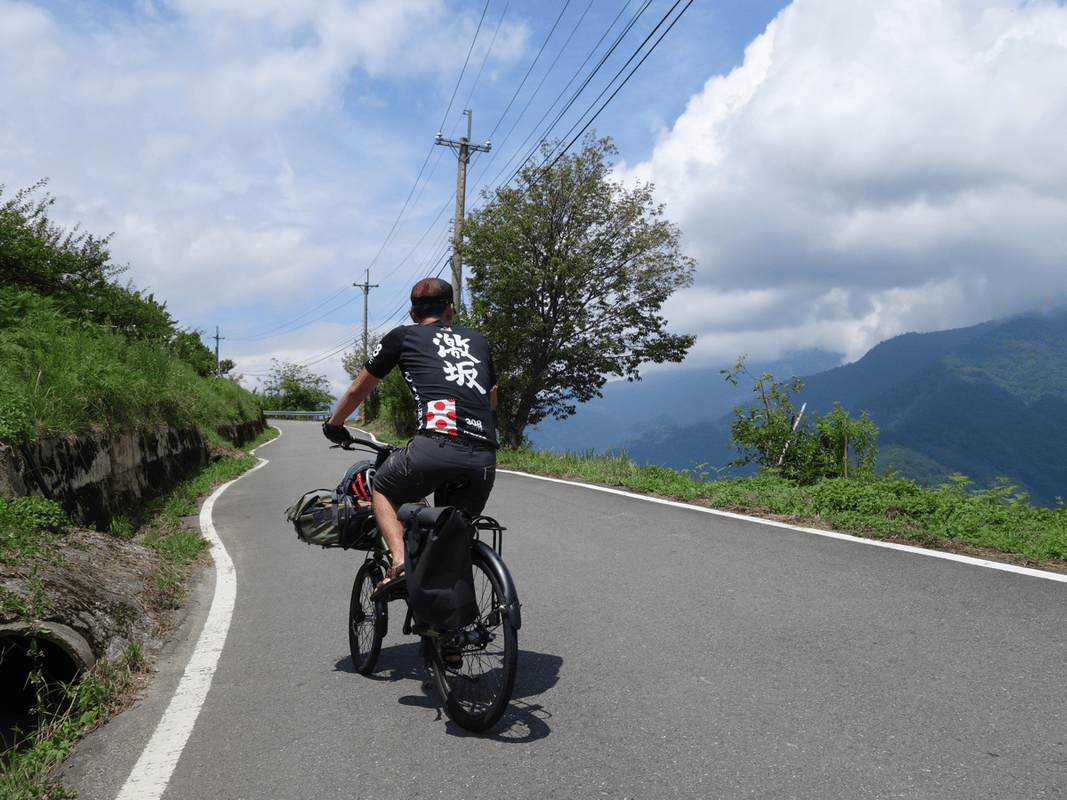
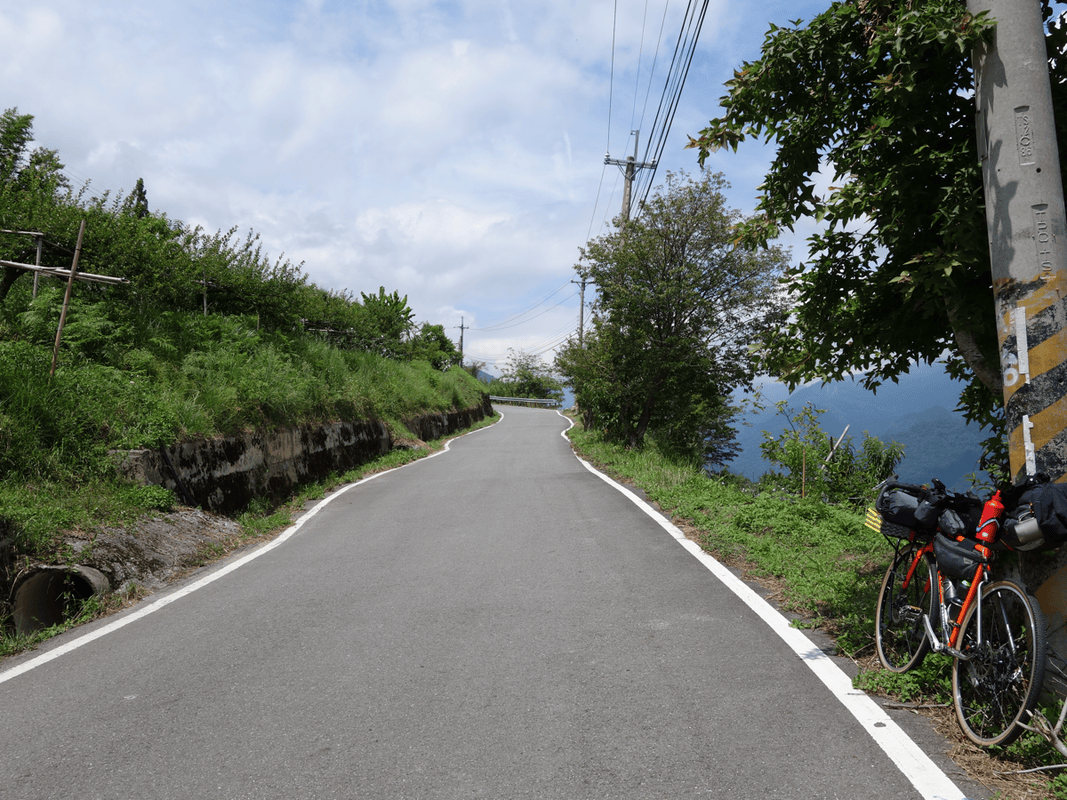
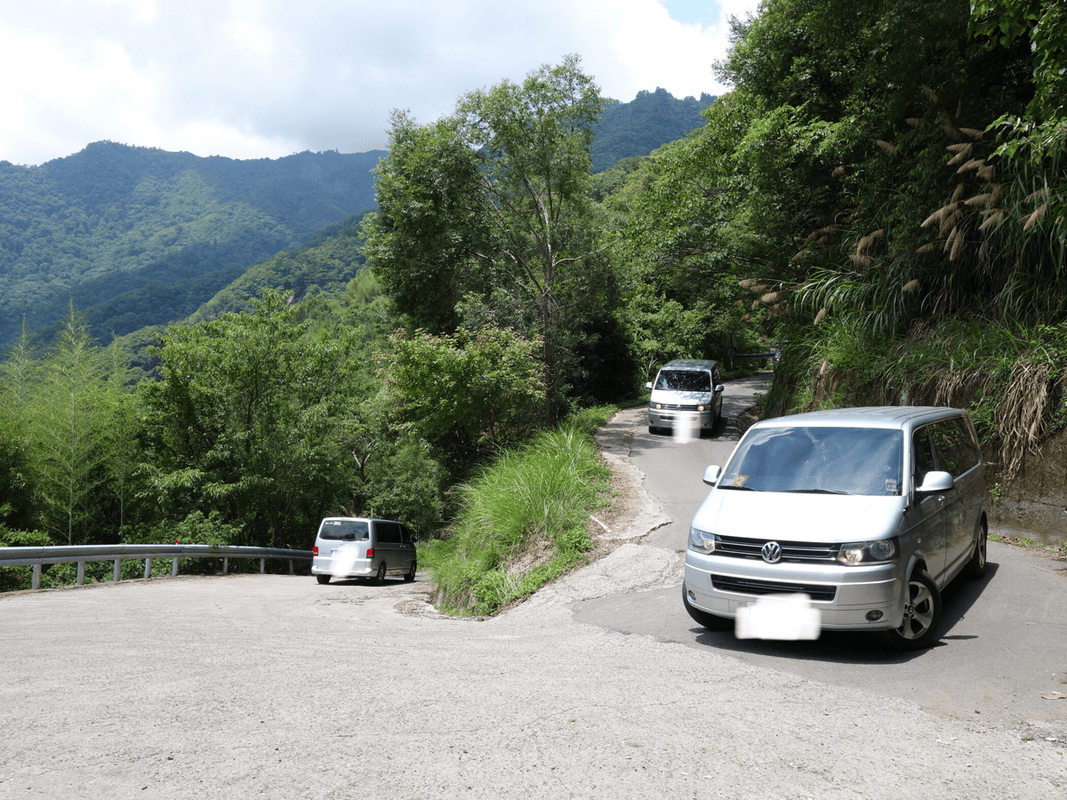
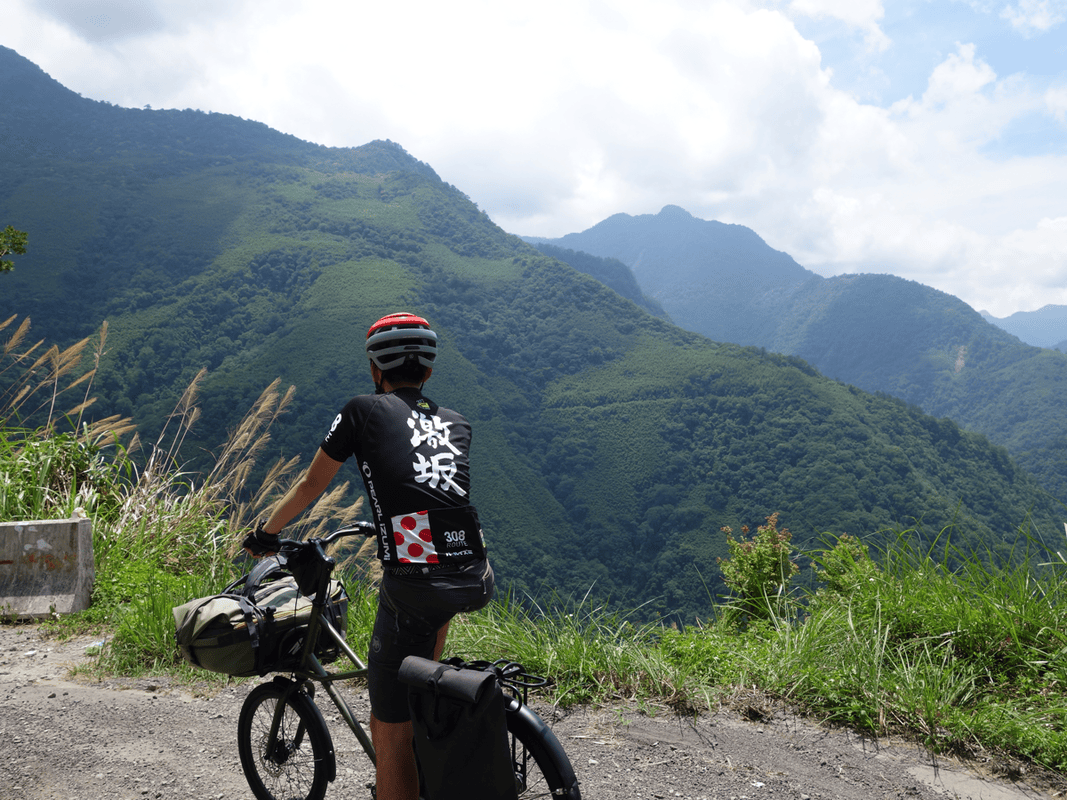
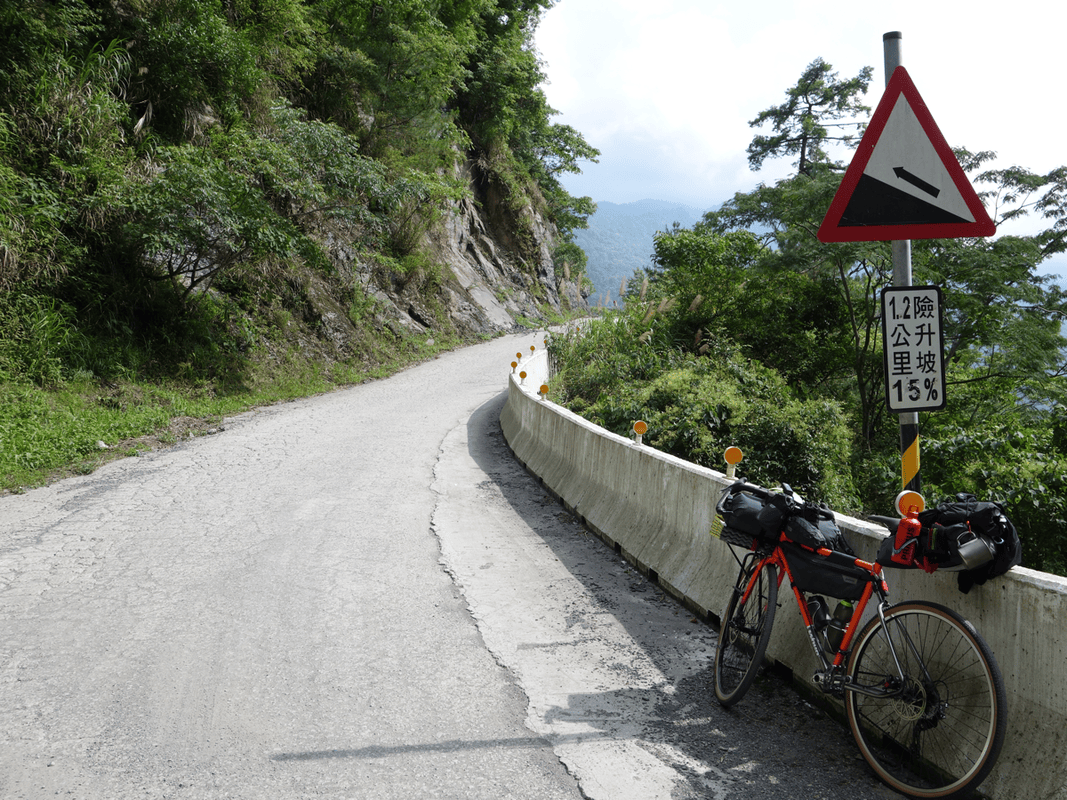
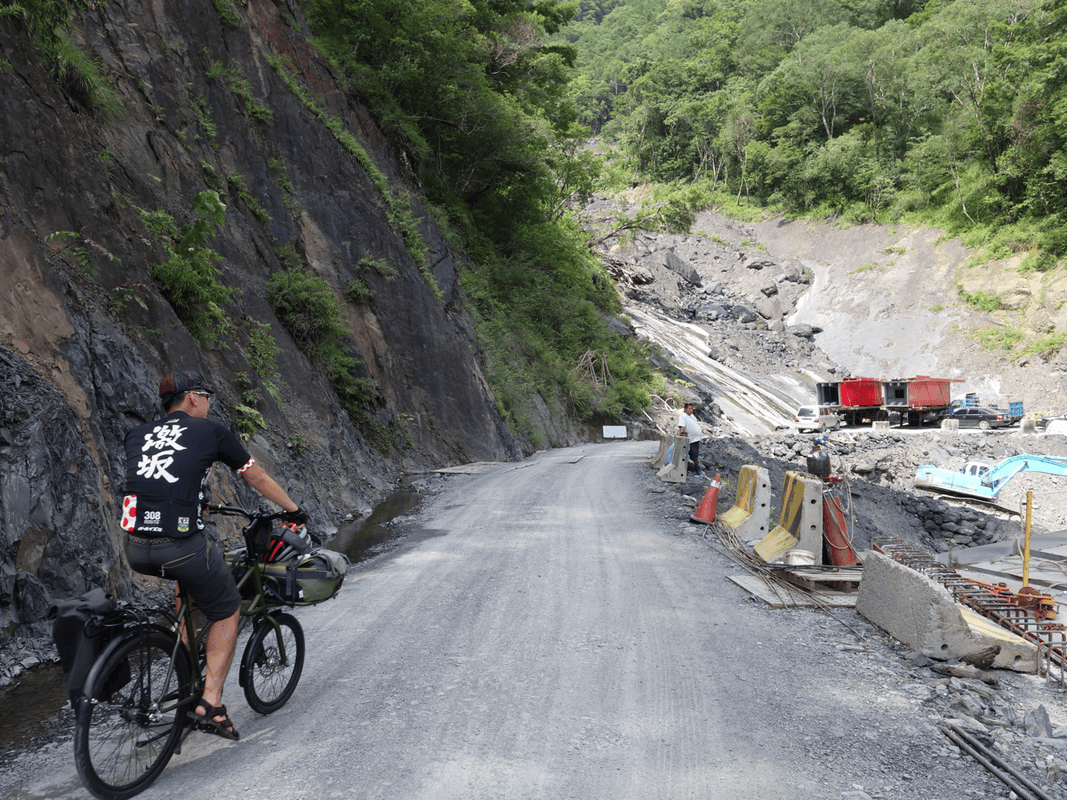
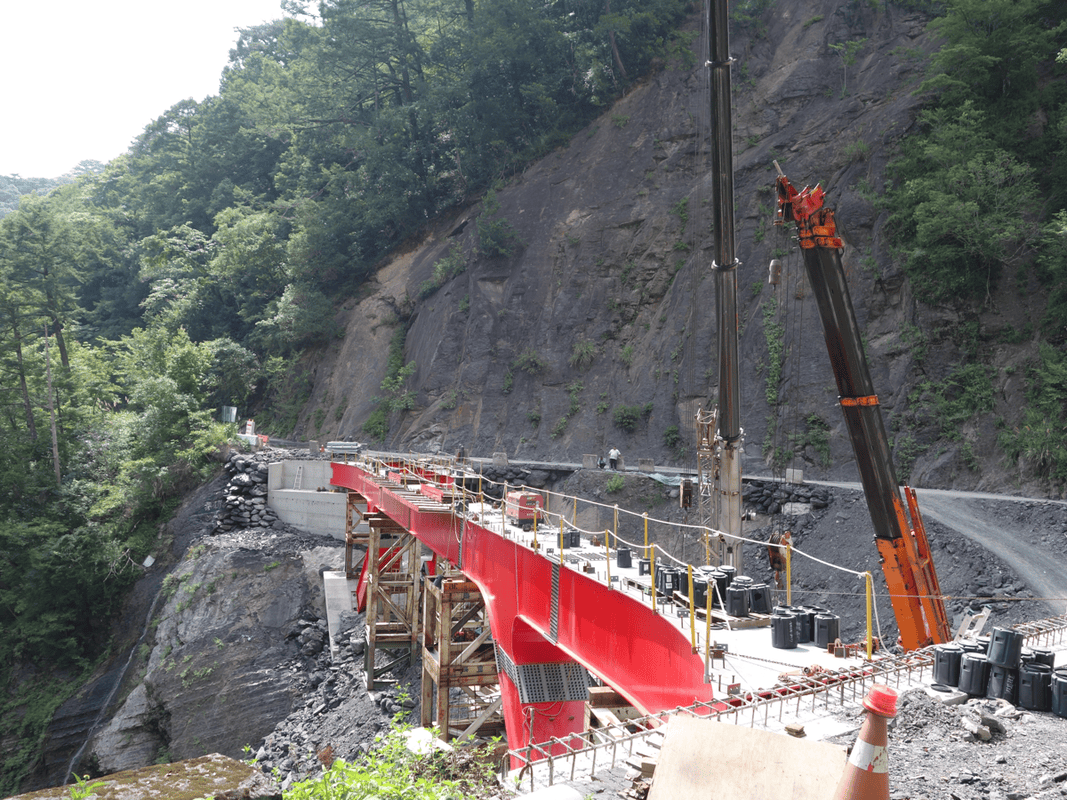
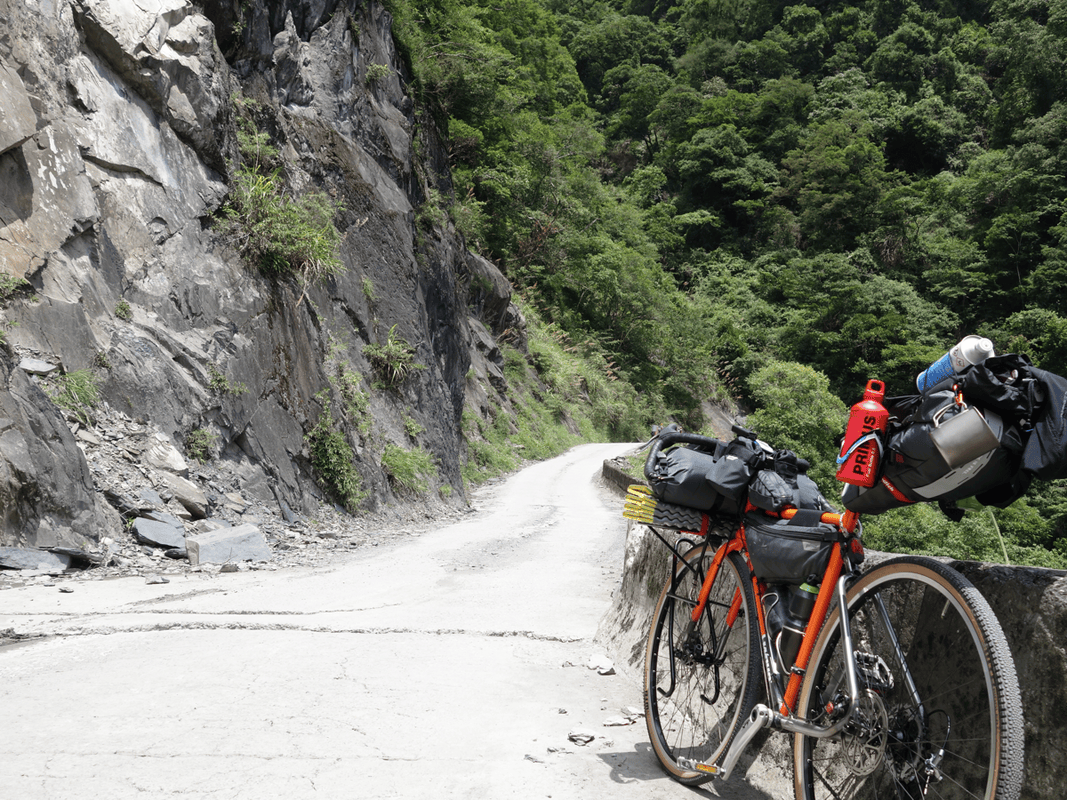
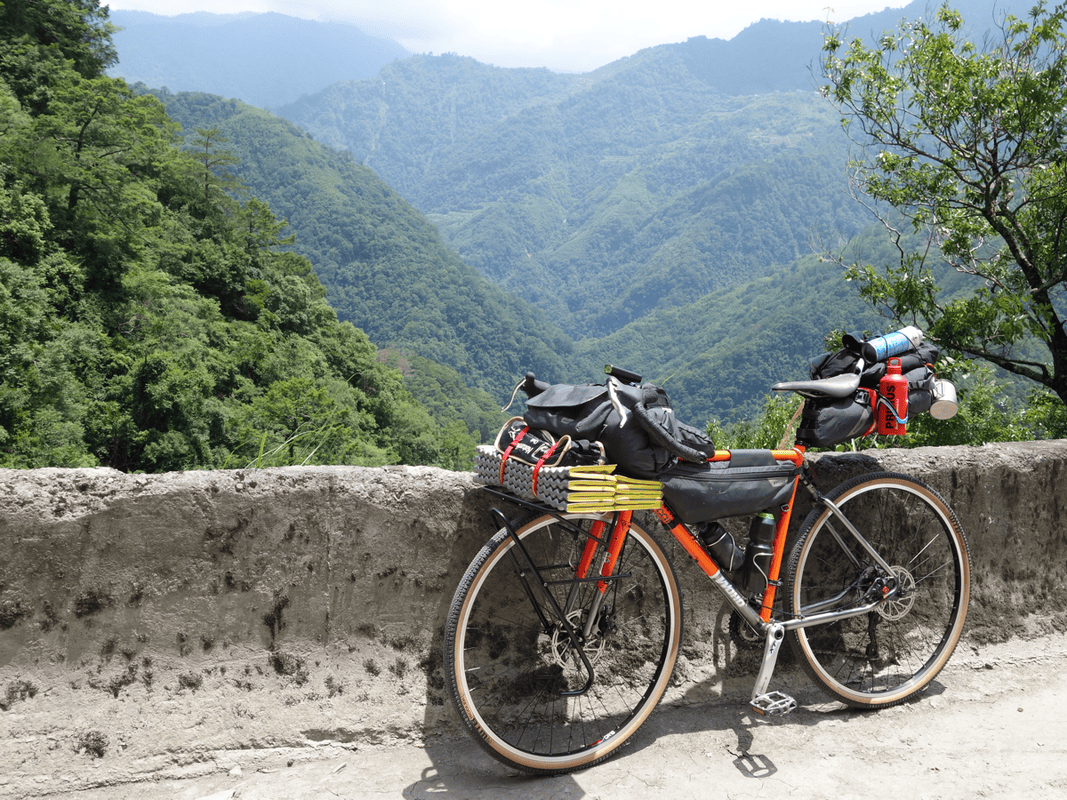
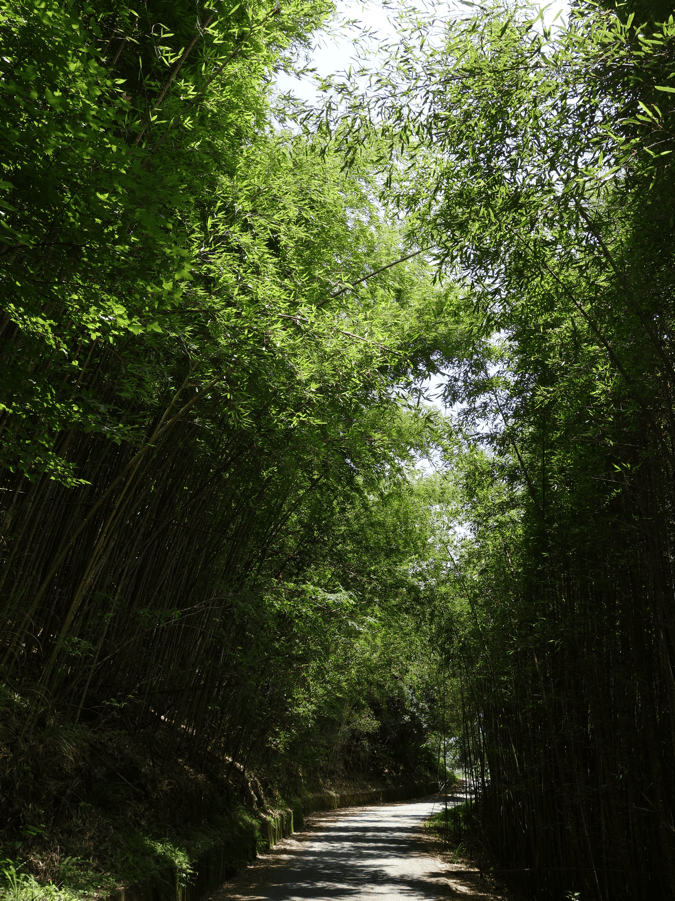
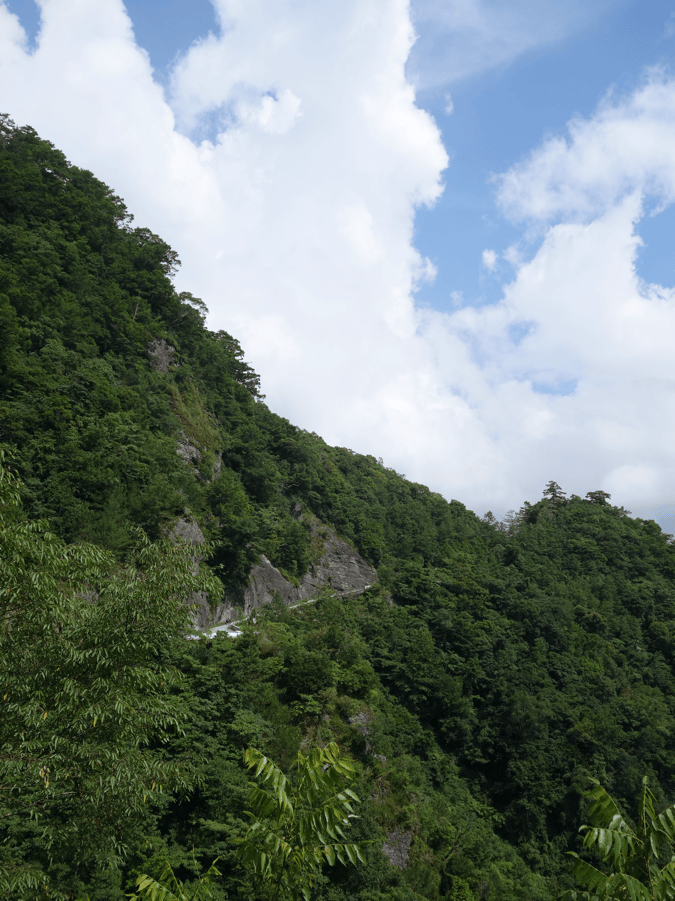
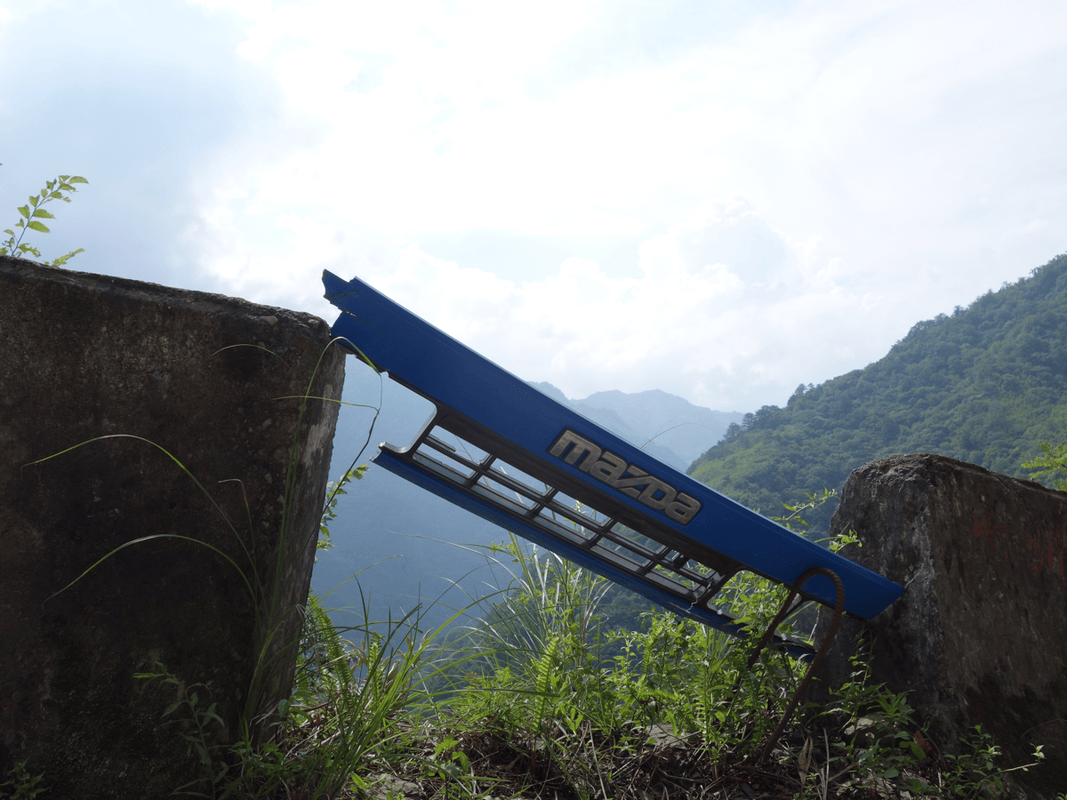
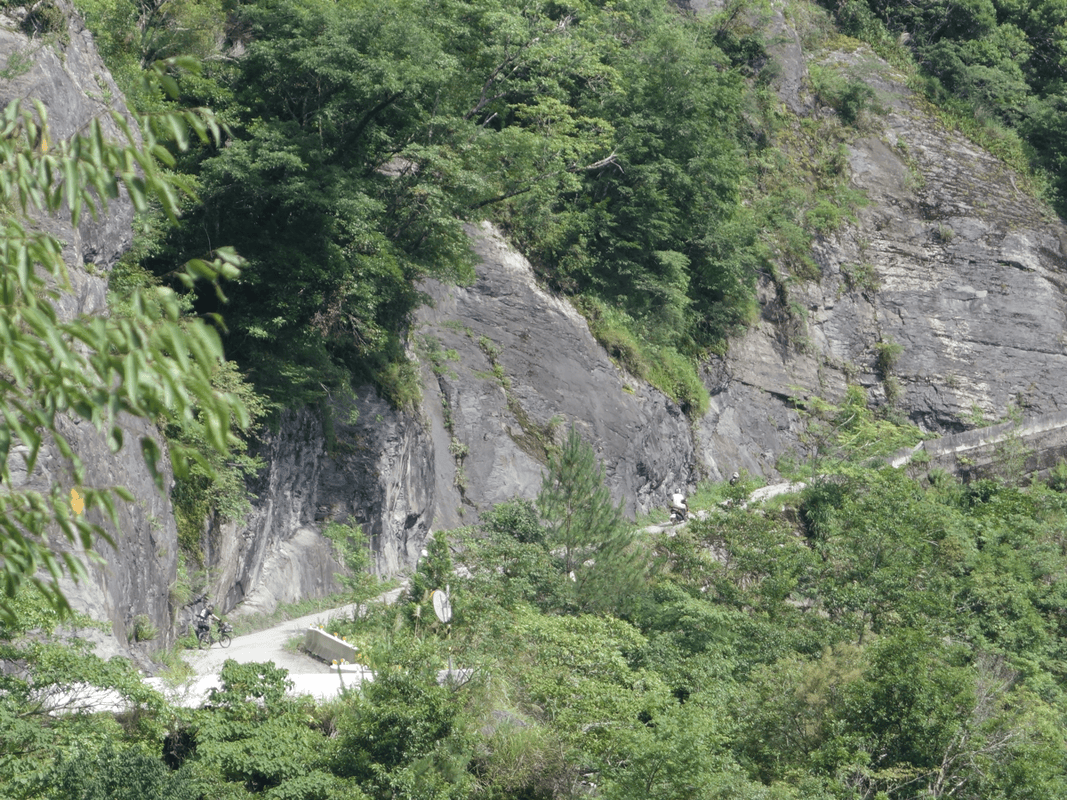
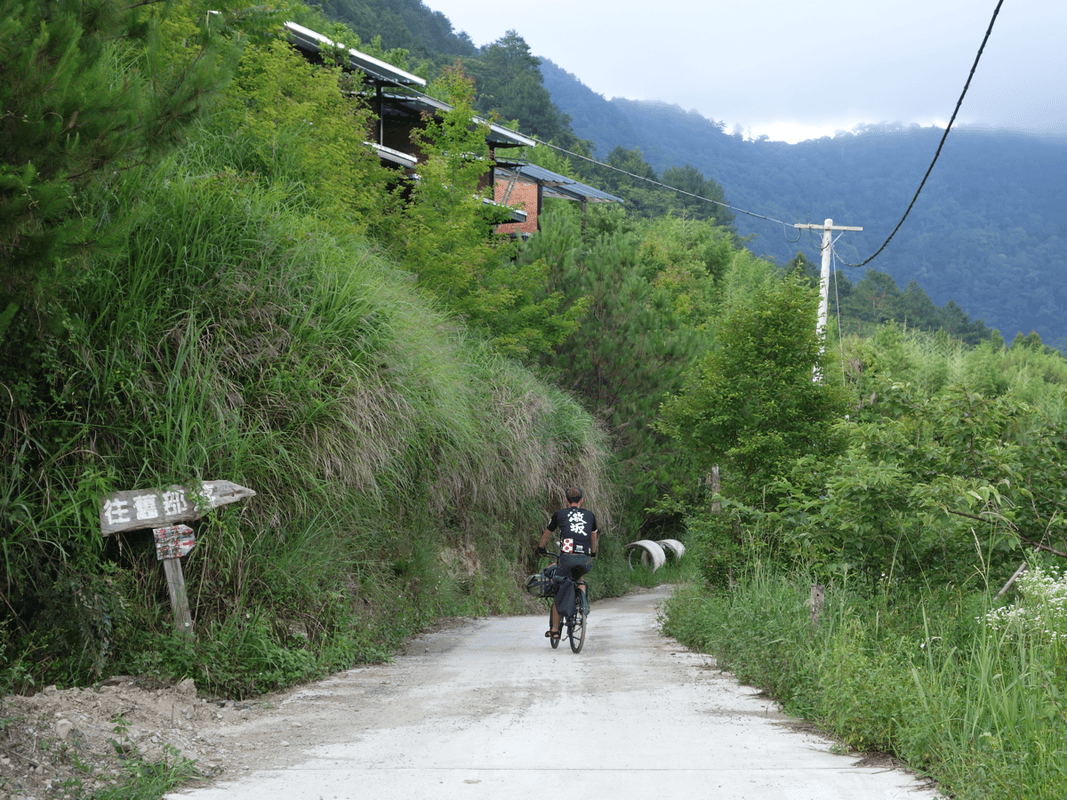
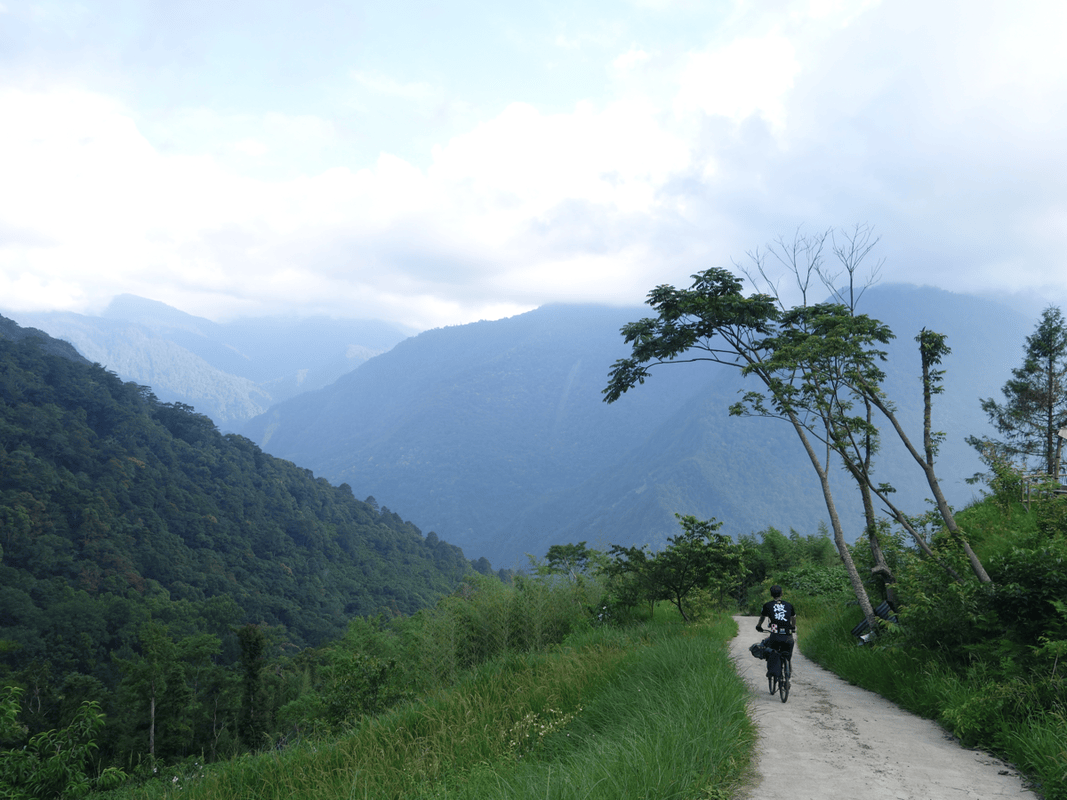
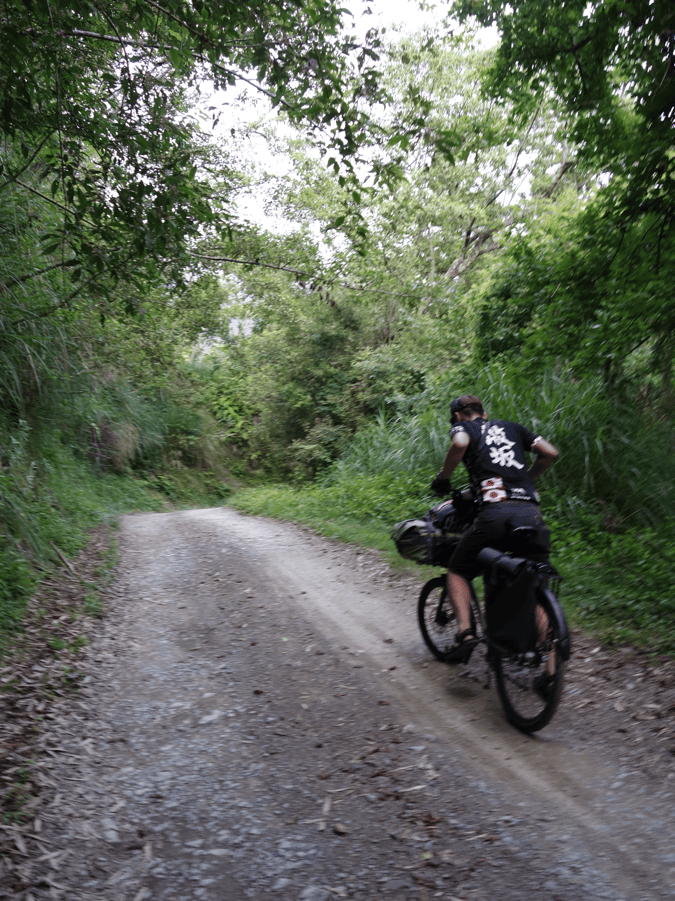
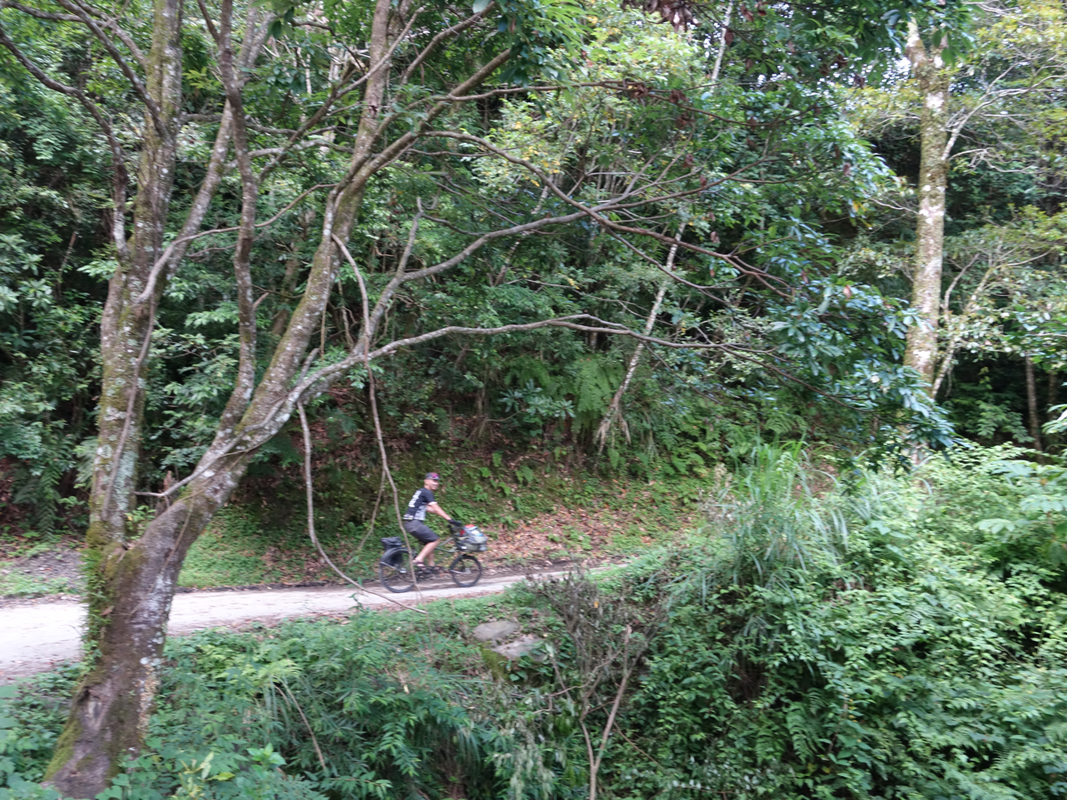
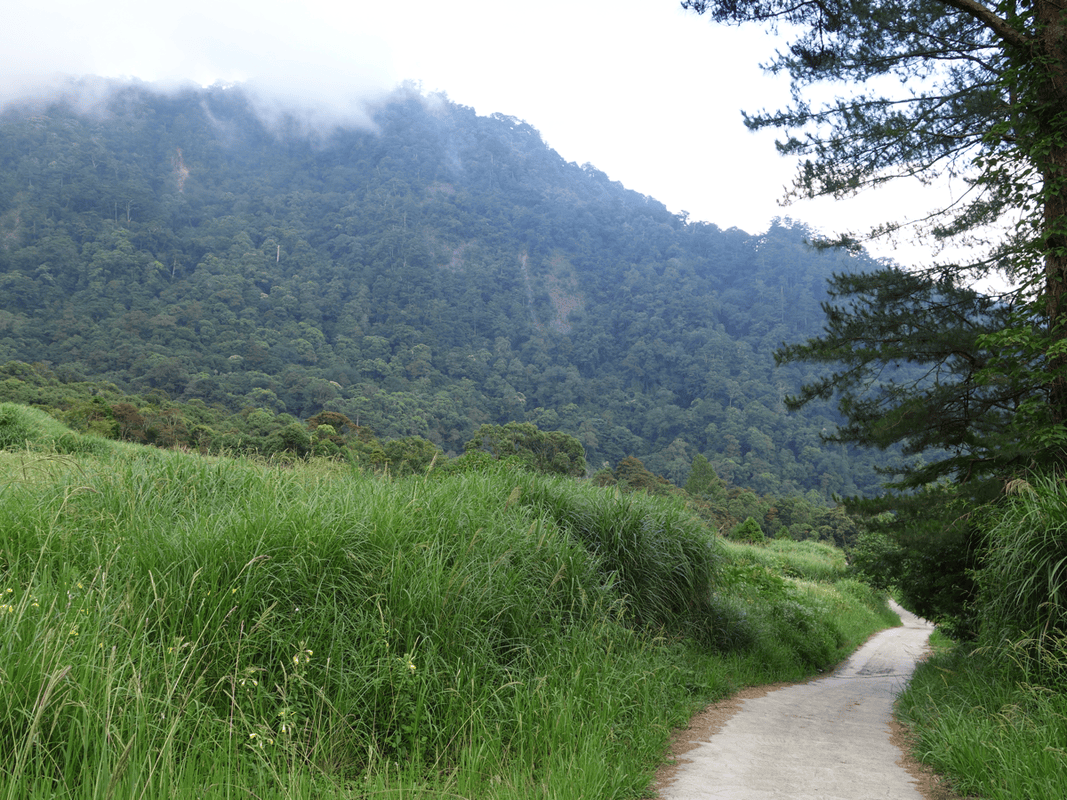
Even when I visited, getting there was not easy. Beyond the distance, the road itself demanded attention: narrow bends, steep gradients and gravel.
I would not have felt comfortable driving it. Yet those same qualities made it an appealing challenge to certain cyclists. Apparently, I was one of them.
On an earlier trip, for reasons I could no longer quite explain, I had ridden a road bike there from Hsinchu with friends and stayed overnight.
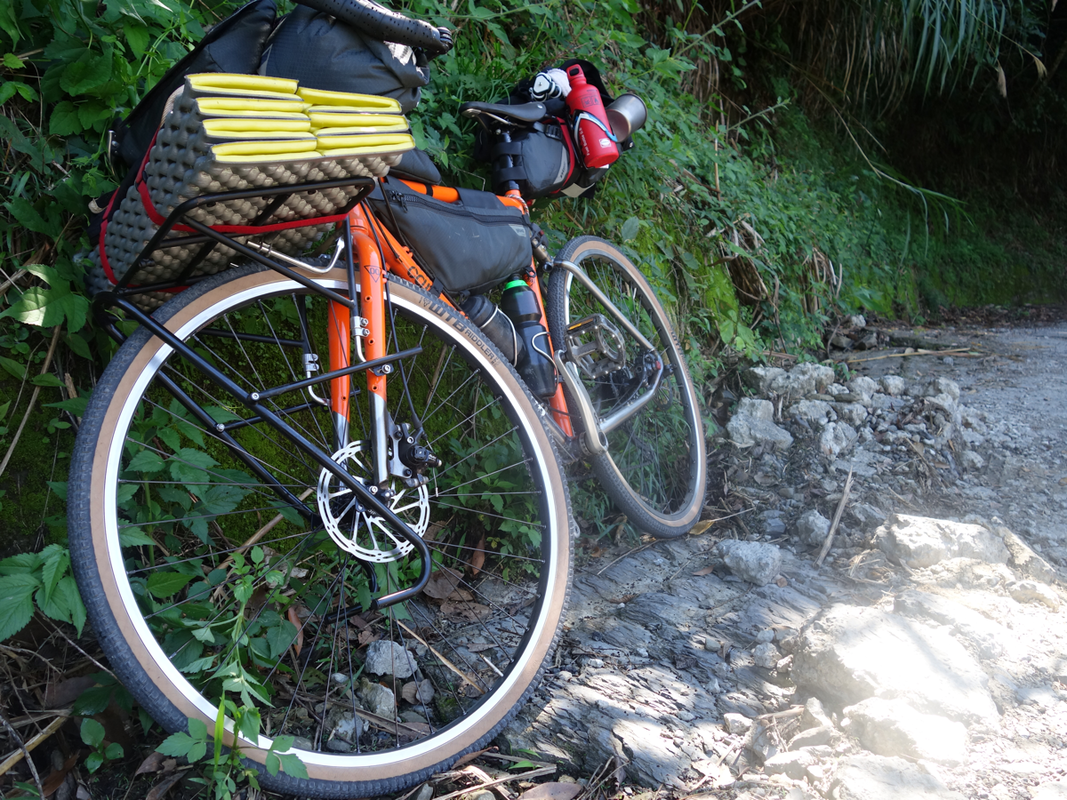
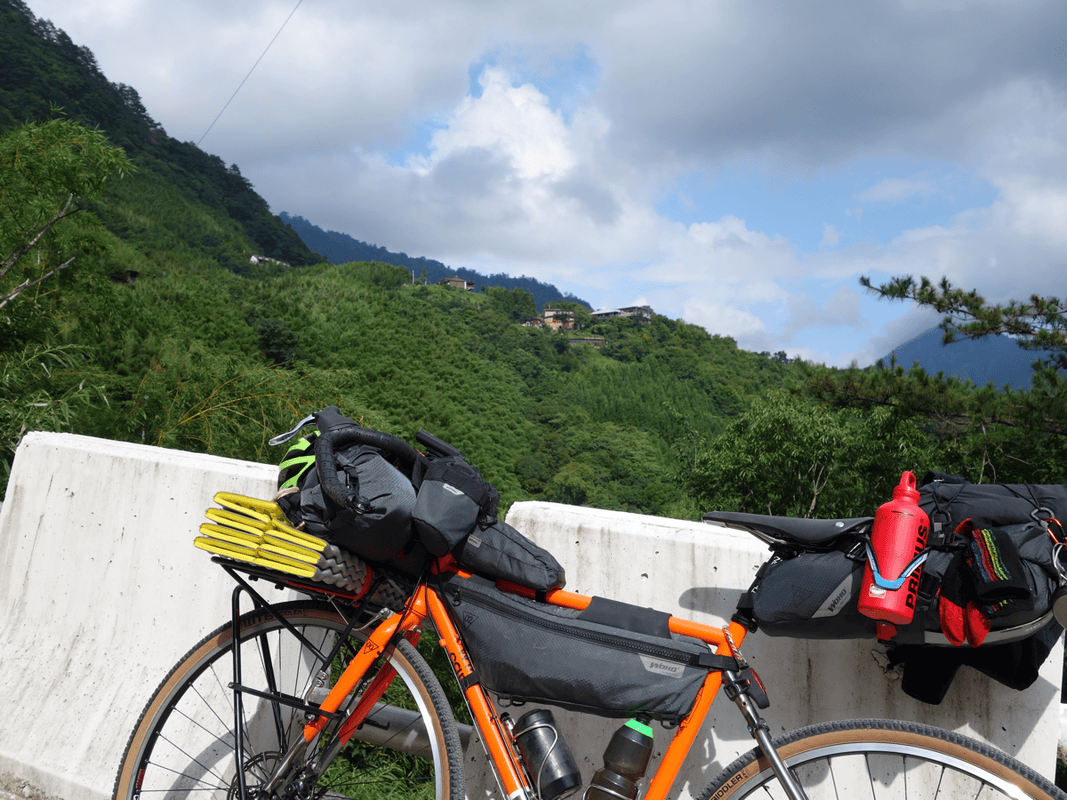
Now, preparing for my upcoming bikepacking journey in Japan, I decided to return with my touring bike.
An Unfamiliar Campsite beyond the Village
Bikepacking, for me, meant camping.
Besides the accommodation most visitors knew in Smangus, I had heard about an off-grid campsite at a place described as the old village, farther beyond the settlement.
It sounded ideal for the kind of trip I enjoyed.
But I had only heard another traveler describe it. I had never been there and had no clear idea what lay beyond Smangus or what the campsite would look like.
That uncertainty was part of the appeal.
Starting from Taigang
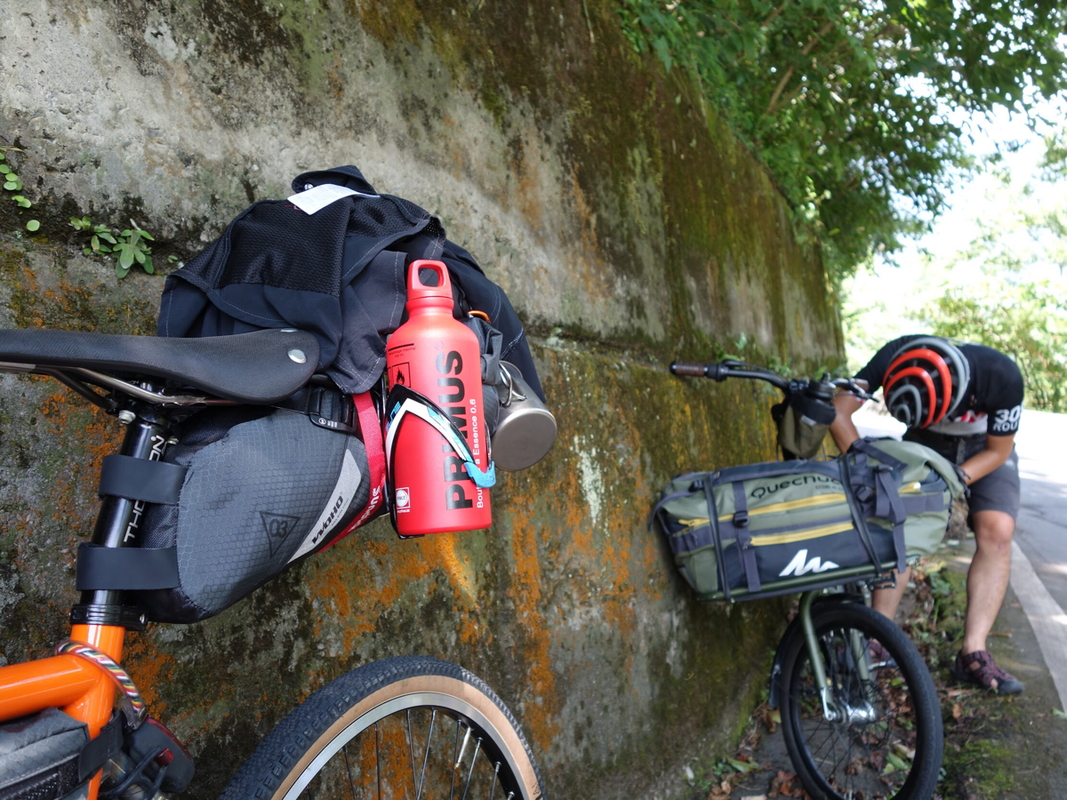
I invited my friend A-Zhe, whom I thought of as a wilderness master chef. We drove from Taipei to Taigang and began riding there.
I would have liked to start farther down in Hsinchu, but the touring bike and luggage made the shorter approach seem wiser. Even on a road bike, the earlier trip had left me exhausted.
The climb from Taigang toward the Smangus road entrance was steep, but manageable at a steady pace. Compared with what followed, it was merely an appetizer.
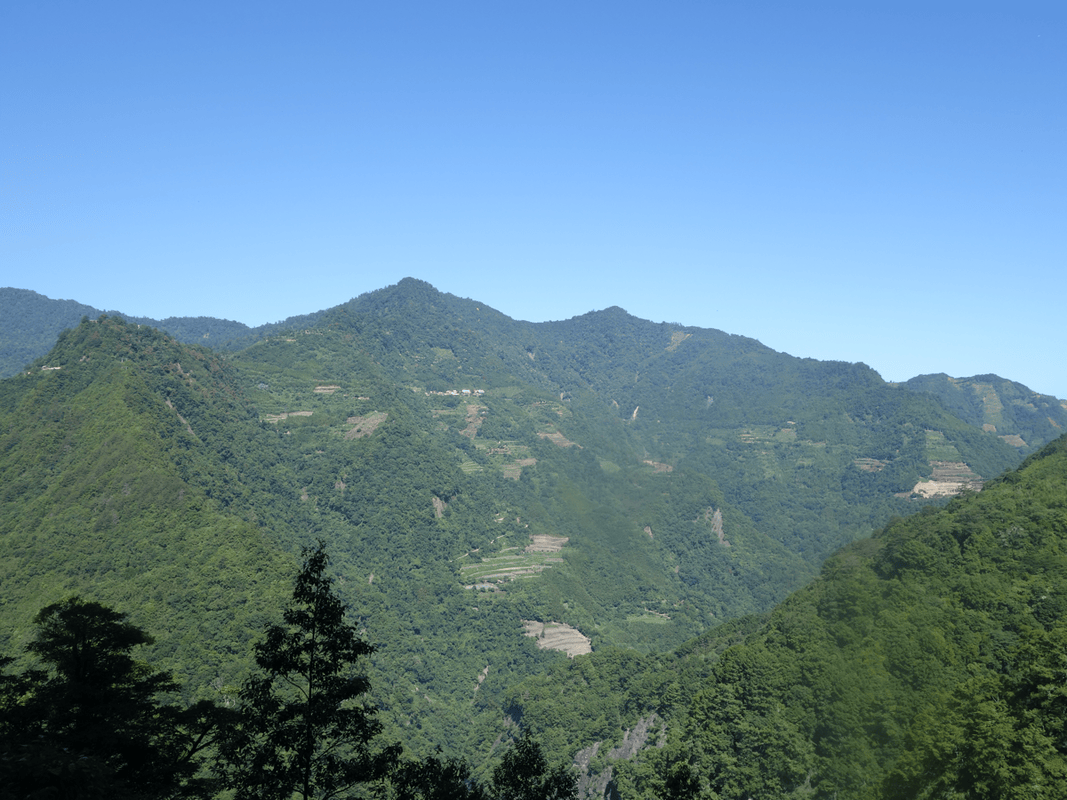
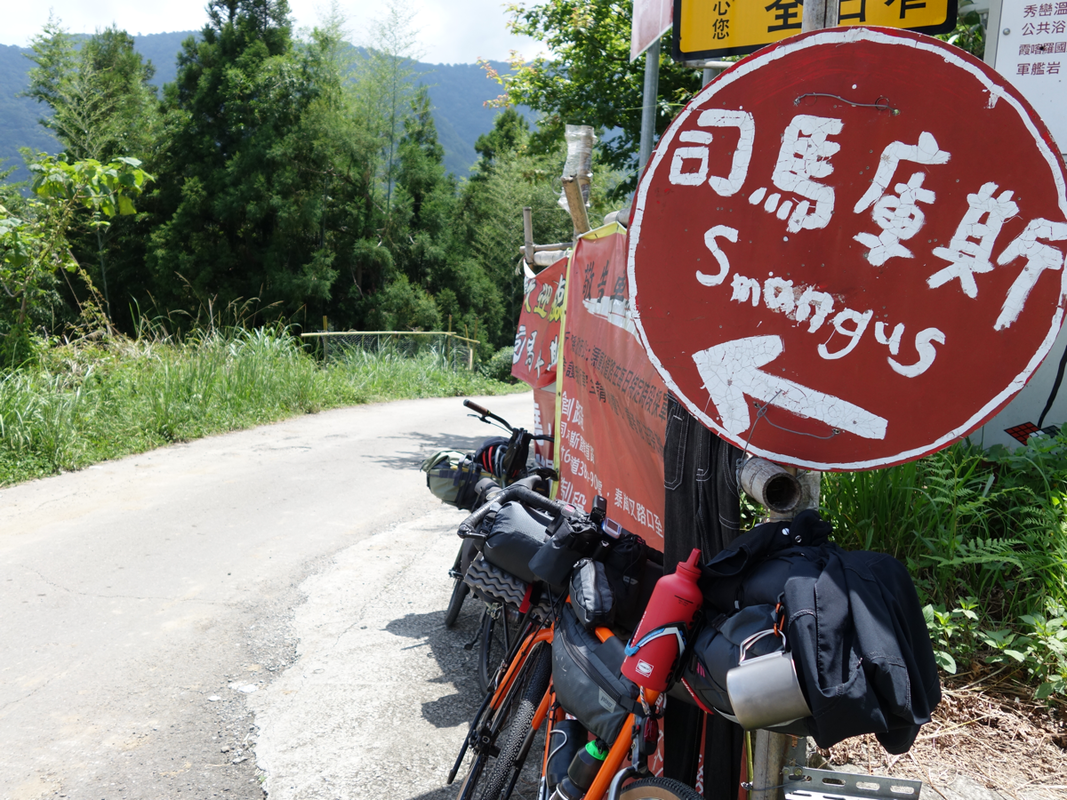
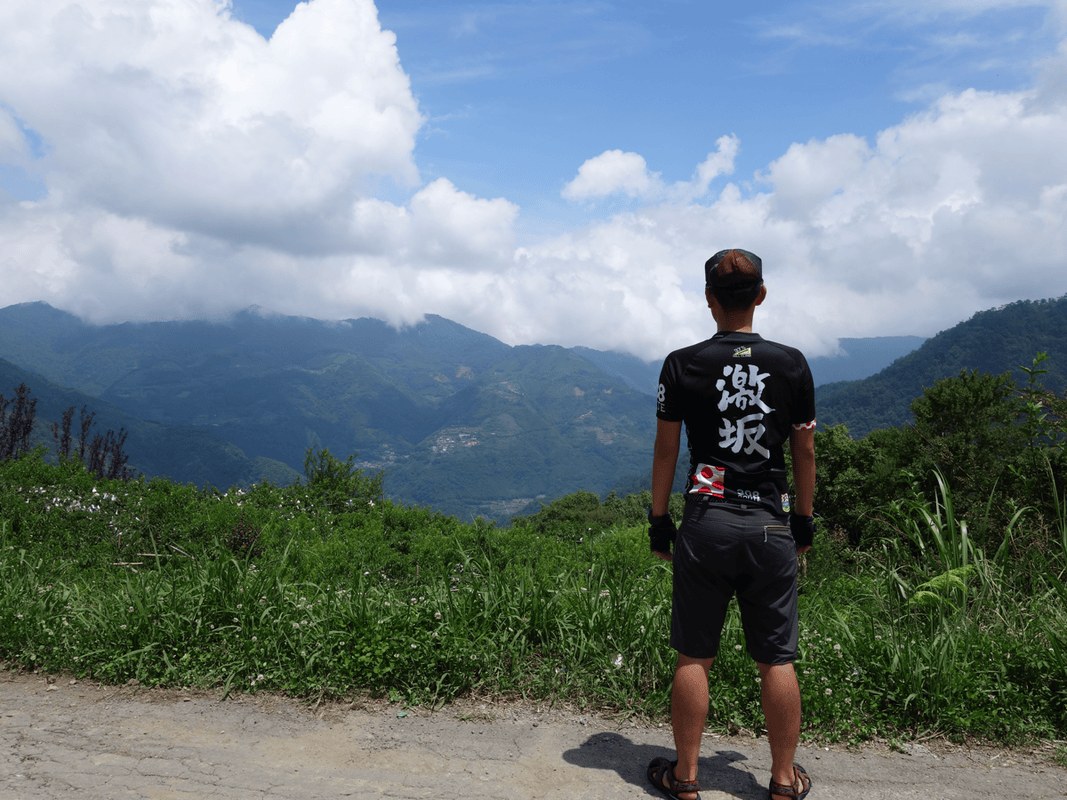
As we gained height, Yulao appeared across the valley. Then we reached the gateway to the Smangus road.
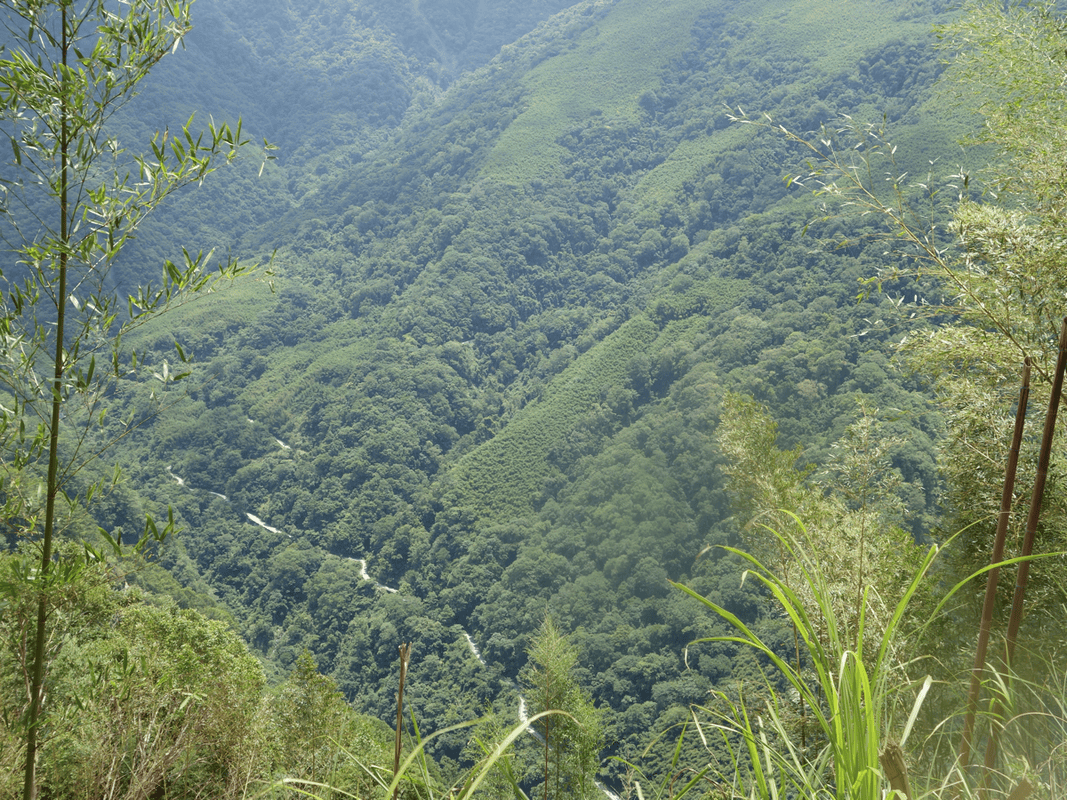
I remembered the first four kilometers as a steep concrete descent, followed by roughly twelve kilometers of climbing. On my previous visit, those sixteen kilometers had taken four hours.
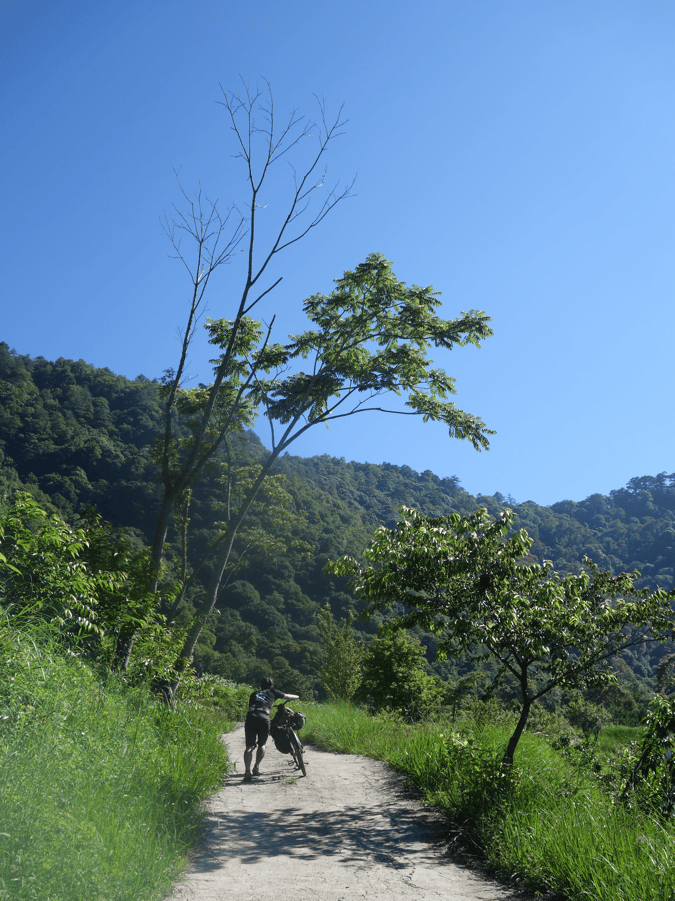
What did that tell me? That I had spent a great deal of time pushing.
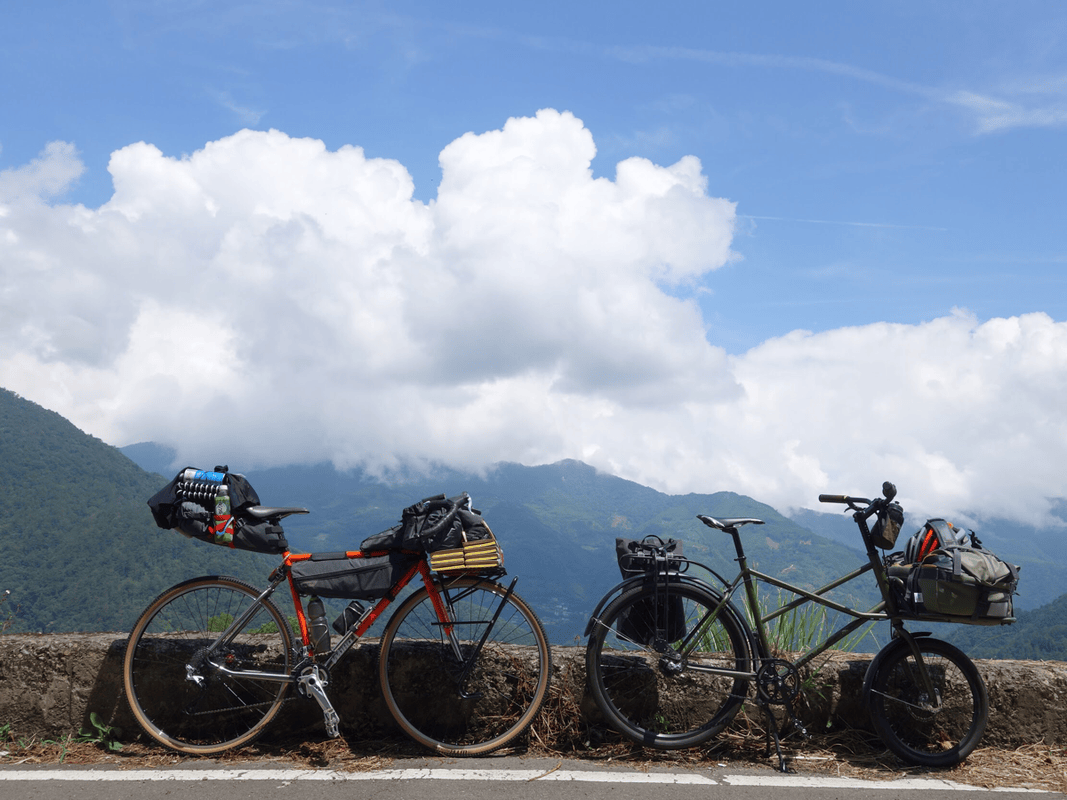
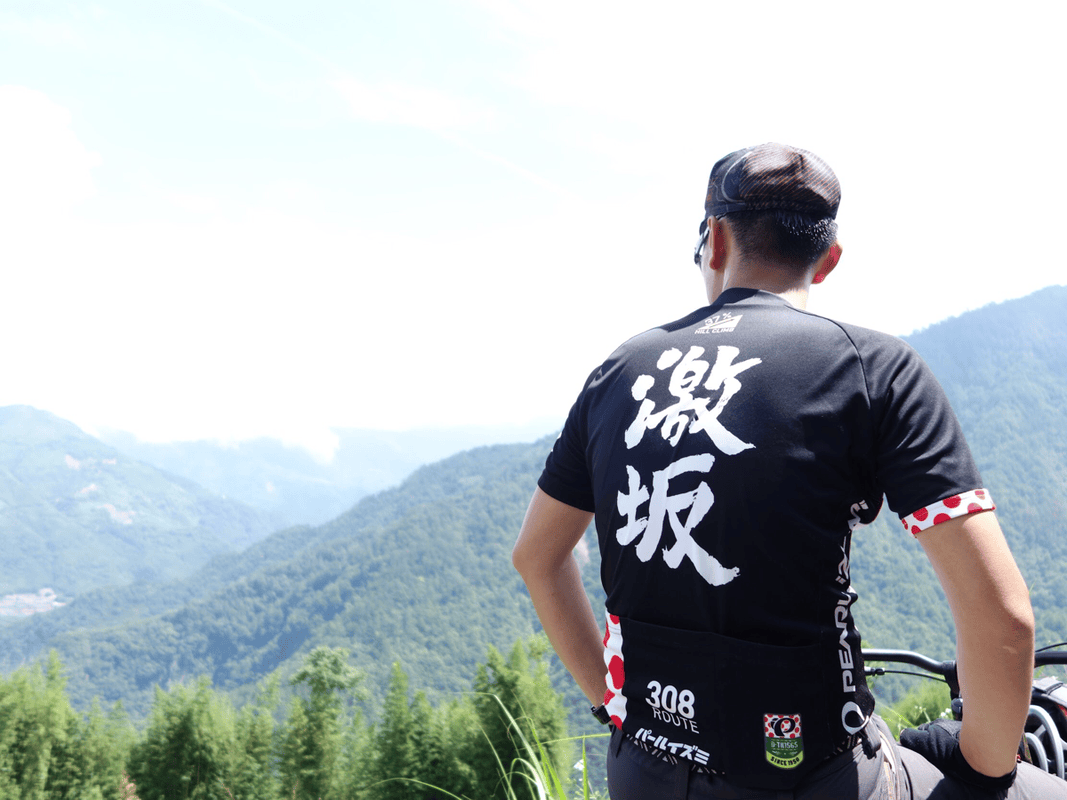
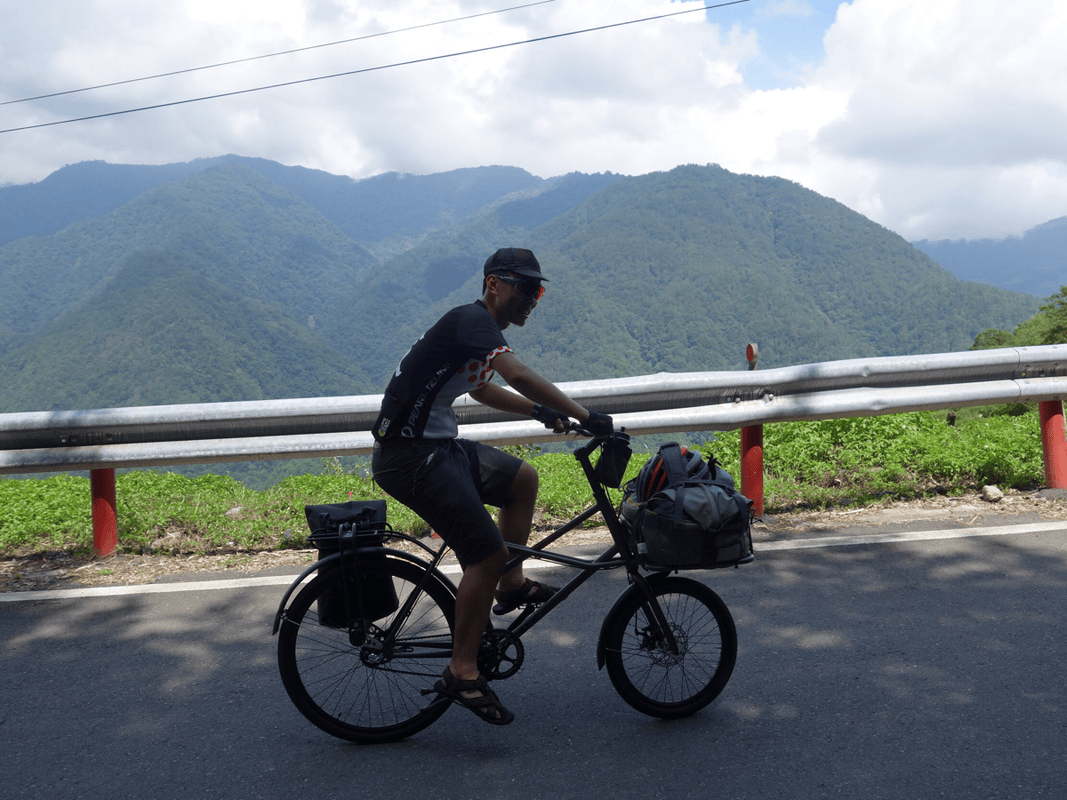
The Temptation at the Bridge
My disc brakes made the opening descent feel manageable. A-Zhe’s different braking setup made those four kilometers more of a struggle.
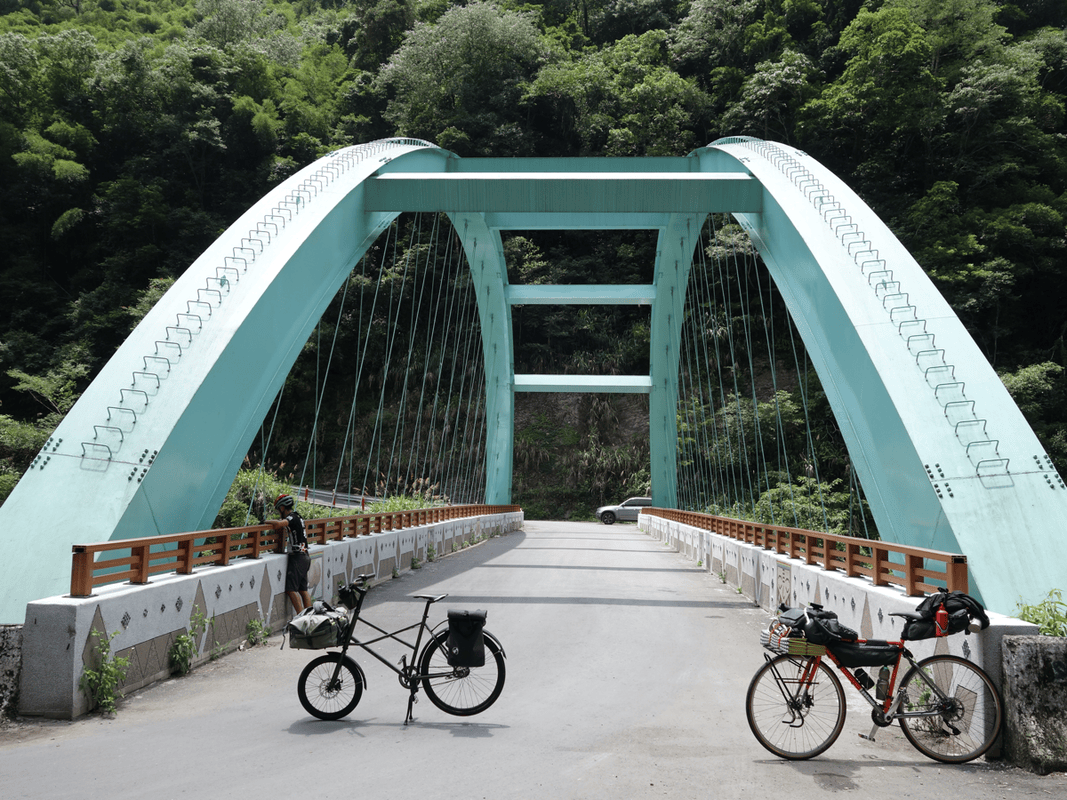
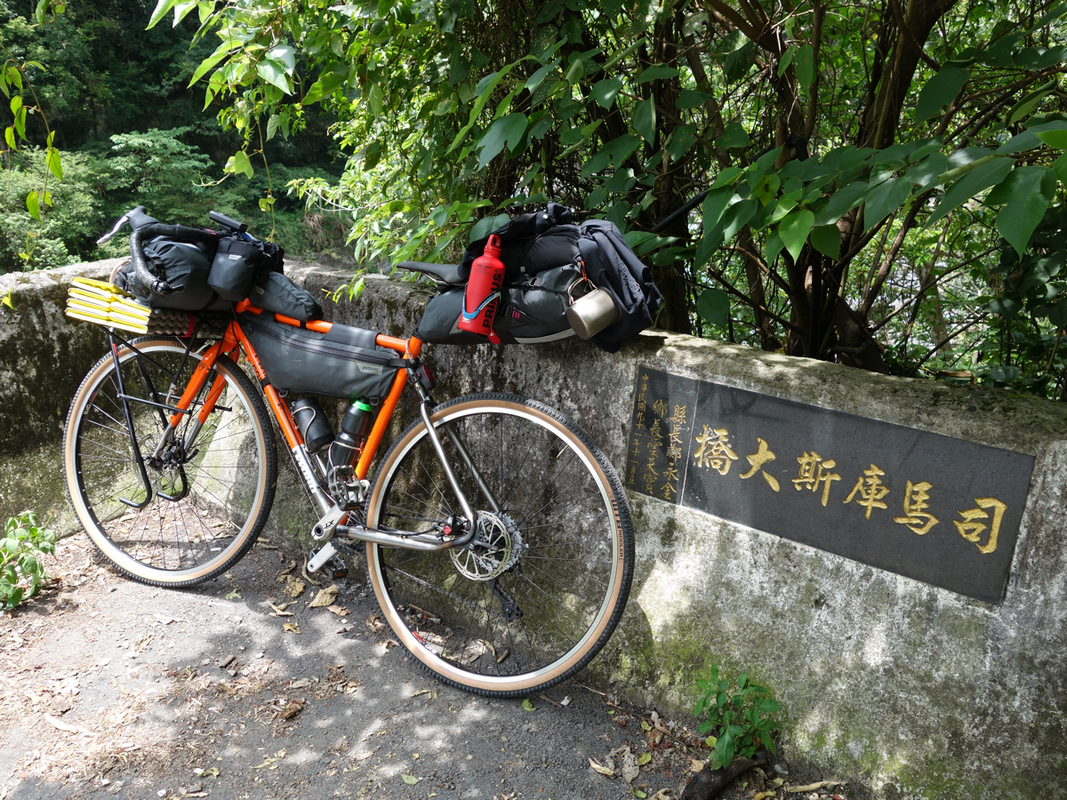
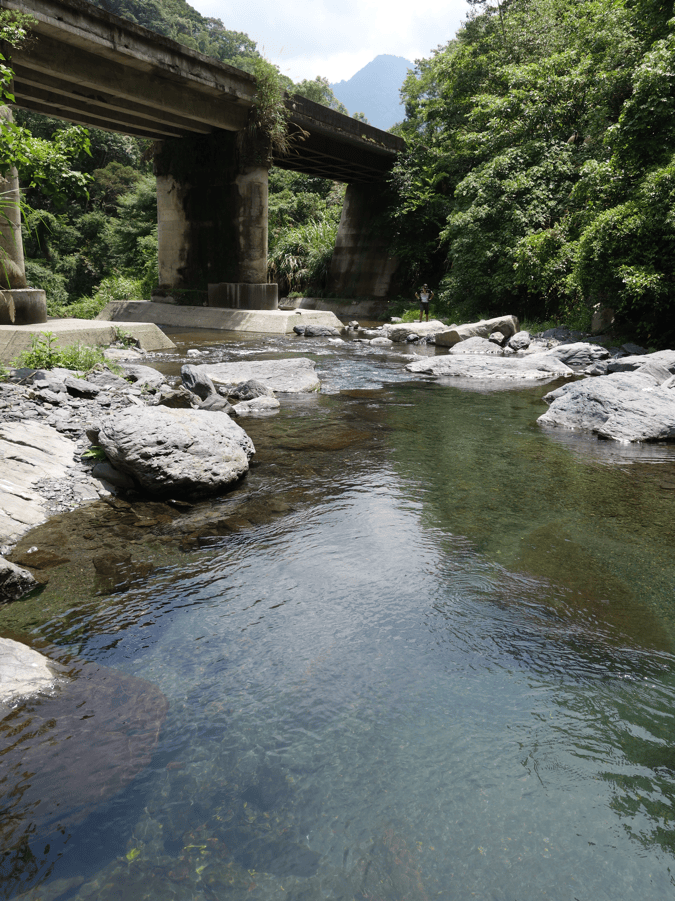
At Smangus Bridge, we met our first real test.
It was not a test of strength. It was a test of resolve.
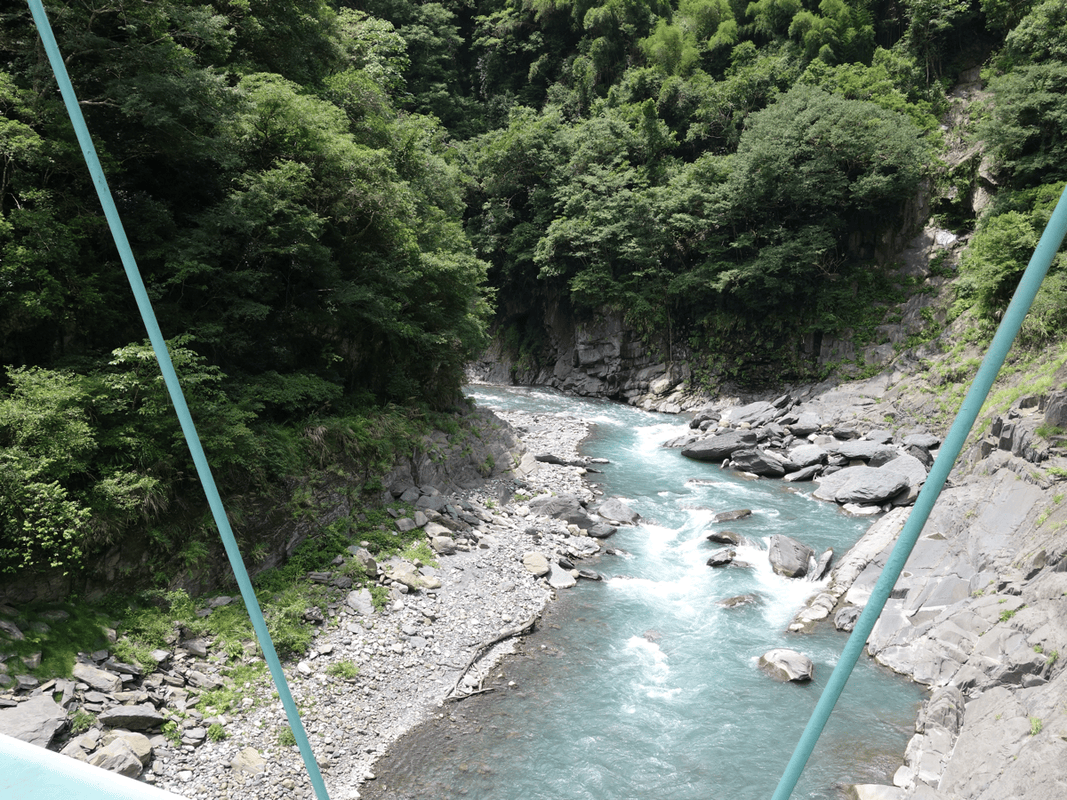
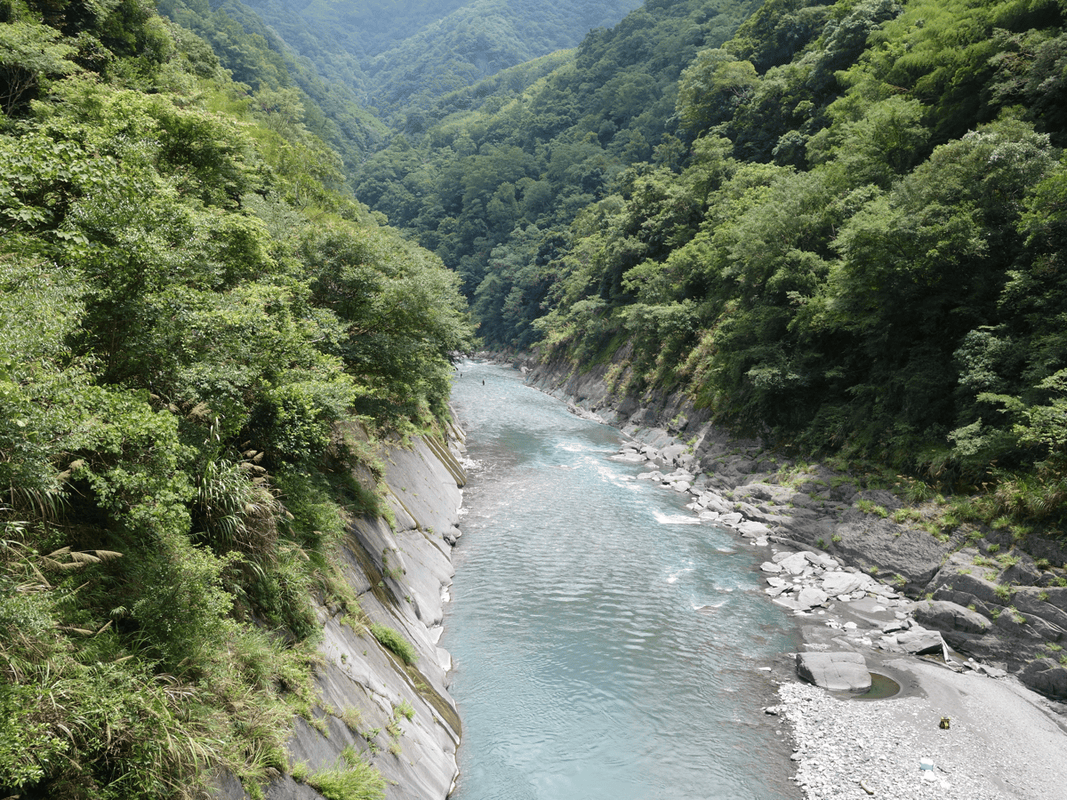
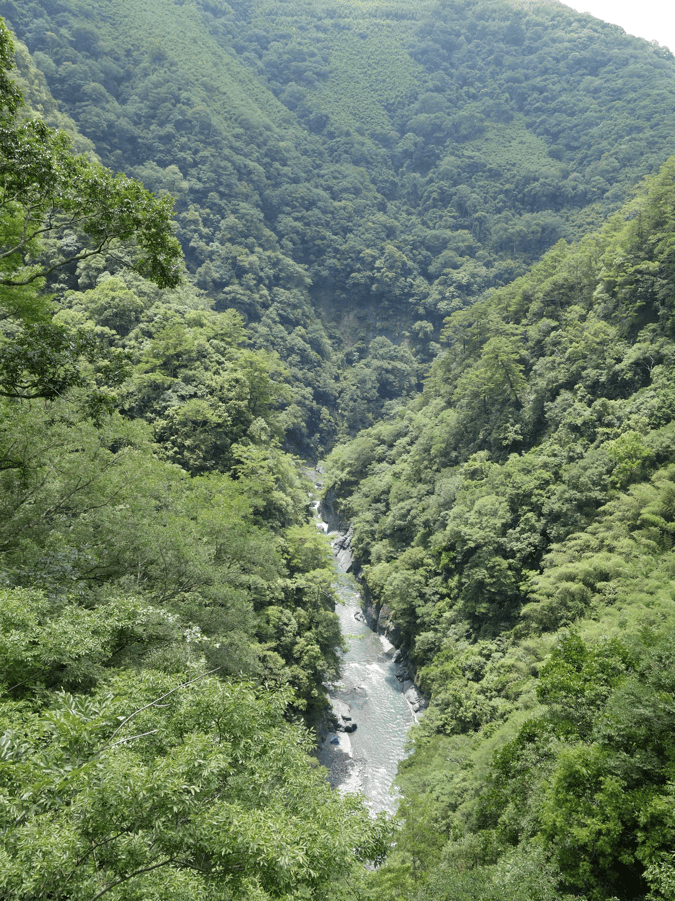
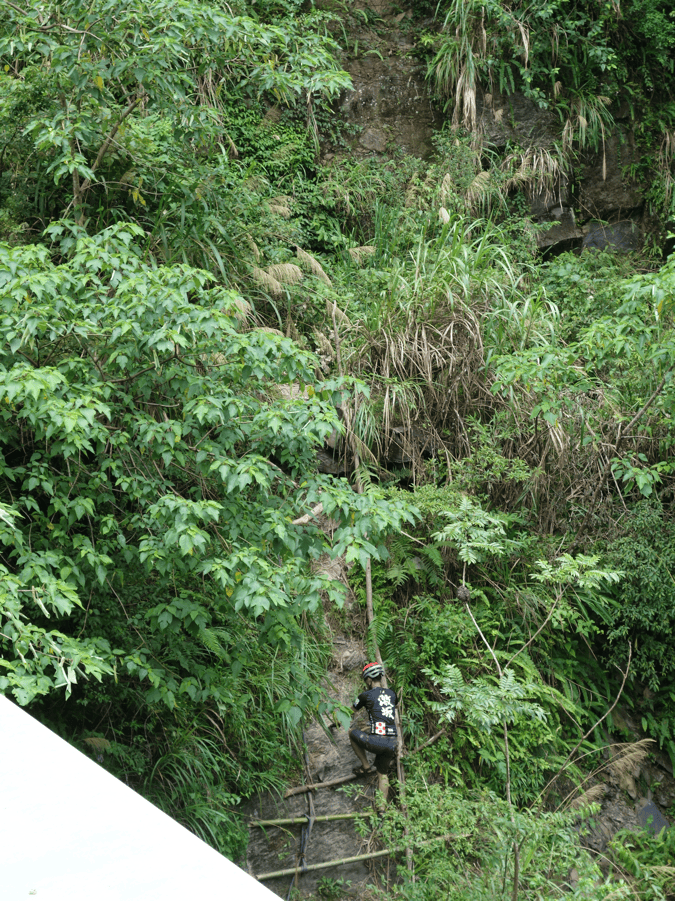
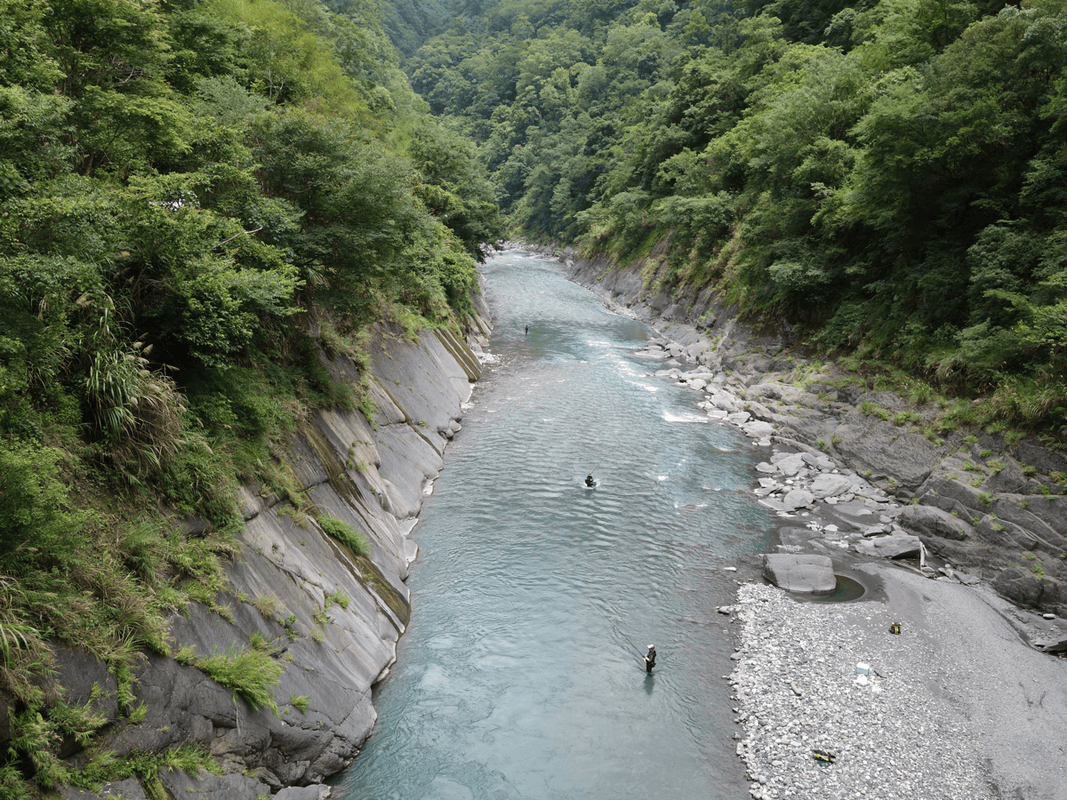
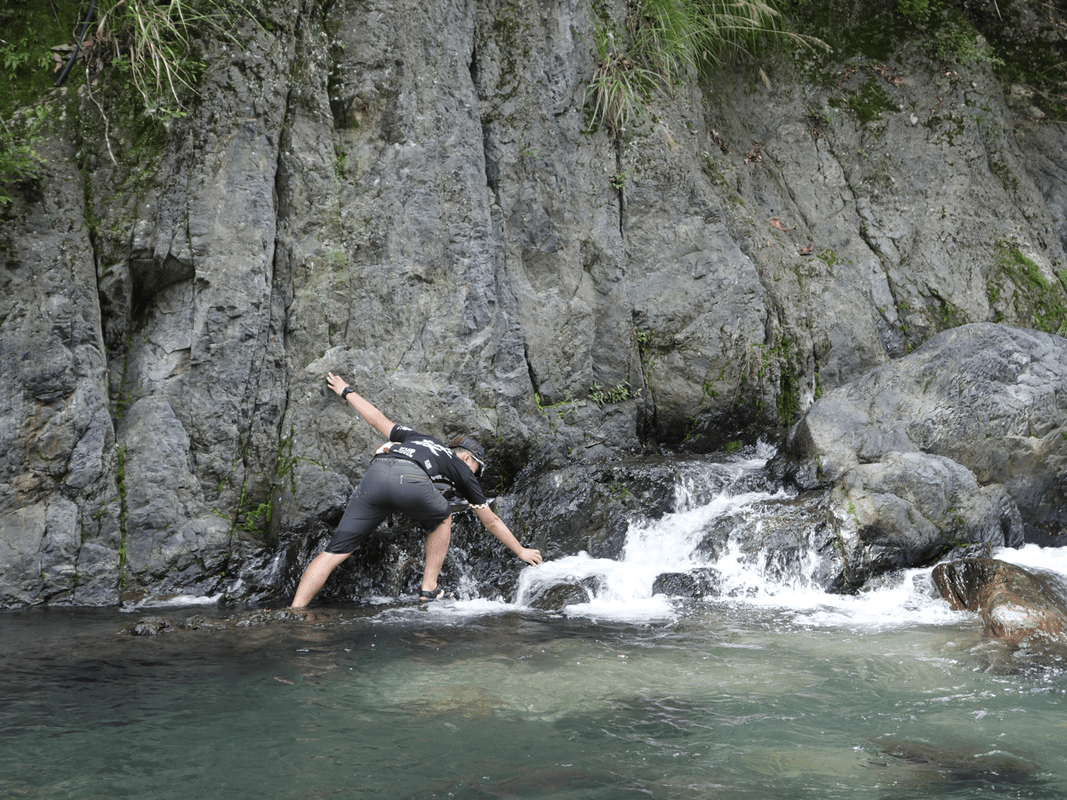
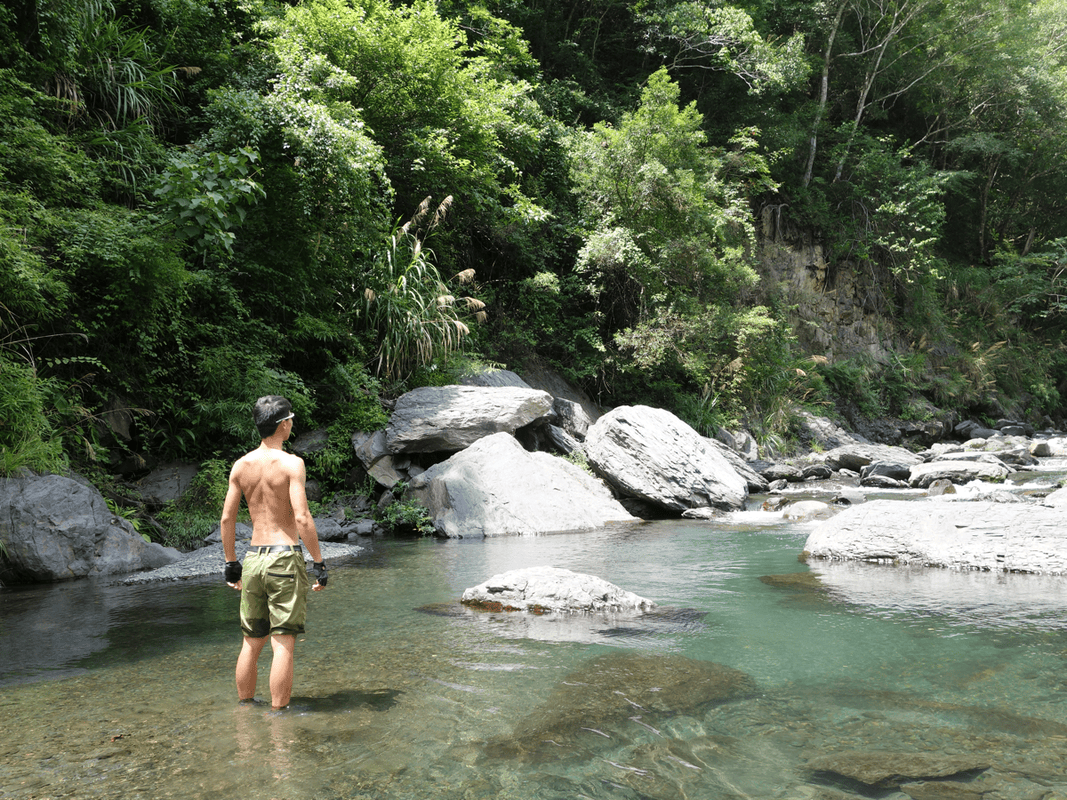
Below the bridge, people were fishing and camping beside the stream, looking wonderfully relaxed. At the threshold of what felt like a climbing ordeal, we could see an apparent paradise.
We could stop there and enjoy ourselves. Nothing much would be lost, except that we would never reach our intended destination.
Between fatigue and indecision, we rested on the bridge for more than half an hour. A-Zhe even walked down to investigate possible places to camp.
After repeated discussion, we chose to continue.
Ride, Push, Repeat
Determination sometimes seems like something we summon only to regret.
After about one climb, I already missed the riverside spot. Having spoken so confidently to A-Zhe, I could hardly suggest turning back immediately.
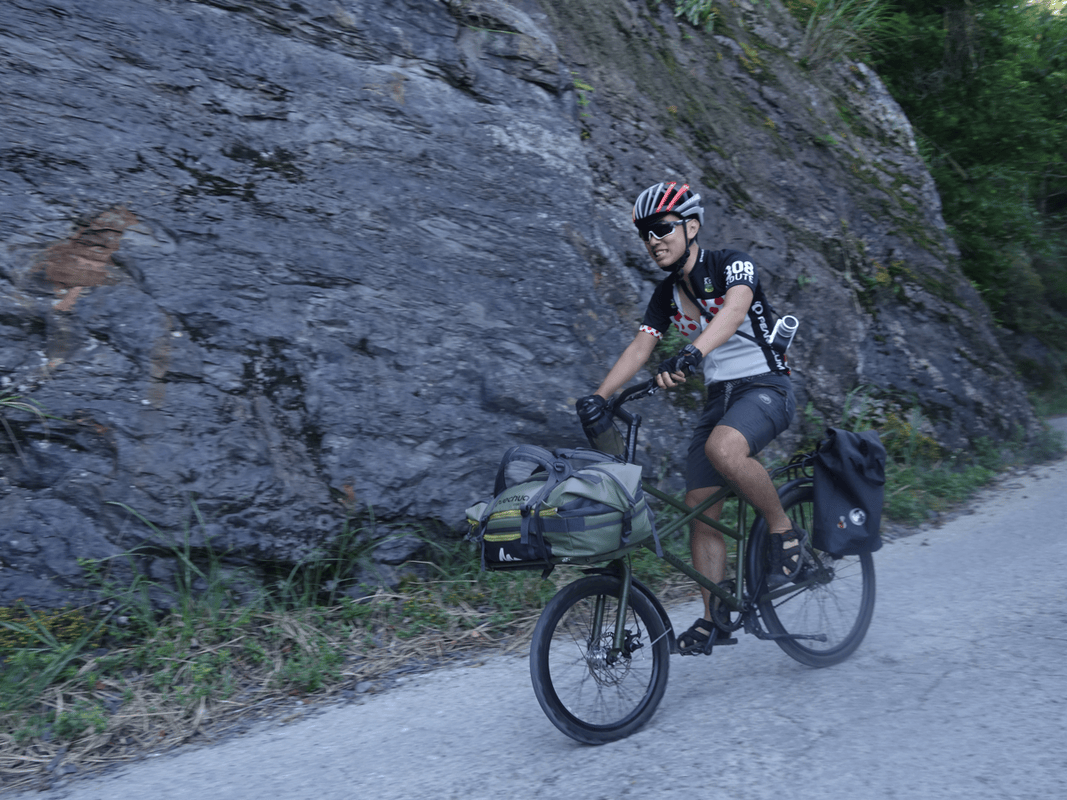
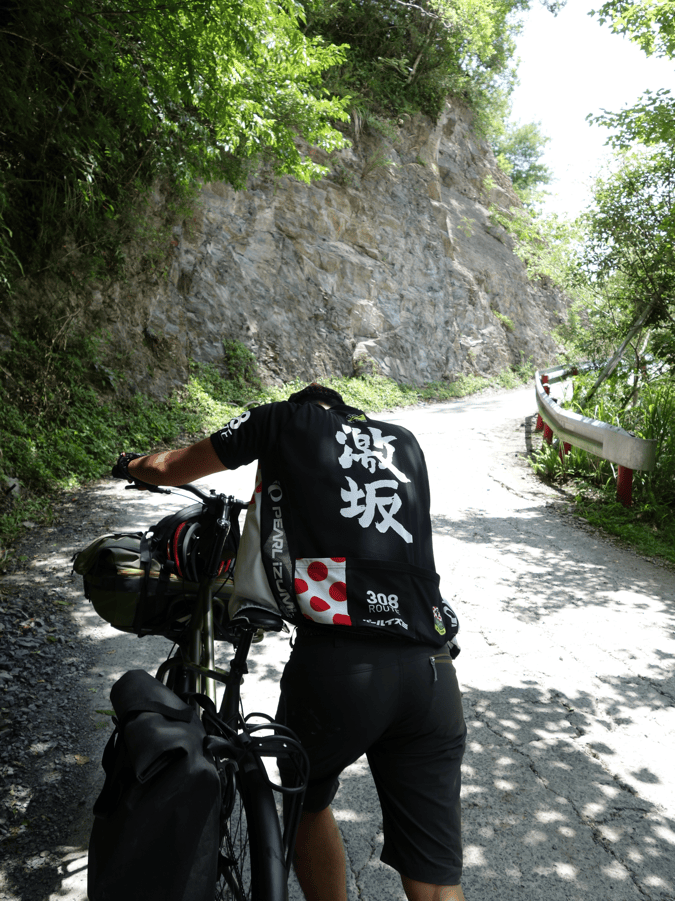
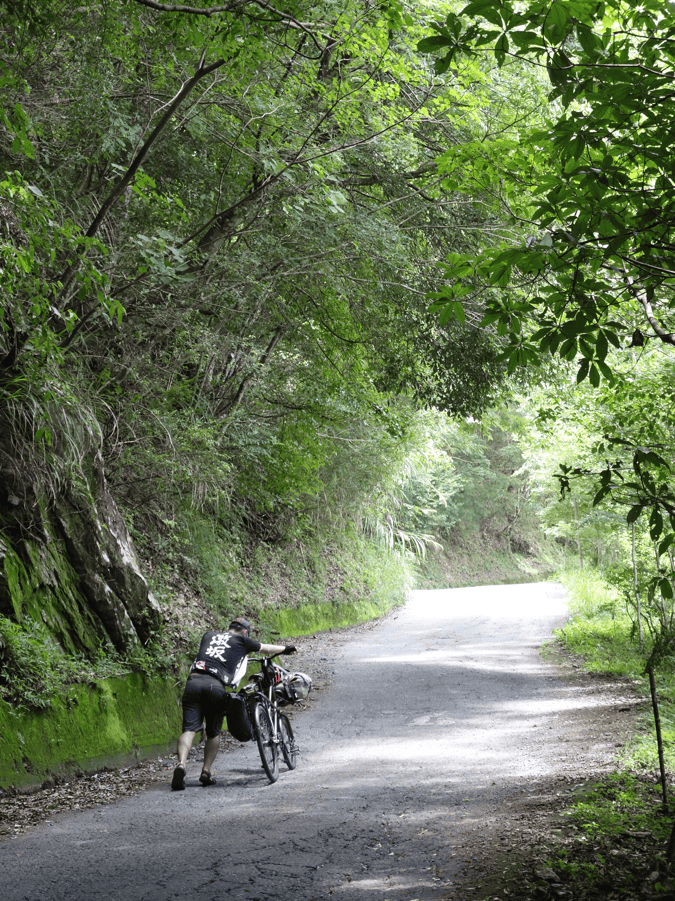
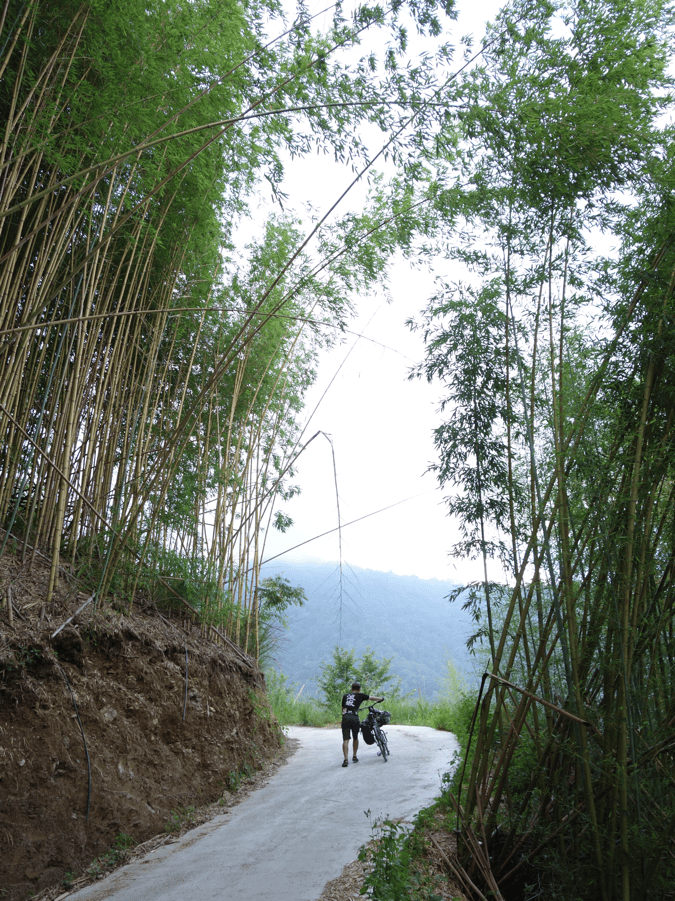
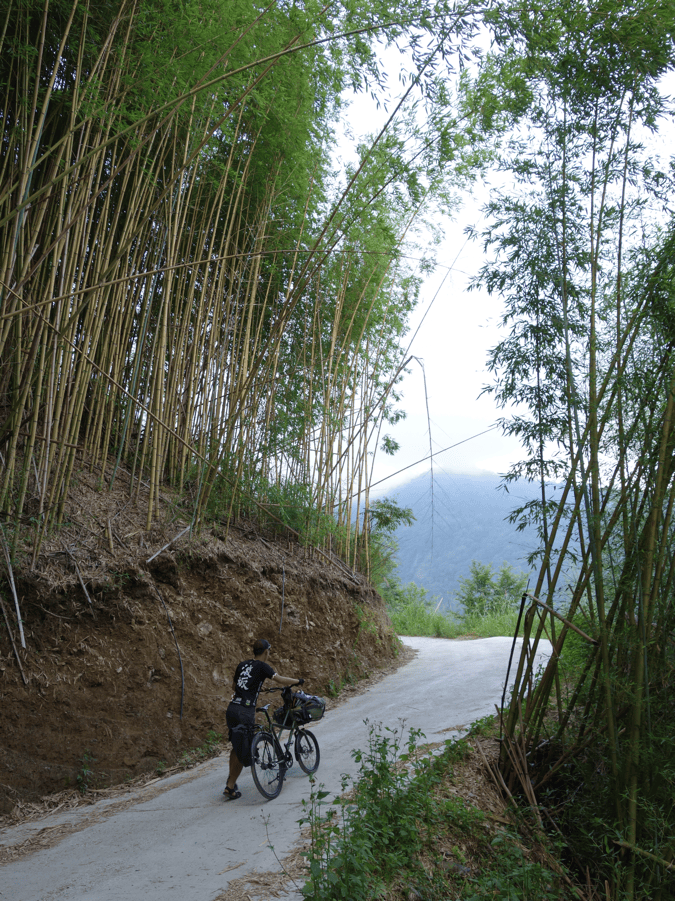
So I rode slowly, and when I could no longer ride, I pushed.
A-Zhe had it harder. His gearing was higher than mine, and he had not brought enough water. Under that strong sun, climbing while thirsty was miserable.
At one point, he excitedly told me he had found a partly finished bottle of water someone had left and drunk it all.
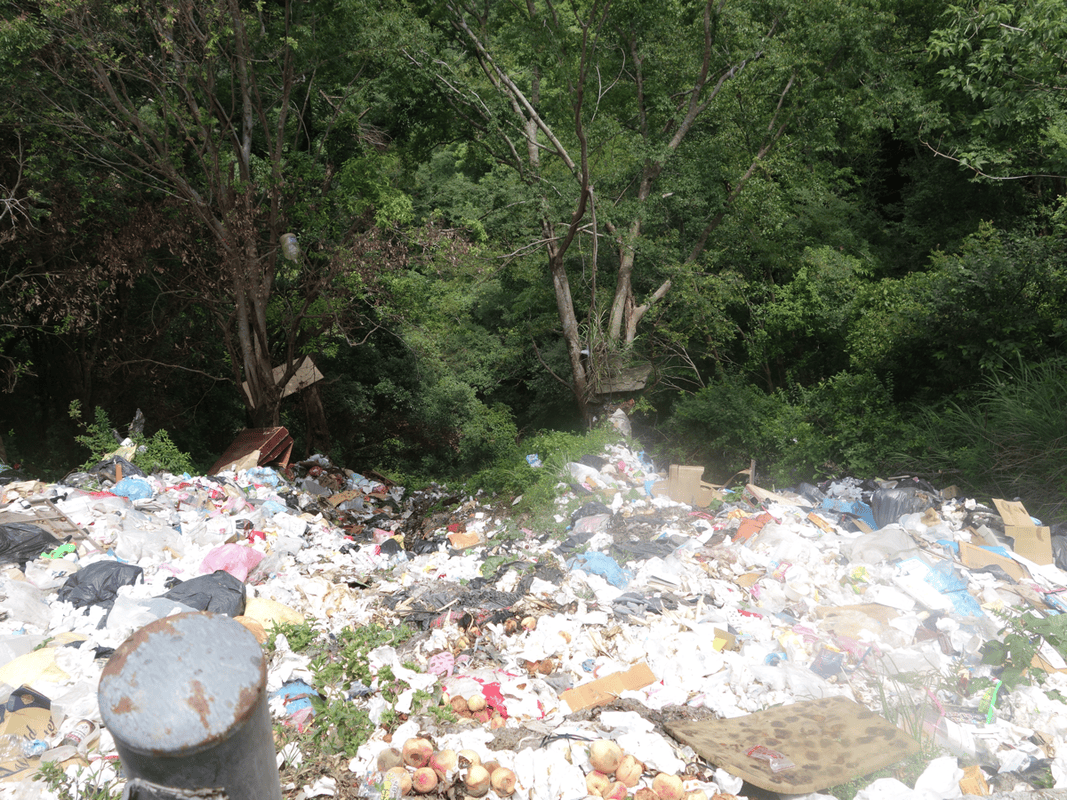
That was how thirsty he was. It was also an unsafe decision, not something to imitate.
Fortunately, we later found a small stream and replenished our supply. Natural water still needs appropriate treatment, even when it looks clear.
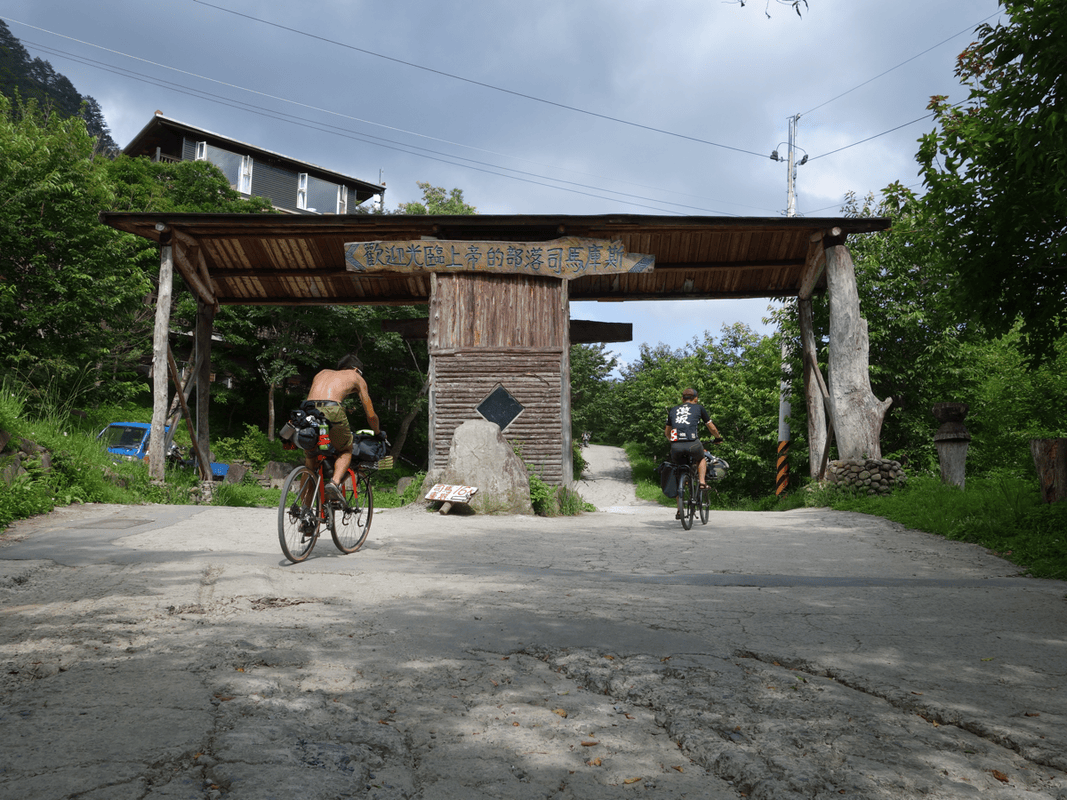
With bottles filled, we resumed the pattern: push, ride, ride, push. Eventually, we reached Smangus.
Still Farther to Go
I had imagined the old-village campsite would be only slightly beyond the main settlement.
Asking local residents revealed my mistake. There was still a little distance to cover, which felt much longer to two exhausted riders.
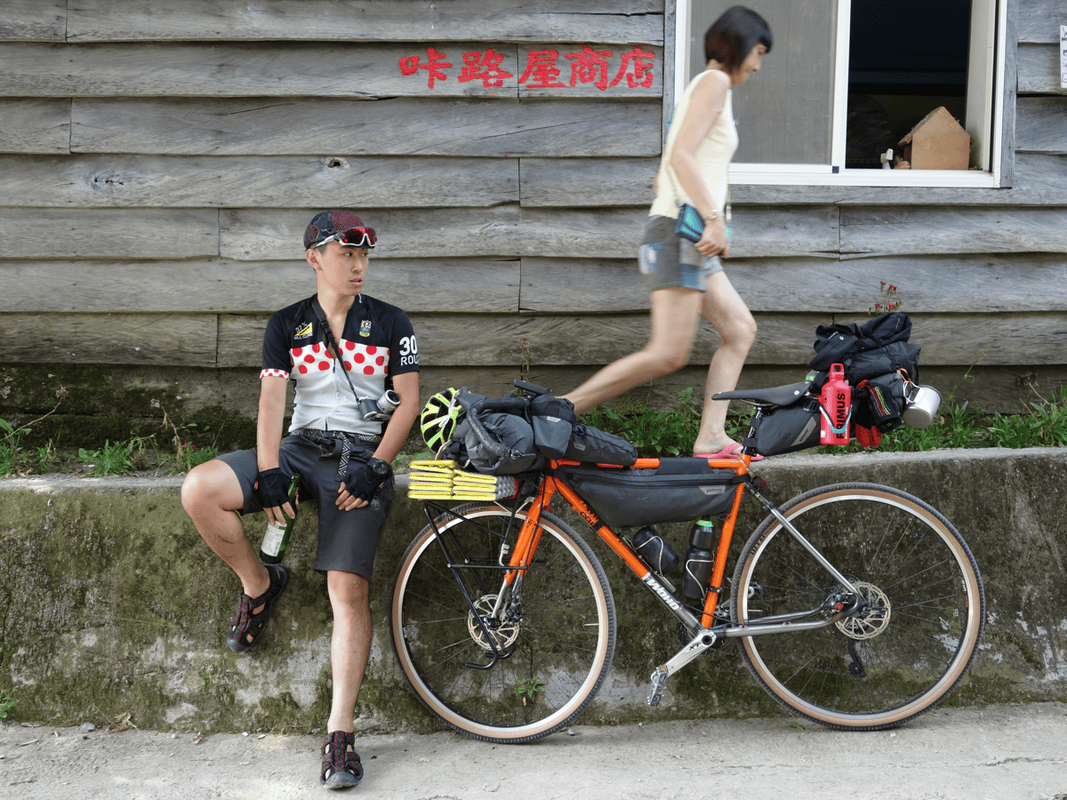
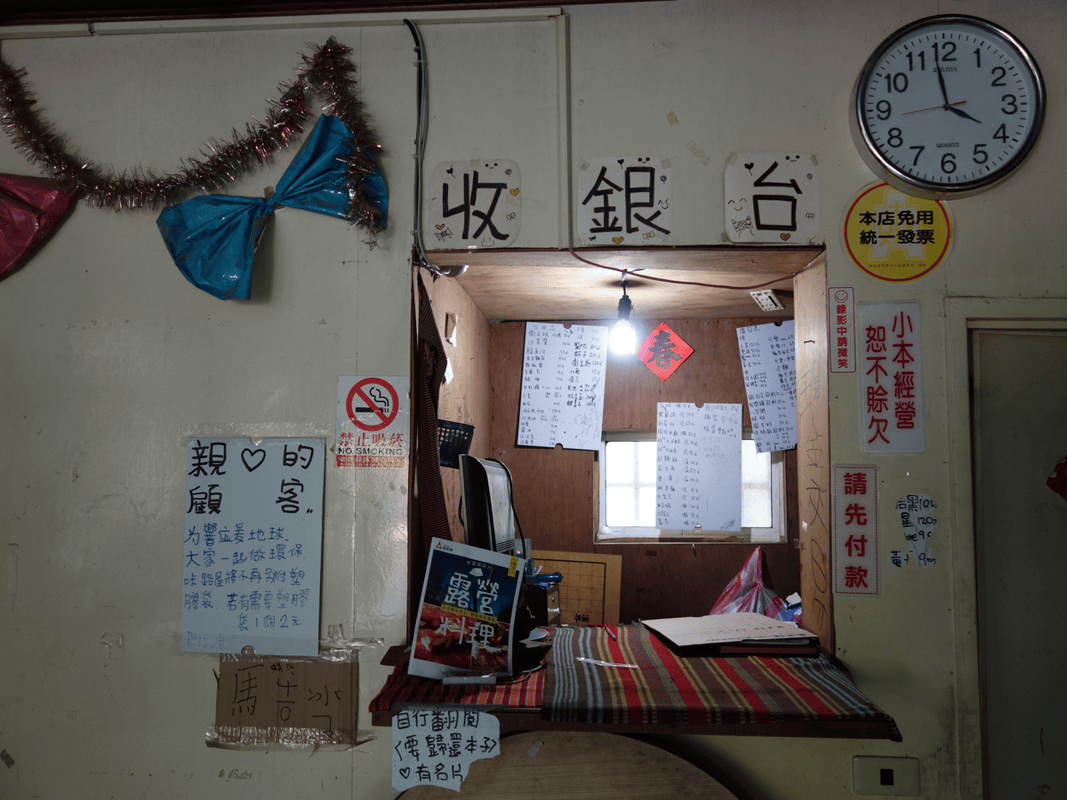
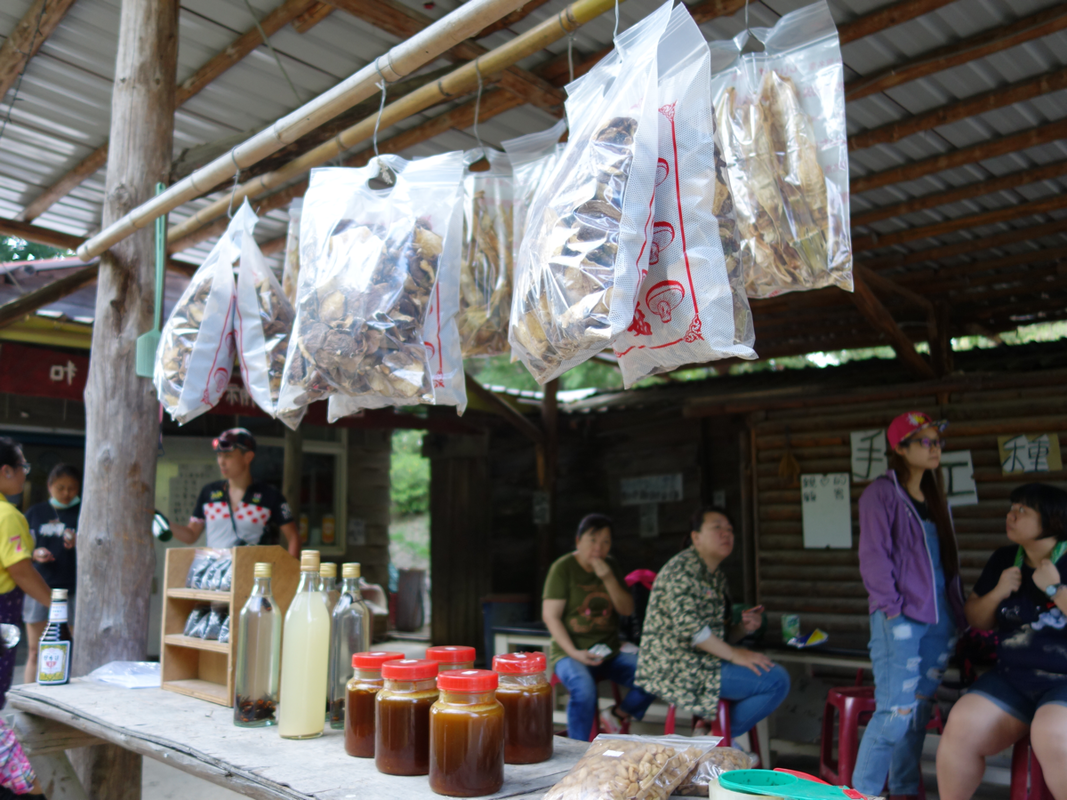
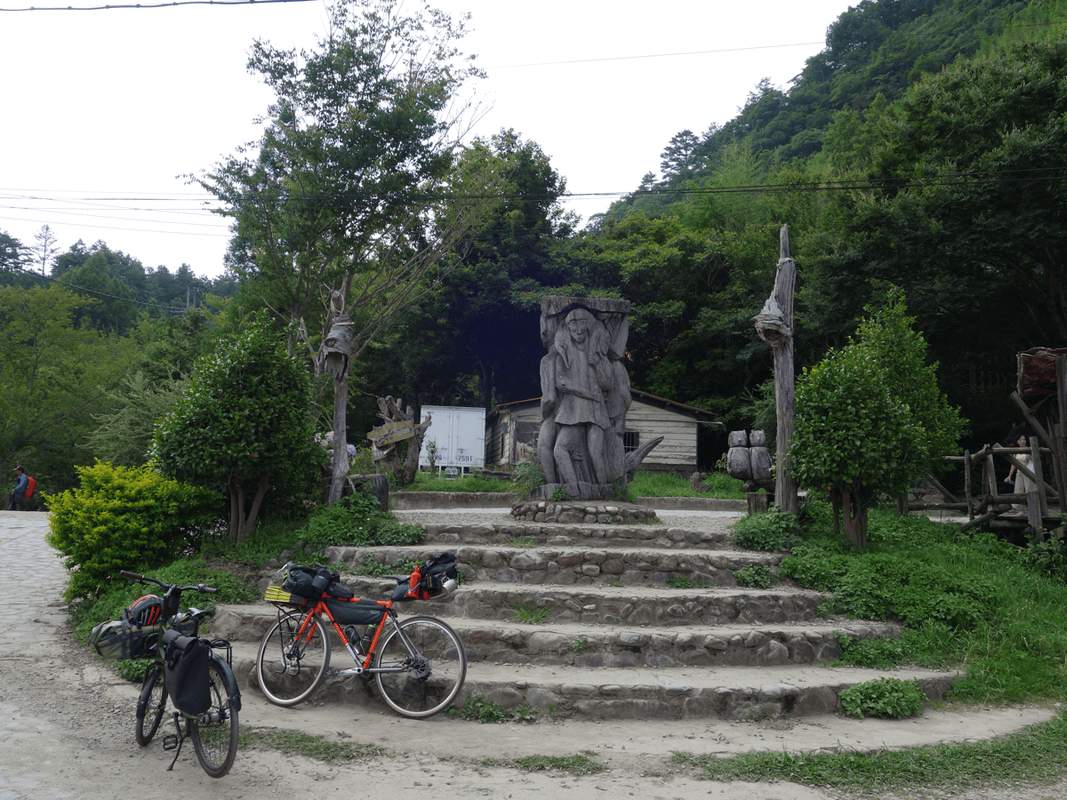
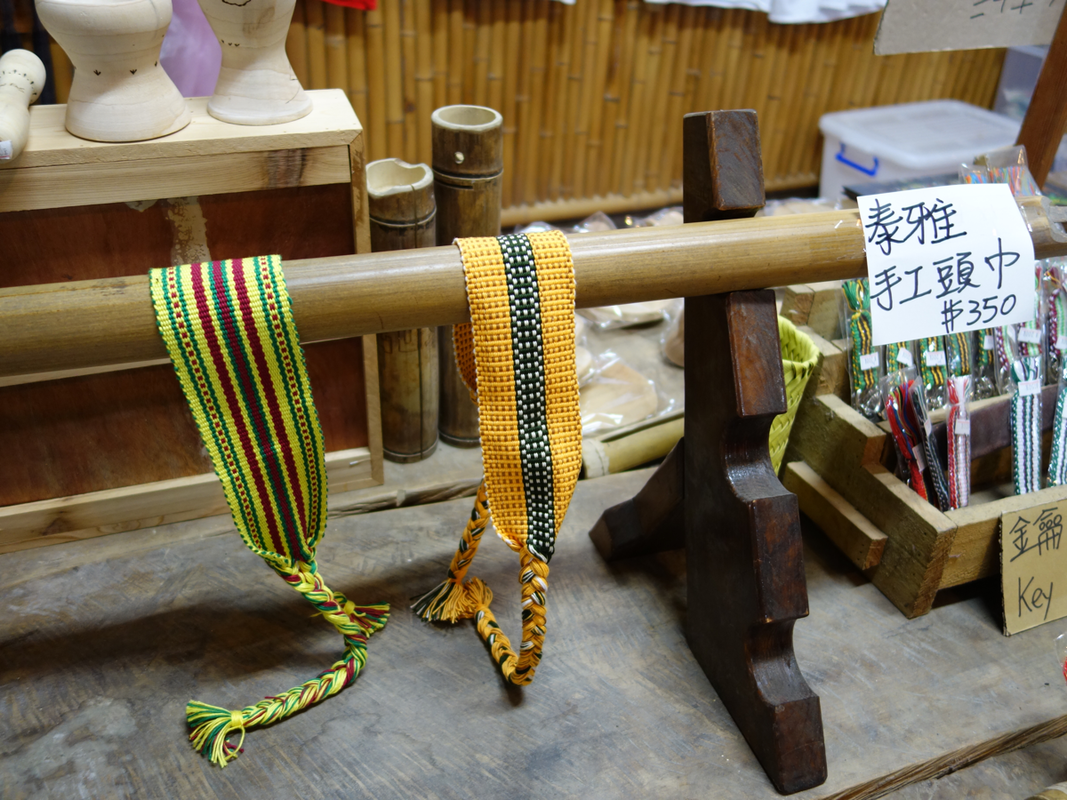
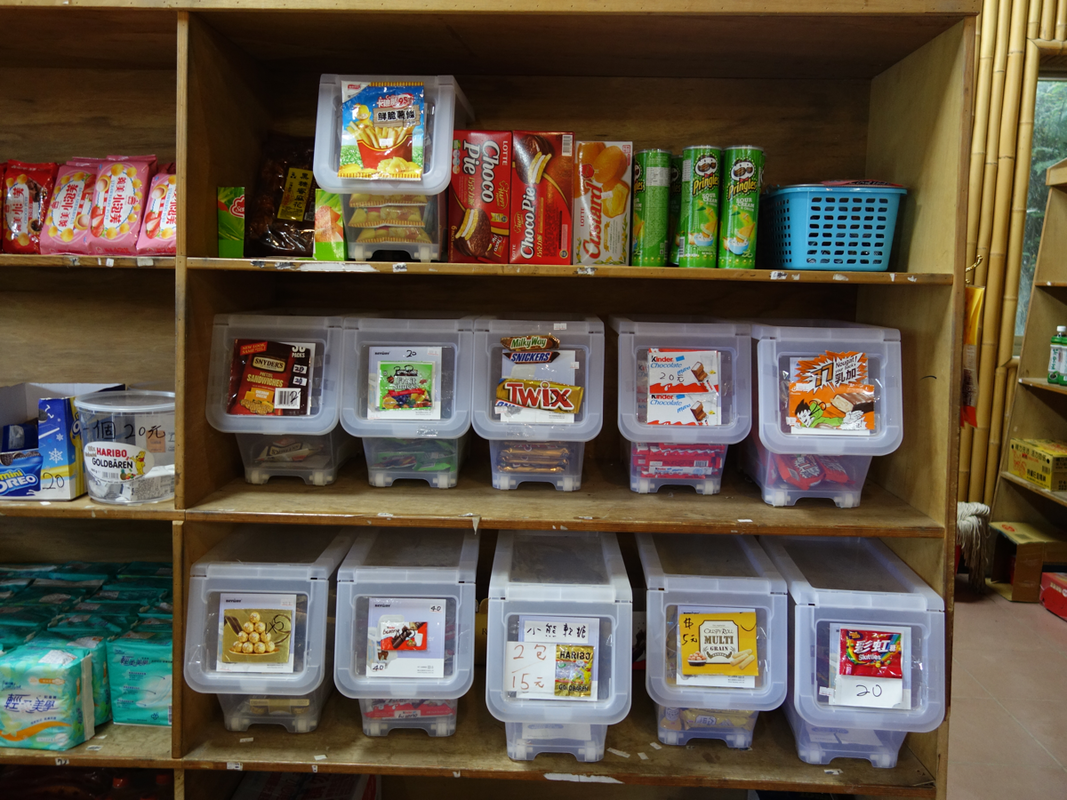
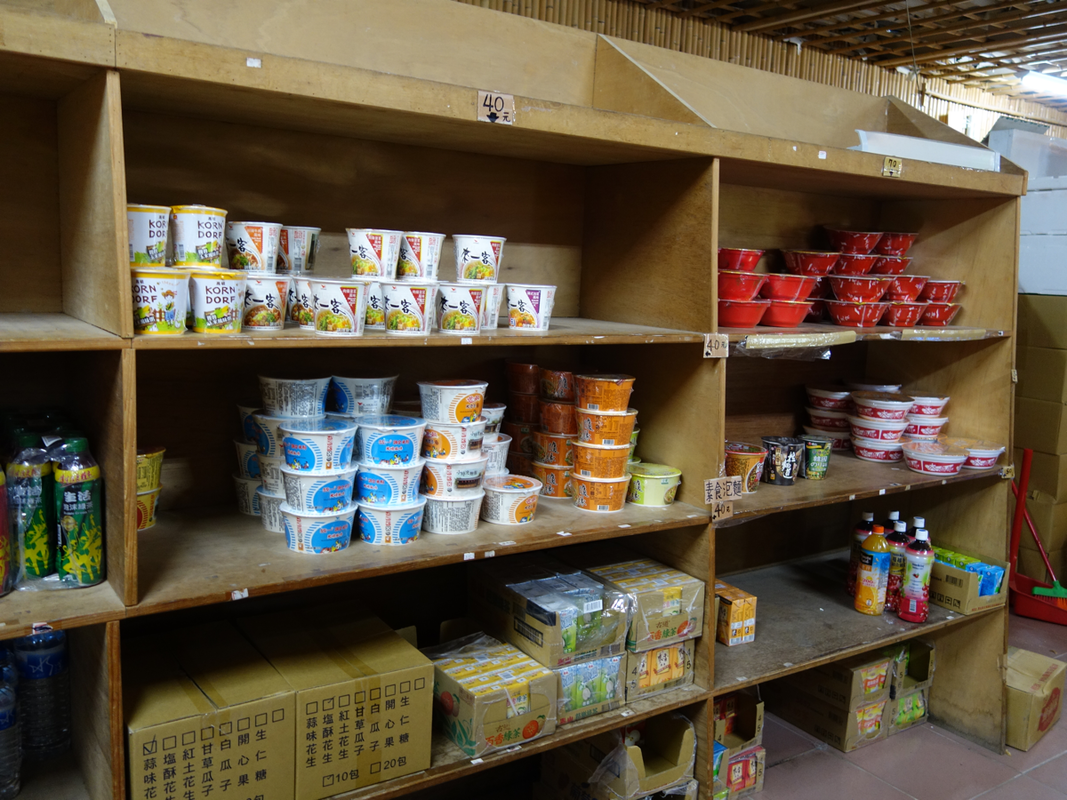
Starting from the higher mountain area rather than Hsinchu had clearly been the right decision. We still had some daylight, enough to rest at the village shop before continuing.
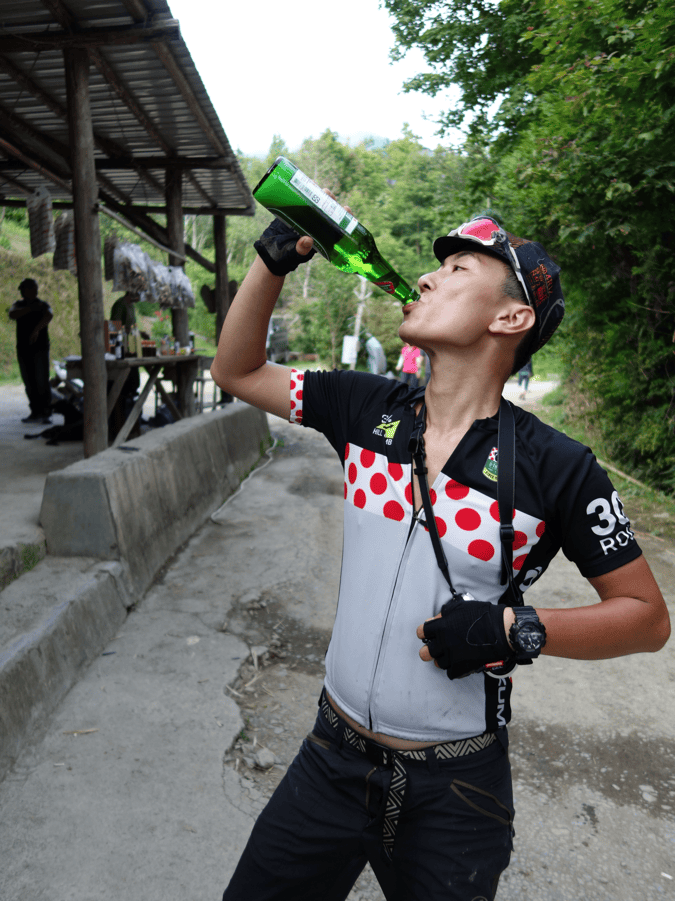
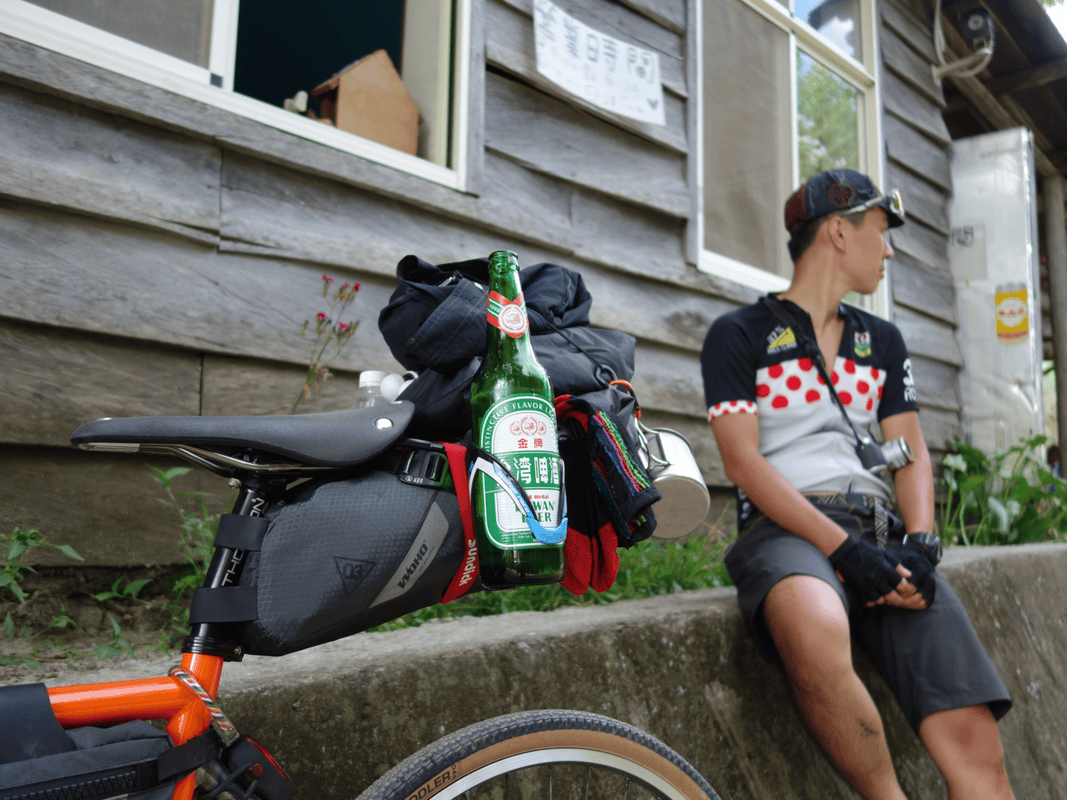
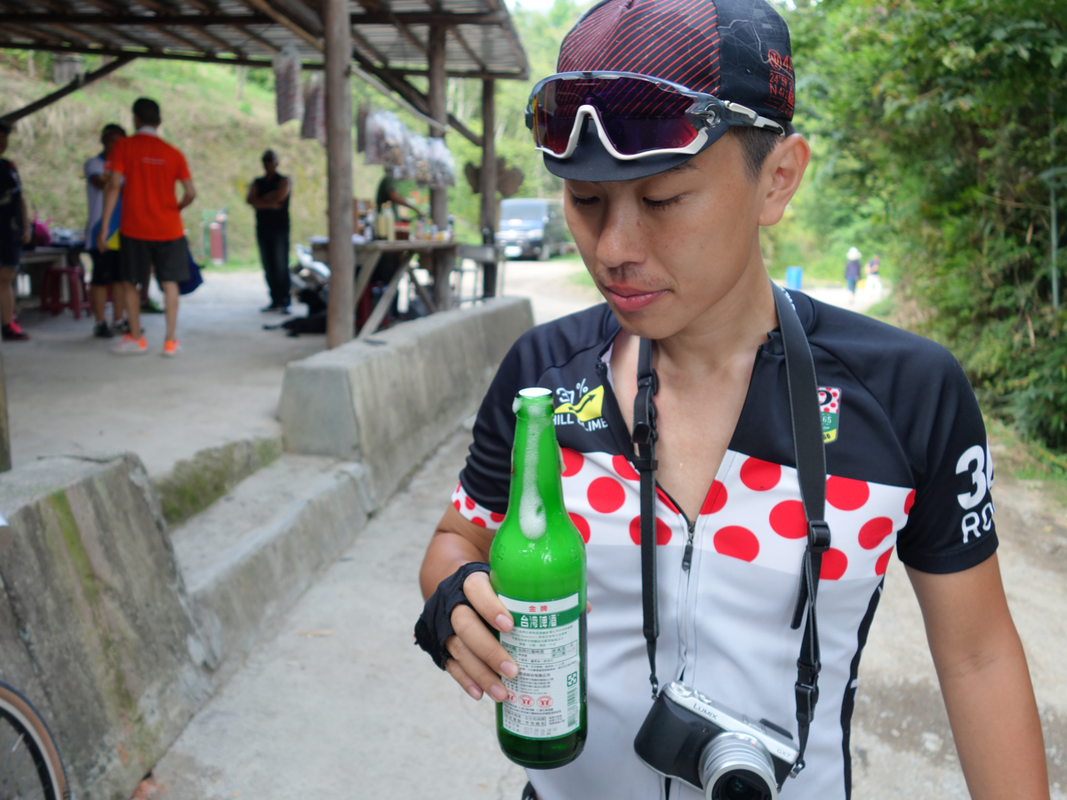
We already carried basic food. In the original account, our extra purchase was beer, jokingly described as “fuel” that would not move a bicycle.
It felt refreshing after the effort, though there was riding still ahead. That sequence belongs to the story, not to responsible riding advice.
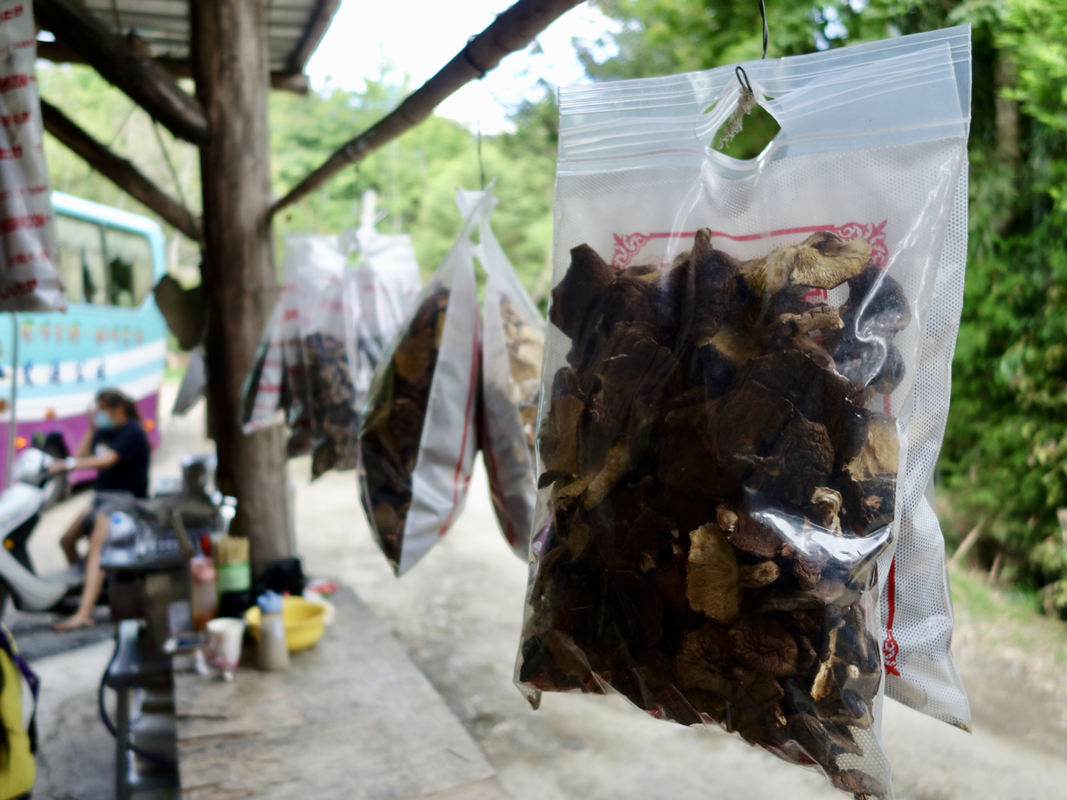
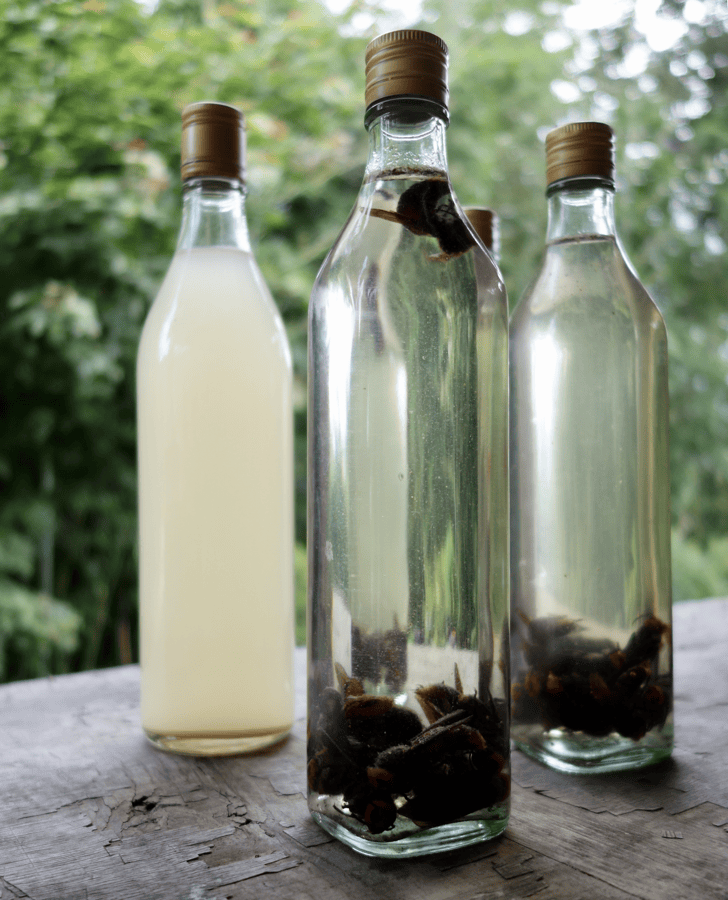
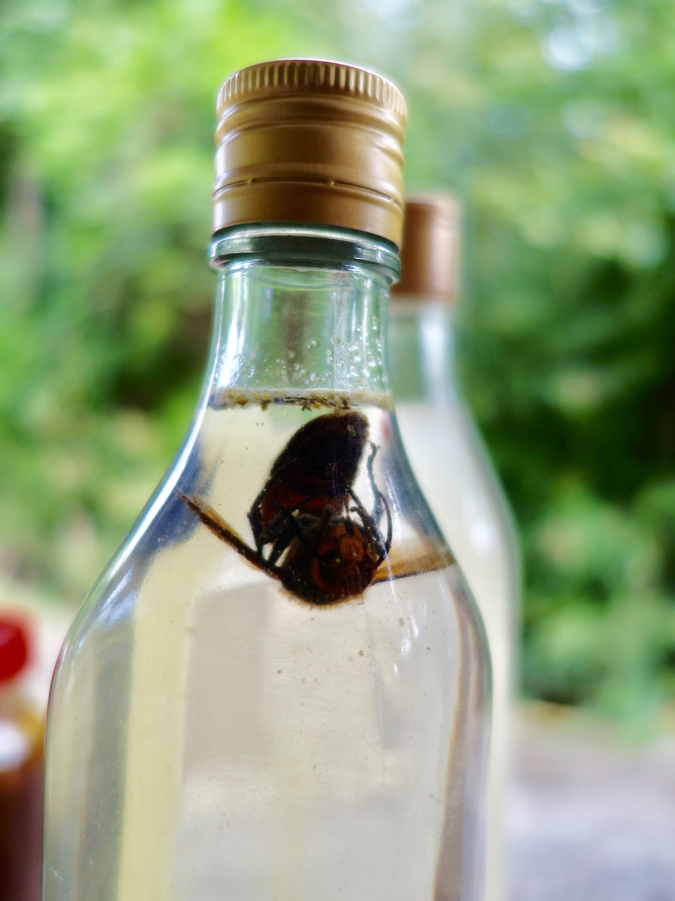
Two Very Different Outdoor Homes
The final stretch felt especially long. There was more pushing, but uncertainty about the destination and the approaching sunset probably made the distance seem worse.
Despite my doubts, we reached the campsite before dark.
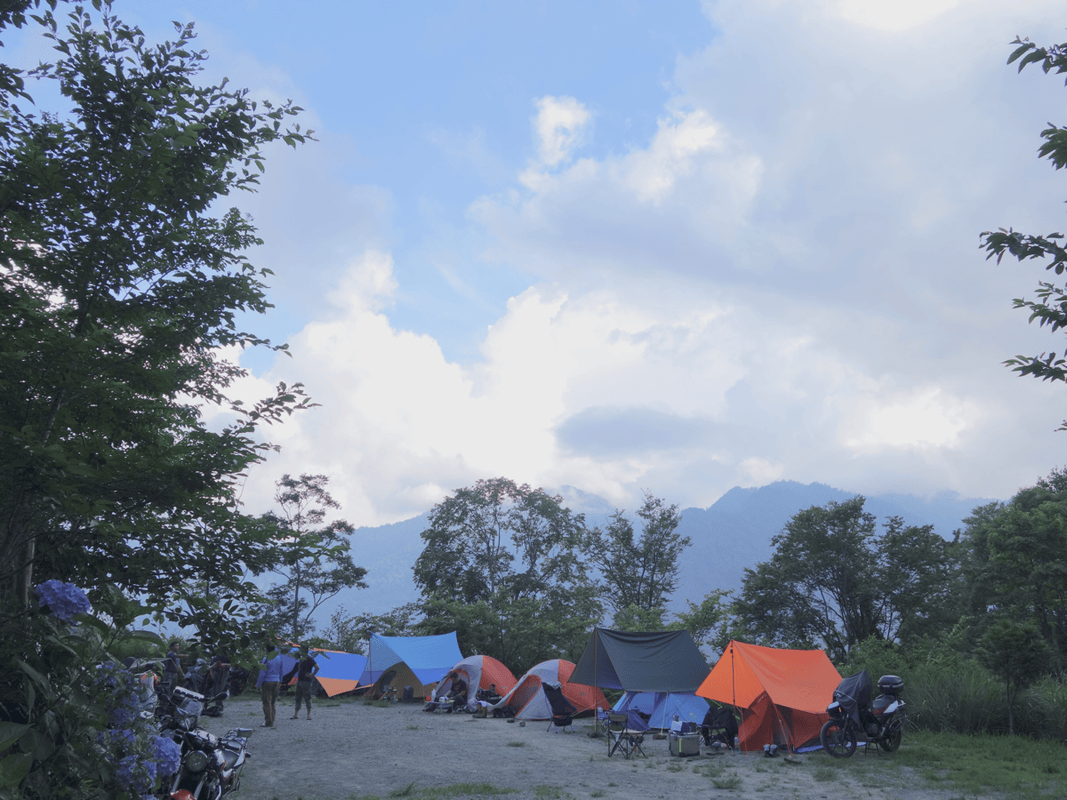
Several parties traveling by car or motorcycle were already there, leaving us to choose among the remaining pitches.
Our shelters were unusual beside the others.
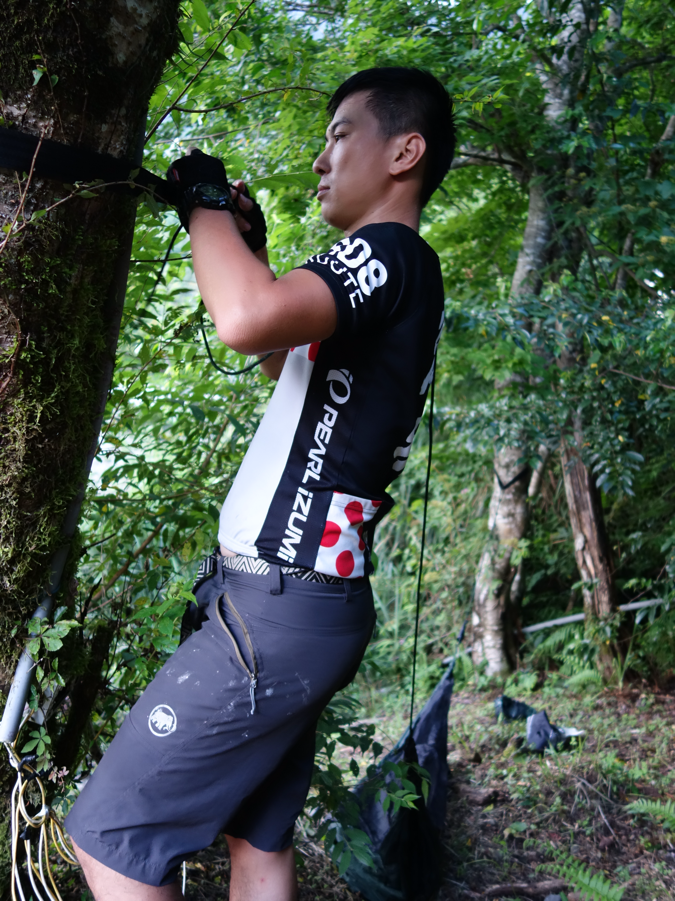
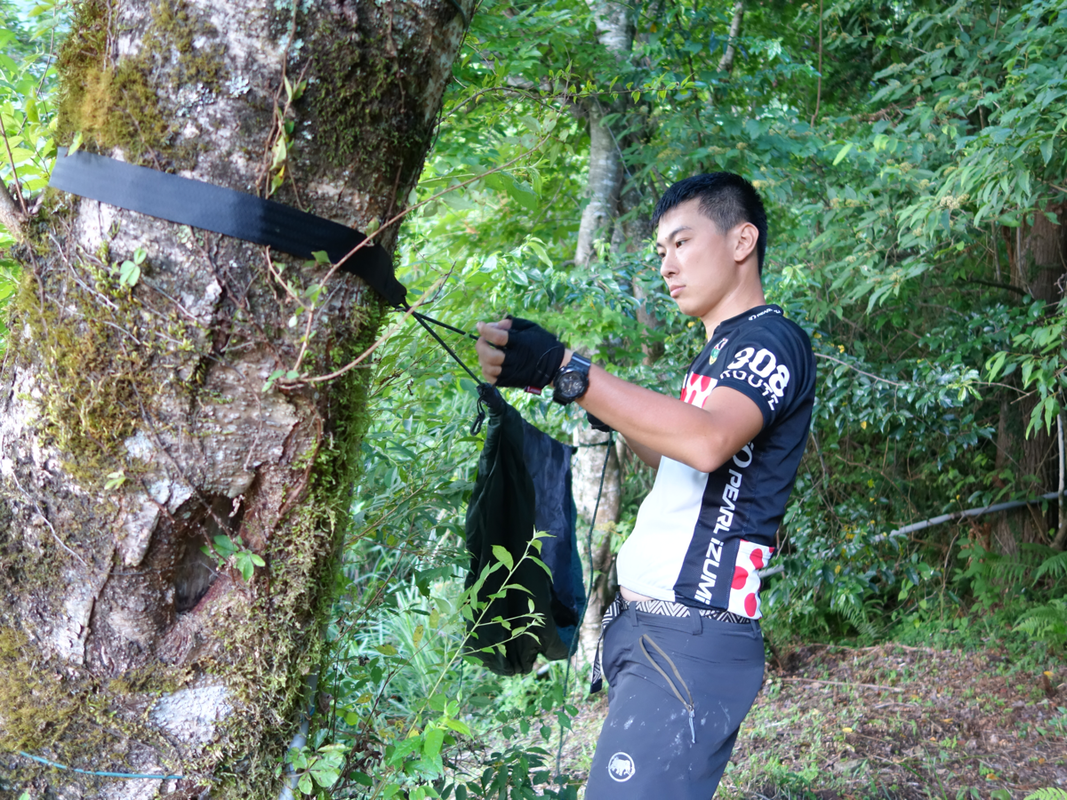
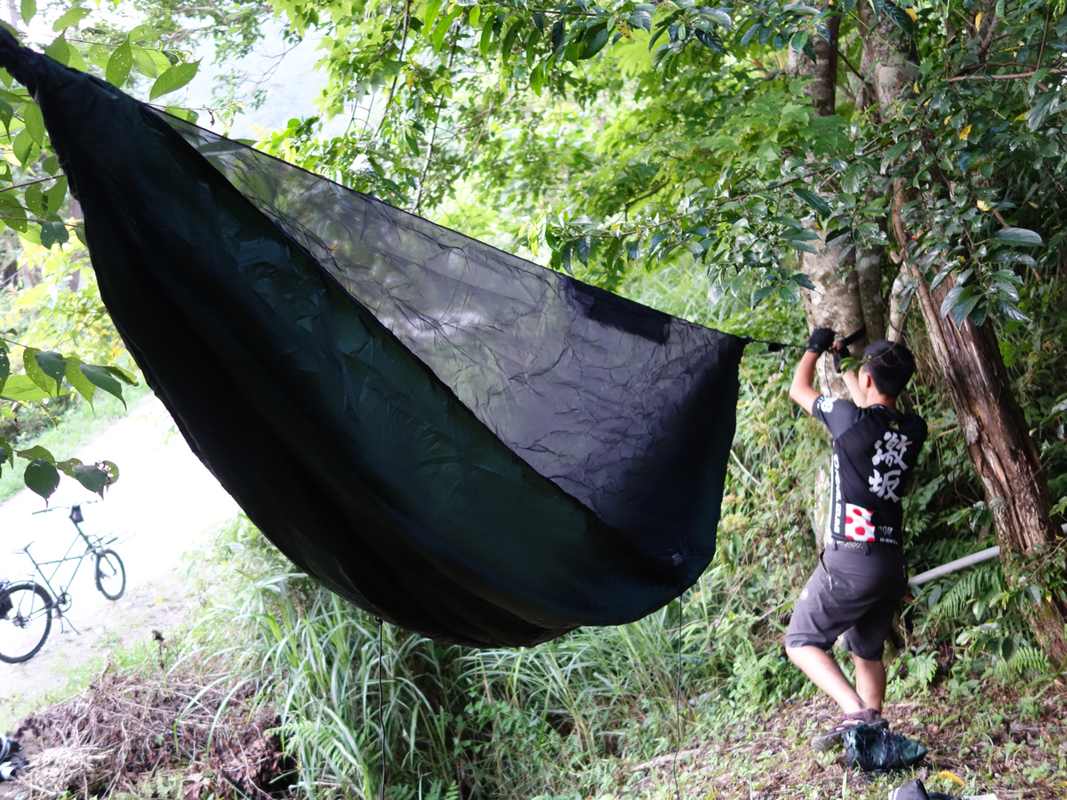
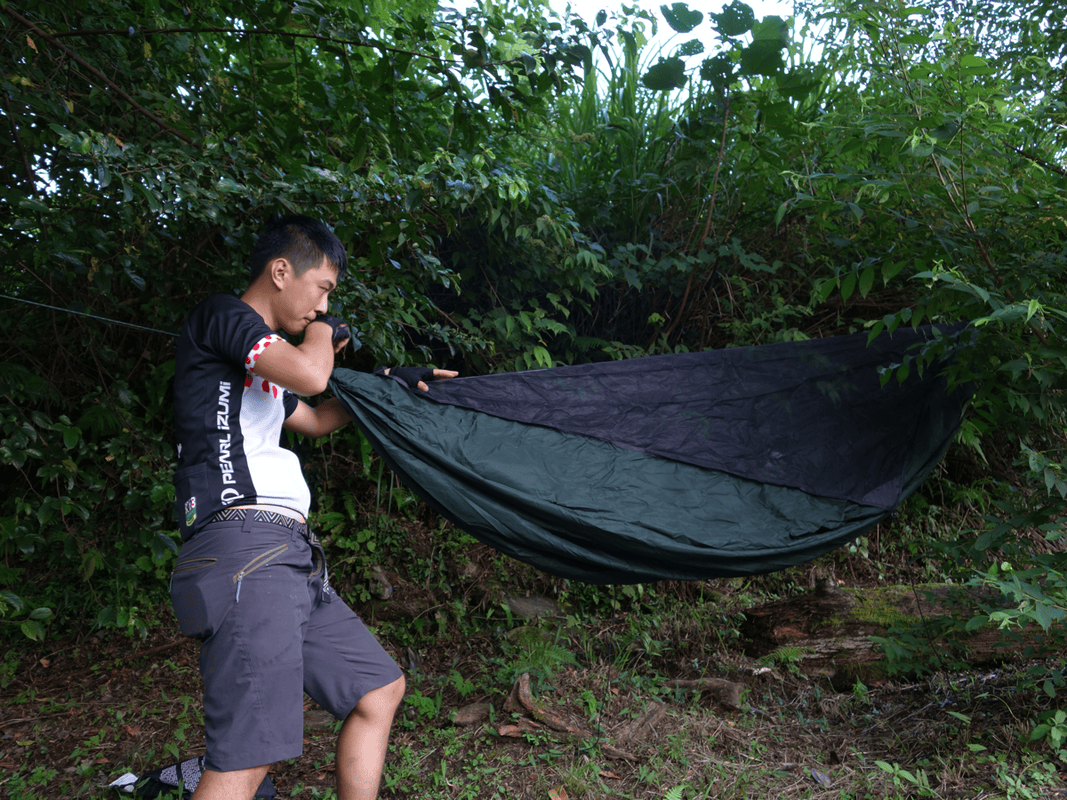
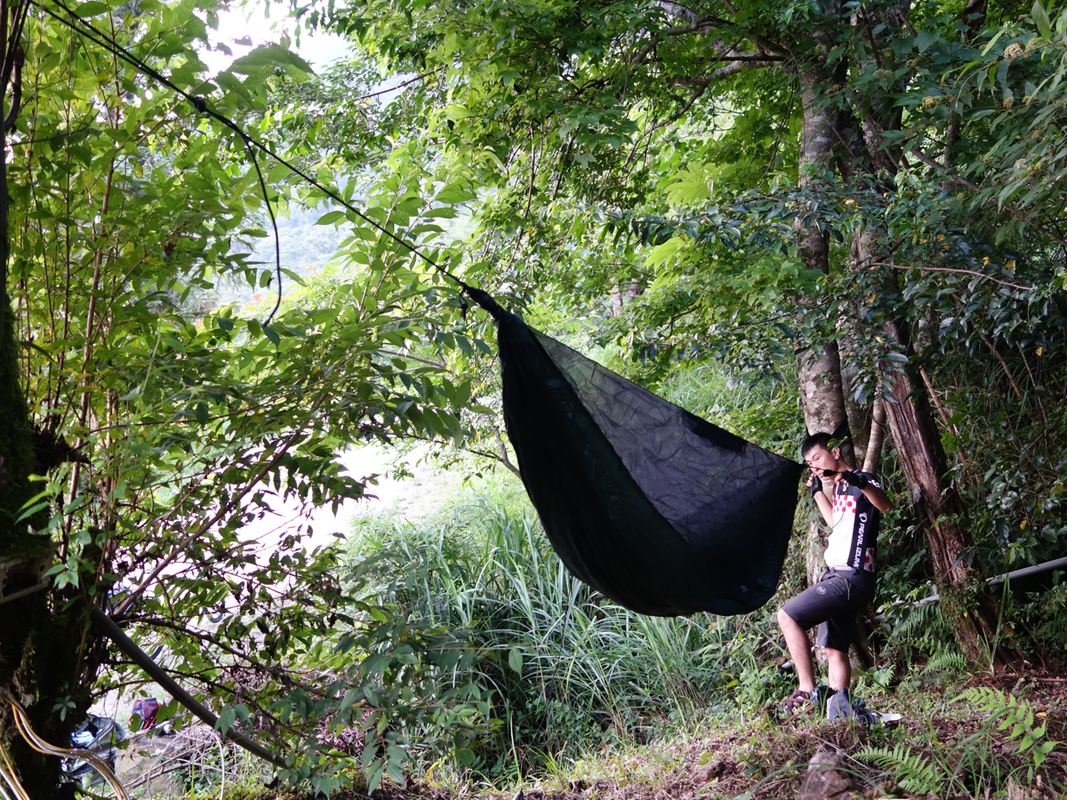
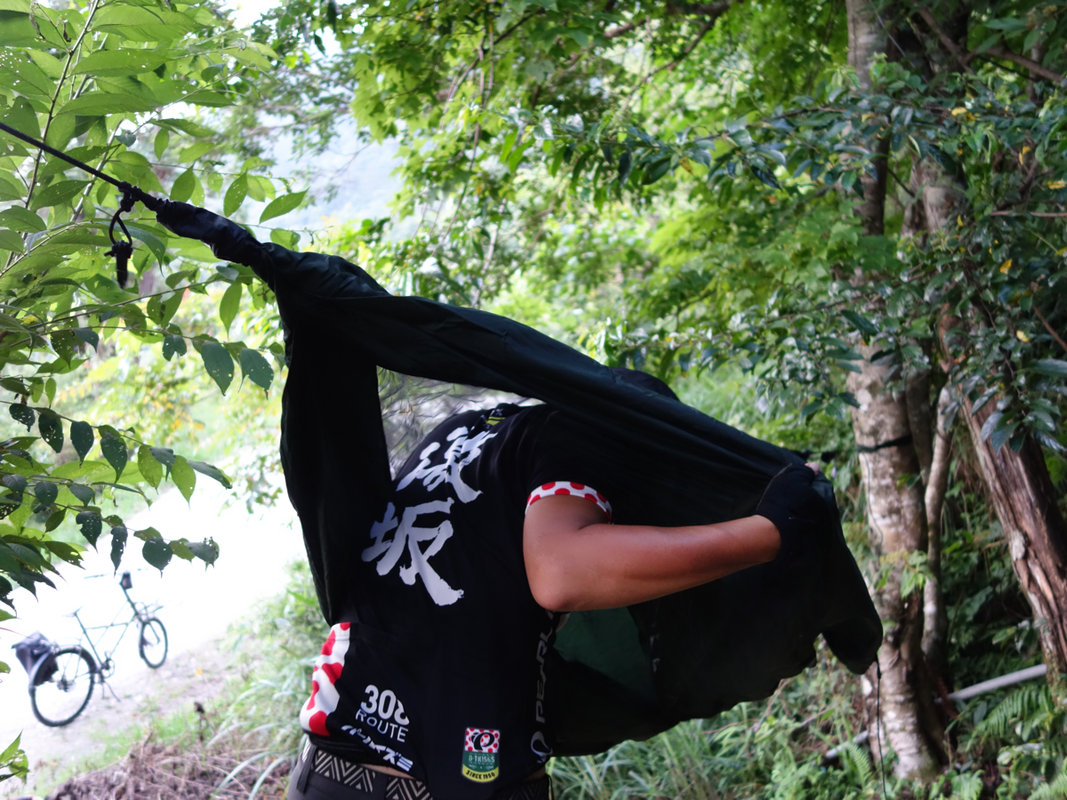
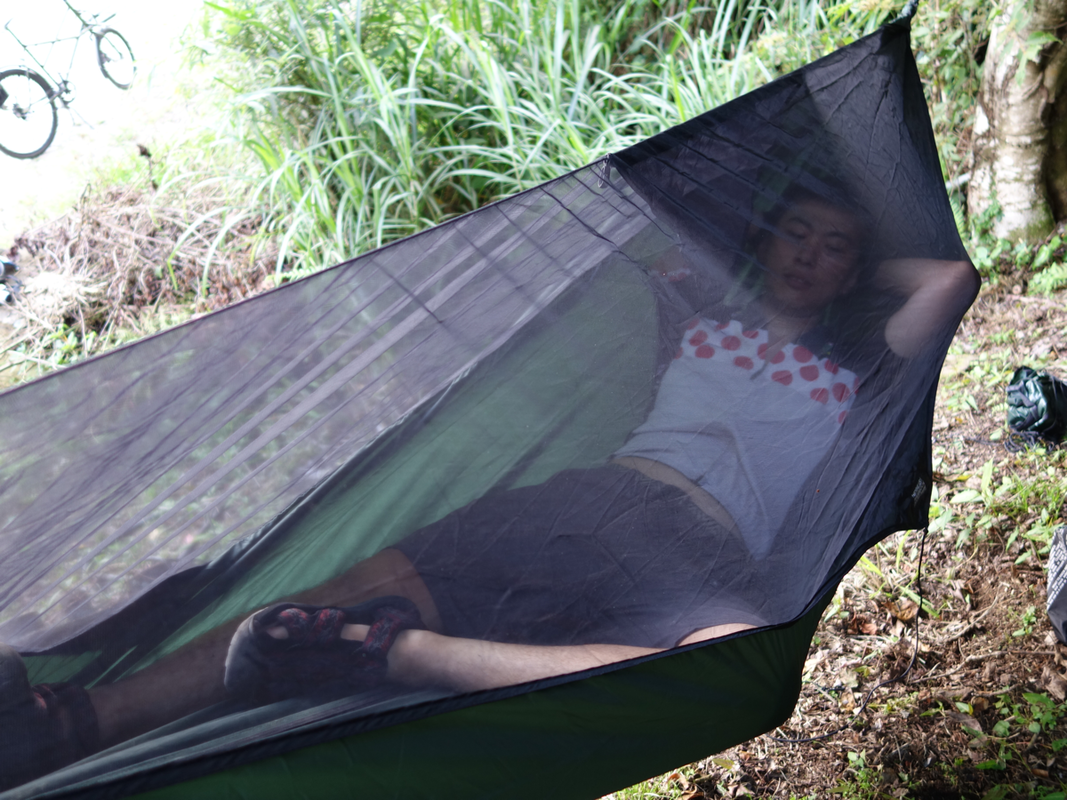
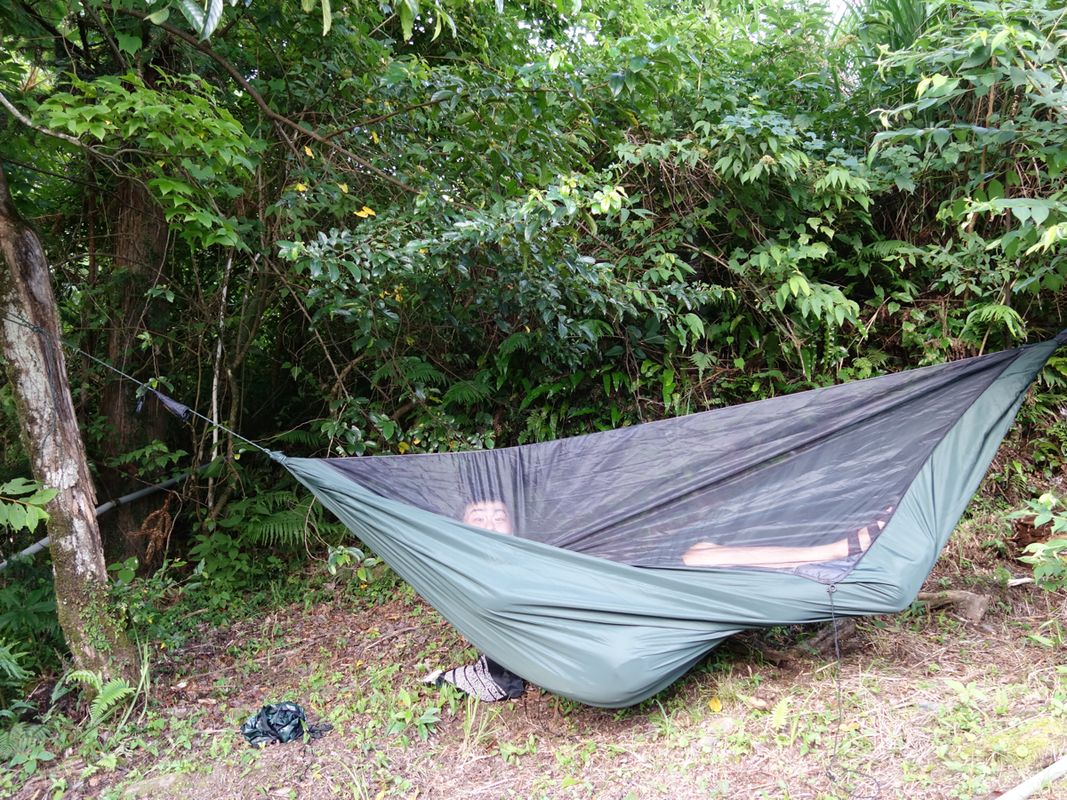
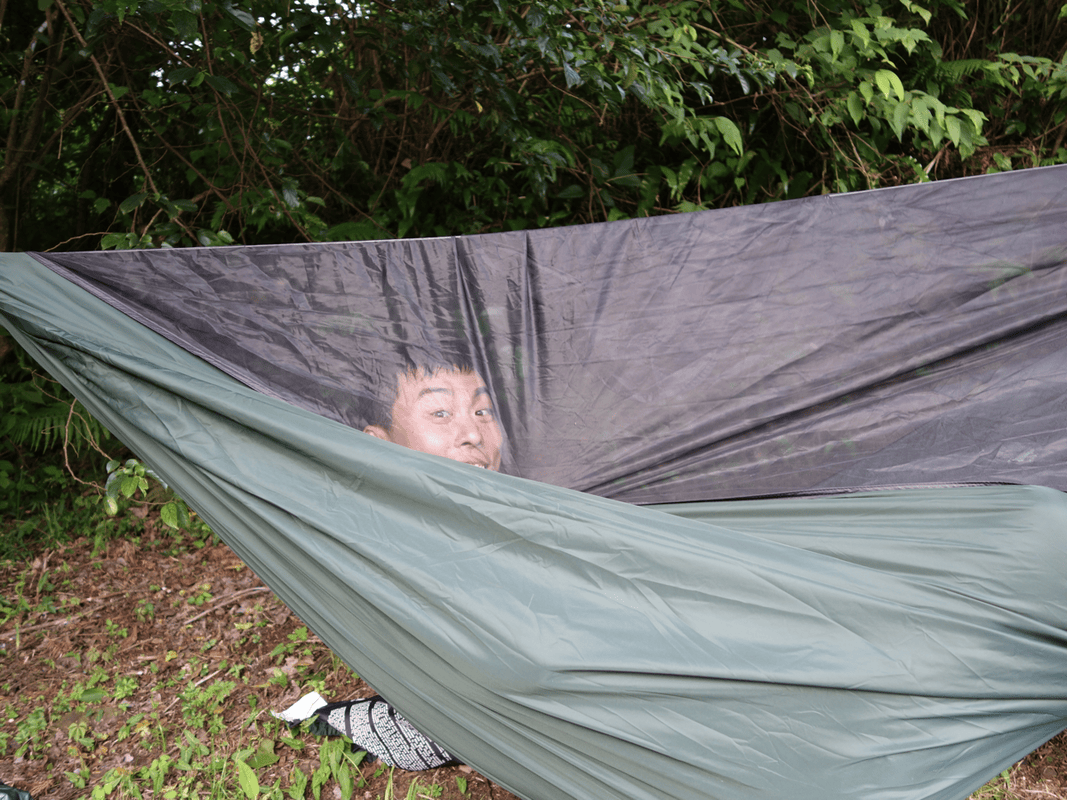
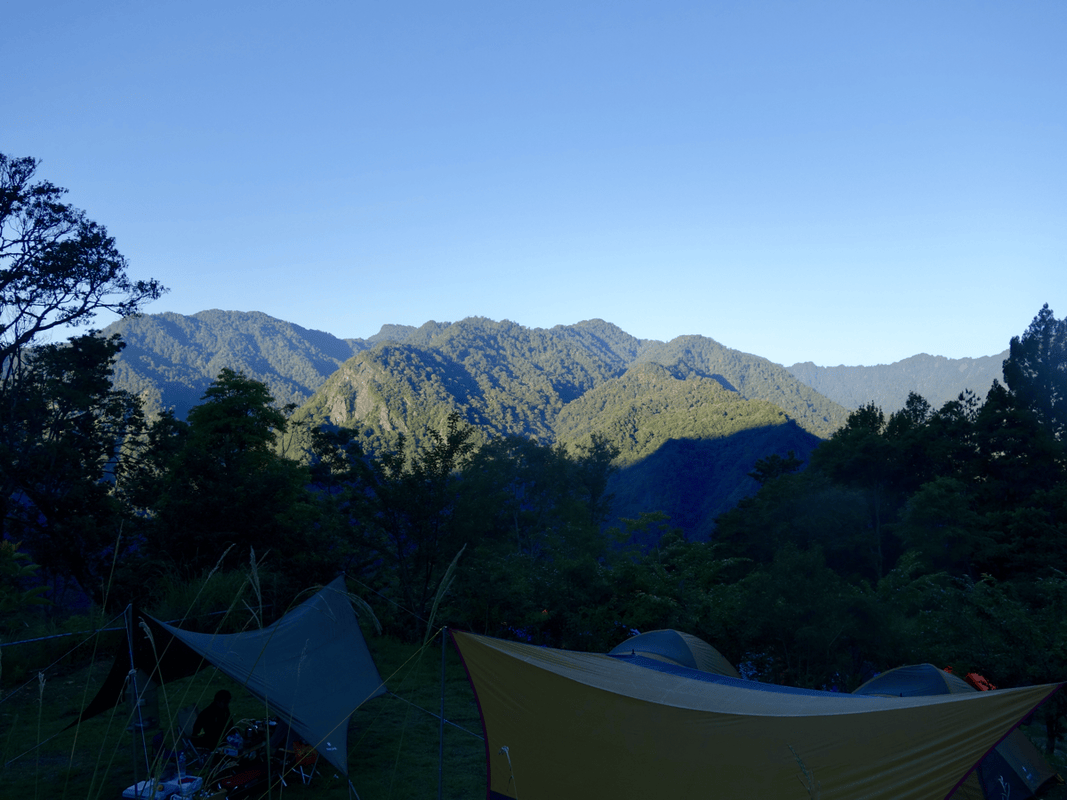
A-Zhe had brought a hammock tent. With few suitable trees on the open pitches, he set up among trees at the edge, on sloping ground. It looked funny to see someone arrive at a campsite and not use a conventional pitch, but his shelter looked very comfortable.
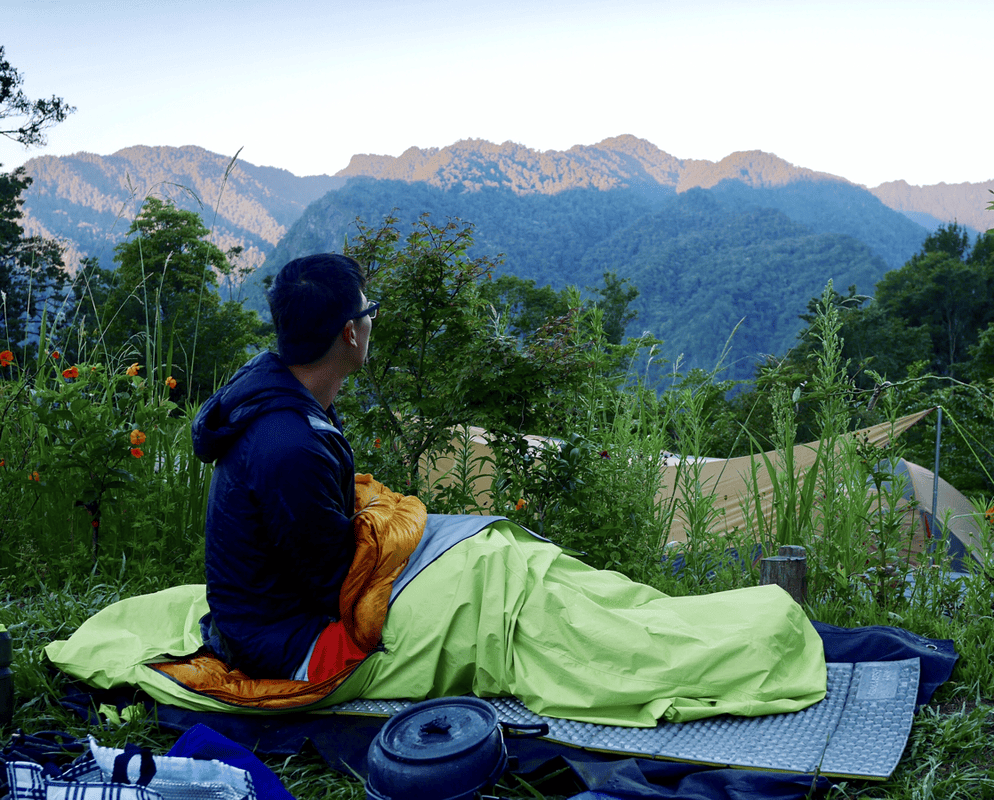
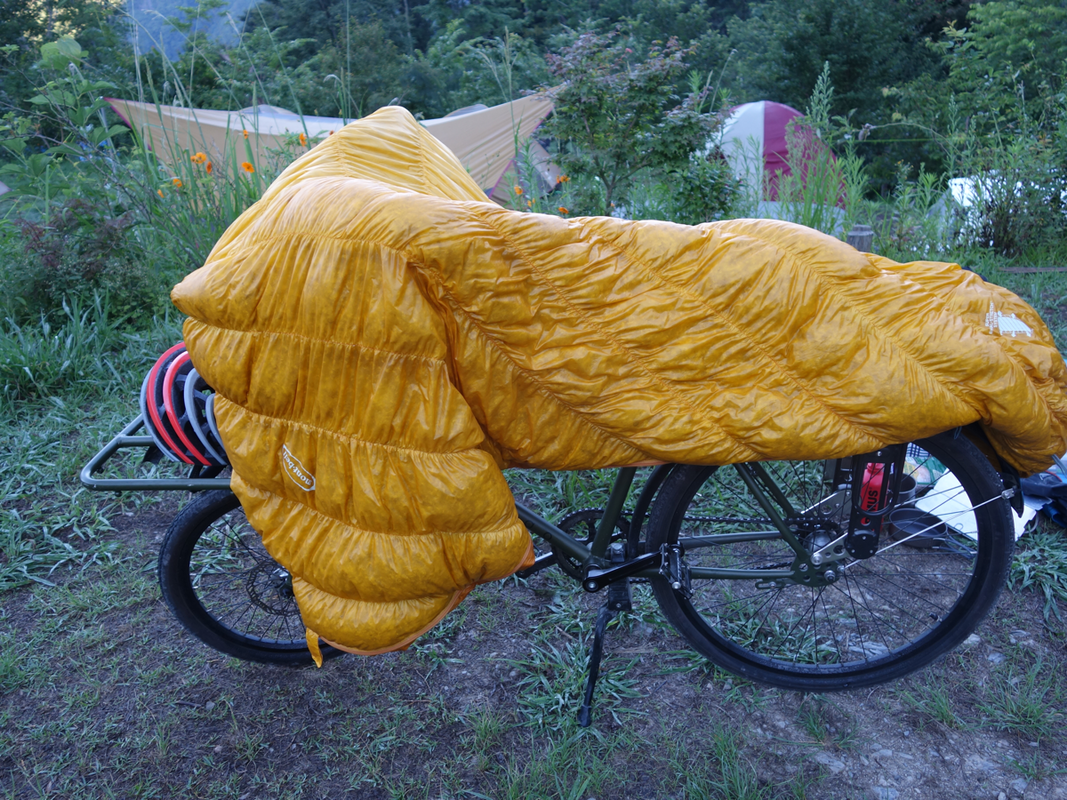
Mine was the opposite. I had brought a bivy bag rather than a tent, so my setup occupied little space. I chose a suitable-looking spot and laid it out.
One of us slept among the trees, while the other used barely more than a sleeping space. Looking at neighboring car campers with elaborate living shelters, I jokingly wondered whether we were getting our money’s worth from the camping fee.
The Wilderness Master Chef
Traveling with A-Zhe meant one thing I always looked forward to: food.
I joked that only twenty percent of his enormous load was his own equipment. The other eighty percent existed to feed his companions.
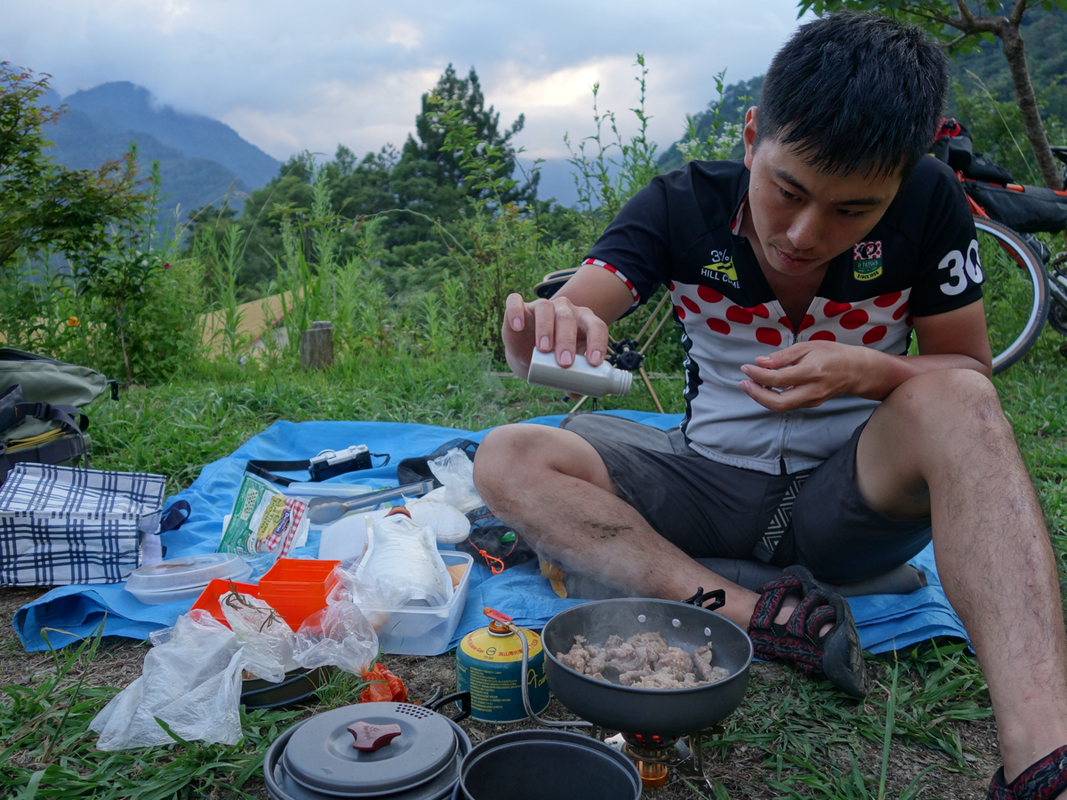
He was the sort of wilderness chef who could produce red wine deep in the mountains. For his cooking, I was willing to cross quite a few hills.
Hungry, I watched his preparations with the concentration of a vulture circling overhead or a lion waiting in the grass.
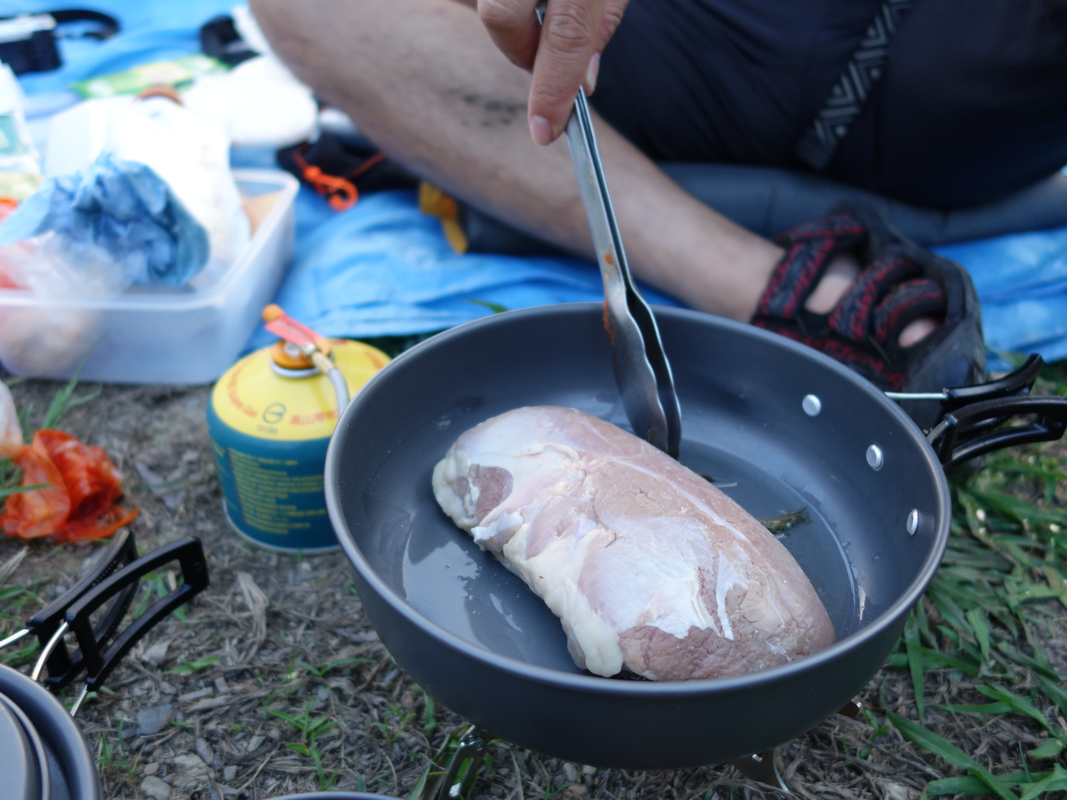
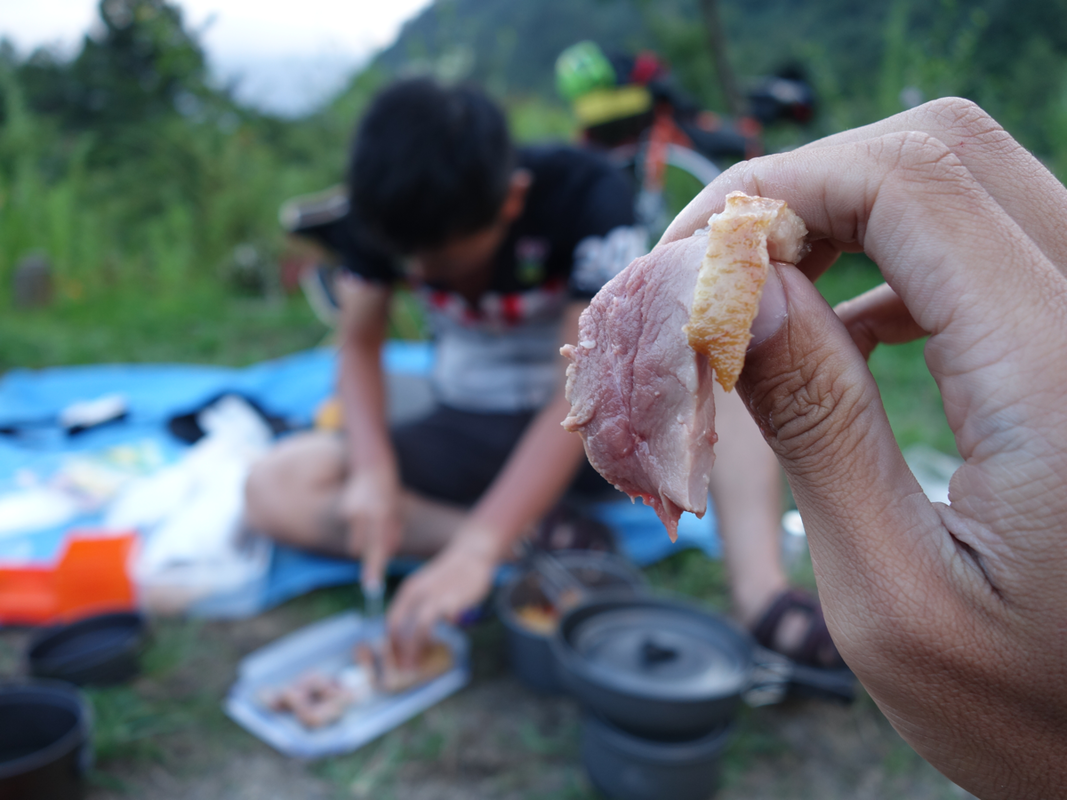
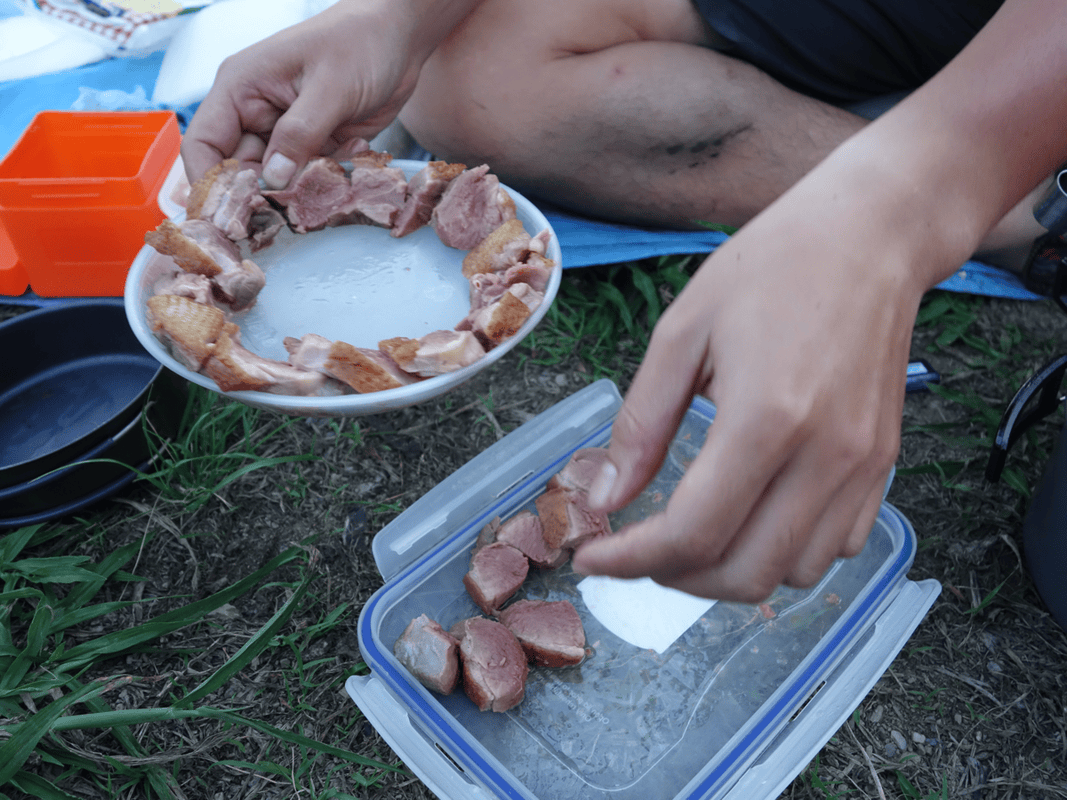
He took out a piece of meat.
“Chicken?” I asked.
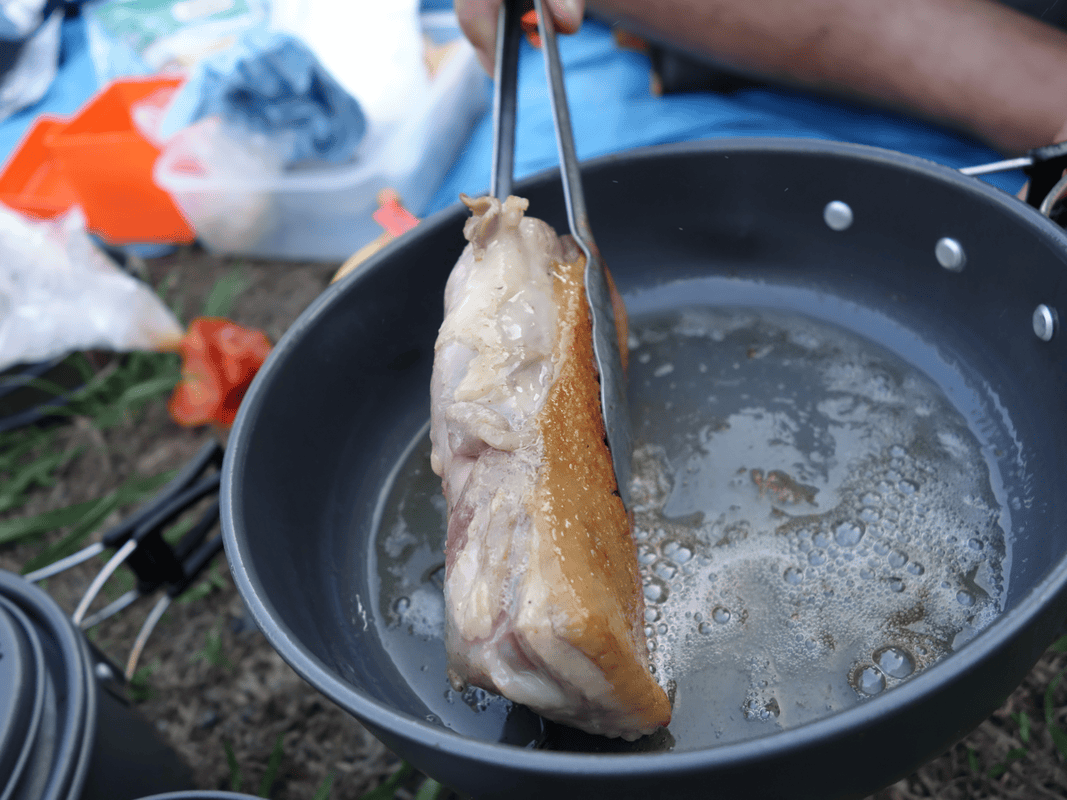
“Duck breast.”
Good heavens. I hardly ate duck breast even at home, and here it was in the middle of the mountains.
He cooked quickly too. Some ingredients had already been prepared at home, so before long dinner appeared.
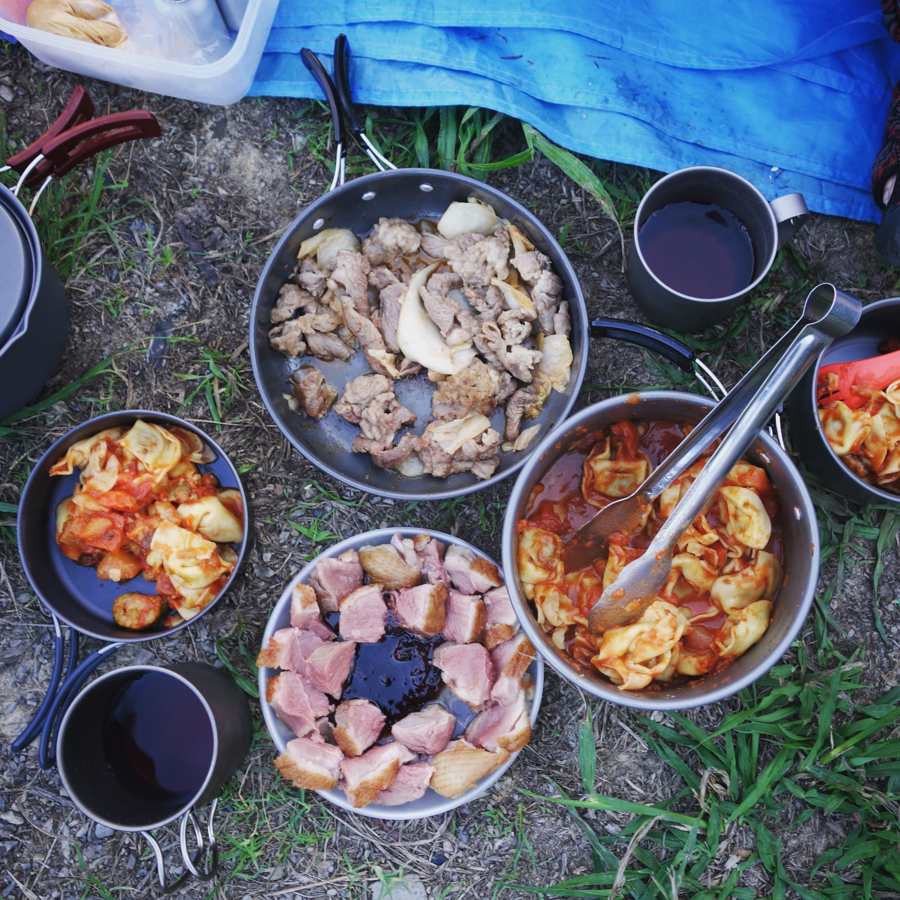
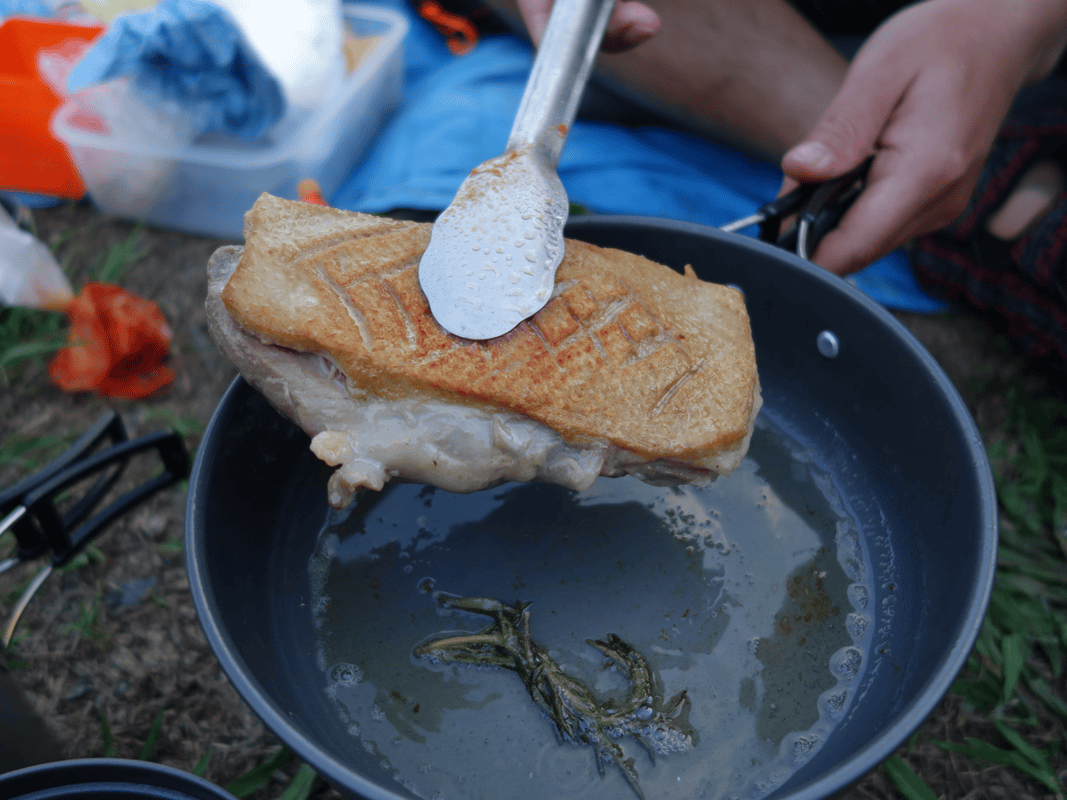
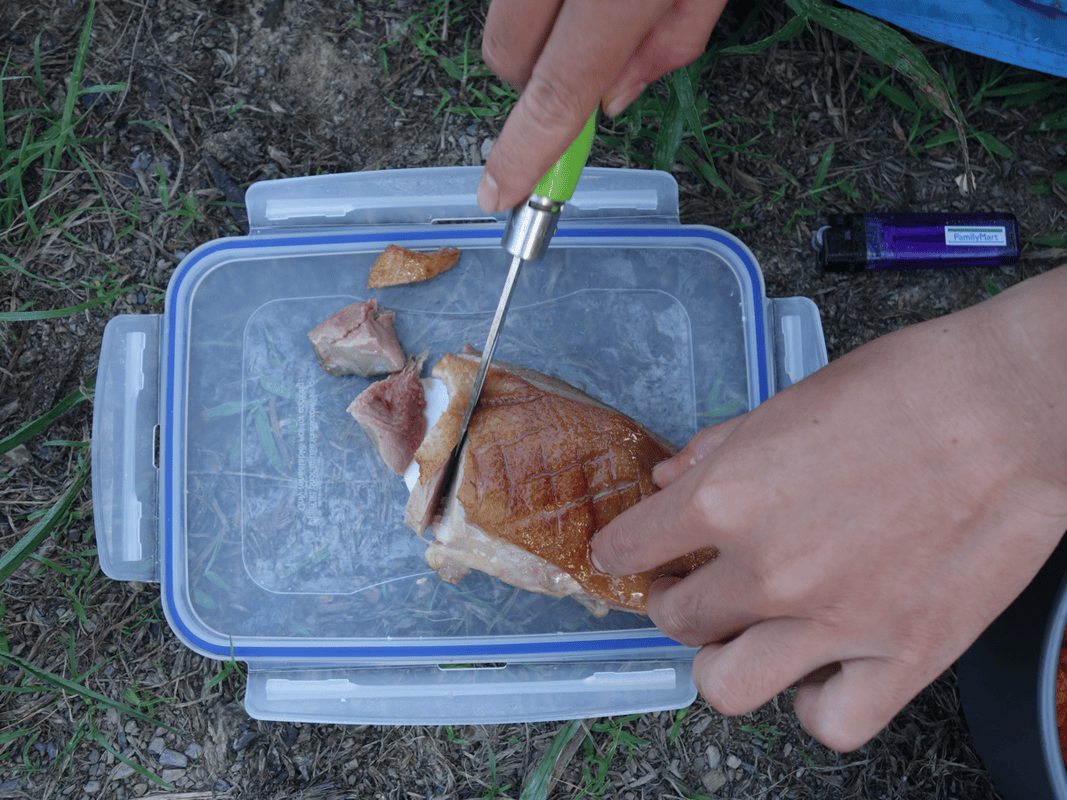
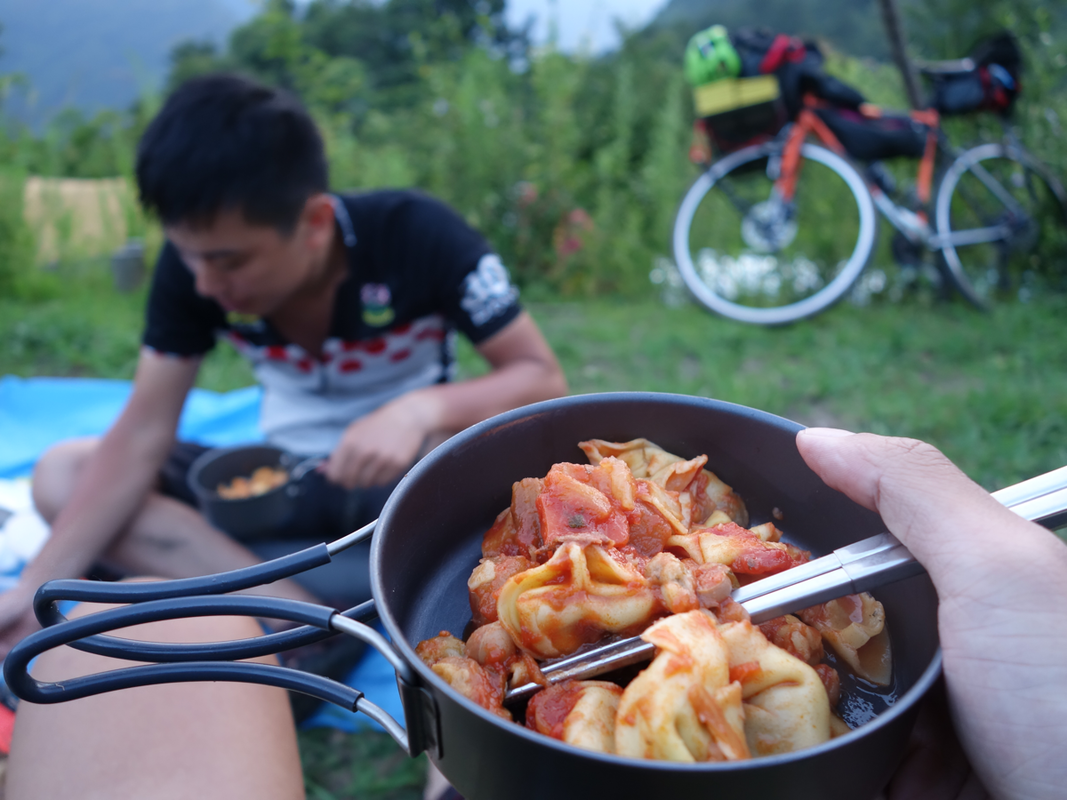
The menu combined kimchi beef tendon, Provencal-style vegetable stew with cheese dumplings, and pan-seared duck breast with a red-wine fig sauce.
A Dinner Worth Every Climb
I could hardly believe we were eating like this at camp.
The duck was tender and juicy, not dry or tough. With the sweet fig sauce, it became a beautifully balanced duet of flavors.
A-Zhe called the beef tendon a failure. A bag had leaked, softening pieces he had previously fried crisp.
I had no idea how good the successful version might have been. Even this so-called failure made me regret not carrying several bowls of rice to go with it.
The cheese dumplings supplied plenty of energy, making all the day’s effort feel richly rewarded.
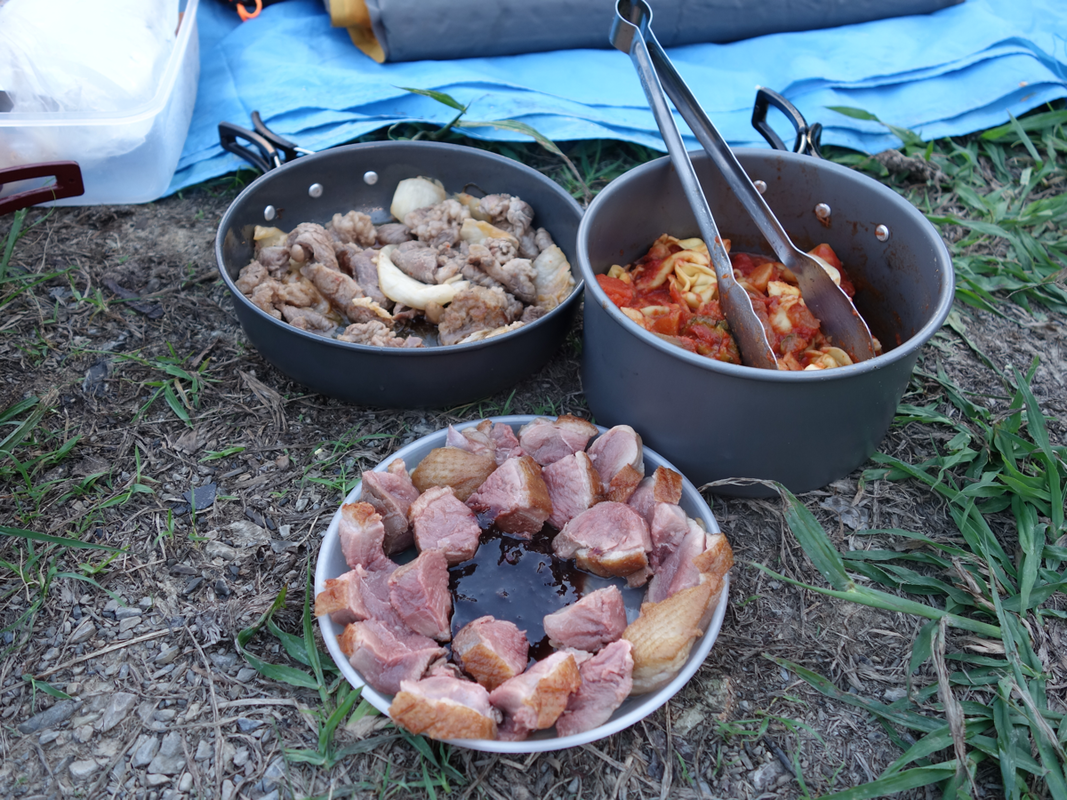
After dinner and a wash, we returned to our separate shelters to rest for the following day.
A Sky Full of Stars
During the night, I woke needing the toilet.
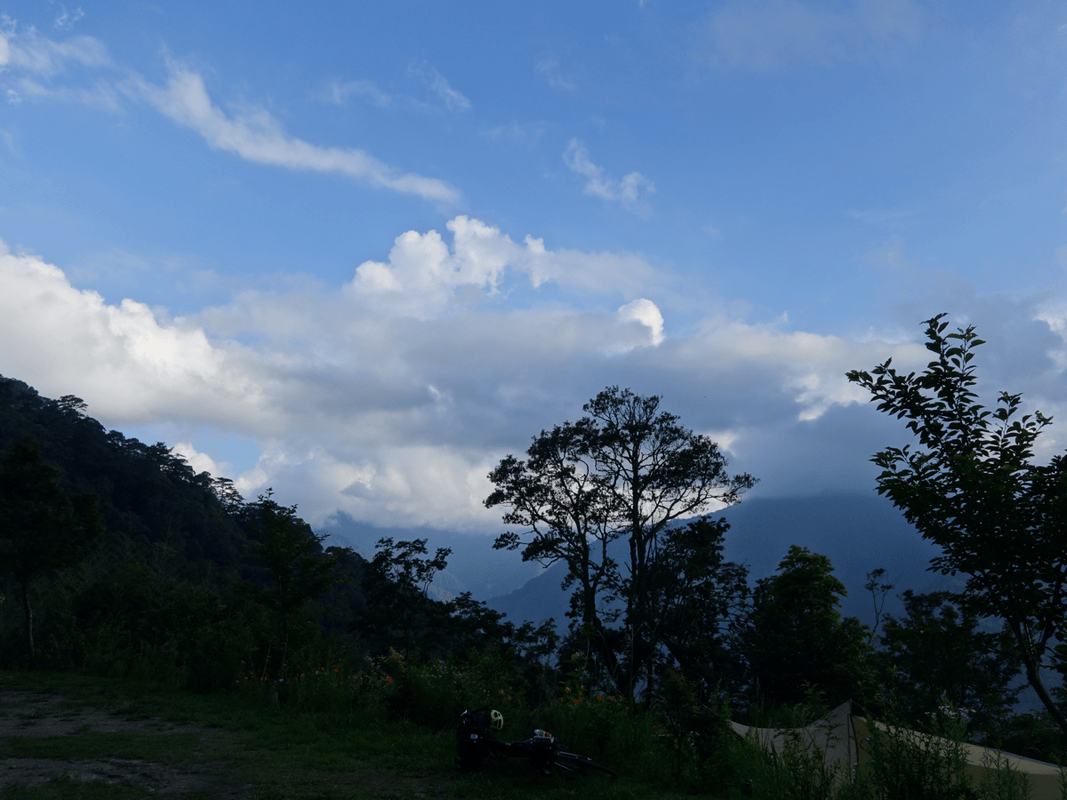
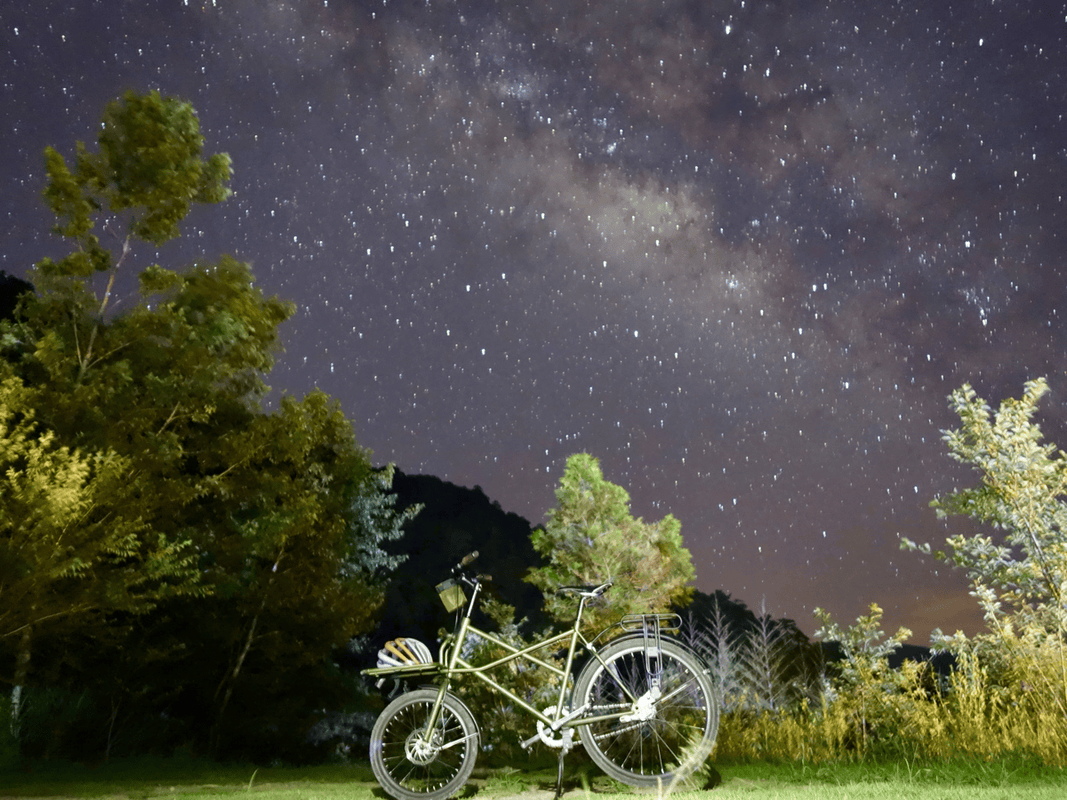
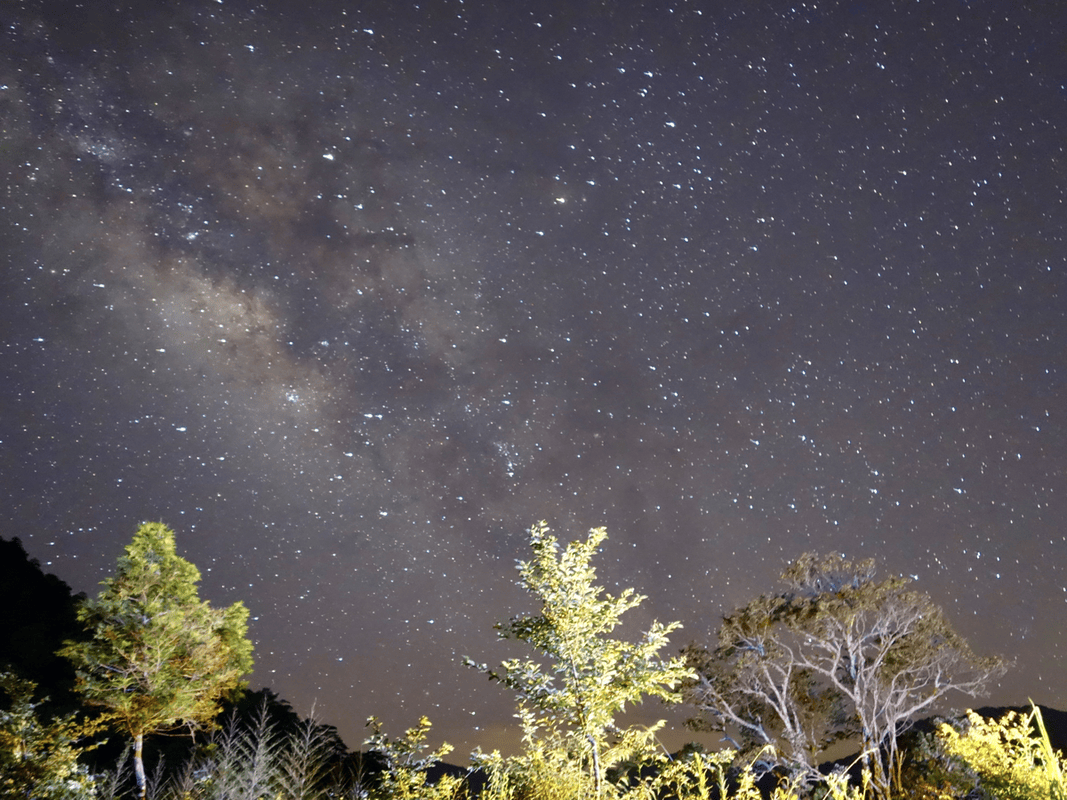
Climbing out of the bivy, I found an entire sky of stars above me. The sight was so overwhelming that I forgot why I had got up.
I picked up the camera and started taking photographs.
My bicycle had no kickstand and would not stand as I wanted, so A-Zhe’s bike became the subject instead.
The next morning, he asked why I had not woken him to see it.
A Prince Arrives with Breakfast
Morning light woke me in the bivy.
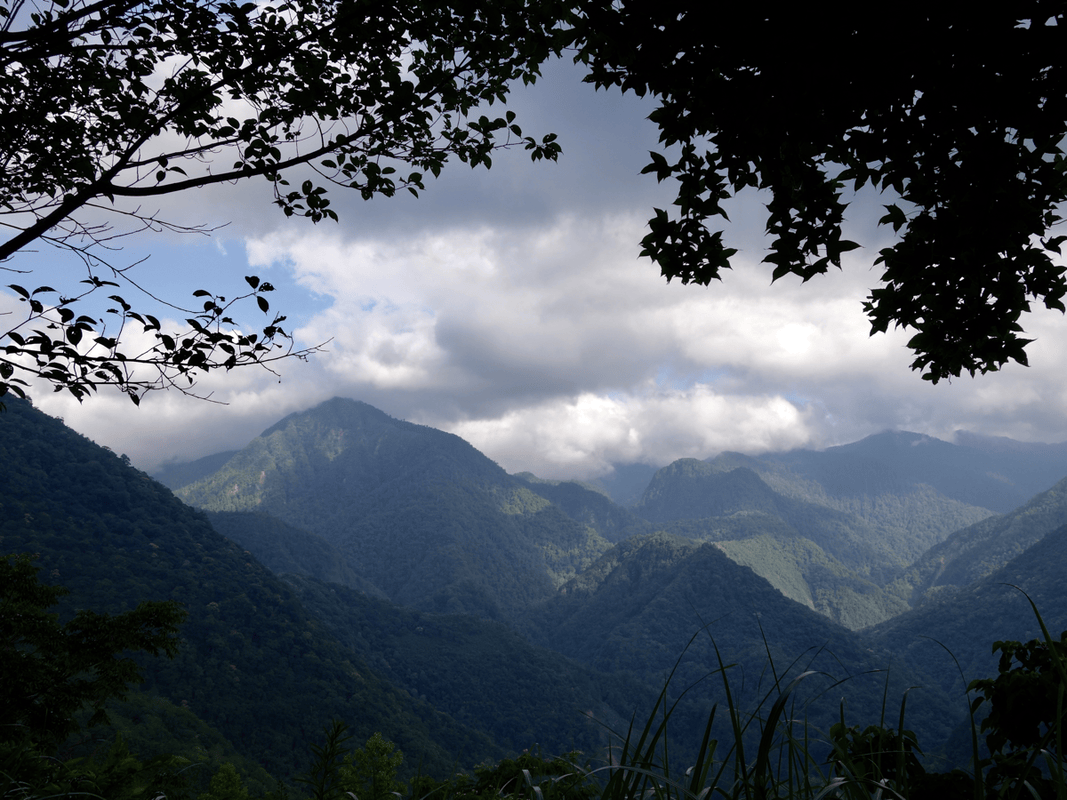
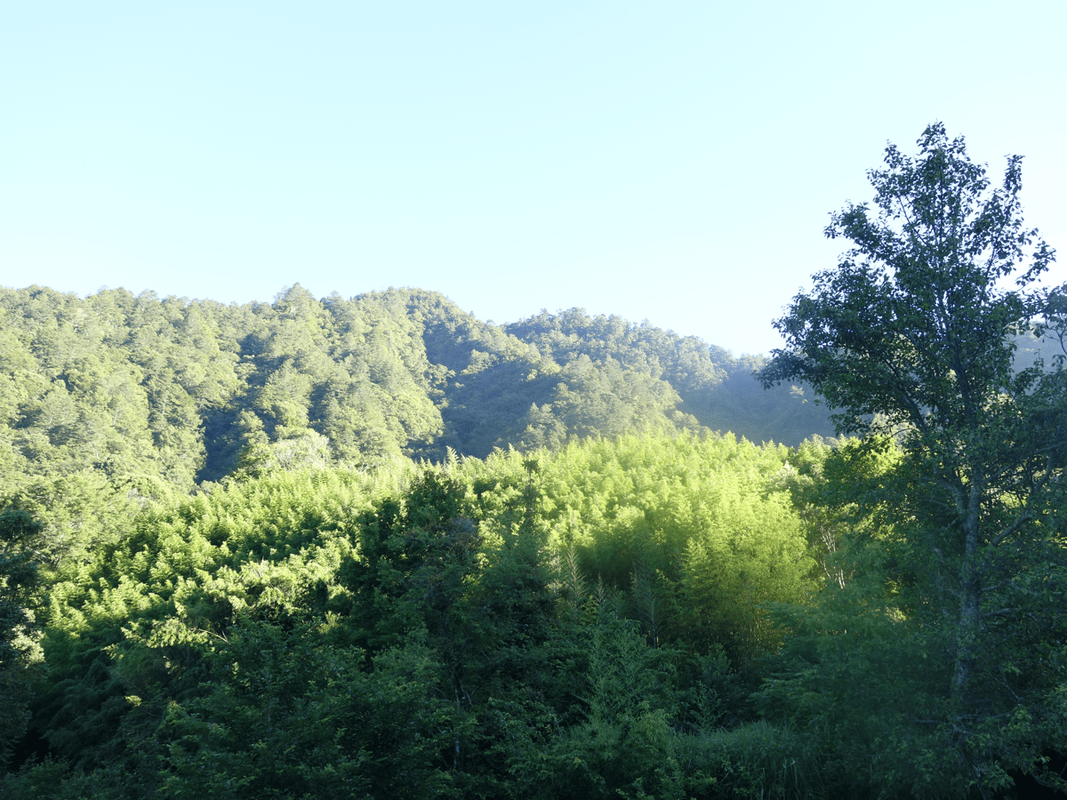
Outside, sunlight had turned the mountains gold and green. Birds were busy with breakfast, while my stomach loudly wondered where mine was.
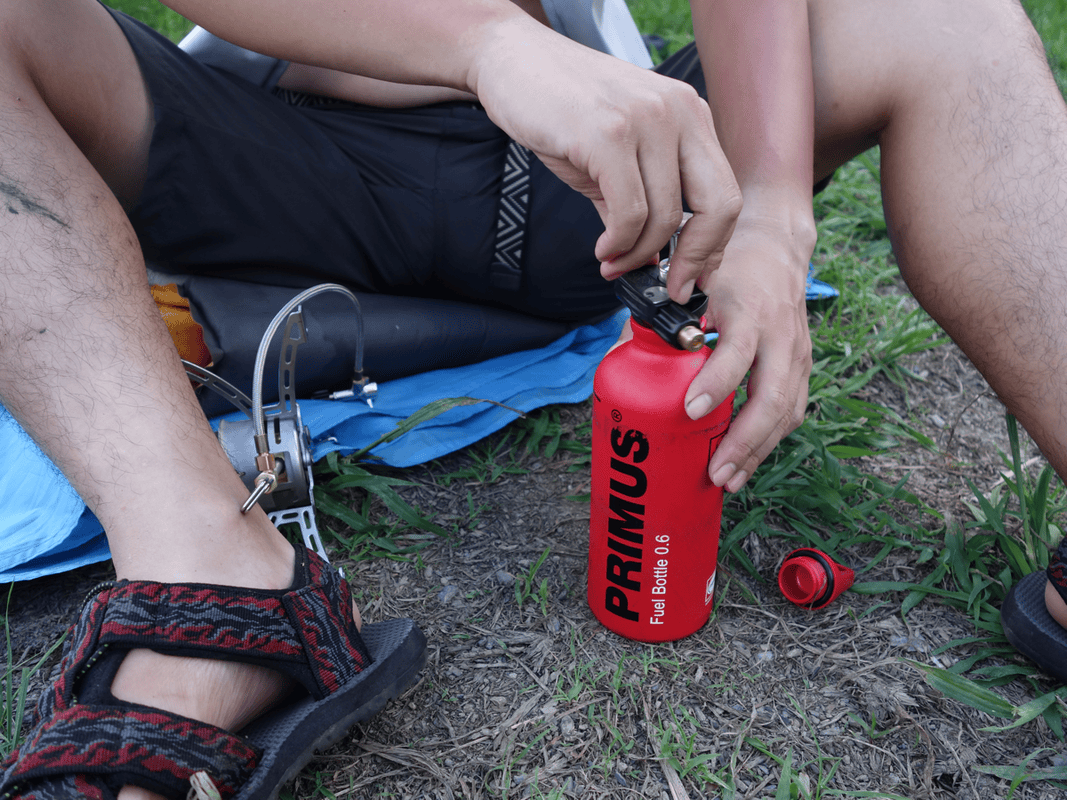
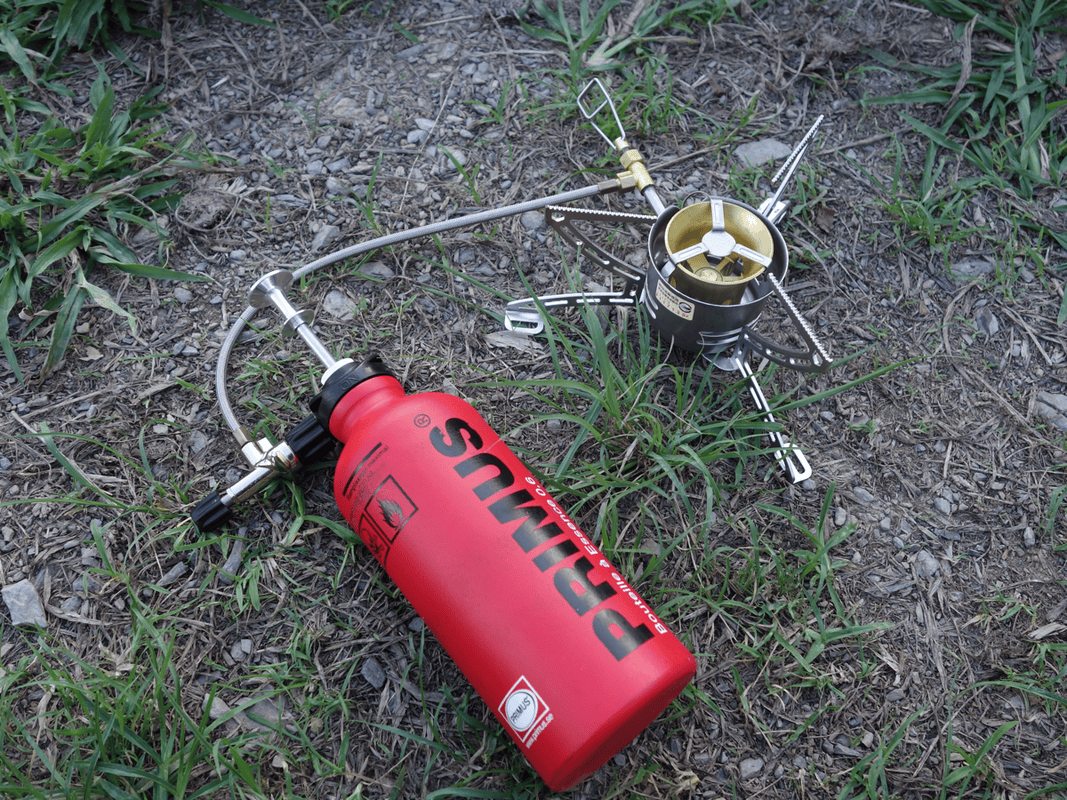
I looked toward A-Zhe’s shelter just as he came walking over with cookware and a stove.
In my hungry imagination, his hair flowed in the breeze, roses bloomed behind him and everything moved in slow motion. Here was a prince coming to save me from starvation.
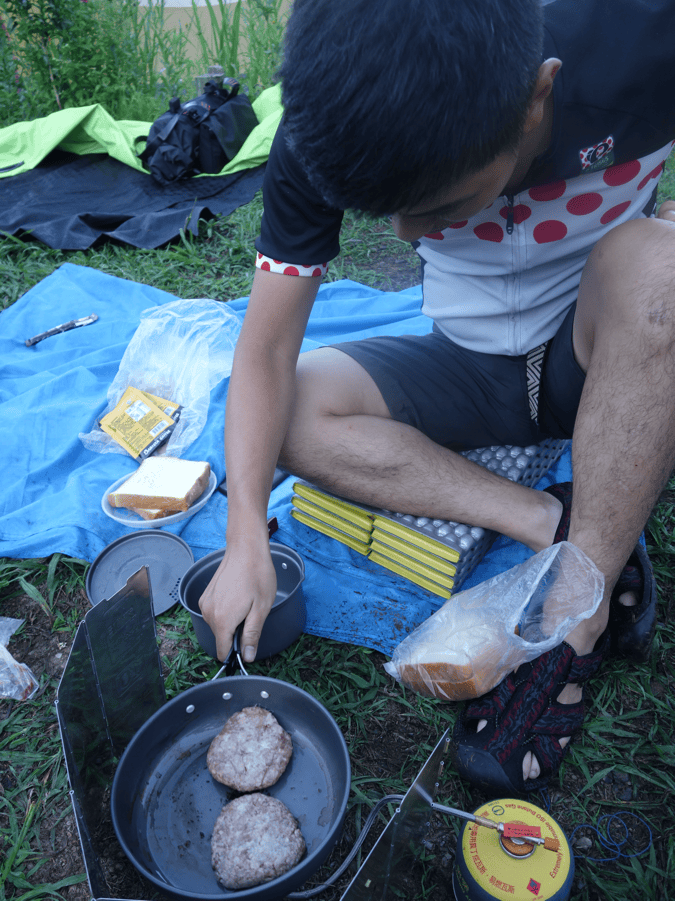
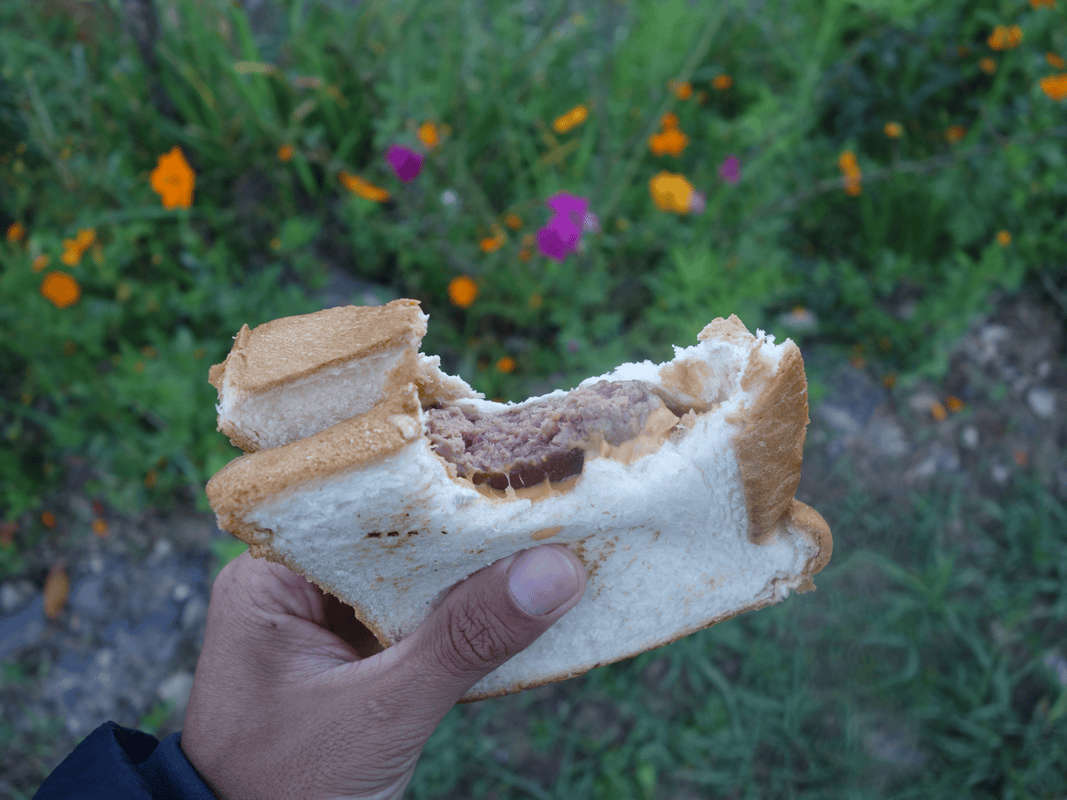
The joke lasted only until breakfast arrived: a burger-patty sandwich.
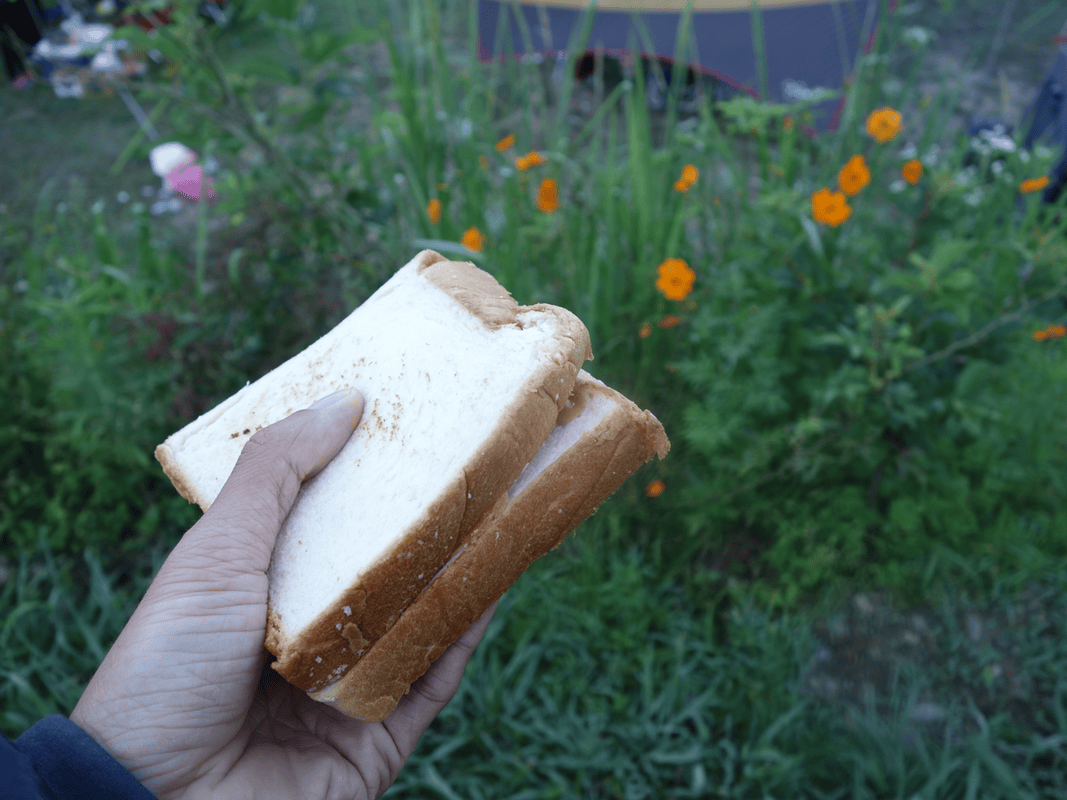
Unlike my usual hurried meals, he had toasted the bread until fragrant and crisp. Melted cheese and juicy beef filled the first bite.
It was the kind of deliciousness that would produce glowing food and spectacular reactions in an anime.
Back over the Hills
After breakfast in the warm morning sunshine, we tidied our gear and wandered around camp, taking photographs and collecting a few more memories.
We were reluctant to leave.
Partly, we did not want to say goodbye to the mountain setting. More deeply, we did not want to face the climbs waiting on the return journey.
But we could not stay forever.
So we got back on the bicycles. Over the hills, toward home.
Bikepacking diary: Facebook