Pingxi Historic Trail | Streamside Bikepacking and the Shikong Descent
Translated from Bikepacking diary’s original Pingxi Historic Trail article, published on January 22, 2017, and republished by arrangement with the author. Photographs are linked directly from the original website.
Editor’s note: This historical personal account is not a current trail, bicycle-access or camping guide. Confirm permitted activities, overnight permissions, trail status and weather with the relevant managers before visiting. A flat area above a stream is not proof of permission or protection from flooding; choose authorized overnight sites away from water hazards. Stream crossings, mossy surfaces and steep paths can be dangerous, especially with a loaded bicycle. Turn back when conditions exceed your ability, and do not rely on an old route record or mobile reception for navigation. Keep a safe distance from wildlife and respect residents and temple grounds. The distances, facilities and encounters below describe the author’s visit in 2017.
Thanks to the People Who Showed Me the Way
I owe this trip to Lent Yang, who told me about Pingxi Historic Trail, and to Eric’s blog.
The GPS route in Eric’s account was enormously helpful to someone like me, with little experience of taking a bicycle onto old mountain trails.
Once I left the roads recorded on Google Maps, the route photographs I had saved from his blog became something to rely on: a light in the unmapped mist.
A Section of the Tamsui–Kavalan Trails
Pingxi Historic Trail, Shikong Historic Trail and the Wantan trail I had ridden previously all belonged to the network known as the Tamsui–Kavalan Trails.
More precisely, I thought of Pingxi and Wantan as sections of that larger route, although I had not heard people use quite the same naming pattern for Shikong.
The original account described this network as an important Qing-period connection between the Tamsui and Kavalan administrative districts.
The Pingxi and Shikong sections I would follow lay toward its Yilan end.
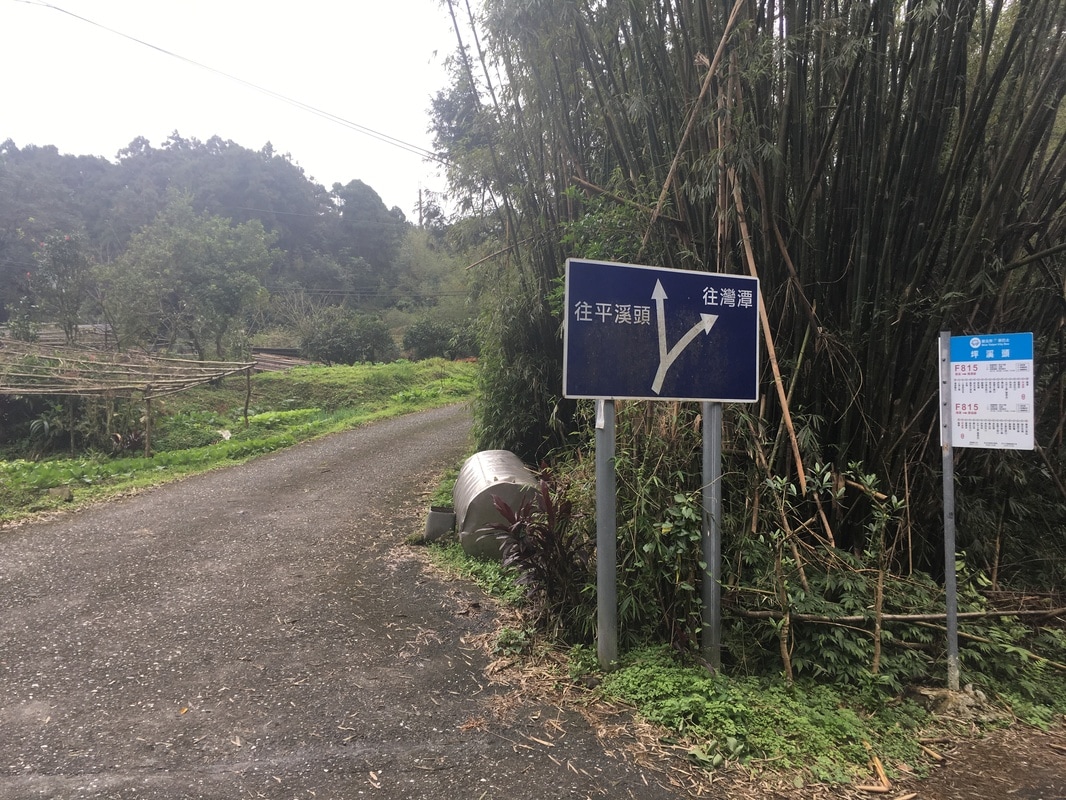
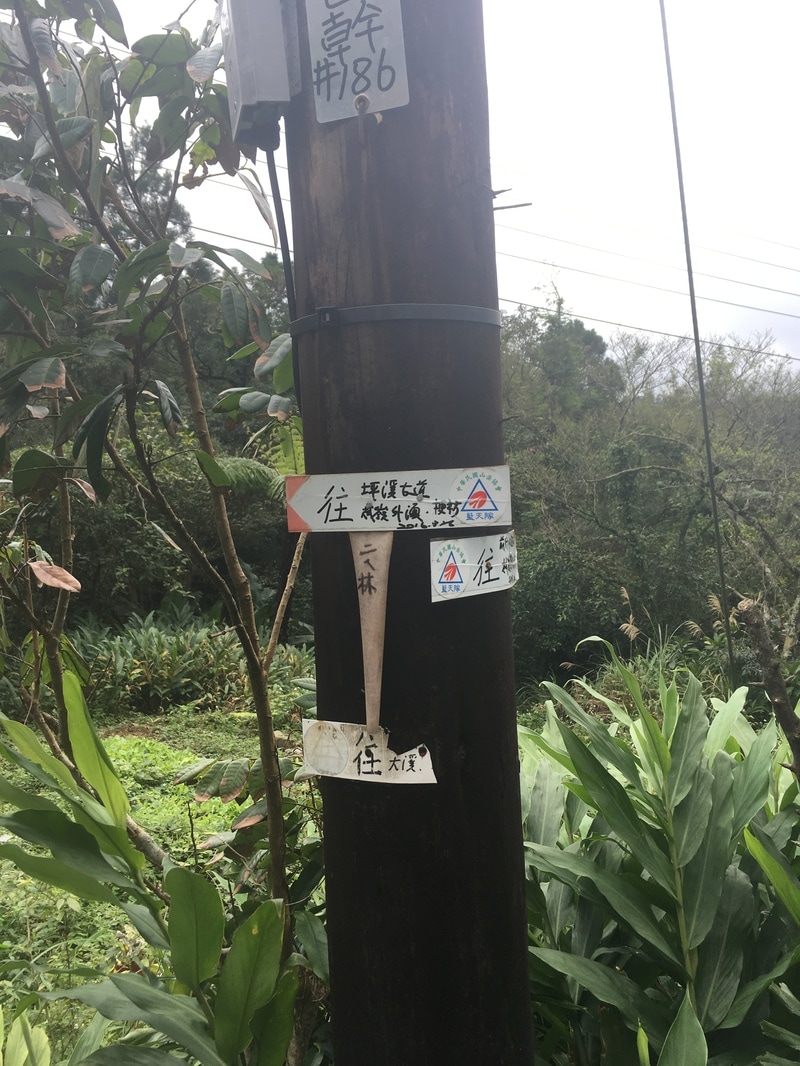
For this journey, I used the same approach as for Wantan: leaving Shuangtai Road at a junction, descending to the right and following signs toward Pingxitou.
That is a recollection of my approach, not a set of current navigation instructions.
Wushan No. 62
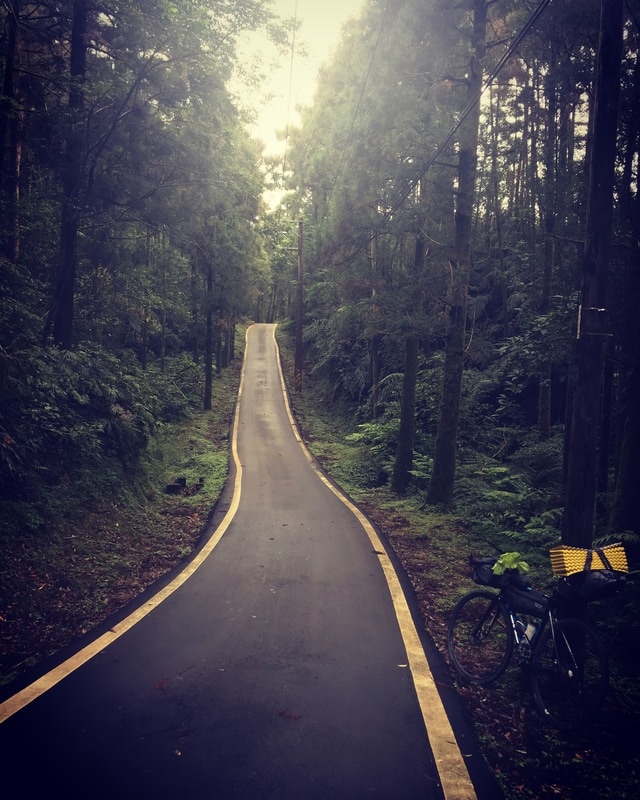
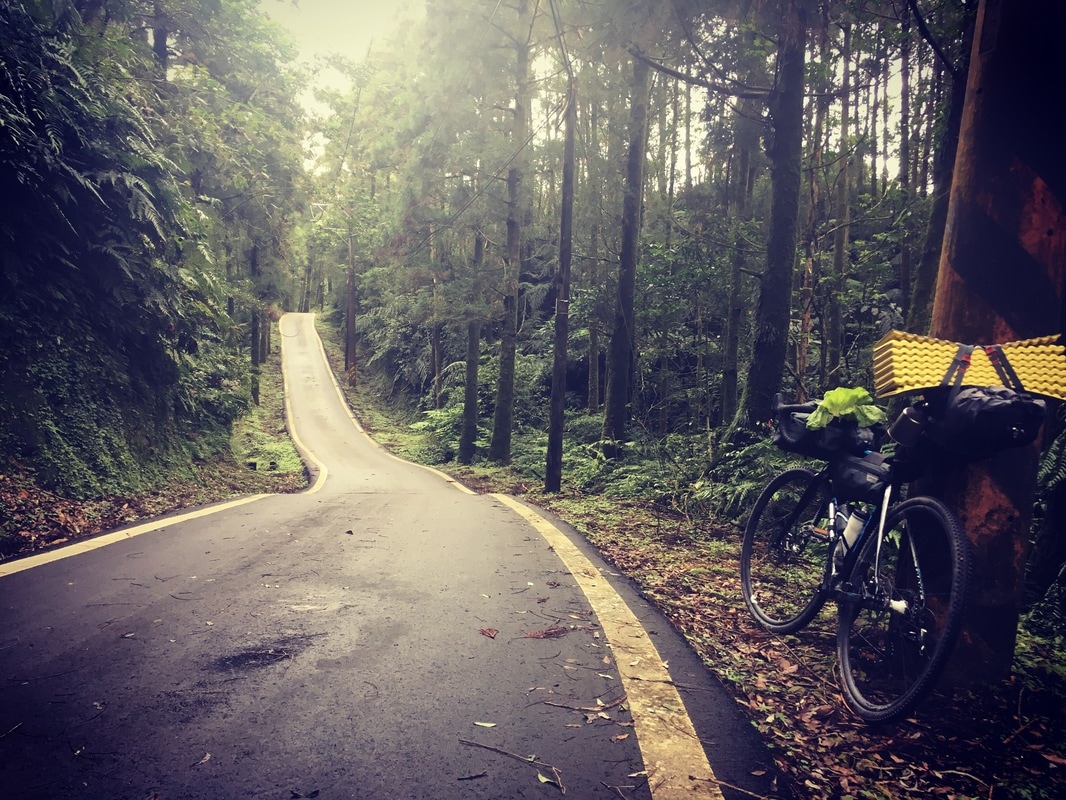
The little road before the historic trail had been asphalted.
The smoother surface did not make me confident, however. Steep gradients and moss still persuaded me to get off whenever a section looked slippery.
I actually felt more comfortable on the gentler concrete farther along.
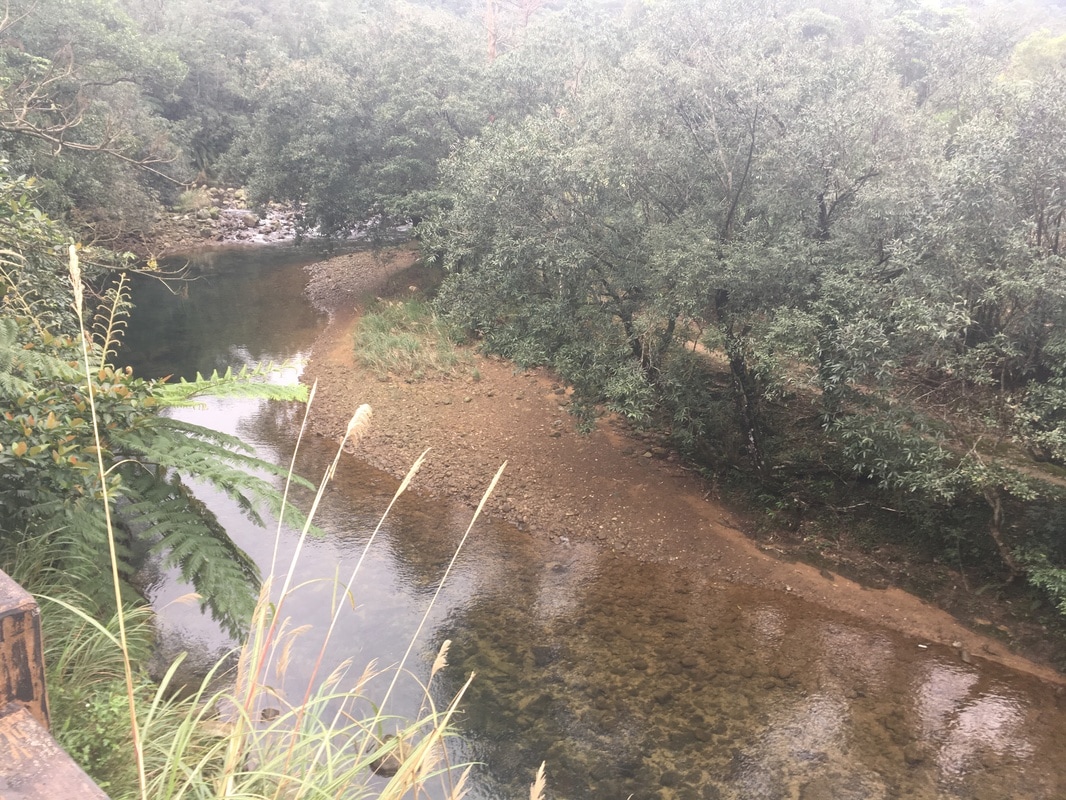
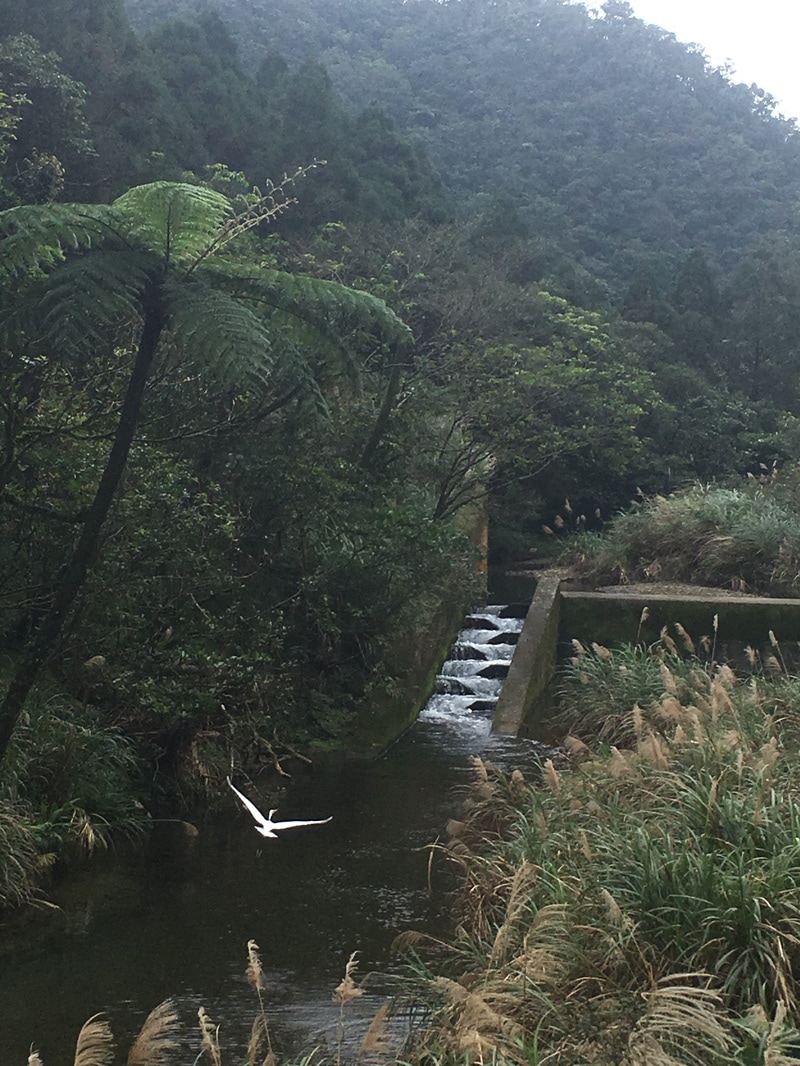
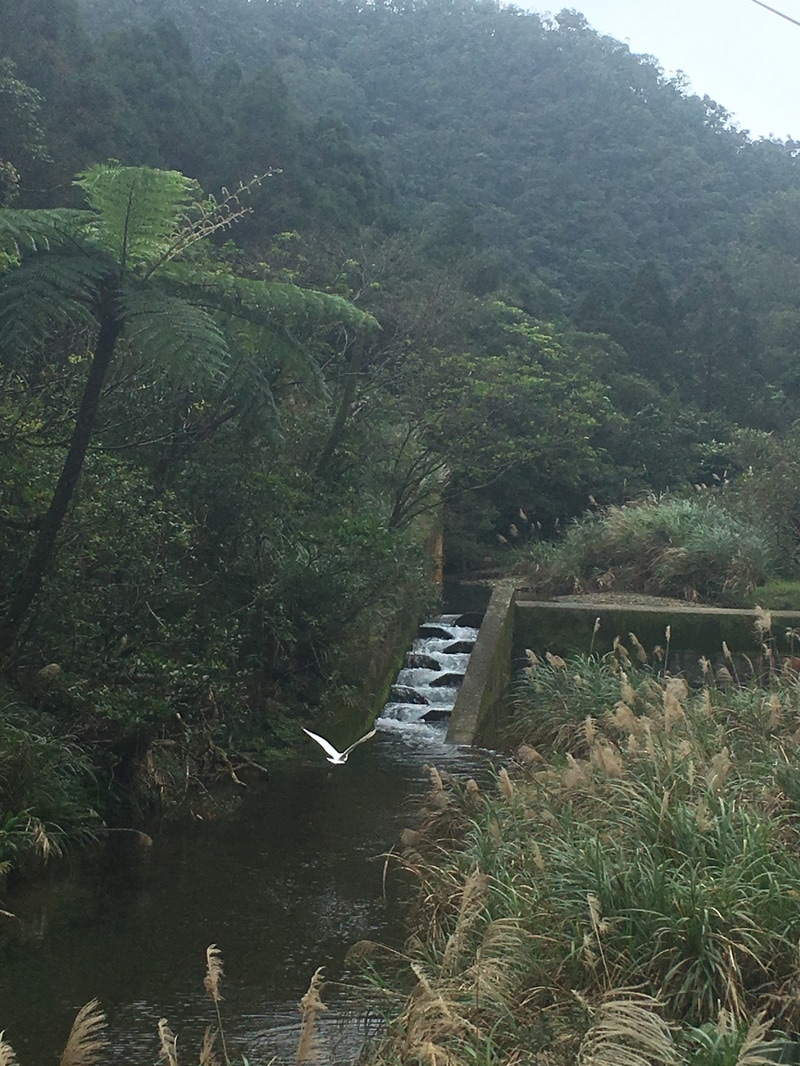
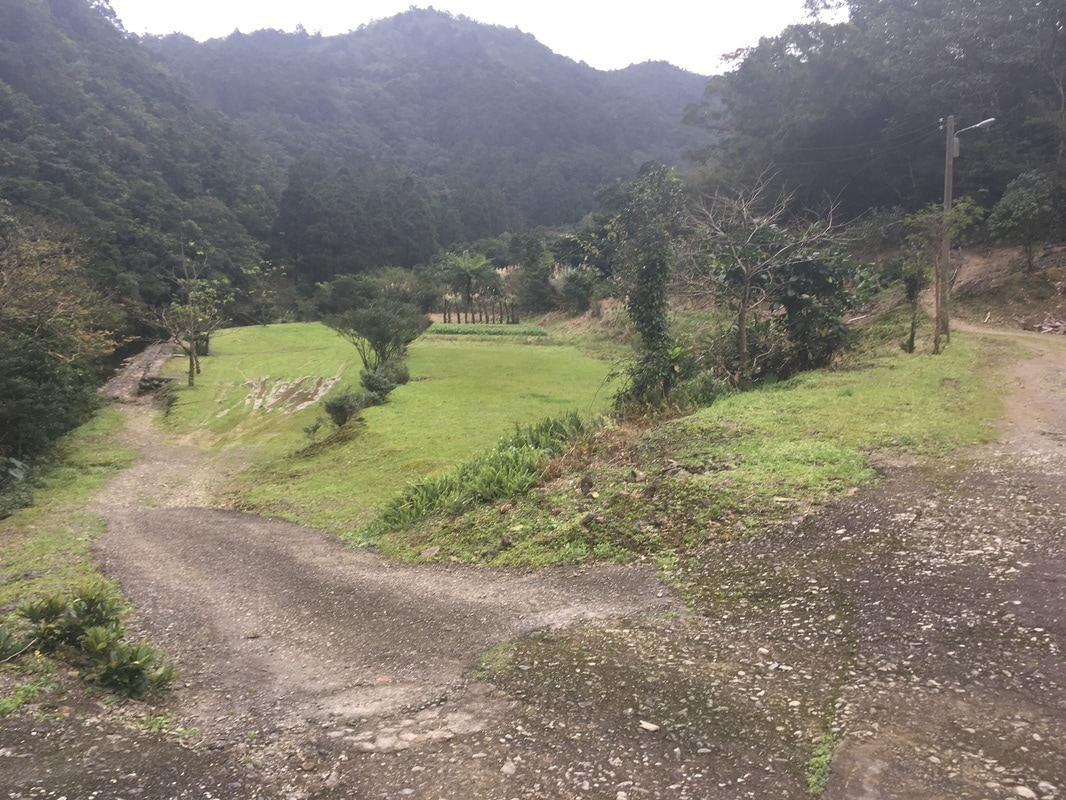
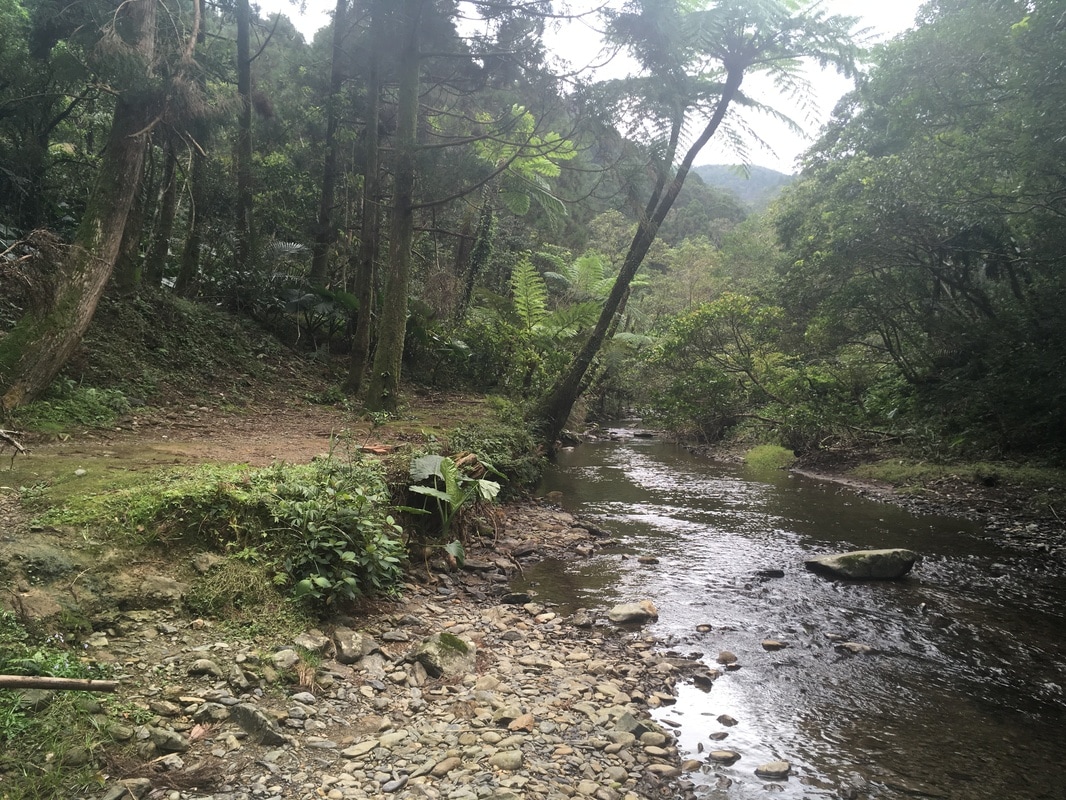
The road followed the stream into the hills. Then the view suddenly opened onto a level concrete yard and a small vegetable garden.
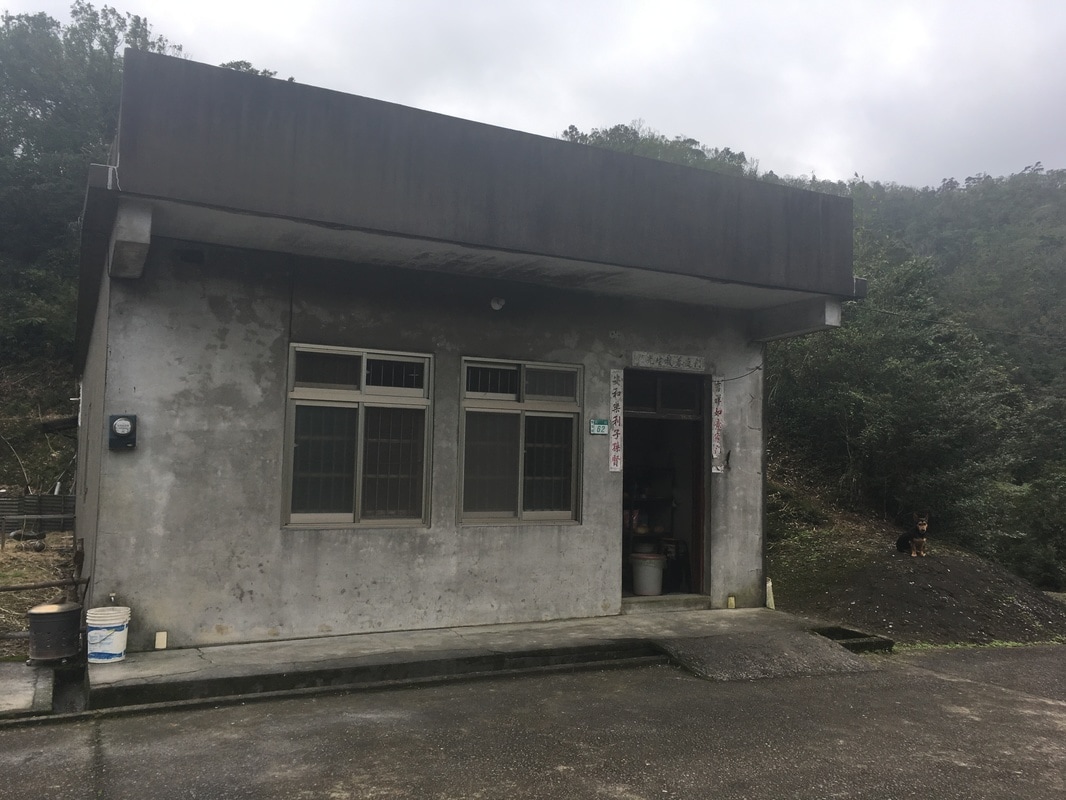
A square building stood there, almost like a die.
I knew I had reached the place I had heard about: Wushan No. 62.
A charming short-legged black dog ran out to bark at me. It put plenty of effort into the job, but its corgi-like proportions made it difficult for me to feel frightened.
An older couple came out after it and invited me in for tea and conversation.
I had not yet found somewhere to sleep, so I reluctantly declined their kindness.
A Place beside the Stream
Standing in the open yard and looking around, I could not see where the route continued.
I took out my phone. No signal.
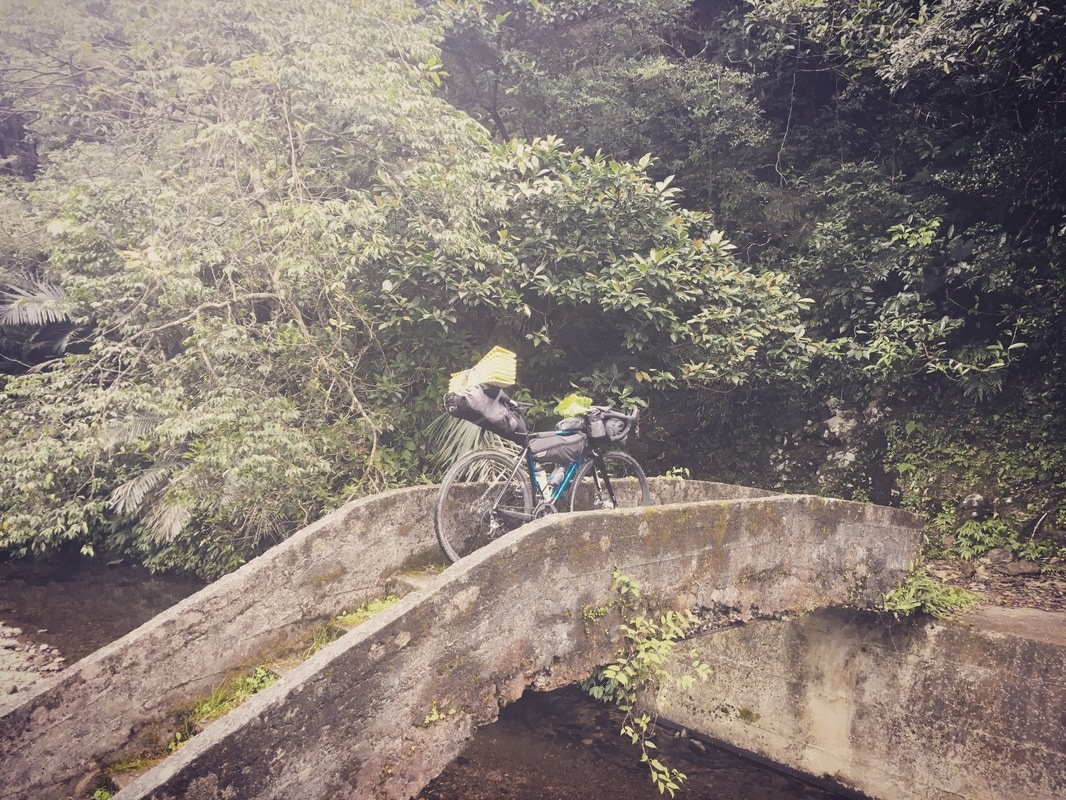
I headed upstream and, behind the camping area, found a small bridge connecting to the historic trail entrance.
The sign gave the trail’s length as only 1.6 kilometers. I thought finding an overnight spot along it should not take long.
In fact, before I had gone farther, I noticed a place right near the entrance.
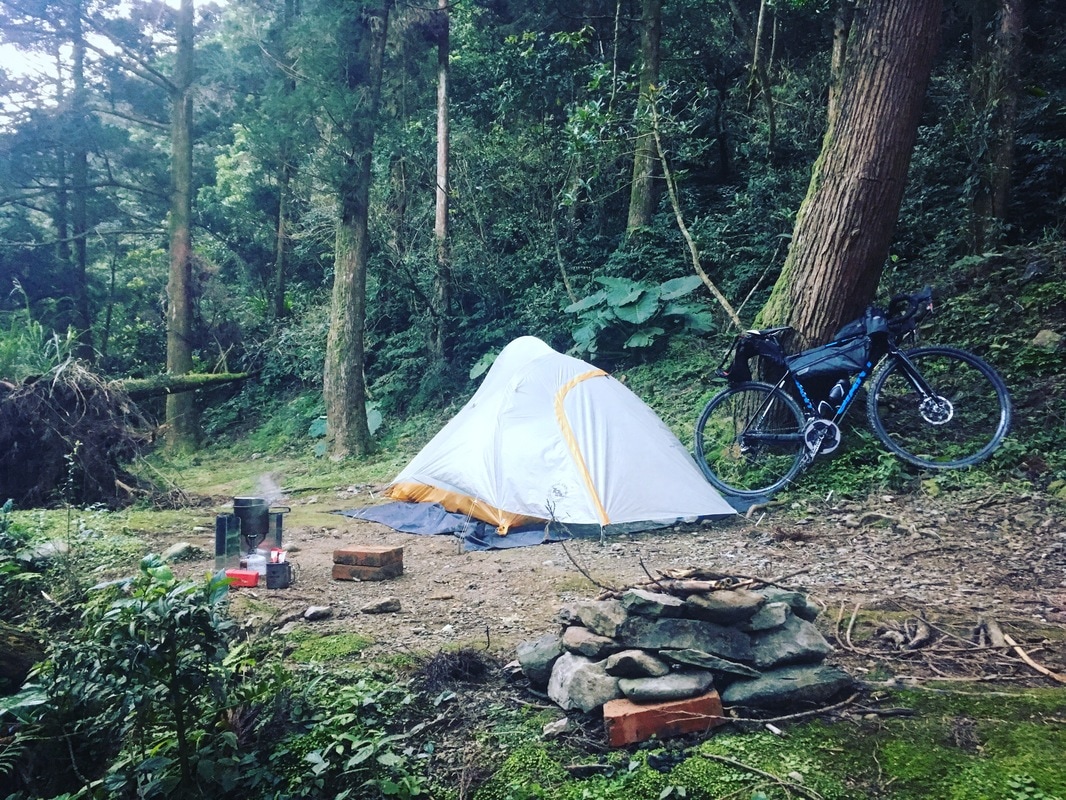
To my eyes then, it was perfect: a front-row stream view and a level platform above the water, with open space around it that I imagined would keep it from being too damp.
I mentally ranked it among the three best places I had slept. That enthusiasm did not establish either camping permission or flood safety.
For once, I had spent almost no time searching. By the time my home for the night was arranged, it was only about three.
The Best Background Music
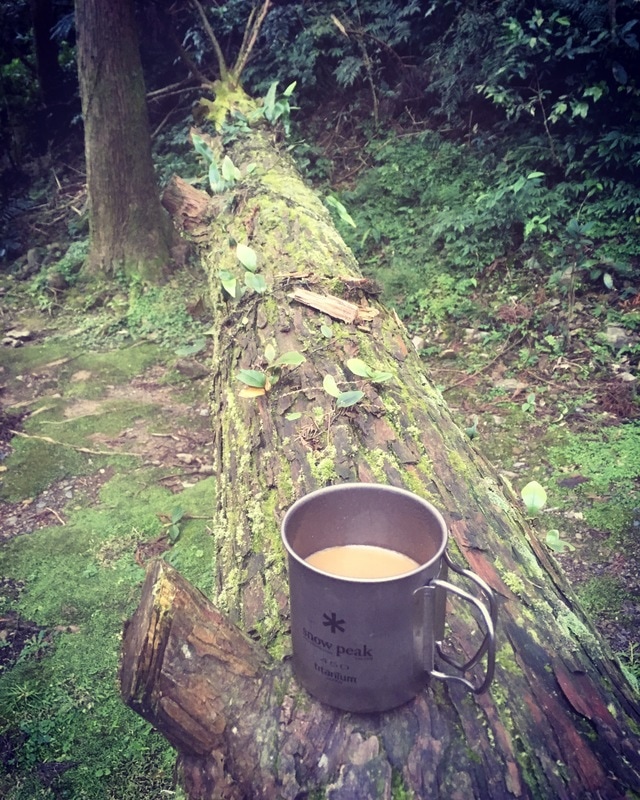
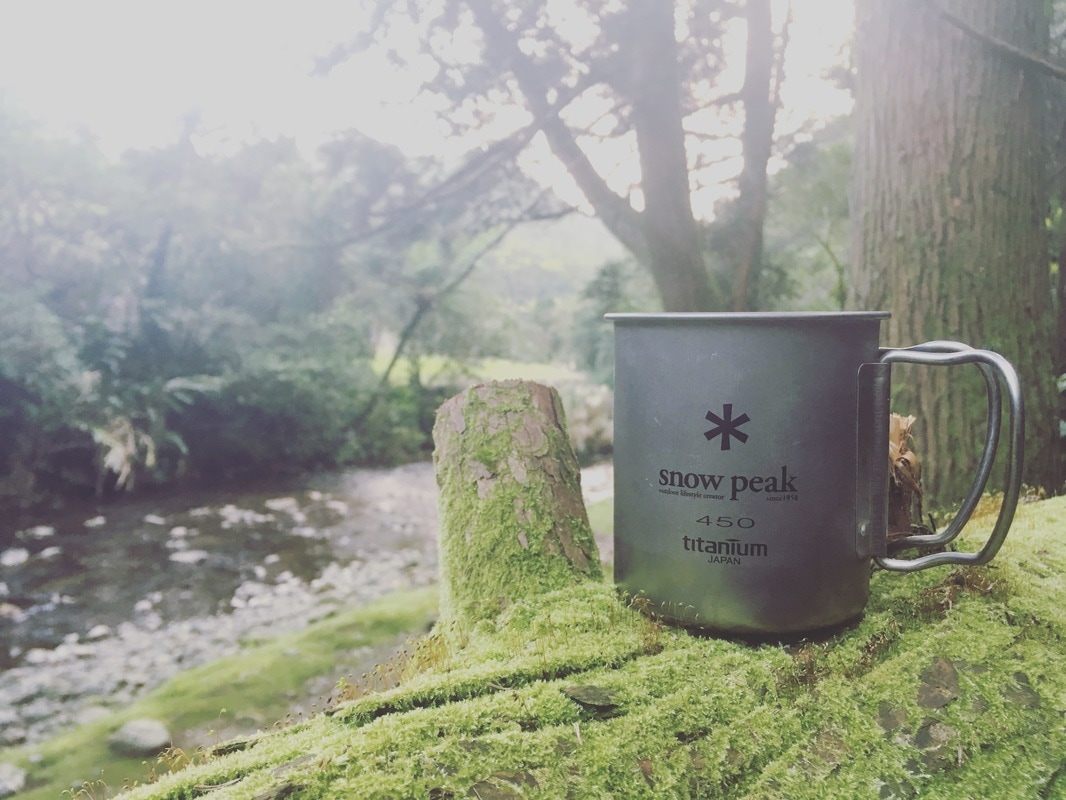
I took out my pot and stove, boiled water and made hot chocolate.
Without milk, it was not especially good. Still, hot chocolate was hot chocolate, and afterward I felt wonderfully lazy.
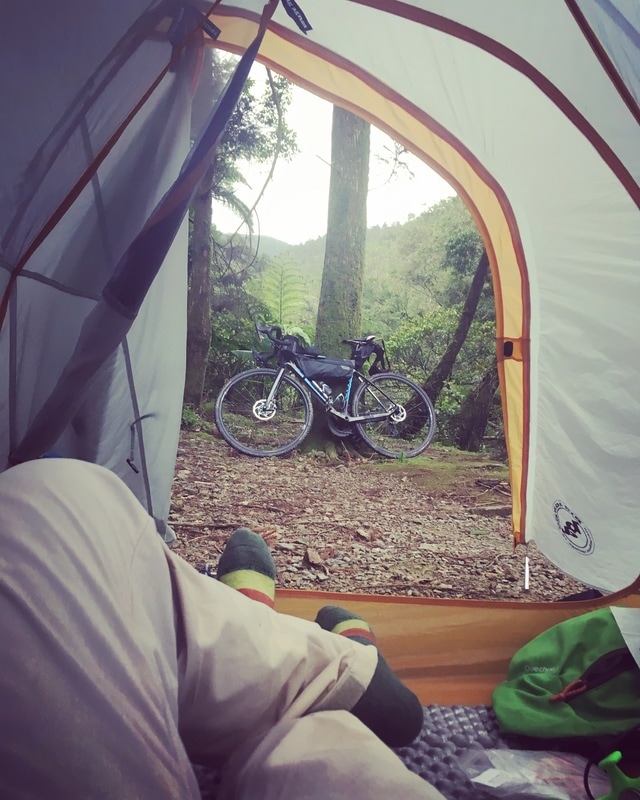
I crawled into the tent for a nap.
Only when I closed my eyes did I really notice how soothing the stream sounded.
I had slept beside the sea and other streams before, but the water had usually roared. I had wondered why it sounded nothing like the nature recordings I knew. Why was it so noisy?
This time, it really did resemble the water on those peaceful Wind Music recordings: slow, steady and deeply calming.
Whatever else I thought of the spot, its background music deserved first place.
I drifted into a deep sleep.
Vegetables, Noodles and an Early Night
When I woke, it was time for dinner.
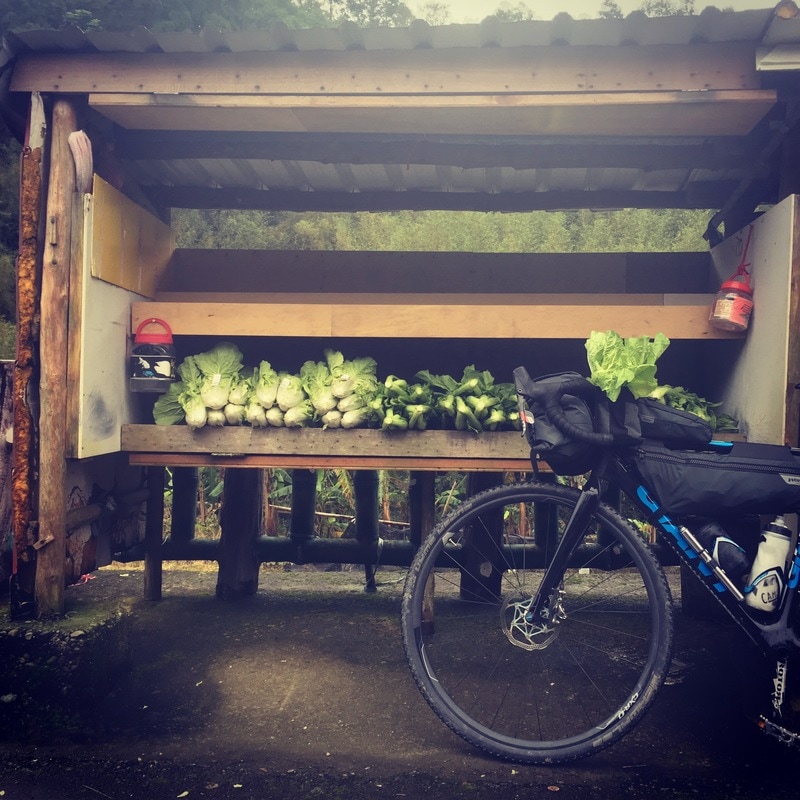
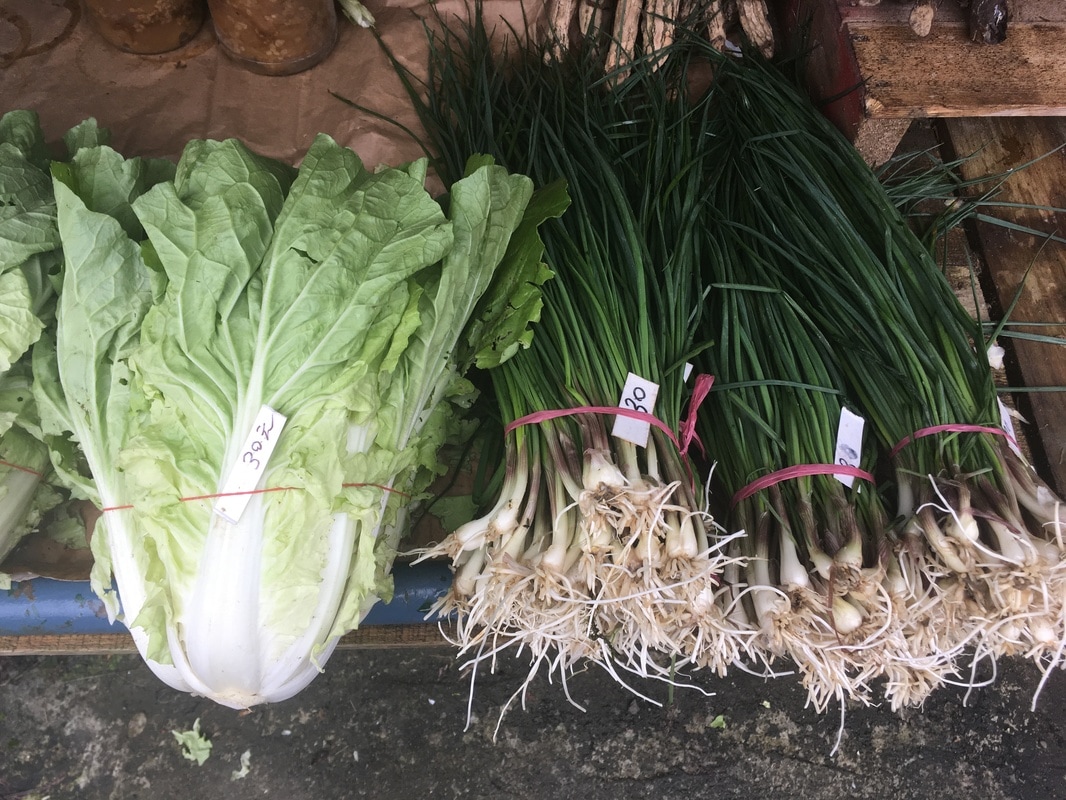
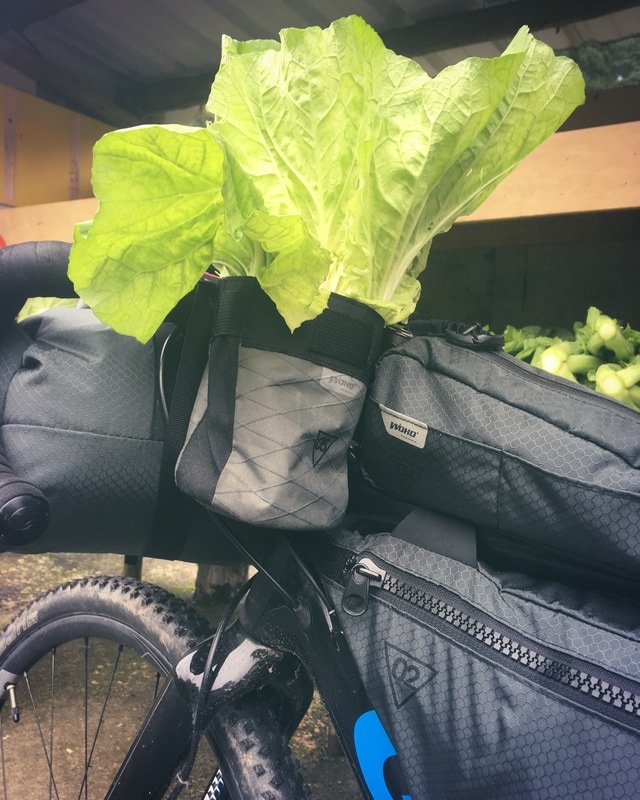
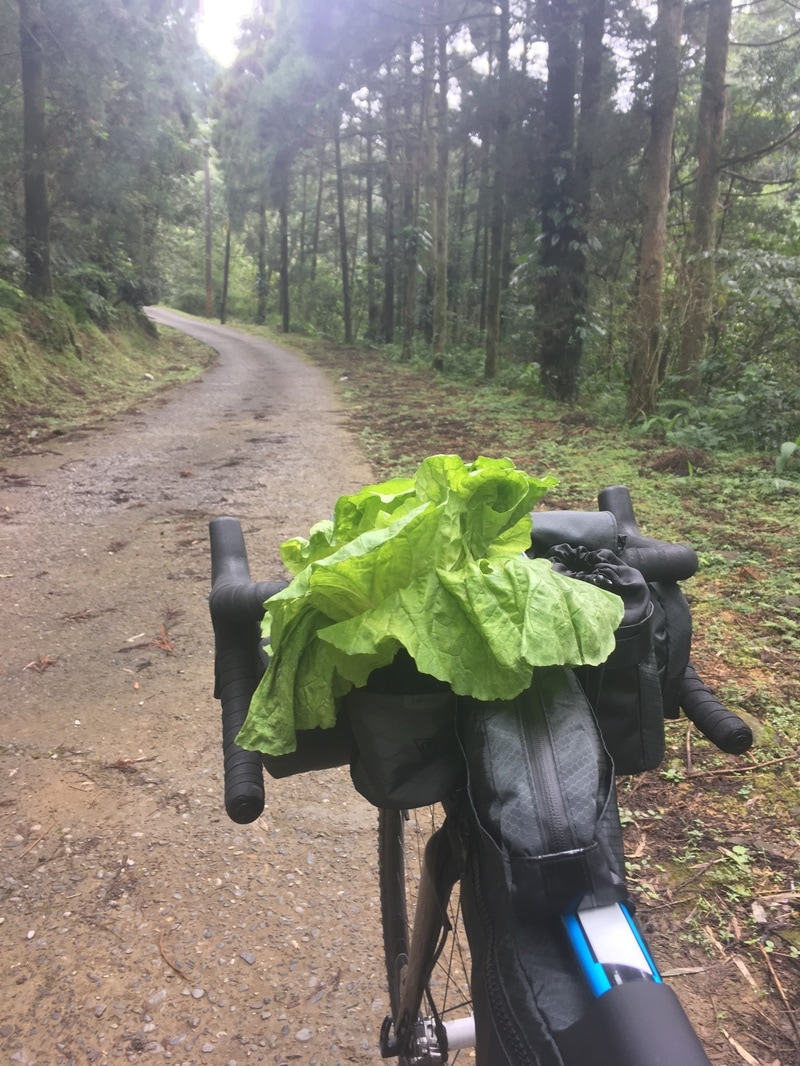
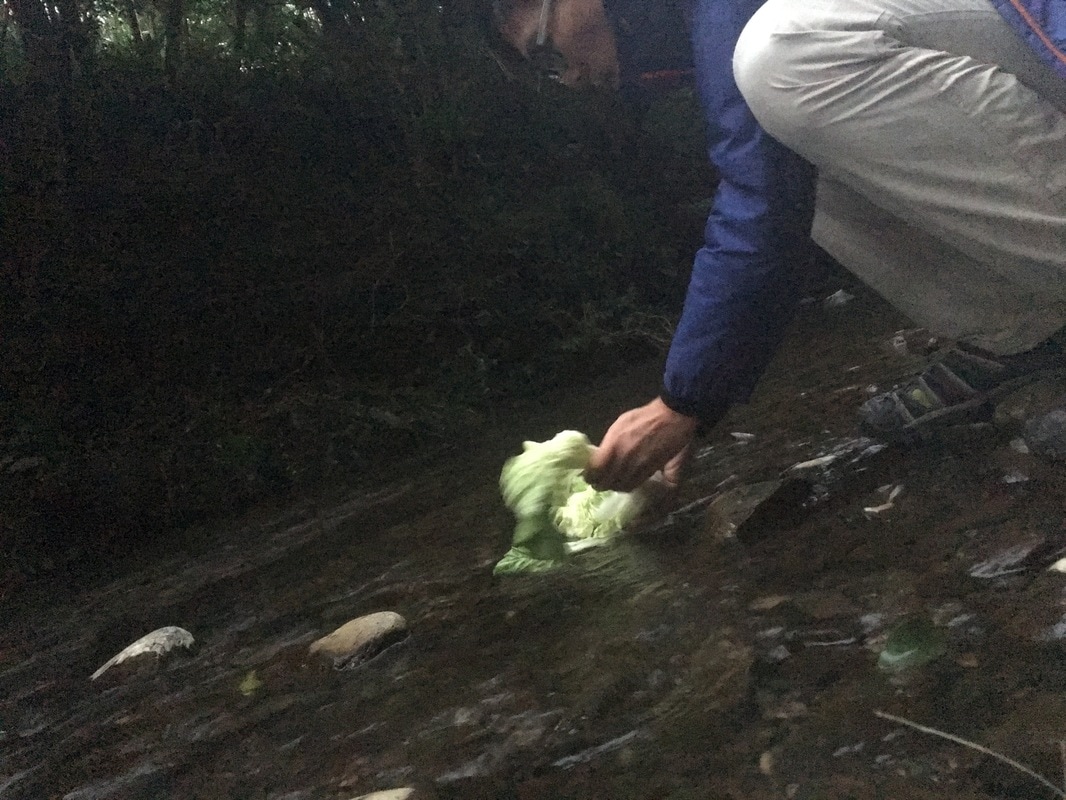
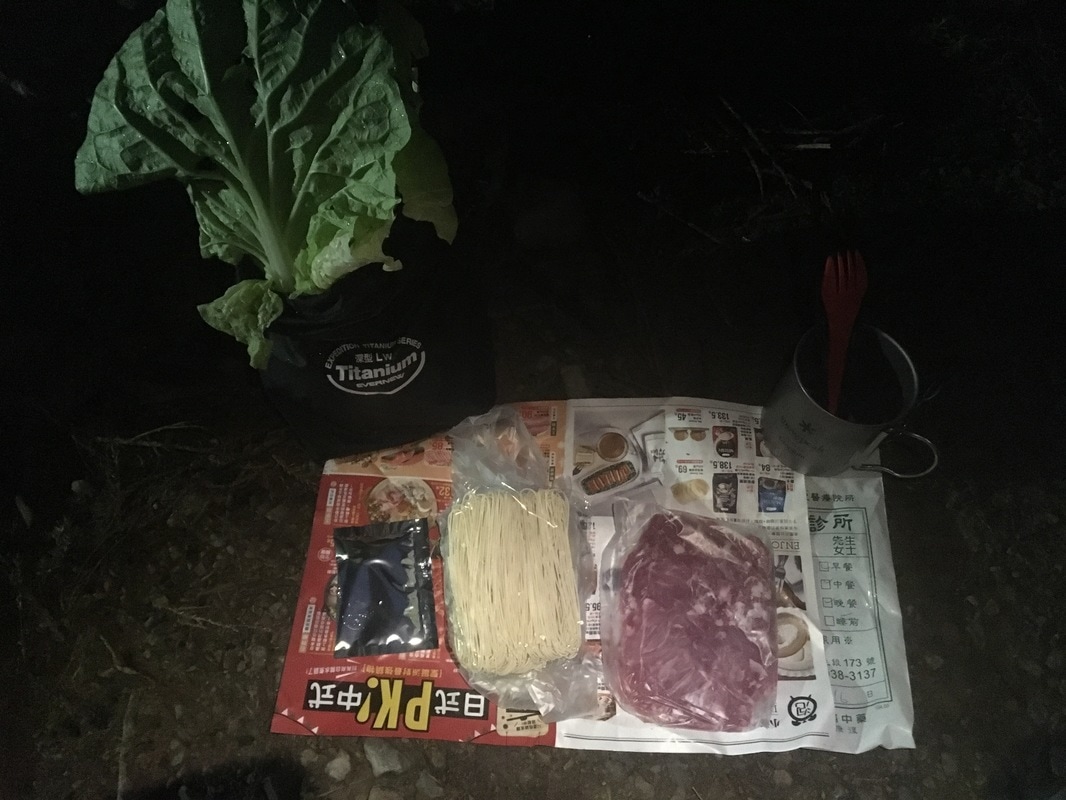
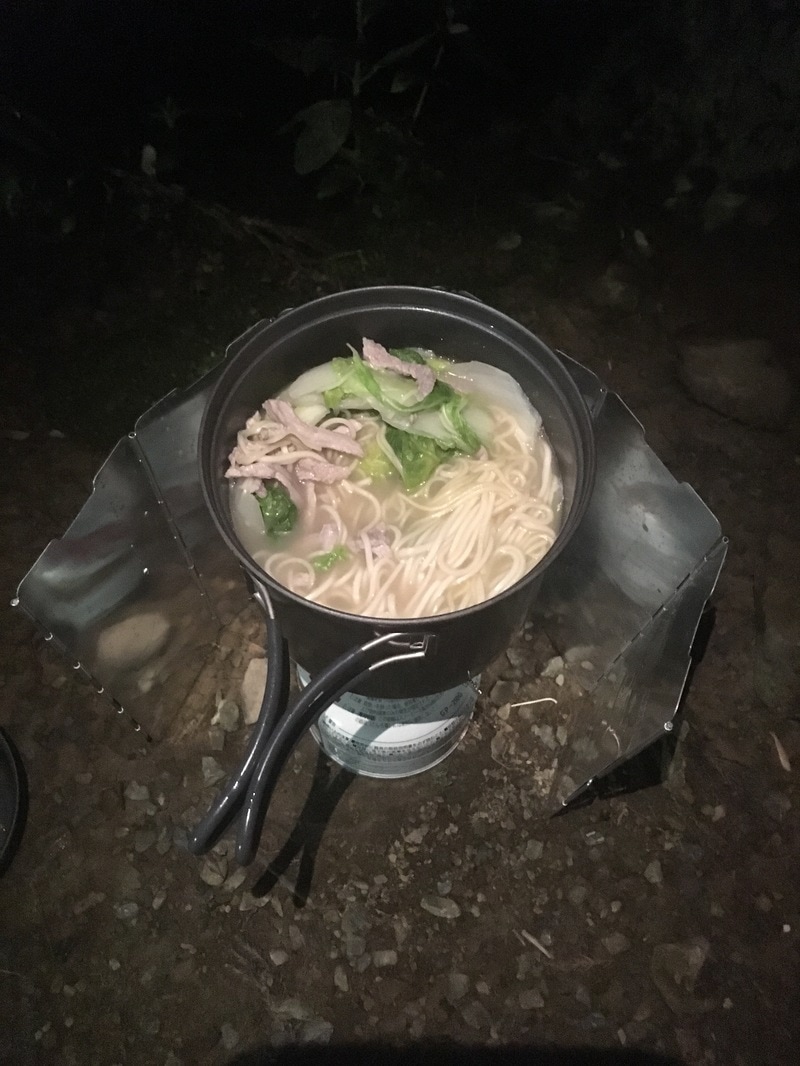
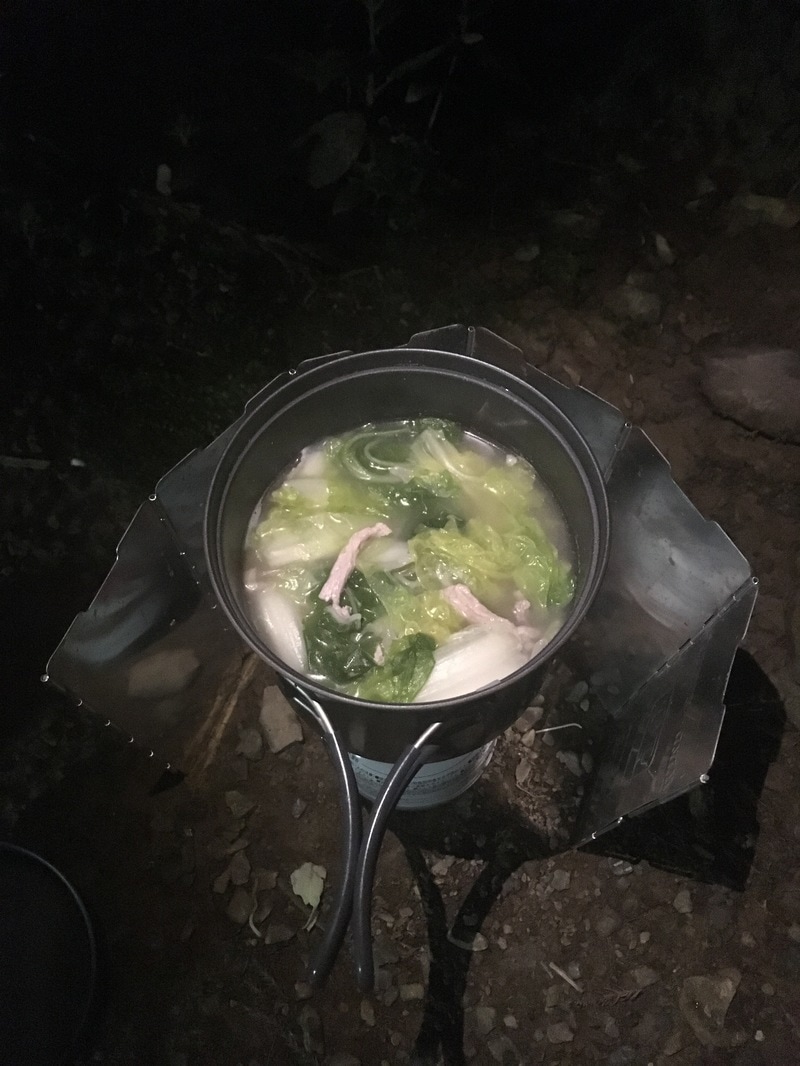
I had bought a bunch of vegetables at an honesty shop along Shuangtai Road. They made my ramen feel much more complete, and I cooked another pot of vegetable soup as well.
Even someone who hardly cooked at home could apparently eat a fairly proper meal outdoors.
An evening apart from the world meant reading, looking through photographs and sleeping.
I picked up a companion novel to Your Name. After only a few pages, I felt sleepy.
Perhaps I should thank this much-praised work, which I found less engaging the more I read.
That night, I went to bed at half past nine.
Morning Light on Pingxi Historic Trail
Opening my eyes in the morning, I felt that the world beyond the sleeping bag was unreasonably cold. I had no desire to leave it.
But it was half past six. I had already slept nine hours. Staying longer seemed excessive.
I opened the tent and went out to make coffee.
As often happens, once I left the bedding, it did not seem quite so cold.
After coffee, I reluctantly said goodbye and finally began the historic trail itself.
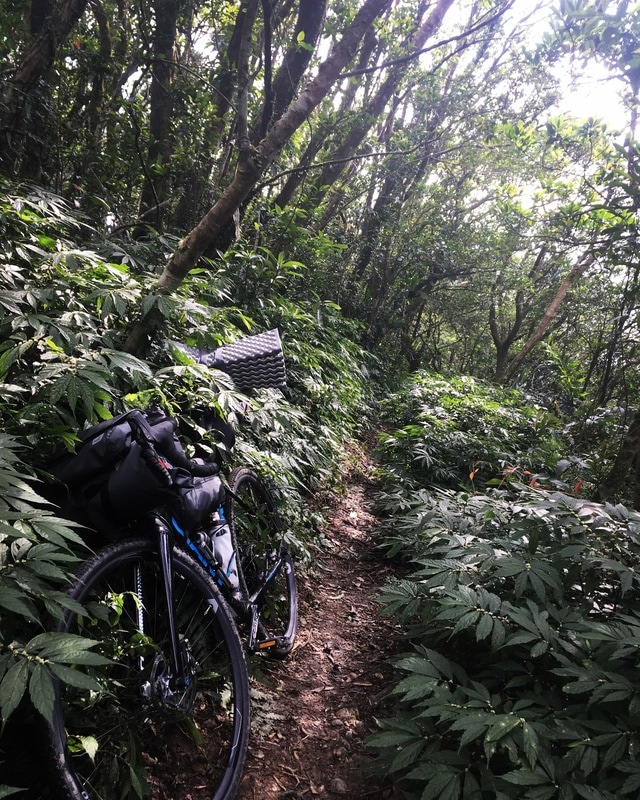
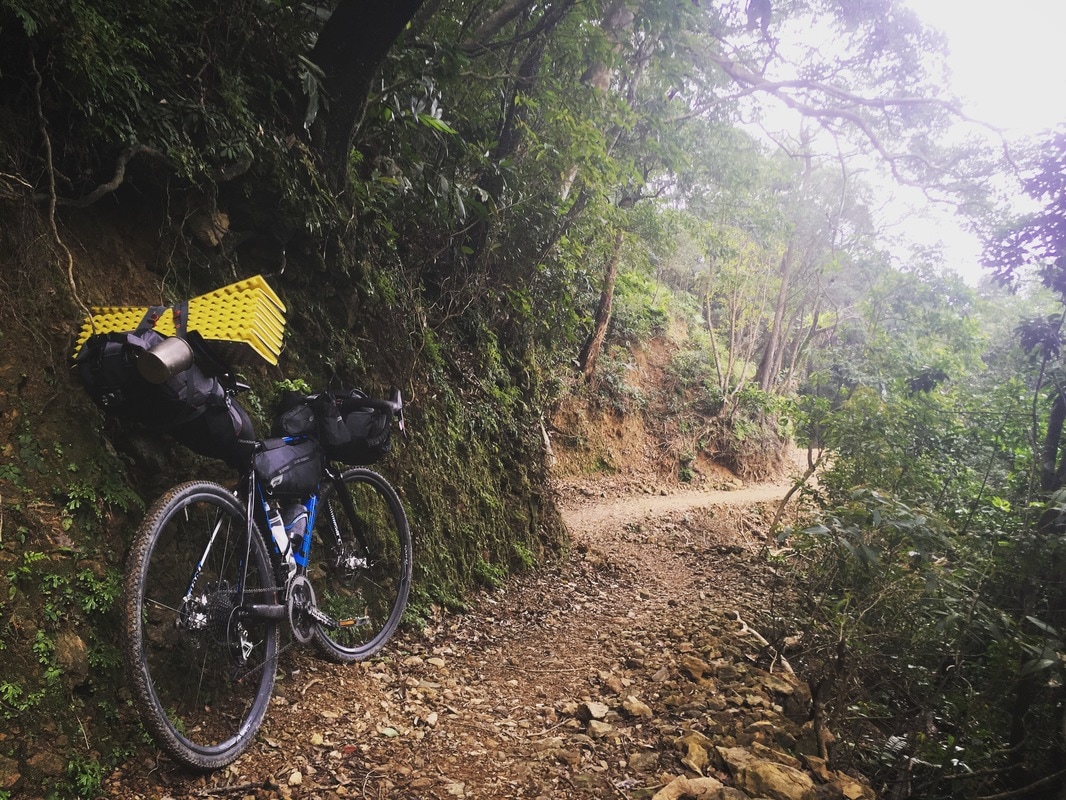
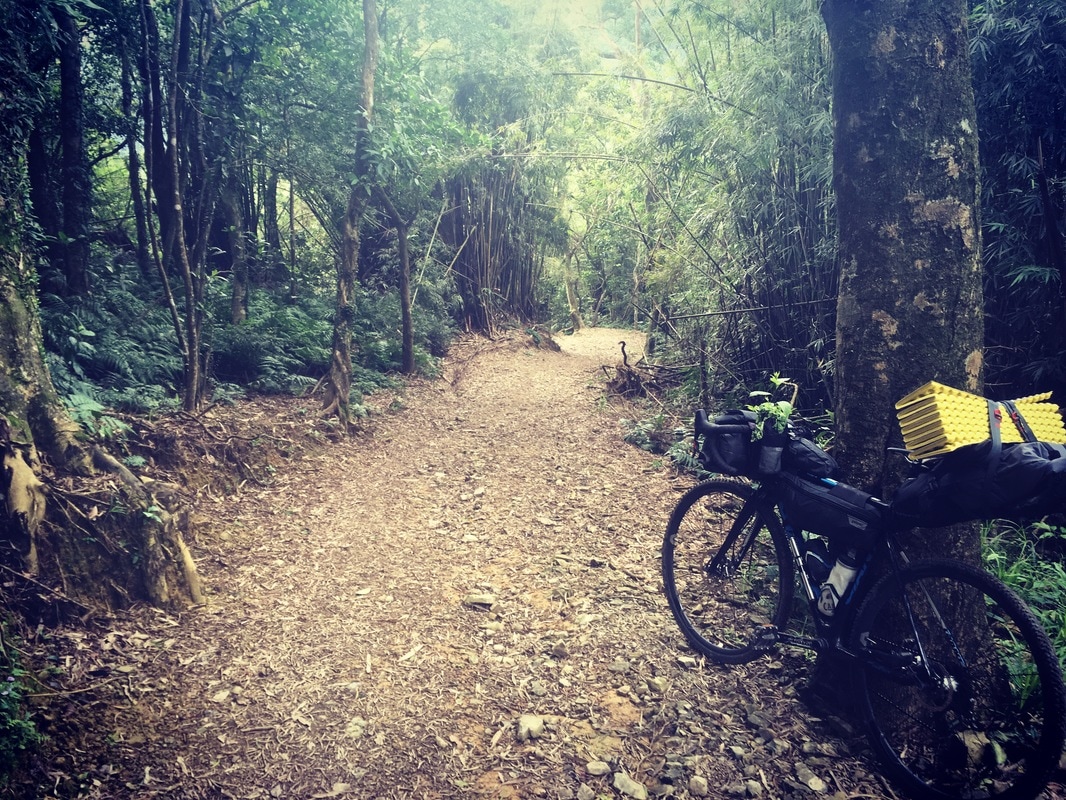
On my visit, the 1.6-kilometer path was broad, with few steep sections. There were also two stream crossings to investigate.
It felt well suited to a forest-trail beginner like me, although that was a personal impression of conditions then, not confirmation of present suitability or bicycle permission.
I tried crossing the water several times, back and forth, but never managed to ride all the way to the other bank in one go.
Clearly, I still had plenty to learn.
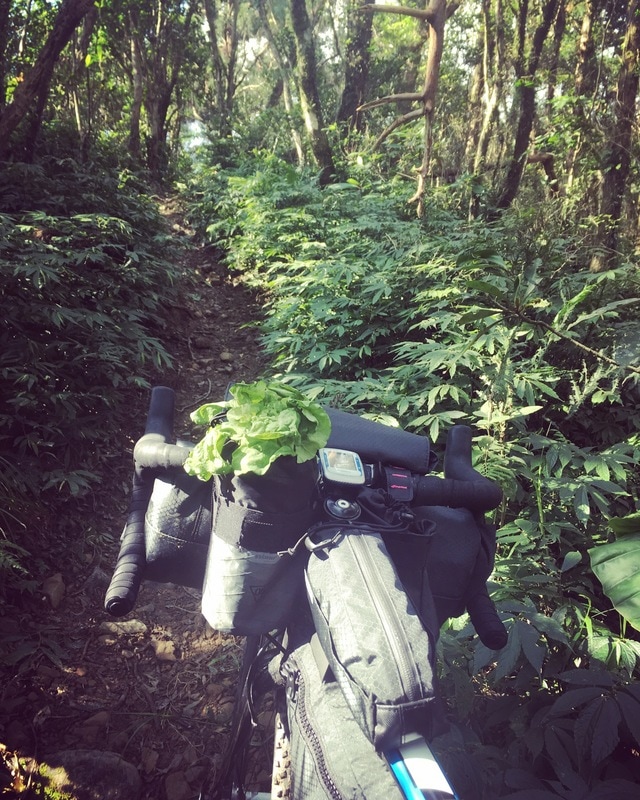
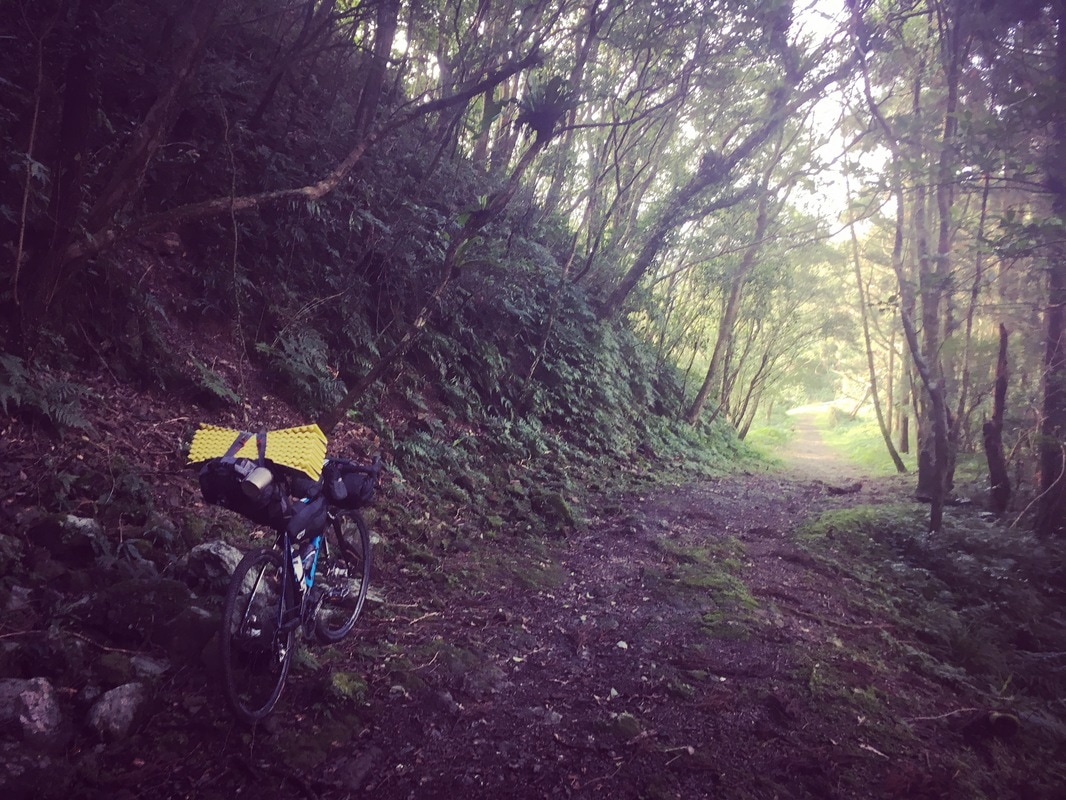
Morning light filtered through the leaves. Without online navigation to guide me, the old trail felt mysterious, as though it were gradually drawing me farther into the mountains.
At its end was a viewpoint, though that description sounded grander than the reality. There was no building, only a small open platform with two chairs.
From there, I could look toward Guishan Island and enjoy something else I had not had for a while: a mobile signal.
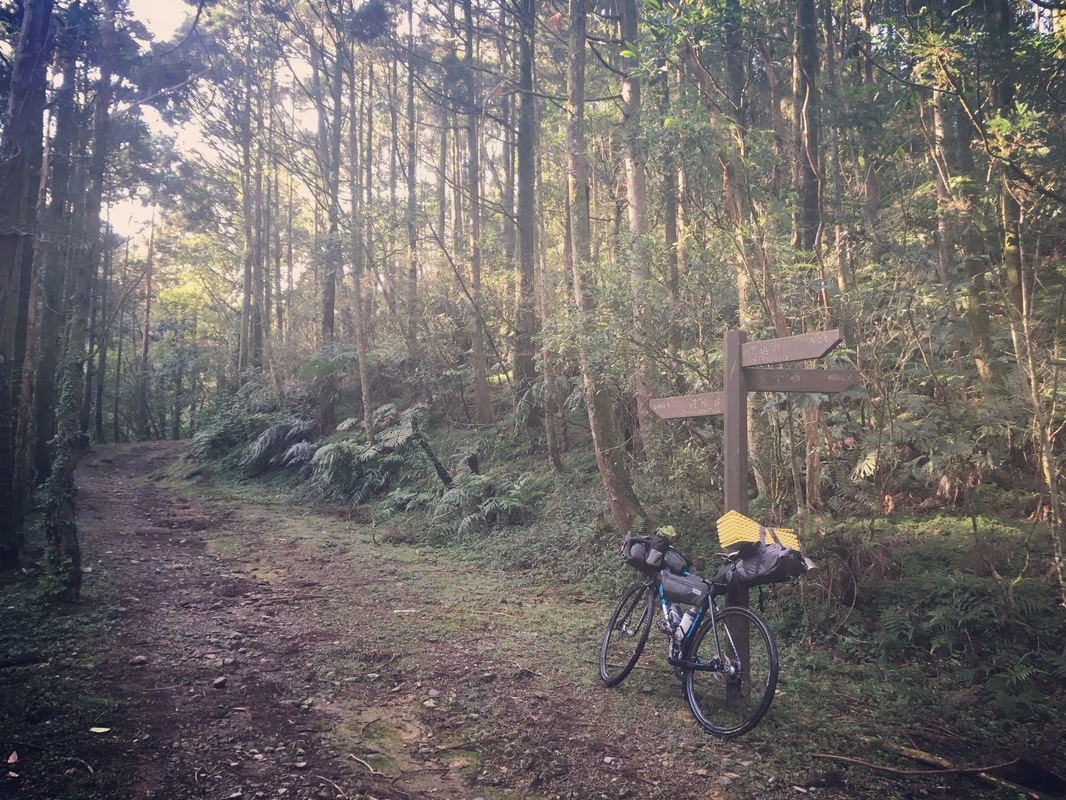
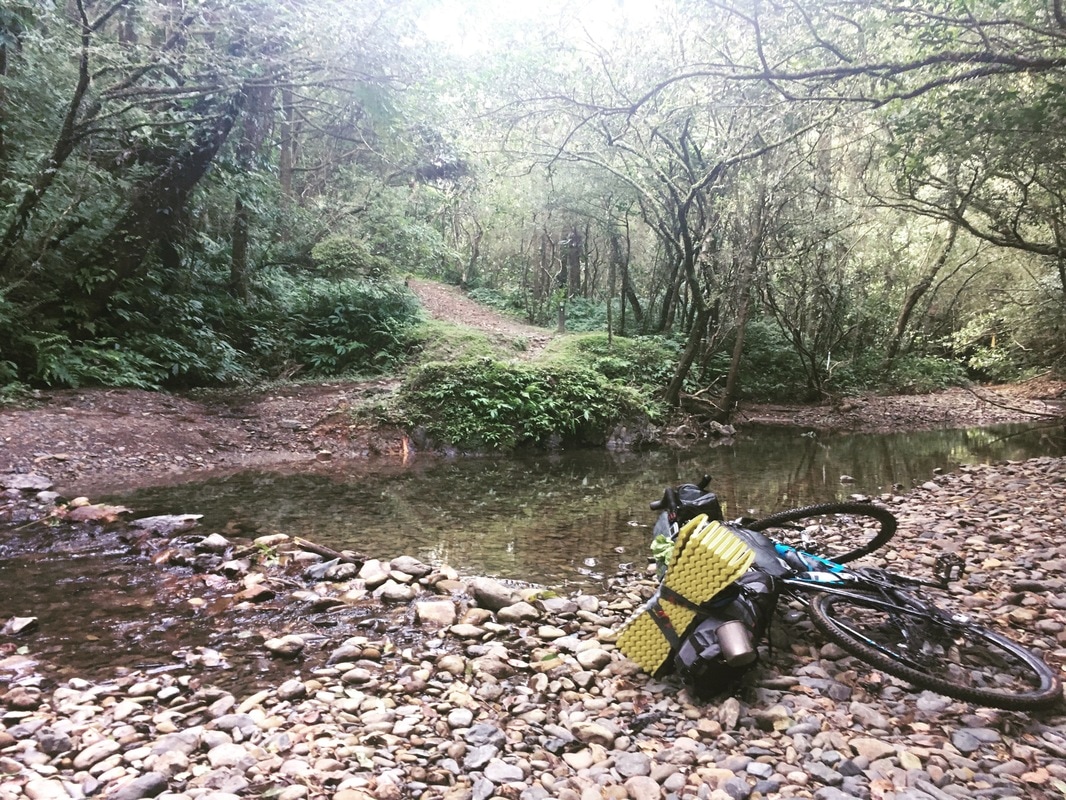
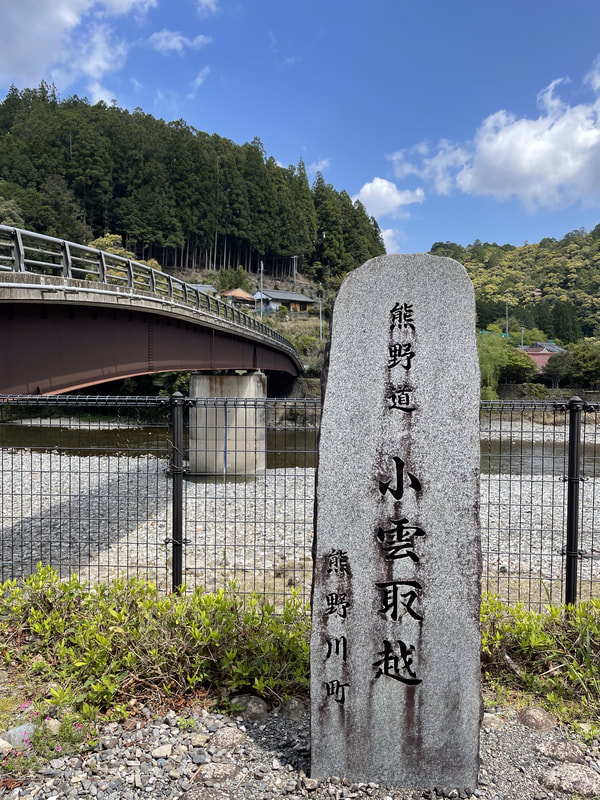
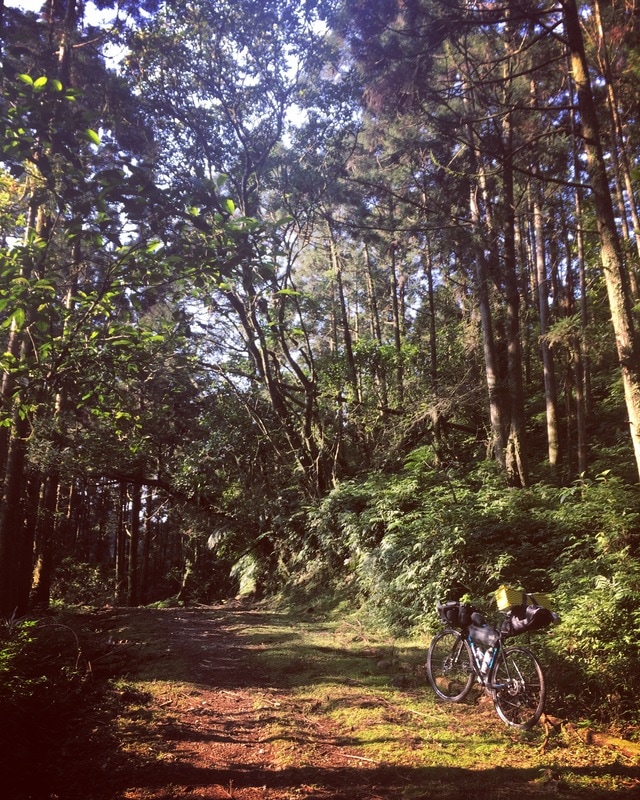
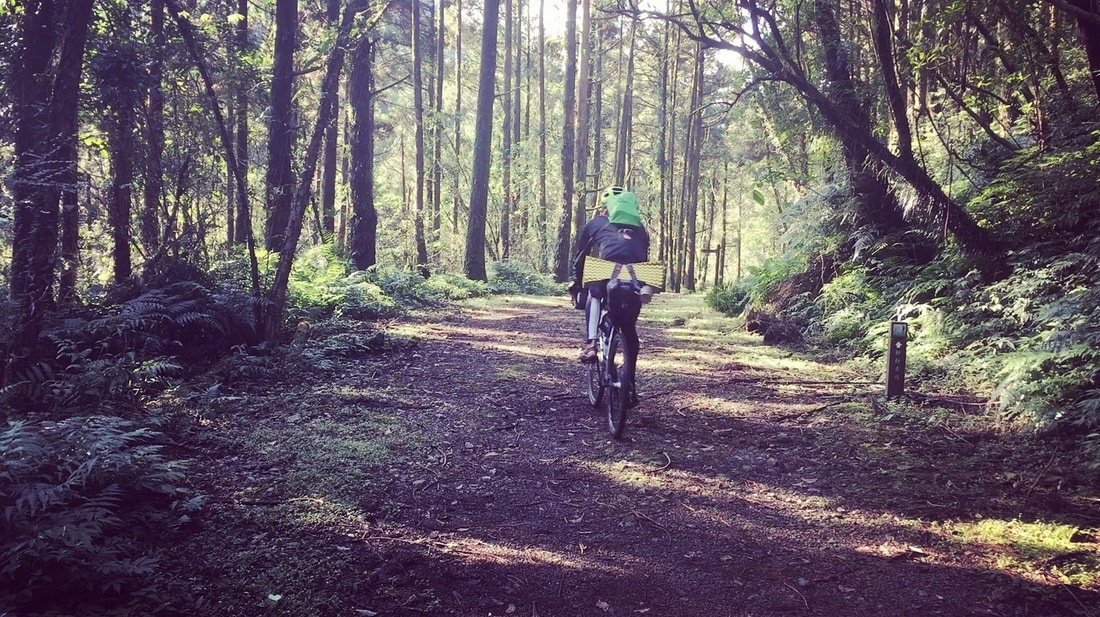
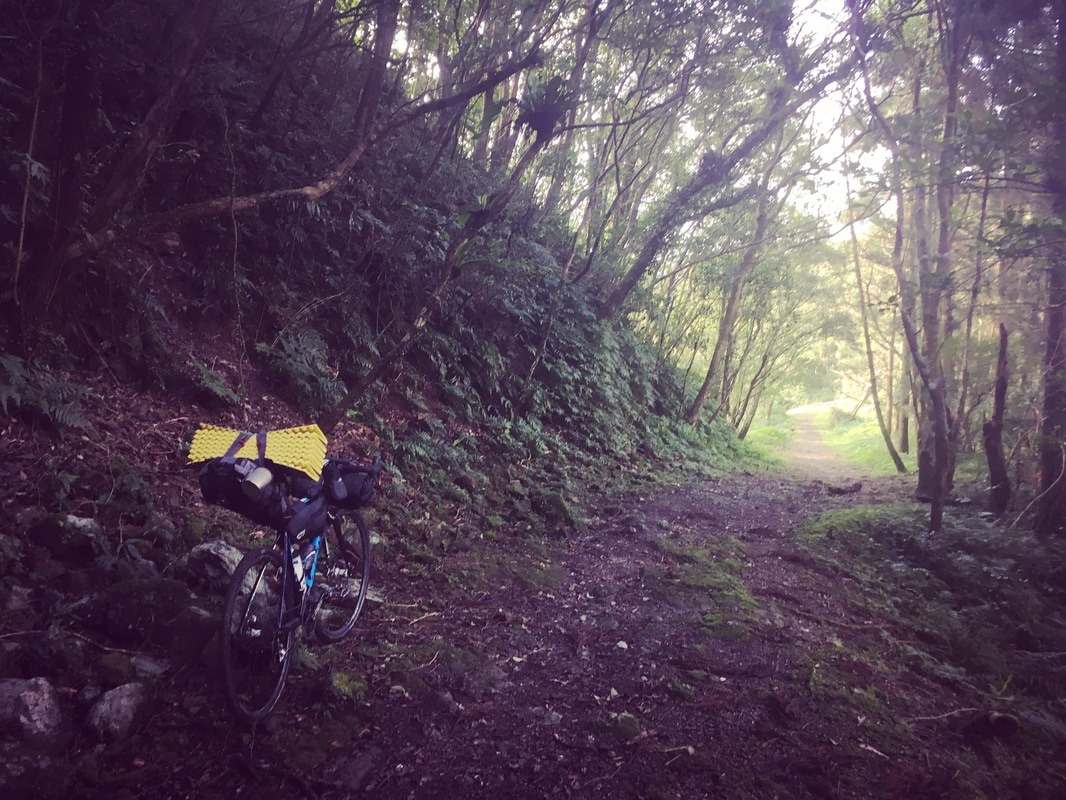
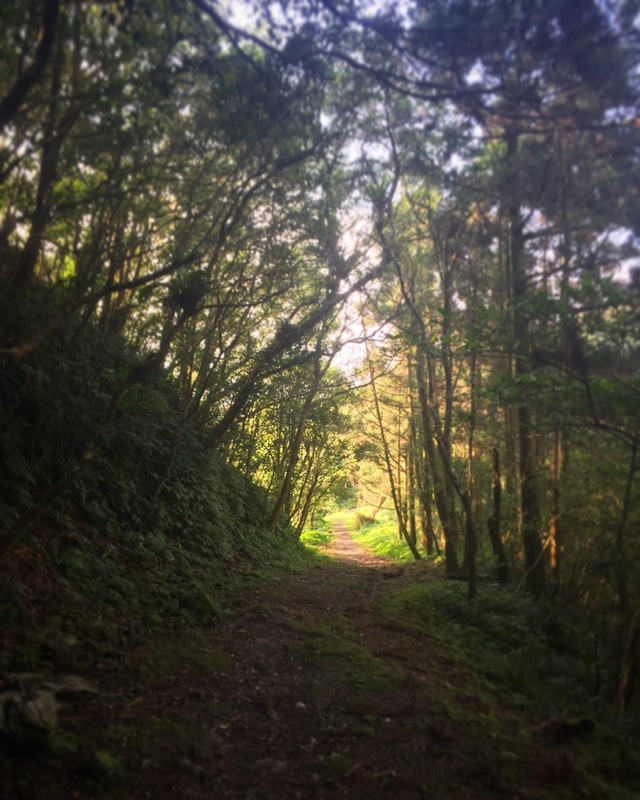
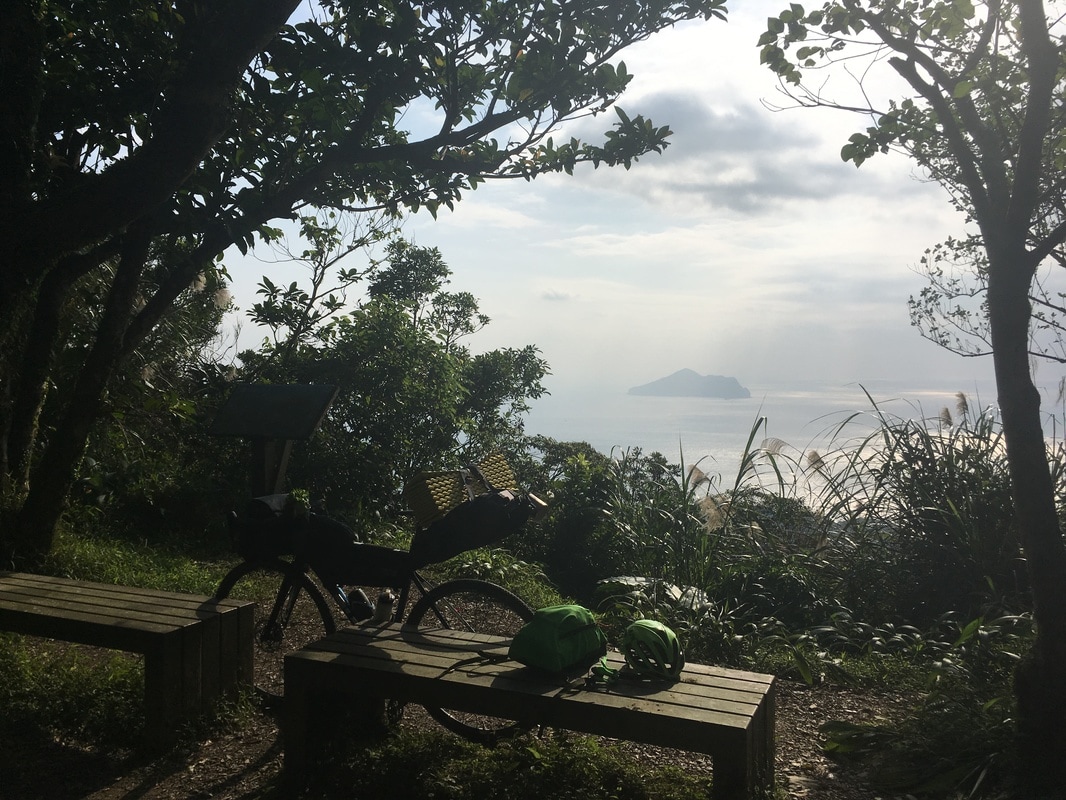
Pushing onto Shikong Historic Trail
Beyond the viewpoint, I understood the route to be Shikong Historic Trail.
The path narrowed. This must have been the singletrack Eric had described.
It was a mountain footpath rather than something I could ride. Even pushing, I had to make sure each foot was firmly placed, or the loaded bicycle could pull me backward.
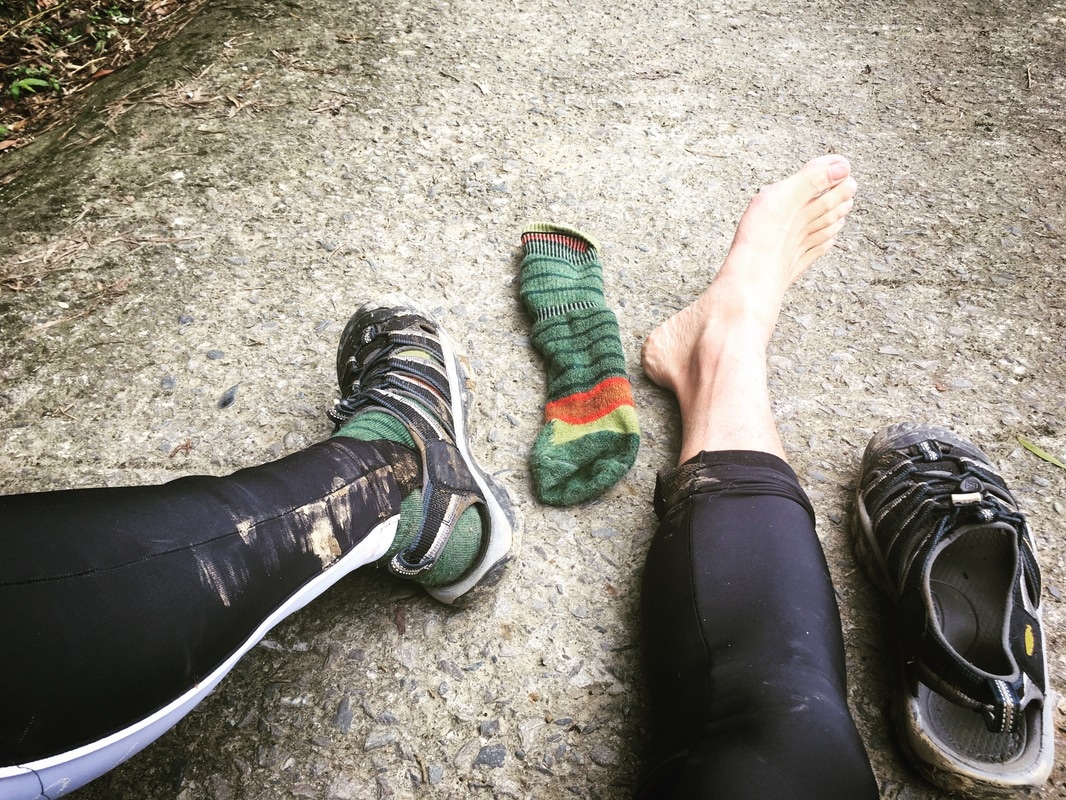
Branches and shrubs kept scraping my legs, so I put my socks back on. My feet were still wet from the crossings, but that seemed better than getting scratched.
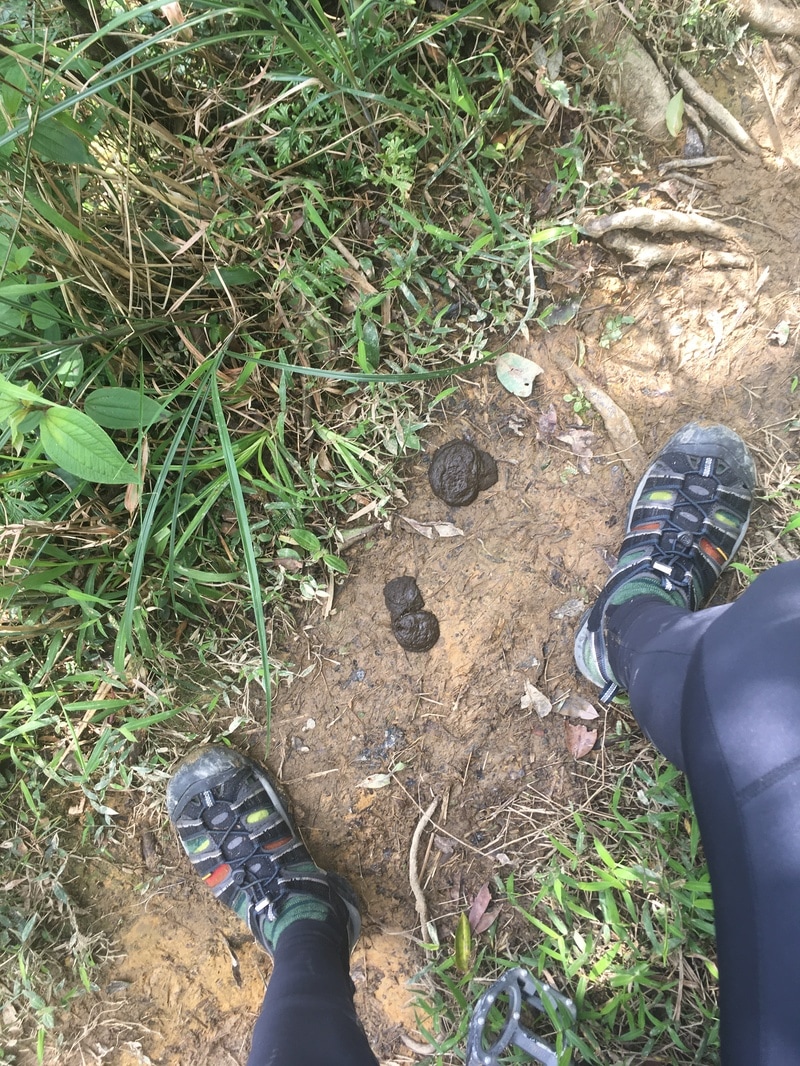
Along the path, I kept noticing little piles of droppings.
Just as I was wondering what animal had left them, an answer appeared.
A creature about the size of a dog, but shaped like a deer, sprang from the vegetation. It ran a few steps along the trail, then vanished into the undergrowth again.
A muntjac, I thought.
I had seen one before near Xiaoxueshan Lodge, grazing on the lawn in front of the visitor center. That encounter had felt almost like seeing an animal in a zoo.
This time, I felt I had truly seen a wild muntjac.
Down through Bamboo to Jietian Temple
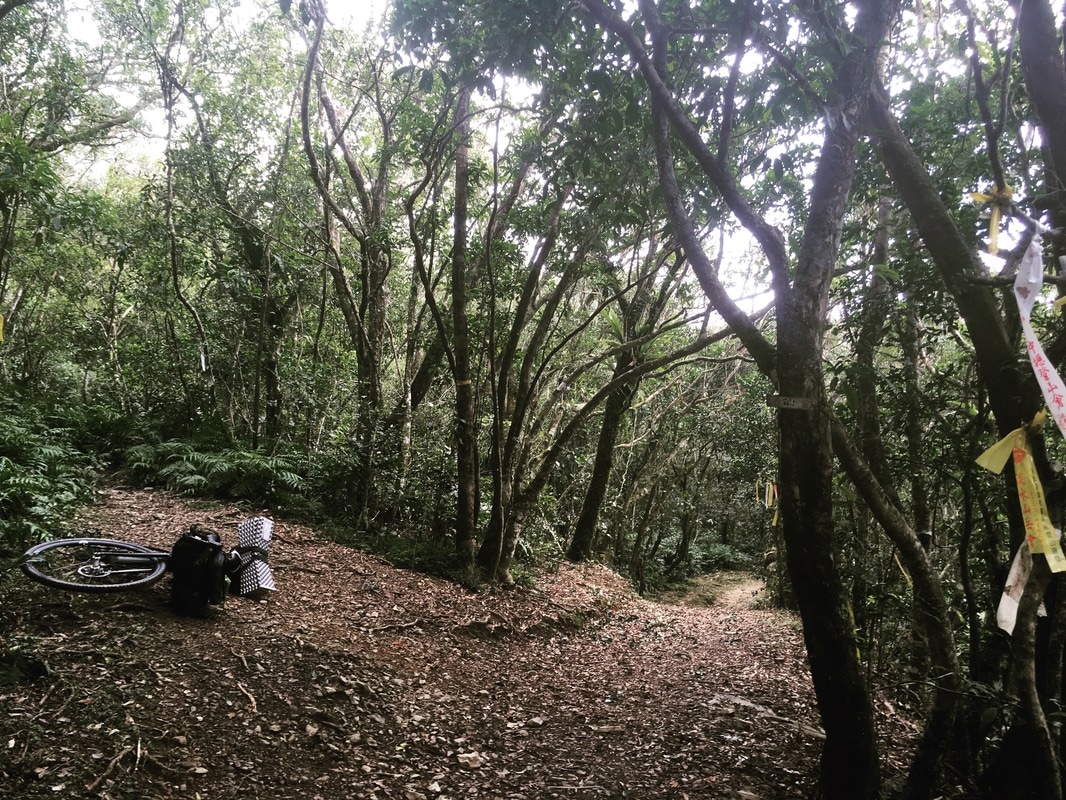
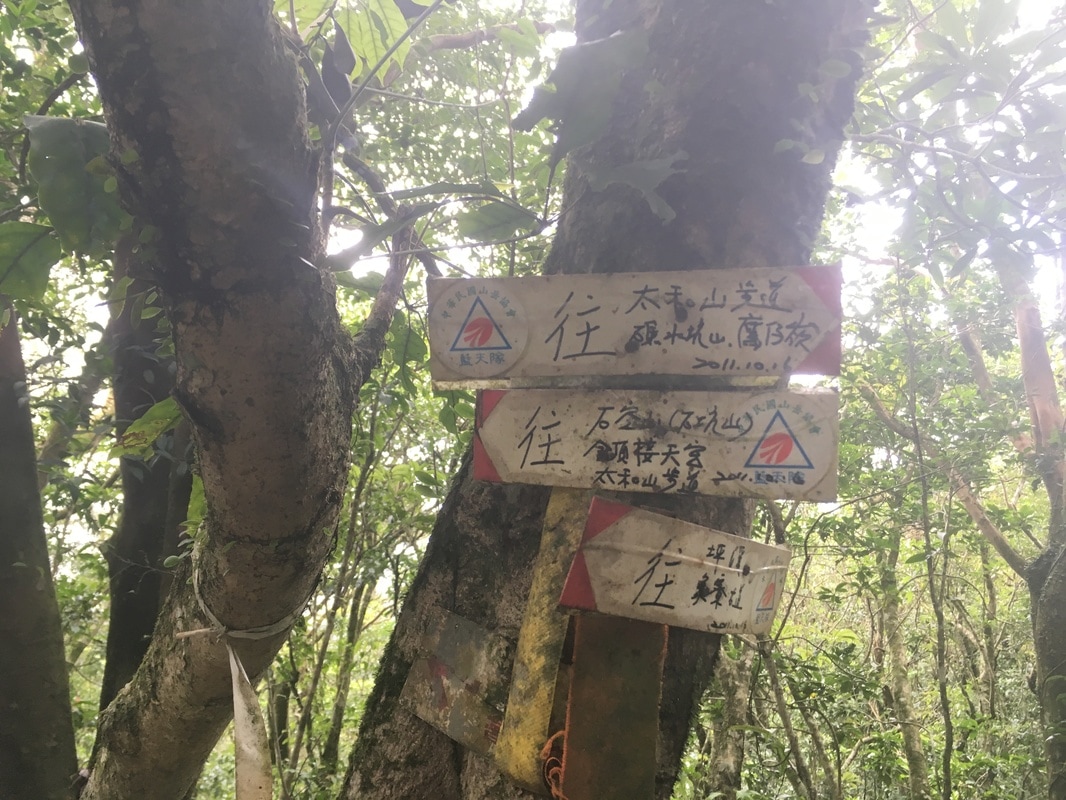
Eventually, pushing brought me to a junction. Both directions were marked for Shikong Historic Trail.
Comparing the scene with the photographs saved from Eric’s blog, I chose the left branch.
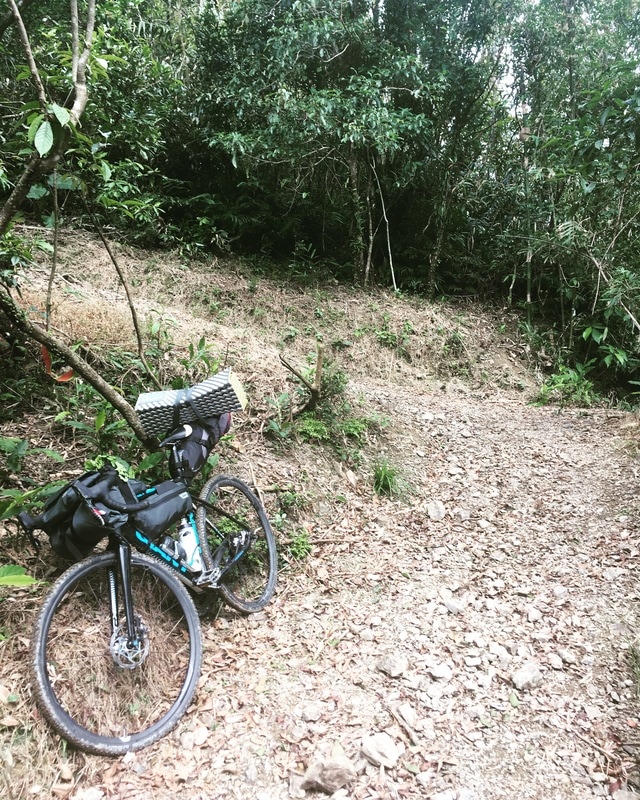
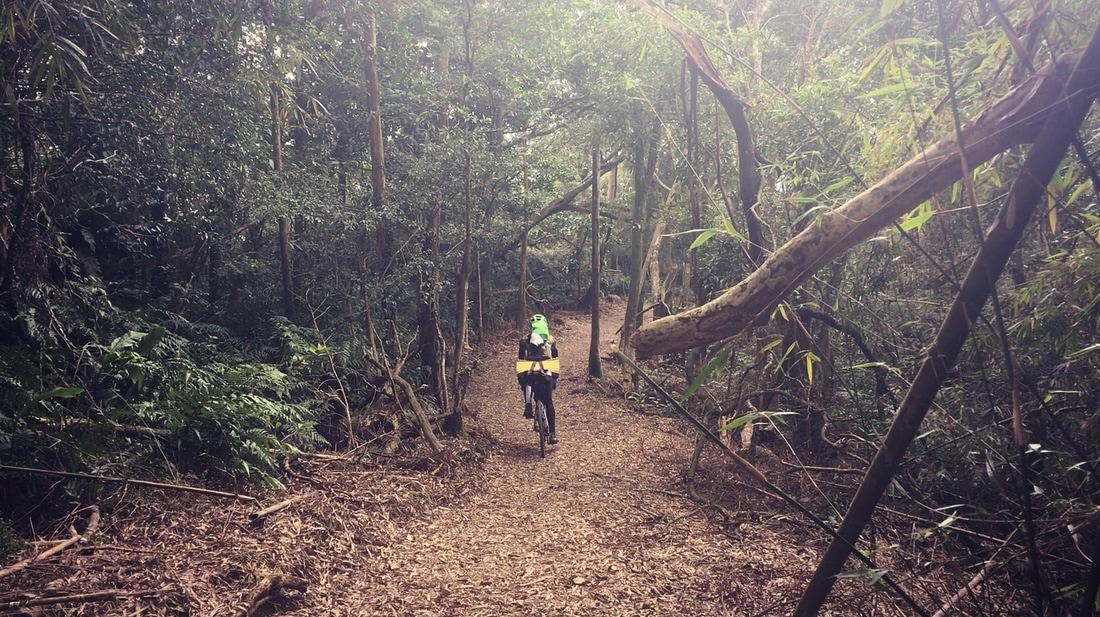
Beyond the junction, the path broadened and began to descend. I got back on the saddle and enjoyed rolling through bamboo.
There were plenty of steep sections, though. With my limited skills, I needed to judge honestly where to ride and where to get off and walk.
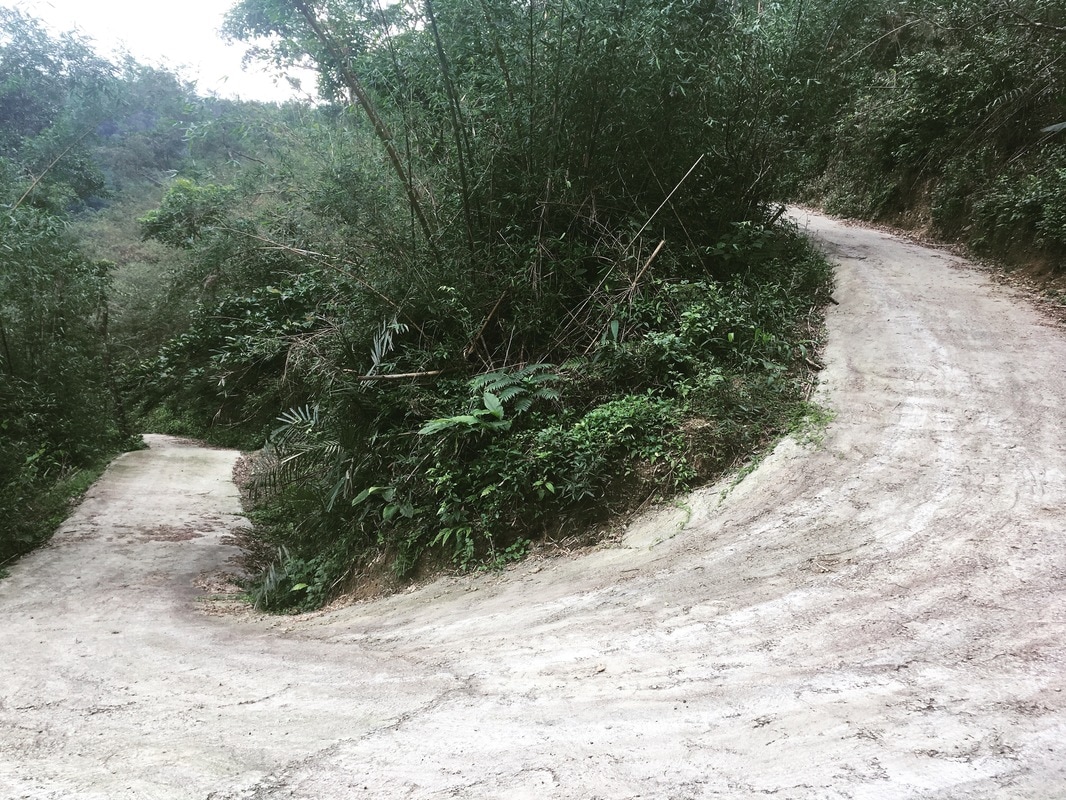
As the trail dropped, earth gave way to concrete, then concrete to asphalt.
Vehicles became more frequent, and the quiet atmosphere of the old route faded.
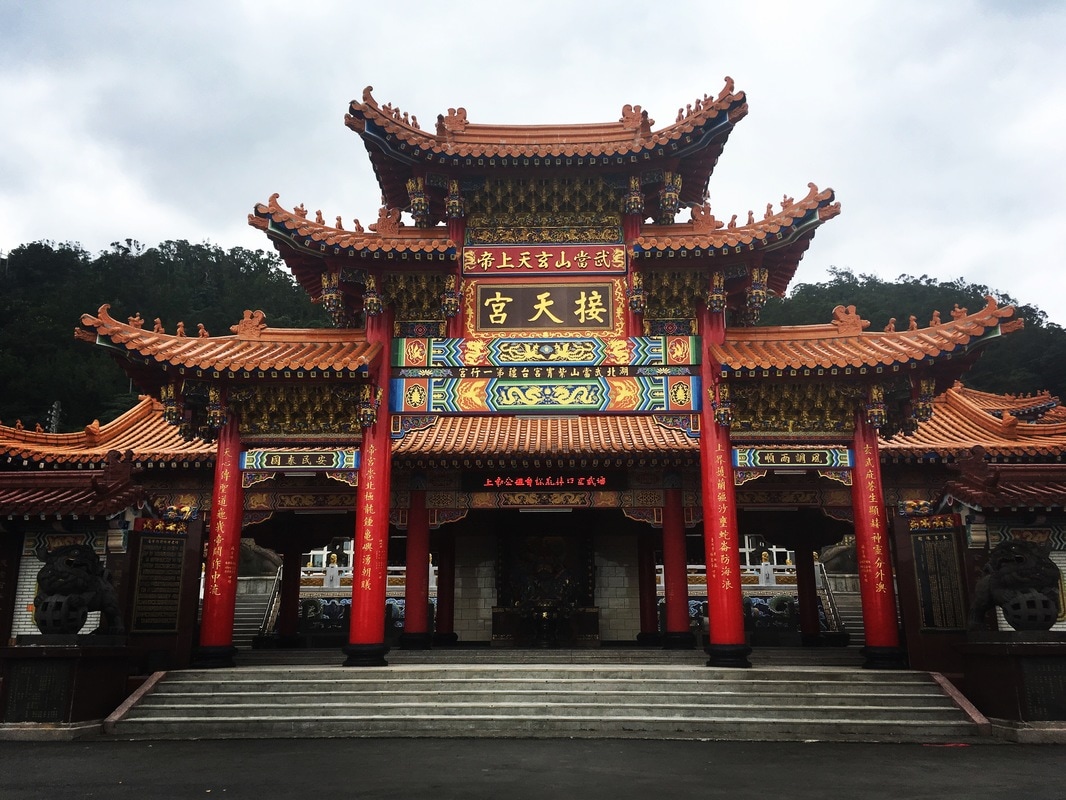
The exit was beside a large temple: Jietian Temple.
I parked outside and bowed toward the interior, giving thanks for arriving safely at the end of the journey.
Original route record: The author’s historical activity on Strava. This records the old journey, not current access permission or route conditions.
Bikepacking diary: Facebook